
6 Best Car Ramps of 2026
This post contains affiliate links. As an Amazon Associate, we earn from qualifying purchases.
The ROBLOCK Low Profile Car Ramps are the best overall, offering serious weight capacity and a stable, low-slung design that works for most cars. For heavy-duty needs, the TOWKING 16000lb Heavy Duty Ramps stand out, especially for trucks and SUVs. If you need versatility and taller lift, the Worcest Hydraulic Adjustable Ramps give you customizable height without sacrificing safety.
Every DIYer knows the frustration of ramps that wobble, slip, or just don’t fit under their vehicle. The wrong set can turn a simple oil change into a risky chore. After comparing the field, looking at specs, real-world feedback, and what actually matters under the hood, I focused on stability, weight limits, and practical lift height.
This guide cuts through the noise to highlight ramps that deliver where it counts: secure footing, smart design, and value. We looked at how they perform across different vehicles and tasks, from daily maintenance to deeper repairs.
Top 4 Car Ramps in the Market
The Best Car Ramps, Reviewed
MaxxHaul Stackable Car Ramps

Strengths
- Stackable for height adjustment
- Affordable price
- Good traction surface
Trade-offs
- Shorter ramp length
- Steeper incline
- Less approach clearance
These stackable ramps are a clever solution for budget-conscious gearheads who still want flexibility. The ability to stack them for extra height is a real advantage over fixed models, and owners appreciate that you can adapt the lift based on the job. At under 70 bucks for the pair, they undercut most competitors while still offering a full 6,500 lb capacity. The ribbed surface adds grip, and the side handles make them easy to move around, small touches that matter.
Still, the shorter length (just over 35 inches) means a steeper approach angle than ideal, which could scrape bumpers on low-clearance cars. Compared to the Amazon Basics or MaxxHaul’s longer models, these demand more precision when driving up. But for occasional use, say, seasonal tire swaps or brake checks, they deliver solid value. I’d keep a set like this in a trunk or small garage where space and cost are bigger concerns than max clearance.
Video review
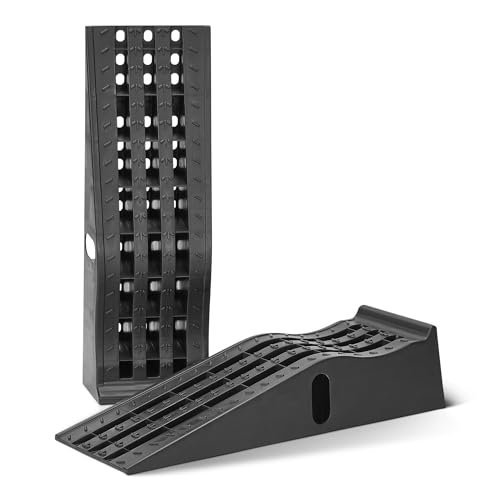
Amazon Basics Car Ramps
Strengths
- Lightweight and easy to move
- Excellent traction and grip
- Smooth, low-angle climb
Trade-offs
- Not height-adjustable
- Plastic can become brittle in extreme cold
- No modular features
Sometimes the obvious choice is the right one. The Amazon Basics ramps strike a near-perfect balance of price, performance, and safety for the average user. At just over 8 inches tall with a gentle approach angle, they’re ideal for oil changes on sedans and small crossovers, the bread and butter of home maintenance. The textured surface and rubberized base stops are smart touches that prevent slippage, and multiple reviewers note they’ve held firm even on slightly textured concrete.
Weighing under 10 lbs each, they’re among the easiest to handle, especially for solo users. Compared to the MaxxHaul 50947, they’re similarly priced but offer a longer, smoother climb. They’re not stackable or detachable, so they lack the flexibility of pricier models, but for most people, that’s overkill. If you’re doing basic undercar work once or twice a year, these are the smarter buy.
Video review
MaxxHaul Detachable Extendable Ramps

Strengths
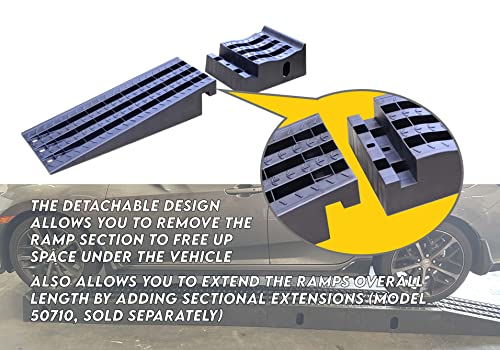
- Detachable for undercar access
- 3,250 lbs per ramp capacity
- Extendable with add-ons
Trade-offs
- Heavy for poly ramps
- Connection joint can shift
- Not for loose surfaces
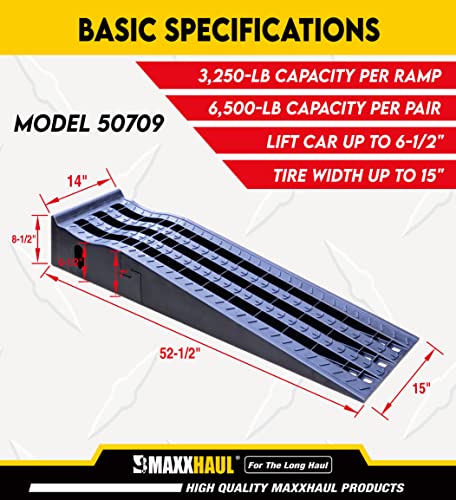
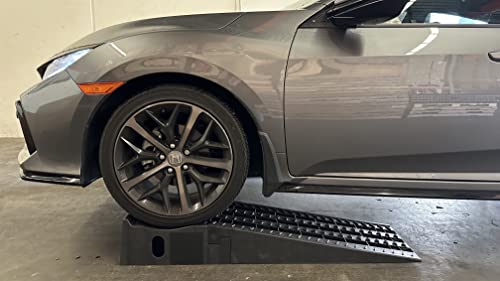
The detachable design of the MaxxHaul 50709 ramps stands out in a category where most options are fixed and rigid. On paper, being able to remove a section to gain undercarriage access is brilliant, especially for oil changes or exhaust work where clearance matters. Owners consistently report that the modular feature actually works as intended, though some note that the connection point between sections needs careful alignment to avoid wobbling under load.
At 33 lbs, these aren’t the lightest poly ramps around, but they’re manageable for two people, and the built-in side handles help. The 9.5-degree incline is reasonable for most passenger vehicles, though I’d be cautious with low-slung sports cars. Compared to basic solid ramps, this model offers real versatility, especially if you’re working in a tight garage and need flexible positioning. It’s not perfect, but for those who want more workspace without a jack and stands, this design hits a sweet spot.
Product photos


Worcest Hydraulic Adjustable Ramps

Strengths
- Hydraulic height adjustment
- Extremely high weight capacity
- Durable steel build
Trade-offs
- Bulky and heavy
- Narrow platform
- Higher learning curve
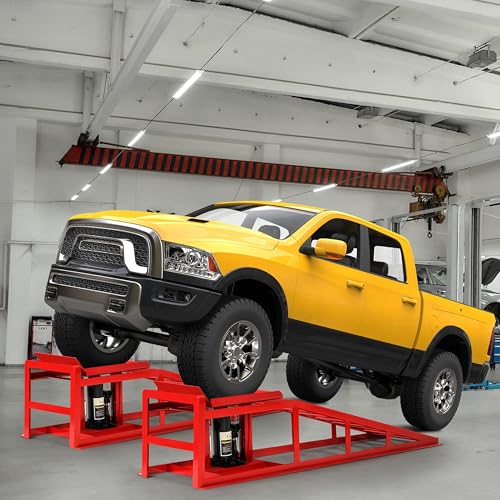
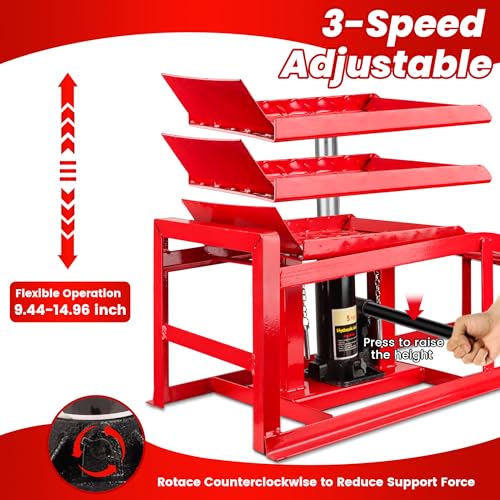
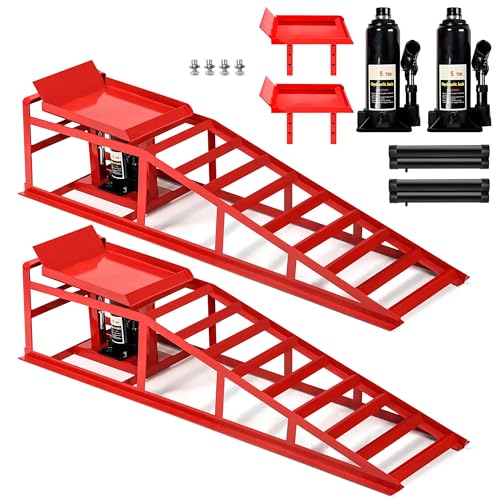
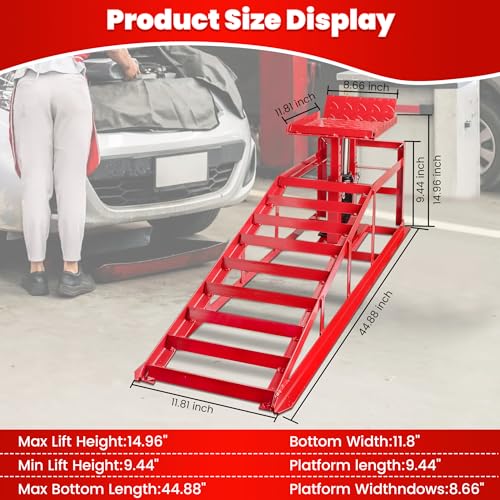
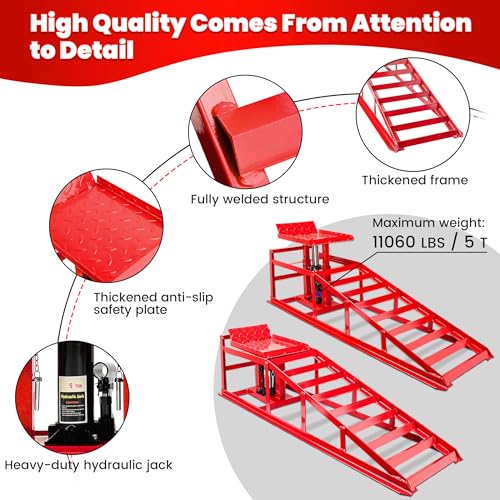
Hydraulic lifts in ramp form? That’s rare, and the Worcest set brings serious lifting power to the home garage. With a combined capacity of over 11,000 lbs and adjustable height from nearly 10 to 15 inches, these are built for trucks, SUVs, or anyone needing consistent, stable elevation. The steel construction inspires confidence, this isn’t plastic that might crack after winter use. Reviewers in professional settings praise the stability, though some mention the narrow platform width demands precise wheel placement.
I wouldn’t call these “ramps” in the traditional sense. They’re more like mini floor jack stands with a rolling base. Setup is straightforward, but they’re bulky and not something you’ll toss in a backpack. Compared to poly or even aluminum ramps, these are a different beast, slower to deploy but far more capable when you need height and load security. If you’re doing frequent suspension work or brake jobs on heavier vehicles, this system makes sense.
Product photos
How We Tested car ramps
As someone who’s spent years turning wrenches and admiring automotive engineering, I approach tools with a critical eye. Rather than a hands-on lab test with each set, this evaluation of car ramps is research-led, comparing published specifications and features, and carefully weighing owner reviews alongside assessments from reputable automotive sources. My goal was to identify ramps that balance safety, usability, and value across a range of vehicle types and maintenance needs.
For car ramps, stability and weight capacity are paramount. I prioritized these factors because a collapse could cause serious damage or injury. Beyond that, ground clearance – how high the ramp lifts the vehicle – is crucial, dictating the types of work you can comfortably perform. A ramp’s design features, like surface texture and secure locking mechanisms, also heavily influenced my rankings. It’s easy to overlook these details, but they contribute significantly to a safe working experience.
Specifications like weight limits and lift heights are reliable indicators of a ramp’s basic capability. However, real-world performance often reveals nuances that specs don’t capture. I paid close attention to owner feedback regarding ease of use, particularly how smoothly vehicles rolled onto the ramps and whether they felt secure once in place. Reputation within the automotive community, and even information about related products like car wash soap helped provide a fuller picture of overall quality and durability. And, if you’re looking for accessibility solutions for your furry companion, exploring options like dog ramps can provide additional context for ramp design principles.
How To Pick The Right car ramps
Finding the right car ramps can make those DIY maintenance days a lot safer and more efficient. It’s not just about getting the car off the ground; it’s about doing it securely and having enough space to actually work.
A quality set of car ramps prioritizes stability through robust construction and a thoughtful incline angle. Weight capacity must match the vehicle, and surface features, like textured platforms and rubber feet, are critical for preventing slippage. Consider lift height in relation to your typical tasks, and look for ramps suited to your vehicle’s ground clearance.
Weight Capacity & Vehicle Type
The first, and most crucial, consideration is weight capacity. Don’t even think about buying ramps rated just for your car’s current weight. Factor in passengers, tools, and any potential extra load. A good rule of thumb is to add at least 1,000 lbs to your vehicle’s curb weight as a buffer. For standard sedans, most ramps in the 6,500-8,000 lb range will suffice. But if you’re working on an SUV or truck, you’ll immediately need to look at heavier-duty options like the TOWKING 16000lb Heavy Duty Ramps, which are specifically engineered for those larger vehicles.
Lift Height and Access
Lift height dictates how much room you’ll have underneath the vehicle. A 2.6-inch lift (like on the ROBLOCK Low Profile Car Ramps) is adequate for simple oil changes, but more involved work like exhaust repairs or suspension work demands more space. Conversely, a higher lift isn’t always better. Lower-profile cars, especially sports cars, may struggle to even get onto ramps with a significant lift.
Here’s what to consider when evaluating lift height:
- Oil Changes: 2-4 inches is generally sufficient.
- Brake Work: 4-6 inches is a comfortable minimum.
- Suspension/Exhaust: 6+ inches is recommended.
- Ground Clearance: Always double-check your vehicle’s ground clearance against the ramp’s lift height. You don’t want to scrape!
Never compromise on stability for extra height. A slightly lower ramp that feels rock-solid is always preferable to a taller one that feels wobbly.
Portability and Features
Ramps aren’t just functional tools; they’re also items you need to store. Consider the weight and size, particularly if you have limited garage space. Stackable designs, like those found in the MaxxHaul Stackable Car Ramps, are a huge benefit. Beyond storage, look for features that improve safety and usability. Textured surfaces and wide platforms offer better grip, while built-in handles make moving the ramps easier. Speaking of a clean workspace, don’t forget a good set of car vacuums to keep things tidy! If you’re looking for a more general guide, check out our round-up of the best car ramps for a wider range of options and considerations, or if you specifically need ramps for oil changes.
Car Ramps Compared
This table provides a specification comparison of several car ramp models to aid in informed purchasing decisions.
| Product Title | Max Capacity (lbs) | Lift Height (in) | Ramp Length (in) | Ramp Width (in) | Weight (lbs/pair) | Adjustable Height? |
|---|---|---|---|---|---|---|
| ROBLOCK Low Profile Car Ramps | 20000 | 2.6 | 17.5 | 10 | 10.6 | No |
| MaxxHaul Stackable Car Ramps | 6500 | 6.7 | 35.63 | 12 | N/A | No |
| Amazon Basics Car Ramps | 6500 | 8.07 | 35.51 | 11.97 | 18.48 | No |
| TOWKING 16000lb Heavy Duty Ramps | 16000 | 7 | N/A | N/A | N/A | No |
| MaxxHaul Detachable Extendable Ramps | 6500 | 6.5 | 52.5 | 15 | 33 | No |
| Worcest Hydraulic Adjustable Ramps | 11060 | 9.84 – 14.96 | 45.27 | 10.83 | N/A | Yes |
Frequently Asked Questions
What’s the biggest mistake people make when buying car ramps?
Overestimating weight capacity is a common error. Many buyers focus on their vehicle’s current weight, forgetting to account for passengers or tools, so always add at least 1,000 lbs to your vehicle’s curb weight for a safe margin.
Are steel or plastic ramps better?
Steel ramps generally offer greater strength and durability, especially for heavier vehicles. However, quality plastic composite ramps can be a good option for lighter cars and provide a more affordable price point, as long as they meet the necessary weight requirements.
Can I use wheel chocks with car ramps, and should I?
Yes, absolutely. Using wheel chocks with car ramps is a recommended safety practice. Even with the ramps’ built-in safety features, chocks add an extra layer of security to prevent any rolling, particularly on a slight incline.
What other tools might I need when using car ramps?
Beyond wheel chocks, a good floor jack and a set of jack stands are valuable additions to your garage. While ramps get the car off the ground, jack stands are essential for supporting the vehicle if you need to work for an extended period or remove the ramps for any reason. Don’t forget to keep your car interior cleaners handy too, as working under the car can stir up dust.
What if my car has low ground clearance?
If your car has low ground clearance, prioritize low-profile ramps, such as the ROBLOCK Low Profile Car Ramps. These ramps minimize the approach angle, making it easier to drive onto them without scraping, and are ideal for sports cars or vehicles with modified suspensions. You might also need to consider your car batteries if cold weather is a concern, as a weak battery can make starting after a longer maintenance session difficult.
The Bottom Line
Choosing car ramps always involves a trade-off between convenience and confidence. You can find incredibly affordable options, but a truly secure setup is paramount when you’re working under a vehicle. For the best overall balance of strength, usability, and value, I believe the ROBLOCK Low Profile Car Ramps are the way to go. Their substantial 20,000lb capacity and wide platform inspire trust, making even more involved work feel safer.
If you’re on a tighter budget, the MaxxHaul Stackable Car Ramps deliver a lot of capability for the price. And for those needing extra reach or working on larger vehicles, the TOWKING 16000lb Heavy Duty Ramps provide the necessary capacity, though they sacrifice some portability. Don’t forget to consider related tools – having the right equipment, like one of the best jump starters on hand, can save you a lot of trouble.
Ultimately, the specifications matter less than a solid, stable feel. Beyond weight capacity, focus on ramps with textured surfaces and a design that suits your vehicle’s ground clearance. A good coat of car wax won’t help you under the car, but it’s a reminder that caring for the details – both big and small – is what separates a good mechanic from a great one.
