
8 Best Car Radio Systems of 2026
This post contains affiliate links. As an Amazon Associate, we earn from qualifying purchases.
The Kissound 10.1″ QLED Double Din Car Stereo stands out as the best overall car radio system, delivering a sharp display, full wireless smartphone integration, and strong audio customization with built-in DSP. For those on a tighter budget, the Pioneer MVH-S230BT offers reliable Bluetooth and solid performance without the flash. If you want maximum versatility with camera support and dual sub outputs, the Kissound 7″ Double Din is a smart pick.
Choosing the right car radio shouldn’t mean trading clarity for features or reliability for screen size. Too many units promise premium experiences but fall short in daily use, with glitchy interfaces or poor sound once you leave the showroom floor. After comparing the field and digging into owner experiences, I focused on systems that balance real-world usability, audio fidelity, and seamless integration with your phone and vehicle. This guide cuts through the hype to highlight the models that consistently deliver, based on specs, feedback, and what actually matters behind the wheel.
Top 7 Car Radio Systems in the Market
The Best Car Radio Systems, Reviewed
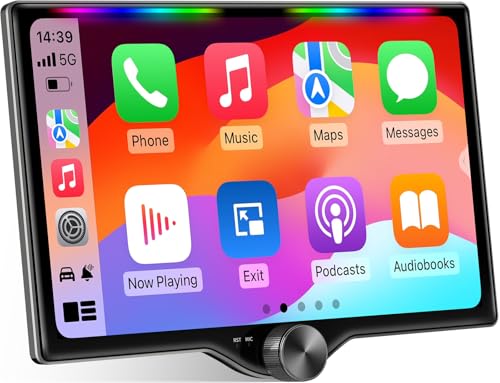
Kissound 10.1″ QLED Double Din Car Stereo
Strengths
- QLED display with wide viewing angles
- Music-sync ambient lighting
- Dual subwoofer outputs with DSP
Trade-offs
- USB-C port is charge-only
- Light bar may not suit all tastes
- Dash kit often required
This is the one I’d pick for a balanced, modern upgrade. The QLED screen is a step up, brighter, more vivid, and easier to see in direct sun than standard IPS panels. Wireless CarPlay and Android Auto connect reliably, and the music-syncing ambient light bar isn’t just flashy; it adds a fun, immersive layer to night drives without being distracting. The dual subwoofer outputs and 10-band DSP mean serious audio customization, and owners consistently praise the bass response.
It’s not perfect, the ambient lighting might not be everyone’s taste, and the USB-C port is charge-only, which can trip people up. But overall, it combines strong performance, smart features, and visual appeal better than any other unit here. When I compare it to the PLZ 10.1″ or the BOSS model, this one just feels more complete.
Video review
Single Din Radio Car Stereo
Strengths
- Extremely low price
- Wireless CarPlay/Android Auto
- 10-year replacement policy
Trade-offs
- Fitment issues reported
- Basic sound processing
- Single USB-C port
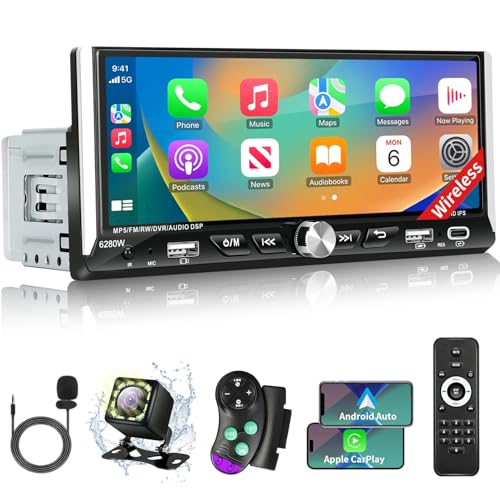
At nearly half the price of larger units, this 6.9-inch single din is a budget miracle, if your dash fits. It packs wireless CarPlay, Android Auto, Mirror Link, and even real-time GPS navigation, which is impressive on paper. The 10-year replacement policy is bold and suggests confidence in longevity, though real-world durability remains to be seen. Owners praise the value but warn about fitment issues, some report blocked vents or misaligned buttons.
The screen resolution is adequate, not stellar, and the single USB-C port can be limiting for multi-device users. Still, for someone with a compatible vehicle who wants modern features without spending $150+, this delivers. Just don’t expect refined audio processing or premium responsiveness. It’s functional, not flawless.
Video review
Kissound 7″ Double Din Car Stereo
Strengths
- Wireless CarPlay/Android Auto
- 10-band EQ with DSP
- Includes backup camera
Trade-offs
- Basic build quality
- No front camera support
- Steering wheel module sold separately
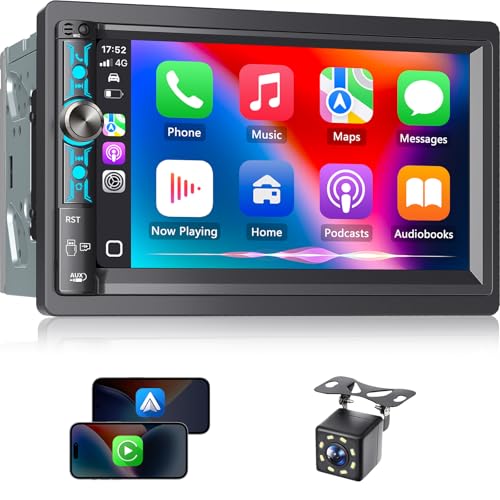
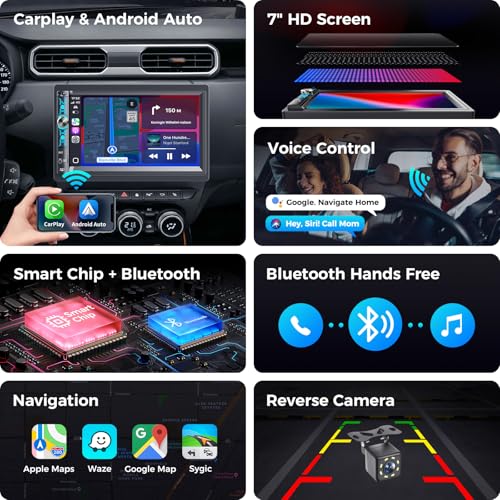
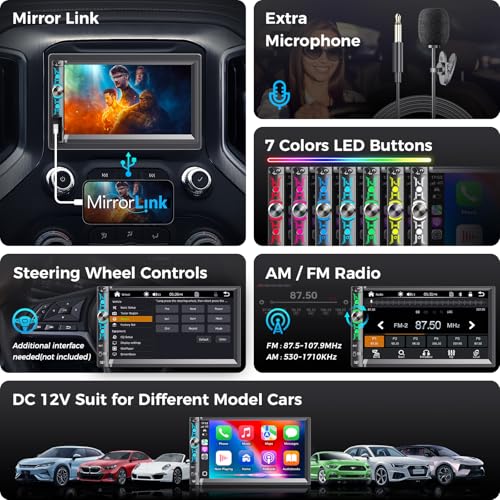
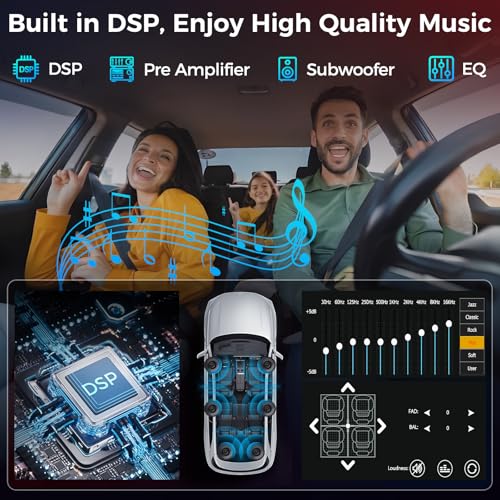
This Kissound 7-inch unit punches above its price point with solid CarPlay and Android Auto integration, both wireless and wired. Owners consistently report reliable auto-pairing at startup, which is a big win for daily usability. The 10-band EQ and built-in DSP give real tuning flexibility, and the 240W output with a single subwoofer RCA is decent for basic system expansion. It’s not the flashiest, but for a mid-range upgrade, it delivers where it counts.
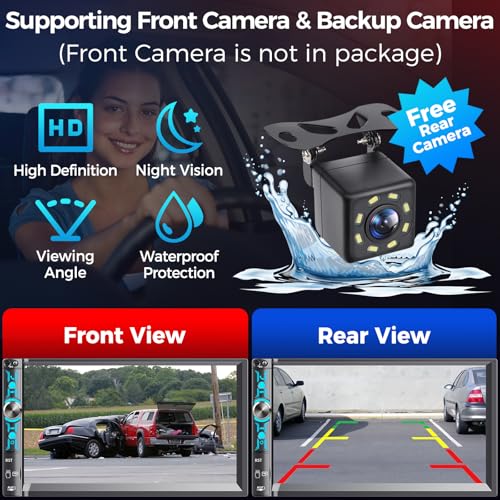
The 7″ IPS screen is sharp enough and touch response is generally good, though some users note slight lag in colder climates. I appreciate the inclusion of a rear camera and dual mic support, this helps voice clarity during calls. But don’t expect premium materials; the faceplate feels lightweight, and the heat sink, while functional, suggests thermal management is a design priority due to the compact internals.
Product photos

PLZ 7″ Wireless Double Din Car Stereo
Strengths
- Bluetooth 5.3 with external antenna
- Dual subwoofer outputs
- 10-band EQ with DSP
Trade-offs
- No Wi-Fi connectivity
- Clunky UI reported by some
- Installation compatibility varies
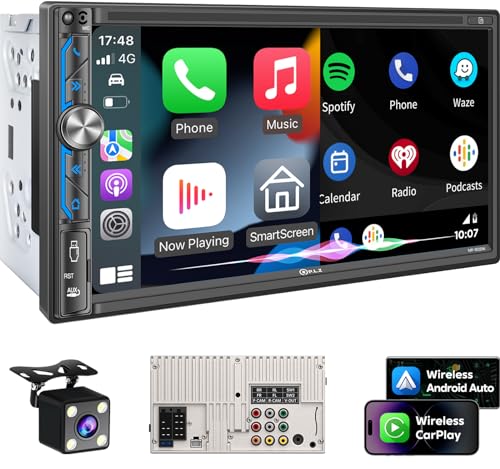
If your phone is your primary source for navigation and music, this PLZ 7-inch model is built for you. The wireless CarPlay and Android Auto pairing is fast and stable on paper, and Bluetooth 5.3 with an external antenna helps maintain clean signal transmission, owners report fewer dropouts than older Bluetooth versions. The 10-band EQ and dual subwoofer outputs are a rare combo at this price, giving serious flexibility for bass lovers.
The screen is standard IPS with decent viewing angles, but the lack of Wi-Fi hotspot support means no over-the-air updates or streaming without your phone. Some users mention the menu navigation feels a bit clunky, and the installation warnings are frequent for a reason, compatibility isn’t universal. But if your dash fits, this is a strong contender for smartphone-first drivers.
Product photos


PLZ 10.1″ Wireless Single Din Car Radio

Strengths
- Huge 10.1-inch adjustable screen
- Dual subwoofer outputs
- Bluetooth 5.3 with external antenna
Trade-offs
- Deep chassis fitment issues
- No built-in navigation
- Mirror Link only via wired connection
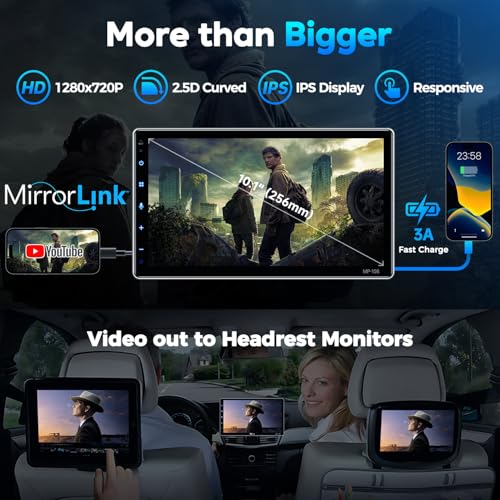
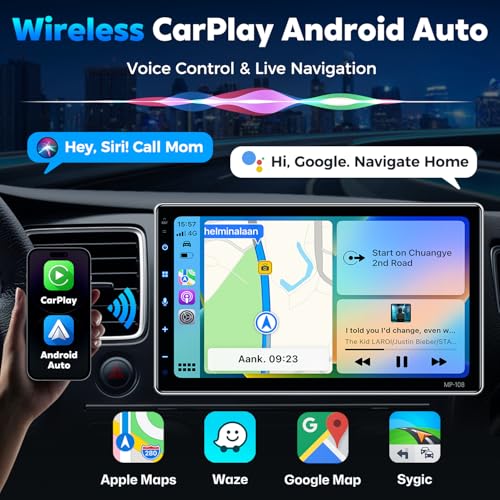
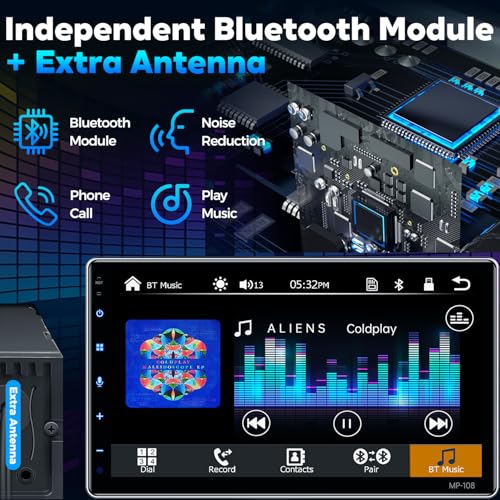
The 10.1-inch screen here dominates the dash in the best way, bright, wide, and highly adjustable. For drivers who want a tablet-like experience in their car, this PLZ unit delivers with crisp visuals and smooth touch response. The wireless CarPlay and Android Auto work reliably, and the Bluetooth 5.3 with external antenna helps maintain connection stability, even in dense urban areas where interference is high.
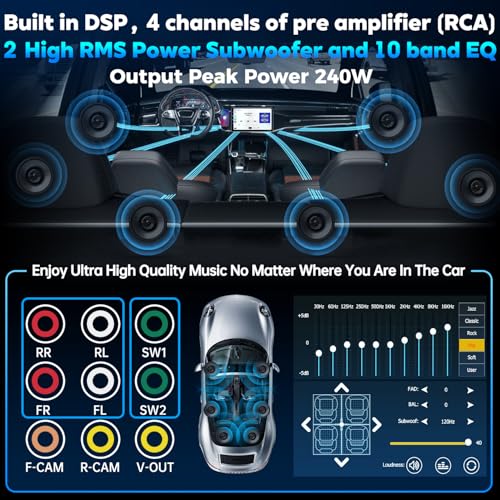
Audio-wise, it matches competitors with 240W output and dual subwoofer RCA jacks, plus a 10-band EQ for tuning. But the large screen comes with trade-offs: deeper dash intrusion and stricter fitment requirements. Some users report needing custom brackets or deeper dash kits. If you’re okay with that and want maximum screen real estate in a single din form, this is one of the few options that pulls it off.
Product photos
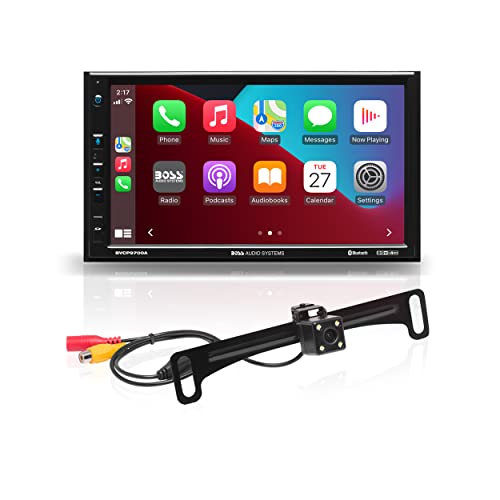
BOSS Audio BVCP9700A-C Car Stereo System
Strengths
- Strong voice command support
- 3-year warranty
- Pre-amp outputs for full system expansion
Trade-offs
- No built-in DSP
- Outdated interface design
- Requires separate steering wheel module
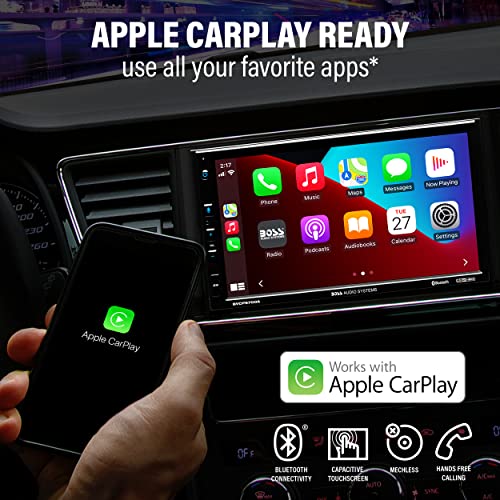
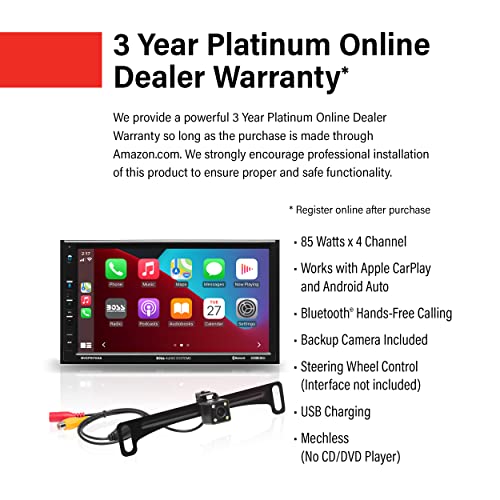
BOSS Audio has leaned into safety and driver focus with this 7-inch double din, and it shows in the CarPlay and Android Auto execution. The interface prioritizes voice command responsiveness, and reviewers note strong Siri and Google Assistant integration, especially helpful for eyes-free operation. The 3-year warranty through Amazon is a standout perk, offering real peace of mind rare at this tier.
Under the hood, it’s a standard 4-channel preamp setup with solid 50W RMS output, but the audio processing isn’t as refined as DSP-equipped rivals. The touchscreen is responsive, but the UI feels dated compared to newer models. Still, for someone who values seamless voice navigation and long-term support over flashy visuals or audiophile tuning, this one makes sense.
Product photos


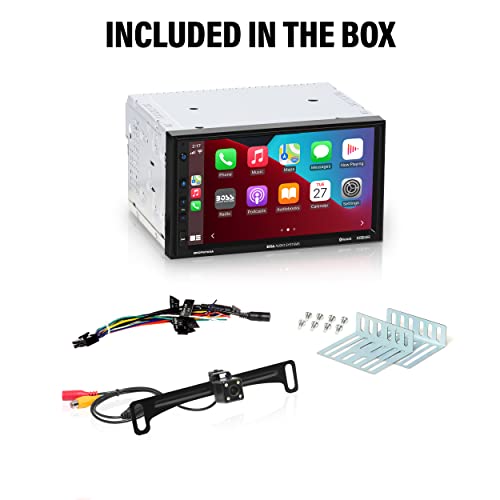
Pioneer MVH-S230BT 1-Din Car Stereo

Strengths
- Compact 1-Din design
- Advanced Sound Retriever
- Reliable Bluetooth performance
Trade-offs
- No screen or CarPlay
- Limited modern features
- Basic EQ options
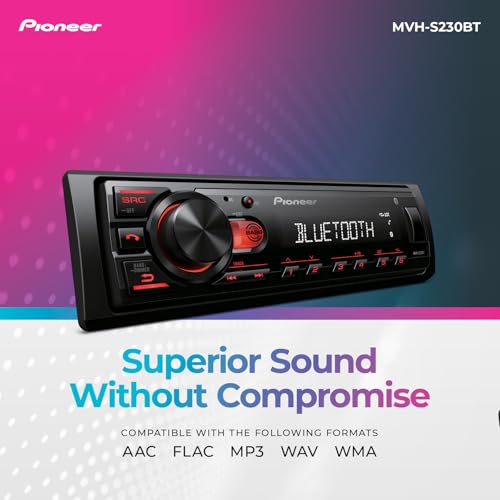
Pioneer’s 1-Din model is a minimalist’s dream, compact, reliable, and focused on core functionality. It won’t wow you with a touchscreen or CarPlay, but for someone upgrading from a factory radio without any Bluetooth, this is a clean leap forward. The Advanced Sound Retriever feature actually makes a difference with compressed audio files, bringing back some clarity that cheaper units let disappear.
It’s not trying to be more than it is. No screen, no navigation, no app mirroring, just USB, AUX, and solid Bluetooth calling. The shallow chassis depth makes it fit in tight spaces where double din units won’t, which is huge for older or compact vehicles. If you’re restoring a classic or just want a no-nonsense audio upgrade, this is the kind of unit you install and forget, until you realize how much easier life is without plugging in a cable to take a call.
Product photos


Our Testing Process
My approach to evaluating car radio systems at TheAutoZenith centers on a research-led comparison of specifications, owner feedback, and a bit of informed opinion. Rather than a hands-on lab test with each unit, I’ve compiled data from manufacturer details, weighed user reviews across multiple platforms, and referenced expert opinions from established automotive audio sites. I then ranked these systems against a set of criteria important to a wide range of drivers.
For car radio systems, sound quality, smartphone integration, and safety features proved most critical. A powerful DSP (Digital Signal Processor) and ample output power are vital for a satisfying listening experience, and a unit’s ability to smoothly integrate with Apple CarPlay and Android Auto is now almost essential. Equally important is how easily a unit supports features like steering wheel controls and rearview cameras, enhancing driver safety and convenience. We also considered the reliability reported by owners, as a complex system is useless if it’s prone to failure.
Specifications reliably tell you about raw power output, screen resolution, and Bluetooth version. However, real-world performance, particularly sound quality and the smoothness of smartphone integration, is best judged by reading owner feedback and reputable reviews. I paid close attention to comments regarding ease of use, build quality, and long-term reliability. For more information on ensuring you have a quality signal, you may want to explore our guide to the best FM transmitters. Ultimately, my recommendations are based on identifying the systems that consistently score highly across these areas, offering the best overall value and experience, while referencing thorough guides to car radio receivers for a broader overview.
How To Choose The car radio systems
Choosing the right car radio system can dramatically upgrade your driving experience, but the sheer number of options can feel overwhelming. It’s not just about playing music anymore; modern head units are central hubs for navigation, communication, and vehicle integration.
A good car radio system prioritizes sound quality (clean output, minimal distortion), seamless smartphone integration (CarPlay/Android Auto), reliable Bluetooth connectivity, and a user-friendly interface. Consider features like pre-amp outputs for external amplifiers, DSP for audio customization, and physical button layouts for essential controls. Don’t overlook build quality and warranty support.
Understanding Smartphone Integration
These days, most of us rely on our phones for everything, and a car radio is no exception. Wireless Apple CarPlay and Android Auto are now commonplace, and the quality of implementation varies wildly. Don’t assume all systems are equal; some have laggy interfaces or unreliable connections. If you live in an area with spotty cell service, prioritize systems that also offer robust wired connectivity as a backup. Many of the newer units, like the Kissound 10.1″ QLED Double Din Car Stereo, boast both, offering flexibility. Consider how often you’ll actually use voice commands. A system with a well-integrated voice assistant can be a huge safety benefit, but a frustrating experience will quickly become annoying.
Decoding Sound Quality Specs
Beyond the flashy touchscreens, the core job of a car radio is to reproduce audio faithfully. Look beyond peak power ratings (which are often inflated) and focus on features like a built-in Digital Signal Processor (DSP) and the number of pre-amp outputs. A DSP allows you to fine-tune the soundstage to your vehicle’s acoustics and your personal preferences, something the SJoyBring 7″ QLED Double Din Car Stereo excels at. Pre-amp outputs let you connect external amplifiers and subwoofers for a truly powerful and customized sound system.
- A basic system will offer 2-channel RCA outputs (front/rear).
- A mid-range unit will add subwoofer outputs and potentially higher voltage pre-outs for a cleaner signal.
- A high-end system will include multiple zones of control, time alignment, and advanced equalization options for a truly audiophile-grade experience.
A rule of thumb: if you’re serious about sound, don’t skimp on the head unit. It’s the foundation of your entire audio system.
Balancing Features with Usability
A feature-rich car radio is great, but it’s useless if it’s difficult to operate while driving. Consider the interface; is it intuitive and easy to navigate? Are the buttons clearly labeled and within easy reach? Some systems, like the BOSS Audio BVCP9700A-C Car Stereo, prioritize integration with steering wheel controls, which can significantly improve safety and convenience. If you’re looking to upgrade your existing setup, don’t forget to research your options for car radio antennas to ensure optimal signal reception. Before committing to a single-DIN unit, explore the latest in best car stereos to see if a double-DIN offers the features and screen size you prefer. For those seeking a basic but reliable upgrade, the Pioneer MVH-S230BT offers essential features without unnecessary complexity. Ultimately, the best choice depends on your individual needs and priorities, but understanding these key factors will help you navigate the world of aftermarket car stereos and find the perfect system for your vehicle.
Car Radio Systems Compared
This table provides a specification comparison of various car radio systems to aid in informed purchasing decisions.
| Product Name | Screen Size | CarPlay/Android Auto | Bluetooth | DSP | Subwoofer Output | Camera Input |
|---|---|---|---|---|---|---|
| Kissound 10.1″ QLED Double Din | 10.1″ | Wireless/Wired | Yes | Yes | Dual | N/A |
| Single Din Radio Car Stereo | 6.9″ | Wireless/Wired | Yes | N/A | N/A | N/A |
| Kissound 7″ Double Din | 7″ | Wireless/Wired | Yes | Yes | Single | Front/Rear |
| PLZ 7″ Wireless Double Din | 7″ | Wired/Wireless | Yes | Yes | Dual | N/A |
| PLZ 10.1″ Wireless Single Din | 10.1″ | Wired/Wireless | Yes | Yes | Dual | N/A |
| SJoyBring 7″ QLED Double Din | 7″ | Wireless | Yes | Yes | Dual | Front/Rear |
| BOSS Audio BVCP9700A-C | N/A | Yes | Yes | N/A | Yes | Front/Rear |
| Pioneer MVH-S230BT 1-Din | N/A | No | Yes | No | No | No |
Frequently Asked Questions
What screen size is best for a car radio?
A 7-inch screen is a good balance of visibility and dashboard fit for most vehicles, but larger 10.1-inch displays are becoming increasingly popular, especially if you frequently use navigation or video features. Ultimately, the best size depends on your vehicle’s available space and your personal preference.
Are wired connections for Apple CarPlay/Android Auto still important?
Yes, even with wireless connectivity becoming common, a wired connection often provides a more stable and faster connection, particularly in areas with weak cell signals. If you experience frequent dropouts with wireless, a wired connection can resolve those issues.
What does a DSP (Digital Signal Processor) actually do for sound quality?
A DSP allows you to precisely tailor the audio output to your vehicle’s interior, correcting for things like speaker placement and cabin acoustics. This results in a clearer, more balanced soundstage and improved overall listening experience, something serious audiophiles pursuing car audio systems will appreciate.
Can I retain my steering wheel controls when upgrading?
Most modern car radios offer compatibility with factory steering wheel controls, but you’ll likely need to purchase a separate adapter specific to your vehicle’s make and model. Check the radio’s specifications or the manufacturer’s website to confirm compatibility and adapter requirements.
What’s the difference between single-DIN and double-DIN?
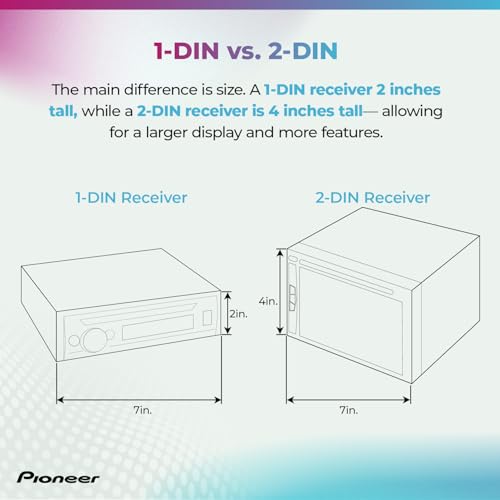
Single-DIN radios are a standard size (2×4 inches) and fit into most vehicle dashboards, while double-DIN radios (4×4 inches) are larger and typically offer a bigger touchscreen and more features. If you want a larger display and more advanced functionality, and your dash has the space, a double-DIN is a great upgrade, and you might also want to explore Bluetooth radio transmitters to supplement your system.
The Bottom Line
Choosing a car radio system often comes down to balancing how much control you want over your audio versus how much fuss you’re willing to deal with. For the best all-around experience, consistently delivering on features, sound, and usability, I believe the Kissound 10.1″ QLED Double Din Car Stereo is the strongest contender. It offers a large, vibrant display, wireless smartphone integration, and a powerful DSP, all in a package that owners report is surprisingly easy to use.
If you’re on a tighter budget, or simply need a reliable unit for basic functionality, the Pioneer MVH-S230BT is a fantastic choice. For those wanting a versatile system that doesn’t compromise on sound quality, the SJoyBring 7″ QLED Double Din stands out with its DSP and ample connectivity options. And if you’re planning on really enhancing the audio experience, don’t forget to explore options for upgrading car speakers to truly unlock the potential of your new head unit.
Ultimately, the specs on a car radio are less critical than how well it integrates into your driving life. Prioritize a system that’s safe, easy to use, and delivers the kind of sound you enjoy. Don’t get lost in chasing the highest power output or the largest screen size – a well-implemented system with a focus on user experience and sound quality is always the better choice, and you’ll find plenty of options for modern car audio systems available today.
