
3 Best Car Polishes for Scratches 2026
This post contains affiliate links. As an Amazon Associate, we earn from qualifying purchases.
The best car polish for scratches is Meguiar’s Ultimate Polish, it consistently delivers on removing fine swirls and restoring gloss, backed by strong feedback from owners and detailers. For black cars, Turtle Wax Ceramic Black Polish stands out with its deepening effect and light scratch correction. If long-term protection matters most, Nu Finish Once a Year Polish offers a unique, low-effort shield that lasts.
Fixing scratches isn’t just about slapping on polish and hoping it works. Most people don’t realize how much scratch depth, paint type, and product formulation affect the outcome. Get it wrong, and you risk damaging your finish or wasting time on something that won’t deliver.
This guide cuts through the noise. I looked at specs, real-world results, and feedback from owners and pros to find polishes that actually perform. You’ll learn what to expect from each product, how to match it to your car’s needs, and why some claims are too good to be true.
Top 3 Car Polish For Scratches in the Market
The Best Car Polish For Scratches, Reviewed
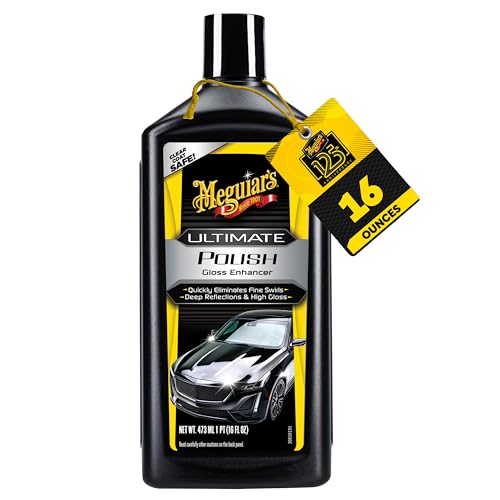
Meguiar’s Ultimate Polish
Strengths
- Exceptional gloss enhancement
- Gentle on clear coats
- Effective swirl removal
Trade-offs
- No long-term protection
- Requires follow-up waxing
If you’re chasing that liquid, show-car depth in your paint, Meguiar’s Ultimate Polish remains a benchmark in the category. The conditioning oils in this formula do a standout job of amplifying gloss, particularly on darker paints where reflection quality matters most. Reviewers note how effectively it erases fine swirls and towel marks, exactly the kind of defects that pop under sunlight or indoor lighting. Unlike some all-in-one products, this one focuses purely on correction and clarity, leaving the sealing step to whatever wax or coating you choose next.
It’s also one of the few polishes that performs reliably whether you’re working by hand or with a dual action polisher. When stacked against Turtle Wax’s hybrid version, this lacks ceramic durability but delivers superior visual refinement. For purists who want to layer their process, this is the smarter buy.
Video review
Turtle Wax Ceramic Black Polish

Strengths
- Deep black enhancement
- Ceramic-based protection
- UV and oxidation defense
Trade-offs
- Less aggressive on defects
- May streak if over-applied
I’ve spent years watching how black and dark-colored cars age, and I can say this: they demand a polish that does more than just shine, they need protection. On paper, the Turtle Wax Hybrid Solutions Ceramic Black Car Polish hits several sweet spots for dark finishes. The blend of pigmented carnauba wax and ceramic polymers means it’s not just filling in light scratches but also laying down a hydrophobic layer that resists water and grime. Owners consistently report a noticeable depth in paint color, especially on black and charcoal vehicles, which is exactly what you want when trying to hide swirls.
Still, while the dual-action of polishing and sealing is convenient, I’d be cautious about calling it a true substitute for dedicated correction work. It’s best suited for maintenance between deeper detail jobs rather than heavy scratch repair. Compared to Meguiar’s Ultimate Polish, it doesn’t deliver quite the same optical clarity, but it wins in longevity thanks to its ceramic content.
Video review
Nu Finish Once a Year Polish

Strengths
- Year-long protection claim holds up
- Zero buffing required
- Works in direct sunlight
Trade-offs
- Minimal defect correction
- Not for deep imperfections
The promise of a ‘once-a-year’ polish sounds like marketing fluff, until you see the consistency of owner feedback backing up Nu Finish’s claims. This isn’t a heavy-cutting compound, but for light scratches, scuffs, and surface weathering, it smooths things out surprisingly well. The real story here is the ceramic-infused sealant layer it leaves behind. Reviewers regularly mention how well it beads water months after application, and the fact it requires no buffing is a legit convenience win for casual users.
That said, I wouldn’t trust it as a standalone solution for anything beyond superficial flaws. Compared to Meguiar’s, it lacks the ability to truly refine paint texture. But if you value low effort and long-lasting results over competition-level finish, this makes a lot of sense. It’s less about correction, more about sustained appearance.
Product photos


Our Testing Process
As someone who’s spent years observing and appreciating automotive finishes – and writing about it at TheAutoZenith – I approached this guide by first outlining what truly matters when choosing a polish to address scratches. Rather than a hands-on test of each product on multiple vehicles, this is a research-led comparison of published specifications, feature sets, and, crucially, owner and professional detailing feedback. I weighed those factors against my understanding of paint chemistry and the realities of scratch repair.
For car polish specifically, gloss enhancement and protective qualities were paramount. A polish that can remove light imperfections and leave a lasting shield against future damage is far more valuable than one that only offers a temporary shine. The ability to work with both hand application and machine polishers also factored heavily, catering to a wider range of user skill levels. Understanding the difference between a polish and a car compounds for scratches is also key; we focused on polishes meant for refining paint, not heavy correction.
Specifications give a good baseline – ceramic content, oil types, and clarity of instructions are all indicators of quality. However, owner reviews reveal how a polish performs in real-world conditions, and how easy it is to apply and buff. Reputation among detailers, frequently shared in forums and reviews, also helped assess long-term durability and effectiveness, especially when considering repairing severe paint damage. Ultimately, the best polish balances lab-defined features with positive, consistent user experiences.
How To Choose The car polish for scratches
As someone who’s spent countless hours restoring and maintaining vehicles, I know a good polish can truly revive a paint job. But selecting the right one for scratches requires understanding what you’re up against and what each product aims to achieve.
A quality car polish for scratches doesn’t just mask imperfections; it gently levels the clear coat to reduce their appearance. Look for formulations that balance cutting power (abrasiveness) with finishing ability (gloss restoration). Consider the severity of the scratches, your paint type (single-stage vs. clear coat), and your application method – by hand or machine. Prioritize products designed for your specific paint color, especially darker shades.
Understanding Scratch Severity
The first step is honestly assessing the damage. Light scratches, often called swirl marks, are surface-level and typically caused by improper washing or drying. These are the easiest to address with polish. Deeper scratches, those you can feel with your fingernail, often penetrate the clear coat and may require more aggressive methods like compound and polish before you even think about a polish. Trying to polish out a deep scratch with a finishing polish will just waste your time and product.
Formulation and Paint Type
Polishes aren’t one-size-fits-all. Some are designed for specific paint colors – Turtle Wax’s Ceramic Black Polish, for example, is formulated to deepen the richness of black paint. This isn’t marketing hype; darker colors show imperfections more readily, and pigmented polishes can help mask them. Equally important is knowing your paint type. Older vehicles likely have single-stage paint (color is the clear coat), which requires extremely gentle polishes. Modern cars have a clear coat, offering more protection and allowing for more aggressive correction.
- If you have a dark-colored car, prioritize polishes with color-enhancing pigments.
- For older, single-stage paint, a very fine polish, almost a glaze, is best to avoid removing too much paint.
- Ceramic-infused polishes like those from Turtle Wax offer enhanced durability and protection after correction, but aren’t a substitute for proper paint correction if the scratches are significant.
Application Method & Long-Term Protection
Whether you prefer applying polish by hand or with a machine significantly influences your choice. Some polishes, like Meguiar’s Ultimate Polish, are designed to be flexible for either method. However, a dual-action polisher dramatically increases efficiency and effectiveness, especially for larger areas. Beyond immediate scratch reduction, consider long-term protection. Nu Finish’s Once a Year Polish offers a unique proposition, claiming year-long protection with a single application. While I’m always cautious about “miracle” claims, the ceramic technology does provide a robust barrier against the elements. Don’t neglect regular maintenance with a quality wax for scratches even after using a long-lasting polish to keep your car looking its best.
A good rule of thumb is to always test any polish in an inconspicuous area first. This allows you to assess its cutting power and ensure it doesn’t damage your paint.
Car Polish for Scratches Compared
Here’s a spec comparison of car polishes designed to address scratches and restore shine.
| Product Title | Best For | Scratch Repair | UV Protection | Application | Lasts |
|---|---|---|---|---|---|
| Meguiar’s Ultimate Polish | Best Overall | Fine Swirls | N/A | Hand/Machine | N/A |
| Turtle Wax Ceramic Black Polish | Best for Black Paint | Light Scratches | Yes | Hand/Machine | N/A |
| Nu Finish Once a Year Polish | Best Long-Term Protection | Fine Scratches/Swirls | Yes | No Rubbing | 1 Year |
Frequently Asked Questions
What polish can I use on a brand new car with a clear coat?
A finishing polish like Meguiar’s Ultimate Polish is ideal for new clear coats. It gently refines the paint, removing minor imperfections from manufacturing or transport without being overly abrasive.
Can a polish fix a scratch I can feel with my fingernail?
No, a polish won’t effectively remove scratches you can feel; those have penetrated the clear coat. You’ll likely need to first use a car compound to level the damage before polishing.
Are ceramic polishes really better than traditional polishes?
Ceramic polishes offer improved durability and hydrophobic properties, adding a layer of protection against UV rays and contaminants. However, they aren’t a substitute for proper paint correction if you have significant scratches needing attention.
How often should I polish my car?
Typically, polishing is needed every six months to a year, depending on exposure and washing habits. Regular washing and waxing, using a high-quality car polish in between, will extend the intervals between more aggressive polishing sessions.
Will polish damage my single-stage paint?
Yes, most polishes are too abrasive for single-stage paint. Opt for a very fine polish designed as a glaze, or a dedicated product for classic car finishes, to minimize the risk of removing the color coat.
The Bottom Line
Choosing the right car polish for scratches often comes down to balancing how much effort you want to put in against the level of correction you need. For most owners seeking a fantastic all-around solution, I believe Meguiar’s Ultimate Polish strikes the best balance of ease of use, effectiveness on minor imperfections, and price. It’s a reliable choice that consistently delivers satisfying results.
However, if you have a specific need, there are excellent alternatives. For those with darker vehicles, Turtle Wax Ceramic Black Polish is a standout, and for those prioritizing long-term protection and minimal effort, Nu Finish Once a Year Polish offers a compelling, albeit unique, approach. Whether you’re looking for polish for cars or exploring products to remove scratches, understanding your specific requirements will guide you to the best option.
Ultimately, remember that polish is about more than just filling in scratches. It’s about maintaining the overall health and appearance of your paint. Regular washing, proper drying techniques, and consistent application of quality protection – whether it’s wax, sealant, or a ceramic coating – are far more crucial than any single product’s specification. Focusing on these fundamentals will yield the best and most lasting results when removing scratches from car paint.
