
9 Best Car Compound and Polish of 2026
This post contains affiliate links. As an Amazon Associate, we earn from qualifying purchases.
The Menzerna 3-Step Polishing System is the best overall for serious paint correction, delivering unmatched cut and gloss. For a more accessible two-step solution, the Chemical Guys C4 & P4 Kit offers excellent results with greater ease of use. If you’re on a budget but still want solid performance, the Turtle Wax Clean Cut Compound gets the job done for light defects.
Most drivers don’t realize how much their car’s finish can deteriorate from sun exposure, washing mistakes, or just years of wear. Swirls, scratches, and hazing dull even the most beautiful paint, restoring it takes more than wax. This guide cuts through the noise by focusing on real-world performance, based on specs, owner feedback, and what detailers actually use. I looked at cutting power, finish quality, and how well each product fits into a proper correction workflow, whether you’re using a machine or working by hand.
Top 9 Car Compound And Polish in the Market
The Best Car Compound And Polish, Reviewed
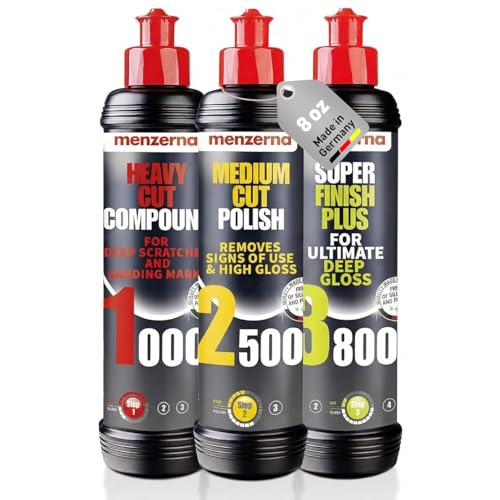
Menzerna 3-Step Polishing System
Strengths
- Professional-grade results
- Precise step progression
- Exceptional gloss
Trade-offs
- Steeper learning curve
- Smaller bottle sizes
This 3-step German-engineered set is why I keep coming back to Menzerna for serious work. HCC1000 starts strong on light scratches, MCC2500 refines without dulling, and 3800 delivers that mirror-like depth that cheaper polishes only dream of. It’s a favorite among pros for a reason, each product is optimized for its role, not compromised for marketing.
Owners consistently report fewer passes and cleaner finishes compared to mainstream brands. It’s not the easiest for beginners, but the results are undeniable. In my view, this is the best overall system here if you value precision and finish quality over convenience.
Video review
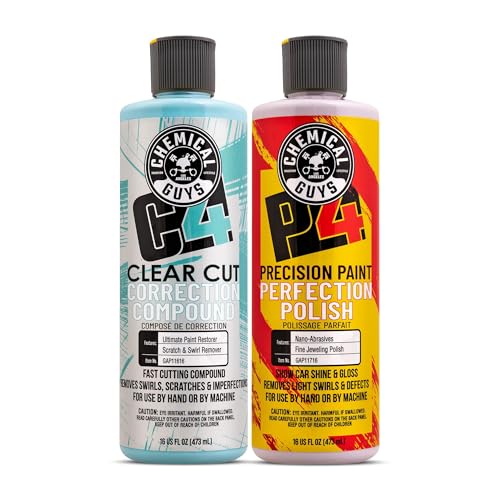
Chemical Guys C4 & P4 Kit
Strengths
- Strong cut with clean finish
- Easy two-step process
- Safe on coatings
Trade-offs
- Less versatility than 4-step kits
- P4 may not refine enough for some
This two-step combo is clean, simple, and effective, C4 cuts hard on scratches and oxidation, then P4 polishes it out to a deep, reflective shine. It’s positioned as a user-friendly alternative to pro systems, and owner feedback supports that: people get great results without needing expert technique.
The formulas play well with DA polishers and are safe on modern clear coats and ceramic layers. Compared to the V Line kit, it’s less granular but easier to use. I’d recommend this as the best middle ground between performance and accessibility for two-step correction.
Video review
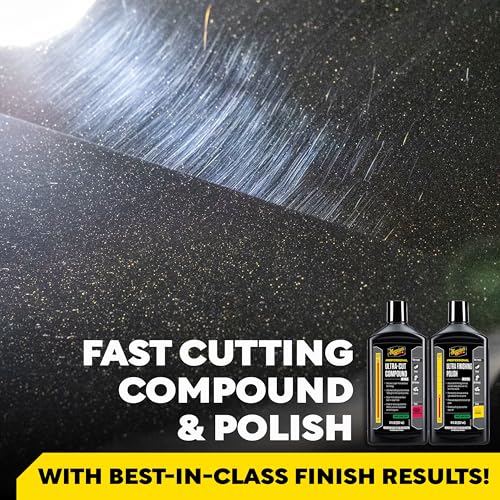
Meguiar’s Mirror Glaze Bundle

Strengths
- Proven two-step system
- Strong defect removal
- Deep, lasting gloss
Trade-offs
- M105 can be messy
- Requires follow-up polish
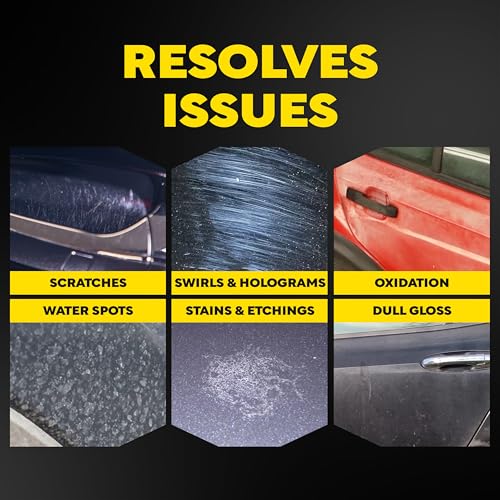
This combo gives you both M105 Ultra-Cut Compound and M205 Ultra Finishing Polish, the classic two-step punch from Meguiar’s pro line. The M105 tackles sanding marks up to 1200 grit and heavy swirls, while the M205 follows up with swirl-free gloss. Together, they cover a lot of ground for enthusiasts tackling full corrections at home.
Owners praise the bundle for being predictable and reliable, especially when used with a dual action polisher. It’s not the most advanced system out there, but for the price, it punches above its weight. I’d recommend this over single bottles if you’re doing a full panel rehab.
Product photos

3D One Hybrid Scratch Remover

Strengths
- True one-step correction
- Zero-dust formula
- Made in USA
Trade-offs
- Less aggressive than dedicated compounds
- Higher price point
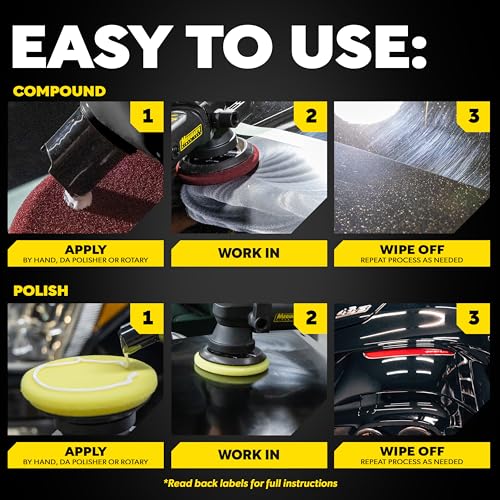
This hybrid formula stands out because it genuinely bridges the gap between compound and polish better than most one-step products. On paper, it removes light scratches and swirls while delivering a mirror-like gloss, owners confirm it brings back faded paint with minimal effort. The zero-dust claim holds up in feedback, making cleanup easier than traditional compounds.
It’s not magic, deep defects still need staging, but for a single bottle solution, it performs remarkably well. Compared to Chemical Guys VSS, it finishes slightly better and cuts just as fast. My recommendation? This is the smarter buy if you want simplicity without sacrificing too much correction.
Product photos

Chemical Guys VSS One-Step
Strengths
- Balanced cut and finish
- Silicone free
- Works on ceramic coatings
Trade-offs
- Not for heavy damage
- Can leave light haze
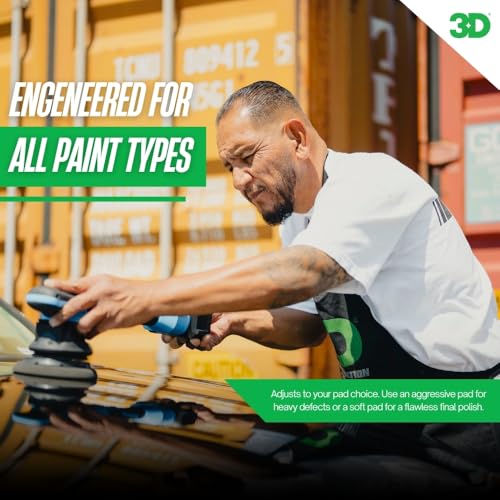
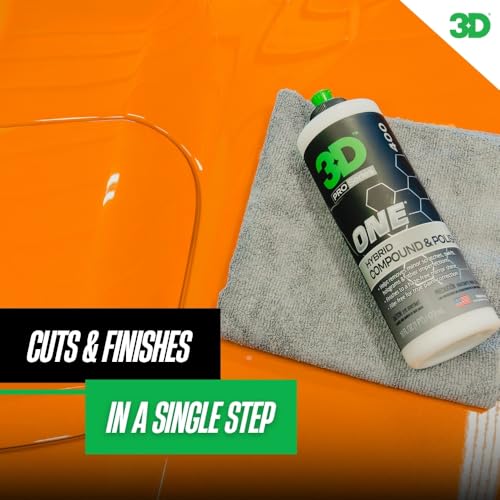
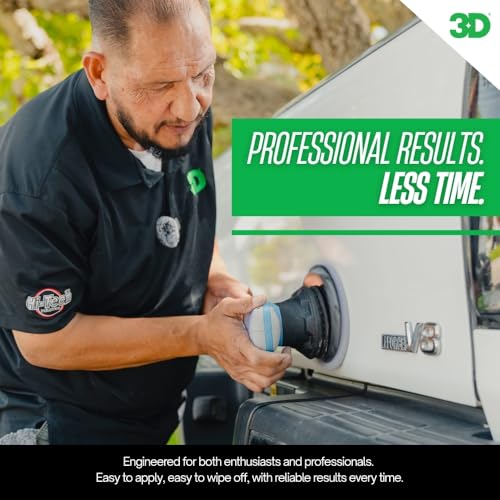
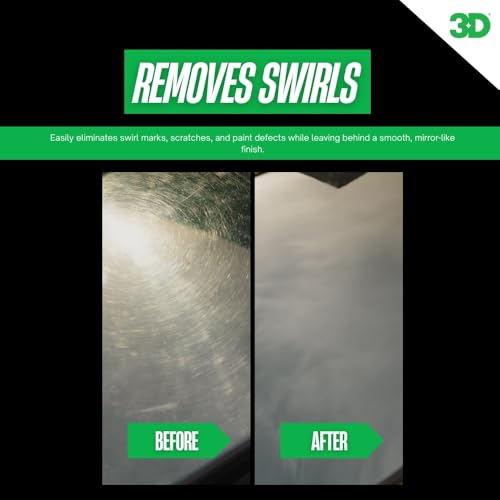
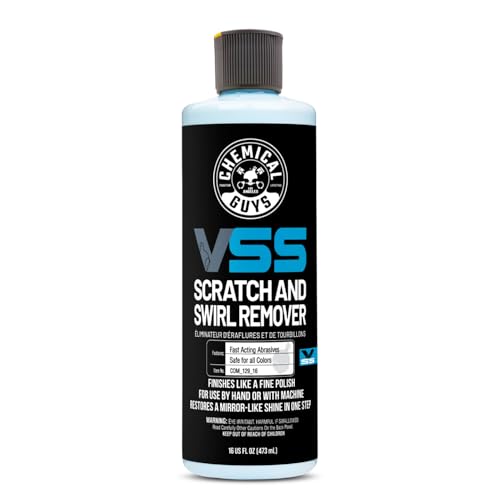
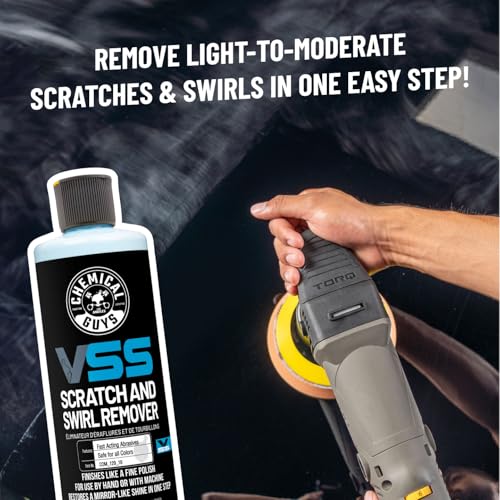
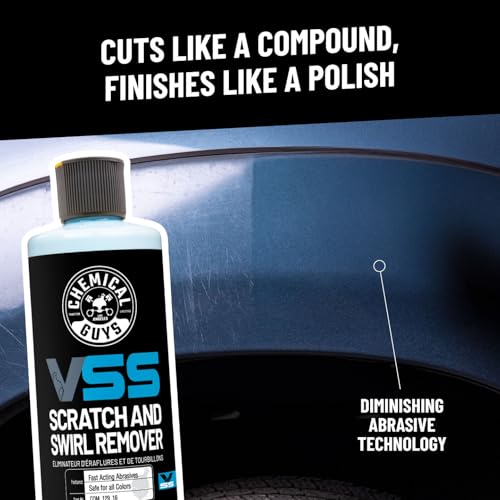
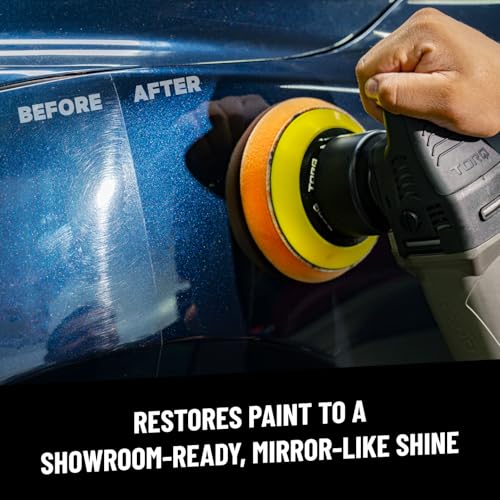
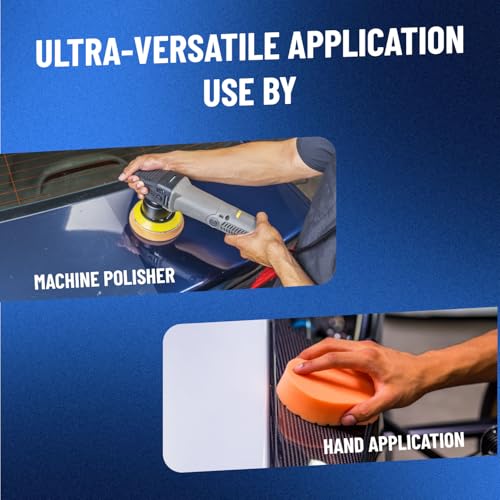
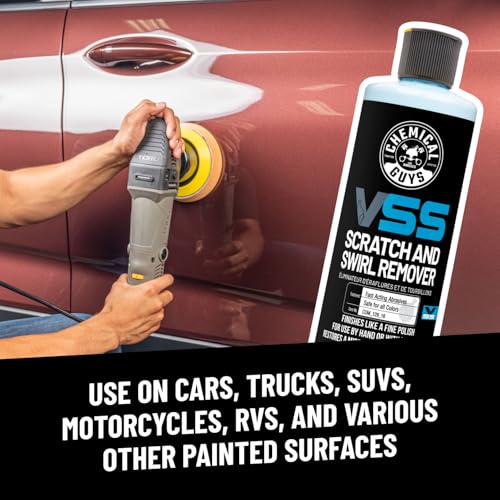
If you’re looking for a single product that balances cut and finish without stepping into aggressive territory, this one delivers. The VSS formula is designed to tackle light to moderate swirls and scratches while still leaving behind a glossy surface, no second polish needed in many cases. Reviewers note it works cleanly on ceramic-coated and freshly painted panels, thanks to its silicone-free, body-shop-safe chemistry.
Compared to true two-step systems, it doesn’t go as deep, but for daily drivers or quick refresh jobs, it’s efficient. I’d pick this over a multi-stage kit if time matters more than absolute perfection.
Product photos
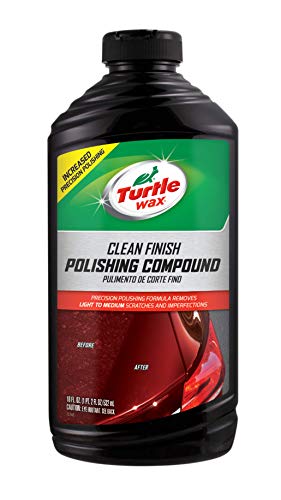
Turtle Wax Clean Cut Compound
Strengths
- Very affordable
- Silicone free
- Easy to apply
Trade-offs
- Inconsistent finish
- Limited cutting ability
This is the budget basement of paint correction, and honestly, it does what it promises at this price. It’ll take care of light swirls and minor oxidation, especially when worked by hand. The silicone-free formula means it won’t interfere with future coatings, which is a win for shops or prep work.
But let’s be real: it lacks the refinement of pricier options. Reviewers note it can smear or dry too fast, and it doesn’t cut as cleanly under a machine. I’d use this only if you’re on a tight budget or doing touch-ups, not a full respray-level job.
Product photos
Meguiar’s M105 Ultra Cut
Strengths
- Aggressive defect removal
- Cuts through oxidation
- Clear coat safe
Trade-offs
- Leaves haze
- Requires finishing step
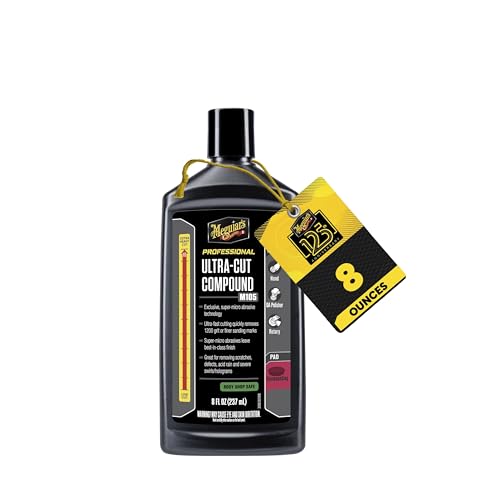
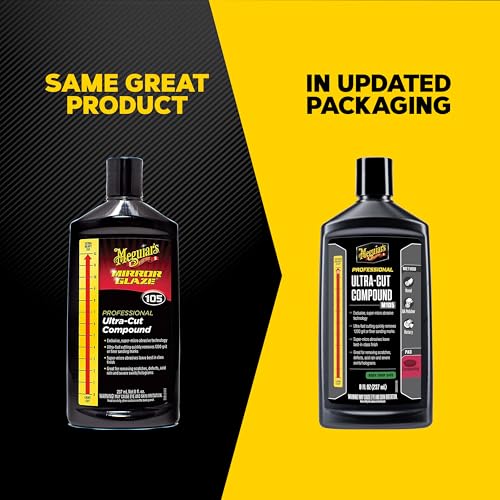
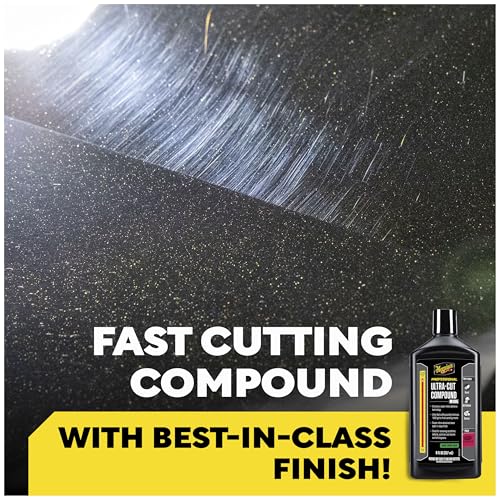
When you need serious cutting power without instantly trashing your clear coat, M105 is a go-to. This is the heavyweight in Meguiar’s lineup, engineered to erase deep swirls, oxidation, and even light sanding marks. Its micro-abrasive tech helps minimize new marring, which is rare at this level of cut.
It’s not subtle: reviewers say it leaves a hazy finish that must be followed by a finer polish like M205. But for pros or experienced users tackling real damage, that’s expected. I’d choose this over lighter compounds when starting with rough paint.
Product photos

Meguiar’s Ultimate Polish
Strengths
- High-gloss finish
- Safe on clear coats
- Removes fine swirls
Trade-offs
- Not for heavy defects
- Limited cutting power
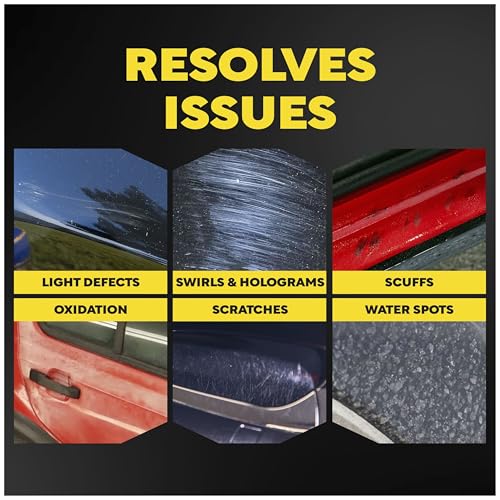
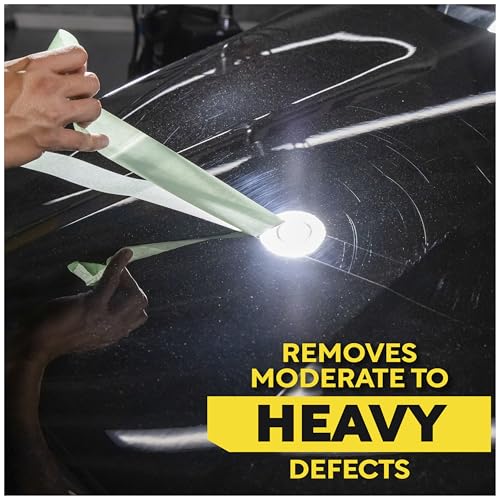
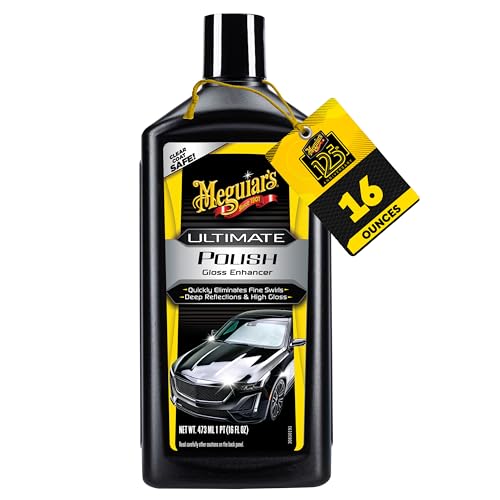
This is the kind of polish I’d reach for when the paint’s already smooth but just needs that final pop before waxing. On paper, it’s not a defect remover, it’s a high-gloss finisher with conditioning oils that deepen reflections, especially on black or dark finishes where gloss really shows. Owners consistently report it erases fine swirls and leaves a slick, glassy surface, which tracks with its micro-abrasive formulation.
It’s not meant to fix deep issues, but as a last step before protection, it shines. I’d pair this with a heavier compound first if you’re correcting anything beyond light marring.
Product photos



Chemical Guys V Line Kit
Strengths
- Full correction range
- Clear labeling
- Professional results
Trade-offs
- Expensive upfront
- Overkill for light jobs
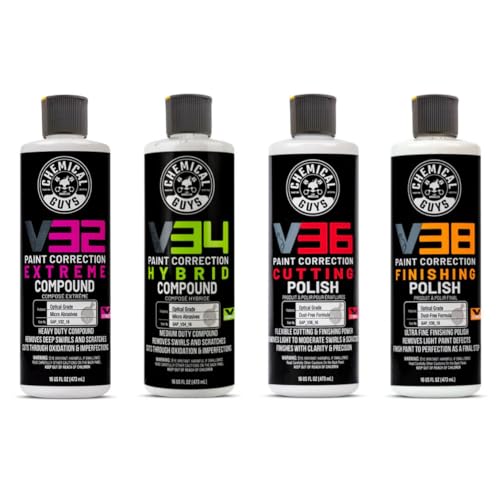
This four-bottle system is built like a pro’s toolkit, from heavy-cut V32 to ultra-fine V38. It’s designed to walk you from deep defect removal all the way to glass-smooth gloss, which makes it ideal for layered correction jobs. The progression is logical, and owners report excellent clarity on both dark and metallic finishes.
It’s overkill for light maintenance, but if you’re restoring an older car or prepping for ceramic coating, this kit has everything. Compared to the Meguiar’s bundle, it offers more granularity. I’d pick this over simpler kits when you need precise control over each stage.
Product photos

How We Chose These car compound and polish
My approach at TheAutoZenith is always rooted in understanding how things work, and car compounds and polishes are no different. Rather than a hands-on lab test, this was a research-led comparison of published specifications, features, and, crucially, owner and professional detailing reviews. I compared listed abrasive levels, chemical compositions, and intended uses, then weighed those against what users actually report about cut, finish, and ease of use. This process allowed me to build a picture of each product’s real-world performance.
For this category, cutting power and finish quality were the most heavily weighted factors. A compound needs to effectively remove defects, but leaving behind a marred surface isn’t acceptable. Equally important is the final polish; a truly show-worthy shine demands a product that refines the paint to a deep gloss. I also considered versatility – whether a product is suitable for hand application or requires a machine, and its compatibility with different paint types. Finding the best polishing products requires balancing these elements.
Specifications reliably tell you about abrasive size and composition, giving a clue to cutting power. However, owner feedback is vital for understanding how a product behaves in practice, especially regarding things like dust production, working time, and the potential for hazing. Professional reviews add another layer, confirming or challenging owner experiences and helping to identify products truly suited for more serious paint correction. For those dealing with existing damage, exploring effective car scratch removers is also crucial.
Choosing The Right car compound and polish
Finding the right products to restore your car’s paint can feel overwhelming. There’s a lot more to it than just grabbing something off the shelf.
A truly effective compound and polish system addresses paint defects at multiple levels. Prioritize products formulated with diminishing abrasives, meaning they start aggressive and finish fine. Consider the severity of your paint’s issues, light swirls need a gentler touch than deep scratches, and look for formulations safe for your vehicle’s clear coat. Finally, a quality product will offer a balance between cutting power and gloss enhancement.
Understanding Cut and Finish
The first thing to grasp is the difference between a compound and a polish. Compounds are abrasive; they level the clear coat to remove imperfections like scratches and oxidation. Polishes, on the other hand, refine the surface after compounding, removing micro-marring left by the compound and maximizing gloss. Many all-in-one products exist, but for significant correction, a dedicated two or three-step process will always yield better results. Don’t assume a heavier cut always means better; aggressive compounds can leave noticeable haze if not followed by a refining polish. If you’re new to paint correction, starting with a less aggressive compound and working your way up is always wiser.
Pad and Machine Compatibility
The compound or polish itself is only half the equation. The applicator – whether it’s a microfiber pad, a foam pad, or even your own elbow grease – significantly impacts the final outcome. Different pad types offer varying levels of cutting and finishing ability. For example, a wool pad paired with a heavy-cutting compound like Meguiar’s M105 is a powerful combination for severe defects, but it’s easy to burn through paint if you aren’t careful. Foam pads come in a range of densities and cuts, allowing for more controlled correction. If you’re exploring polish buffers for the first time, starting with a dual-action (DA) polisher is highly recommended; it’s much more forgiving than a rotary buffer.
Balancing Cost and Correction Needs
It’s tempting to go for the cheapest option, but remember you get what you pay for. A budget-friendly product like Turtle Wax Clean Cut Compound might be adequate for very minor swirl removal, but it won’t have the refinement or longevity of a professional-grade system. Here’s a quick guide to help you prioritize:
- Minor Swirls/Enhancement: A one-step product like Chemical Guys VSS One-Step is a reasonable choice.
- Moderate Defects (Swirls, Light Scratches): A two-step system (compound and polish) from brands like Chemical Guys or Meguiar’s will provide better results.
- Severe Defects (Deep Scratches, Oxidation): A three-step system, or a dedicated heavy-cut compound like Meguiar’s M105 followed by a polish and potentially a finishing polish, is essential for achieving a show-quality finish.
A good rule of thumb is to always test a small, inconspicuous area first. This allows you to evaluate the product’s cutting power and finishing ability on your paint before committing to the entire vehicle.
Ultimately, the “best” compound and polish depends on your skill level, the condition of your paint, and your desired outcome. Don’t hesitate to research and learn before you begin, and consider exploring more in-depth guides about compound polish to help you choose the right tools for the job. A little patience and the right products can dramatically transform your car’s appearance.
Car Compound and Polish Compared
This table provides a specification comparison of various car compound and polish products.
| Product Name | Best For | Steps | Cut Level | Finish Level | Safe for Ceramic? | Volume (oz) |
|---|---|---|---|---|---|---|
| Menzerna 3-Step Polishing System | Best Overall | 3 | Heavy/Medium/Fine | High | N/A | 8 (x3) |
| Chemical Guys C4 & P4 Kit | Best for Two-Step Correction | 2 | Medium/Fine | High | Yes | N/A |
| Meguiar’s Mirror Glaze Bundle | Best Value Kit | 2 | Heavy/Fine | High | Yes | N/A |
| 3D One Hybrid Scratch Remover | Best One-Step Polish | 1 | Medium | High | N/A | N/A |
| Chemical Guys VSS One-Step | Best Budget One-Step | 1 | Light/Medium | Medium | Yes | 16 |
| Turtle Wax Clean Cut Compound | Best Budget Compound | 1 | Light | N/A | N/A | N/A |
| Meguiar’s M105 Ultra Cut | Best Heavy Cutting Compound | 1 | Heavy | Medium | Yes | N/A |
| Meguiar’s Ultimate Polish | Best Finishing Polish | 1 | Fine | High | Yes | N/A |
| Chemical Guys V Line Kit | Best Professional System | 4 | Heavy/Medium/Fine/Fine | High | Yes | N/A |
Frequently Asked Questions
What grit sandpaper is equivalent to a heavy-cut compound?
A heavy-cut compound is roughly equivalent to 1500-2000 grit sandpaper. While not a direct comparison, both aim to remove significant paint imperfections, but compounds offer more control and refinement than abrasive sandpaper.
Can I use a compound on a relatively new car with no visible scratches?
Yes, you can, but it’s usually unnecessary. A very light compound followed by a polish can help remove minor imperfections accumulated during washing and drying, enhancing gloss, especially if you’re looking for the best car polish for a show-quality finish.
What’s the difference between a one-step, two-step, and three-step paint correction process?
A one-step process combines cutting and polishing into a single product. Two-step uses a compound to correct defects, followed by a polish to refine the finish. Three-step adds a final finishing polish for maximum gloss and swirl removal.
Are all compounds and polishes safe for every type of car paint?
Not all are. Some older formulas can damage single-stage paints or react poorly with certain clear coats. Always check the product label for compatibility and test in an inconspicuous area first, and if you’re unsure, consulting with a professional detailer is recommended.
How often should I compound and polish my car?
The frequency depends on how you care for your vehicle and the severity of the imperfections. Typically, compounding is needed only when deeper scratches or oxidation appear, potentially every 2-3 years. Polishing, to maintain gloss and remove minor swirls, can be done every six months to a year, alongside regular cleaning supplies to keep your car looking its best.
The Bottom Line
Ultimately, achieving a truly refined finish with car compounds and polishes comes down to balancing your budget with the severity of the paint’s condition. While a professional-grade system offers the deepest correction and longest-lasting results, the Menzerna 3-Step Polishing System stands out as the strongest overall performer, offering a complete solution for those serious about paint restoration. It provides the tools to tackle everything from heavier defects to final gloss enhancement.
For those seeking a more targeted approach, the Chemical Guys C4 & P4 Kit delivers excellent results for two-step correction, and the Meguiar’s Mirror Glaze Bundle provides a fantastic value for those looking to get into more serious detailing. If you’re primarily focused on light imperfections, the Chemical Guys VSS One-Step is a great choice, and for a truly budget-friendly option, the Turtle Wax Clean Cut Compound can address very minor swirl marks. Don’t forget to explore options for maintaining your results with the right detailing products!
At the end of the day, the specification sheets and cutting power ratings matter less than your technique and preparation. A thorough wash, careful masking, and proper pad selection will have a far greater impact than simply choosing the most aggressive compound. And remember, addressing minor scratches early with the right polish for scratches can prevent them from becoming deeper, more difficult-to-remove defects down the road.
