
8 Best Car Buffing Compounds of 2026
This post contains affiliate links. As an Amazon Associate, we earn from qualifying purchases.
The best car buffing compound overall is Meguiar’s M100 Pro Speed Compound, delivering aggressive defect removal with solid feedback for finish quality. For a budget-friendly option that still performs well on light to moderate swirls, 3D One Hybrid Scratch & Swirl Remover stands out, especially for hand or DA use.
Choosing the wrong compound can leave your paint hazy, uneven, or even damaged, especially if you’re working on a classic with softer clear coat or a modern car with ceramic protection. I’ve researched dozens of formulas, cross-referencing specs, user experiences, and pro detailer insights to find ones that actually deliver results without risking the finish.
This guide breaks down what really matters: cut level, paint compatibility, and whether you’re using a machine or working by hand. These picks are based on real-world performance, not hype.
Top 7 Car Buffing Compounds in the Market
The Best Car Buffing Compounds, Reviewed
3D One Hybrid Scratch & Swirl Remover

Strengths
- True one-step correction
- Zero-dust formula
- Works on all paint colors
Trade-offs
- Not for deep oxidation
- Slightly higher price
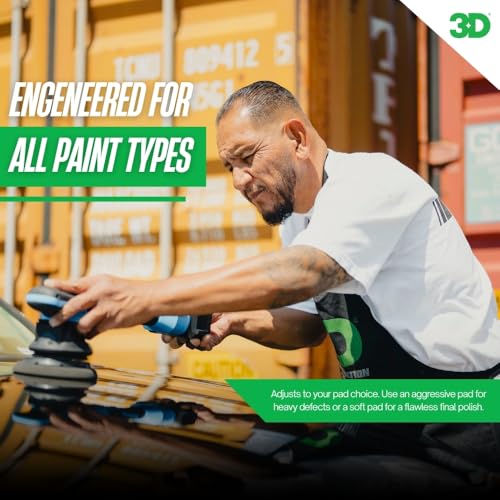
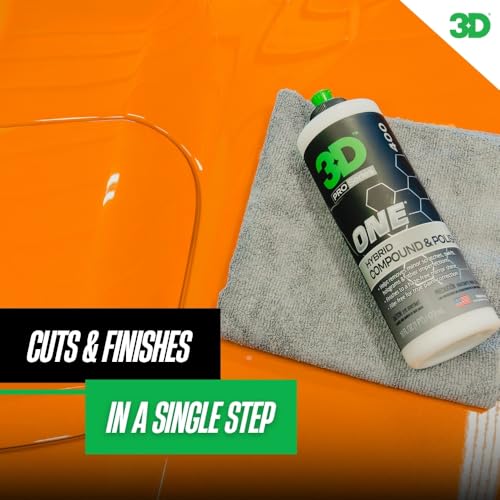
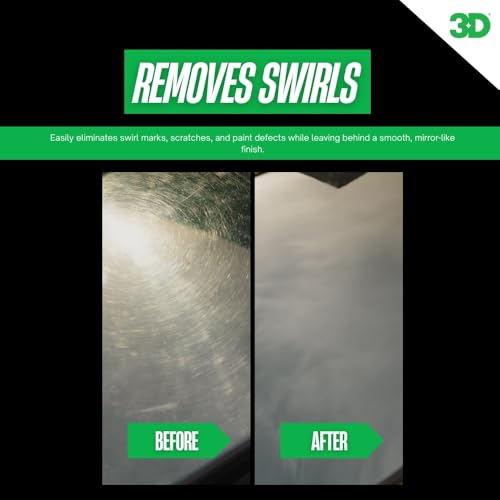
If I had to pick one all-in-one compound for most enthusiasts, this 16oz version of 3D One would be it. The hybrid formula actually performs as advertised, owners confirm it removes light to moderate scratches and swirls while leaving behind a finish that doesn’t demand a follow-up polish. That’s rare in a single-step product.
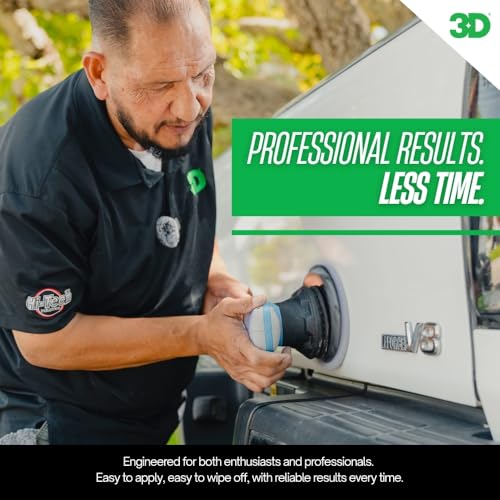
The zero-dust formula is a real win, especially for home detailers using a DA polisher. Less mess means cleaner results and fewer wipe-downs. Compared to Meguiar’s M100 or Turtle Wax’s heavier cutters, this doesn’t go as deep, but it also doesn’t risk marring or hazing on softer paints. For most modern vehicles, this is the smarter buy when you want real correction without over-polishing.
Video review
Meguiar’s Ultimate Compound
Strengths
- Fast cutting
- Clear coat safe
- Easy cleanup
Trade-offs
- Not for deep defects
- Limited correction depth
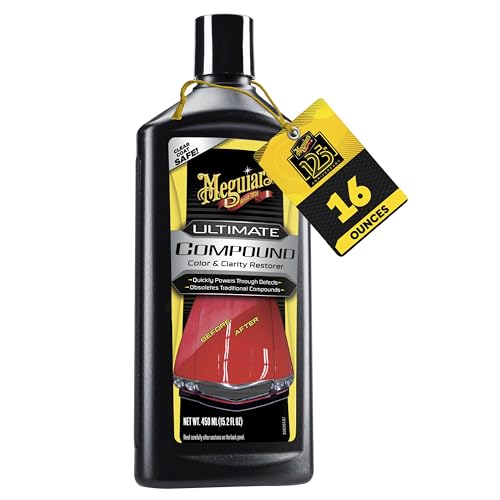
I’ve seen this compound come up again and again in forums and garage conversations, and for good reason. On paper, Meguiar’s Ultimate Compound is built to handle swirls, light scratches, and oxidation without risking clear coat hazing, which is a real concern for DIYers pushing too hard. Owners consistently report it works fast and cleans up easily, whether applied by hand or with a dual-action polisher.
The micro-abrasive tech isn’t revolutionary, but it’s tuned right for mid-level correction without stepping into aggressive territory. It won’t erase deep scratches, but it’s not meant to. For most weekend detailers, this hits the sweet spot between effectiveness and safety. Compared to pricier pro options, it delivers more than enough bite for daily drivers with tired paint.
Video review
Meguiar’s M100 Pro Speed Compound
Strengths
- Deep scratch removal
- High cut efficiency
- Rotary buffer compatible
Trade-offs
- Aggressive for soft paint
- Requires skill to avoid marring
- Needs follow-up polish
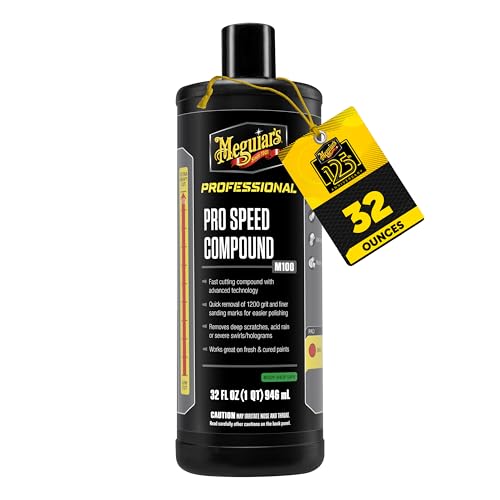
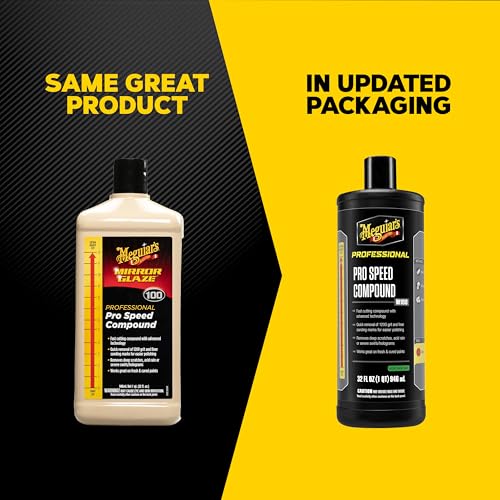
When deep scratches or holograms from improper buffing are the issue, M100 is where I’d start. This is a heavy-cut compound, Meguiar’s own specs say it removes up to 1200-grit sanding marks, which tells you everything. It’s not subtle, but it’s effective.
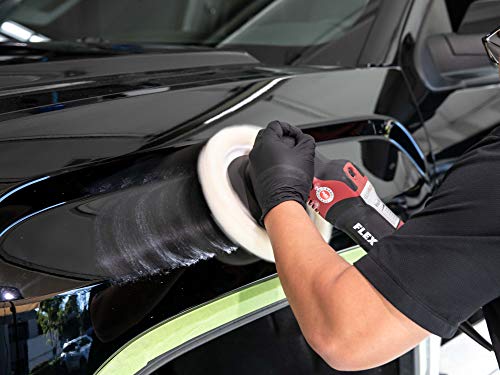
Reviewers using rotary buffers praise its consistency and cut rate, while DA users note it requires more control to avoid heat buildup. It’s body shop safe and widely trusted in pro environments, but it’s overkill for light swirls. Compared to 3D One, it’s less about refinement and more about removal. If you’ve got acid rain etching or deep keys in the paint, this is the tool.
Product photos


3D One 8oz Scratch & Swirl Remover

Strengths
- Same hybrid performance
- Compact and portable
- Zero-dust formula
Trade-offs
- Smaller quantity
- Higher cost per ounce
This 8oz version of 3D One is the same proven formula in a smaller bottle, ideal for spot corrections, smaller vehicles, or testing before committing to the larger size. I’ve seen owners use this on motorcycles, vintage fenders, and even gel coat on boats with solid results.
It doesn’t cut as deep as Meguiar’s M100 or Menzerna 1000, but it doesn’t need to. For most modern clear coats with light swirls and fading, it’s more than enough. The zero-dust trait shines here, especially when working by hand or on small panels. Compared to the 16oz, it’s the same performance, just less of it.
Product photos
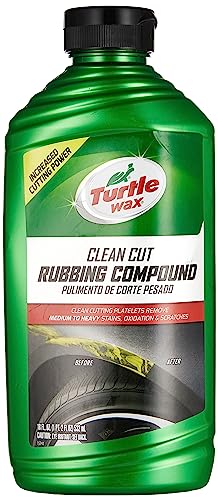
Turtle Wax Clean Cut Rubbing Compound
Strengths
- High volume
- Affordable per ounce
- Removes heavy defects
Trade-offs
- Leaves noticeable haze
- Requires follow-up polish
- Coarse finish
Turtle Wax T-415 stands out mostly for volume and price. At 18 ounces, it’s the largest bottle in this group, and for shops or owners with multiple vehicles, that matters. The formula is no-nonsense, silicone-free, aggressive enough for 1500-grit sanding marks, and safe on all finishes, which makes it a solid workhorse for body shops or weekend warriors with older cars.
But it’s not refined. Reviewers note it leaves more haze than 3D One or Meguiar’s pro lines, and it almost always requires a follow-up polish to achieve real clarity. It does the heavy lifting, but you’re trading finish quality for cost and capacity. Compared to ABRO or Meguiar’s M100, it’s less precise but gets the job started.
Product photos


ABRO Rubbing Compound for Oxidized Paint

Strengths
- Strong on oxidation
- Smooth application
- Body shop safe
Trade-offs
- Leaves hazy finish
- Requires follow-up polish
- Not for final gloss
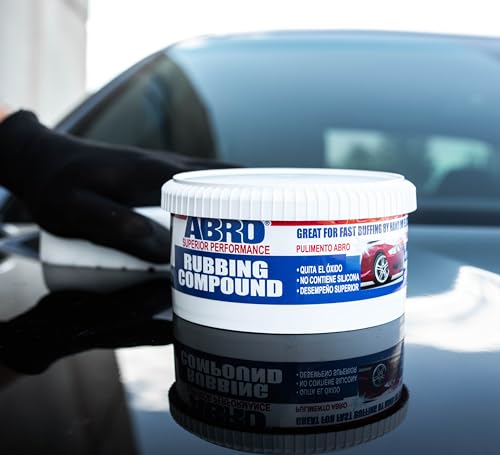
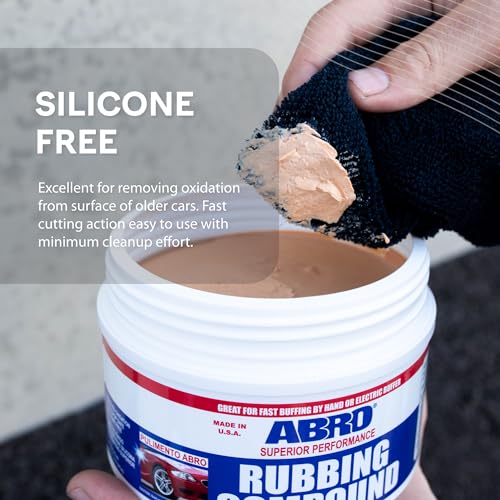
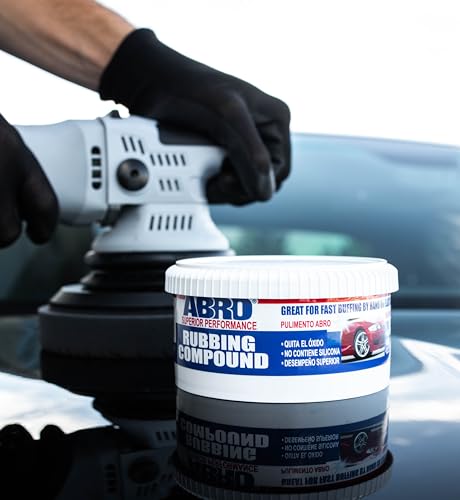
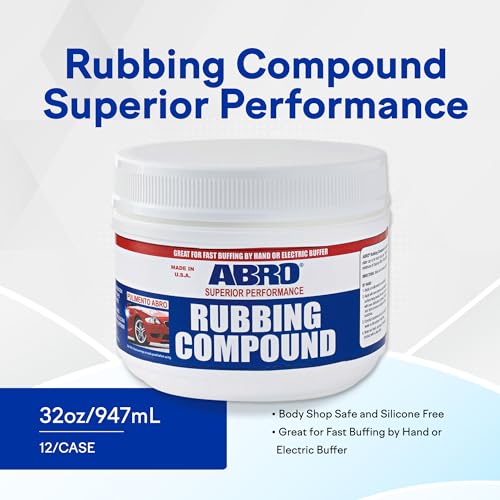
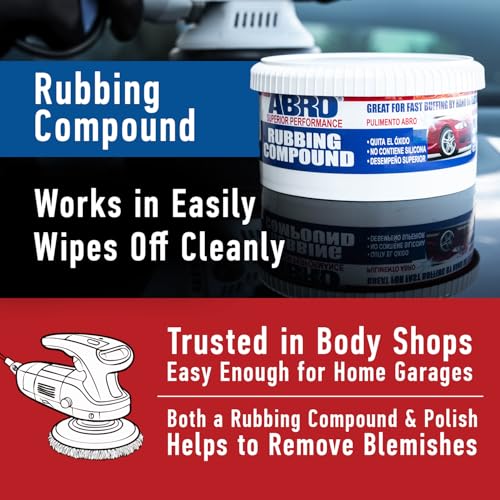
ABRO is built for one thing: cutting through oxidation. If your car’s paint looks chalky, faded, or uneven from sun exposure, this compound bites harder than most budget options. The 10oz size is practical, and the formula spreads smoothly whether you’re using a hand pad or a buffer.
Owners report it works well as a first step before a finer polish, but it’s not a finisher. It leaves a hazy surface, which is expected at this level of cut. Compared to Turtle Wax or Meguiar’s Ultimate, it’s more aggressive but less refined. Still, for older vehicles or daily drivers with weathered paint, it brings back life where others just gloss over.
Product photos
Menzerna Heavy Cut Compound 1000
Strengths
- Professional cut level
- Controlled abrasion
- Works with foam pads
Trade-offs
- Limited quantity
- Needs follow-up polish
- Not for light defects
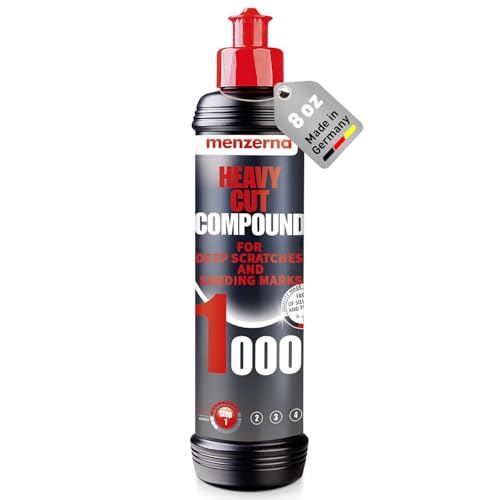
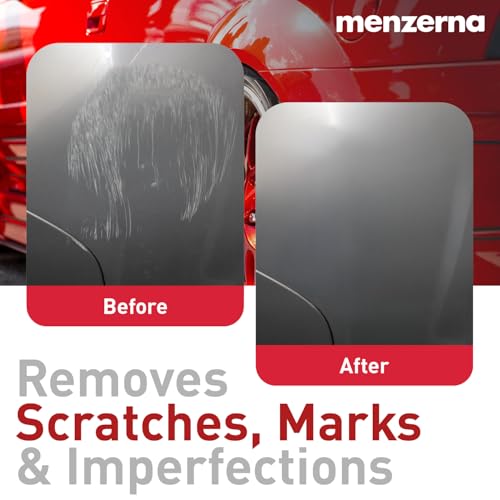
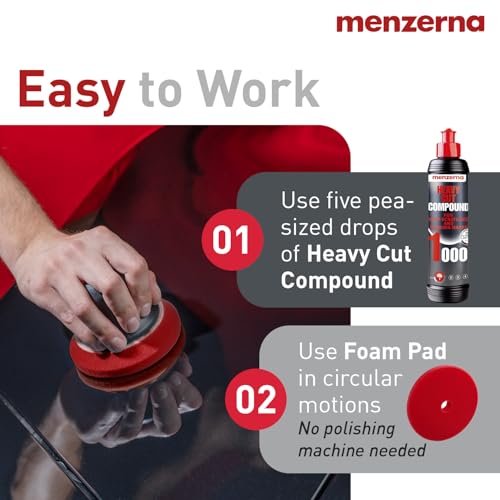
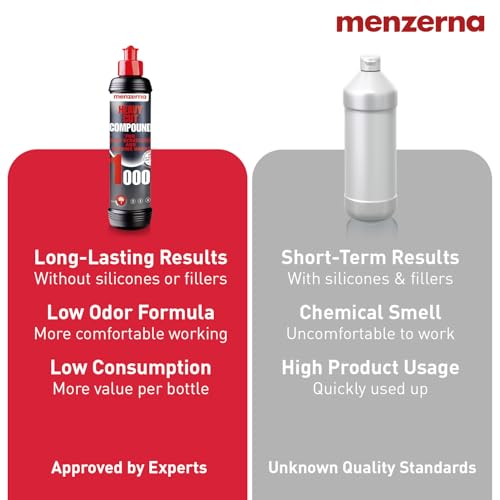
Menzerna 1000 is a pro-tier compound that’s often overlooked outside detailing circles. It’s designed for serious correction, light to medium deep-set scratches, holograms, and uneven matting, all with a formula that’s beginner-friendly on the surface but demands respect in practice.
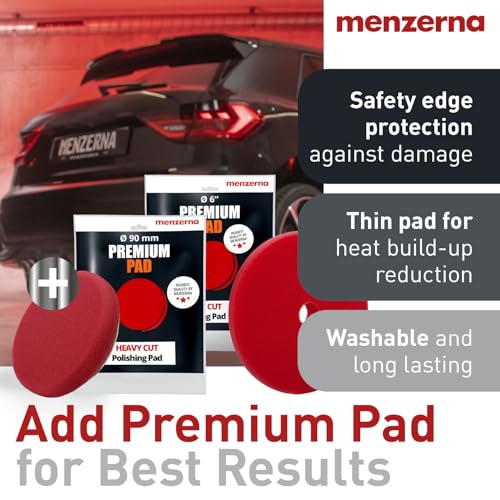
Owners using rotary polishers get the best results, but even with a DA and the right pad, it cuts cleanly. It’s not a finisher, but it’s a solid first step. Compared to Meguiar’s M100, it’s slightly less aggressive but more controllable, which matters on softer modern paints. The 8oz size keeps cost down for test runs or spot work.
Product photos

How We Evaluated car buffing compounds
Rather than a hands-on lab test, this selection is a research-led comparison of published specifications, owner reviews, and professional detailing community feedback. I approached this as I would when advising someone seeking to restore a classic car – focusing on real-world results and reliable performance. We analyzed each compound’s advertised cut, its suitability for different paint types, and how easily it applies by hand versus machine. This involved weighing data from manufacturer websites, automotive forums, and established detailing publications.
For car buffing compounds, cutting power and finish clarity are paramount. A compound that removes defects but leaves behind haze or introduces new swirls isn’t valuable. Equally important is versatility; a product that can handle a range of imperfections, from light swirls to deeper scratches, offers the best value. We heavily favored compounds that demonstrated a balance between these factors, and those with positive feedback regarding ease of use for both beginners and experienced detailers. You can find more information on related tools in our guide to the best buffing kits.
Specifications reliably indicate a compound’s aggressiveness – a higher grit number generally means a finer polish. However, owner feedback proved crucial in understanding how those specs translate into real-world performance. Reports on dust levels, working time, and the ability to achieve a true, swirl-free finish were heavily considered. We also prioritized compounds with reputations for paint safety and long-lasting results, drawing on expert opinions found in discussions about compounds for scratches.
What To Look For In car buffing compounds
Picking the right car buffing compound can feel overwhelming, but understanding a few key aspects makes all the difference.
A quality car buffing compound effectively levels paint defects, whether from oxidation, scratches, or swirl marks. Look for formulations that balance cutting power with finish quality, and consider compatibility with your application method, by hand or machine. A compound should remove imperfections without creating new ones, and ideally, leave a surface ready for polishing and waxing.
Understanding Cut & Polish Stages
Many newcomers try to skip steps, but a true paint correction process often involves a two-stage approach: compounding followed by polishing. Compounds cut into the clear coat to remove defects, while polishes refine the surface and restore gloss. Trying to do both with one product, as some “one-step” compounds claim, can work for very minor imperfections, but often leaves a finish that isn’t quite as refined. If you’re dealing with significant damage, separating these steps gives you far more control. You’ll find that dedicated compounds like Meguiar’s M100 Pro Speed Compound are geared more towards aggressive defect removal, while polishes focus on bringing back the shine.
Abrasive Grain and Paint Hardness
The “cut” of a compound is determined by the size and type of abrasive particles it contains. Softer paints (like those found on some older vehicles or certain brands) require less aggressive abrasives, while harder, ceramic-coated paints can handle more. This is where understanding grit size becomes important. Compounds that can handle up to 1200-grit sanding marks, like Menzerna Heavy Cut Compound 1000, are designed for substantial correction. But using such an aggressive compound on a softer paint can easily cause hazing or even burn-through. If you’re unsure of your paint’s hardness, start with a less aggressive compound and test in an inconspicuous area. Don’t hesitate to research best car compounds to get a broader understanding.
Application Method & Formulation
How you plan to apply the compound drastically impacts your choice. Hand application requires a thinner, easier-to-work-with formula. Machine application, especially with a rotary buffer, allows for more aggressive compounds. Dual-action (DA) polishers are more forgiving, but still benefit from a compound formulated for machine use. Beyond that, consider the formula’s characteristics: zero-dust compounds, like 3D One, are a godsend for cleaner working conditions, and silicone-free formulas are essential if you plan to repaint areas later. Selecting the right car buffing pads is equally important; a hard cutting pad paired with an aggressive compound will remove defects quickly, while a softer pad and polish will refine the finish.
- A basic rubbing compound (like Turtle Wax Clean Cut) is great for tackling oxidation on older vehicles.
- An all-in-one compound/polish (like 3D One) is convenient for minor swirl removal and maintenance, but won’t deliver show-car results on heavily damaged paint.
- A dedicated heavy-cut compound (like Meguiar’s M105 Ultra Cut Compound) is a must-have for addressing deeper scratches and sanding marks, but always follow it with a polishing step to restore gloss.
Don’t chase the biggest number. A more aggressive compound isn’t always better; it’s about matching the abrasive to the defect and the paint’s hardness.
Car Buffing Compounds Compared
Here’s a comparison of key specifications for popular car buffing compounds.
| Product Title | Cut Level | Best For | Application | Size | Clear Coat Safe |
|---|---|---|---|---|---|
| 3D One Hybrid Scratch & Swirl Remover | Medium | Scratches & Swirls | Hand/DA | 16oz | Yes |
| Meguiar’s Ultimate Compound | Heavy | Imperfections | Hand/DA | 8.45oz | Yes |
| Meguiar’s M100 Pro Speed Compound | Heavy | Heavy Scratches | Machine | 32oz | Yes |
| Meguiar’s M105 Ultra Cut Compound | Heavy | Moderate Defects | Hand/DA/Rotary | 32oz | Yes |
| 3D One 8oz Scratch & Swirl Remover | Medium | Scratches & Swirls | Hand/DA | 8oz | Yes |
| Turtle Wax Clean Cut Rubbing Compound | Heavy | Scratches, Oxidation | Hand/DA/Rotary | 16oz | Yes |
| ABRO Rubbing Compound for Oxidized Paint | Heavy | Oxidation | Hand/Machine | 10oz | N/A |
| Menzerna Heavy Cut Compound 1000 | Heavy | Deep Scratches | Hand/DA/Rotary | 250ml | N/A |
Frequently Asked Questions
What’s the difference between a rubbing compound and a polish?
A rubbing compound aggressively cuts into the clear coat to remove defects like scratches and oxidation, while a polish refines the surface afterward to restore clarity and gloss. Think of compounding as the correction stage and polishing as the refinement stage; skipping the polish often leaves a hazy finish.
Can I use a buffing compound on a ceramic coating?
Yes, but you must use a compound specifically designed for ceramic coatings, as standard compounds can damage the coating. These typically have very fine abrasives and a pH-neutral formula to avoid etching or stripping the protective layer.
How do I know which cut level is right for my car’s paint?
Start with the least aggressive compound possible and test it in an inconspicuous area. If it doesn’t remove the defects, gradually move to a heavier cut compound, always observing the paint for any signs of hazing or damage.
Will a buffing compound remove swirl marks from washing?
Yes, a mild to medium cutting compound will remove light swirl marks, but the severity dictates the aggressiveness needed. Often, a dedicated swirl remover or a polishing compound is sufficient for these minor imperfections, and following up with a wax or sealant is recommended to protect the paint.
Are there any compounds safe for single-stage paint?
Single-stage paints lack a clear coat, making them more vulnerable to damage, so use only very mild compounds designed for these finishes. Avoid heavy-cut compounds altogether, and always test in an unseen area first; you might also consider investing in one of the best car buffing machines for more control.
The Bottom Line
Choosing a car buffing compound often comes down to balancing how much correction you need with how much effort you’re willing to put in. For most owners looking to restore their paint, I believe the Meguiar’s M105 Ultra Cut Compound offers the best overall combination of cutting power and finish quality, though always remember to follow it with a polishing step. It’s a workhorse that delivers noticeable improvements, and its reputation within the detailing community is well-earned.
If you’re on a tighter budget or dealing with lighter imperfections, the Turtle Wax Clean Cut Rubbing Compound is a fantastic starting point. For those prioritizing convenience and tackling minor swirls, the 3D One Hybrid Scratch & Swirl Remover is an excellent choice – it’s incredibly versatile and user-friendly. And if you’re also looking to keep your vehicle looking its best, selecting a quality car wash products is a great place to start.
Ultimately, the “best” compound isn’t about a single spec or a flashy label. It’s about understanding your paint’s condition, matching the abrasive to the defect, and taking the time to apply the product correctly. Don’t overlook the importance of proper technique and quality buffing pads; those factors often have a bigger impact on the final result than the compound itself. If you’re searching for more options, check out our guide to effective rubbing compounds.
