
8 Best Car Buffing Pads of 2026
This post contains affiliate links. As an Amazon Associate, we earn from qualifying purchases.
The overall best car buffing pads are the IPELY 6 Inch Wool Buffing Pads, offering strong cutting power and included backer for versatility. For budget-conscious detailers, the Poliwell 11 PCS 6 Inch Pads deliver solid performance in a multi-pack, while the Meguiar’s 6″ Polishing Foam Pads are ideal for finishing and light correction work.
Choosing the wrong pad can mean wasted time, uneven finishes, or even paint damage, even with a high-end polisher. After comparing the field, reading owner feedback, and evaluating specs through the lens of real-world use, I focused on material, cutting grade, size, and durability to narrow the picks. This guide breaks down what actually matters so you can match the right pad to your car’s finish needs and your machine.
Top 8 Car Buffing Pads in the Market
The Best Car Buffing Pads, Reviewed
IPELY 6 Inch Wool Buffing Pads

Strengths
- Thick wool construction
- Includes M14 adapter
- Washable and reusable
Trade-offs
- Higher risk of swirls
- Less precision than foam
- Not ideal for finishing
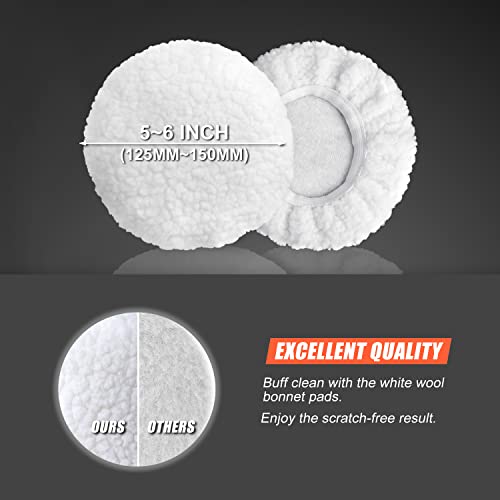
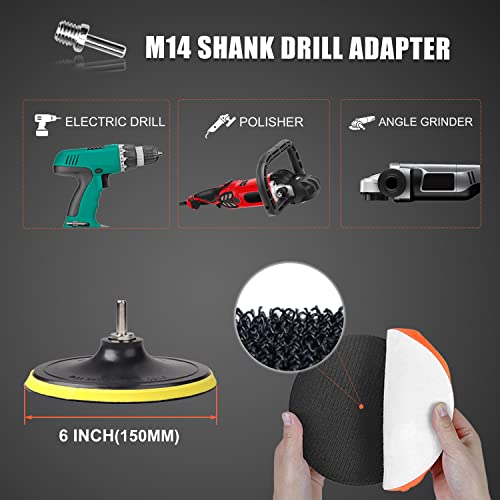
Wool pads are a classic choice for aggressive cutting and compounding, and the IPELY 6-inch set delivers on that front with thick, quality wool that owners say holds up well across multiple uses. The inclusion of an M14 adapter is a smart touch for drill users, making this a solid option if you’re rigging a budget buffer setup. On paper, it’s built for heavy-duty work like removing oxidation or prepping paint before polishing.
Still, wool requires more control than foam, especially on modern clear coats, and beginners might struggle to avoid heat buildup or marring. That said, experienced users appreciate how well these pads carry compound and transfer energy during cut-heavy jobs. They’re not as refined as some foam alternatives for final finishes, but that’s not their job.
Video review
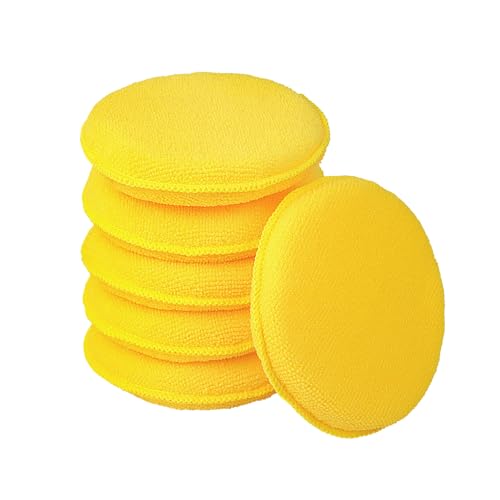
FONAROLL Microfiber Wax Applicator Pads
Strengths
- Stitched-edge durability
- Smooth, streak-free application
- Great for sensitive coatings
Trade-offs
- Limited to light duties
- Only sold in six-packs
- Not for machine use
These yellow 5-inch pads hit a sweet spot between softness and structure, making them ideal for applying delicate products like ceramic coatings or synthetic waxes that demand even, lint-free distribution. The stitched edges resist fraying better than glued versions, and owners report fewer streaks and missed spots compared to looser weaves. They’re also easy to clean and hold their shape after repeated washes.
While they don’t have the aggression needed for compounding, that’s not the point. When you’re at the final stage and want to protect your hard work, these give confidence. I’d choose these over flat microfiber cloths any day for controlled wax delivery.
Video review
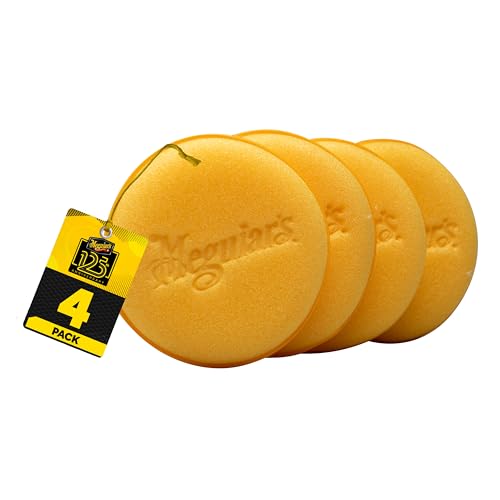
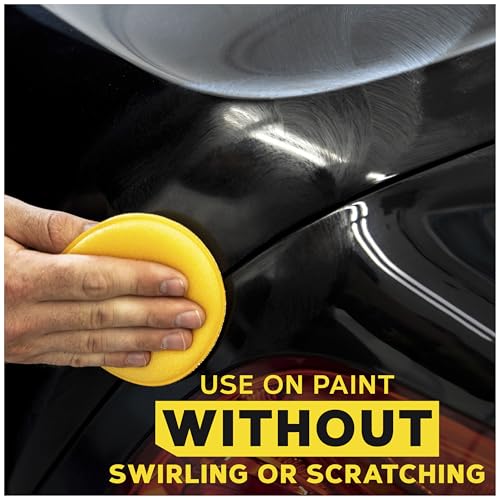
Meguiar’s 4″ Foam Applicator Pads
Strengths
- Compact for detailed areas
- Minimal product absorption
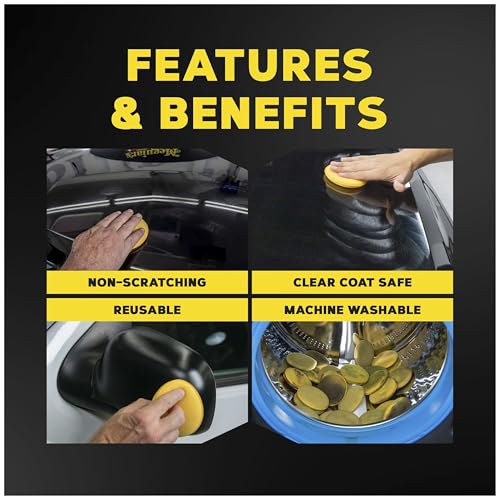
- Long-lasting and washable
Trade-offs
- Too small for large panels
- Hand use only
- Not for cutting or polishing
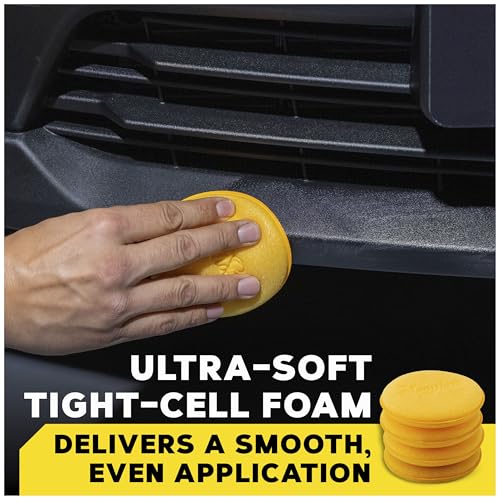
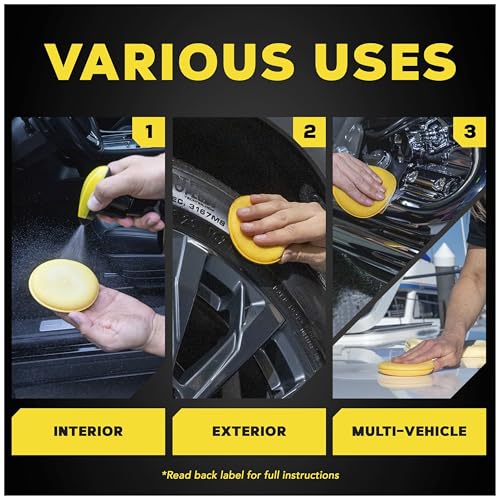
Sometimes small is smart. These 4-inch pads are perfect for controlled, manual application of waxes, sealants, or interior dressings where larger tools just get in the way. The tight-cell foam doesn’t soak up product like a sponge, meaning less waste and more precise coverage. I’ve seen owners use these for engine bay detailing or trim restoration, places where a big buffer would be overkill.
They’re also among the most durable hand applicators out there. Machine washable and resistant to tearing, they last through dozens of uses if cared for. While not for machine polishing, they fill a niche no other pad here addresses: finesse over force.
Product photos
SPTA 5.5 Inch Mix Cutting Pads
Strengths
- Full correction spectrum included
- Smart 5.5”/5” hybrid fit
- Excellent heat dissipation
Trade-offs
- Slight learning curve
- No wool or microfiber options
- Backing plate sold separately
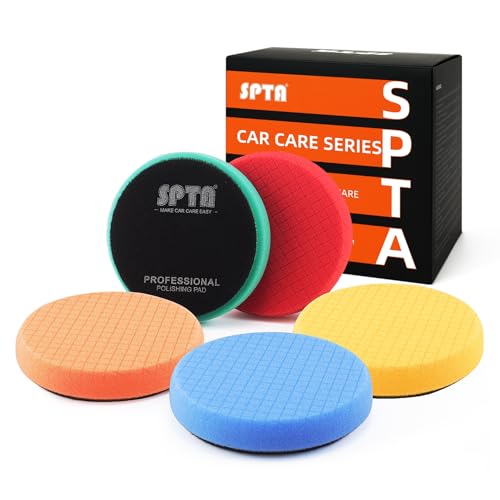
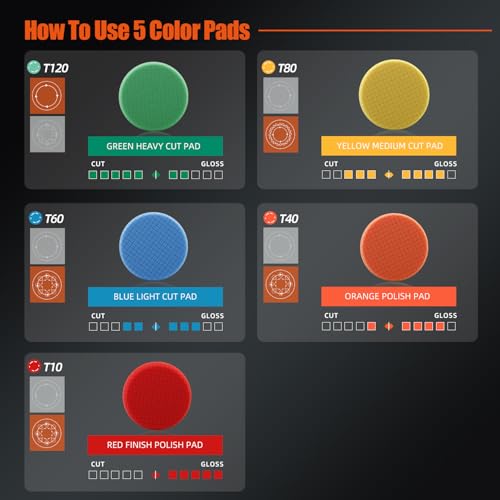
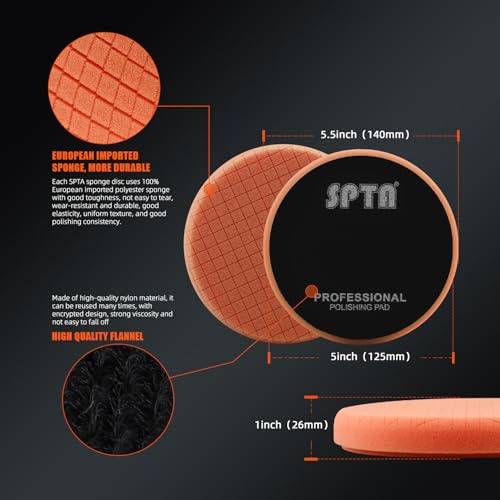
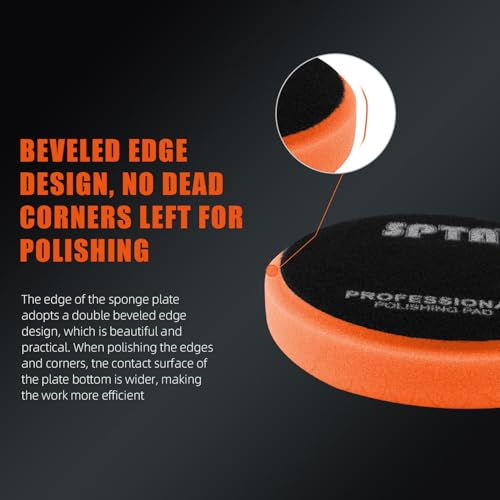
SPTA’s color-coded T-series foam pads offer one of the most thoughtful progressions in this lineup, from T120 green for heavy cutting all the way down to T10 red for flawless finishing. The unique 5.5-inch face design actually improves edge clearance, reducing the chance of pad overlap marks or edge rolling. Owners praise how well these hold compound, even at high speeds, thanks to the open-cell structure and tight manufacturing tolerances.
These pads feel like they’re built for pros on a budget. They handle heat impressively well and maintain contact across curved panels. If you’re running a rotary or forced-cutting DA job, this set gives you the stages you need without pad hopping between brands. My recommendation? Start with the yellow T80, then finish with red.
Product photos
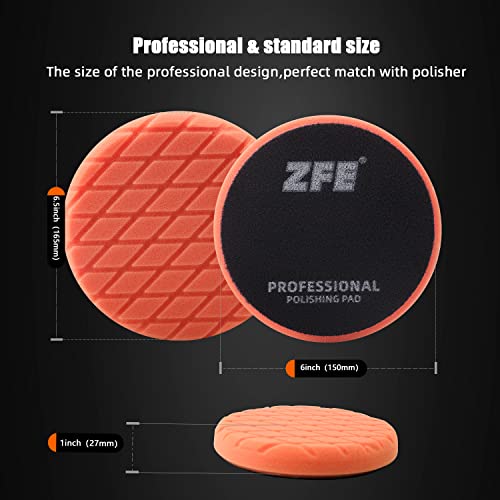
ZFE 7Pcs 6″ Waffle Foam Pads
Strengths
- Superior heat dissipation
- Waffle design reduces polish sling
- Includes wool and microfiber
Trade-offs
- Inconsistent sizing
- Foam durability varies
- Some fitment issues
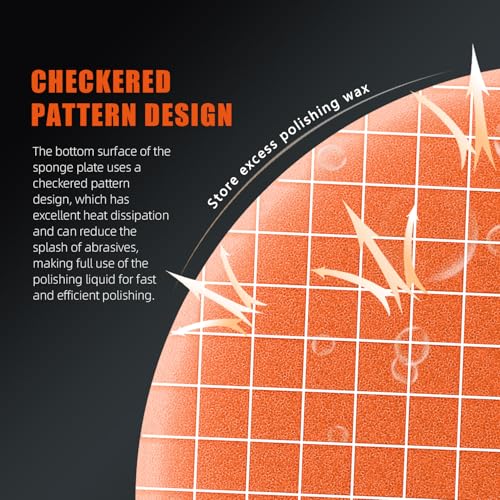
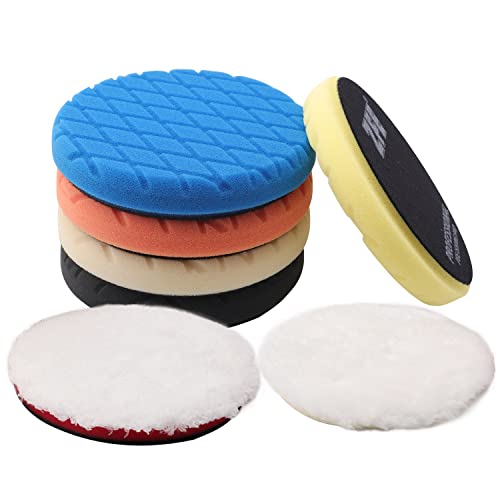
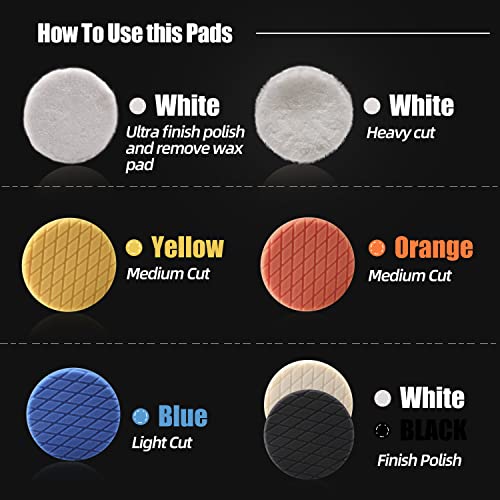
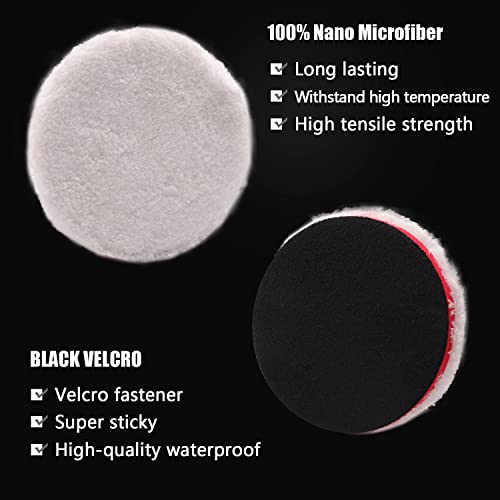
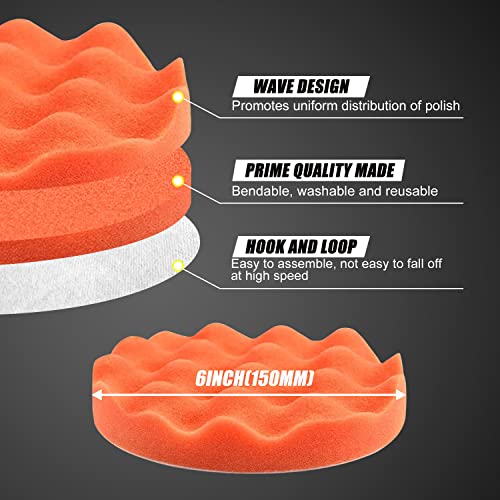
The waffle pattern isn’t just for looks, it genuinely helps with airflow and heat management, which is why many owners highlight cooler operation during long sessions. This kit mixes foam densities with a real wool pad and a microfiber finishing disc, giving a hybrid approach that bridges old-school and modern methods. The wool performs well on oxidized boat gel coats and older car paints, while the waffle foams excel at spreading polish evenly with minimal sling.
However, the mix of sizes (some listed as 5”) causes minor confusion, and not all pads fit standard 6-inch backing plates smoothly. Still, for users tackling heat-prone jobs, like dark-colored cars in summer, the thermal benefits make this a standout.
Product photos


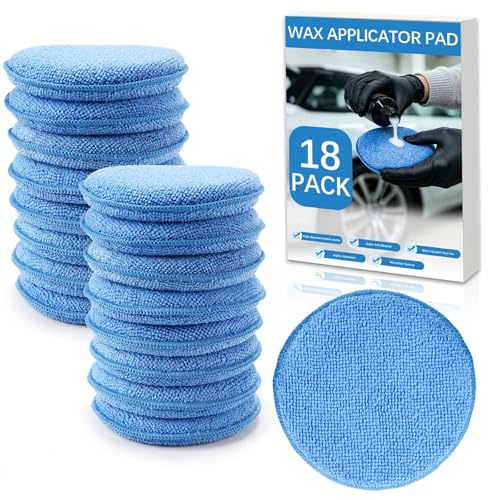
HeatPure 18 Pack Microfiber Pads
Strengths
- High quantity pack
- Good elasticity and absorbency
- Multi-use beyond waxing
Trade-offs
- Bulk packaging limits freshness
- Not for polishing machines
- Edges can loosen over time
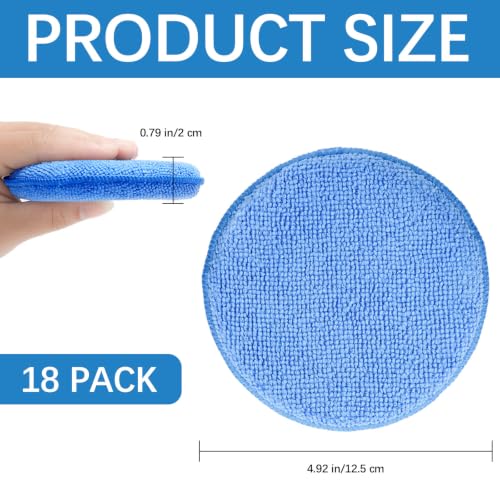
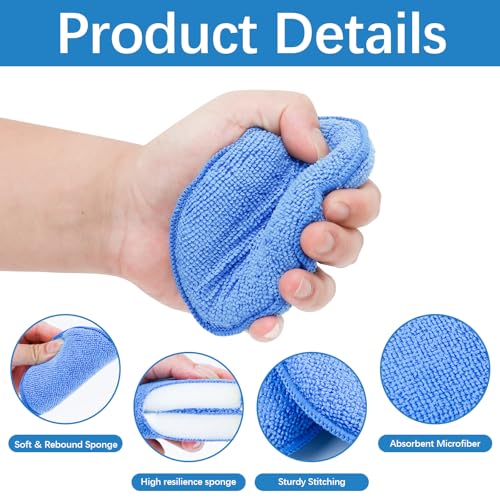
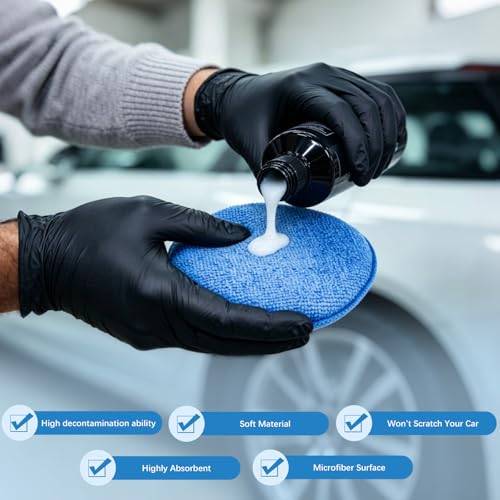
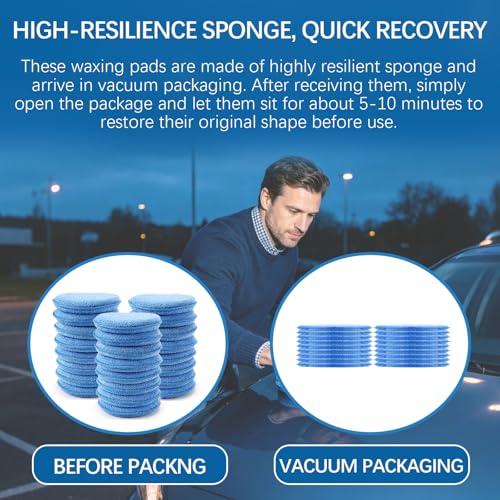
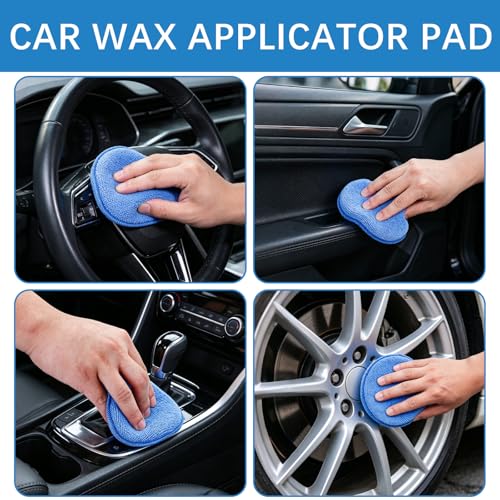
If you go through applicator pads like tissues, this bulk pack makes sense. Eighteen microfiber-sponge hybrids mean you can rotate fresh ones in for every stage of waxing or cleaning, no cross-contamination, no degraded performance. Owners love having spares on hand for tire shine, glass prep, or interior wipe-downs. The built-in sponge gives enough cushion for even spread without dripping excess product.
They rebound well after vacuum sealing, though they need a few minutes to expand fully. And while they aren’t meant for machine work, their absorbency and softness beat basic foam. For the price, it’s hard to beat the volume and utility.
Product photos
Poliwell 11 PCS 6 Inch Pads

Strengths
- Complete correction-to-finish system
- Multiple backing plates included
- Balanced blend of cut and finish
Trade-offs
- Foam density varies slightly
- Not for high-speed rotary use
- Durability lags behind premium brands
This kit stands out by offering a full workflow in one package, from coarse orange pads for defect removal to fine blue ones for gloss finishing. The range of sponge densities lets users follow a real step-by-step process without buying pads separately, which is rare at this price. Owners consistently report getting swirl-free results when pairing the yellow and black pads with appropriate compounds, especially on moderately oxidized surfaces.
The build quality isn’t showroom-pro-grade, but it’s reliable for weekend detailers. Having two backing plates and adapters adds real value, letting you keep different pad types ready to swap. Compared to single-pad buys, this gives far better bang for the buck if you’re building a starter kit.
Product photos

Meguiar’s 6″ Polishing Foam Pads
Strengths
- Optimized for defect removal
- Durable open-cell foam
- Compatible with DA and rotary tools
Trade-offs
- Limited for heavy cutting
- Sold in pairs only
- Higher price per pad
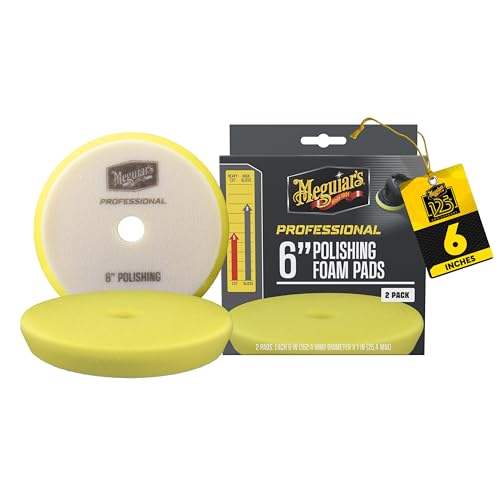
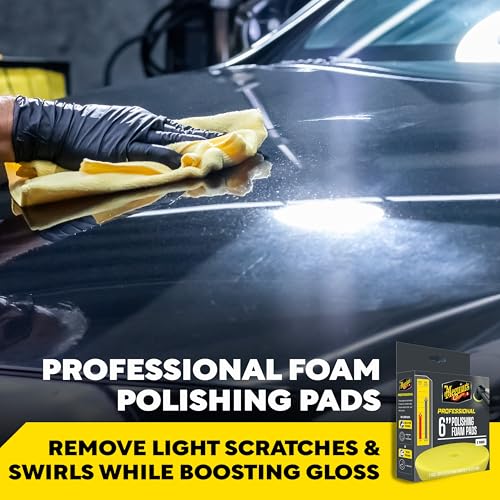
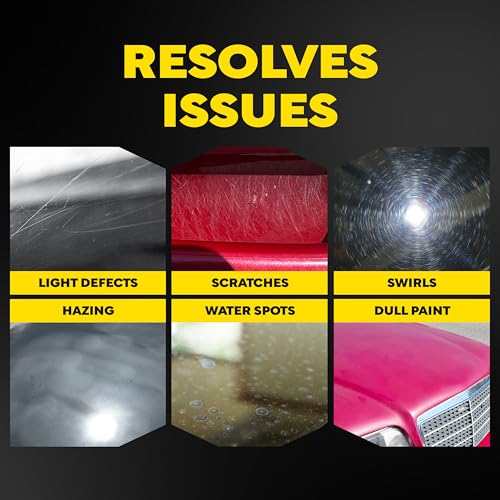
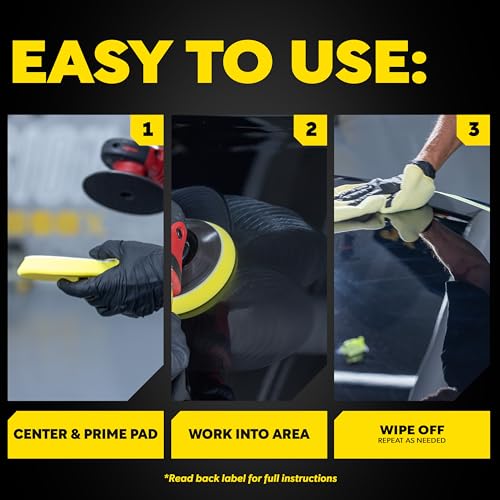
Meguiar’s has been in the game longer than most, and their M6PFP2 foam pad reflects that experience, it’s tuned specifically for scratch and swirl removal without leaving behind new defects. The foam is firm enough to carry cutting compounds effectively but engineered to stay cool during extended passes. Reviewers note fewer heat marks compared to generic pads, especially when used with a dual-action polisher.
It’s not the most aggressive pad out there, so deep scratches may need a preliminary step with a heavier-cut option. But for finishing off a cut or handling light to moderate imperfections, this pad strikes a sweet spot between efficacy and safety. I’d pick this over cheaper foams when working on newer vehicles where paint protection matters.
Product photos

How We Evaluated car buffing pads
As someone deeply involved in the automotive world through TheAutoZenith, I approach detailing tools with a critical eye. Rather than a hands-on lab test with each pad, this selection is based on a research-led comparison of published specifications, features, and, crucially, owner and professional detailing reviews. I weighed factors like pad material, intended use (cutting, polishing, finishing), backing type, and durability – all to determine which pads offer the best value and performance across a range of needs.
For car buffing pads, three things stand out as most influential. First, the density and type of foam or wool directly impacts cutting power and finish quality. Second, the backing system (hook-and-loop versus threaded) affects ease of use and compatibility with different buffing machines. Finally, durability and washability are key; frequently replacing pads adds up, so a reusable, well-made pad is a significant benefit. You can find recommendations for reliable buffing machines on my site as well.
Specifications reliably tell you about pad dimensions and material composition. However, owner feedback is where you learn about real-world performance – how well a pad dissipates heat, how it holds up over multiple uses, and whether it truly delivers the advertised level of cut or polish. Reputation within the detailing community also matters. A pad consistently praised by professionals is likely a solid choice, and pairing it with quality car wax will elevate your results.
How To Pick The Right car buffing pads
Choosing the right buffing pads is surprisingly crucial; it’s where the rubber meets the road – or, in this case, the pad meets the paint. A fantastic polisher is wasted if you’re using the wrong pad for the job.
A quality car buffing pad exhibits consistent density throughout, durable construction resisting tearing, and appropriate material for the intended correction level (cutting, polishing, or finishing). Pad face design impacts heat dissipation and compound delivery. Compatibility with your polisher’s backing plate (size and attachment style) is also essential.
Pad Material: Foam vs. Wool vs. Microfiber
The material of the pad dictates its aggressiveness and, therefore, its purpose. Foam is the most common and versatile, ranging from very soft finishing foams to more dense cutting foams. Wool pads are the most aggressive, ideal for heavy defect removal but require a skilled hand to avoid damaging the paint. Microfiber offers a middle ground, excelling at applying waxes and sealants, and can also be used for light polishing. Don’t assume more aggressive is always better; starting with a less aggressive pad and working your way up is a safer strategy.
Pad Cutting Power (Grade)
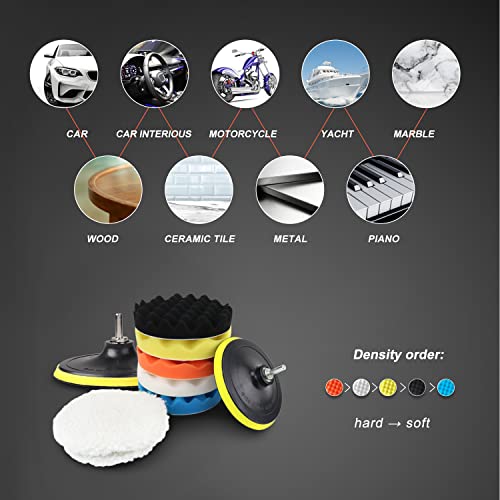
Understanding pad “cutting power” – how effectively it removes paint defects – is paramount. Pads are typically color-coded to indicate their aggressiveness. Generally, black and orange pads represent heavier cutting, while white and blue pads are for polishing and finishing. I often recommend newcomers start with a kit offering a range of grades so they can experiment and learn how each pad interacts with their specific paint system. When considering your needs, think about the condition of your car’s paint; if you’re dealing with significant swirl marks, you’ll need a more aggressive pad.
- A very light oxidation might only require a finishing pad for a quick gloss boost.
- Moderate swirl marks will benefit from a polishing pad paired with a good car polish.
- Deep scratches and heavy oxidation demand a cutting pad, demanding patience and careful technique, and potentially multiple stages of correction.
Pad Size and Attachment
Pad size needs to match your polisher. Most dual-action (DA) polishers use 5- or 6-inch pads, while rotary polishers can accommodate larger sizes. Beyond size, the attachment method is critical. Most pads use a hook-and-loop (Velcro) system, but ensuring compatibility with your polisher’s backing plate is vital. I always suggest having a selection of detailing pads on hand, as switching between pads is frequent during a thorough detail.
Never apply excessive pressure when polishing. Let the pad and polish do the work. A gentle, even motion is far more effective than brute force.
Car Buffing Pads Compared
This table provides a specification comparison of various car buffing pads to aid in selecting the right product.
| Product Title | Pad Size (in) | Pad Material | Included Backer Pad | Best For | Quantity |
|---|---|---|---|---|---|
| IPELY 6 Inch Wool Buffing Pads | 6 | Wool | Yes | Overall | 4 |
| FONAROLL Microfiber Wax Applicator Pads | 5 | Microfiber/Sponge | No | Wax Application | 6 |
| Meguiar’s 4″ Foam Applicator Pads | 4 | Foam | No | Small Foam Pads | 4 |
| SPTA 5.5 Inch Mix Cutting Pads | 5.5 | Foam | No | Wool Pads | 5 |
| ZFE 7Pcs 6″ Waffle Foam Pads | 6 | Foam | No | Heat Dissipation | 7 |
| HeatPure 18 Pack Microfiber Pads | 4.9 | Microfiber | No | Value Bulk Pack | 18 |
| Poliwell 11 PCS 6 Inch Pads | 6 | Foam | Yes | Budget Kit | 11 |
| Meguiar’s 6″ Polishing Foam Pads | 6 | Foam | No | Scratch Removal | N/A |
Frequently Asked Questions
What pad color should I start with if I’m new to buffing?
Begin with a white or light blue foam pad. These are the least aggressive and minimize the risk of causing damage while you learn proper technique. You can always move to a more aggressive pad if needed.
Are wool pads safe for all paint types?
No, wool pads are generally not recommended for soft or single-stage paints. Their aggressive nature can easily burn through the clear coat, so they’re best reserved for durable, multi-stage finishes and experienced users.
How often should I replace my buffing pads?
Pad lifespan depends on use, but generally, replace foam pads after 5-10 details, or sooner if they become heavily soiled or lose their shape. Wool pads can last longer with proper cleaning, but monitor for wear and tear.
Can I use the same pad for both cutting and polishing?
While technically possible, it’s not ideal. Using a cutting pad for polishing can leave micro-marring, and vice versa. Dedicated pads for each stage deliver better results and maintain pad longevity. Consider investing in one of the excellent buffing kits to have the right pad on hand.
What’s the best way to clean my buffing pads?
Clean pads after each use with a dedicated pad cleaning brush and pad conditioner. This removes compound residue and restores the pad’s texture. Proper cleaning extends pad life and prevents scratches, and is part of a full suite of detailing products you’ll want to have.
The Bottom Line
Choosing car buffing pads always comes down to balancing control with convenience. You can spend a lot getting a truly tailored setup, or opt for a kit that covers most bases. For most owners, the IPELY 6 Inch Wool Buffing Pads strike the best balance, offering a solid starting point for tackling a variety of paint imperfections and a good reputation for durability.
If you’re on a tighter budget, or just getting started, the Poliwell 11 PCS 6 Inch Pads are a fantastic value. For those focused on applying waxes and sealants, or doing routine maintenance, the FONAROLL Microfiber Wax Applicator Pads are hard to beat for ease of use and a streak-free finish. Remember to pair your chosen pads with the right buffing compounds for optimal results.
Ultimately, the perfect pad isn’t about a single specification or price point. It’s about understanding your car’s paint, the type of defects you’re addressing, and having the patience to learn how each pad performs. Don’t underestimate the importance of addressing underlying issues like deep scratches with a quality scratch removers product before you even reach for a pad.
