
7 Best Car Air Purifiers with HEPA Filter 2026
This post contains affiliate links. As an Amazon Associate, we earn from qualifying purchases.
The IQAir Atem Car HyperHEPA Purifier stands out as the best overall for its exceptional filtration and dedicated automotive design, while the Aucleia Compact Air Purifier is a strong budget-friendly pick that doesn’t skimp on quiet operation or portability. For those wanting versatility between car and home use, the Aucleia Portable Car Air Purifier offers solid performance at a reasonable price.
If you’ve ever gotten into your car and been hit with a stale, stuffy smell, or suffer from allergies that flare up on the road, you know how quickly poor air quality can ruin a drive. In a confined space like a car cabin, pollutants, allergens, and odors can build up fast, and standard HVAC filters often don’t do enough.
This guide cuts through the marketing hype to focus on purifiers that actually deliver cleaner air, based on verified filter specs, real-world owner feedback, and how well each unit fits into daily driving life. We looked at filtration depth, noise, power options, and long-term usability to find the ones worth your attention.
Top 6 Car Air Purifiers With Hepa Filter in the Market
The Best Car Air Purifiers With Hepa Filter, Reviewed
IQAir Atem Car HyperHEPA Purifier
Strengths
- HyperHEPA filters down to 0.003 microns
- CARB and EPA compliant
- Headrest-mounted directed airflow
- Removes gases and ultrafine particles
- Bluetooth-enabled monitoring
Trade-offs
- Very high price point
- Requires mounting setup
- Overkill for basic odor control
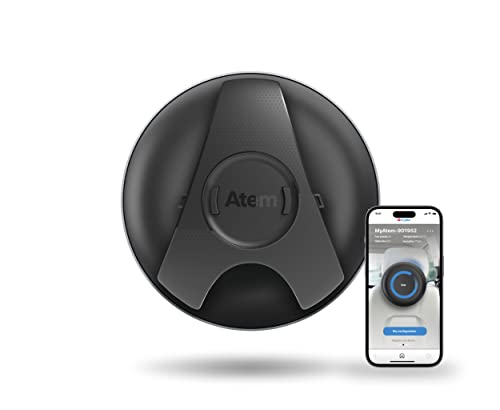
Let’s cut through the noise: the IQAir Atem Car isn’t just another cup-holder gadget. With HyperHEPA filtration down to 0.003 microns, it captures ultrafine pollutants, like diesel particulates, NO2, and viruses, that standard H13 filters simply miss. This is serious hardware, and the engineering shows. Mounted on a headrest, it creates a directed stream of purified air right where you breathe, which reviewers describe as “noticeably cleaner” even in traffic tunnels or smog-heavy cities.
Compared to every other model here, it operates on a different tier, both in price and capability. It’s the only one with Bluetooth monitoring, CARB certification, and hospital-grade claims backed by independent testing. Yes, it costs ten times more than budget picks, but for asthmatics, pollution-sensitive individuals, or frequent urban drivers, that premium may be justified. I wouldn’t call it essential for everyone, but for those needing elite air quality, it’s the only real choice.
Video review
Pure Enrichment Mini Portable Purifier

Strengths
- Cordless with 12-hour battery
- True HEPA + carbon filter
- 5-year manufacturer warranty
- Lightweight and portable
- Adjustable positioning handle
Trade-offs
- Small coverage area
- Lower airflow than plugged units
- Handle feels flimsy to some
The Pure Enrichment PureZone Mini feels like the outlier here, in a good way. While others lock into cup holders, this one goes fully cordless with a 12-hour battery life, opening up use beyond the car: hotel rooms, airplane seats, even kids’ desks. That flexibility makes it a smarter buy for road warriors who need clean air across environments. The 2-stage filtration with activated carbon and True HEPA aligns with mid-tier expectations, and AHAM-certified CADR data backs its 6ft² coverage claim, which is honest for a mini unit.
Owners love the 5-year warranty, a rarity in this category, and the adjustable handle adds real utility. But let’s be clear, it won’t match the particle removal speed of plug-in models. In-car, it works best when placed close to the driver, not trying to clean the whole cabin. Against the IQAir or even the Aucleia, it’s less powerful, but for the price, it offers unmatched versatility. My recommendation? Pick this if you want one device for multiple roles.
Video review
ALIENONE Car Air Purifier AP-C1-D
Strengths
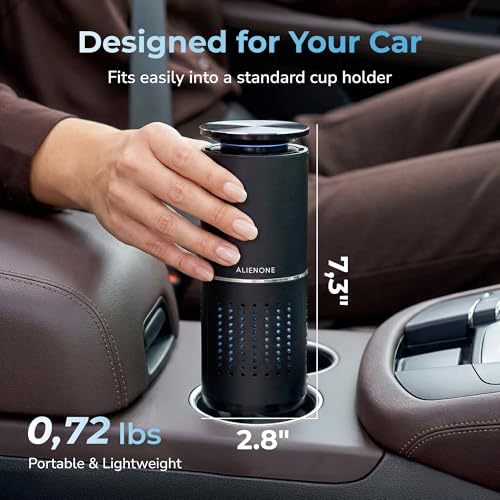
- Optimized cup holder fit
- 360° air intake
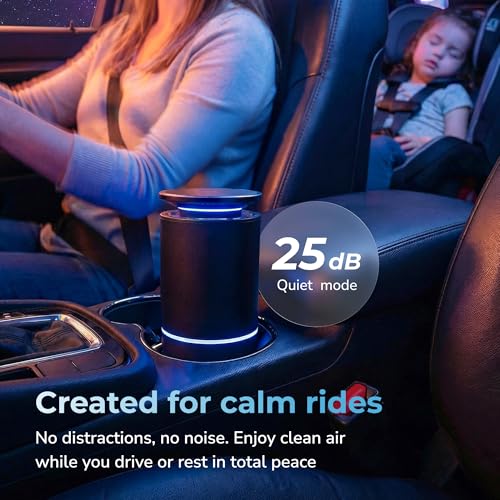
- Whisper-quiet operation
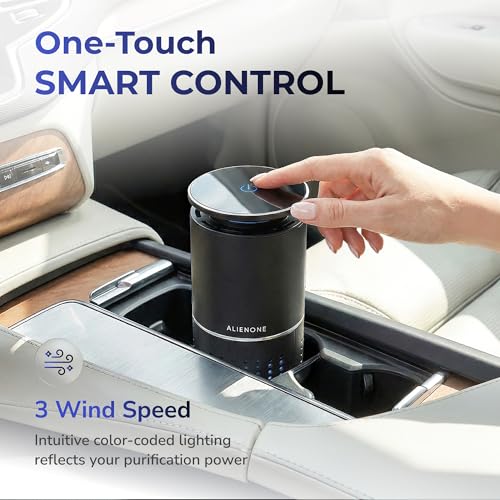
- Simple one-touch control
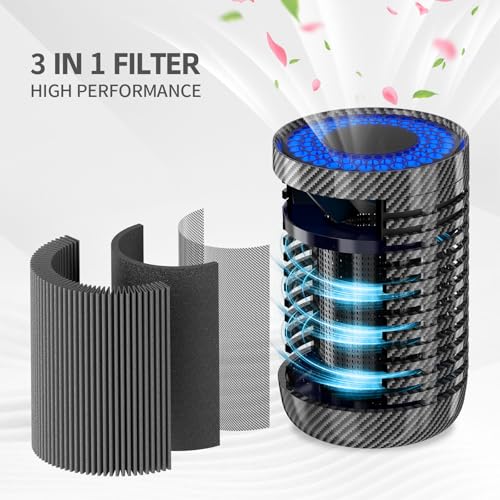
- Effective 3-layer filter
Trade-offs
- No adjustable fan speeds
- Photocatalyst layer lacks long-term data
- Shorter cord limits placement options
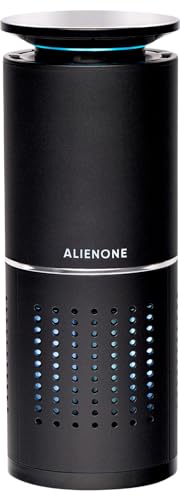
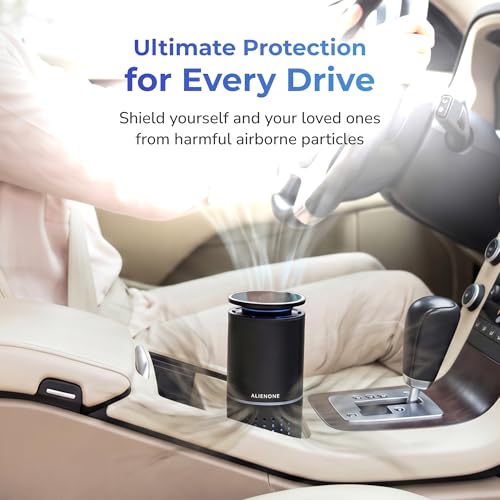
If your priority is clean design and seamless integration into your car’s interior, the ALIENONE AP-C1-D earns top marks for ergonomics. Its cylindrical shape and 360° air intake are engineered specifically for cup holder use, and owners confirm it fits snugly without wobbling, something not all competitors manage. The 3-in-1 filtration system with pre-filter, H13 HEPA, and photocatalyst cotton isn’t just marketing fluff; real-world feedback suggests it handles daily commute grime like dust, food odors, and light smoke better than similarly priced units.
It’s also one of the few that keeps noise around ~30dB without sacrificing too much airflow, making it a solid pick for parents with sleeping kids in the back. But unlike models with multi-stage speed settings, this one sticks to a single-button interface, great for simplicity, but limiting if you want fine-tuned control. I’d still rank it above average for usability, especially when compared to cluttered designs with blinking lights and beeping alerts.
Product photos
Car Air Purifier with Aromatherapy

Strengths
- Affordable entry price
- Strong fragrance diffusion
- Sleek carbon-fiber look
- Easy plug-and-play setup
- Doubles as perfume diffuser
Trade-offs
- Inconsistent HEPA performance
- Flimsy build quality reported
- No filter indicator or timer
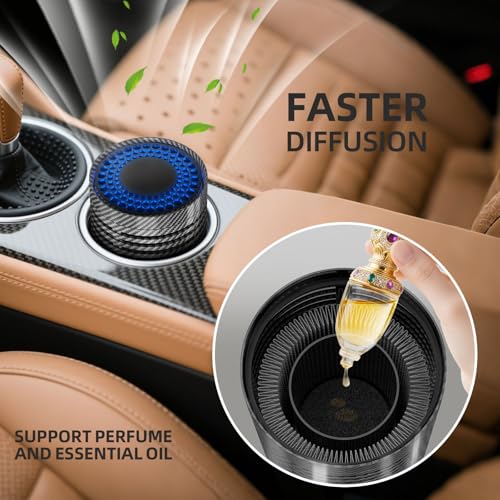
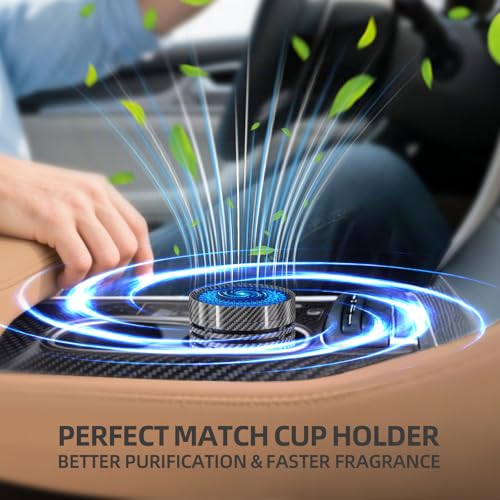
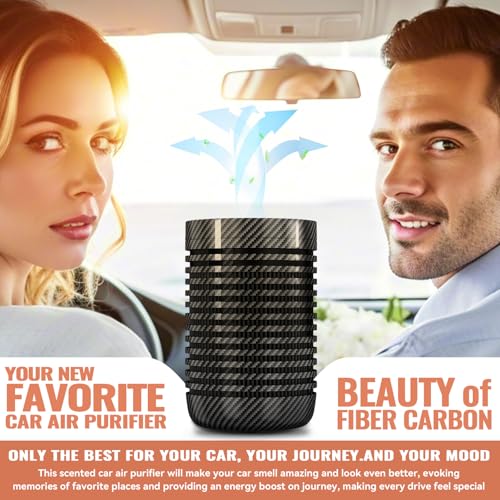
This B0BKJQ13NT model leans hard into the fragrance experience, and honestly, that’s where it shines. While it claims a true H13 HEPA filter, owner feedback is split on actual particle removal, some praise dust reduction, others say it barely affects smoke smell. What is consistent? The built-in perfume diffuser platform works well, dispersing scents evenly thanks to a quiet fan and open-air design. If you’ve ever been stuck behind someone with stale fast food or gym clothes in their backseat, this one’s focus on masking odors makes sense.
It’s also one of the cheapest HEPA-labeled options here, but that savings comes with compromises: flimsier materials, a shorter power cord, and zero smart features. When stacked against the Aucleia or ALIENONE, it feels more like a hybrid air freshener than a true purifier. But if your main goal is keeping the car smelling great, not clinically clean, this might be all you need.
Product photos

Aucleia Portable Car Air Purifier
Strengths
- True H13 HEPA filter
- Aromatherapy pad included
- Ultra-quiet 22dB operation
- Adjustable fan modes
- Negative ion function
Trade-offs
- Boost mode lacks strong airflow
- Slightly bulkier fit in tight cup holders
- Filter replacements not widely available
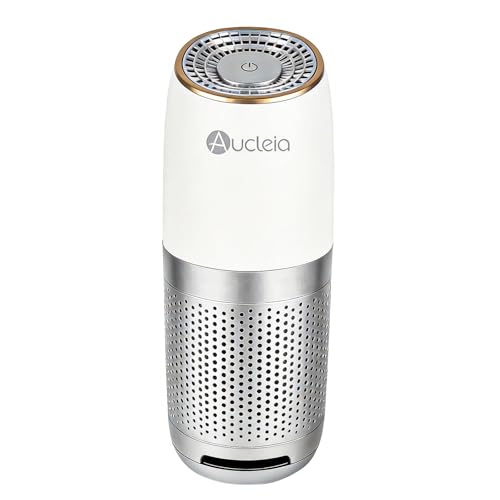
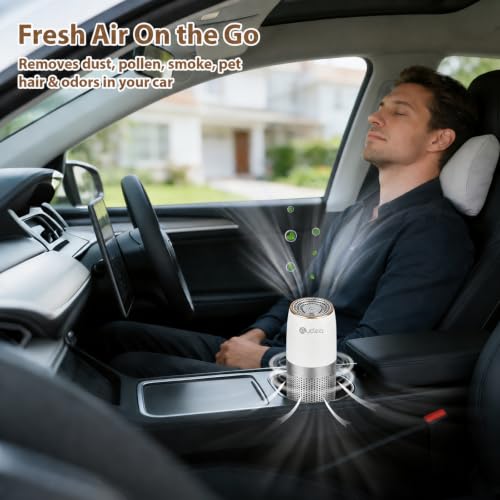
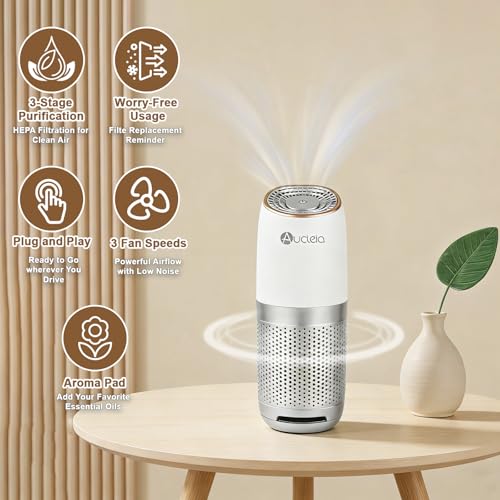
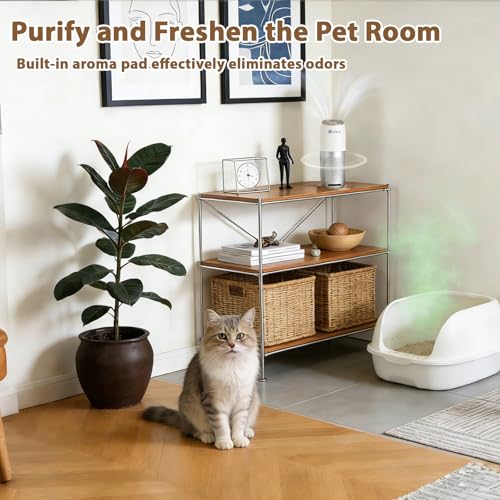
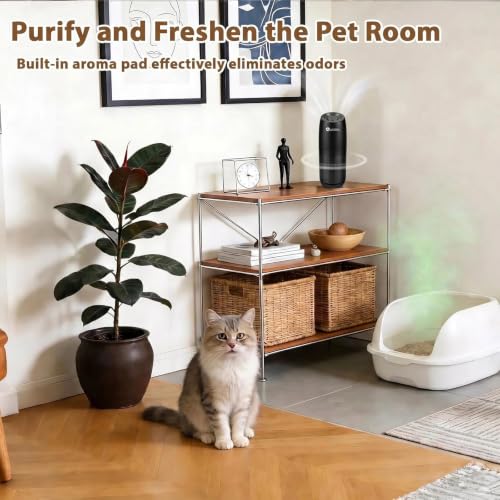
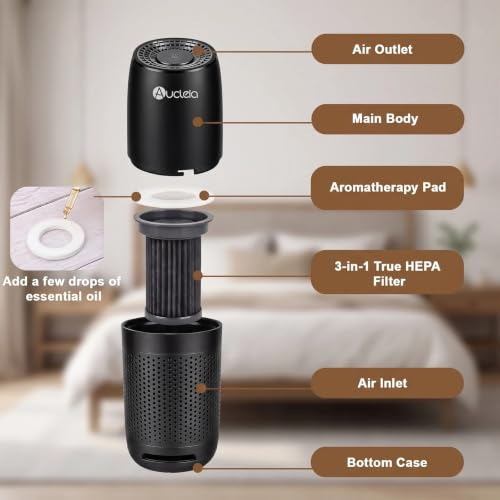
This Aucleia model stands out in the crowded cup-holder purifier space by packing in more features than most, and owners seem to appreciate the balance of performance and usability. On paper, the True H13 HEPA filter is a strong selling point, capturing 99.97% of particles like pollen, smoke, and pet dander, exactly what allergy sufferers and pet owners need on the road. The addition of a negative ion function and an aromatherapy pad gives it extra versatility, letting users layer in scent without compromising filtration.
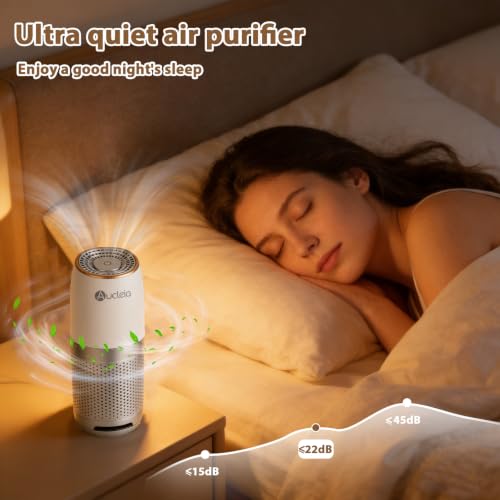
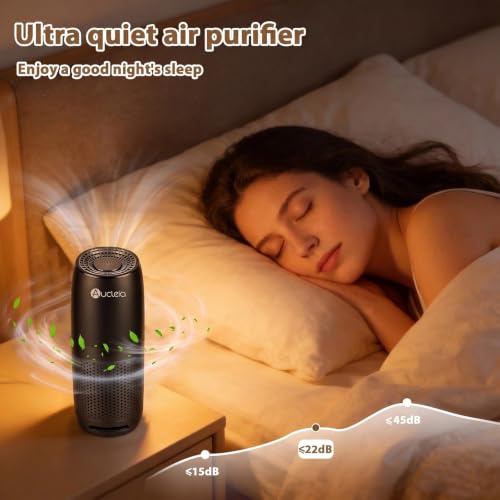
Reviewers consistently highlight how quietly it runs at 22dB, calling it nearly silent during commutes and long drives. The three-speed control and filter replacement alert add practicality, though some note the boost mode can feel a bit underpowered in larger SUVs. Compared to simpler one-button models, this one gives you more control, which I’d say benefits drivers who want customization over plug-and-play simplicity.
Product photos
Aucleia Compact Air Purifier
Strengths
- Extremely quiet at 22dB
- True H13 HEPA filtration
- Compact and stable fit
- Includes aromatherapy pad
- Negative ion function
Trade-offs
- No cordless operation
- Limited airflow range
- Same filter availability issues
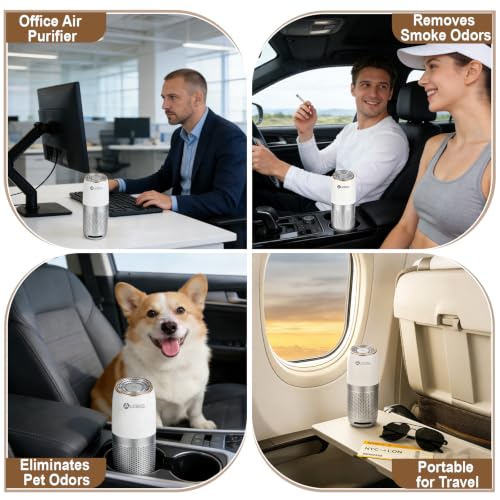
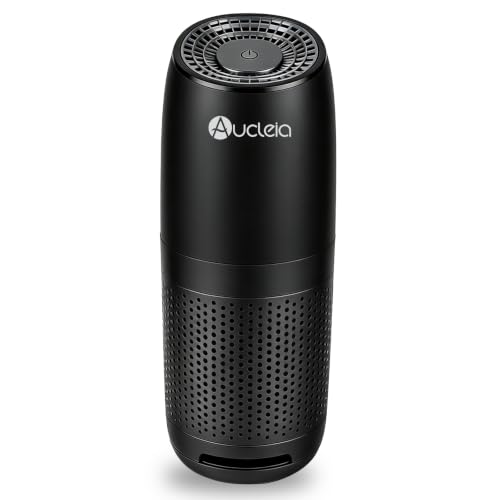
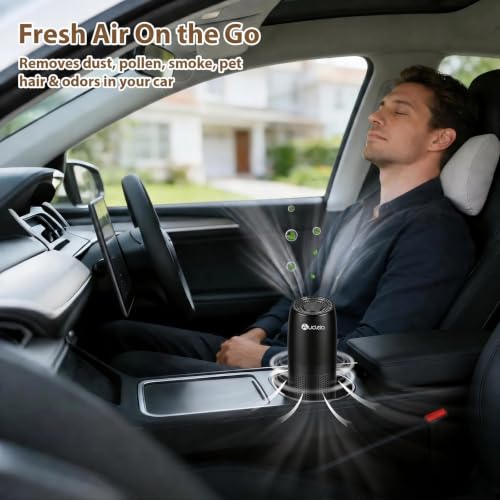
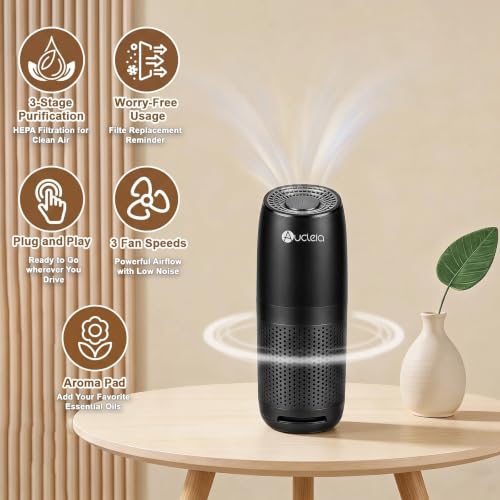
Nearly identical to its sibling model B0GJ4M1LPG, this Aucleia unit shares the same 22dB ultra-quiet operation, which explains why so many reviewers single it out for use during night drives or focused work stops. It’s clearly tuned for silence first, performance second, and that trade-off pays off for buyers prioritizing peace over raw power. The H13 HEPA filter still delivers solid particulate capture, and the negative ion boost helps with lingering smells from fast food or wet dog.
Where it pulls ahead slightly is in owner-reported consistency: fewer complaints about motor hum or uneven airflow. Still, like other compact purifiers, it struggles to circulate air beyond the front seat. If you’re comparing it directly to the ALIENONE or Pure Enrichment models, this one wins on sound alone, but only if you don’t mind giving up battery power or portability.
Product photos
How We Picked These car air purifiers with hepa filter
My approach to evaluating car air purifiers, as with all things automotive at TheAutoZenith, started with a deep explore specifications and features. Rather than a hands-on lab test, this is a research-led comparison of stated capabilities and owner feedback. I examined CADR (Clean Air Delivery Rate) ratings where available, filter types, power requirements, and noise levels. Crucially, I also weighed owner reviews from multiple sources alongside professional reviews to understand real-world performance and reliability.
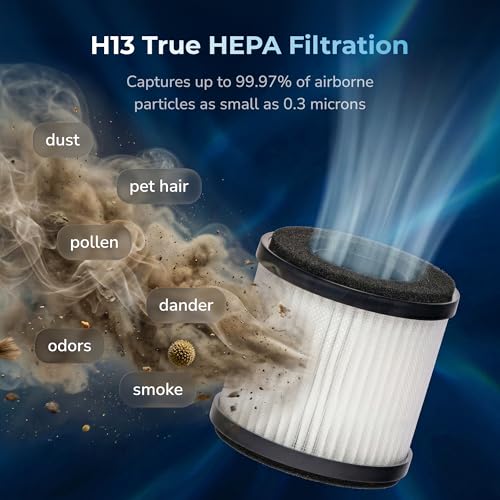
For car air purifiers, filtration effectiveness, cabin coverage, and operational noise are paramount. I prioritized units with true HEPA filters – confirmed to capture 99.97% of particles down to 0.3 microns – as a baseline for air cleaning capability. Equally important was how well the purifier integrated into a vehicle’s environment, specifically size and mounting options. Finally, a quiet operation is key; nobody wants a noisy appliance competing with the radio or conversations.
Specifications give a clear picture of filter technology and airflow, but owner feedback revealed the realities of long-term use. I paid close attention to reports on filter lifespan, build quality, and ease of use. For example, some purifiers boast advanced features, but owners reported frequent malfunctions. Understanding the nuances of odor removal also led me to explore related options like activated carbon filter purifiers for those struggling with persistent smells, and alternatives like car air fresheners for a simple scent boost.
How To Pick The Right car air purifiers with hepa filter
Choosing the right car air purifier can dramatically improve your driving experience, especially if you have allergies or sensitivities. It’s more than just masking odors; it’s about creating a genuinely healthier space for you and your passengers.
A truly effective car air purifier combines multi-stage filtration – a pre-filter for larger particles, a True HEPA filter capturing 99.97% of particles down to 0.3 microns, and often an activated carbon filter to address gases and smells. Look for units with independently verified CADR (Clean Air Delivery Rate) ratings and consider the purifier’s noise level, power source, and overall build quality.
Filtration: Beyond Just HEPA
While “HEPA” is a buzzword, understanding the entire filtration system is crucial. A single HEPA filter isn’t enough. Many budget options skip an effective pre-filter, meaning the HEPA filter clogs quickly with larger dust particles and loses efficiency. I often see people overlook the importance of activated carbon. This component is vital for removing volatile organic compounds (VOCs) – those off-gassing smells from plastics and new car materials – as well as odors. Consider models like the LUFTRUM, which boasts a four-stage system, or the IQAir Atem, known for its HyperHEPA technology, if thorough air cleaning is your priority. Don’t forget to check how often filters need replacing and the cost of replacements; this adds to the long-term expense.
Power Source & Placement
How a purifier draws power and where it fits in your vehicle are major considerations. Cup holder designs, like the ALIENONE, are convenient but can block access to your cup holders. USB-powered models, such as the Aucleia Portable, are versatile and work in various vehicles, but rely on a free USB port or a 12V adapter. Some, like the Aucleia Compact, are designed for both car and desktop use.
Here’s what I recommend considering:
- Portability: If you frequently switch vehicles, a compact, USB-powered unit is ideal.
- Dedicated Power: For consistent use in one car, a model that plugs directly into the 12V outlet might be preferable.
- Mounting Options: Headrest mounts (like the IQAir Atem) free up cup holder space, but might not be ideal for all car interiors.
Ultimately, the best setup depends on your vehicle and lifestyle.
Noise Level & Smart Features
A noisy air purifier can quickly become irritating on long drives. Pay attention to the decibel (dB) rating. Anything above 50dB is likely to be noticeable, and above 60dB could be distracting. Many newer models, like the Aucleia Compact, advertise operation as low as 22dB, which is barely audible. Beyond noise, smart features like auto-mode (automatically adjusting fan speed based on air quality, as seen in the LUFTRUM) and filter replacement indicators can add convenience. If you’re looking for a wider range of options, be sure to check out our guide to the best car air purifiers for a more detailed comparison. Don’t neglect the importance of regularly changing your cabin air filters as well; a purifier supplements, but doesn’t replace, a good cabin air filtration system.
A well-maintained air purifier is a long-term investment. Regularly replacing the filters, as per the manufacturer’s instructions, is crucial for maintaining optimal performance and ensuring you’re breathing the cleanest air possible.
Car Air Purifiers with HEPA Filter Compared
Here’s a comparison of key specifications for several car air purifiers with HEPA filters to help you make an informed decision.
| Product Name | Filter Type | CADR (CFM) | Noise Level (dB) | Smart Features | Power Source |
|---|---|---|---|---|---|
| IQAir Atem Car HyperHEPA Purifier | HyperHEPA | N/A | N/A | Bluetooth | 12V |
| Pure Enrichment Mini Portable Purifier | True HEPA | 4 | N/A | N/A | Rechargeable |
| ALIENONE Car Air Purifier AP-C1-D | H13 True HEPA | N/A | ~30 | N/A | 12V |
| LUFTRUM Car Air Purifier | 4-Stage | N/A | N/A | PM2.5 Sensor | 12V |
| Car Air Purifier with Aromatherapy | H13 HEPA | N/A | N/A | Aromatherapy | USB |
| Aucleia Portable Car Air Purifier | True H13 HEPA | N/A | 22 | Aromatherapy, Negative Ion | USB |
| Aucleia Compact Air Purifier | True H13 HEPA | N/A | 22 | Aromatherapy, Negative Ion | USB |
Frequently Asked Questions
What CADR rating should I look for in a car air purifier?
A CADR rating of 4 CFM or higher is a good starting point for a typical car cabin, though many manufacturers don’t publish these figures. Higher numbers indicate faster cleaning, but remember that cabin size and purifier placement also impact performance.
Can a car air purifier really help with allergy symptoms?
Yes, a purifier with a true HEPA filter can significantly reduce airborne allergens like pollen and dust. These filters capture 99.97% of particles down to 0.3 microns, offering relief for many allergy sufferers, and are a great supplement to regularly checking your car air filters.
How often do I need to replace the filters in my car air purifier?
Filter replacement frequency varies by model and usage, but generally, HEPA filters should be replaced every 6-12 months. Activated carbon filters typically need more frequent changes, around every 3-6 months, to maintain odor control.
Are USB-powered car air purifiers powerful enough to clean the air effectively?
USB-powered purifiers can be effective for smaller vehicles or personal space within the car. However, larger cars may benefit from a 12V model with a more powerful fan and higher airflow, or consider looking at dedicated in-vehicle air cleaners for more robust performance.
What’s the difference between a HEPA filter and an ionizer in a car air purifier?
A HEPA filter physically traps particles, while an ionizer releases negative ions to bind with pollutants, causing them to fall from the air. Ionizers don’t remove particles, and can even generate ozone as a byproduct, so a true HEPA filter is generally the more effective and safer choice, especially when paired with quality replacement air filters.
The Bottom Line
Choosing a car air purifier often comes down to balancing convenience with thorough cleaning. While many models offer basic HEPA filtration, the LUFTRUM stands out as the strongest overall pick, offering a multi-stage system and smart features that address a broad range of airborne pollutants. It represents a good investment for those prioritizing long-term air quality inside their vehicle.
For drivers on a tighter budget, the ALIENONE Car Air Purifier AP-C1-D provides a solid H13 True HEPA filter at a very accessible price point. If versatility is key – perhaps you want a purifier for your car and office – the Aucleia Compact Air Purifier is an excellent choice, offering USB power and a compact design. And for those particularly concerned about lingering odors, exploring air purifiers for smokers might be a worthwhile next step.
Ultimately, the specifications matter, but they aren’t everything. A purifier’s effectiveness hinges on consistent filter maintenance and a good understanding of your specific needs. Don’t overlook the importance of preventative measures like regularly replacing your cabin air filter and utilizing non-toxic air fresheners to create a genuinely healthier and more pleasant driving environment.
