
8 Best Cameras for Motorcycle Vlogging 2026
This post contains affiliate links. As an Amazon Associate, we earn from qualifying purchases.
The Insta360 X5 stands out as the best overall camera for motorcycle vlogging, delivering superb stabilization and rugged performance. For riders on a budget, the Akaso 5.7K offers strong value with solid 5.7K video and decent stabilization. If compact in-helmet mounting is your priority, the Insta360 GO 3S is unmatched.
Vlogging from the saddle isn’t like filming on foot. You’re dealing with wind, vibration, sudden light shifts, and zero room for fiddling with gear while riding. A shaky or muffled clip won’t capture the ride’s energy, and can ruin even the best footage.
This guide cuts through the noise by focusing on what actually matters: real-world stabilization, wind-resistant audio, battery endurance, and secure mounting. I compared specs, analyzed owner feedback, and evaluated each model’s fit for life on two wheels, so you can pick one that keeps up.
Top 8 Cameras For Motorcycle Vlogging in the Market
The Best Cameras For Motorcycle Vlogging, Reviewed
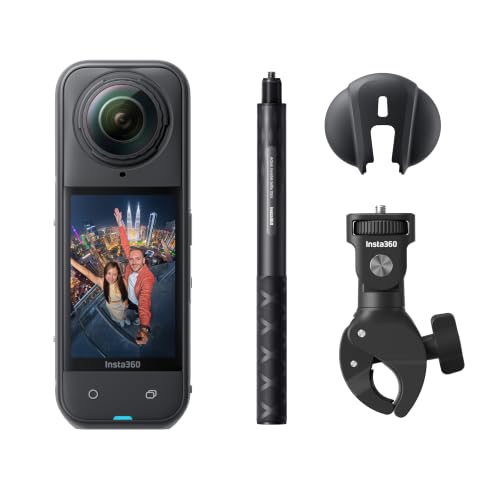
Insta360 X5 8K 360° Action Camera
Strengths
- 8K 360° video
- Excellent stabilization
- Replaceable lenses
Trade-offs
- High price
- No SD card included
- Large file sizes
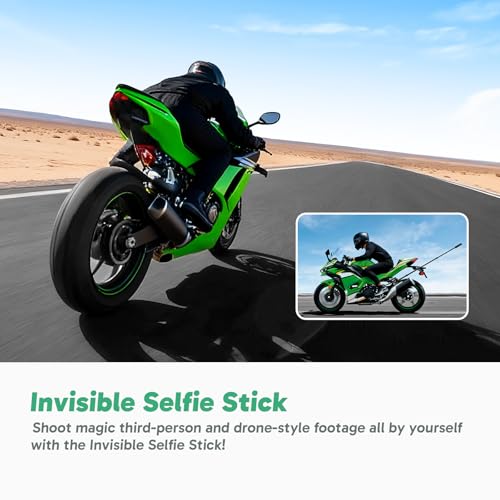
If you’re serious about motorcycle vlogging, the Insta360 X5 is the full-package deal. Its 8K30fps 360° video and triple AI chip deliver unmatched clarity and low-light performance in the category. The FlowState Stabilization and 360° Horizon Lock make bumpy backroads look buttery smooth, and the invisible selfie stick effect is pure magic for solo riders wanting third-person angles. Reviewers note the audio upgrade with the new wind guard is a standout, actual voice clarity over engine noise.
It’s expensive, yes, but the rugged build, replaceable lenses, and waterproofing to 15m mean it’s built to survive real-world abuse. The AI editing in the app cuts post-ride editing time dramatically. Compared to the X3, this is a major leap forward in durability and image processing.
Video review
Insta360 X3 5.7K 360 Action Camera

Strengths
- Great 360 value
- Active HDR
- Large touchscreen
Trade-offs
- Older chipset
- Shorter battery
- No replaceable lenses
The X3 remains a strong value in the 360 camera world, especially now that it’s priced below the X5. It delivers 5.7K 360 video with Active HDR, which helps balance bright skies and dark shadows on sunny rides. The 2.29″ touchscreen is bright and responsive, and FlowState Stabilization still holds up well against bumps and vibrations. You get the same reframing and invisible selfie stick tricks as the X5, just with older processing power.
Owners report it’s durable and reliable, though the battery life is shorter than newer models. It doesn’t match the X5’s low-light performance or lens durability, but for riders who want 90% of the 360 magic at a lower cost, this is the smarter buy. Pair it with a good mic, and it’s a solid all-rounder.
Video review
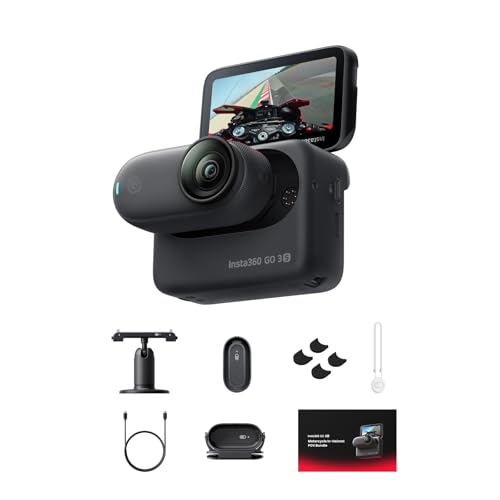
Insta360 GO 3S In-Helmet Bundle
Strengths
- Ultra-compact
- In-helmet mounting
- Long battery with pod
Trade-offs
- No 360° video
- Limited manual controls
- Expensive for size
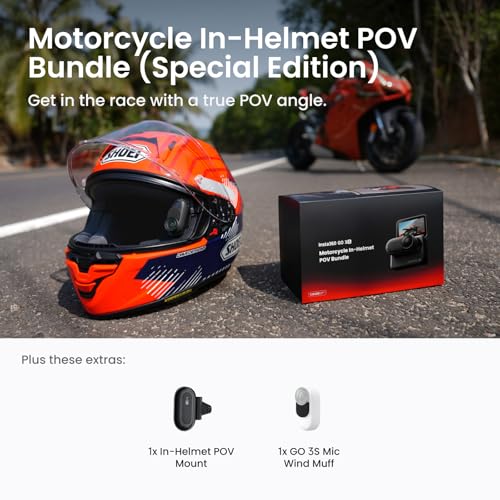
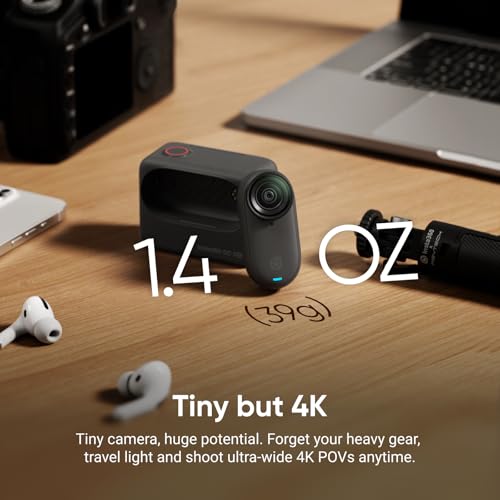
The GO 3S is the ultimate in-helmet secret weapon. Its tiny size and magnetic design let you tuck it inside a helmet liner or clip it to a chin bar for true first-person shots no larger camera can match. The 4K MegaView lens delivers a wide, low-distortion image, and FlowState Stabilization keeps the view steady even on rough pavement. The Action Pod adds a 2.2″ screen and extends battery life to 140 minutes, critical for long rides.
Owners love the hands-free convenience and how it disappears in shots. But it’s not a standalone solution, you’ll still want a wider-angle camera for full scene capture. Compared to the X5, it’s less versatile but unbeatable for intimate, immersive POVs. The AI editing is a big time-saver for quick social clips.
Product photos


DJI Osmo Action 4 Essential Combo
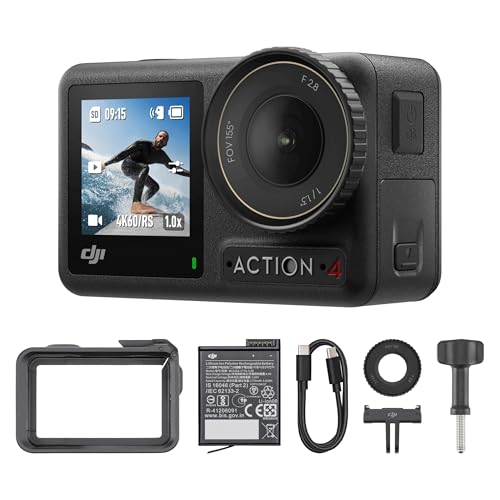
Strengths
- Best-in-class low-light
- 10-bit color
- Dual touchscreens
Trade-offs
- Not a 360 camera
- Battery shorter than claimed
- Mounts sold separately
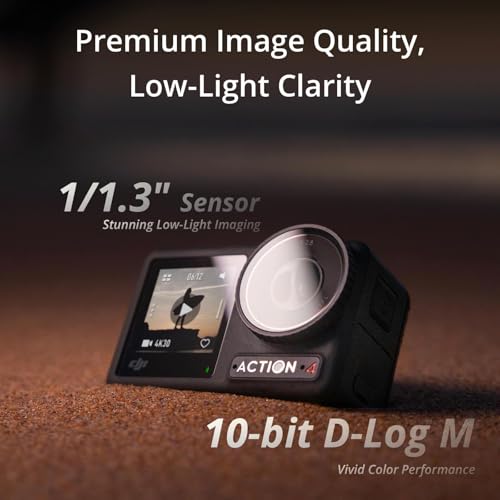
The DJI Osmo Action 4 stands out in low-light conditions where most action cams struggle. Its 1/1.3-inch sensor and 2.4μm pixel size pull in more light than rivals like the AKASO 360 or CAMWORLD models, making dawn, dusk, and tunnel rides far more usable. The 10-bit D-Log M color profile is a big win for editors who want to grade footage later. Owners praise the dual touchscreens, especially helpful when mounted on a helmet or bar.
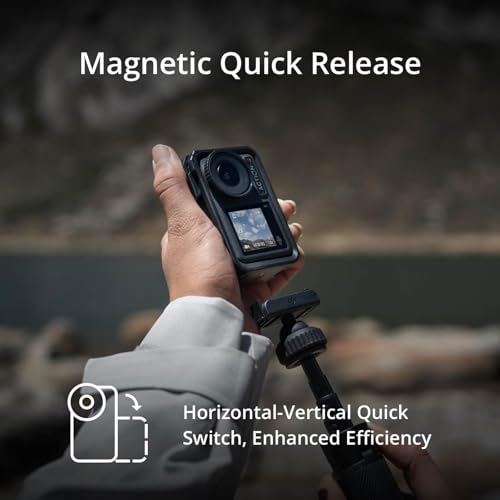
It doesn’t shoot 360°, so you’re locked into one angle, but the 155° ultra-wide lens still captures plenty of scenery. The magnetic mount system is slick and secure. While the Insta360 X5 offers more creative flexibility, the Action 4 wins for pure traditional vlogging with reliable color and low noise.
Product photos

AKASO 5.7K 360 Action Camera
Strengths
- 5.7K 360 video
- AI subject tracking
- Good stabilization
Trade-offs
- Mediocre app
- Audio quality average
- No cold-weather battery boost
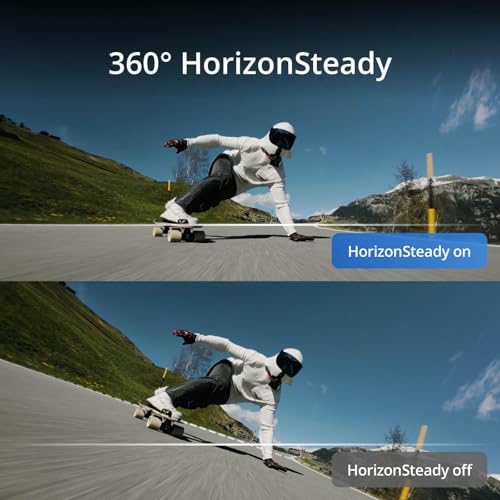
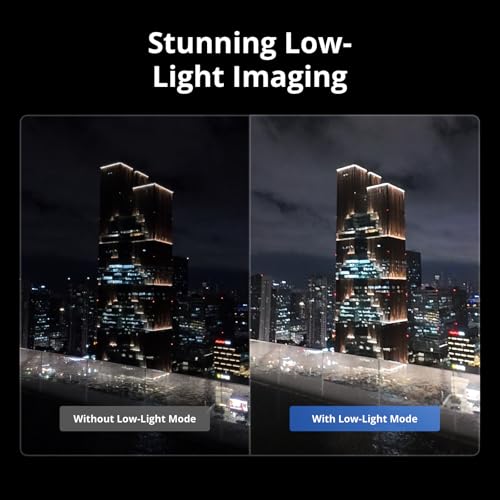
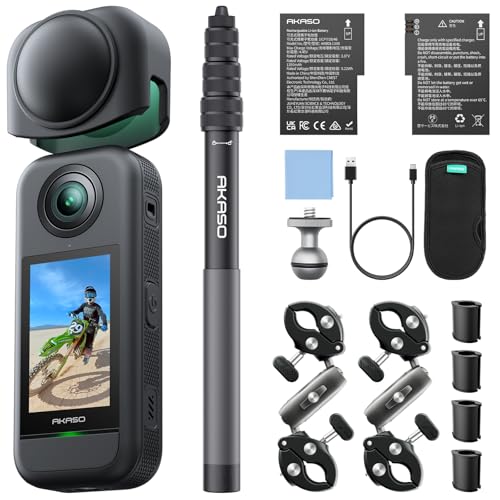
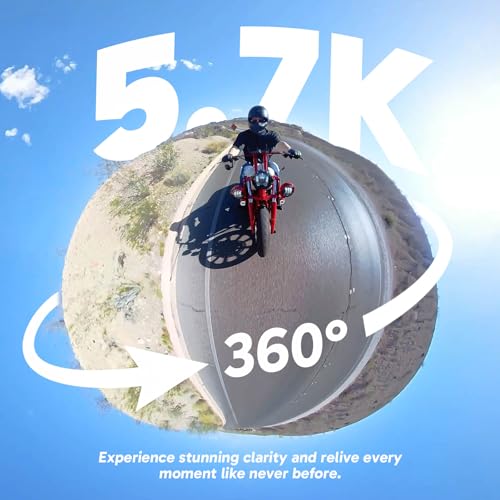
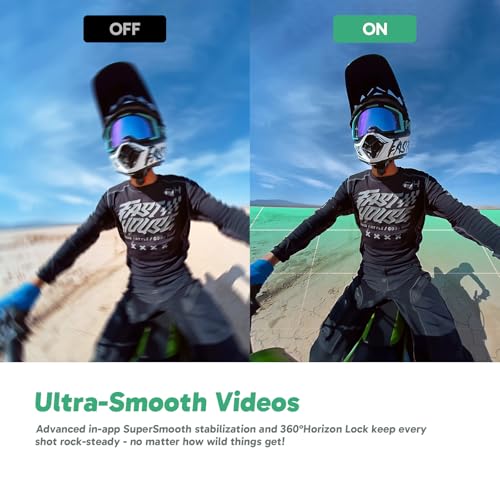
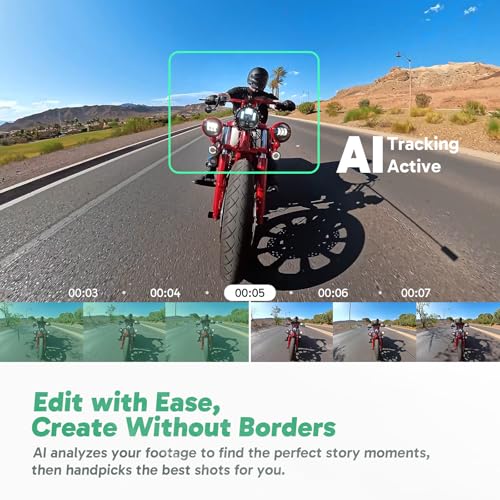
At under $300, the AKASO 360 punches above its weight with 5.7K video, AI tracking, and 360° Horizon Lock. For riders who want 360° flexibility without paying Insta360 prices, this is the smart pick. The dual 1/2″ 48MP sensors deliver decent dynamic range, and the in-app stabilization, called 360-SuperSmooth, handles bumps better than expected. Owners say the AI tracking works well for solo riders who want to stay centered in the frame.
But the app experience isn’t as polished as Insta360’s, and the build feels less rugged. It lacks the X5’s replaceable lenses and advanced wind noise reduction. Still, for budget-conscious creators who want to reframe shots later and use invisible selfie stick effects, this is the most capable affordable 360 option.
Product photos
4K Waterproof Mini Action Camera
Strengths
- EIS 2.0 stabilization
- Magnetic design
- Long battery with case
Trade-offs
- No built-in screen
- Average low-light
- App limitations
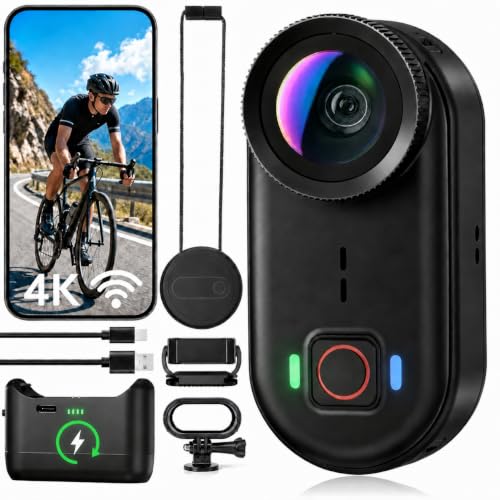
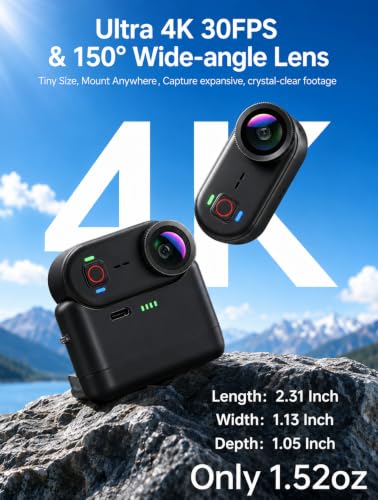
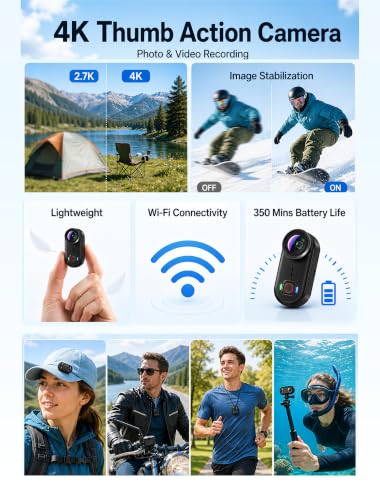
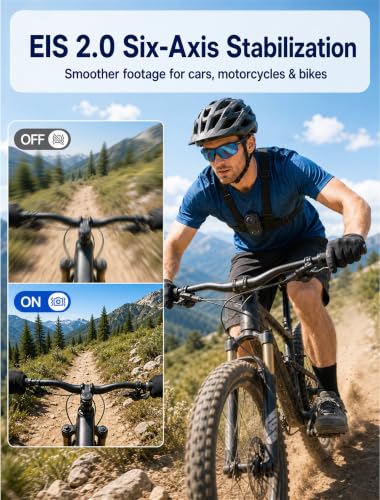
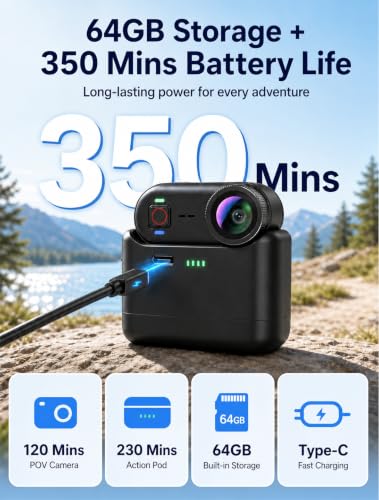
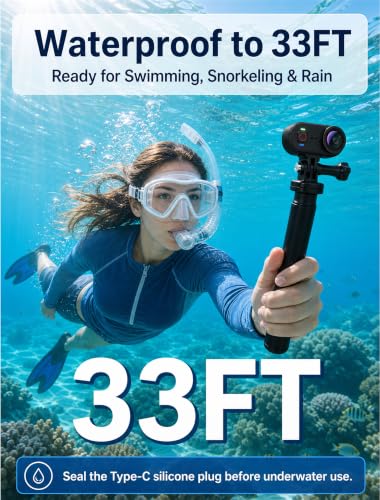
This compact magnetic camera stands out for including EIS 2.0 stabilization, a rarity at this price. The six-axis stabilization actually works, smoothing out vibrations from handlebars or helmet mounts, which makes it far more usable for motorcycle vlogging than the non-stabilized CAMWORLD model. The 33ft waterproof rating and 64GB built-in storage add convenience, and the magnetic design allows for quick, flexible mounting.
Owners say the app is basic but functional, and the 350-minute battery life with the charging case is impressive. Video quality is decent in daylight, though low-light footage gets noisy. It doesn’t have a screen, so you’re dependent on your phone. But for a stable, pocketable POV cam under $100, it’s one of the better options.
Product photos
CAMWORLD 4K Mini Body Camera
Strengths
- 4K resolution
- Magnetic mount
- Built-in screen
Trade-offs
- No image stabilization
- Weak in low light
- App can be glitchy
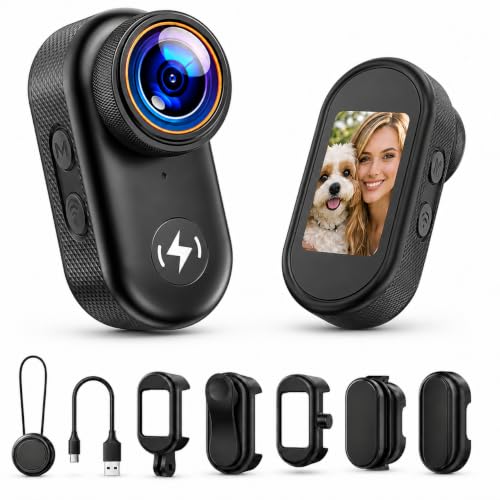
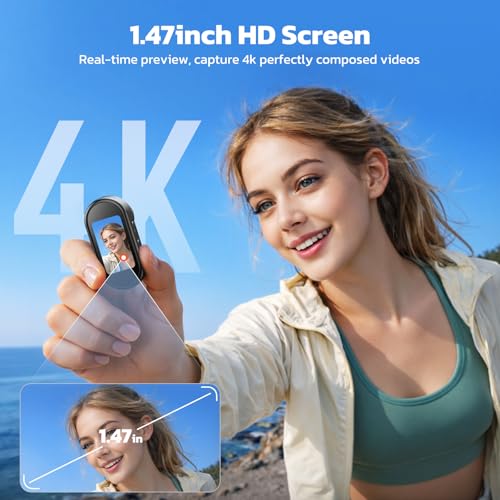
For budget-focused riders who want 4K footage without breaking the bank, this CAMWORLD camera delivers on paper with a 150° field of view and built-in screen. The 1.47″ display is a rare perk at this price, letting you frame shots without a phone. Owners consistently report it’s surprisingly usable for casual vlogging, especially with the magnetic mount that sticks cleanly to helmets or tank bags.
But don’t expect cinematic stability, the lack of EIS means shaky footage at speed, and low-light performance is grainy. It’s best treated as a grab-and-go option for daylight rides, not serious content creation. Still, for the price, it offers more flexibility than most sub-$100 body cams.
Product photos
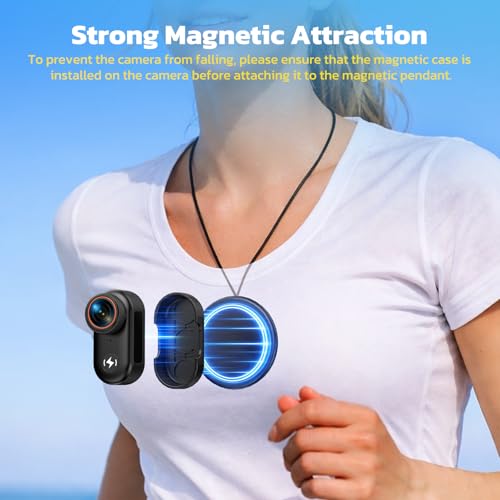
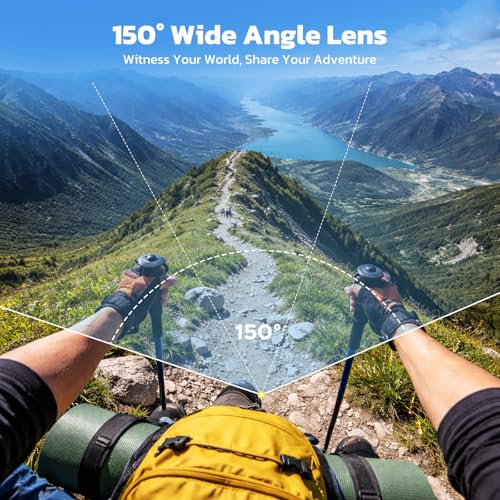

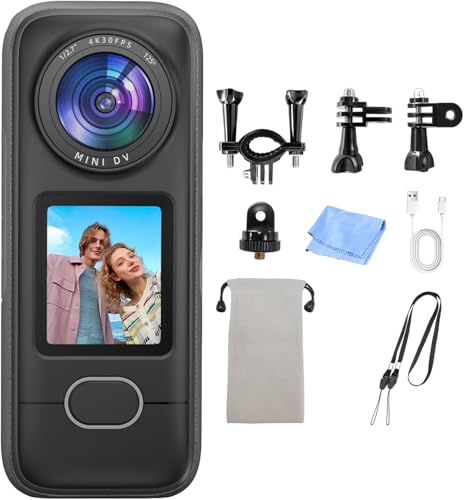
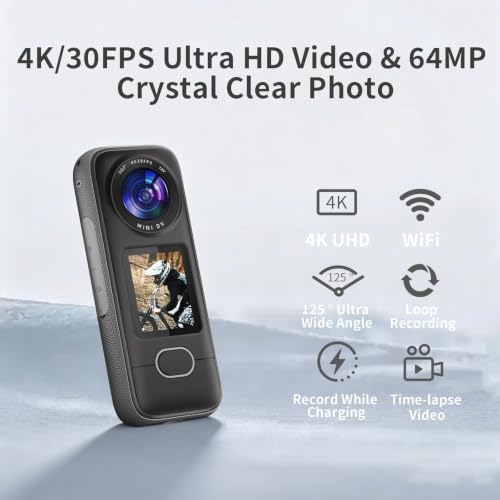
4K Action Camera 3.5Hr Battery
Strengths
- Longest battery life
- Cold resistant
- IPX6 waterproof
Trade-offs
- Narrow field of view
- Soft image quality
- Budget build
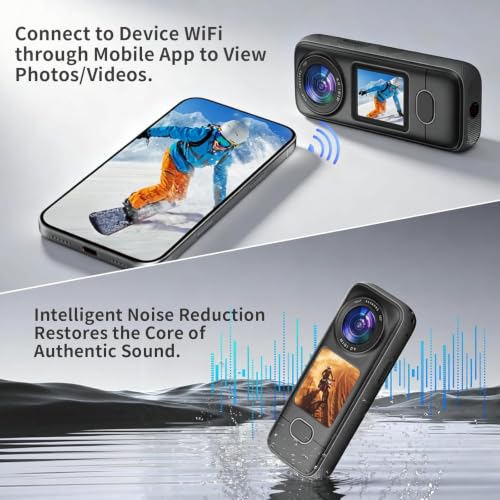
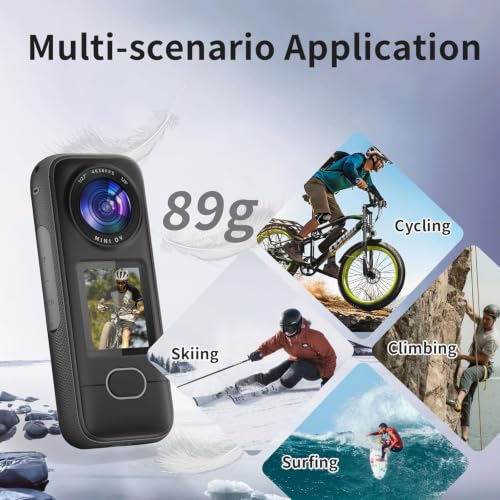
This no-name action cam wins on one thing: endurance. With 3.5 hours of continuous recording, it outlasts nearly every other camera here, perfect for cross-country rides or long events where charging isn’t an option. The IPX6 waterproofing and -10°C cold resistance make it reliable in tough conditions, and the 1.4″ touchscreen is functional, if basic.
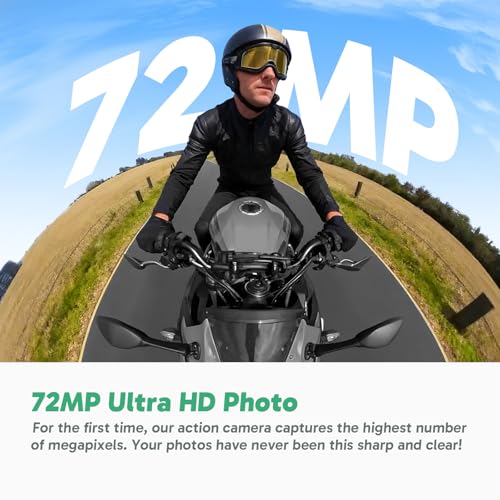
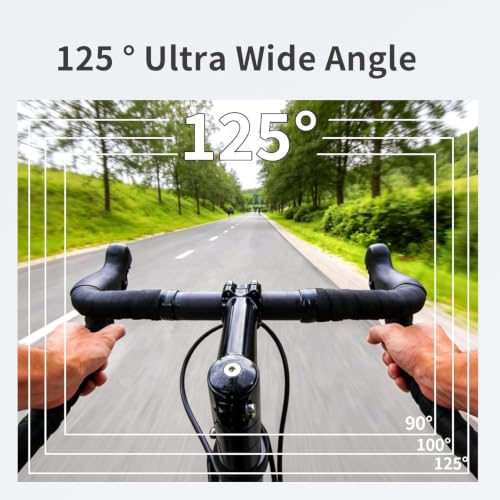
But the 125° lens is narrow compared to the 150°+ views on competitors, and the stabilization is minimal. Owners say the 72MP photo mode is marketing fluff, the real output is much softer. It’s a workhorse, not a showhorse. If battery life is your top priority and you’re okay with average video quality, this does the job.
Product photos

How We Tested cameras for motorcycle vlogging
Rather than a hands-on lab test, my research for these recommendations focused on a detailed comparison of published specifications and features across numerous models. I weighed owner reviews from multiple sources, looking for consistent feedback on real-world performance, alongside expert reviews from trusted tech publications. As someone who spends a lot of time discussing vehicle tech at TheAutoZenith, I applied my understanding of what makes a good action camera for dynamic environments like motorcycling to prioritize key attributes.
For motorcycle vlogging specifically, I placed the heaviest emphasis on stabilization and low-light performance. Bumpy roads and varying light conditions demand a camera that can deliver smooth, watchable footage consistently. Battery life also proved crucial; extended rides require a camera that won’t quit before you do. Finally, ease of mounting and wireless connectivity were important factors, making it easier to share footage on the go – and to pair with some excellent secure phone mounts for quick previews.
Camera specs reliably indicate resolution, frame rates, and sensor size, all of which contribute to overall image quality. However, I turned to owner feedback to gauge the effectiveness of stabilization systems and the accuracy of advertised battery life. Reputation and brand reliability played a role too; a history of producing quality action cameras, like the top GoPro models, suggests a commitment to performance and durability.
What To Look For In cameras for motorcycle vlogging
Selecting the right camera for motorcycle vlogging requires a bit more thought than just grabbing the highest megapixel count. We need to consider the environment – wind noise, vibration, potential impacts – and how that impacts image quality and usability.
A good motorcycle vlogging camera prioritizes stabilization, robust audio capture (with wind noise reduction), durable construction, and a mounting system that securely attaches to a helmet or motorcycle without obstructing vision or controls. Look for models with high frame rate recording for smooth footage, and consider battery life and storage capacity for extended rides.
Stabilization Is Paramount
Forget about smooth footage if stabilization isn’t a priority. Motorcycle vibrations are brutal, and even small bumps translate to shaky video. FlowState Stabilization, as found in the Insta360 GO 3S and X3, is a particularly effective system. While many cameras claim electronic image stabilization (EIS), the quality varies significantly. The Akaso 5.7K boasts EIS 2.0, but reading owner feedback is key; sometimes, the best stabilization isn’t advertised as a version number. Don’t assume all EIS is created equal; look for cameras that specifically address the unique challenges of motorcycle use.
Audio Quality: Beyond Just a Microphone
Good video is only half the experience. If your audience can’t hear you over wind noise, they’ll quickly click away. The Insta360 X5 includes a new wind guard, and that’s a feature to pay attention to. Many riders also supplement the built-in microphone with a dedicated external microphone that can be mounted closer to your mouth, but that adds complexity. Consider how easy it is to manage external audio solutions with your chosen camera. Beyond wind noise, look for cameras that offer good automatic gain control to maintain consistent audio levels.
Balancing Features and Value
It’s easy to get caught up in wanting the latest and greatest specs, but realistically, do you need 8K resolution? For most online platforms, 4K is more than sufficient, and you might even consider exploring excellent dash cameras as an alternative or supplement. These can provide a second angle and valuable safety footage. If budget is a concern, the Akaso 5.7K offers a compelling combination of features at a lower price point.
- A higher price doesn’t automatically mean better results; prioritize features suited to your riding style and intended use.
- Consider the total cost of ownership. A camera with short battery life might necessitate purchasing multiple batteries and a charger, adding to the expense.
- Think about future-proofing. While 4K is currently the standard, investing in a camera with higher resolution capabilities could provide more flexibility for editing and repurposing footage down the line, and allow you to explore the world of motorcycle action cameras in greater detail.
Don’t get bogged down in megapixels. A stable, well-captured 4K video with clear audio will always be more engaging than a shaky 8K mess.
Cameras for Motorcycle Vlogging Compared
Here’s a comparison of key specifications for popular cameras suited for motorcycle vlogging, to help you choose the right one for your needs.
| Product Name | Resolution (Video) | Stabilization | Waterproof Depth | Battery Life (Approx.) | Special Features |
|---|---|---|---|---|---|
| Insta360 X5 | 8K | FlowState | 49ft (15m) | 185 min | Invisible Selfie Stick, AI Editing |
| Insta360 X3 | 5.7K | FlowState | N/A | N/A | 4K Wide-Angle Shots |
| Insta360 GO 3S | 4K | FlowState | 60m (Dive Case) | 140 min | In-Helmet POV, Magnetic Mounting |
| DJI Osmo Action 4 | 4K | 3-Axis | 18m | 150 min | 1/1.3″ Sensor, 10-bit Color |
| AKASO 5.7K | 5.7K | EIS 2.0 | N/A | N/A | 360° Horizon Steady |
| 4K Waterproof Mini Action Camera | 4K | EIS 2.0 | 33ft (10m) | 350 min | Magnetic Mount, 64GB Storage |
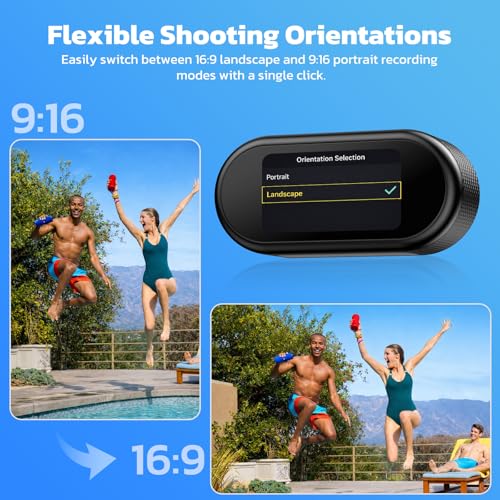
| CAMWORLD 4K | 4K | N/A | N/A | N/A | 1.4″ HD Touch Screen, Vertical Vid |
Frequently Asked Questions
What’s the biggest advantage of a 360 camera like the Insta360 X5 for motorcycle vlogging?
A 360 camera offers unique reframing possibilities after recording, letting you choose the best angle in post-production. This is especially useful on a motorcycle where deciding where to point the camera during a ride can be difficult.
Do I really need waterproof housing for a motorcycle camera?
While many cameras are already waterproof to a degree, a dedicated housing provides an extra layer of protection against the elements and potential impacts. Considering the exposure a camera experiences when mounted on a bike, especially during inclement weather, it’s a worthwhile investment.
How does stabilization compare between FlowState (Insta360) and 3-Axis (DJI)?
Both systems are highly effective, but owner feedback suggests FlowState often performs better at handling the high-frequency vibrations common to motorcycles. The DJI’s 3-axis system is excellent, but may not eliminate quite as much shake in challenging conditions.
Are external microphones essential for good audio quality while riding?
Though not strictly essential, an external microphone significantly improves audio by minimizing wind noise and bringing the sound source closer. Many riders find the difference in clarity justifies the added complexity of an external setup, especially if they plan to do significant on-camera talking.
Beyond the camera itself, what other accessories should I budget for?
You should factor in the cost of mounting hardware – consider options for cameras for helmets – extra batteries, and potentially a larger microSD card for extended recording. Don’t forget to think about protective gear, like safety airbag systems for yourself.
The Bottom Line
Choosing a camera for motorcycle vlogging often comes down to balancing your budget with the level of stabilization and features you require. While many options exist, the Insta360 X5 strikes a remarkable balance, delivering exceptional 8K footage with its impressive FlowState stabilization and innovative features like the Invisible Selfie Stick – making it our overall top pick for capturing dynamic motorcycle adventures. It represents a significant investment, but the quality and versatility are hard to beat.
For riders on a tighter budget, or those wanting a simple, reliable option, the Akaso 5.7K is a strong contender. If you’re primarily interested in a compact and easily mountable camera for POV footage, the Insta360 GO 3S really shines, especially when exploring different mounting positions. And for those wanting to capture truly immersive footage, exploring best 360 cameras will open up a whole new world of editing possibilities.
Ultimately, the best camera isn’t about chasing the highest specs. Consistent, smooth footage and clear audio are what truly engage viewers. Prioritize a robust stabilization system and consider how well the camera handles wind noise, and always remember to practice motorcycle rain safety for year-round riding and filming.
