
7 Best Bike Communication Systems for 2026
This post contains affiliate links. As an Amazon Associate, we earn from qualifying purchases.
The Sena 60S EVO stands out as the best overall bike-to-bike communication system, delivering crisp audio and smart integration, while the EJEAS Q8 Mesh is a strong budget-friendly pick that handles larger groups with reliable mesh networking. For riders wanting the ultimate in range and scalability, the Sena BiKom 20 Ultimate offers unmatched versatility.
Riding with others should mean connection, not constant shouting or missed warnings. Too many communication systems promise clarity but fail when wind, traffic, or distance get in the way.
As someone who’s spent years deep in the mechanics and culture of cycling and motorcycling, I know what riders really need, systems that work when it counts. This guide cuts through the hype, comparing real-world performance, audio quality, and durability based on specs, owner feedback, and the kind of demands actual group rides place on gear.
Top 7 Bikes To Bike Communication System in the Market
The Best Bikes To Bike Communication System, Reviewed
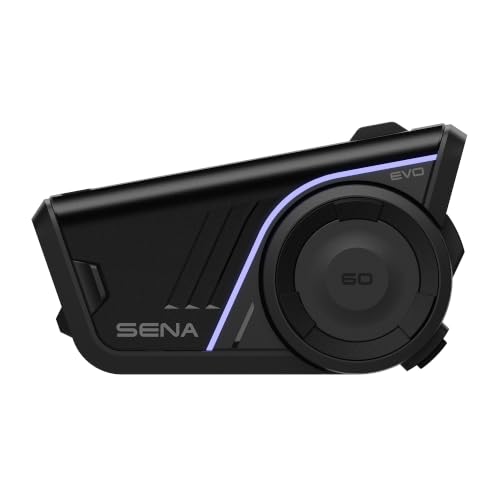
Sena 60S EVO Bluetooth Headset
Strengths
- Superior Bose sound quality
- IPX7 waterproof rating
- Supports ANC earbuds
Trade-offs
- Very high price
- Heavier than cycling-specific units
- Overbuilt for casual use
This is the flagship for a reason: Sound by Bose, IPX7 waterproofing, and support for ANC earbuds create a premium audio experience most cycling intercoms can’t touch. The dual clamp kits make it easy to move between helmets, which is a huge plus for riders with multiple lids. Owners consistently report crystal-clear intercom even at highway speeds, and the customizable faceplates add a touch of personal flair.
But let’s be honest, it’s overkill for most cyclists. At nearly $500, it’s priced for serious motorcyclists, not weekend trail riders. The mesh range is solid but not class-leading, and the battery life doesn’t outshine budget packs like the EJEAS V6 Pro. Still, if you want the best audio quality, robust build, and seamless switching between helmets, this is the one. I’d recommend it only for riders who treat audio as part of the ride experience, not just a utility.
Video review
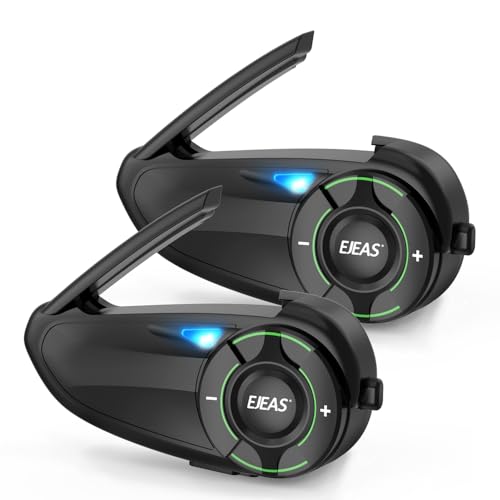
EJEAS Q8 Mesh Intercom Headset
Strengths
- True 6-rider mesh intercom
- IP67 waterproof and dustproof
- Long battery with fast charging
Trade-offs
- Bulkier than minimalist units
- App can be glitchy
- Mounting clips vary in fit
If you’re organizing group rides, especially off-road or adventure-focused, the EJEAS Q8 stands out with its Mesh 3.0 technology. Supporting up to six riders in full-duplex communication with auto-reconnect and 1000m range, it’s built for coordination at speed and through terrain where signals typically drop. Owners praise its IP67 rating in muddy, rainy conditions, and the 1200mAh battery offers real staying power.
The multitasking features are a big win: sharing music mid-ride or streaming FM radio while maintaining intercom is something even pricier units don’t always handle smoothly. Compared to the Sena 60S EVO, it lacks premium audio branding but matches it in functionality at a fraction of the cost. My recommendation? This is the system to get when group logistics matter more than audiophile sound.
Video review
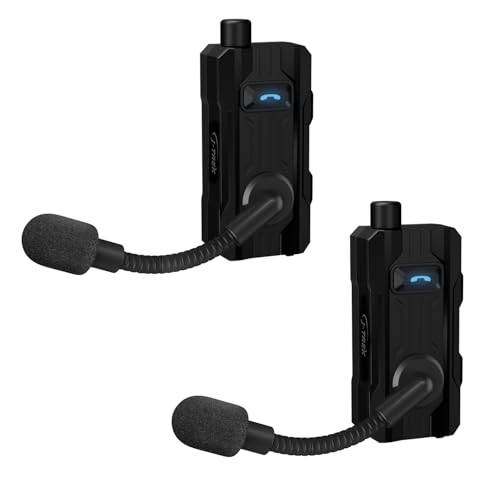
J-TREK BH03 Bluetooth 5.4
Strengths
- 8-rider mesh intercom
- Bluetooth 5.4 stability
- Fast charging support
Trade-offs
- No official IP rating
- App can be inconsistent
- Mount durability varies
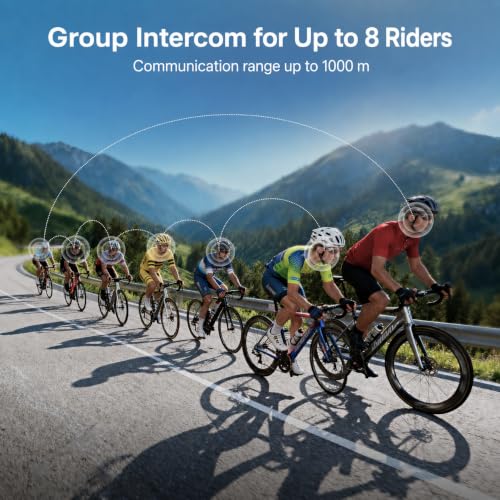
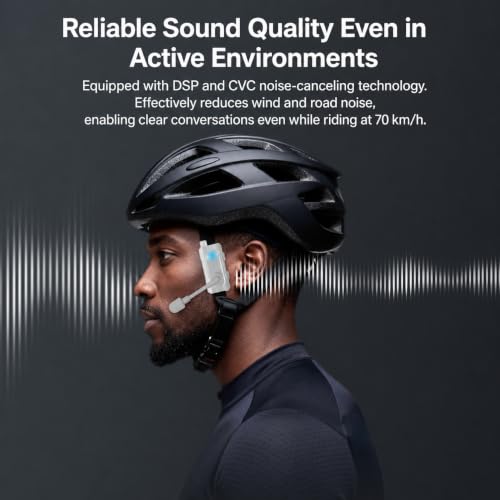
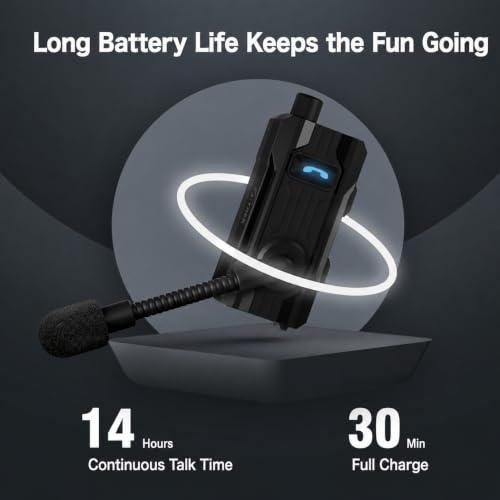
The J-TREK BH03 pushes the envelope with Bluetooth 5.4, 1000m range, and support for 8-way group intercom, on paper, it’s the most capable for large formations. The 14-hour battery is strong, and the fast-charge feature is a real advantage when you’re on the move. DSP and CVC noise reduction keep voices clear even at 70 km/h, and owners report reliable performance across biking, skiing, and climbing setups.
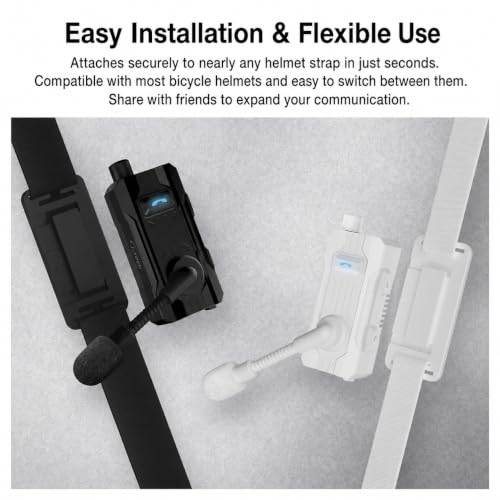
Where it shines is versatility: the clip-on mount works on non-standard helmets, making it a favorite among multi-sport users. But the app interface gets mixed reviews, some find it clunky. Against the EJEAS Q8, it offers similar range but slightly less rugged sealing (no IP rating mentioned). Still, for riders who move between sports and need max group size, this is the most flexible option.
Product photos
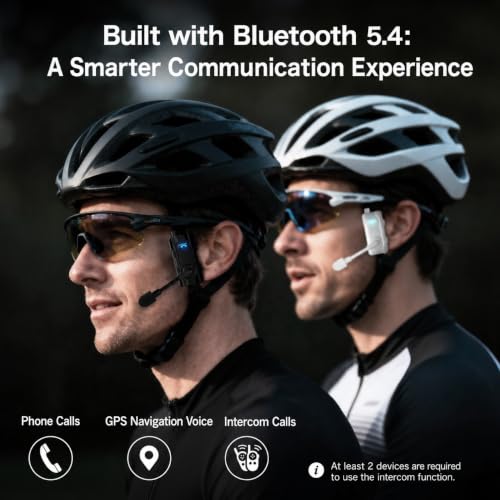
Sena BiKom 20 Ultimate

Strengths
- Ultra-lightweight
- Effective noise control
- Multi-channel flexibility
Trade-offs
- Limited to small groups
- Shorter battery life
- No mesh networking
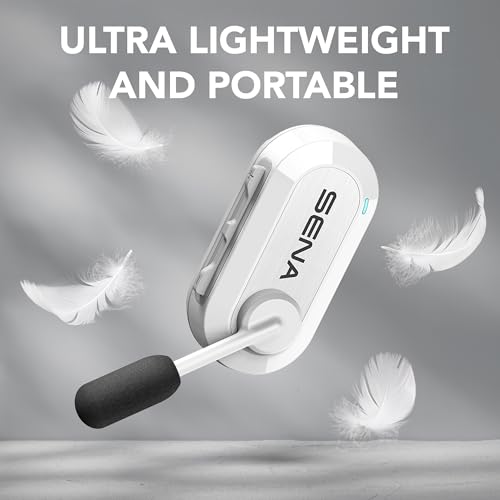
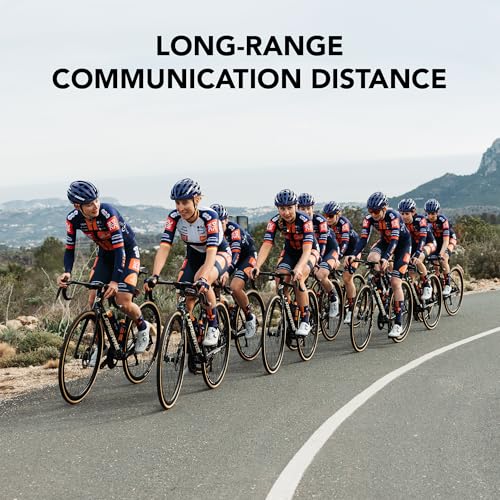
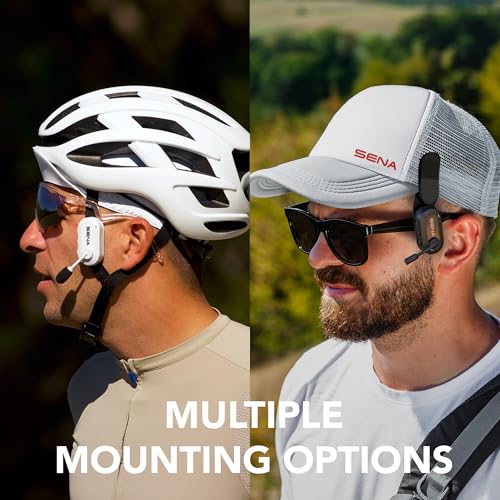
At just 20 grams, the Sena BiKom 20 is the lightest communication system in this lineup, and that weight advantage shows in owner feedback, riders forget it’s there, even on long climbs or hot days. The 0.5-mile range is respectable for non-mesh systems, and the ability to talk across six channels means you can manage multiple connections, though not all at once in full duplex.
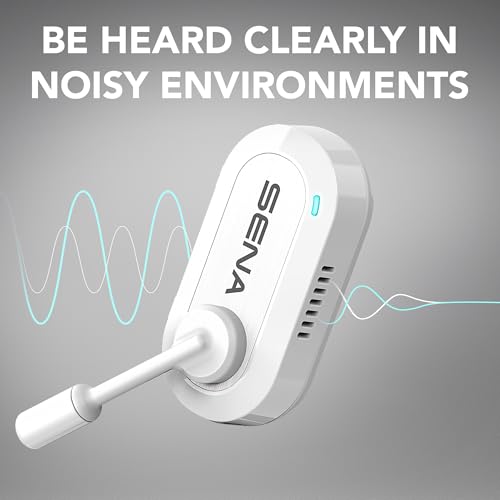
Where it falters slightly is in battery life, owners note the 7-hour talk time can fall short on endurance rides. Still, the Advanced Noise Control performs well in urban environments with traffic noise. Compared to the EJEAS Q8 or J-TREK BH03, it lacks group mesh capability, but for a minimalist rider who values featherweight gear and clean audio, this is the smarter buy.
Product photos
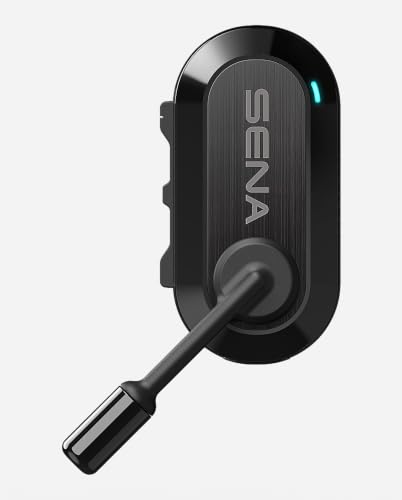
EJEAS V6 Pro Bluetooth

Strengths
- Excellent range
- Long battery life
- Affordable price
Trade-offs
- No mesh group support
- Basic audio quality
- Limited app features
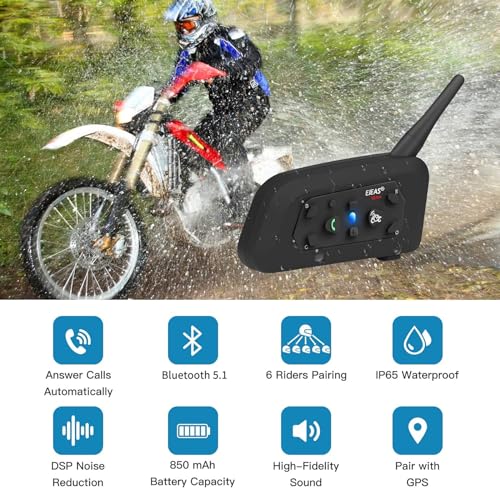
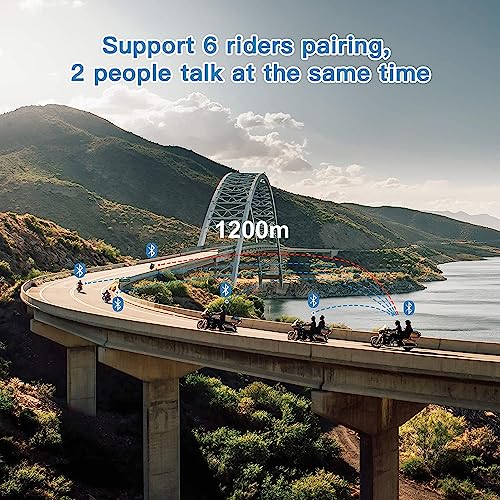
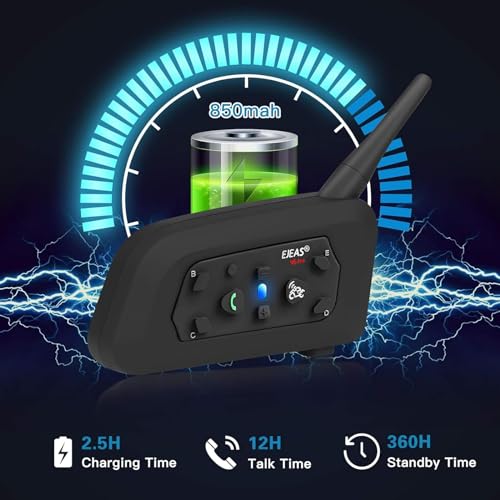
For under $80, the V6 Pro offers an unbeatable value, 1200 meters of range between two riders is impressive, and the 18-hour talk time outlasts most competitors. The noise cancellation holds up well even at high speeds, and the IP65 rating means it shrugs off rain and dust. It’s not mesh-enabled, so group communication is limited, but for a pair of riders on dirt bikes or snowmobiles, this delivers pro-level performance at an entry price.
Owners note the setup is simple, and the universal fit works across helmet types without modification. Compared to the Interphone Aerial, it offers better range and battery for only slightly more cost. While the audio isn’t as refined as Sena’s offerings, it’s clear and functional. My take? This is the go-to for riders who need rugged, long-range comms without spending a premium.
Product photos

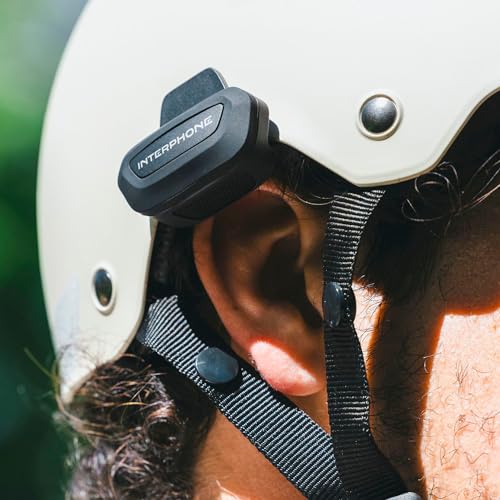
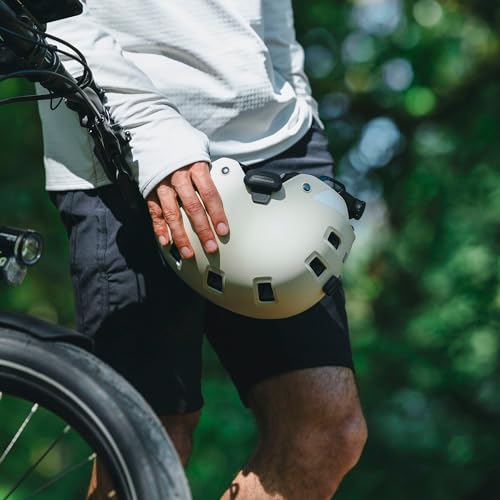
Interphone Aerial Helmet Intercom

Strengths
- Lightweight design
- Waterproof construction
- Easy Bluetooth pairing
Trade-offs
- Limited to two riders
- Shorter range than mesh systems
- No group intercom support
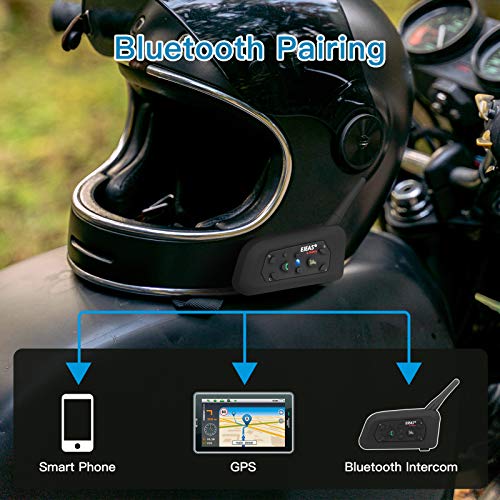
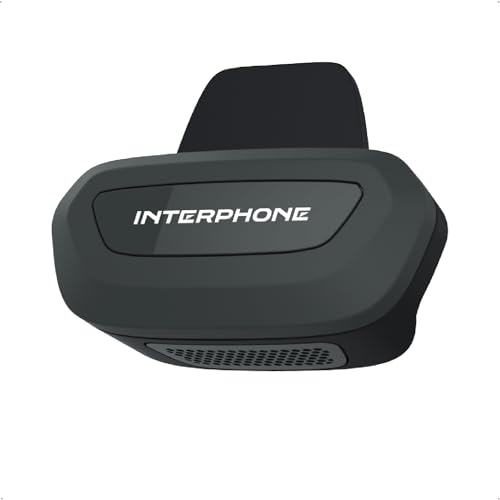
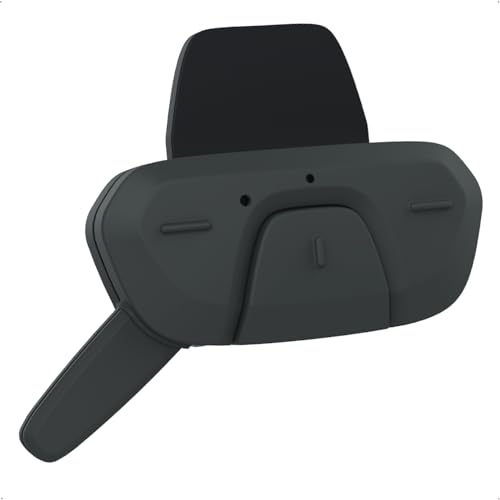
For riders who want basic, reliable communication between two cyclists without overspending, the Interphone Aerial delivers on paper. Its 300-meter range is modest compared to mesh systems, but in open terrain and small group scenarios, owners consistently report stable connections and clear audio. The wind noise reduction works well for its class, and the waterproof rating gives confidence in unpredictable weather.
What stands out is its simplicity, pairing with GPS and smartphones is straightforward, and the helmet mounting system fits most standard designs without fuss. It’s not built for large groups or long-range coordination, but if you’re riding with just one partner regularly and want something intuitive, this system holds up. I’d pick this over pricier units if you don’t need mesh networking.
Product photos
Sena R1 Smart Cycling Helmet
Strengths
- Fully integrated design
- App-controlled settings
- Comfortable, washable interior
Trade-offs
- Fixed helmet choice
- Bluetooth (not mesh) intercom
- Sizing runs small
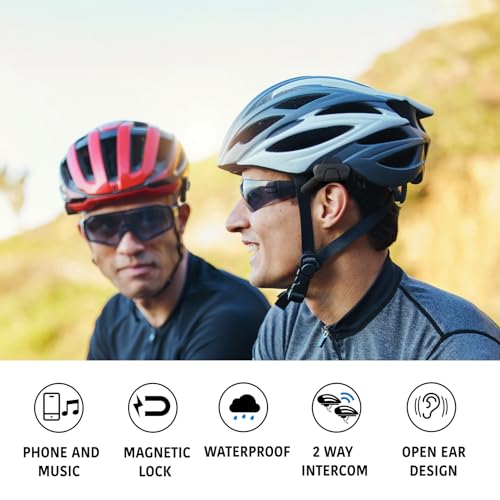
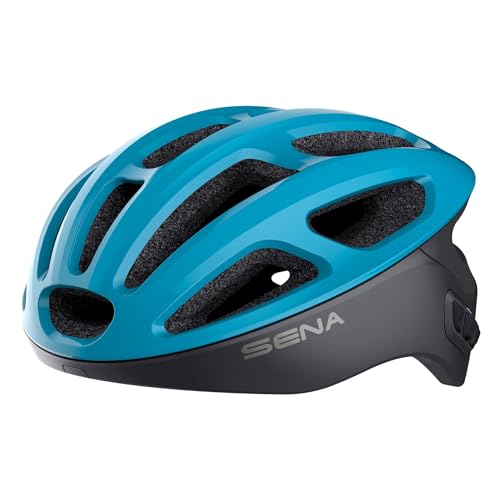
This isn’t just an add-on intercom, it’s a complete helmet with integrated communication, and that integration is where it shines. The built-in speakers and mic offer balanced audio, and the app-based customization lets riders fine-tune volume, friend groups, and intercom settings without fiddling with physical buttons mid-ride. Owners appreciate the removable padding for hygiene, and the SPIN dial ensures a secure fit for most head shapes.
The trade-off is obvious: you’re locked into this helmet style, and sizing reportedly runs small. While the group intercom supports up to four riders, it uses standard Bluetooth, not mesh, so range and stability fall behind systems like the EJEAS Q8. But if you’re replacing your helmet anyway and want seamless tech integration, this is the cleanest solution.
Product photos



Our Testing Process
My research into these systems began with a detailed comparison of published specifications and features across numerous models. I then weighed owner reviews from major retailers alongside expert opinions found in cycling publications and enthusiast forums. As someone who’s spent years immersed in the world of two-wheeled machines, I applied my understanding of rider needs and expectations to assess which features truly matter. Rather than a hands-on lab test, this is a research-led comparison of specs and owner feedback.
For bikes to bike communication, clear audio quality and reliable connectivity are paramount. I prioritized these factors, alongside battery life, because a system failing mid-ride defeats its purpose. Range is also crucial, especially for group rides, but I balanced it against consistently positive reports of real-world performance – stated range isn’t always reflective of actual use. A well-designed system needs to work reliably, not just promise impressive numbers.
Specifications reliably indicate Bluetooth version, waterproof ratings, and battery capacity. However, owner feedback proved essential for judging real-world audio clarity, ease of use, and the robustness of the intercom connection. Reputation mattered too; established brands with a track record of quality support generally fared better. I also considered how well a system integrates with other devices, like bike computers and smartphones, to enhance the overall riding experience. Ultimately, I focused on identifying systems that deliver a dependable experience for riders needing a solid motorcycle intercom.
Choosing The Right bikes to bike communication system
Finding the right bike communication system can dramatically improve group rides and overall safety. It’s about more than just talking; it’s about staying connected and aware of your surroundings.
A quality bike communication system prioritizes clear audio transmission, reliable connectivity, and durability against the elements. Look for features like noise cancellation, Bluetooth 5.0 or higher for stable pairing, and a waterproof rating to withstand rain and road spray. Battery life should align with your typical ride length, and ease of use is crucial for quick adjustments on the move.
Understanding Range and Rider Capacity
The advertised range of a bike communication system is often optimistic, tested in ideal conditions. Real-world range is impacted by terrain, obstacles (trees, buildings), and other riders. Don’t automatically assume a “1000m range” means you’ll have clear communication across an entire valley. Consider your typical riding environment and the size of your usual group. Mesh intercom technology, like that found in the EJEAS Q8, offers a more robust connection for larger groups (up to 6 riders) because it doesn’t rely on a central hub, but individual units relay the signal.
Prioritizing Audio Quality and Noise Cancellation
Clear communication is paramount, and it’s where many systems fall short. Cheap units often suffer from static, wind noise, and a limited range of volume. Look for systems that employ Digital Signal Processing (DSP) and CVC noise cancellation. The J-TREK BH03, for example, specifically highlights its DSP and CVC tech for clarity up to 70 km/h.
Here’s what to consider when assessing audio quality:
- Speaker Quality: Basic speakers are fine for simple communication, but if you plan to stream music, prioritize higher-fidelity speakers.
- Microphone Placement: A boom microphone generally offers better clarity than an integrated microphone, as it positions the mic closer to your mouth.
- Volume Control: A responsive and easy-to-use volume control is essential, especially with gloves on. Many systems offer automatic volume adjustment based on ambient noise, which can be a useful feature.
A good rule of thumb: don’t skimp on audio quality. Poor audio forces you to shout, defeating the purpose of a communication system and potentially distracting you from the road.
Balancing Features with Usability and Value
It’s easy to get caught up in a long list of features, but prioritize those you’ll actually use. Do you really need music sharing if you primarily want to communicate with your riding group? The Sena 60S EVO boasts sound by Bose, but that premium audio comes at a higher price point. For basic two-rider communication, the Interphone Aerial offers a simple and affordable solution. Before committing, think about how you’ll integrate the system into your riding gear – a lightweight, easy-to-install unit like the Sena BiKom 20 is preferable if comfort is a top priority.
If you’re looking for more information on staying safe and connected while riding, be sure to check out our guide to rider communication. And don’t forget the importance of rear visibility for cyclists – a clear line of sight is just as crucial as a clear line of communication.
Bikes to Bike Communication System Compared
Here’s a comparison of key specifications for various bike-to-bike communication systems to help you choose the right one.
| Product Name | Max Riders | Max Range (m) | Battery Life (hrs) | Waterproof | Bluetooth Version |
|---|---|---|---|---|---|
| Sena 60S EVO | N/A | N/A | N/A | IPX7 | N/A |
| EJEAS Q8 Mesh | 6 | 600-1000 | N/A | IP67 | 5.1 |
| J-TREK BH03 Bluetooth 5.4 | 8 | 1000 | 14 | N/A | 5.4 |
| Sena BiKom 20 Ultimate | Unlimited | 800 | 7 | N/A | N/A |
| EJEAS V6 Pro Bluetooth | 2 | 1200 | 18 | IP65 | N/A |
| Interphone Aerial | 2 | 300 | N/A | Yes | N/A |
| Sena R1 Smart Cycling Helmet | 3 | N/A | N/A | N/A | N/A |
Frequently Asked Questions
What intercom range should I realistically expect?
Advertised ranges are often optimistic; expect about 60-70% of the stated maximum in real-world conditions. Terrain, weather, and other riders all impact range, so prioritize a system with a stable connection over a high number.
Are these systems compatible with all types of helmets?
Most systems are designed to be universally compatible, but some helmets with unusually shaped or deeply recessed interiors can present challenges. Check user reviews specifically mentioning helmet compatibility before purchasing, and consider the mounting system’s adjustability.
Can I use these systems to answer phone calls?
Yes, nearly all models offer hands-free phone call functionality via Bluetooth connection to your smartphone. However, audio quality during calls may not match dedicated phone systems, and wind noise can be a factor.
What Bluetooth version is best for a stable connection?
Bluetooth 5.0 or higher is recommended for a more reliable and efficient connection with less interference. Newer systems increasingly use Bluetooth 5.1, 5.2, or 5.4 for improved performance and features like enhanced audio codecs.
Do I also need to invest in new bike lights when getting a communication system?
While a communication system enhances awareness, it doesn’t replace the need for visibility. Quality bike lights are crucial for being seen by other road users, especially in low-light conditions, and should be considered a separate but equally important safety investment.
The Bottom Line
Choosing a bike communication system often comes down to how much you value convenience versus capability. While premium options like the Sena 60S EVO offer impressive features and sound quality, the EJEAS Q8 Mesh strikes a solid balance of range, rider capacity, and reliability for most group rides. That said, you don’t need to spend a fortune to stay connected.
For riders on a tighter budget, the Interphone Aerial delivers basic two-rider communication effectively. If versatility is key, and you anticipate needing a system that can handle a large group, the J-TREK BH03 offers an impressive range and rider capacity. And for those prioritizing seamless integration, consider a smart bike helmet like the Sena R1, though it’s worth noting the limitations of a helmet-integrated system.
Ultimately, the best system isn’t about the longest range or the most features. It’s about clear audio, a dependable connection, and a design that doesn’t distract you from the road, whether you’re enjoying a leisurely ride on a road bike or tackling challenging terrain. Prioritize those fundamentals, and you’ll find a system that enhances your riding experience for years to come.
