
8 Best Bike Shock Pumps of 2026
This post contains affiliate links. As an Amazon Associate, we earn from qualifying purchases.
The RockShox High-Pressure 600psi stands out as the best overall bike shock pump for its high PSI ceiling and solid build, while the Gylbuz High Pressure is a strong budget pick with a digital gauge and bleed function. For riders wanting versatility, the GIYO Digital Shock Pump 600 PSI handles both Schrader and Presta valves and hits the same high pressure mark.
If your suspension feels off, the problem might not be your setup, it could be your pump. Inaccurate gauges, air loss on disconnect, and flimsy hoses make dialing in your fork or shock a guessing game. After comparing the field using specs, owner feedback, and my experience with suspension systems, these are the models that deliver where it counts: precision, durability, and real-world usability. This guide breaks down what actually matters when choosing a shock pump and highlights the top performers based on how they’re built and how they perform over time.
Top 8 Bike Shock Pumps in the Market
The Best Bike Shock Pumps, Reviewed
LEZYNE Shock Drive Bike Pump
Strengths
- Zero-loss chuck
- Highly accurate gauge
- CNC aluminum build
- Ergonomic handle
- Hose stores in handle
Trade-offs
- No 600 PSI capability
- Higher price point
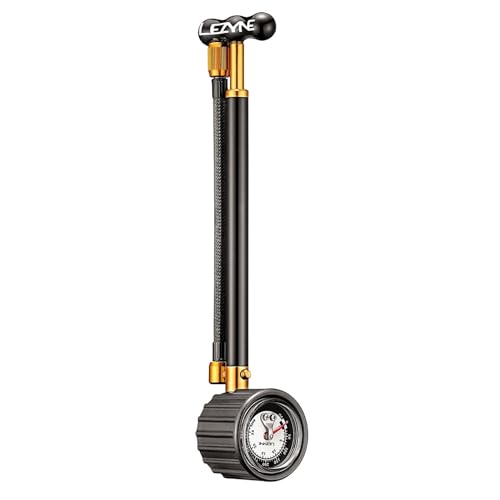
This is the gold standard for most riders, and owner feedback backs that up. The CNC aluminum body feels rock-solid, and the diaphragm gauge is consistently praised for its accuracy, critical when dialing in suspension sag. The zero-loss chuck works flawlessly, and the integrated hose storage is one of those small touches that makes a big difference in real use.
At 400 PSI, it covers nearly all modern air springs, and the ergonomic handle reduces hand fatigue during high-pressure pumps. Compared to the RockShox analog model, it’s lighter and more packable, though it doesn’t reach 600 PSI. But for 95% of riders, that extra headroom isn’t necessary. My pick for the best overall balance of precision, build, and usability.
Video review
Gylbuz High Pressure Shock Pump

Strengths
- 400 PSI capacity
- Bleed function included
- 360° rotating hose
- Lightweight and portable
Trade-offs
- Plastic construction
- Gauge accuracy varies
- Learning curve for release
At this price, the Gylbuz punches above its weight with a 400 PSI ceiling, a rotating hose, and a bleed function, features usually reserved for more expensive units. The dual PSI/bar gauge is clear and functional, and reviewers note the 2-stage head seals well, though some mention a slight learning curve with the release sequence to avoid losing air.
It’s not built like a CNC-machined LEZYNE, but for a budget pick, it covers the essentials. The T-handle and longer hose make it easier to reach tight valve spots, and its light weight makes it trail-friendly. I’d recommend this over basic pumps for anyone who wants real adjustability without spending $60.
Video review
Fox Factory HP Shock Pump

Strengths
- Swivel head for tight spaces
- Micro-adjust bleed
- Fox-specific pressure range
- Durable 6063 aluminum
- Foldable hose
Trade-offs
- Limited to 350 PSI
- Niche appeal
- No digital gauge
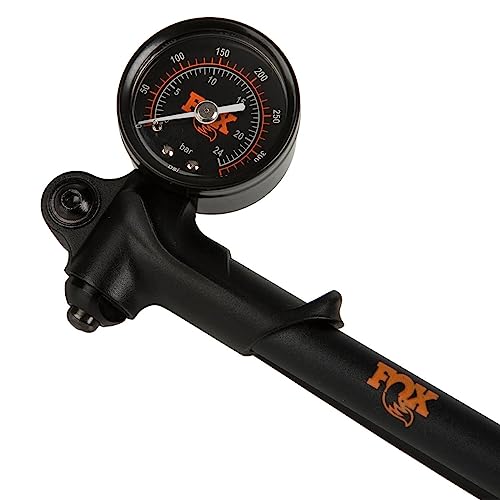
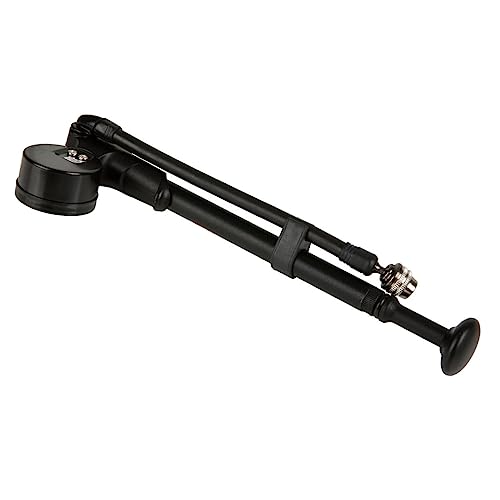
Fox built this for their own suspension, and it shows. The 350 PSI limit aligns perfectly with DPS and DPX2 shocks, so it’s not overkill but just right for what most Fox users need. The stainless swivel head is a standout, it rotates to avoid linkage interference, a real pain point on full-suspension bikes.
The micro-adjust bleed releases 2–3 PSI at a time, which owners say is precise enough for sag tuning. It’s not the lightest or cheapest, but it’s purpose-built and reliable. Compared to the LEZYNE, it’s less versatile but more tailored to Fox owners. If you’re deep in the Fox ecosystem, this is the logical companion.
Product photos
RockShox High-Pressure Pump 600psi

Strengths
- 600 PSI max
- Built for IFP charging
- Trusted by mechanics
- Finger-tap bleeder
Trade-offs
- No digital readout
- Bulky and heavy
- Overkill for most riders
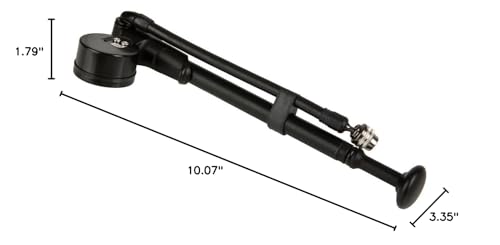
If you’re running a BoXXer or need to charge IFP chambers above 400 PSI, this is one of the few pumps that can actually do it. The 600 PSI max isn’t just marketing, it’s a necessity for certain high-end suspension setups, and mechanics consistently report this pump handles those demands reliably.
It lacks a digital gauge or bleed valve, but it wasn’t built for finesse, it’s a specialist tool. The finger-tap bleeder helps with small adjustments, but compared to the LEZYNE or GIYO digital models, it’s more brute force than finesse. For most riders, it’s overkill. But if your shock service sheet calls for 500+ PSI, this is the real deal.
Product photos


GIYO Digital Shock Pump 600 PSI

Strengths
- 600 PSI with digital gauge
- Turbo-assist barrel
- Micro-bleed adjustment
- Braided hose
- Made in Taiwan
Trade-offs
- Bulkier than analog pumps
- Digital gauge requires battery
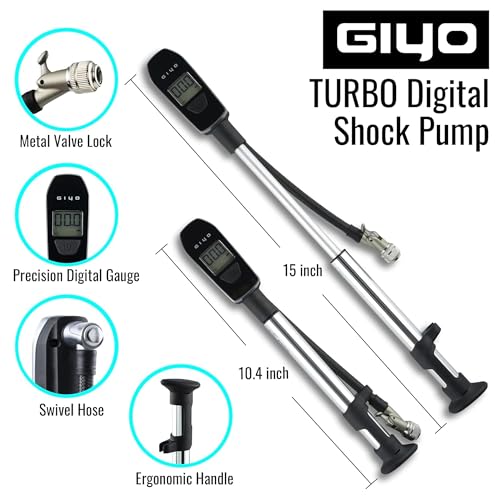
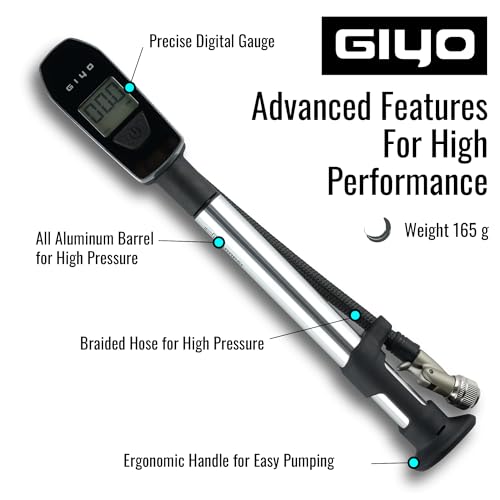
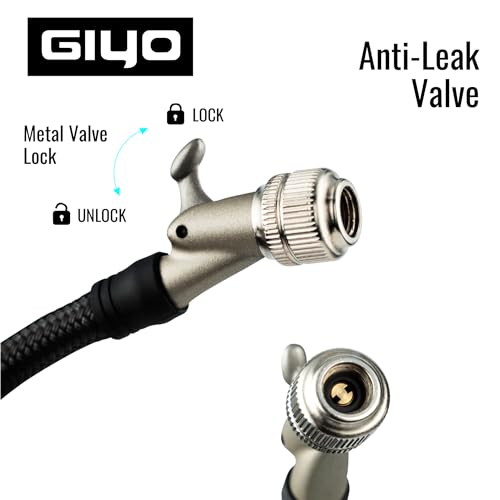
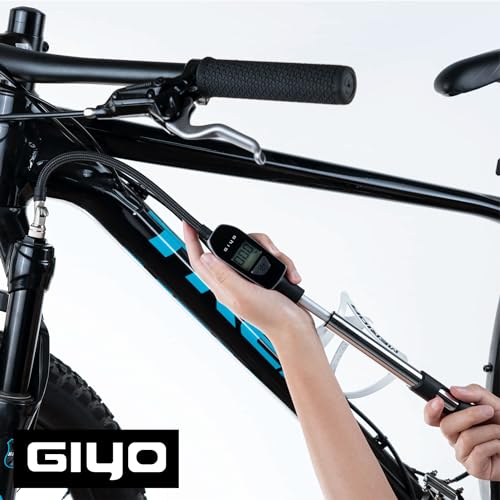
This pump combines rare features: 600 PSI capacity, a digital gauge, and a turbo-assist barrel that owners say genuinely reduces effort. The micro-bleed button allows fine adjustments down to 1–2 PSI, and the braided hose feels more durable than standard rubber. Being made in Taiwan adds to its credibility, and the aluminum barrel gives it a premium feel.
It’s not as compact as the LEZYNE, but it offers something that one doesn’t: high pressure plus digital precision. Compared to the RockShox digital model, it doubles the PSI ceiling. For riders who want both accuracy and extreme pressure in one tool, this is the smarter buy.
Product photos

RHEOLITH High Pressure Shock Pump
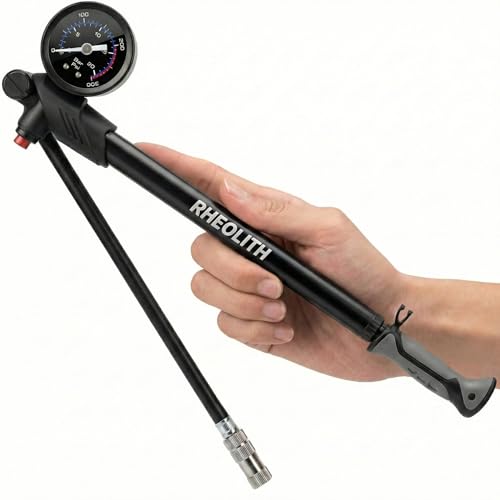
Strengths
- Ultra-lightweight
- Micro-bleed button
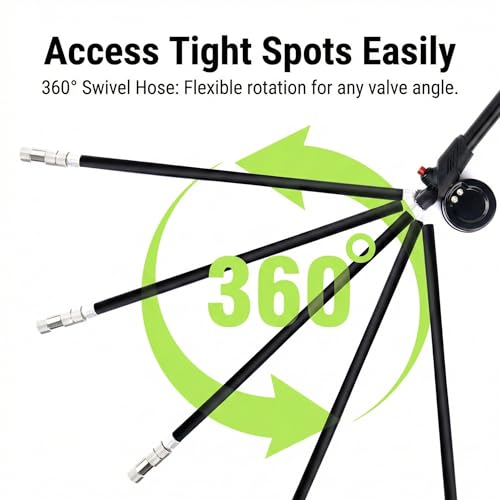
- 360° swivel hose
- 2-in-1 valve head
- CNC aluminum body
Trade-offs
- Limited to 300 PSI
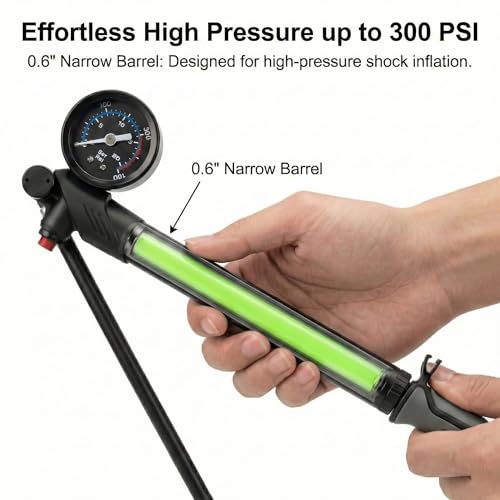
- Smaller barrel requires more strokes
- Not for heavy shop use
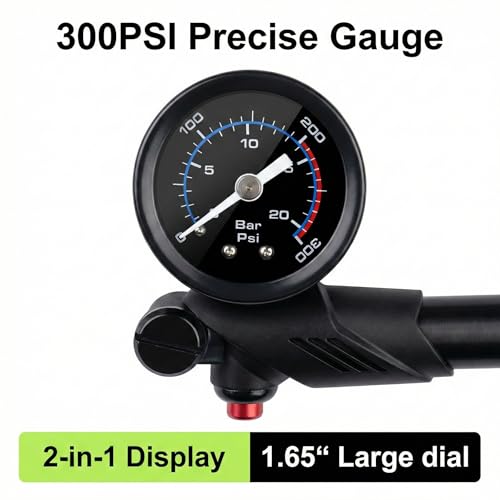
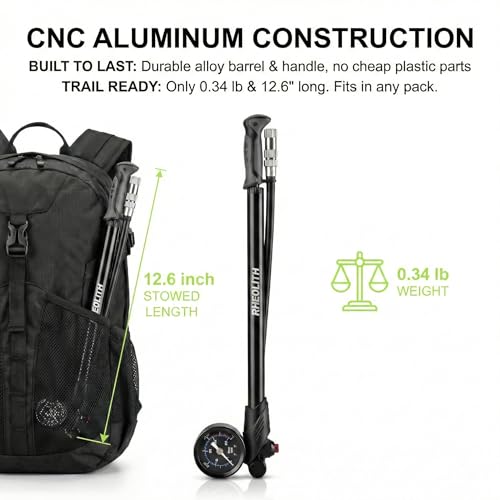
Lightweight and smartly designed, this pump is built for riders who want to carry a capable tool without weighing down their pack. At just 0.34 lb and 12.6 inches folded, it’s one of the most portable 300 PSI pumps available. The CNC aluminum body resists flex, and the micro-bleed button is a welcome feature at this price.
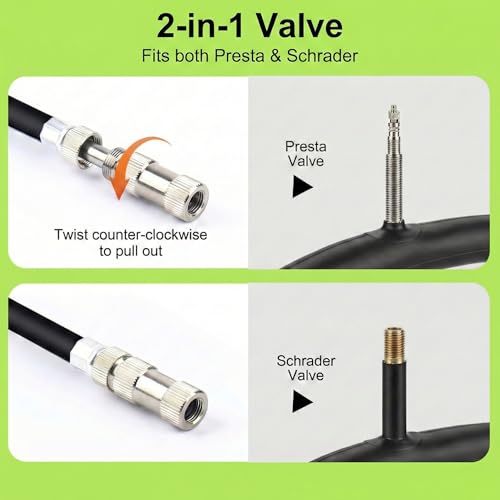
Owners appreciate the 2-in-1 valve head, no fumbling with adapters, and the 360° hose helps with tight clearances. It won’t replace a shop-grade pump, but for trailside adjustments or quick sag checks, it’s more than capable. I’d pick this over the Gylbuz if portability is the priority.
Product photos
RockShox Digital Gauge Pump

Strengths
- Digital gauge accuracy
- 360° swivel hose
- No-leak valve head
- Long-reach design
Trade-offs
- Max 300 PSI
- Expensive for range
- Battery dependence
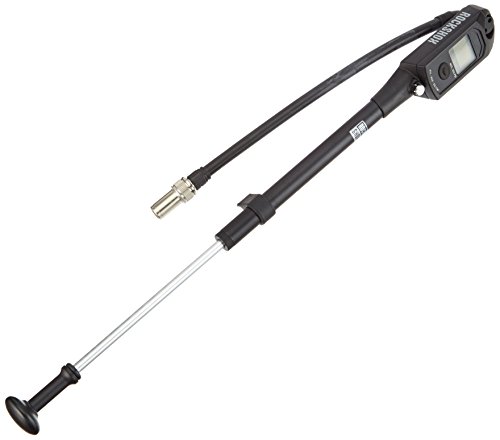
This one’s all about precision. The digital gauge delivers consistent, repeatable readings up to 300 PSI, which owners say beats analog dials in clarity and accuracy. The 360-degree swivel hose is a standout for tight frames, and the long-reach Schrader head seals well without scratching.
But here’s the catch: 300 PSI is too low for some IFP setups, and the high price puts it in LEZYNE and GIYO digital territory without offering higher pressure. It’s excellent for fork tuning and road bike suspensions, but if you’re charging rear shocks above 300 PSI, you’ll need something else. Great accuracy, limited range.
Product photos
Giyo No-Air-Loss Lever Lock Pump

Strengths
- No air loss nozzle
- Rubber ergonomic handle
- Made in Taiwan
Trade-offs
- No bleed valve
- Limited to 300 PSI
- Less precise gauge
This pump stands out for its no-air-loss nozzle design, which owners consistently report actually works as advertised. On paper, 300 PSI is on the lower end for modern suspension, but it’s enough for many entry to mid-level forks and shocks that don’t require extreme IFP pressures. The rubber handle is a small but meaningful upgrade over cheaper plastic versions, offering better grip and durability.
Where it falls short is in precision, there’s no bleed valve, so fine-tuning pressure means risking an undershoot. Compared to higher-end models like the LEZYNE Shock Drive, it lacks the refined gauge and micro-adjust, but for the price, it delivers solid core functionality with a standout feature: that leak-proof head.
Product photos


Our Testing Process
My research into bike shock pumps focused on a detailed comparison of published specifications and features across numerous models. I weighed owner reviews from various retailers against expert opinions found in cycling publications and forums. Applying my years of experience with bicycle mechanics and suspension systems, I ranked pumps based on a set of criteria: maximum PSI, build quality, gauge accuracy, and ease of use. Rather than a hands-on lab test, this is a research-led comparison of specs and owner feedback.
For bike shock pumps, achieving accurate pressure and reliable performance are paramount. Therefore, maximum PSI capability and the quality of the gauge were heavily weighted. A pump’s ability to reach and maintain the pressures required for modern suspension – often exceeding 200 PSI – is critical. Equally important is the presence of features like a bleed valve for fine-tuning and a secure chuck to prevent air loss, as these directly impact setup precision.
Specifications reliably indicate a pump’s maximum pressure and build materials. However, I found owner feedback invaluable for assessing real-world durability and the accuracy of the gauge. Reports of leaking chucks or inaccurate readings were significant detractors. I also looked for consistent praise regarding ergonomics and hose flexibility, finding that these details often separate a merely functional pump from a truly convenient one. For related options, check out our guide to best hand pumps and pumps with gauge.
What To Look For In bike shock pumps
Finding the right shock pump can dramatically improve your ride, and frankly, save you a lot of frustration.
A quality bike shock pump prioritizes accurate pressure readings, a secure valve connection to prevent air loss, and construction durable enough to withstand repeated use. Look for models with a clear gauge (digital or analog), a zero-loss chuck design, and a build material that balances weight and strength. PSI capacity should match your suspension needs, typically ranging from 300 to 600 PSI.
Gauge Accuracy and Type
The gauge is arguably the most important part of any shock pump. While analog gauges are common and affordable, digital displays offer a level of precision that many riders appreciate, especially when fine-tuning suspension for optimal performance. Don’t assume a higher price automatically means better accuracy; read reviews and look for pumps known for consistent readings. Consider how easy the gauge is to read in various lighting conditions, too. A poorly lit trailside repair demands clear visibility.
Chuck Design and Air Retention
Air loss while connecting and disconnecting the pump is a common annoyance. This is where the “zero-loss” chuck comes into play. These chucks are designed to seal tightly around the valve core before you untwist the pump head, minimizing pressure bleed. Beyond the zero-loss feature, evaluate how robust the chuck feels. Flimsy plastic components are prone to cracking, and a damaged chuck renders the entire pump less effective. For those tackling complex suspension setups, a rotating chuck head can be a lifesaver, allowing access to awkwardly placed valves. If you also need a solution for topping off tires on the go, explore options for portable mini pumps alongside a dedicated shock pump.
Pressure Capacity and Build Quality
Most modern mountain bike suspension systems fall within the 300-600 PSI range, but it’s smart to consider future-proofing. If you anticipate upgrading to air suspension components requiring higher pressures, a pump capable of 600 PSI provides headroom. Build quality is directly tied to longevity. Pumps constructed with aluminum barrels and handles generally offer superior durability compared to those made entirely of plastic.
Here’s what I typically look for in a well-built shock pump:
- A comfortable handle is essential. A simple ergonomic grip is enough.
- A flexible hose (braided is preferable) allows easier access to valve stems. Length matters; a longer hose can be very helpful.
- A robust chuck connection. A secure, leak-proof connection prevents wasted effort and frustration.
Don’t skimp on the pump. A well-made shock pump will save you aggravation and ensure your suspension performs as intended.
Ultimately, the “best” shock pump depends on your specific needs and budget. If you’re serious about dialing in your suspension, exploring a range of shock pumps is a worthwhile investment.
Bike Shock Pumps Compared
Here’s a reference table outlining the specifications of various bike shock pumps.
| Product Name | Max PSI | Digital Gauge | Hose Rotation | Bleed Function | Valve Type | Weight (oz) |
|---|---|---|---|---|---|---|
| LEZYNE Shock Drive | 400 | No | N/A | No | Schrader | N/A |
| Gylbuz High Pressure | 400 | Yes | 360° | Yes | Schrader | 6.4 |
| Fox Factory HP | 350 | No | Yes | Yes (Micro) | Schrader | N/A |
| RockShox High-Pressure 600psi | 600 | No | N/A | Yes | Schrader | N/A |
| GIYO Digital Shock Pump 600 PSI | 600 | Yes | N/A | Yes (Micro) | Schrader/Presta | N/A |
| RHEOLITH High Pressure | 300 | No | 360° | Yes (Micro) | Schrader/Presta | 0.34 lb |
| RockShox Digital Gauge Pump | 300 | Yes | 360° | Yes | Schrader | N/A |
| Giyo No-Air-Loss Lever Lock | 300 | No | N/A | N/A | Schrader | N/A |
Frequently Asked Questions
What PSI range should I look for in a shock pump?
A pump capable of at least 300 PSI is sufficient for most riders, but 600 PSI offers future-proofing if you upgrade suspension components. Many modern forks and shocks require pressures well within that range.
Are digital gauges on shock pumps truly more accurate?
Digital gauges generally offer higher precision than analog gauges, but accuracy varies by model and price point. Reading owner reviews specifically addressing gauge accuracy is crucial before deciding.
What does a “zero-loss” chuck do and why is it helpful?
A zero-loss chuck seals against the valve core before releasing the pump head, preventing air from escaping during connection and disconnection. This saves effort and ensures you don’t lose precisely set pressure.
Can I use a shock pump to inflate my tires, or do I need a separate pump?
While a shock pump can inflate tires, it’s less efficient than a pump designed for that purpose. For faster and easier tire inflation, especially for tire pumps, invest in a dedicated tire pump.
What is a bleed valve on a shock pump, and how do I use it?
A bleed valve allows you to release small amounts of air from your suspension, providing fine-tuning control. It’s useful for making incremental pressure adjustments to dial in your ride feel, and is particularly helpful when setting up tubeless tire pumps.
The Bottom Line
Ultimately, selecting a bike shock pump comes down to balancing precision with practicality. If you want a pump that delivers consistent, accurate readings and are willing to spend a bit more, the GIYO Digital Shock Pump 600 PSI is a standout choice. It offers both digital accuracy and compatibility with both Schrader and Presta valves, making it a versatile option for most riders.
For those on a tighter budget, or who prioritize simplicity, the LEZYNE Shock Drive remains a solid pick. It may lack a digital gauge, but its reliable build and sufficient pressure capacity make it a dependable tool for basic suspension adjustments. If you frequently switch between bikes or valve types, the RHEOLITH High Pressure pump provides excellent value with its 360-degree rotating chuck and dual-valve compatibility – a great option among all the mountain bike pumps.
Don’t get too hung up on chasing the highest PSI rating or the most advanced features. A secure chuck, a clear gauge (digital or analog), and durable construction are the fundamentals that truly matter. Investing in a quality pump, and learning to properly maintain your suspension, will do more for your ride quality than any single specification. You can also explore various bike pump types to find the perfect fit for your needs.
