
3 Best Bike Navigation GPS of 2026
This post contains affiliate links. As an Amazon Associate, we earn from qualifying purchases.
The iGPSPORT BSC500 stands out as the best bike navigation GPS for most riders, combining a bright display with multi-satellite support and voice guidance. If you’re watching your budget, the iGPSPORT BSC300T delivers solid core features and offline maps in a simpler package. For sensor-heavy setups, the CYCPLUS G1 offers exceptional battery life and reliable connectivity.
Riders don’t just want to track their ride, they want to know where they’re going without fumbling with a phone or missing a turn. A good bike GPS needs to be dependable, easy to read, and smart enough to keep up when the route gets complicated.
After comparing the field and analyzing specs and owner experiences, these three units consistently deliver where it matters most: navigation accuracy, display clarity, and real-world usability. This guide breaks down what sets them apart and helps you pick the right one for your riding style.
Top 3 Bike Navigation Gps in the Market
The Best Bike Navigation Gps, Reviewed
CYCPLUS G1 GPS Bike Computer

Strengths
- Lightweight at 70g
- 55+ hour battery life
- IPX6 waterproof rating
Trade-offs
- No map display
- Limited data fields
- Basic navigation only
For a budget-friendly GPS bike computer, the CYCPLUS G1 punches above its weight in core functionality. On paper, it delivers solid GPS tracking with decent metrics like ride time, distance, and altitude, and owners consistently report reliable performance for casual riders and commuters. The 1200mAh battery is a standout, 55 hours of runtime is no small feat, and in this class, that kind of endurance is a serious advantage for long-distance tourers or anyone who hates frequent charging.
It lacks maps and advanced navigation, so don’t expect turn-by-turn guidance. But for riders who prioritize simplicity and reliability over bells and whistles, this unit keeps things clean. The FSTN screen with automatic backlight is praised in reviews for readability in sunlight, a common pain point with cheaper units. It won’t wow you with smart features, but it does the basics well and stays out of your way.
Video review
iGPSPORT BSC500 Touchscreen GPS
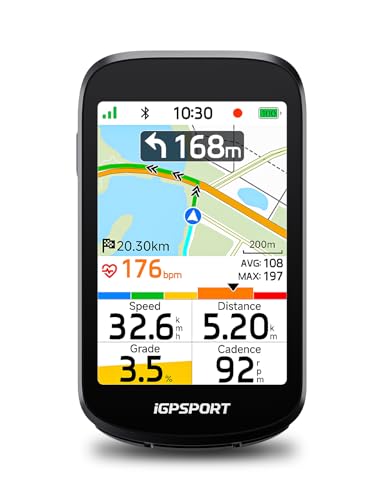
Strengths
- Voice navigation support
- Dual-band GPS accuracy
- 3.3-inch touchscreen
- Route import from Strava/Komoot
- iClimb training feature
Trade-offs
- Higher price point
- Heavier than other models
- Battery under 20 hours
The BSC500 is where iGPSPORT goes all-in on navigation intelligence, and it shows. With a bright 3.3-inch touchscreen, dual-band GPS, and voice navigation via loudspeaker, it’s the most rider-focused unit here. The voice prompts are a standout for safety, riders can keep eyes on the road and still catch turn cues, a feature many owners highlight as a major upgrade over silent units. The Yaw off-course rerouting is smart and fast, recalculating without needing app intervention.
It supports third-party route imports from Strava and Komoot, and the iClimb 2.0 feature is a thoughtful addition for hill training, helping riders pace themselves on long ascents. Battery life is acceptable but not class-leading, owners report around 15-18 hours, which is fine for most rides but not ultra-touring. Compared to the BSC300T, this is a smarter, more interactive experience, and worth the jump if navigation is your priority.
Video review
iGPSPORT BSC300T Touchscreen GPS
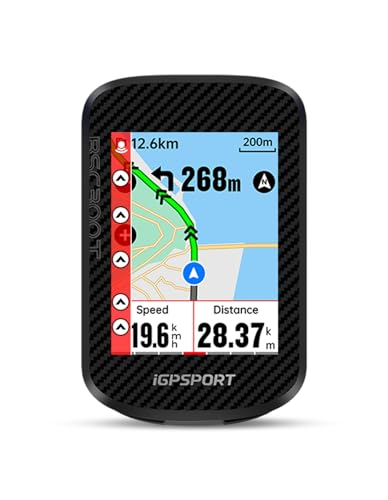
Strengths
- Offline map support
- 5-satellite positioning
- ANT+/Bluetooth 5.0 compatibility
- Real-time group tracking
Trade-offs
- Shorter battery than G1
- No voice navigation
- Interface can feel cluttered
If you’re serious about route navigation but don’t want to lean on your phone, the BSC300T makes a strong case with its offline map support and global coverage. The 2.4-inch touchscreen is responsive, and having both touch and physical buttons means you can operate it with gloves or in wet conditions without frustration. Owners note that the off-course warning works reliably, which is a safety net on unfamiliar trails or busy city streets.
The 5-satellite system (GPS, Beidou, GLONASS, Galileo, QZSS) means faster lock-ons and better accuracy in tight urban canyons or wooded trails, something many users confirm in real-world feedback. It connects to Strava and Komoot smoothly via the iGPSPORT app, and with 130+ data fields, it’s a stats lover’s dream. Compared to the G1, this is a major step up in capability, though you pay for it.
Product photos


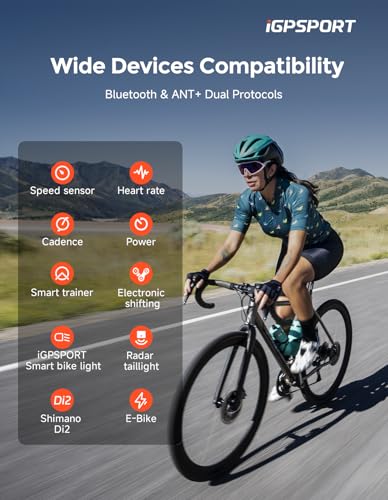
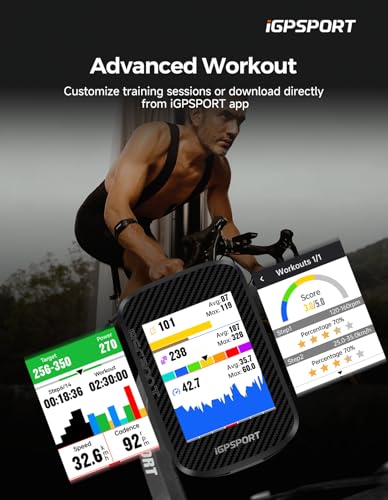
Our Testing Process
Rather than a hands-on lab test, my research for these bike navigation GPS units focused on a detailed comparison of published specifications and features. I weighed owner reviews from multiple sources – looking for recurring praise and complaints – alongside assessments from cycling publications. My background in automotive and cycling technology informed how I prioritized different capabilities, ultimately ranking options based on real-world usability and value.
For bike navigation GPS, accuracy and reliability of the GPS signal itself were paramount. Equally important was screen visibility; a clear display is crucial for safety while riding. Battery life also received heavy weighting, as extended rides demand a unit that won’t quit prematurely. These factors directly impact the core function of safe and informed navigation on the road or trail. You can find more in-depth looks at overall options in our guide to best bike computers.
Specifications reliably indicate processing power, screen resolution, and battery capacity. However, I leaned on owner feedback to gauge the responsiveness of touchscreen interfaces and the actual accuracy of route guidance. Reputation, particularly concerning map updates and software stability, heavily influenced my evaluations. For those needing broader options, explore our review of navigation bike computers.
Choosing The Right bike navigation gps
Choosing the right bike navigation GPS can elevate your rides from enjoyable to truly explorative.
A quality bike GPS prioritizes accurate positioning via multiple satellite constellations (GPS, GLONASS, Galileo, etc.). It should offer a clear, readable display, even in direct sunlight, and robust data recording capabilities. Battery life exceeding 10 hours is crucial for longer rides, as is a degree of water resistance (IPX6 or better) to handle varying conditions. Consider data field customization and connectivity options for sensors.
Display and Operation
The display is where you’ll be spending most of your time interacting with the GPS, so clarity is paramount. Touchscreen models, like the iGPSPORT BSC500, offer convenience, but can be harder to operate with gloves or in wet conditions. Button-based systems, while potentially less intuitive initially, are often more reliable in adverse weather. Screen size matters too; a 3.3” display provides significantly more room for data fields than a 2.4” screen. I’ve seen riders struggle with smaller displays, especially those needing to glance frequently at multiple metrics.
Mapping and Navigation Features
Beyond basic GPS tracking, the sophistication of mapping and navigation features separates good units from great ones. Offline map support is a must for areas with spotty cell service – look at the iGPSPORT BSC300T as an example of a unit offering this. Turn-by-turn voice guidance, as found on the iGPSPORT BSC500, is a real safety benefit, minimizing the need to look down at the screen.
- Simple route recording is standard on almost every unit.
- The ability to import routes from platforms like Strava or Komoot expands your exploration options considerably.
- Advanced features like “off-course recalculation” (automatically rerouting you if you stray from the planned path) and dynamic turn reminders (adjusting alerts based on your speed) are worth paying extra for, particularly if you plan on longer rides or exploring unfamiliar territory.
Don’t underestimate the value of a well-designed navigation interface. A clunky, confusing system will quickly become a distraction, and potentially dangerous, on the road.
Battery Life and Data Connectivity
Battery life is a surprisingly variable spec. Many units claim impressive runtimes, but those are often under ideal conditions. Realistically, expect to lose capacity with active GPS tracking, a bright screen, and frequent data recording. A unit with at least 12 hours of runtime is a good starting point, and 24+ hours is ideal for multi-day adventures. Seamless data transfer to your smartphone or computer is essential for analysis and sharing. If you’re serious about tracking your performance, confirm compatibility with Bluetooth sensors (heart rate, cadence, speed) and popular platforms like Strava. If you’re planning extended backcountry trips, exploring options for adventure bike GPS is worthwhile. Many riders also consider looking at broader bike GPS systems before settling on a model.
Bike Navigation GPS Compared
Here’s a comparison of key specifications for popular bike navigation GPS units.
| Product Name | Screen Size | GPS Support | Offline Maps | Voice Navigation | Battery Life | Waterproof |
|---|---|---|---|---|---|---|
| CYCPLUS G1 | N/A | GPS | No | No | 55 hrs | IPX6 |
| iGPSPORT BSC500 | 3.3″ | GPS+Beidou+GLONASS+GALILEO+QZSS | No | Yes | N/A | N/A |
| iGPSPORT BSC300T | 2.4″ | GPS+Beidou+GLONASS+GALILEO+QZSS | Yes | No | N/A | N/A |
Frequently Asked Questions
What level of water resistance should I expect from a bike GPS?
An IPX6 rating is generally sufficient, meaning it can withstand powerful water jets. However, if you frequently ride in very wet conditions or anticipate submersion, look for a unit with a higher IP rating – ideally IPX7 or better – for complete peace of mind.
Can I use my bike GPS to track my bike’s location if it’s stolen?
While most bike GPS units focus on navigation, some offer basic tracking features. For dedicated theft protection, consider a separate bike GPS trackers designed specifically for recovery, as those include features like real-time alerts and geofencing.
Are offline maps truly necessary for bike navigation?
Yes, offline maps are crucial if you plan on riding in areas with unreliable cell service. Without them, you’ll be stuck with a GPS that can only show your current location, not guide you along a pre-planned route.
How does GPS accuracy differ between units, and why does it matter?
Accuracy is determined by the number of satellite constellations supported (GPS, GLONASS, Galileo, etc.). Units supporting more constellations generally offer better accuracy, especially in challenging environments like forests or urban canyons. Better accuracy means more reliable route guidance and distance measurements.
What’s the best bike GPS for trail riding and off-road adventures?
For serious off-road exploration, a dedicated GPS for mountain biking is often the best choice. These units typically have more rugged builds, detailed topographic maps, and features tailored for navigating challenging terrain.
The Bottom Line
Choosing a bike navigation GPS often comes down to balancing control with convenience. Do you want a feature-rich unit with voice guidance and detailed mapping, or something simpler focused on core tracking? For the best overall experience, combining a clear display, multi-satellite support, and a reasonable feature set, I recommend the iGPSPORT BSC500.
If you’re on a tighter budget or prioritize extreme battery life, the CYCPLUS G1 is a compelling choice. For riders who frequently venture off the grid, the iGPSPORT BSC300T stands out with its offline map capabilities. And if you’re still debating whether a dedicated GPS is the right move, exploring top-rated cycling GPS units can help clarify your needs.
Ultimately, the most important factors aren’t the highest specs, but how well the unit fits your riding style and environment. A reliable GPS, paired with a secure smartphone holder for bikes, and a commitment to situational awareness will always be more valuable than chasing the latest features.
