
7 Best Bike Bluetooth Headsets of 2026
This post contains affiliate links. As an Amazon Associate, we earn from qualifying purchases.
The Cardo Spirit HD stands out as the overall best bike Bluetooth headset for its superior audio quality and seamless connectivity, while the J-TREK BH03 is a top contender with excellent range and group intercom support. For riders on a budget, the Fodsports FX-S V5.4 delivers solid performance without breaking the bank.
Riding solo is one thing, but staying connected with your group or navigating hands-free can transform your cycling experience. The real challenge lies in finding a headset that keeps up with the wind, weather, and pace of real rides, without sacrificing comfort or reliability.
This guide cuts through the specs and marketing to focus on what actually matters: clear communication, dependable range, and real-world usability. I looked at the leading models, weighing technical data against rider feedback and brand reputation, so you can pick the right one for your type of ride.
Top 7 Bike Bluetooth Headsets in the Market
The Best Bike Bluetooth Headsets, Reviewed
Cardo Spirit HD Motorcycle Bluetooth Headset

Strengths
- Over-the-air updates
- FM radio with RDS
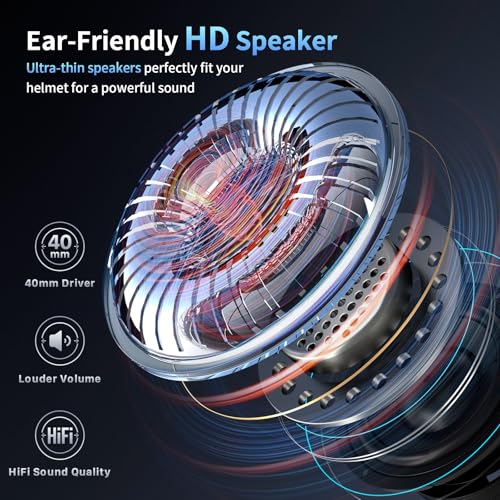
- Thin 40mm speakers
- Waterproof design
- App-based management
Trade-offs
- No group intercom beyond 2 riders
- Higher price than mid-tier options
The Cardo Spirit HD stands out in a crowded field by balancing premium features with real-world reliability. On paper, it’s built for riders who demand more than just intercom chatter, over-the-air updates, FM radio with RDS, and thin 40mm speakers suggest a focus on both convenience and sound quality. Owners consistently report solid performance in mixed riding conditions, especially praising the FM radio for long highway stretches where phone signal drops out. Compared to the base Spirit model, this HD version delivers richer audio and slightly better mic clarity, making it a strong contender for touring riders who value entertainment beyond phone calls.
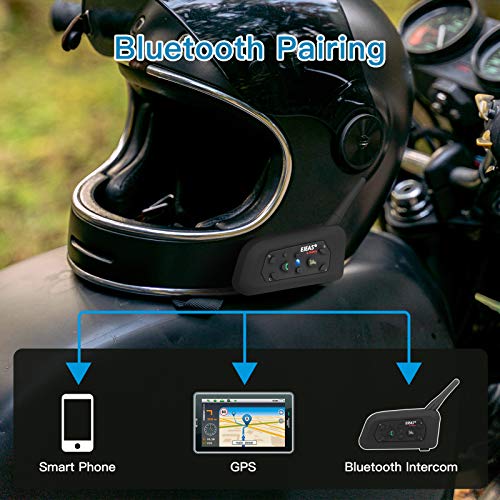
Where it really pulls ahead is in ecosystem integration. The Cardo Connect app is polished, and reviewers note fewer pairing hiccups when switching between GPS units, phones, and passenger headsets. It doesn’t reach the group size of the J-TREK BH03, but for a 2-rider setup, the connection stability is top-tier. I’d pick this over the EJEAS V6 Pro for daily touring use, not because of range, but because of how well everything works together.
Video review
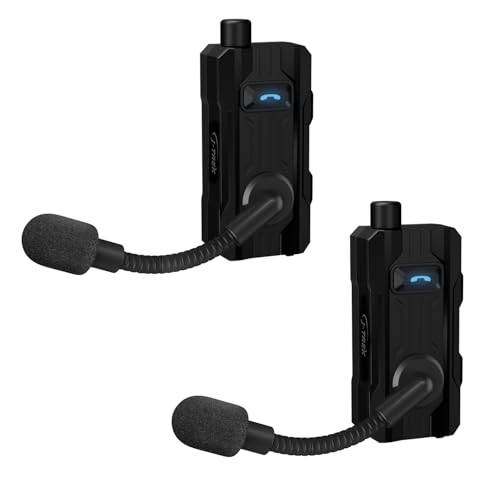
J-TREK BH03 8-Way Cycling Intercom
Strengths
- 8-rider intercom
- 1000m range
- 14-hour battery
- Fast charging
- Multi-sport compatible
Trade-offs
- No FM radio
- Clip mount less secure than adhesive
- Higher price than 2-rider systems
When riding in a pack, the J-TREK BH03 is in a class of its own. Supporting 8-way group intercom up to 1000 meters, it’s built for organized rides, touring clubs, or mountain biking groups that need everyone in sync. The Bluetooth 5.4 chip ensures fast pairing and stable connections, and owners consistently report clear audio even at high speeds, thanks to DSP and CVC noise reduction that actually tames wind roar. The 14-hour battery life is another win, easily covering full-day rides without panic charging.
It’s also impressively versatile. The clip-on design fits bike, ski, and climbing helmets, and the fast charge feature is a lifesaver when you forget to top it off. Compared to the Cardo Spirit HD, it lacks FM radio, but makes up for it in group utility. For solo riders, it’s overkill. But if you’re often in a group, this is the only real choice in the sub-$200 range.
Video review
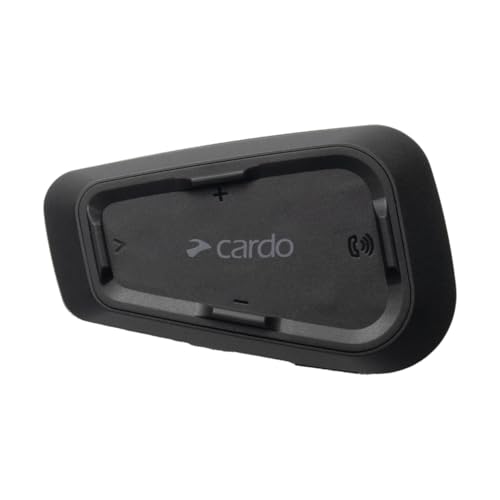
Cardo Spirit Motorcycle Bluetooth Headset
Strengths
- Universal brand pairing
- Over-the-air updates
- Waterproof build
- Simple setup
- Reliable app
Trade-offs
- Smaller 32mm speakers
- No FM radio
- Lower audio output
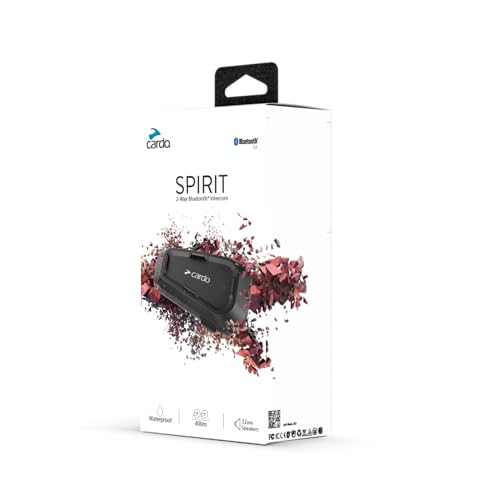
The base Cardo Spirit is a stealth bargain for riders who value universal connectivity above all. It can pair with any Bluetooth headset, regardless of brand, a rare feature that makes it ideal for mixed groups where not everyone has the same gear. That alone makes it a standout, especially compared to closed ecosystems like some mid-tier brands. The 32mm speakers are smaller than the Spirit HD’s, so bass and volume take a hit, but for voice clarity, they’re still effective.
Owners praise its durability and waterproofing, and the over-the-air updates keep it future-proof. It lacks the HD’s FM radio and richer audio, but for a rider who often rides with friends using different systems, this is the smarter pick. I’d choose it over the Fodsports or EJEAS models when compatibility trumps bells and whistles.
Product photos
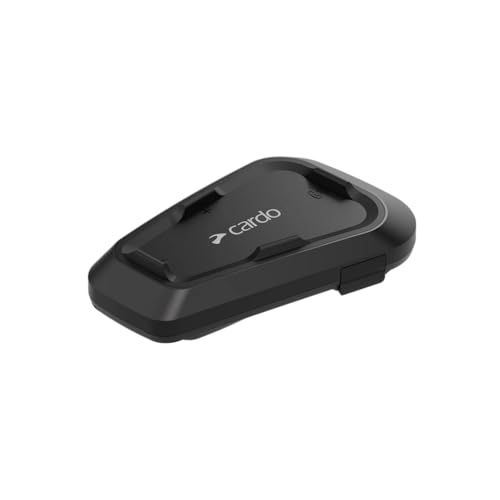
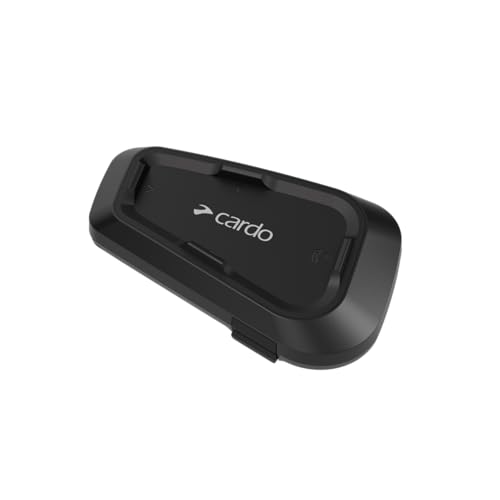
Fodsports FX-S V5.4 Bluetooth Headset

Strengths
- IP67 waterproof
- Bluetooth 5.4
- Lightweight design
- Type-C charging
- Dual mic options
Trade-offs
- Limited app support
- Intercom range inconsistent
- Noise cancellation adequate, not great
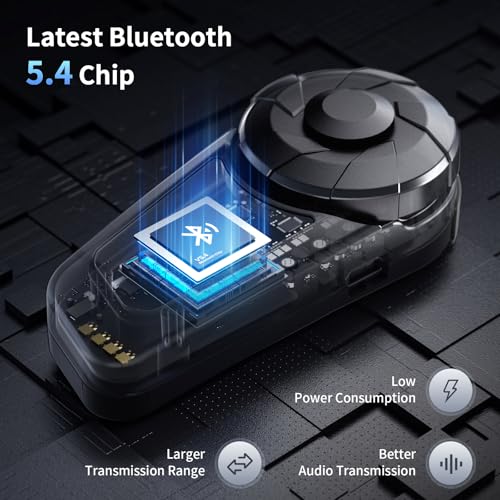
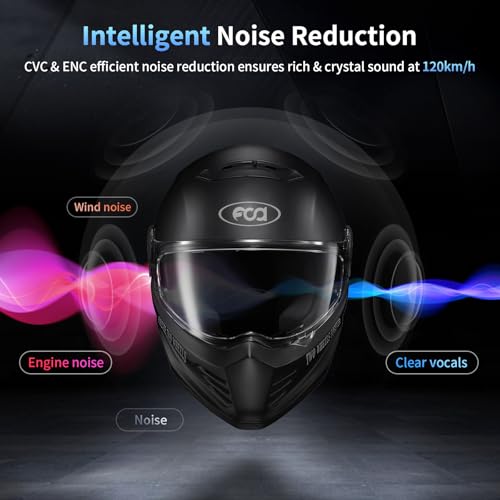
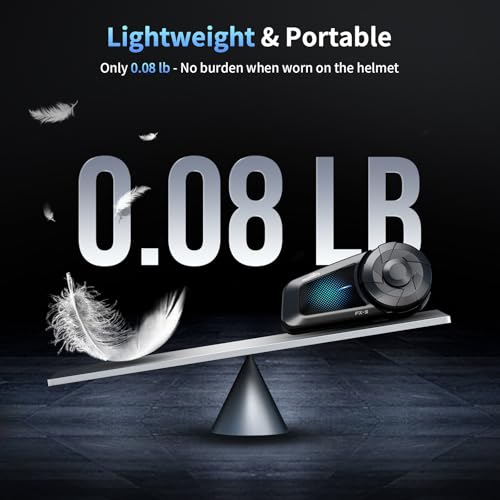
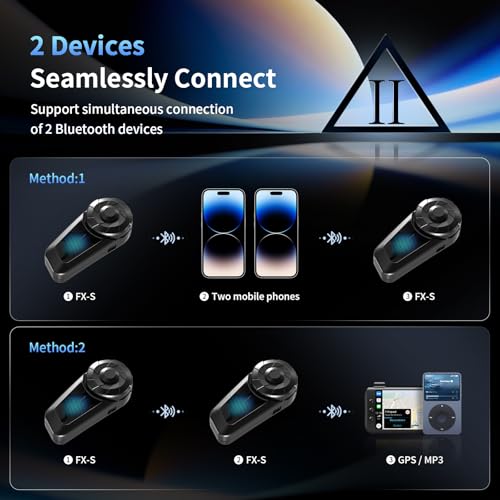
The Fodsports FX-S hits a sweet spot between affordability and modern features. Priced under $50, it packs Bluetooth 5.4, CVC noise cancellation, and an IP67 waterproof rating, that last one means it can survive full submersion, not just rain. The 0.08-pound weight is barely noticeable on the helmet, and the inclusion of both button and boom mics makes it adaptable across helmet styles. Owners appreciate the Type-C charging and ability to use while charging, a small but meaningful perk on long trips.
Sound quality is solid for the price, though not quite on par with the Cardo Spirit HD. Where it falls short is in app polish and long-range stability, intercom cuts out more often beyond 800 meters compared to the EJEAS V6 Pro. But for solo riders or occasional two-up tours, it’s a smarter buy than the Y10. I’d pick this over the BTQILEYOO for daily use where weather and reliability matter.
Product photos
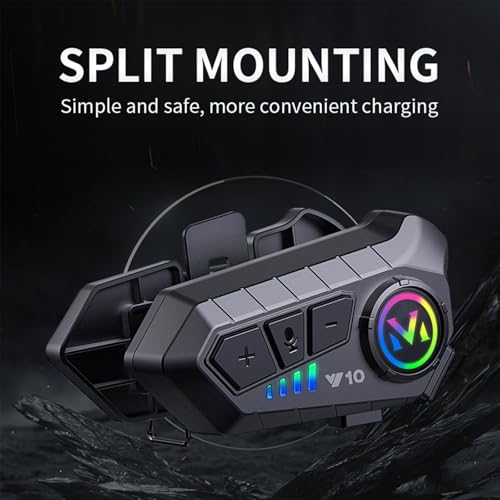
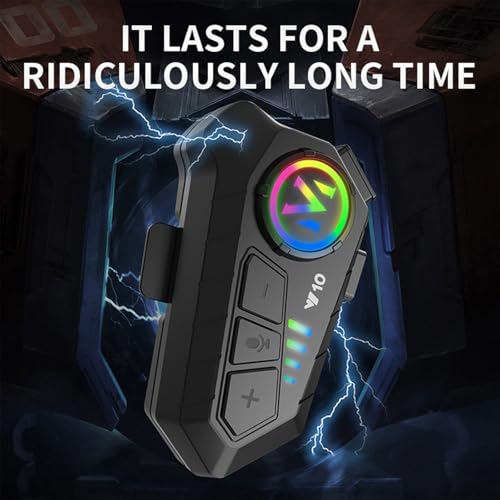
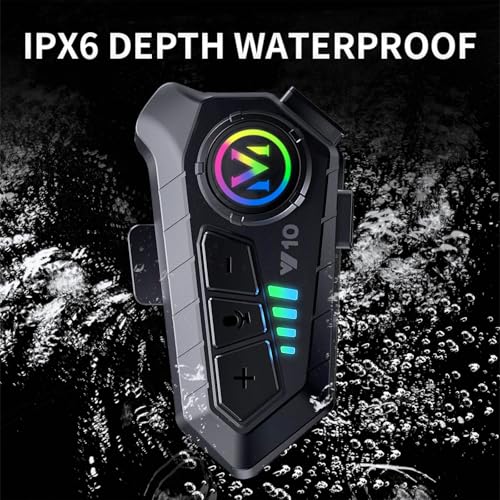
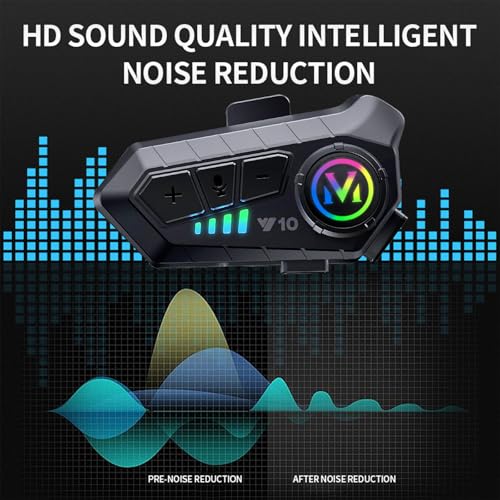
BTQILEYOO Y10 Motorcycle Bluetooth Headset
Strengths
- Extremely low price
- Bluetooth 5.3
- 1000mAh battery
- IPX6 waterproof
- Auto answer calls
Trade-offs
- Build quality feels cheap
- Mic clarity drops at speed
- No group intercom
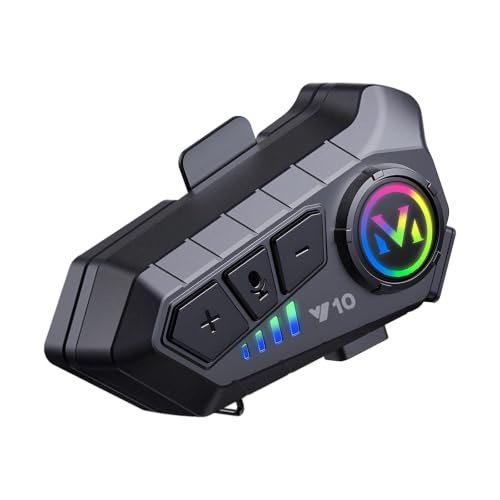
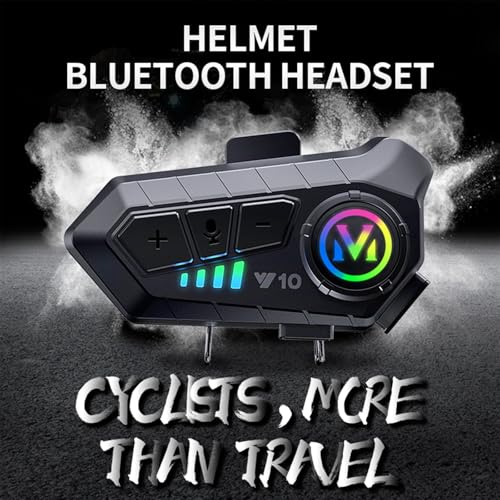
At under $20, the BTQILEYOO Y10 is a jaw-dropper, not because it outperforms, but because it offers so much for so little. For new riders or those testing the waters with helmet comms, this thing delivers Bluetooth 5.3, dual phone pairing, and IPX6 waterproofing at a price that feels like a typo. The 1000mAh battery promises 30 hours of talk time, and while real-world use likely cuts that in half, even 15 hours is impressive at this tier. Owners say it holds up in rain and delivers surprisingly clear audio for music and calls.
But let’s be real, this is budget tech. The dual noise cancellation helps, but wind noise still creeps in at highway speeds, and the build feels light to the point of fragility. It doesn’t match the Cardo or J-TREK for durability or clarity, but as an entry point? Unbeatable. My recommendation: if you’re not ready to invest in a premium system, the Y10 is the smart buy.
Product photos
EJEAS V6 Pro Motorcycle Bluetooth Intercom

Strengths
- 1200M intercom range
- 850mAh battery
- IP65 waterproof
- Noise reduction effective
- Universal helmet fit
Trade-offs
- App interface outdated
- Slightly bulky controls
- Limited to 2 riders
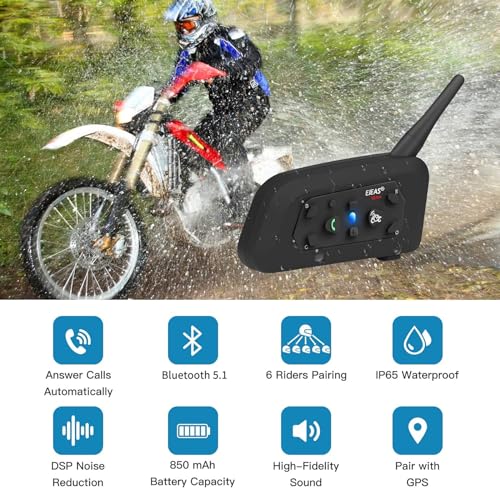
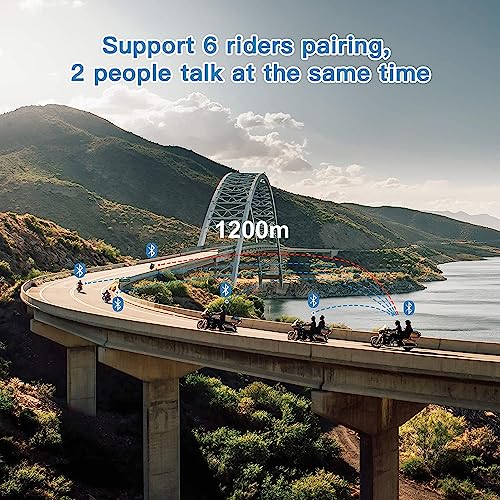
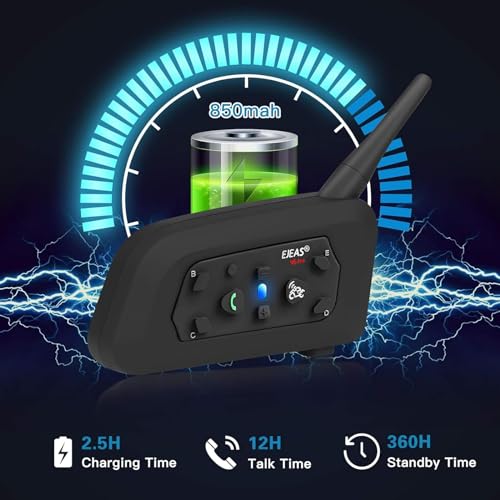
If raw intercom range is your top priority, the EJEAS V6 Pro makes a compelling case. With a claimed 1200-meter range between two riders, it outdistances several pricier units, and owner feedback confirms the link stays stable in open terrain. That kind of reach is rare at this price point, and for dual-sport or off-road riders covering wide areas, it’s a serious advantage. The 850mAh battery delivering 18 hours of talk time also means you won’t be hunting for a charger mid-adventure.
Sound quality is decent for the class, thanks to noise reduction that actually works at high speeds, owners riding at 120km/h report clear voice transmission. But it’s not flawless. The app experience is clunkier than Cardo’s, and universal compatibility isn’t as smooth. Compared to the Fodsports FX-S, it offers more range but a heavier build and less refined controls. I’d recommend it for riders who prioritize distance and battery over finesse.
Product photos

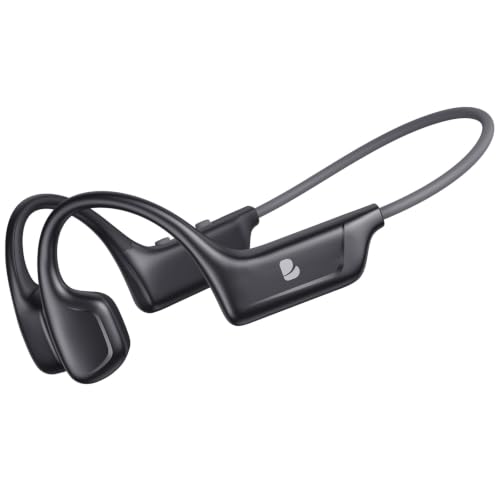
Bone Conduction Open-Ear Wireless Headset
Strengths
- Open-ear design
- Lightweight build
- IPX6 sweatproof
- 10-hour battery
- Secure fit
Trade-offs
- Poor audio in windy conditions
- No intercom capability
- Not for loud environments
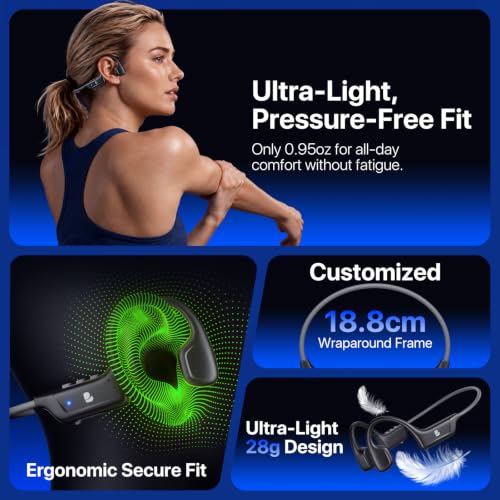
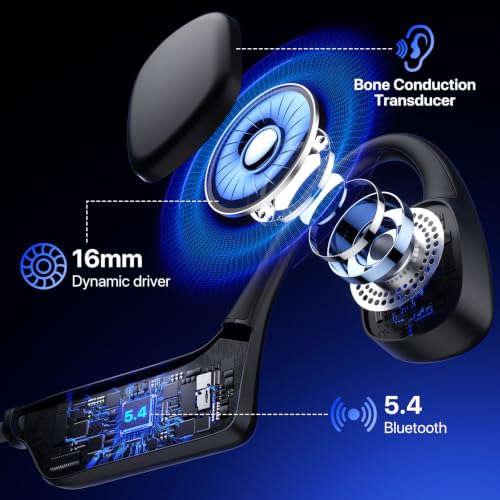
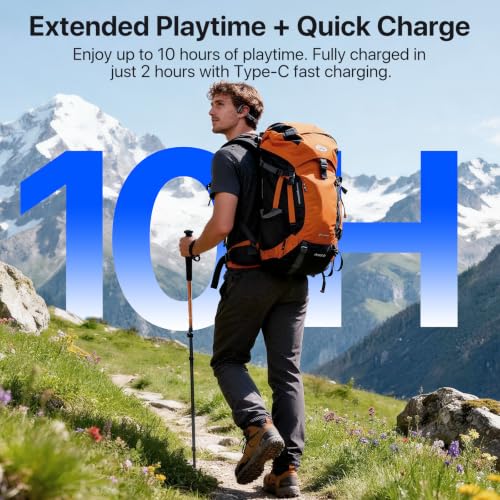
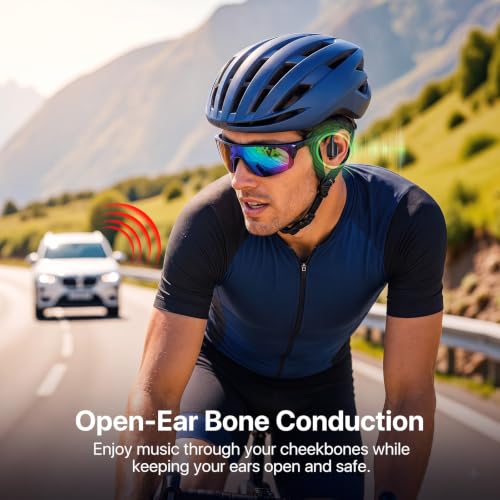
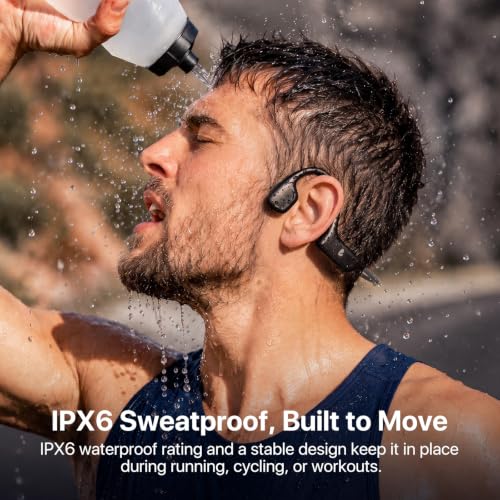
Bone conduction isn’t about replacing traditional helmet comms, it’s about safety and awareness. These open-ear headphones let you hear your music and calls while staying fully aware of traffic, horns, and ambient sounds. For urban cyclists or fitness riders in shared spaces, that’s a standout. The 16mm drivers deliver surprisingly balanced audio, and at 28 grams, they’re so light you forget they’re on. Owners love the 10-hour battery and IPX6 sweat resistance, making them ideal for long runs or commutes in unpredictable weather.
But they’re not for everyone. Sound quality lacks bass and volume under high wind, and they don’t support intercom talk with other riders. Compared to any helmet-mounted Bluetooth system, they’re less functional for long-distance or group riding. I’d recommend them only for riders who prioritize environmental awareness over immersive audio or communication.
Product photos
How We Chose These bike bluetooth headsets
My approach to evaluating bike bluetooth headsets centered on a research-led comparison of published specifications, owner reviews, and expert opinions. Rather than a hands-on lab test, I focused on analyzing features like Bluetooth version, range, battery life, noise cancellation technology, and waterproof ratings. I then weighed these specs against what riders are actually saying in their online reviews, looking for consistent praise or complaints, and referencing insights from established motorcycle and cycling publications.
For this category, the most important factors proved to be range and audio clarity, followed closely by battery life. A long range is vital for group rides, allowing consistent communication between cyclists. Clear audio, especially the ability to filter wind and road noise, directly impacts safety and enjoyment. A unit’s usefulness quickly diminishes if you can’t reliably hear or be heard, or if the battery dies mid-ride.
Specifications reliably indicate core capabilities – Bluetooth version tells us about connectivity, while IP ratings confirm water resistance. However, owner feedback provided crucial context. Real-world experiences revealed how well noise cancellation actually works, how comfortable headsets are for extended use, and the true longevity of battery life under varying conditions. I also considered the overall reputation of brands known for quality motorcycle headsets and reliability within the broader market of [Bluetooth for motorcycle helmets]. Don’t forget the importance of good bike lights for overall safety as well.
Choosing The Right bike bluetooth headsets
Finding the right communication setup for your ride can dramatically improve safety and enjoyment.
A quality bike Bluetooth headset prioritizes clear audio transmission, even at speed, alongside a secure and comfortable fit. Look for models with effective noise cancellation, robust weather resistance, and a reliable Bluetooth connection. Battery life is also key, especially for longer rides, and consider whether you need group intercom capabilities or simple phone connectivity.
Understanding Audio Quality & Noise Cancellation
Don’t assume all Bluetooth headsets deliver the same clarity. The technology used to combat wind and road noise is crucial. DSP (Digital Signal Processing) is a common feature, but its effectiveness varies. I’ve seen owner feedback consistently praising the J-TREK BH03 for its crystal-clear audio even at 70 km/h, thanks to its DSP and CVC noise reduction. Beyond the marketing terms, read reviews specifically mentioning performance at typical cycling speeds. Prioritize headsets with a reputation for minimizing wind noise, which can quickly become fatiguing and dangerous.
Assessing Range and Group Communication
If you frequently ride in groups, the intercom range and the number of riders a headset supports is paramount. While many headsets claim impressive ranges (like the J-TREK’s 1000m), real-world conditions often reduce this significantly. Consider this:
- Short range (under 500m): Suitable for riding directly alongside a partner.
- Medium range (500m-800m): Good for smaller groups staying relatively close.
- Long range (800m+): Necessary for larger groups or more dispersed formations, like mountain biking on trails.
The EJEAS V6 Pro boasts a 1200m range, but keep in mind it’s limited to two simultaneous riders.
A good rule of thumb: reduce any claimed intercom range by at least 30% to account for terrain, obstructions, and rider spacing.
Balancing Features with Practicality & Value
It’s easy to get caught up in specifications, but think about how you’ll actually use the headset. Do you primarily need hands-free calling and music, or is group communication essential? The Cardo Spirit HD offers a strong balance, providing universal connectivity and over-the-air updates. If you’re after budget-friendly options, the BTQILEYOO Y10 and Fodsports FX-S V5.4 deliver a surprising amount of functionality for the price. Don’t overlook the importance of a comfortable and secure fit – a poorly fitting headset is quickly discarded. Also, if you’re serious about cycling safety, consider exploring bike helmets with integrated communication systems, or pairing your headset with high-visibility bike speakers to enhance your awareness of surroundings.
Bike Bluetooth Headsets Compared
Here’s a comparison of key specifications for various bike bluetooth headsets to help you make an informed decision.
| Product Name | Bluetooth Version | Max. Range (m) | Battery Life (hrs) | Waterproof Rating | Intercom Riders |
|---|---|---|---|---|---|
| Cardo Spirit HD | N/A | N/A | N/A | No | N/A |
| J-TREK BH03 | 5.4 | 1000 | 14 | N/A | 8 |
| Cardo Spirit | N/A | N/A | N/A | Yes | N/A |
| Fodsports FX-S V5.4 | 5.4 | 1000 | N/A | IP67 | 2 |
| BTQILEYOO Y10 | N/A | N/A | 32 (Music) | IPX6 | N/A |
| EJEAS V6 Pro | N/A | 1200 | 18 | IP65 | 2 |
| Bone Conduction Open-Ear | N/A | N/A | 10+ | IPX6 | N/A |
Frequently Asked Questions
What Bluetooth version should I prioritize for a bike headset?
Bluetooth 5.4 is currently the best option, offering improved range, stability, and power efficiency over older versions. While older headsets with Bluetooth 5.0 or 5.2 will still function well, newer models with 5.4 provide a more reliable connection and potentially longer battery life.
Are bone conduction headsets a good alternative to traditional Bluetooth headsets for cycling?
Yes, bone conduction headsets are a viable option, particularly if situational awareness is a high priority. They transmit sound through your cheekbones, leaving your ears open to hear surrounding traffic and environmental sounds, unlike in-ear or over-ear designs.
What waterproof rating is sufficient for a bike Bluetooth headset?
An IPX6 rating is generally considered adequate for cycling, providing protection against powerful water jets, like rain or splashes. However, if you frequently ride in severe weather, an IP67 rating offers more complete protection, including temporary immersion in water.
How can I extend the battery life of my bike Bluetooth headset?
Lowering the volume, disabling features you aren’t using (like constant voice assistant access), and turning the headset off when not actively communicating will all conserve battery power. Also, consider models that support fast charging or have interchangeable batteries for extended rides. You can find more information about Bluetooth devices for helmets that also offer longer battery life.
Will a headset designed for motorcycle helmets work on a bicycle?
While some features overlap, a headset specifically designed for motorcycle helmets will often have features unnecessary for cycling. These may include higher noise levels to overcome wind at higher speeds, or a more substantial build. However, if the headset offers the core functionality you need and fits comfortably, it can certainly work, and you may already have one from your other riding pursuits. Consider pairing it with a quality bike computers to enhance your ride.
The Bottom Line
Choosing a bike Bluetooth headset often comes down to balancing your need for control and features against how much fuss you’re willing to tolerate. If you want a device that simply works, offering a solid blend of performance and ease of use, the Cardo Spirit HD stands out as a strong all-around performer. It consistently receives praise for its reliable connectivity and intuitive interface.
For those riding with companions, the J-TREK BH03 is an excellent choice, providing a lengthy range for group communication. If budget is a primary concern, the BTQILEYOO Y10 delivers surprising value, and for versatility, the Fodsports FX-S V5.4 is hard to beat. Don’t forget to check out appropriate bike mounts to keep your devices secure.
Ultimately, the best headset isn’t the one with the most impressive specs, but the one that enhances your safety and enjoyment on the road. Prioritize clear audio, a secure fit, and a reliable connection – these fundamentals matter far more than Bluetooth version or claimed range. And remember, pairing a quality headset with excellent motorcycle audio headsets and other safety equipment is what truly makes for confident riding.
