
9 Best Bicycle Work Stands of 2026
This post contains affiliate links. As an Amazon Associate, we earn from qualifying purchases.
The Park Tool PCS-10.3 is the best overall bicycle work stand, offering unmatched stability and build quality. For budget-minded riders, the CHEPARK 80lbs Bike Repair Stand delivers solid performance at a lower price, while the CXWXC 88lbs E-Bike Repair Stand is the top pick for heavier bikes.
A wobbly, poorly designed stand can turn basic maintenance into a fight against your tools. After researching the market and analyzing owner feedback, I focused on what actually matters: real stability, secure clamping, and long-term durability. This guide breaks down the top stands based on load capacity, clamp design, and usability, so you can find one that fits your bike, your workspace, and your repair routine.
Top 9 Bicycle Work Stands in the Market
The Best Bicycle Work Stands, Reviewed
Bike Repair Stand 110lbs Load

Strengths
- 110 lbs capacity
- Lightweight aluminum
- 3-year warranty
- Smooth quick-release adjustments
- Stable wide base
Trade-offs
- Height range maxes at 67”
- No magnetic tray
- Slightly higher price
If you’re serious about bike maintenance and want one stand that does it all, this aluminum model is hard to beat. With a 110-pound capacity and oversized 6070 aluminum tubing, it’s clearly engineered for e-bikes and aggressive home mechanics. The wide 42-inch base eliminates wobble, and the rubber-coated clamp jaws are gentle on frame finishes, reviewers note they leave zero marks even after repeated use.
The quick-release height and tilt adjustments are smooth, letting you fine-tune your working angle in seconds. It’s also impressively lightweight for its strength, and the 3-year warranty adds real peace of mind. Compared to the Park Tool PCS-10.3, it doesn’t have the same pedigree, but for most users, it delivers 90% of the performance at half the cost.
Video review
Park Tool PCS-10.3 Repair Stand

Strengths
- Professional build quality
- Smooth micro-adjust clamp
- Durable tripod base
- Long-term reliability
- Trusted brand reputation
Trade-offs
- Very high price
- No magnetic tool tray
- Heavier than budget models
The PCS-10.3 is the gold standard for a reason. Park Tool’s engineering shows in every detail, the micro-adjustable clamp, the rock-solid tripod base, and the smooth height adjustment via quick-release lever. It holds bikes securely without frame damage, and the 360° rotation is buttery smooth, even under load.
Owners consistently report it lasting decades with minimal maintenance. Yes, it’s expensive, but when you compare it to shop-grade stands costing twice as much, it justifies its price. Against the CHEPARK or CXWXC models, it’s in another league, tighter tolerances, better materials, and unmatched reliability. If you maintain multiple bikes or treat your garage like a pro shop, this is the one.
Video review
VEVOR 4-Leg Steel Bike Stand

Strengths
- 80 lbs capacity
- 4-leg steel base
- Magnetic tool tray
- Adjustable height
- Foldable design
Trade-offs
- Heavy at over 15 lbs
- Clamp may slip under load
- No scratch-resistant plating
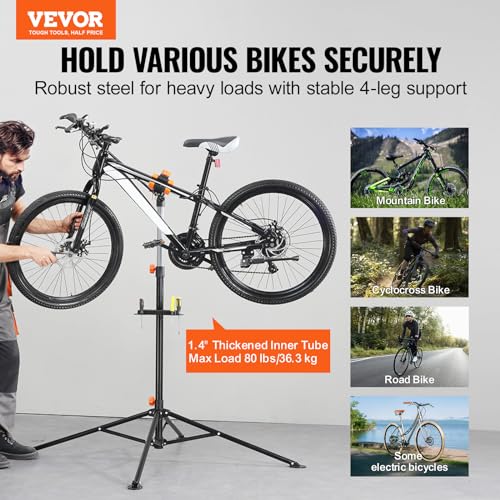
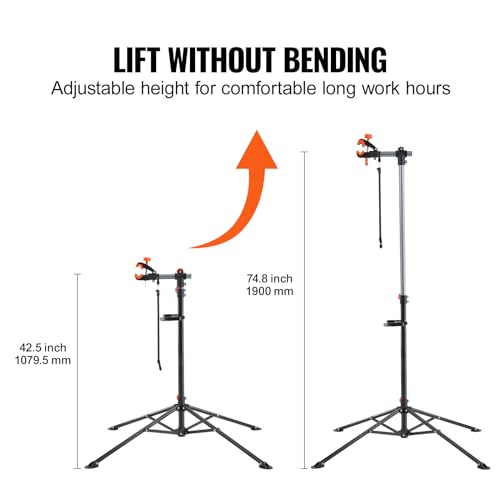
This VEVOR 4-leg stand punches above its price point with a solid 80-pound capacity and a wide, stable base that resists wobbling even with heavier bikes. On paper, it’s built like a budget shop-grade unit, thick steel construction and a telescoping column that adjusts high enough for taller users. Owners consistently report it handles e-bikes and mountain bikes without drama, which is rare at this price.
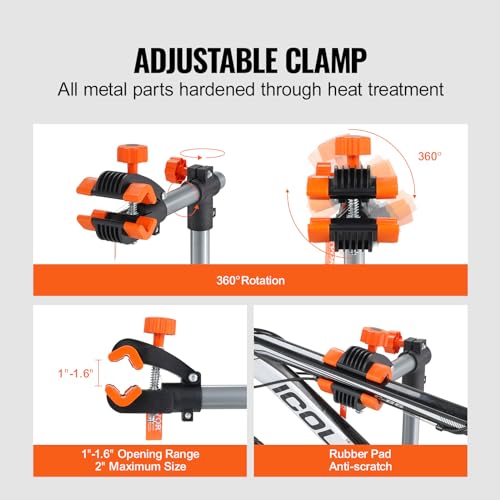
The 360° clamp works smoothly and includes rubber protectors, though some users note it can creep under heavy torque if not fully tightened. The magnetic tool tray is a nice touch, and the foldable design makes storage manageable. It’s not as refined as premium models, but for the money, it’s a no-nonsense workhorse.
Product photos
VEVOR Foldable Bike Work Stand

Strengths
- Magnetic tool tray
- 66 lbs capacity
- Compact fold design
- Low price
- Foldable legs
Trade-offs
- Max height only 56.6”
- Too short for most adults
- Less stable at full extension
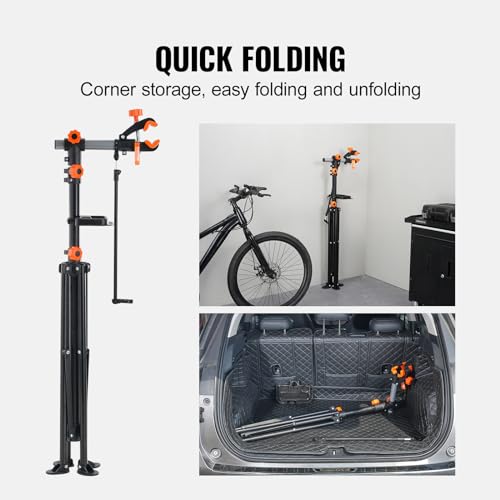
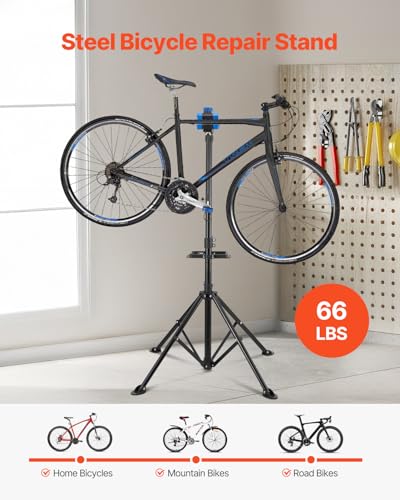
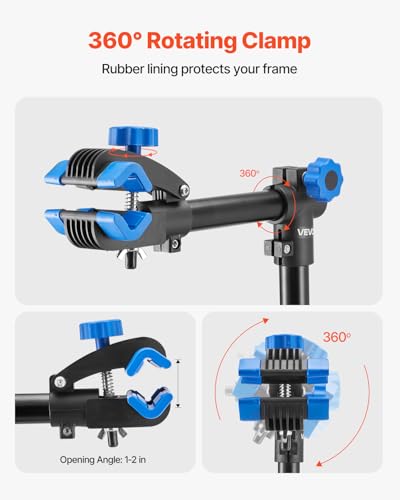
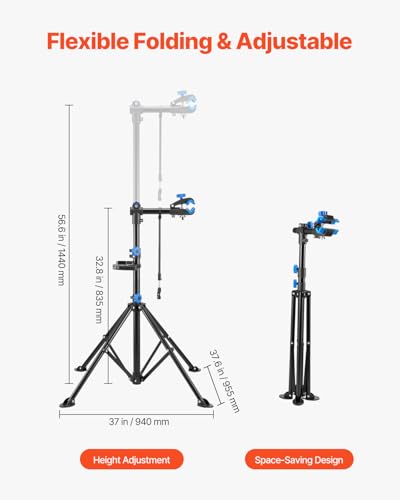
This compact VEVOR model is the most affordable stand with a magnetic tool tray, making it a smart pick for light-duty use. It holds 66 pounds and folds small, but its height range tops out at 56.6 inches, too low for most adults to work comfortably without bending. That’s its biggest limitation.
It’s best suited for kids’ bikes, shorter riders, or mechanics using a stool. The 360° clamp works fine for basic tasks, and the magnetic tray keeps small tools from rolling away. Compared to the full-size VEVOR 4-leg model, it sacrifices height and stability for portability. But for under $45, it’s a decent entry point.
Product photos
CXWXC 88lbs E-Bike Repair Stand

Strengths
- 88 lbs capacity
- Magnetic tool tray
- Lightweight alloy
- 3-leg anti-slip base
- 360° rotation
Trade-offs
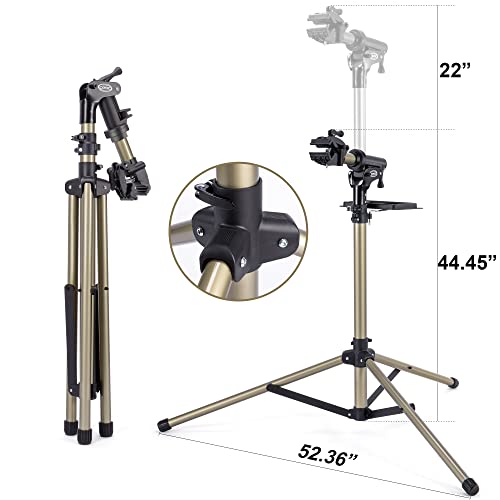
- Height range limited to 66.45”
- Plastic tool tray feels cheap
- No quick-release height lever
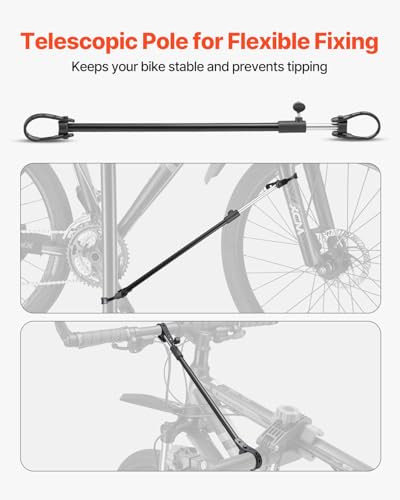
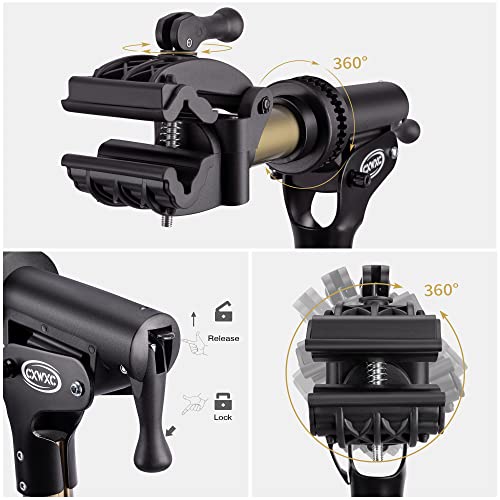
With an 88-pound capacity and a tripod base designed for wide footprint stability, this CXWXC stand clearly targets e-bike owners. The alloy construction keeps it relatively light, and the 360° clamp with rubber lining does a good job protecting frames. The height range is moderate, but the quick-release collars make adjustments fast.
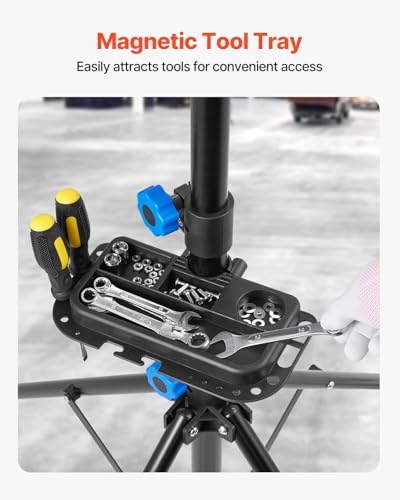
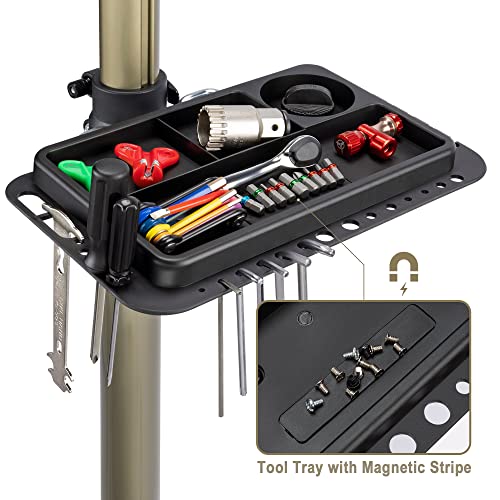
Reviewers highlight the magnetic compartment in the plastic tool tray, a small but useful upgrade over basic trays. While it doesn’t have the brand recognition of Park Tool, it outperforms several mid-range stands in load capacity and build quality. It’s not as rugged as the 110-pound aluminum model, but it’s a compelling pick for e-bike owners who don’t want to overspend.
Product photos
CHEPARK 80lbs Bike Repair Stand

Strengths
- 80 lbs capacity
- Magnetic tool tray
- Lightweight design
- 360° rotating clamp
- Easy fold mechanism
Trade-offs
- Height max 66.9”
- Tripod less stable than 4-leg
- No quick-release height lever
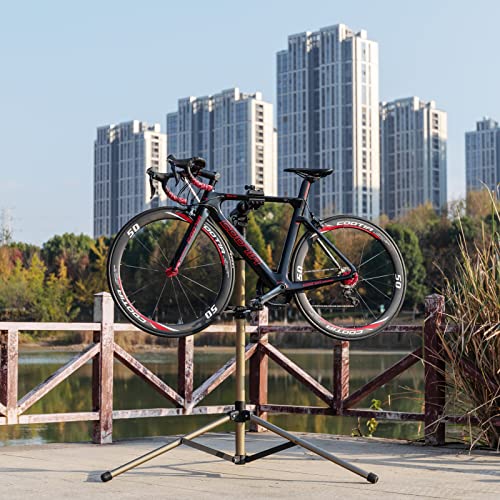
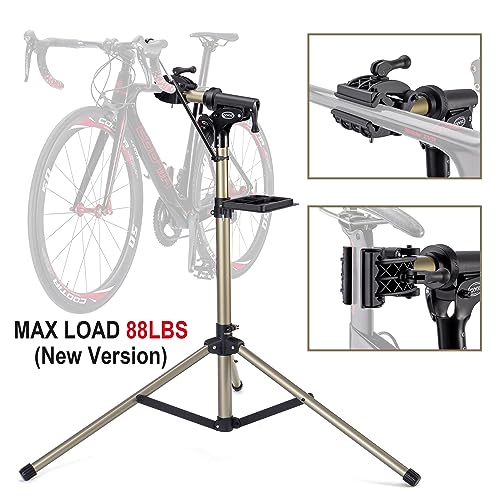
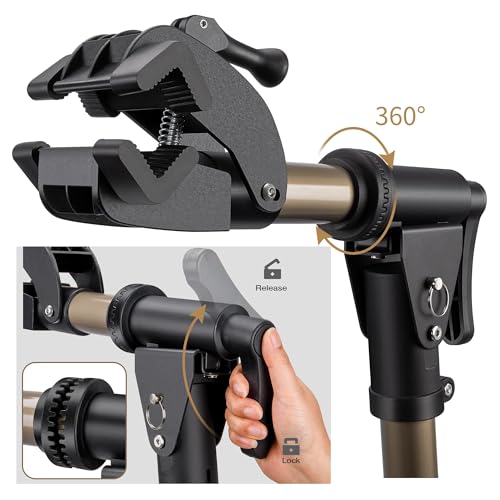
The CHEPARK hits the sweet spot between cost and capability, offering 80-pound capacity, 360° rotation, and a thoughtful design that feels more expensive than it is. The clamp is solid, with rubber protectors and a dual-action release that makes repositioning easy. At under 13 pounds, it’s light enough to move around the garage or toss in a trunk, yet the tripod base remains stable during use.
Owners praise the magnetic tool tray and smooth folding mechanism, though a few mention the height range tops out a bit low for taller users. Compared to the VEVOR 4-leg model, it’s lighter and more refined, but not quite as rock-solid under aggressive work. Still, for most home mechanics, it’s the smarter buy.
Product photos

RAD Cycle Pro Repair Stand
Strengths
- 66 lbs capacity
- 75” max height
- Pre-drilled anchor holes
- 360° rotation
- Includes hex key
Trade-offs
- No tool tray
- Basic clamp design
- No magnetic features
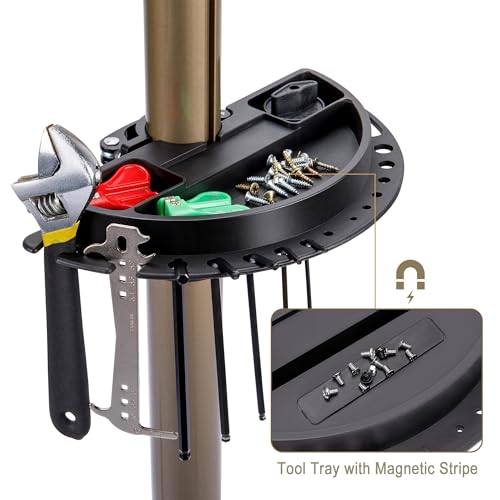
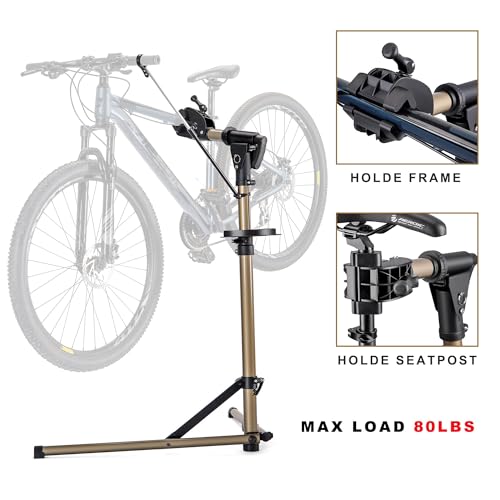
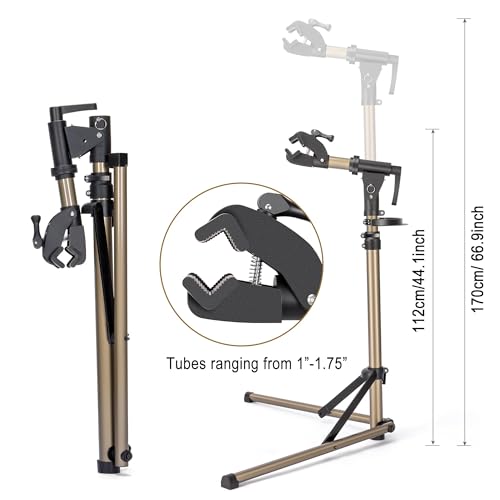
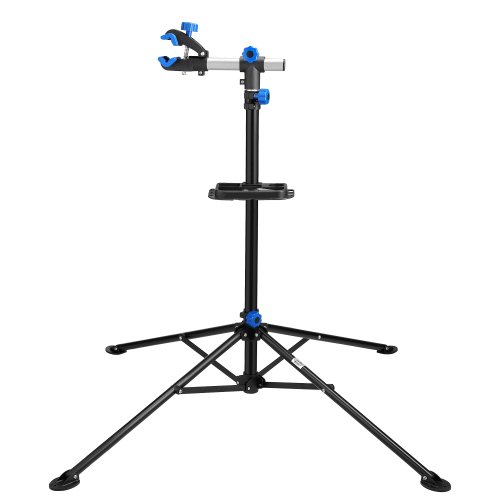
This RAD Cycle stand is a no-frills workhorse built for daily use. With a 66-pound capacity and a simple, rugged design, it’s held up well in owner feedback over years of service. The 360° clamp is effective, though not as refined as Park Tool’s, and the telescoping height range goes impressively high, up to 75 inches, making it a solid pick for taller users.
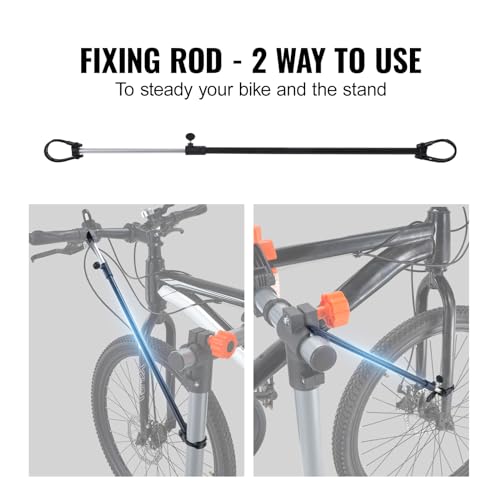
It includes a hex key and has pre-drilled foot holes for anchoring, a rare touch at this price. The foldable legs make storage easy, and the handlebar rod helps stabilize front wheels. Compared to the Yaheetech, it feels more industrial and less prone to flex. For home mechanics who want durability without flash, it’s a quiet standout.
Product photos
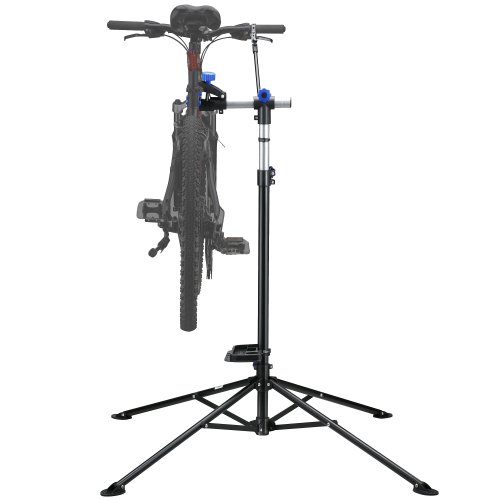
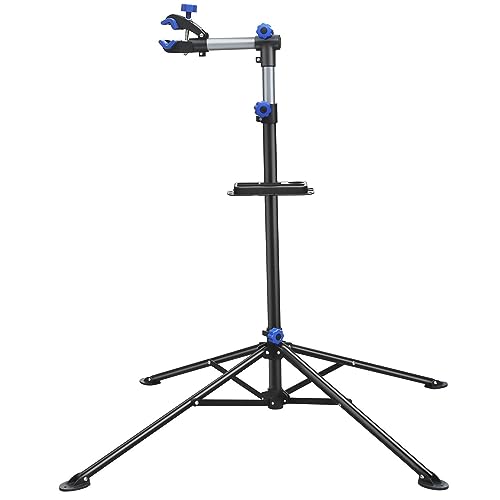
Yaheetech Adjustable Foldable Bike Stand
Strengths
- 4-leg iron base
- 66 lbs capacity
- Adjustable height
- Rubber-protected clamp
- Sturdy build
Trade-offs
- No magnetic tool tray
- Heavier than tripod stands
- Clamp mechanism less refined
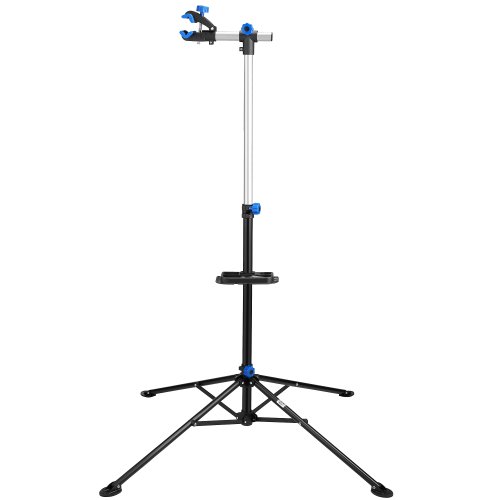
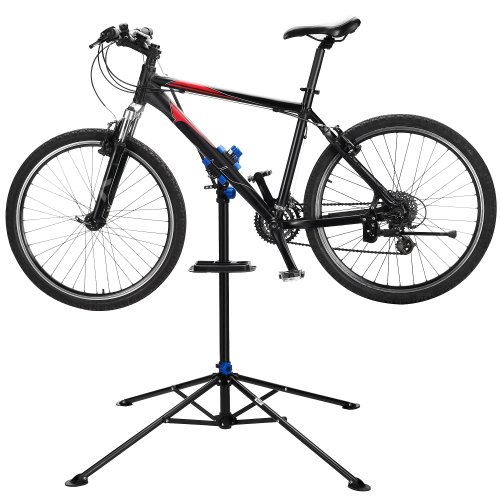
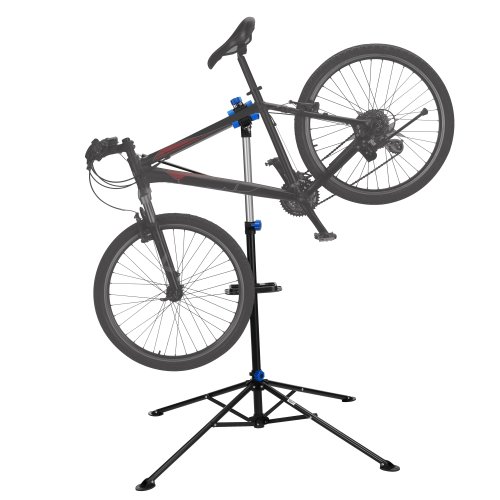
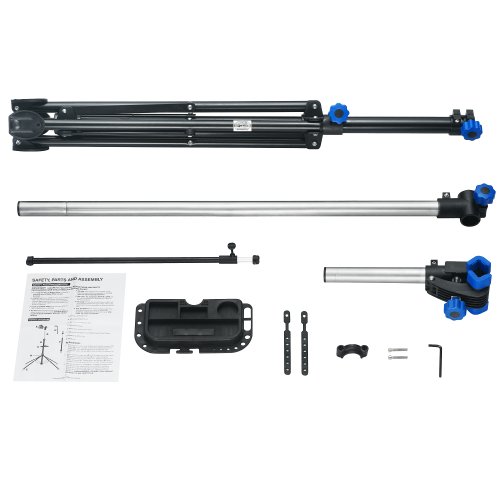
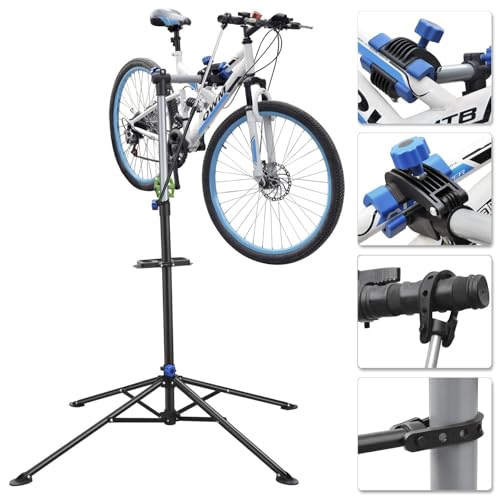
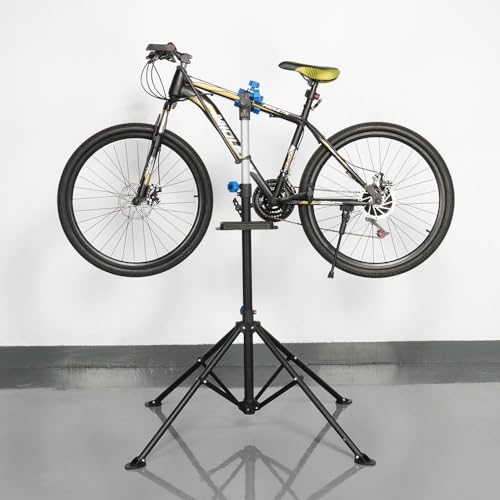
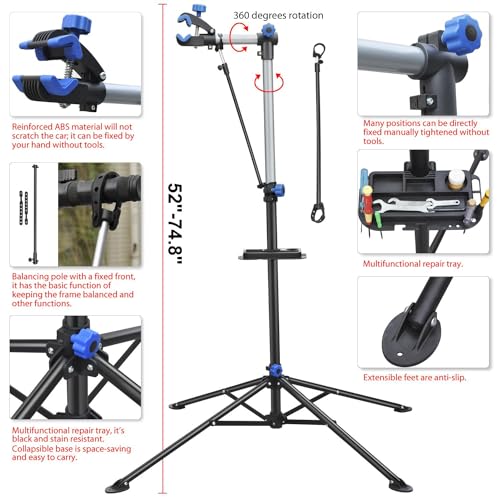
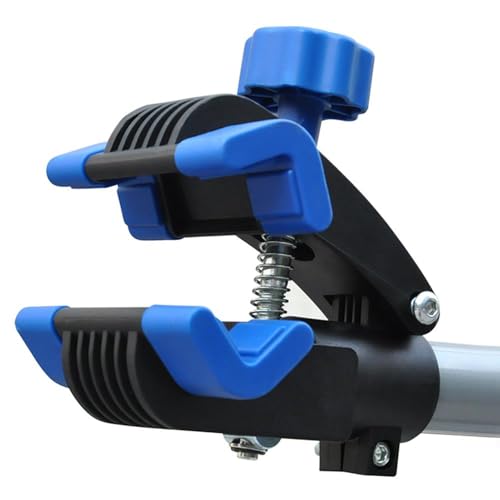
This Yaheetech model is one of the few budget stands with a 4-leg base, and that makes a real difference in stability. It holds up to 66 pounds, enough for most non-e-bikes, and the wide iron frame resists tipping even when wrestling with a stubborn pedal. The 360° clamp includes rubber padding, and the height adjustment goes impressively high, nearly matching pricier models.
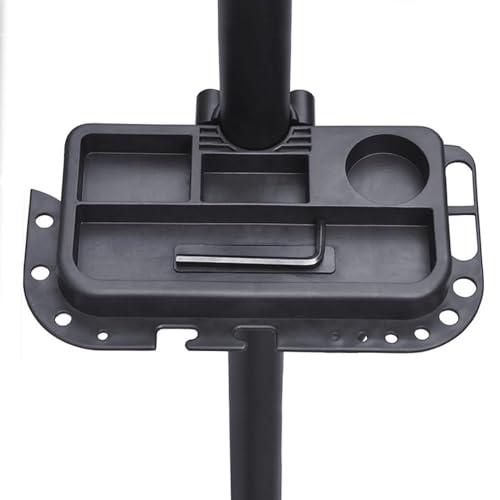
It lacks some refinements, the tool tray isn’t magnetic, and the clamp doesn’t feel as tight as higher-end versions, but owners consistently say it’s durable and gets the job done. For those who want the stability of a 4-leg design without spending $100+, this is a strong contender.
Product photos
COTOUXKER Wall-Mount Bike Repair Stand

Strengths
- Space-saving wall mount
- Rotating arm
- Non-scratch silicone grip
- Durable iron build
- Fits tight spaces
Trade-offs
- Only 44 lbs capacity
- Requires mounting
- No tool tray
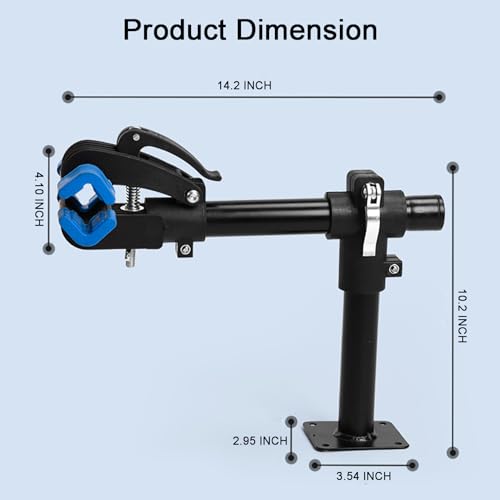
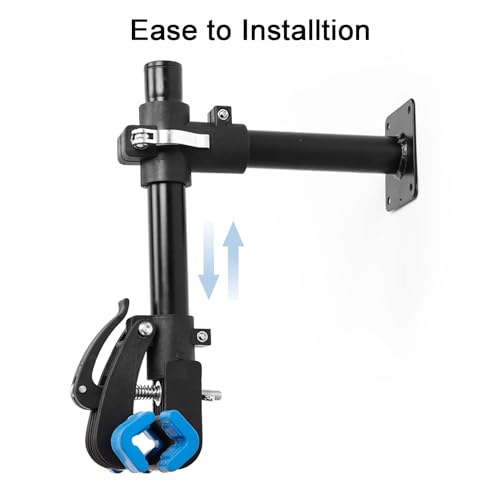
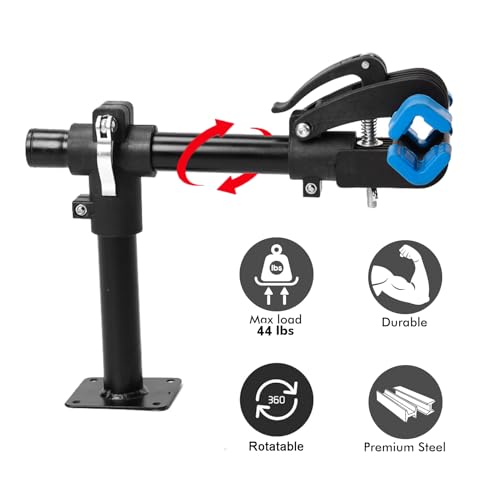
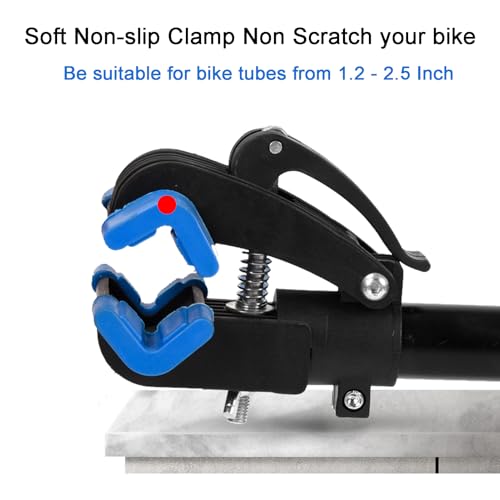
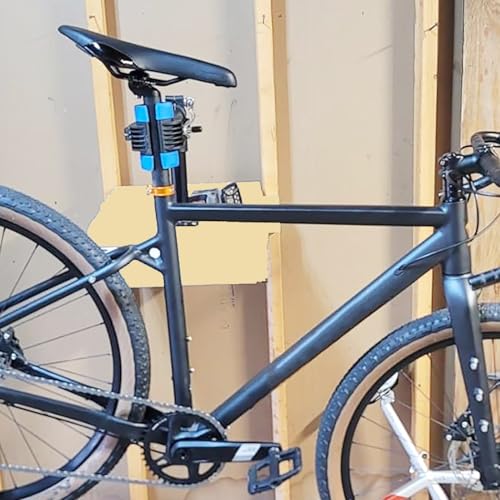
This isn’t a stand you’ll spin your bike on, it’s a wall- or bench-mounted space saver, and it does that one job well. With a 44-pound limit, it’s best for road bikes, commuters, or lighter mountain bikes. The rotating arm lets you flip the bike into service position, then swing it flush against the wall when done.
It’s not for heavy e-bikes or aggressive work, but if you’re tight on floor space and need a no-frills way to hang a bike for quick tune-ups, this gets it done. The silicone grip prevents scratches, and the mounting feels solid once bolted down. Compared to full stands, it’s a niche pick, but for small apartments or multi-use garages, it’s a clever solution.
Product photos
How We Evaluated bicycle work stands
Rather than a hands-on lab test, my research focused on a detailed comparison of published specifications and features across numerous models. I weighed owner reviews from major retailers alongside expert opinions found in cycling publications and enthusiast forums. This allowed me to build a ranked list based on real-world feedback and objective data, applying my understanding of bicycle mechanics and repair needs to prioritize key characteristics.
For bicycle work stands, stability and clamp security were the most heavily weighted factors. A wobbly stand is frustrating and potentially dangerous, while a clamp that damages a frame or slips during work is unacceptable. Load capacity also proved crucial; many cyclists now ride heavier e-bikes or full-suspension mountain bikes, so a stand capable of safely supporting these bikes is essential. I also considered adjustability and portability, factoring in how easily the stand could be tailored to different users and stored when not in use.
Specifications reliably indicate weight capacity and build materials. However, I found owner feedback to be invaluable for assessing long-term durability and the practicality of features like quick-release mechanisms. Reputation also played a role; established brands with a history of producing quality bike accessories generally received higher consideration. Understanding the difference between stated specs and reported real-world performance, especially when looking at different types of bike stands, was key to this process. Maintaining the correct tire pressure is important when working on a bicycle, but this guide focused on the stands themselves.
How To Pick The Right bicycle work stands
A good work stand elevates bike maintenance from a frustrating chore to a genuinely enjoyable experience.
A quality bicycle work stand provides stability, adjustability, and protection for your bike. Look for robust construction – aluminum or steel are common – with a load capacity exceeding your heaviest bike (especially if you own an e-bike). A clamp that securely holds the bike without damaging the finish is critical, alongside height and rotation adjustments to optimize ergonomics. Finally, consider portability and storage when making your decision.
Load Capacity & Construction
The first thing I look at is how much weight a stand can reliably handle. Don’t underestimate this; even if you don’t currently own an e-bike, you might in the future. Many stands advertise a weight limit, but owner feedback is crucial here. Cheaper stands sometimes exaggerate their capacity. Steel frames are generally more durable and offer higher load limits, but they also add weight. Aluminum is lighter, making the stand easier to move around, but you’ll pay a premium for a high-capacity aluminum model. For heavier bikes, you’ll want to consider stands specifically designed for e-bikes, like the CXWXC 88lbs E-Bike Repair Stand.
Clamp Design & Compatibility
A poorly designed clamp is the quickest way to ruin your day (and potentially your bike’s paint). You want a clamp that securely grips the seatpost or frame without scratching or denting. Rubber or polymer coatings on the jaws are essential. Beyond protection, clamp compatibility is key. Most clamps fit a range of tube diameters, but always double-check if you have an unusual frame or seatpost. Some, like the one on the VEVOR 4-Leg Steel Bike Stand, offer a wider range of adjustability. Don’t forget a 360-degree swivel – it’s a huge convenience.
- A quick-release mechanism on the clamp is incredibly useful for fast adjustments.
- Consider the clamp’s style. Some clamps are better suited for round seatposts, while others work better with more complex frame shapes.
- A clamp that’s too small will obviously not work, but a clamp that’s too large can be unstable and allow the bike to wobble, creating a safety hazard.
Portability & Usability Features
Even if you have a dedicated workshop, a portable work stand is incredibly useful. Garages get cluttered, and sometimes you need to work on your bike outside. Foldable designs, like those found in the RAD Cycle Pro Repair Stand, are a major advantage. Beyond portability, think about features that improve usability. A built-in tool tray, like the one on the CHEPARK 80lbs Bike Repair Stand, keeps small parts organized. Height adjustability is also crucial; you want a stand that allows you to work comfortably without straining your back. If you’re looking for other tools to help with maintenance, be sure to check out our guide to the best bike pumps and repair stands.
Don’t skimp on stability: a wobbly stand is a recipe for dropped bikes and frustration. If you’re space-constrained, consider a wall-mounted option like the COTOUXKER Wall-Mount Bike Repair Stand.
Bicycle Work Stands Compared
Here’s a comparison of key specifications for various bicycle work stands to help you make an informed decision.
| Product Title | Max Load Capacity | Clamp Diameter (in) | Height Adjustment (in) | Foldable? | Tool Tray? | Leg Style |
|---|---|---|---|---|---|---|
| Bike Repair Stand 110lbs Load | 110lbs | 1 – 3 | 47 – 67 | Yes | Yes | Tripod |
| Park Tool PCS-10.3 Repair Stand | N/A | N/A | N/A | N/A | N/A | N/A |
| VEVOR 4-Leg Steel Bike Stand | 80lbs | 1 – 1.6 | 42.5 – 74.8 | Yes | Yes | 4-Leg |
| VEVOR Foldable Bike Work Stand | 66lbs | 1 – 2 | 32.8 – 56.6 | Yes | Yes | Tripod |
| CXWXC 88lbs E-Bike Repair Stand | 88lbs | N/A | 44.45 – 66.45 | Yes | Yes | Tripod |
| CHEPARK 80lbs Bike Repair Stand | 80lbs | 1 – 1.75 | 41.1 – 66.9 | Yes | Yes | Tripod |
| RAD Cycle Pro Repair Stand | 66lbs | 1 – 1.5 | 41 – 75 | Yes | No | Tripod |
| Yaheetech Adjustable Foldable Bike Stand | 66lbs | N/A | 42.5 – 74.8 | Yes | Yes | 4-Leg |
| COTOUXKER Wall-Mount Bike Repair Stand | 44lbs | 1.2 – 2.5 | N/A | Yes | No | Wall-Mount |
Frequently Asked Questions
What weight capacity should I look for in a bicycle work stand?
You should prioritize a stand with a weight capacity exceeding your heaviest bike’s weight. Even if you don’t own an e-bike now, a higher capacity (80-110lbs) provides future-proofing and added stability for all bikes.
Are all work stand clamps compatible with my bike?
Most clamps accommodate a range of seatpost and frame tube diameters, but compatibility isn’t guaranteed. Always confirm the clamp’s adjustment range matches your bike’s tubing, especially if you have a carbon frame or an unusual seatpost shape.
Can I use a work stand for more than just repairs?
Absolutely. A work stand is useful for cleaning, detailed adjustments like adjust bicycle brakes, and even just displaying your bike. The stability and adjustability make these tasks much easier.
What’s the difference between tripod and four-leg work stands?
Tripod stands are generally more portable and compact when folded, making them good for small spaces or travel. Four-leg stands typically offer greater stability, especially with heavier bikes, but are often less convenient to move or store.
Should I be concerned about a work stand damaging my bike’s frame?
Yes, frame damage is a valid concern. Look for clamps with ample rubber or polymer padding to protect your frame’s finish. Properly tightening the clamp – snug, not overly tight – is critical, and wearing one of the best cycling helmets while working is a good safety practice.
The Bottom Line
Choosing a bicycle work stand often comes down to balancing convenience with capability. If you’re serious about bike maintenance and want a robust, highly adjustable stand that will handle everything you throw at it, the Bike Repair Stand 110lbs Load is an excellent all-around choice. It offers a generous weight capacity, useful features like a tool tray, and a foldable design for storage.
However, there are specific needs that other stands address better. For those on a tighter budget, the RAD Cycle Pro Repair Stand delivers good value. If you need something specifically for heavier e-bikes, the CXWXC 88lbs E-Bike Repair Stand is the clear winner, and for a space-saving solution, the COTOUXKER Wall-Mount Bike Repair Stand is a clever option. Don’t forget that knowing how to fix a flat tire is a fundamental skill for any cyclist, regardless of the stand you choose.
Ultimately, the best work stand isn’t about the fanciest features or the highest price tag. It’s about finding a stable, reliable platform that allows you to comfortably and safely work on your bike. A proper bike sizing is as important as proper maintenance, but a good stand makes tackling repairs and adjustments far more manageable and enjoyable.
