
8 Best Beginner Full Suspension Mountain Bikes 2026
This post contains affiliate links. As an Amazon Associate, we earn from qualifying purchases.
The Canyon Spectral 125 AL 5 stands out as the best beginner full suspension mountain bike, offering smart geometry and reliable components, while the Canyon Spectral 5 delivers more aggressive capability for those ready to push harder, both beat out budget builds that sacrifice performance for price.
Most riders new to full suspension struggle with finding a bike that’s capable without being overwhelming. Too many cheap models use outdated parts or poor suspension design, leading to frustration on the trail.
I focused on bikes with proven component packages, proper trail geometry, and suspension that actually works, drawing from specs, owner experiences, and brand reputation to highlight real value. These picks give you a solid foundation to learn, grow, and enjoy the ride.
Top 8 Beginner Full Suspension Mountain Bikes in the Market
The Best Beginner Full Suspension Mountain Bikes, Reviewed
Canyon Spectral 125 AL 5

Strengths
- Lightweight alloy frame
- Superior RockShox fork
- Shimano Deore drivetrain
Trade-offs
- Shorter travel limits rowdy descents
- Higher price than entry models
If you want a bike that feels sharp, lively, and built for speed on less extreme trails, the Spectral 125 AL 5 is my top pick. It’s lighter than the standard Spectral 5, with 140mm up front and 125mm in the rear, enough travel for playfulness without the weight penalty of a full 150mm rig. The RockShox 35 Gold RL fork is a step up from the Silver on the Spectral 5, offering better damping and tuning, and the Shimano Deore 12-speed drivetrain shifts more cleanly than SRAM SX.
Owners praise its agility and how easily it climbs, making it ideal for riders who spend more time going up than dropping into chutes. Against the Schwinn Traxion, it’s stiffer, lighter, and far more precise. I’d recommend this for beginners who know they prefer faster, flowy trails over heavy enduro-style terrain. It’s the smarter buy if you’re not chasing maximum downhill plushness.
Video review
Canyon Spectral 5
Strengths
- RockShox suspension
- Dropper seatpost included
- Tubeless-ready wheels
Trade-offs
- SRAM SX shifting lags slightly
- Heavier than carbon models
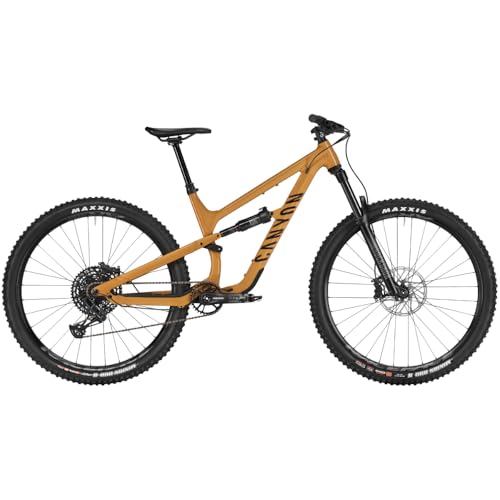
The Canyon Spectral 5 sits at that sweet spot where high-end trail performance meets real-world value. On paper, it’s a complete package: 150mm of RockShox suspension front and rear, a durable aluminum frame with progressive geometry, and a full build that includes a dropper post, tubeless-ready wheels, and powerful SRAM 4-piston brakes. Owners consistently report it handles rowdy descents with composure while still being light enough to haul uphill without feeling sluggish.
What stands out is the SRAM SX Eagle drivetrain, it’s the budget-friendly end of SRAM’s 12-speed lineup, and while it doesn’t shift quite as crisply as GX or X0, it holds up well under regular trail use. Compared to the similarly priced but lower-spec’d Schwinn Traxion, the Spectral 5 is in a different league in terms of suspension quality and frame stiffness. I’d pick this over most bikes in the $2,000 range for sheer capability per dollar.
Video review
Schwinn Traxion 24-Speed
Strengths
- 24-speed Shimano shifting
- Double-wall rims
- Disc brakes
Trade-offs
- Mushy suspension
- No dropper post
- Overpriced for components
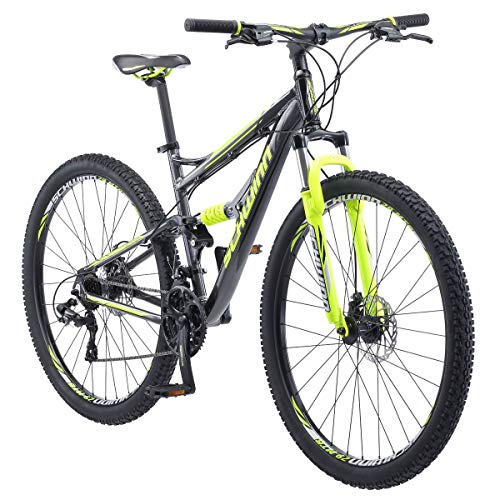
The Schwinn Traxion sits in the awkward middle ground, priced near $700 but built with components that don’t fully justify it. It has a 24-speed Shimano drivetrain, mechanical disc brakes, and an aluminum frame with full suspension, which sounds good on paper. But owners report the suspension feels soft and vague, and the frame lacks stiffness compared to Canyon or even Mongoose.
Where it shines is the double-wall alloy rims and 2.25-inch knobby tires, which are durable and grippy. But for the price, it should have a better fork or at least a dropper post. Against the Canyon Spectral 125 AL 5, it’s heavier and less responsive. I’d only recommend this if you’re loyal to the Schwinn brand or find it heavily discounted. Otherwise, you can get better performance elsewhere for the same money.
Product photos


Mongoose Impasse 1.0
Strengths
- Aluminum frame
- Wide trail tires
- Disc brakes
Trade-offs
- Only 7 speeds
- No dropper post
- Basic suspension fork
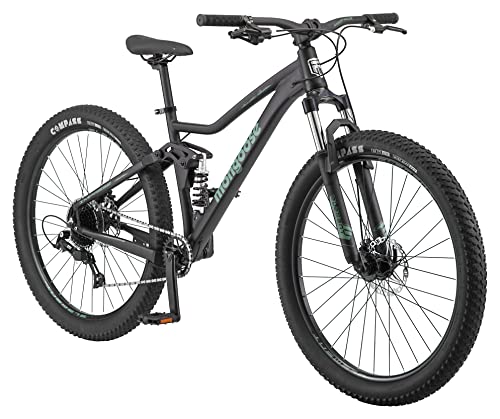
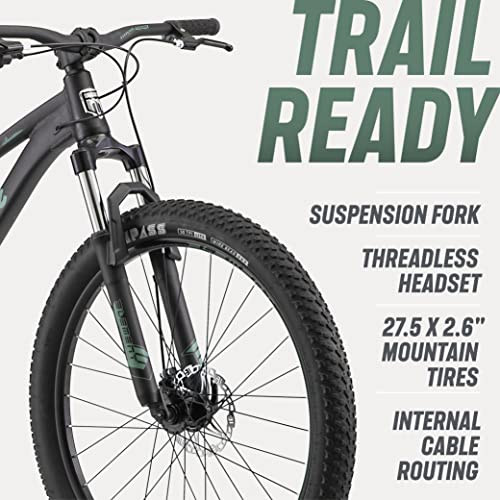
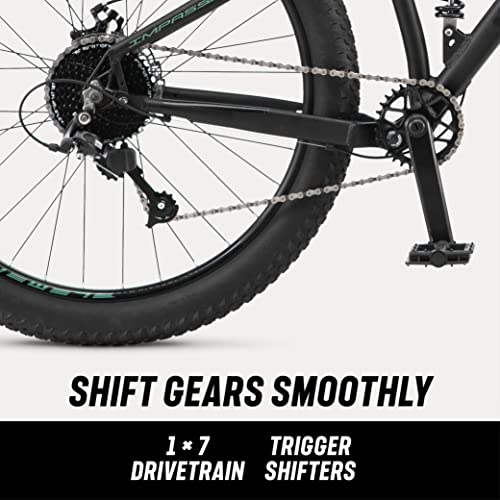
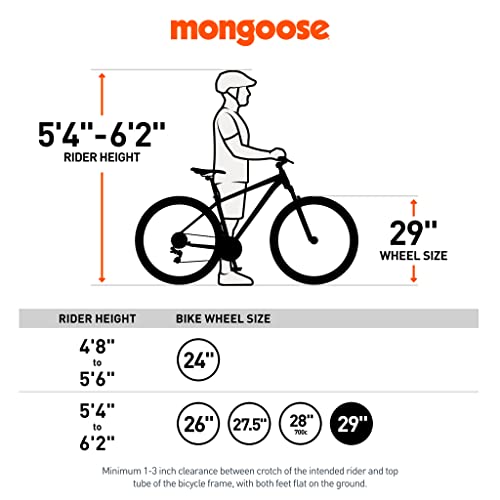
Mongoose brings some heritage credibility, and the Impasse 1.0 feels like a solid step up from ultra-cheap department store bikes. With a lightweight aluminum frame, 27.5-inch wheels, and mechanical disc brakes, it’s built for real trail use. The 7-speed drivetrain is narrow (1×7), but the 30-tooth narrow/wide chainring helps prevent chain drops, which is smart for beginners.
Owners say it’s stable and confidence-inspiring, especially with the wide 2.6-inch tires that boost traction. Compared to the Schwinn Traxion, it’s lighter and more trail-focused, though it lacks a dropper post and has fewer gears. I’d call this the best pick for someone who wants a no-fuss, reliable bike that looks and rides like a real mountain bike without the high price tag. It doesn’t have fancy suspension, but it’s honest and capable.
Product photos


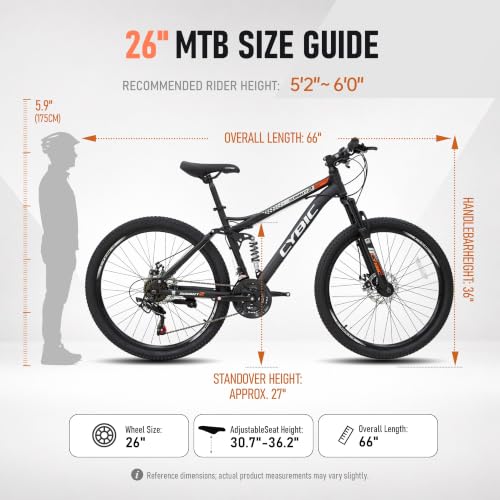
CYBIC 26″ Shimano 21-Speed
Strengths
- Shimano 21-speed drivetrain
- Front and rear disc brakes
- Knobby all-terrain tires
Trade-offs
- Heavy steel frame
- Basic suspension damping
- Mechanical disc brakes
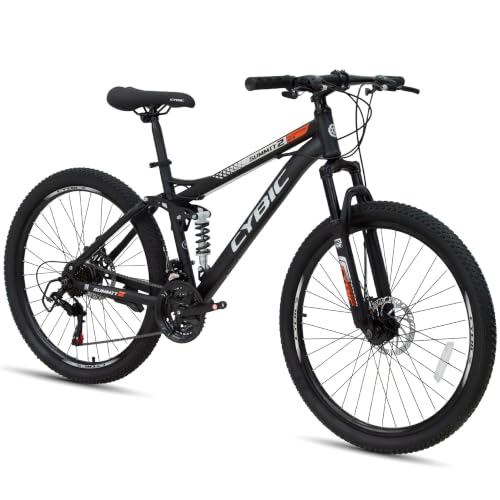
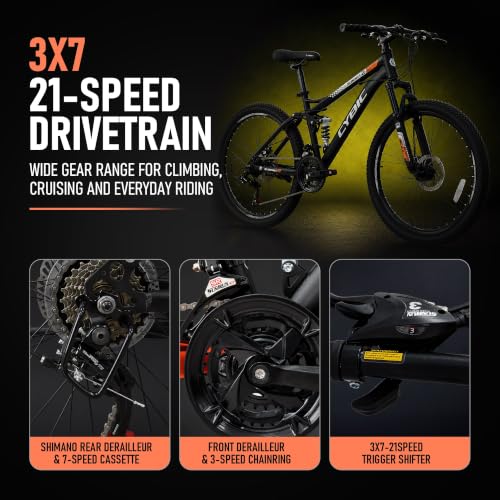
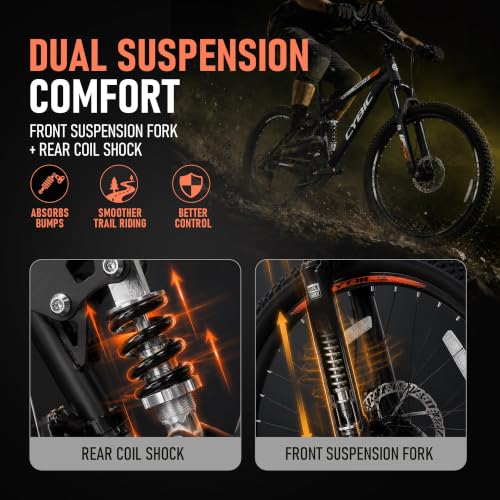
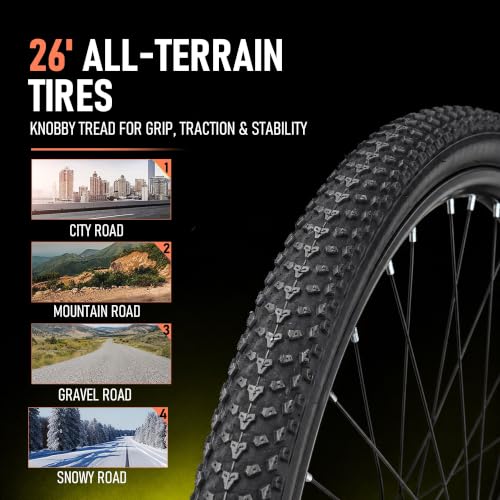
The CYBIC stands out in the sub-$250 category with a Shimano 21-speed drivetrain, disc brakes, and a full steel frame with dual suspension. For the price, that’s a strong spec sheet. Owners consistently praise the Shimano components for their reliability, especially the rear derailleur, which shifts more smoothly than expected at this level. The disc brakes are mechanical, not hydraulic, but they outperform V-brakes in wet or dusty conditions.
It’s not light, the steel frame adds weight, but it’s durable and comes 85% pre-assembled with a tool kit. Compared to the Max4out or WEIZE, it’s a clear upgrade in braking and gearing. I’d recommend this over most bikes under $250, especially for riders who want real trail capability without spending a fortune. It won’t win any weight competitions, but it’s a dependable, no-surprises machine.
Product photos
richvelo 26″ Full Suspension

Strengths
- 21-speed with gear indicator
- Mechanical disc brakes
- Strong tire grip
Trade-offs
- Heavy steel frame
- Limited frame size range
- Basic suspension tuning
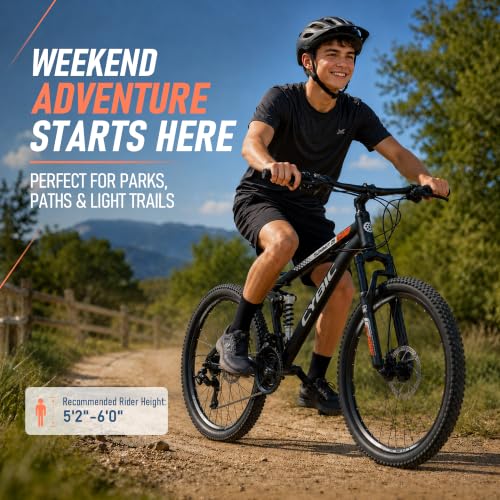
At $240, the richvelo punches above its weight with 21 speeds, mechanical disc brakes, and a gear indicator, a rare feature at this price. The high-carbon steel frame keeps it durable but heavy, and the 24×2.125-inch tires offer solid grip on gravel and dirt. Owners appreciate the disc brakes for their all-weather reliability compared to V-brakes, and the gear indicator helps new riders learn shifting patterns.
It’s not fast or light, but it’s a no-nonsense workhorse for flat trails and neighborhood rides. Against the Max4out, it’s clearly the better-equipped bike, though the Mongoose Impasse beats it in frame material (aluminum vs. steel). I’d recommend this for budget-focused adults who want disc brakes and more gears without stepping into the $500+ range. It’s not going to inspire trail confidence, but it gets you out there.
Product photos
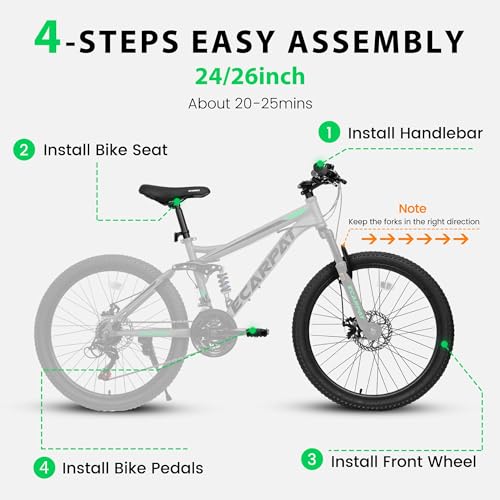
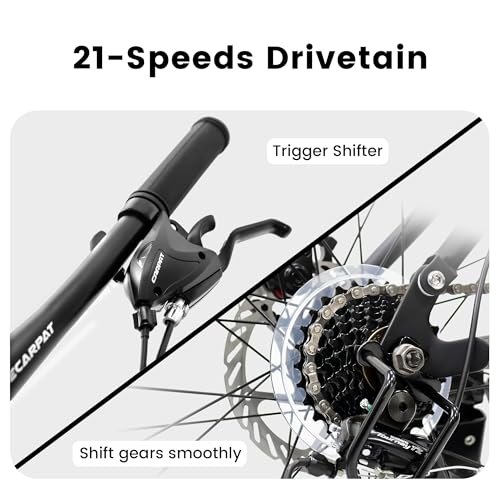
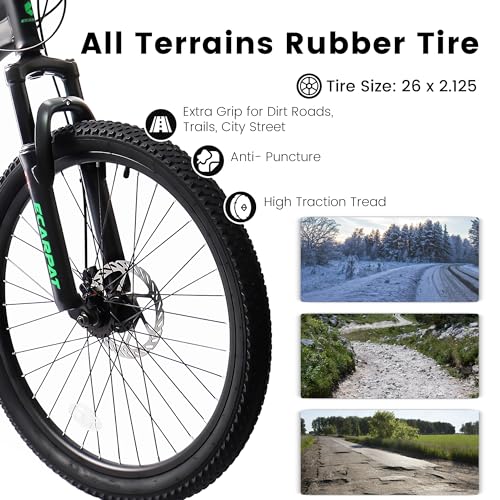

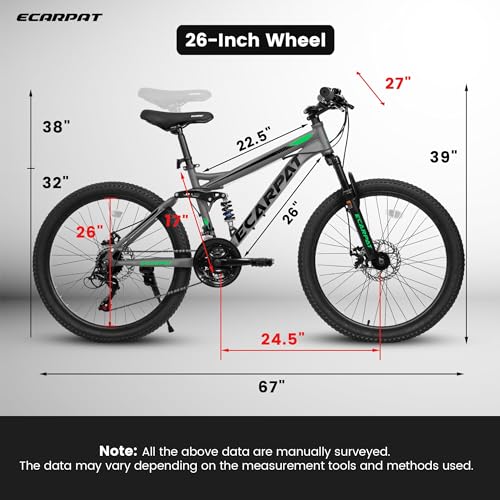
WEIZE 26″ 18-Speed

Strengths
- 18-speed gearing
- Steel frame durability
- Decent tire size
Trade-offs
- Linear pull brakes
- Heavy frame
- Twist shifter imprecision
The WEIZE straddles the line between mountain bike and hybrid commuter, and it shows. With an 18-speed twist-shift drivetrain and linear pull brakes, it’s not built for aggressive trail work. The steel frame and basic suspension suggest it’s meant for paved paths, bike lanes, or smooth fire roads. Owners report it’s decent for casual riding, but the brakes lack bite and the shifting can get clunky over time.
It’s heavier than aluminum bikes in the same price range and doesn’t offer disc brakes like the CYBIC or richvelo. Where it stands out is the 18-speed range, more gears than the 7-speed Max4out, which helps on moderate inclines. But compared to true trail bikes, it’s underpowered and sluggish. It’s not a mountain bike in the traditional sense, but if you want a do-it-all city-to-trail hybrid on a budget, it’s passable.
Product photos


Max4out 26″ 7-Speed

Strengths
- Extremely affordable
- Simple setup
- Decent tire grip
Trade-offs
- Heavy steel frame
- V-brakes lack power
- Limited gearing
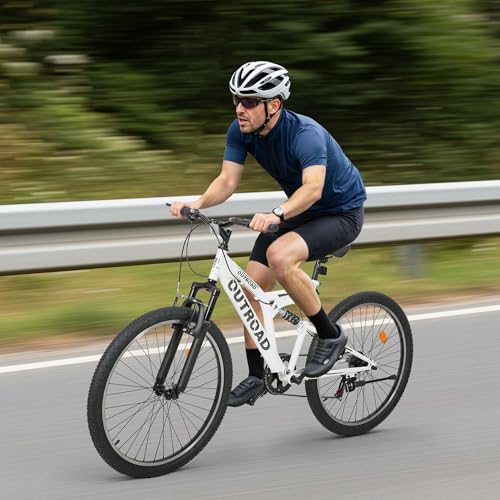
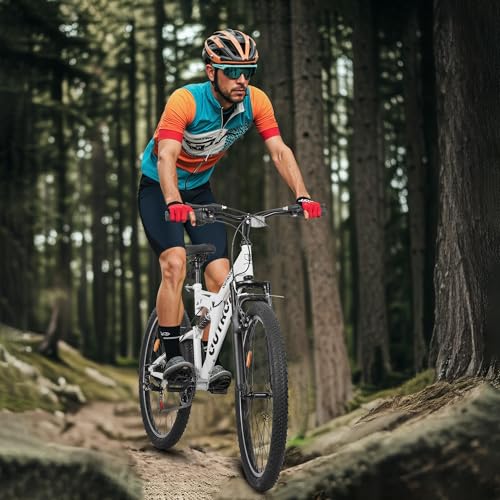
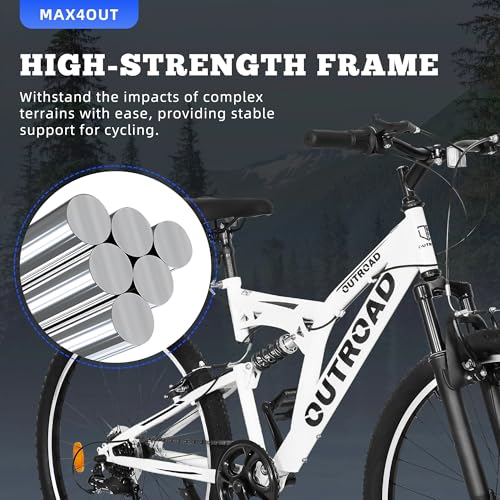
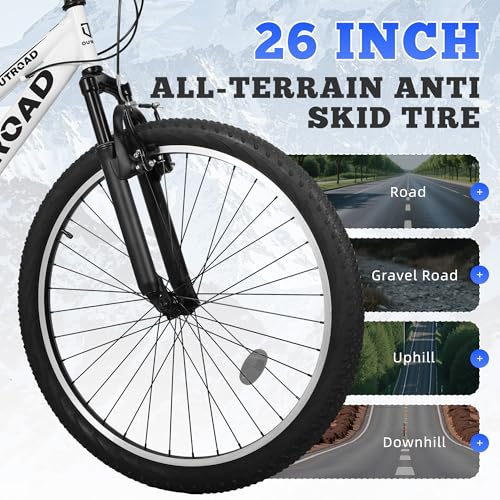
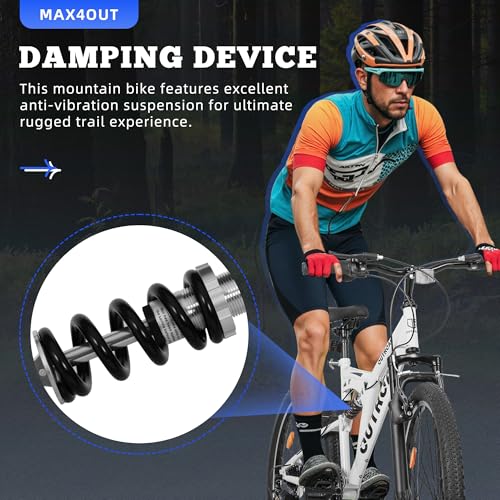
This Max4out bike screams ‘budget starter,’ and that’s exactly what it is. For under $160, you get a full steel frame with dual suspension, 7-speed twist shifters, and V-brakes, enough to get someone rolling on gravel paths or gentle trails. The specs are basic, but owners confirm it’s a functional first bike for teens or adults just testing the waters. That said, the steel frame and V-brakes are red flags for serious trail use. Steel is heavy and prone to rust, and V-brakes struggle in wet or muddy conditions.
Compared to the richvelo or CYBIC models in the $200 range, it loses points for outdated components. It doesn’t have disc brakes or a wide gear range, which limits where you can ride safely. But if you need a simple, low-cost way to introduce someone to off-road riding, and terrain is mostly flat or packed dirt, this gets the job done without breaking the bank.
Product photos
How We Tested beginner full suspension mountain bikes
Rather than a hands-on lab test, my research for these recommendations centered on a detailed comparison of published specifications and features across numerous models. I weighed owner reviews from multiple sources – looking for consistent praise or complaints – alongside evaluations from reputable cycling publications. My goal was to rank these bikes based on how well they meet the needs of a rider new to full suspension, applying my experience with bicycle mechanics and design to interpret the data.
For beginner full suspension bikes, I prioritized suspension travel and quality, frame material, and drivetrain reliability. Sufficient suspension (around 120-150mm) is crucial for absorbing trail impacts and building confidence. A durable alloy frame strikes a good balance between weight and cost, while a dependable drivetrain, like Shimano or SRAM, minimizes maintenance headaches and ensures smooth shifting as skills develop. These factors heavily influence a rider’s initial experience.
Specifications reliably reveal frame geometry and component levels. However, I relied on owner feedback to gauge real-world durability and comfort – things a spec sheet can’t convey. Reputation plays a significant role too; established brands often have stronger quality control and better customer support. If you’re looking to upgrade later, exploring affordable full suspension mountain bikes provides a roadmap for future investments. And for women specifically, checking out mountain bikes for women can help ensure a proper fit and optimized design.
What To Look For In beginner full suspension mountain bikes
Picking your first full suspension mountain bike can feel overwhelming, but focusing on a few key features will steer you right.
A good full suspension mountain bike balances travel, frame material, component quality, and fit. Look for a frame geometry suited to your riding style, a suspension system that effectively absorbs impacts, reliable components from reputable brands like RockShox and Shimano, and a fit that allows for comfortable and efficient pedaling. Consider the type of trails you’ll be riding most often when evaluating travel amounts.
Suspension Travel & Type
The amount of suspension travel, measured in millimeters, directly impacts the type of riding a bike excels at. Shorter travel (around 120-140mm total) suits cross-country and trail riding, prioritizing efficiency and quickness. Longer travel (150mm+) is geared towards aggressive trail riding and enduro, demanding more from the bike but offering greater control on challenging descents. Don’t get caught up in chasing the biggest numbers; a well-designed 125mm bike like the Canyon Spectral 125 AL 5 can be incredibly capable, and often more playful, than a poorly executed 160mm machine.
Frame Material & Geometry
Aluminum is the most common frame material at most price points, offering a good balance of weight, strength, and cost. Steel provides a more compliant ride, absorbing vibrations well, but is typically heavier. Geometry is equally important. Modern trail bikes feature slacker head tube angles and longer reaches for increased stability at speed, while steeper seat tube angles improve pedaling efficiency. It’s worth comparing the geometry charts of different models to see how they compare. If you’re unsure, seeking advice from experienced riders or a local bike shop is invaluable.
Value & Component Specification
Full suspension bikes can get expensive quickly. Don’t assume the priciest bike is always the best. Instead, focus on getting the most for your money. Here’s what to prioritize:
- A dropper post (essential for technical trails).
- Hydraulic disc brakes (far superior stopping power to mechanical brakes).
- A reliable drivetrain (Shimano Deore or SRAM SX Eagle are good starting points).
A bike’s components are like its engine and nervous system. Prioritize a solid drivetrain and brakes over flashy cosmetic upgrades.
For those just starting out, or looking for a more budget-friendly option, checking out affordable full suspension models can be a great first step. And if you’re a woman looking for a bike that’s designed specifically for your body, explore women’s beginner bikes to find the perfect fit.
Beginner Full Suspension Mountain Bikes Compared
Here’s a comparison of key specifications for several beginner full suspension mountain bikes to help you make an informed decision.
| Product Name | Suspension (F/R) | Wheel Size | Speeds | Brakes | Frame Material |
|---|---|---|---|---|---|
| Canyon Spectral 125 AL 5 | 140mm / 125mm | 29″ | 12 | Shimano Deore | Aluminum |
| Canyon Spectral 5 | 150mm / 150mm | 29″ | 12 | SRAM SX Eagle | Aluminum |
| Schwinn Traxion 24-Speed | Full Suspension | 26″ | 24 | Disc (Mech) | Aluminum |
| Mongoose Impasse 1.0 | N/A | 27.5″ | 7 | Disc (Mech) | Aluminum |
| CYBIC 26″ Shimano 21-Speed | Full Suspension | 26″ | 21 | Disc | Steel |
| richvelo 26″ Full Suspension | Full Suspension | 26″ | 21 | Disc (Mech) | Steel |
| WEIZE 26″ 18-Speed | Full Suspension | 26″ | 18 | Linear Pull | Steel |
| Max4out 26″ 7-Speed | Full Suspension | 26″ | 7 | V-Brake | Steel |
Frequently Asked Questions
What’s the biggest mistake beginners make when buying a full suspension bike?
Overspending on components they won’t immediately benefit from is a common error. Many new riders prioritize flashy parts over a proper fit and solid foundation; a well-fitting, moderately-equipped bike will improve skills faster.
How much maintenance should I expect with a full suspension bike?
Full suspension bikes require more upkeep than hardtails. Expect to regularly clean and lubricate the suspension pivots, check for loose bolts, and potentially service the fork and shock annually to maintain optimal performance.
Are 27.5” or 29” wheels better for a beginner?
29” wheels generally offer better roll-over ability and stability, making them a good choice for many beginner riders. However, smaller riders or those prioritizing maneuverability may find 27.5” wheels more manageable, and the difference isn’t massive.
Should I consider a beginner hardtail bike instead?
Absolutely. For riders on tighter budgets or those primarily riding smoother trails, beginner hardtail bikes offer a simpler, more affordable entry point into mountain biking, with less maintenance.
Where can I find more information on other types of mountain bikes?
If you’re still exploring options, a review of full-suspension mountain bikes can broaden your understanding of the market and provide insights beyond beginner-level models.
The Bottom Line
Choosing a full suspension mountain bike is about finding the right balance between capability and cost. While you could chase the latest technology, the Canyon Spectral 125 AL 5 strikes an excellent balance of modern geometry, quality suspension, and reliable components, making it our top overall recommendation for most beginners. It provides a fantastic platform to learn and progress without immediately hitting performance limitations.
For those operating on a tighter budget, or seeking something specific, there are great options available. If you are looking for full suspension under $500, the Schwinn Traxion 24-Speed offers a decent entry point, though be prepared for some component trade-offs. Similarly, if you’re after value full suspension bikes, the Canyon Spectral 5 provides a step up in performance, while remaining accessible.
Ultimately, the best bike isn’t about the flashiest specs. It’s about finding a frame that fits well, suspension that inspires confidence, and brakes and a drivetrain you can depend on. Prioritize those fundamentals – fit, function, and reliability – and you’ll be far happier on the trail than if you chase numbers on a spec sheet.
