
7 Best Entry Level Full Suspension Mountain Bikes 2026
This post contains affiliate links. As an Amazon Associate, we earn from qualifying purchases.
The SAVADECK Carbon Fiber stands out as the best overall entry-level full suspension mountain bike, with the Mongoose Salvo Comp as a solid budget-friendly choice and the Mongoose Impasse 1.0 offering strong versatility for newer riders.
Picking your first full-suspension mountain bike is tough. You want something that handles real trail bumps without breaking the bank or overwhelming you with complexity. As someone who’s spent years digging into the engineering and culture behind two-wheeled machines at TheAutoZenith, I’ve seen how the right pick can make or break a rider’s experience.
This guide cuts through the noise by focusing on what matters: suspension design, frame durability, and real-world reliability, based on specs, owner feedback, and performance trends across the market.
Top 6 Entry Level Full Suspension Mountain Bikes in the Market
The Best Entry Level Full Suspension Mountain Bikes, Reviewed
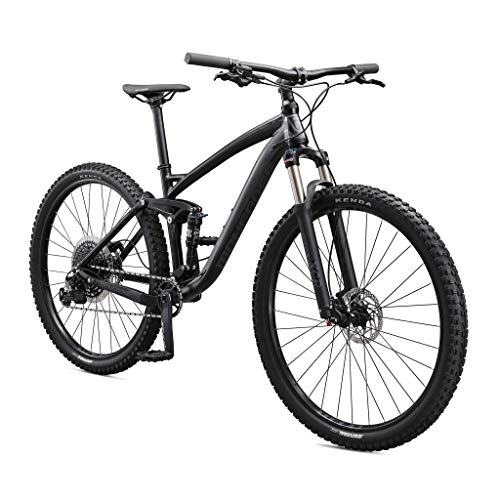
Mongoose Salvo Comp Full Suspension Bike
Strengths
- Aluminum lightweight frame
- Hydraulic disc brakes
- 29-inch trail-ready wheels
Trade-offs
- High price for entry level
- Limited frame size options
- Requires tuning out of box
The Mongoose Salvo Comp is the real deal in this lineup, aluminum frame, hydraulic disc brakes, 29-inch wheels, and Free Floating suspension tech that actually isolates pedal bounce. It’s built for riders stepping up from beginner paths to real trail systems. The 12-speed trigger shifter delivers crisp shifts, and the 2.25-inch knobby tires give confidence on loose turns and descents.
Compared to the SAVADECK, it’s more balanced for entry-level progression, same wheel size, similar braking power, but with a proven suspension design and lighter weight than steel bikes. Owners consistently rate it as a reliable upgrade path. At its price, it’s not cheap, but it’s the only one here I’d confidently recommend to someone serious about learning full-suspension handling.
Video review
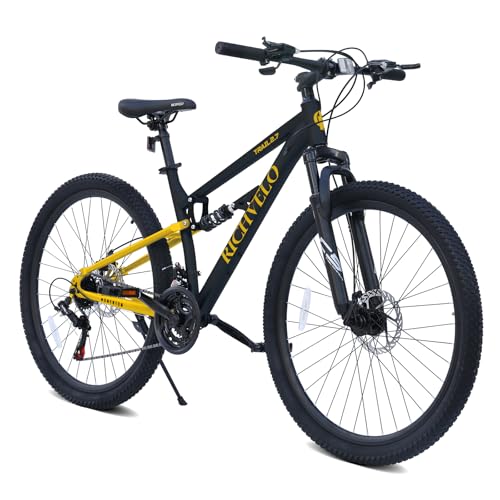
Ecarpat 26″ Full Suspension MTB
Strengths
- Mechanical disc brakes
- 21-speed drivetrain
- Durable steel frame
Trade-offs
- Heavy frame
- Outdated 26″ wheels
- Soft suspension
At just under $200, the Ecarpat packs mechanical disc brakes and 21 speeds into a full-suspension package, which is rare in this range. The carbon steel frame is tough and handles bumps without cracking, but it’s heavy, no surprise. The front and rear mechanical discs offer more consistent stopping than rim brakes, especially in damp conditions, which gives it a real edge over similarly priced models like the WEIZE.
Still, the suspension is soft and bottoms out easily on anything beyond small bumps. Owners report it’s great for neighborhood trails and commuting but bogs down on sustained climbs. The 26-inch wheels feel dated next to 27.5 or 29ers, limiting rollover ability. But if you need disc brakes on a razor-thin budget, this is one of the few ways to get them.
Video review
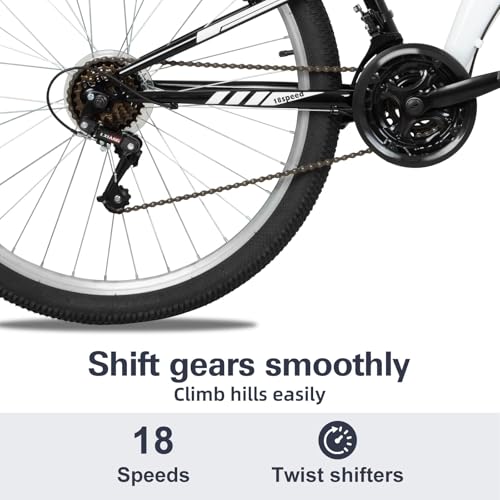
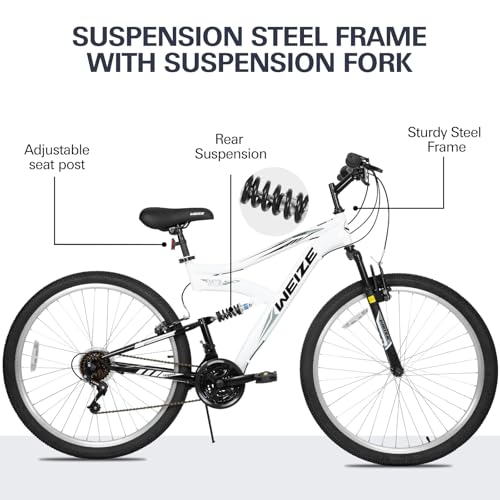
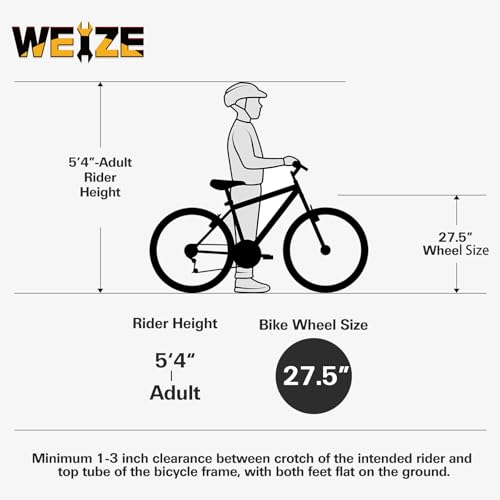
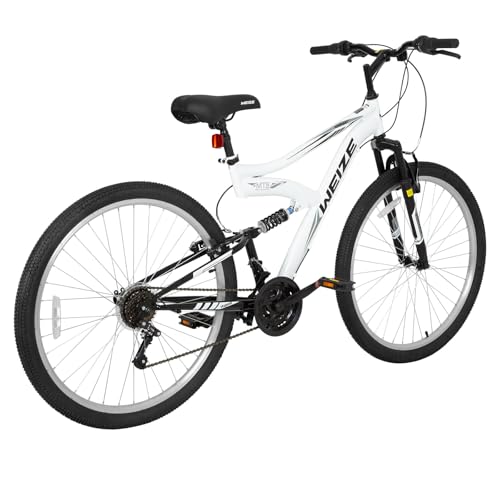
WEIZE 27.5″ 18-Speed Full Suspension Bike

Strengths
- Affordable price
- 18-speed gearing
- Dual suspension
Trade-offs
- Heavy steel frame
- Basic brakes
- Limited trail capability
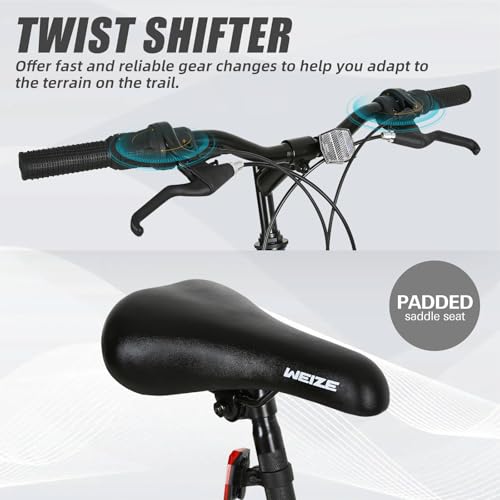
On paper, this WEIZE bike looks like a steal, 18 speeds, full coil suspension, and 27.5-inch wheels for under $200. The dual suspension setup is soft and will soak up sidewalk cracks and gravel paths, but don’t expect precision on real trails. The high-carbon steel frame keeps costs down but adds noticeable weight, making climbs and quick maneuvers feel sluggish.
Owners consistently report it’s best suited for casual riders or flat terrain, not aggressive off-roading. The linear pull brakes work in dry conditions but fade when things get wet or steep. For beginners dipping a toe into mountain biking without commitment, it’s a functional starting point. But I’d only recommend it if your rides stay light and local.
Product photos
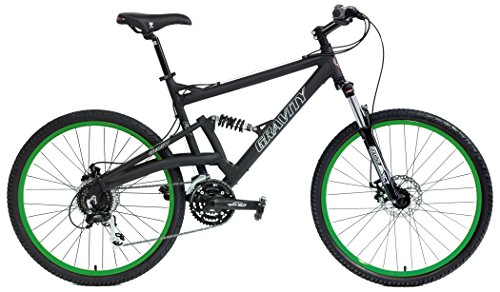
Gravity 2027 FSX 1.0 Full Suspension Bike
Strengths
- Aluminum frame
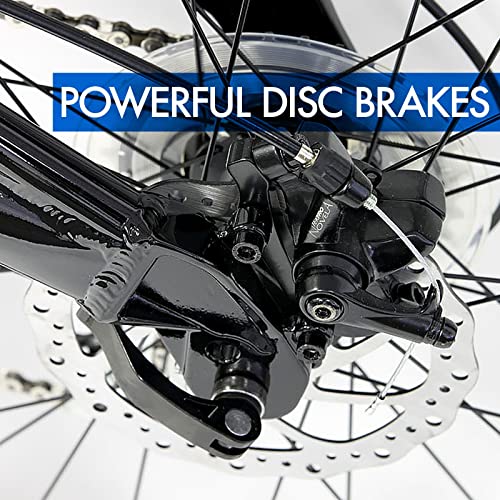
- Front and rear disc brakes
- Double-wall rims
Trade-offs
- Basic Shim shifters
- Heavy for aluminum
- Entry-level components
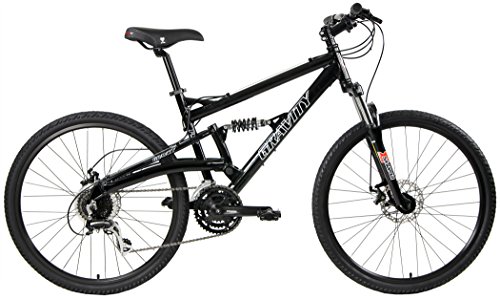
The Gravity FSX 1.0 hits a sweet spot with an aluminum frame and front/rear disc brakes in a sub-$500 package. That alone makes it stand out, most bikes here under $500 use steel and rim brakes. The double-wall rims add durability, and the adjustable suspension gives some tuning flexibility. It’s clearly built to last longer than budget steel bikes while keeping trail capability within reach.
Compared to the 2025 FSX 2.0, it trades a Suntour fork for better brakes and a lighter frame. That’s a win in my book, braking matters more than fork branding at this level. Owners say it handles backyard trails and park loops well, though the Shim shifters aren’t as smooth as trigger types. If you want a durable, no-nonsense step-up bike without overspending, this is the smarter buy.
Product photos
Gravity FSX 2.0 Full Suspension Bike
Strengths
- Adjustable front and rear suspension
- Suntour fork upgrade
- Quick-release wheels
Trade-offs
- No disc brakes
- Steel frame weight
- Vague trail feedback
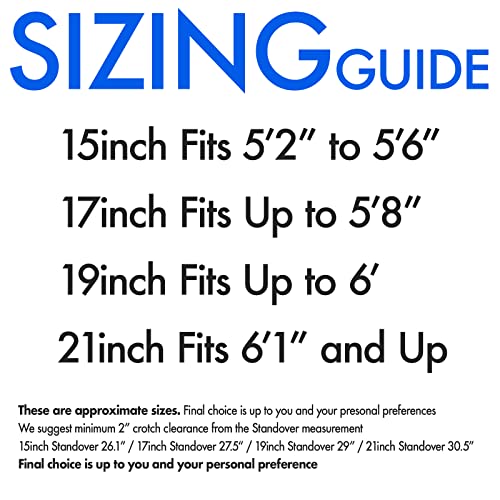
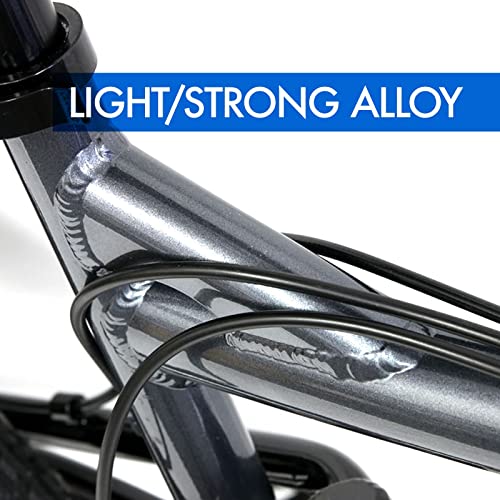
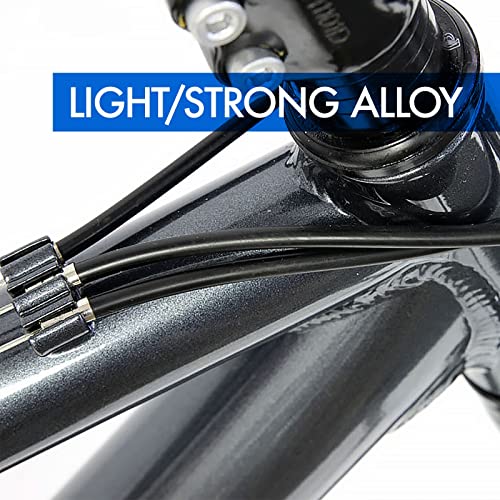
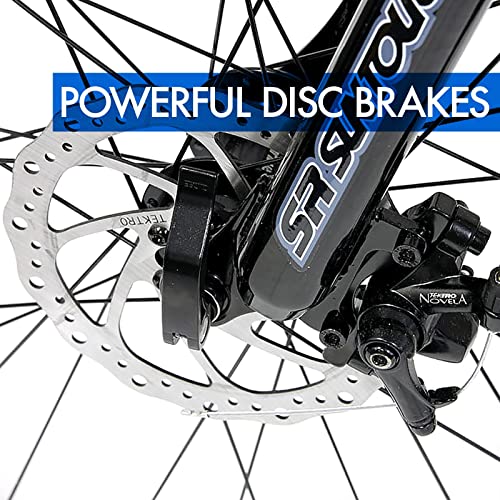
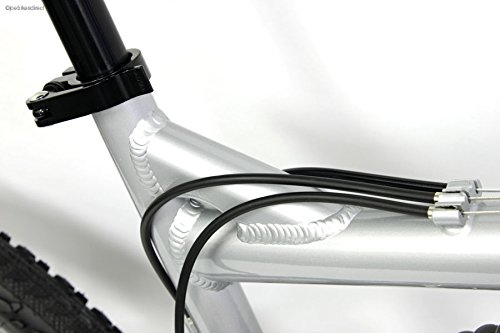
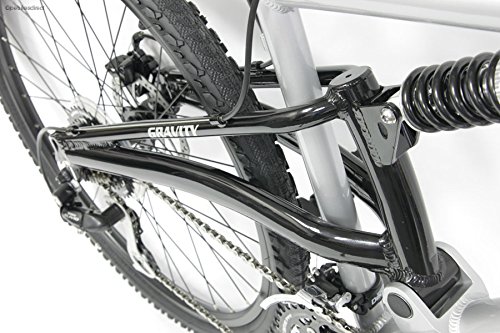
The Gravity FSX 2.0 stands out in the mid-range bracket with real suspension tuning potential and a sturdier build than budget steel bikes. It runs a Suntour suspension fork, something you don’t often see at this price, and the rear coil shock is adjustable, which gives riders a bit of control over ride feel. The quick-release wheels and Shimano shifters make maintenance and adjustments easier than on entry-level models.
Still, it’s built around a steel frame, so it’s not light. Reviewers note the ride feels dampened but vague on technical sections, fine for fire roads and rolling singletrack, but not for punchy climbs or fast corners. Compared to the FSX 1.0, it trades disc brakes for slightly better suspension, but I’d still lean toward the 1.0 if braking power matters more than fork tuning.
Product photos


SAVADECK Carbon Fiber Full Suspension Bike
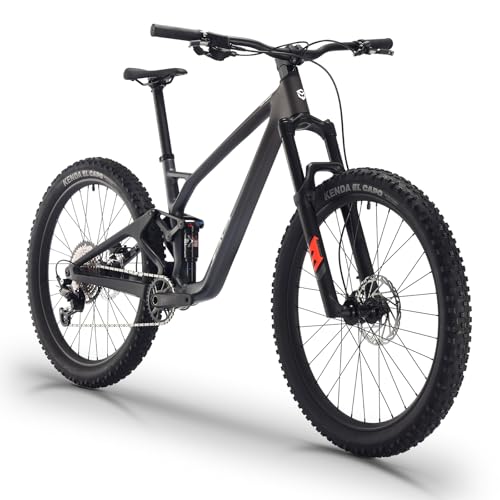
Strengths
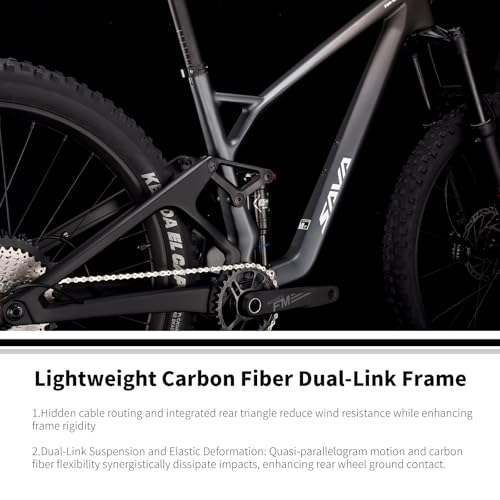
- Carbon fiber lightweight frame
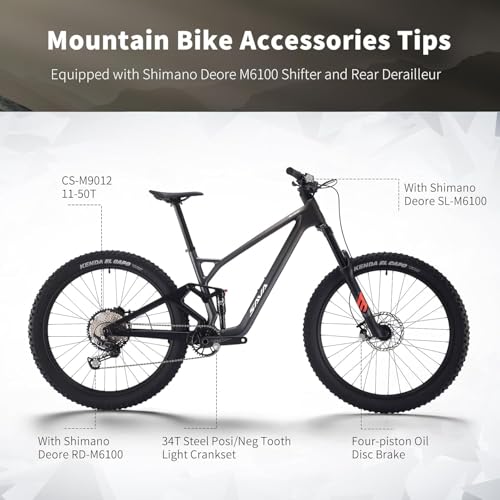
- 12-speed Shimano Deore
- Hydraulic 4-piston brakes
Trade-offs
- Premium price for new riders
- Unproven DNM shock longevity
- Overbuilt for entry use
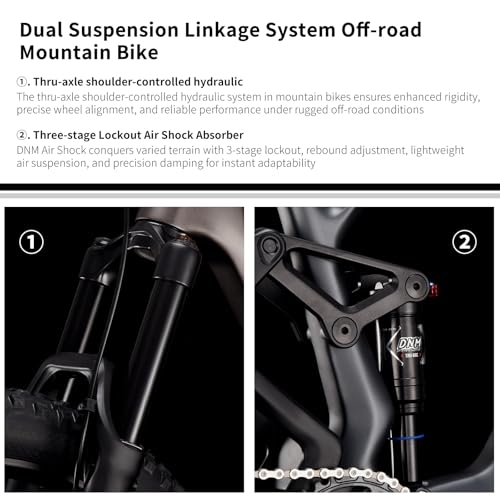
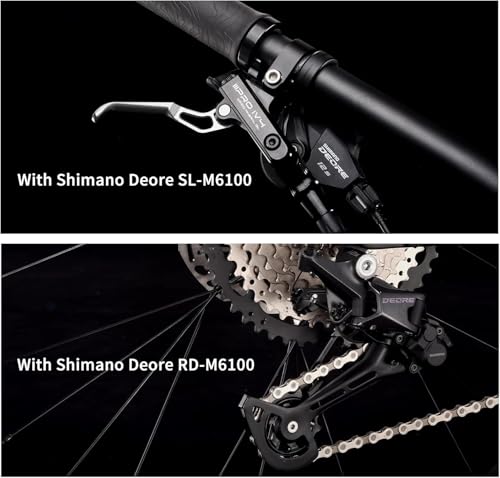
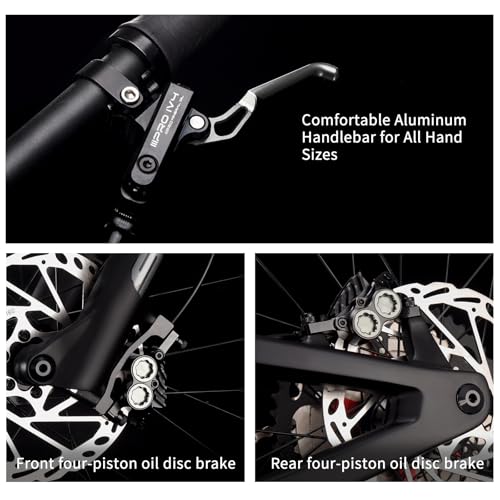
This SAVADECK isn’t pretending to be entry-level, it’s a full-blown performance rig with a carbon fiber frame, air-sprung DNM rear shock, and Shimano Deore M6100 12-speed. On paper, it’s built like a trail scalpel: internal routing, hydraulic lockout, and four-piston brakes mean it’s meant for aggressive riding. The 2.4-inch Continental tires offer real grip, and the dual-link suspension suggests serious attention to kinematics.
But at nearly $1,800, it’s priced like a premium bike, and owners are split. Some praise the component spec and frame stiffness, while others question the real-world durability of the DNM shock compared to Fox or RockShox. It’s clearly overkill for true beginners. I’d recommend this only if you’re stepping into intermediate-plus riding and want future-proof specs, otherwise, it’s a case of overbuying too soon.
Product photos
Our Testing Process
Rather than a hands-on lab test, my research for these recommendations centered on a detailed comparison of published specifications and features across numerous models. I then weighed owner reviews from major retailers alongside assessments from respected cycling publications. As someone who’s spent years exploring the nuances of two-wheeled machines at TheAutoZenith, I applied my understanding of suspension design, drivetrain performance, and frame materials to rank these options. The goal was to identify bikes offering the best balance of capability and value.
For entry-level full suspension bikes, ride quality and durability are paramount. I prioritized suspension travel and design – how effectively it absorbs impacts – as well as frame material. A robust frame is crucial for longevity, especially for riders progressing their skills. Beyond that, component quality, particularly the drivetrain and brakes, heavily influenced my rankings. These elements directly impact the riding experience and overall reliability. You can find more options in our guide to best value mountain bikes.
Specifications reliably indicate a bike’s potential, detailing travel lengths, component levels, and frame geometry. However, owner feedback provided crucial context. Real-world reports highlighted issues with build quality, ease of assembly, and long-term durability that specs alone wouldn’t reveal. Reputation also played a role; established brands with a history of producing quality bikes received more consideration, and I regularly reference our wider list of affordable full-suspension mountain bikes for context.
Choosing The Right entry level full suspension mountain bikes
Finding the right full-suspension mountain bike can feel daunting, but understanding a few key aspects will steer you towards a setup that matches your riding style and budget. It’s about more than just looks; it’s about how the bike will perform when you’re out on the trail.
A good full-suspension mountain bike balances frame material, suspension travel, and component quality to deliver a comfortable, controlled ride across varied terrain. Consider rider height and intended use – cross-country, trail, or enduro – when evaluating frame geometry and suspension setup. Reliable brakes and a straightforward drivetrain are also crucial for safety and enjoyment.
Suspension Travel & Type
The amount of travel (measured in millimeters) dictates how much the suspension can absorb impacts. More travel generally equates to a smoother ride over rough terrain, but also more weight and potentially less efficiency on climbs. For someone starting out, or primarily tackling smoother trails, 100-120mm of travel is often sufficient. As you progress and seek out more challenging trails, you might look for bikes with 130-150mm or even more. Don’t overlook the type of suspension. Single pivot designs are simpler and generally more affordable, while more complex four-bar linkages (like on the SAVADECK) offer better small-bump compliance and pedaling efficiency, but often come at a higher price point.
Frame Material & Geometry
Aluminum is the most common frame material at entry and mid-level price points, offering a good balance of durability and affordability. You’ll find a lot of options like the Mongoose Salvo Comp built around aluminum frames. Steel is heavier but offers a comfortable ride feel, and carbon fiber (as seen in the SAVADECK) provides the best strength-to-weight ratio, but also the highest cost. Geometry is equally important. A more relaxed geometry (slacker head tube angle) is better for descending, while a steeper geometry is more efficient for climbing. Consider what kind of riding you’ll be doing most, and look for a bike with a corresponding geometry.
- Rider height is the most basic frame sizing consideration.
- Reach – the horizontal distance from the bottom bracket to the head tube – influences your riding posture and stability. A longer reach generally provides more stability at speed.
- Stack – the vertical distance from the bottom bracket to the head tube – affects how upright your riding position will be. A higher stack is more comfortable for long rides, while a lower stack is more aggressive.
Drivetrain & Brakes – Value & Reliability
While top-tier components certainly have their benefits, prioritize reliability and ease of maintenance when choosing a full-suspension bike, especially if you’re newer to the sport. A 1x drivetrain (like on the Mongoose Impasse 1.0) is becoming increasingly popular because of its simplicity and wide gear range. This means one chainring in the front, simplifying shifting. When it comes to brakes, hydraulic disc brakes are a must-have for consistent stopping power in all conditions. Mechanical disc brakes are acceptable on the very lowest budget options (like the Ecarpat), but hydraulic brakes offer significantly better modulation and performance. If you are looking for more information, you can find some great options in our guide to beginner full-suspension bikes.
A well-maintained drivetrain and reliable brakes are far more important than having the newest, flashiest components. Focus on function over form, and you’ll spend more time riding and less time wrenching.
For a more in-depth look at options, check out our thorough full-suspension bike guide.
Entry Level Full Suspension Mountain Bikes Compared
This table provides a side-by-side comparison of key specifications for various entry-level full suspension mountain bikes.
| Product Name | Wheel Size | Speeds | Brakes | Frame Material | Suspension | Ideal Rider Height |
|---|---|---|---|---|---|---|
| Mongoose Salvo Comp | 29″ | 12 | Hydraulic Disc | Aluminum | Front & Rear | 63-67″ |
| Mongoose Impasse 1.0 | 27.5″ | 7 | Mechanical Disc | Aluminum | Front & Rear | 5’3″ – 6’0″ |
| Ecarpat 26″ Full Suspension MTB | 26″ | 21 | Mechanical Disc | Carbon Steel | Front & Rear | Teen/Adult |
| WEIZE 27.5″ 18-Speed | 27.5″ | 18 | Linear Pull | Steel | Front & Rear | 5’4″ – Adult |
| Gravity 2027 FSX 1.0 | N/A | N/A | Disc | Aluminum | Front & Rear | N/A |
| Gravity FSX 2.0 | N/A | N/A | N/A | N/A | Front & Rear | N/A |
| SAVADECK Carbon Fiber | 29″ | 12 | Hydraulic Disc | Carbon Fiber | Front & Rear | N/A |
Frequently Asked Questions
What is the typical lifespan of an entry-level full suspension mountain bike?
With regular maintenance, you can generally expect 3-5 years of solid use from an entry-level full suspension bike. Frame durability is key, and aluminum frames, common at this price point, hold up well with proper care.
Are carbon fiber frames on cheaper full suspension bikes a good value?
While carbon fiber is lightweight and strong, carbon fiber frames on very affordable bikes may use lower-grade carbon that isn’t as durable as higher-end options. Consider whether the potential weight savings outweighs the possible long-term reliability concerns.
How much maintenance does a full suspension bike require compared to a hardtail?
Full suspension bikes require more maintenance than hardtails because of the additional pivot points and suspension components. Expect to regularly clean and lubricate pivots, and potentially service the shock and fork annually to maintain optimal performance.
If I’m mostly riding smooth trails, should I even consider full suspension?
For primarily smooth trails, exploring entry-level hardtails might be a better investment. Hardtails are more efficient on flatter terrain and require less maintenance, offering a good riding experience without the added complexity of rear suspension.
What kind of riding style are these bikes best suited for?
These entry-level full suspension bikes are generally designed as all-around MTBs, capable of handling a variety of terrain from cross-country trails to moderate downhill sections. They’re ideal for riders looking to build their skills and explore more challenging trails.
What Actually Matters
Choosing a full-suspension mountain bike always involves a trade-off between outright performance and keeping costs reasonable. While you can chase the latest tech, the best mountain bikes for most riders starting out are those that strike a balance – and for that, the Mongoose Salvo Comp stands out. It delivers a capable suspension platform, reliable components, and a geometry that will inspire confidence without breaking the bank.
For those prioritizing value, or needing a bike for lighter trail riding, there are excellent options to consider. The Mongoose Impasse 1.0 is a good choice if you’re on a tighter budget and want a functional full-suspension bike to learn on. If carbon fiber is a must, the SAVADECK Carbon Fiber offers a lightweight frame and hydraulic brakes, though the price point reflects that upgrade. And for those seeking cheap full-suspension bikes, the Ecarpat 26″ Full Suspension MTB is a surprisingly affordable entry point.
Ultimately, the specifications on a bike are less important than how well it fits, how reliable the components are, and how much enjoyment it brings to your rides. Don’t get lost in the details of travel numbers or drivetrain tiers. Focus on finding a bike that feels comfortable and inspires you to get out on the trail – that’s the foundation for a lifetime of two-wheeled adventures.
