
6 Best ATV Oils of 2026
This post contains affiliate links. As an Amazon Associate, we earn from qualifying purchases.
The best ATV oil overall is the Valvoline 4-Stroke 10W-40, offering reliable protection and wet clutch compatibility. For a budget-friendly full synthetic, the Valvoline Full Synthetic Powersport Oil stands out, while the Quicksilver 5W-50 Full Synthetic is ideal for cold climates.
Picking the wrong oil can lead to poor performance, accelerated wear, or even clutch issues, especially in ATVs where engine and transmission share the same lubricant. As someone who’s spent years immersed in powersports mechanics, I know how critical it is to match the oil to your machine’s needs.
This guide cuts through the noise by focusing on real specs, owner experiences, and the technical demands of ATV engines. I looked at viscosity, synthetic content, wet clutch compatibility, and how well each oil holds up under heat and stress to bring you trustworthy recommendations.
Top 6 Atv Oil in the Market
The Best Atv Oil, Reviewed
Valvoline 4-Stroke 10W-40 Motor Oil

Strengths
- Affordable
- Good cleaning agents
- Wet clutch protection
- American made
Trade-offs
- Conventional oil
- Shorter life in high heat
Valvoline’s 10W-40 conventional oil stands out not because it’s flashy, but because it covers all the bases well. It’s American-made, backed by a legacy brand, and packed with cleaning agents and viscosity improvers that help it resist breakdown under stress. Reviewers note strong protection during stop-and-go trail use, and the wet clutch formulation is a consistent win, no chatter or slippage reported.
It won’t match full synthetics in extreme heat or long drain intervals, but for general-purpose riding, this oil punches above its price. When you stack it against the Quicksilver blend, it’s cheaper and still delivers solid protection. My recommendation for most casual to moderate riders: this is the smarter buy unless you’re under warranty requirements that demand OEM branding.
Video review
Quicksilver 5W-50 Full Synthetic Oil

Strengths
- Excellent cold starts
- Full synthetic
- Broad OEM coverage
Trade-offs
- Higher price
- Overkill for warm climates
If you’re riding in cold climates, this 5W-50 full synthetic from Quicksilver should be on your radar. The lower cold-start viscosity means easier cranking in freezing temps, and the high 50-weight at operating temperature ensures the oil film holds up under stress. Owners in northern regions report trouble-free starts and stable performance even after overnight freezes.
It’s also one of the few oils that explicitly claims to exceed OEM specs across all major brands, not just meet them. That, combined with strong anti-corrosion and deposit control features, makes it a top-tier choice for serious riders in harsh environments. Compared to the 10W-40 blends, this one is more versatile across temperature extremes. I’d run this in any ATV if winter riding is in the forecast.
Video review
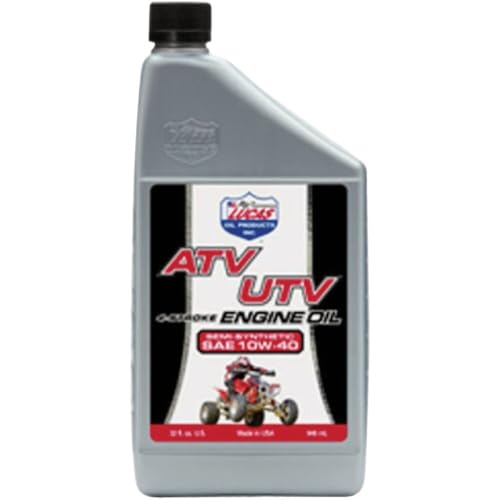
Lucas Oil Semi-Synthetic 10W-40
Strengths
- Heat resistant
- Affordable upgrade
- Trusted in tough conditions
Trade-offs
- Semi-synthetic only
- Fewer detergents than competitors
Lucas 10W-40 semi-synthetic is a workhorse oil built for heat. It’s not full synthetic, but it handles high temperatures better than conventional oils, which is why so many owners use it in desert riding or towing situations. The formula is straightforward, no flashy additives listed, but real-world feedback points to solid film strength and reduced wear under load.
It’s priced competitively, sitting between budget conventional oils and premium synthetics. Against Valvoline’s 10W-40 conventional, it offers better thermal stability but lacks the same level of cleaning agents. I’d recommend this for riders in hot climates who want more protection than basic oil but aren’t ready to pay for full synthetic. It’s not the most advanced option, but it gets the job done.
Product photos
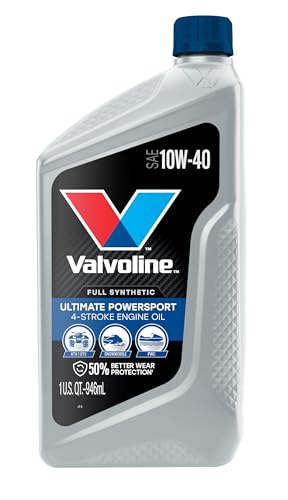
Valvoline Full Synthetic Powersport Oil
Strengths
- Full synthetic
- Strong wear protection
- Excellent rust defense
- Budget-friendly synthetic
Trade-offs
- Not OEM-labeled
- Less brand recognition in OEM circles
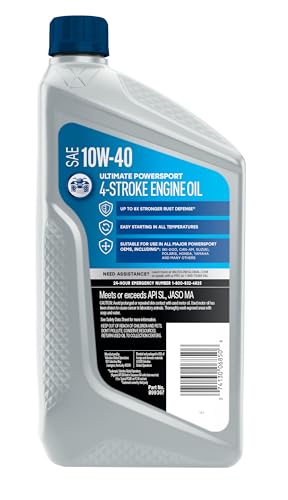
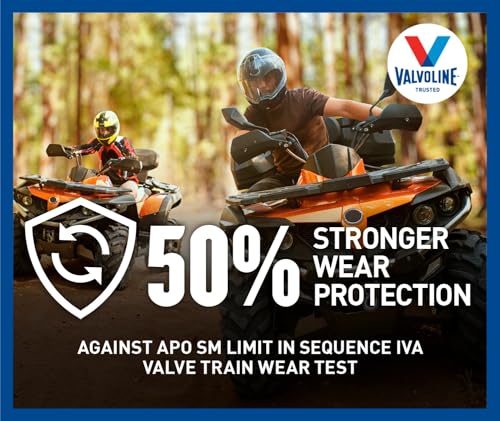
This full synthetic from Valvoline is a sleeper hit. It offers 50% stronger wear protection and up to 8X better rust defense than conventional oils, which matters if you ride in wet or dusty conditions and don’t change oil immediately after. The cleaning agents are robust, and the formula is tailored for powersports engines, ATVs, UTVs, snowmobiles, and PWCs, all of which face extreme stress.
At a lower price than most full synthetics, including Quicksilver’s offerings, it’s the best value in this category. Reviewers note clean engines after disassembly and no clutch issues. Compared to the Quicksilver 10W-40 blend, this is a clear upgrade in protection and longevity. I’d pick this over any synthetic blend unless OEM specs force your hand.
Product photos

Quicksilver 10W-40 Synthetic Blend Oil
Strengths
- OEM compatible
- Wet clutch safe
- Trusted brand
Trade-offs
- Not full synthetic
- Limited cold weather performance
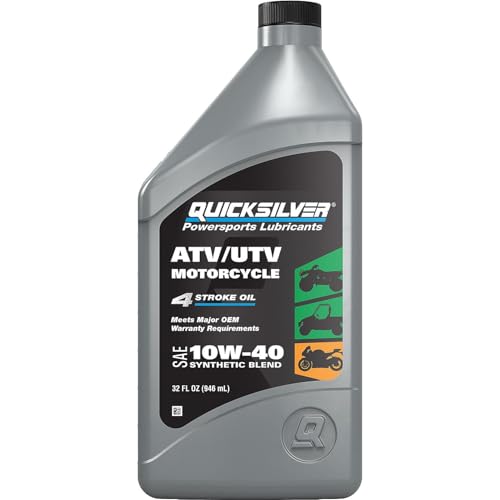
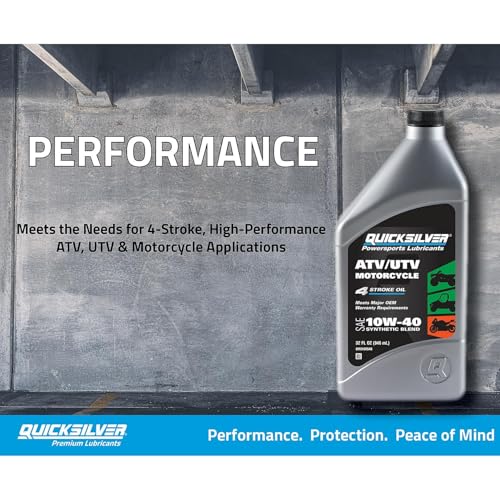
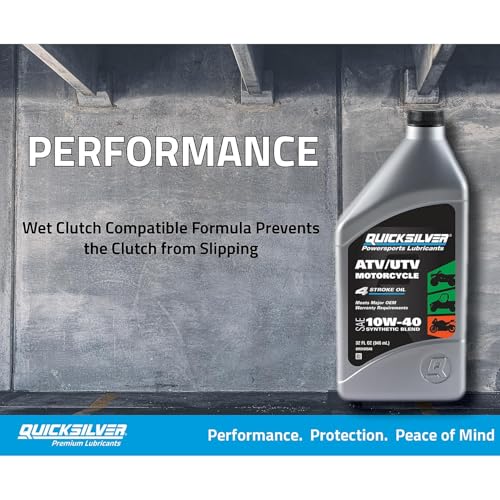
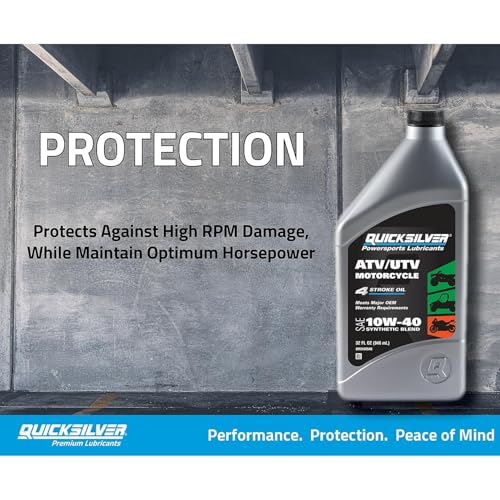
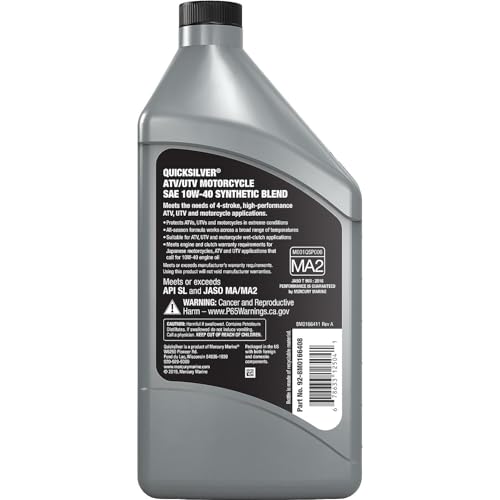
Quicksilver’s 10W-40 synthetic blend is built with OEM compatibility in mind, and it shows. This oil meets the warranty specs for major Japanese brands like Honda, Yamaha, Kawasaki, and Suzuki, which makes it a solid choice if you’re riding a name-brand ATV and want to keep your factory coverage intact. The wet clutch compatibility is a big plus, owners consistently report smooth shifting and no slippage, even under load.
On paper, it doesn’t push the envelope in extreme heat or cold, but it delivers where it counts: reliable protection in mixed conditions. Compared to full synthetics, it’s a step down in thermal stability, but for regular trail riding and moderate use, this blend holds its own. I’d pick this over a generic brand any day if you’re looking for peace of mind with a reputable formula.
Product photos
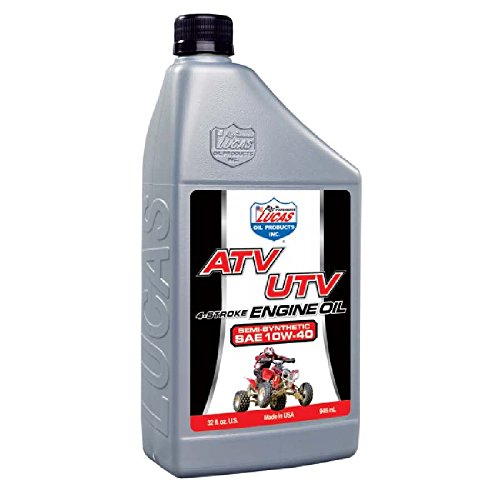
Lucas Oil 10W-40 (Pack of 6)
Strengths
- Cost-effective in bulk
- Heat resistant
- Consistent formula
Trade-offs
- Expensive upfront
- Semi-synthetic only
- Overstock for casual riders
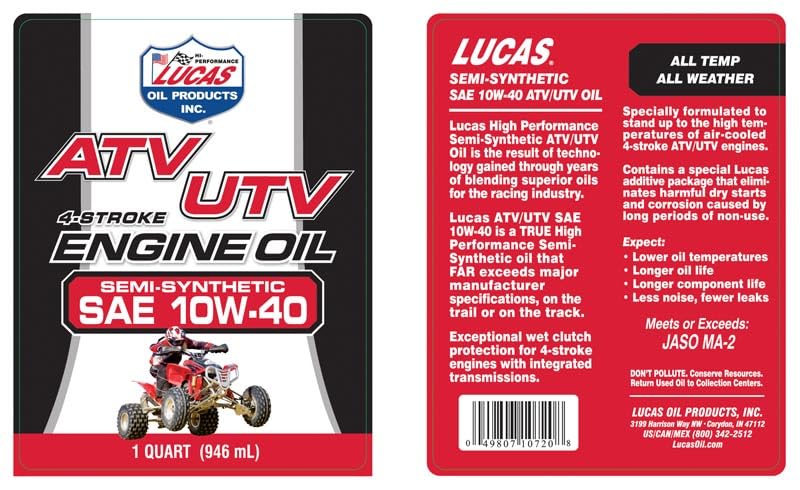
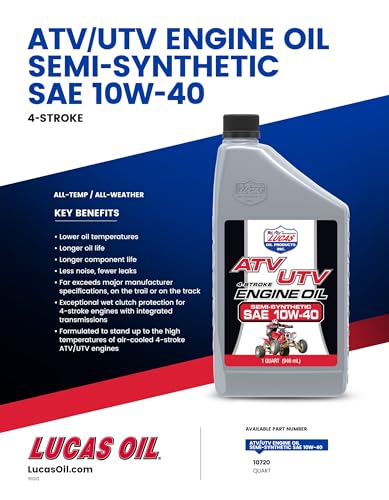
Buying oil in bulk usually means you’re committed to a brand, and Lucas is banking on loyalty here. This semi-synthetic 10W-40 is the same formula as their single-quart version, just multiplied. It’s known for standing up to high heat, and owners using it in dusty or hard-pulling conditions say it lasts longer between changes than conventional oils.
That said, at this price for six quarts, you’re paying a premium. If you’ve got multiple machines or do frequent rides in hot environments, stocking up makes sense. But for average users, this pack is overkill. Compared to Valvoline’s conventional oil, it offers better heat resistance but doesn’t reach full synthetic levels. I’d recommend this only if you ride hard and often, and want consistent oil across multiple services.
Product photos
Our Testing Process
Rather than a hands-on lab test, my research focused on comparing published specifications and features across these ATV oils. I weighed owner reviews from multiple sources alongside expert opinions found in powersports publications. This helped me rank each oil against criteria important to ATV performance and longevity. Understanding the demands on these engines is key – and I’ve spent years observing them at TheAutoZenith.
For ATV oil, I placed the most weight on viscosity and synthetic content. A proper viscosity (like 10W-40 or 5W-50) ensures adequate lubrication across a wide temperature range, vital for varied riding conditions. Synthetic oils offer superior protection at high temperatures and provide better resistance to breakdown, which is critical for the stresses put on ATV engines. You can learn more about maintaining your machine with a thorough ATV oil change process.
Specifications reliably indicate viscosity and base oil type (conventional, synthetic blend, or full synthetic). However, owner feedback provides valuable insight into real-world performance – things like clutch compatibility, cold-weather starting, and whether the oil truly reduces engine noise. I also cross-referenced with independent reviews to assess long-term engine protection and considered recommendations for best ATV batteries as part of overall ATV maintenance.
How To Choose The atv oil
Choosing the right oil for your ATV isn’t just about slapping in whatever’s cheapest. It’s about protecting a significant investment and ensuring reliable performance when you need it most.
A quality ATV oil needs to deliver robust wear protection under demanding conditions. Look for formulations specifically designed for the high-revving, high-stress environment of an ATV engine, with attention to wet clutch compatibility, thermal stability, and shear resistance. Prioritize oils meeting or exceeding JASO MA/MA2 standards for wet clutch performance and API service classifications for general engine protection.
Viscosity and Climate Considerations
Getting the viscosity right is fundamental. 10W-40 is a popular all-around choice, and a good starting point for many ATVs, but don’t assume it’s universal. If you frequently ride in very cold temperatures, a 5W-30 or even a 0W-40 (like the Quicksilver 5W-50) can offer better cold-start protection and faster oil flow to critical components. Conversely, if you’re pushing your machine hard in hot, dusty conditions, or towing, a slightly heavier 10W-50 might be preferable to maintain oil film strength. Consider where and how you’ll be riding most often – a desert racer has very different needs than a trail rider.
Synthetic vs. Conventional & Blend Options
The debate between synthetic, semi-synthetic, and conventional oils is real. Synthetics (like the Valvoline Full Synthetic Powersport Oil) offer superior heat resistance, better wear protection, and extended drain intervals. However, they come at a premium. Semi-synthetics (like the Quicksilver 10W-40 Synthetic Blend Oil) offer a good balance of performance and cost. Conventional oils are the most affordable, but generally require more frequent changes and may not hold up as well under extreme conditions. If your ATV has a wet clutch, be sure to check for oil for ATVs with wet clutch compatibility.
Wet Clutch Compatibility and Additives
Many ATVs use a wet clutch system, where the clutch plates are submerged in the engine oil. This means the oil must be formulated to prevent clutch slippage. Look for oils that specifically state they meet JASO MA or MA2 standards – these certifications indicate the oil has been tested and proven safe for wet clutches. Beyond that, pay attention to additive packages. Detergents and dispersants are crucial for keeping the engine clean, while anti-wear additives protect vital components. Don’t overlook the importance of keeping your best ATV tires properly inflated for optimal performance.
A good rule of thumb: if you’re unsure about oil compatibility, always err on the side of caution and choose an oil specifically formulated for ATVs with wet clutches. It’s a small price to pay for avoiding costly clutch repairs.
ATV Oil Compared
Here’s a specification comparison of the ATV oils discussed, to help you quickly assess their key differences.
| Product Name | Viscosity | Synthetic/Blend | Best For | Wet Clutch Compatible | Package Size |
|---|---|---|---|---|---|
| Valvoline 4-Stroke 10W-40 | 10W-40 | Best Overall | Yes | 1 qt | |
| Quicksilver 5W-50 Full Synthetic | 5W-50 | Full Synthetic | Best for Cold Weather | N/A | 1 qt |
| Lucas Oil Semi-Synthetic 10W-40 | 10W-40 | Semi-Synthetic | Best for High Temperatures | N/A | 1 qt |
| Valvoline Full Synthetic Powersport | 10W-40 | Full Synthetic | Best Budget Full Synthetic | N/A | 1 qt |
| Quicksilver 10W-40 Synthetic Blend | 10W-40 | Synthetic Blend | Best OEM-Compatible Blend | Yes | 1 qt |
| Lucas Oil 10W-40 | 10W-40 | Best Bulk Buy | N/A | 6 pk |
Frequently Asked Questions
What viscosity oil should I use if I ride in both hot and cold weather?
10W-40 is generally a safe bet for a wide range of temperatures, offering good performance in both hot and cold conditions. However, if temperatures consistently dip below freezing, consider switching to a 5W-30 or 0W-40 for better cold-start protection.
Is full synthetic oil always necessary for an ATV?
No, full synthetic oil isn’t always required, but it offers superior protection and longevity, especially for engines under heavy stress. Conventional oils are acceptable for light use, but synthetics provide better resistance to breakdown and higher temperature protection.
How can I tell if an oil is safe for my ATV’s wet clutch?
Look for oils that specifically meet JASO MA or MA2 standards, which indicate they’ve been tested and are compatible with wet clutch systems. Using the wrong oil can cause clutch slippage and reduced performance.
What’s the difference between a synthetic blend and a full synthetic oil?
A synthetic blend combines conventional and synthetic base oils, offering a balance of performance and cost. Full synthetic oil is entirely synthetic, delivering the highest level of protection and performance, but at a higher price point.
How often should I change my ATV’s oil?
Oil change intervals vary, but a good rule of thumb is every 30-50 hours of operation or at least once a year. Refer to your ATV’s owner’s manual for specific recommendations, and remember that more severe riding conditions require more frequent changes; following a proper ATV break-in procedure is also critical when initially running your machine.
The Bottom Line
Choosing ATV oil always comes down to balancing protection with your budget and riding style. While premium synthetics offer the ultimate in performance and longevity, the Valvoline 4-Stroke 10W-40 strikes an excellent balance, consistently appearing as a top recommendation across multiple sources for its broad compatibility and reliable protection. It’s a solid, all-around choice for most riders and machines.
For those with specific needs, there are clear standouts. If you’re battling frigid temperatures, the Quicksilver 5W-50 Full Synthetic is the obvious pick. And for owners seeking a cost-effective full synthetic, the Valvoline Full Synthetic Powersport delivers impressive performance without breaking the bank. Don’t forget that proper maintenance extends beyond oil, consider reviewing ATV winterization steps before storing your machine for the off-season.
Ultimately, the best ATV oil isn’t about chasing the highest specs or the most expensive brand. It’s about finding a formulation that suits your ATV’s engine, your riding conditions, and your maintenance habits. Prioritize viscosity, wet clutch compatibility (if applicable), and a reputable brand, and don’t hesitate to explore resources for finding the best motorcycle oil if you also maintain other powersports vehicles.
