
6 Best Adventure Bike Boots of 2026
This post contains affiliate links. As an Amazon Associate, we earn from qualifying purchases.
The Sidi Adventure 2 Gore stands out as the best overall adventure bike boot, combining proven GORE-TEX waterproofing with rugged microfiber construction and strong impact protection. For riders on a budget, the Tourmaster Trailblazer delivers solid performance and reliable weather resistance without breaking the bank. If you’re after something more versatile for mixed on-off riding, the Forma Adventure Low strikes a smart balance between protection and walkability.
Adventure riders face a constant trade-off: you need serious protection for rough terrain, but also enough comfort to hike, scramble, or walk through town when the ride stops. Too stiff, and your feet pay the price off the bike. Too soft, and you’re underprotected when things get rowdy.
This guide cuts through the noise by focusing on what actually matters, waterproof integrity, ankle support, sole grip, and real-world durability, based on specs, owner feedback, and design traits trusted by experienced riders. These picks weren’t chosen because they look tough, but because they consistently deliver where it counts.
Top 6 Adventure Bike Boots in the Market
The Best Adventure Bike Boots, Reviewed
MSR Waterproof Adventure Motorcycle Boots

Strengths
- Full-grain leather
- Steel shank support
- Solid impact protection
Trade-offs
- Break-in can be tight
- Calf fit runs narrow
This MSR boot punches above its weight, blending rugged full-grain leather with thoughtful protection that feels more European than budget-oriented. The Te-Por membrane isn’t GORE-TEX, but owner feedback suggests it holds up well in wet conditions, few report leaks, and breathability gets solid marks. The injection-molded armor on shin, toe, and heel covers the basics without feeling bulky, and the steel shank adds real torsional rigidity, which helps on long days in the saddle.
It’s not as articulated as the Sidi, but for the price, the balance of durability and comfort is impressive. The cushioned liner gets praise for all-day wear, and the aggressive sole grips well on muddy trails or wet rocks. Compared to the Tourmaster models, this one feels more like a complete package, better materials, better sole, better support. My recommendation? This is the smarter buy if you want near-premium performance without the Sidi tax.
Video review
Noru Hakken Adventure Waterproof Boots

Strengths
- Lightweight construction
- Good ventilation
- Flexible feel
Trade-offs
- Limited impact protection
- Midsole not as stiff
The Noru Hakken boots are built with one thing in mind: keeping weight down without ditching core features. The top-grain leather is lighter than the MSR’s full-grain, and the Aqua-Barrier membrane does its job, owners report dry feet in wet grass and light puddles, though long submersion isn’t advised. The flex panels are generous, and the overall feel is more ‘trail runner’ than ‘armored tank’, which is a plus if you’re hiking with your bike.
But that lightness comes with trade-offs. The protection is decent, but not CE-rated, and the shank, while present, feels less rigid than in the MSR or Forma. Compared to the Tourmaster Break Trail, it’s very similar, but the Noru has a slightly sleeker look and better ventilation. I’d pick this for hot climates or technical terrain where walking distance matters more than crash armor.
Video review
Sidi Adventure 2 Gore Touring Boots

Strengths
- GORE-TEX waterproofing
- Excellent ankle flex
- Durable Technomicro build
Trade-offs
- Stiff out of box
- Higher price point
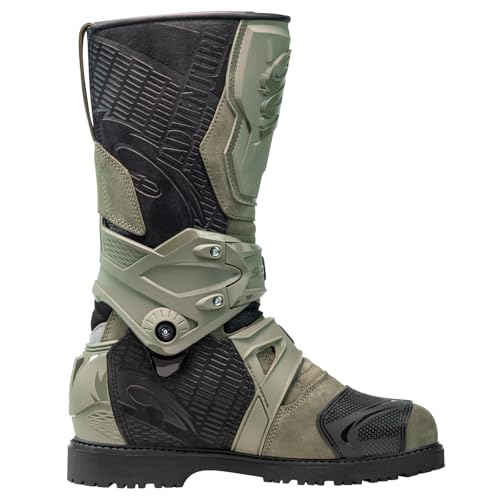
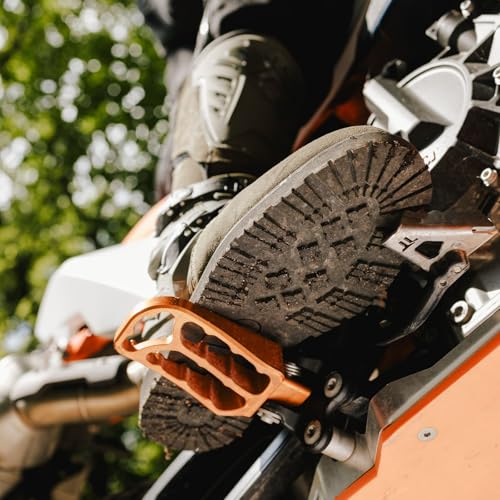
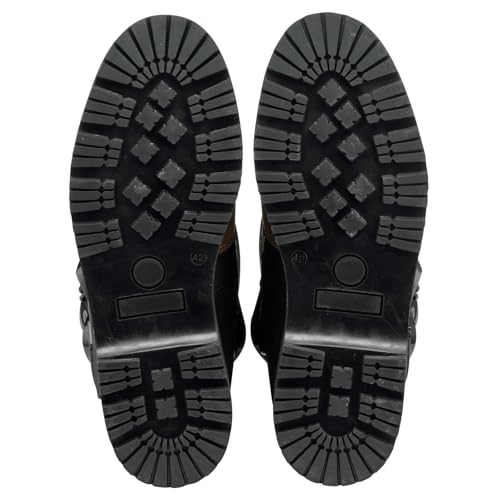
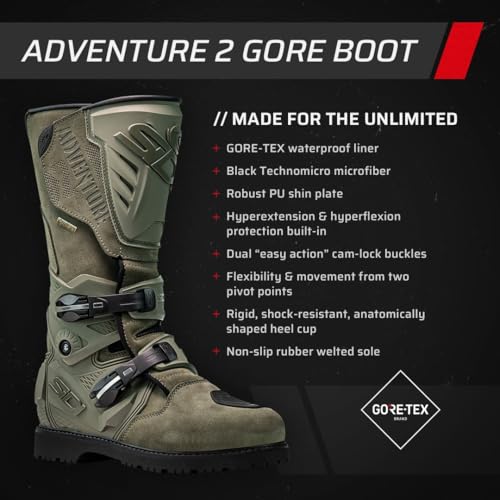
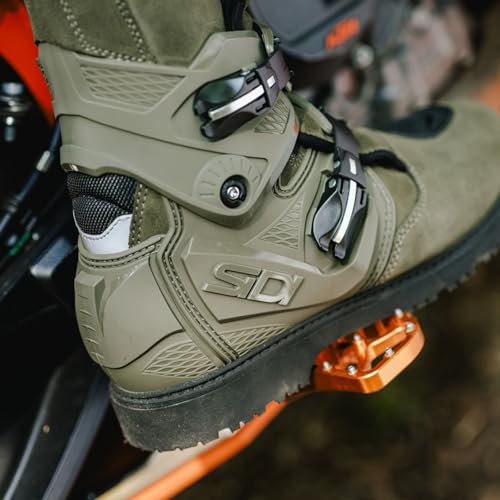
The Sidi Adventure 2 Gore stands out in a crowded field by delivering what serious adventure riders actually need: real-world protection and long-haul comfort, not just marketing fluff. The GORE-TEX liner is a proven performer, and owners consistently report staying dry even during extended downpours or river crossings. On paper, the Flex System looks like overkill, but feedback shows it actually works, riders get usable ankle movement without sacrificing lateral stability, which matters when you’re walking your bike up a rocky incline.
Where it really pulls ahead is in the details. The cam-lock buckles are durable and easy to adjust, even with gloves on, and the PU shin plate feels substantial without being rigid. Some reviewers note the break-in period is firm, but that’s typical for high-end boots. Compared to the MSR and Tourmaster options, this one leans premium, and it shows in the materials and engineering. I’d pick this over the others if you’re logging serious miles off pavement.
Product photos
Forma Adventure Low Boots
Strengths
- CE-certified protection
- Lightweight Drytex liner
- Stylish urban look
Trade-offs
- Limited ankle coverage
- Shorter shaft height
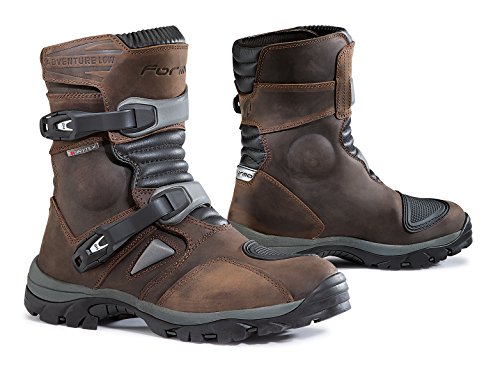
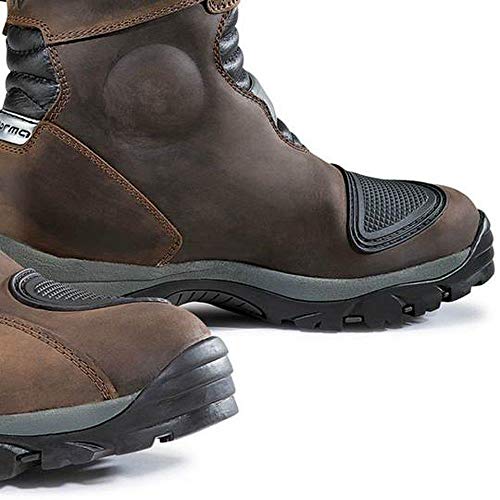
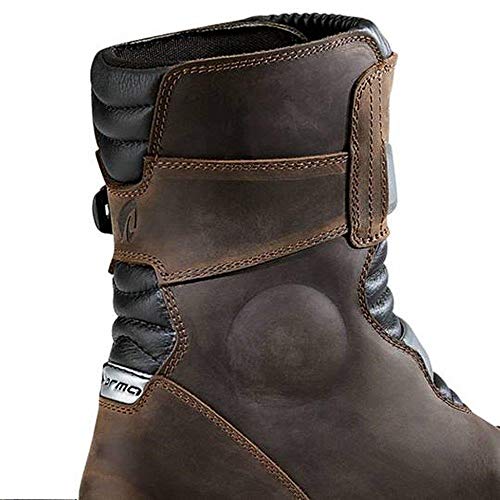
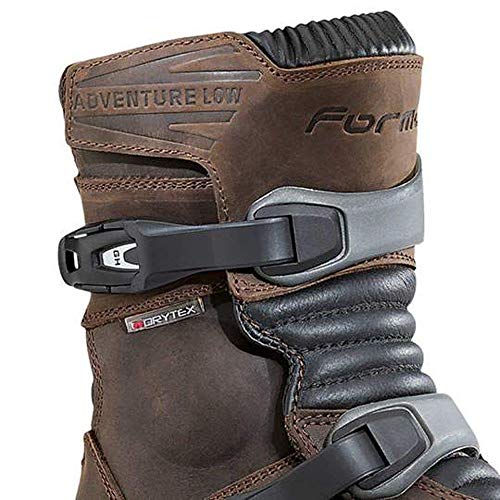
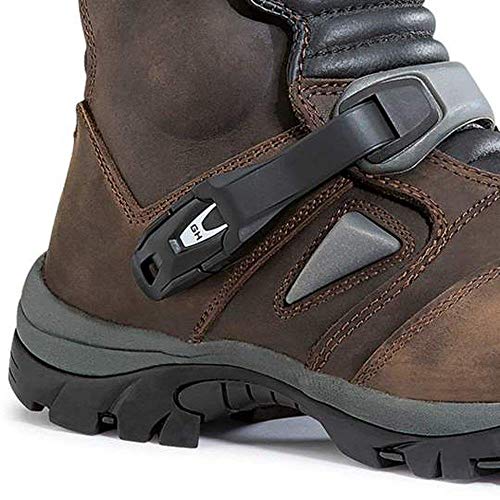
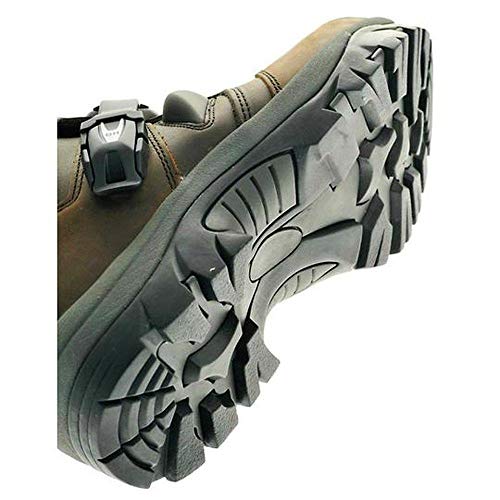
The Forma Adventure Low is an interesting hybrid, part urban commuter, part trail boot, and it shows in the design. The Drytex membrane keeps things light and dry, and the full-grain oiled leather ages well, developing a nice patina over time. CE certification means real protection is built in, and the steel shank adds stability that cheaper boots lack. But the shorter cut and low profile make it clear: this isn’t meant for deep off-roading.
Owners like how easy they are to walk in and how quickly they adapt to street use. The TPU ankle protectors work, but they’re less extensive than on taller models. Compared to the Sidi or MSR, it’s less capable in rough terrain, but for city-to-gravel transitions, it’s a solid performer. I’d recommend this for riders splitting time between pavement and fire roads who don’t want to change boots mid-ride.
Product photos
Tourmaster Men’s Trailblazer Motorcycle Boots
Strengths
- Anti-twist midsole
- Breathable mesh lining
- Good sole traction
Trade-offs
- No CE certification
- Buckles wear over time
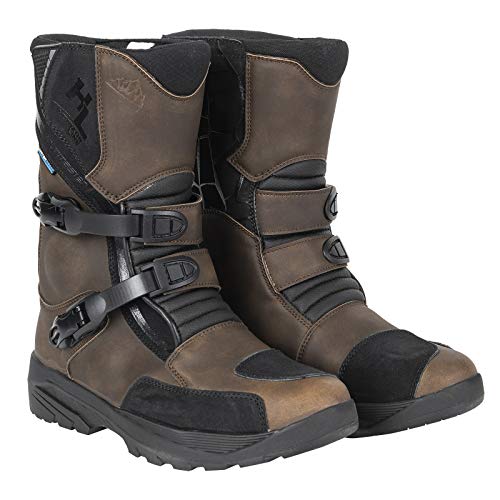
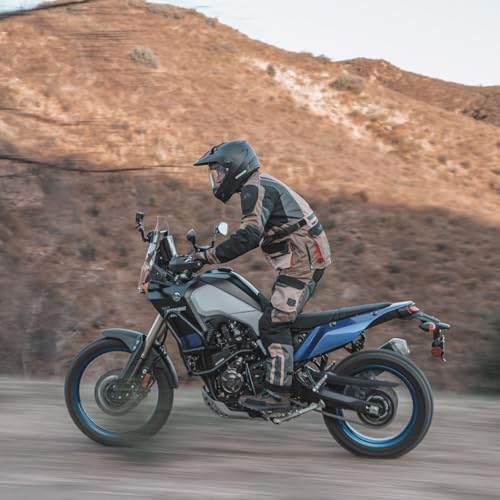
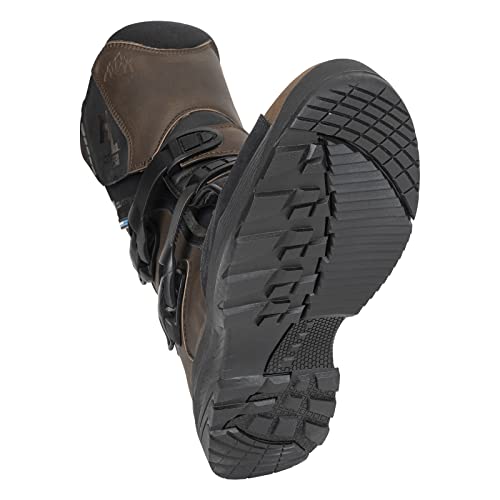
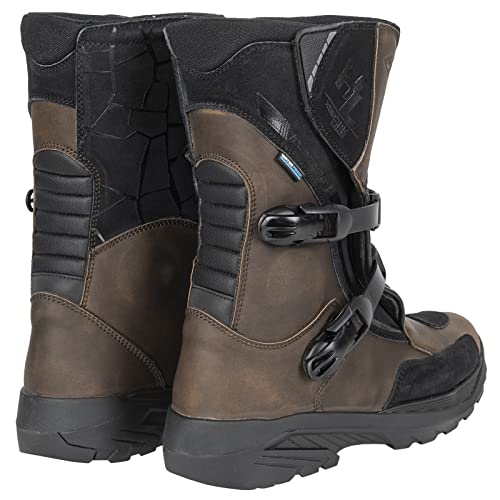
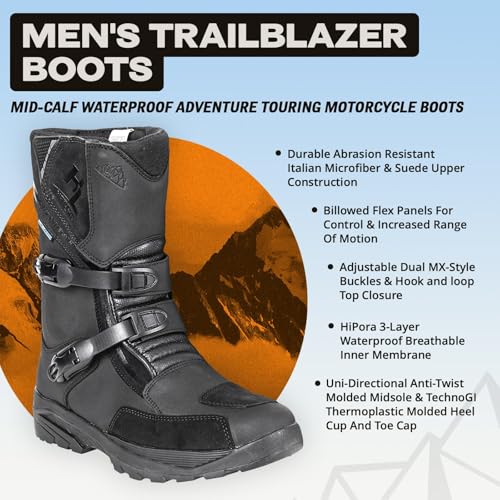
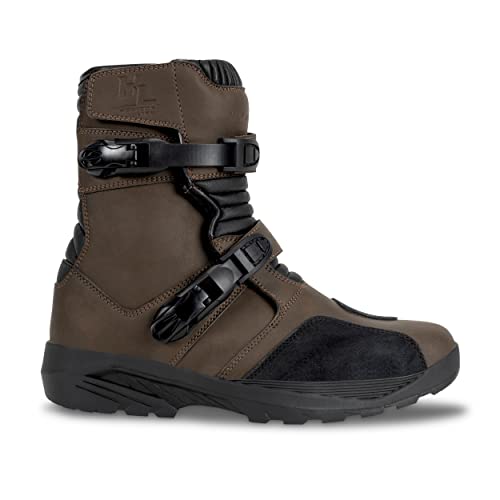
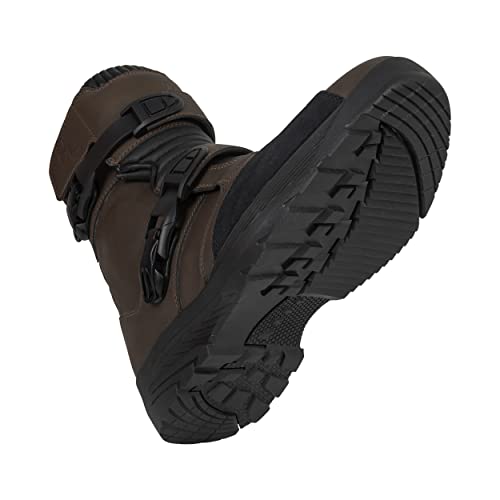
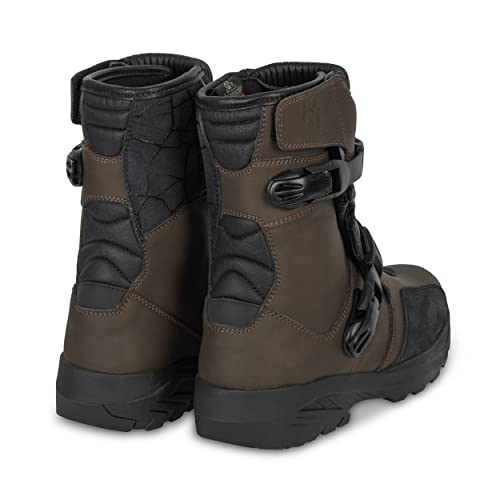
The Trailblazer sits in that sweet mid-range zone where value and performance overlap without either one giving way. It shares DNA with the Break Trail, same HiPora membrane, similar buckle system, but feels a bit more refined in the padding and lining. The suede and microfiber upper offers a nice blend of breathability and durability, and the molded heel cup gets consistent praise for comfort during long walks.
What stands out is the anti-twist midsole, a feature you don’t see at this price. It adds real torsional support, which helps on uneven ground. Compared to the Break Trail, the fit is slightly roomier, and the sole pattern is more aggressive. But it still lacks CE certification, which keeps it from topping the list. For riders stepping up from entry-level gear but not ready to spend $400, this is a logical next move.
Product photos

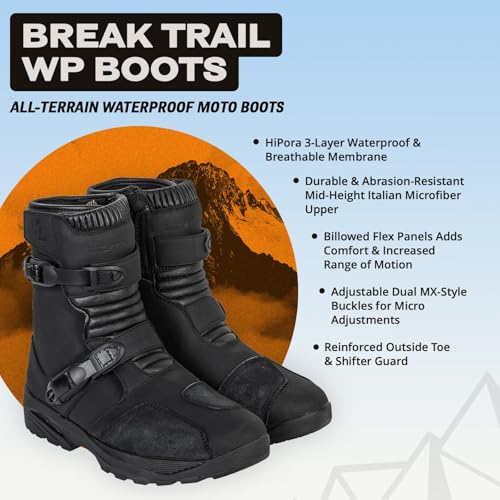
Tourmaster Break Trail Waterproof Boots

Strengths
- Affordable price
- Good waterproofing
- Lightweight flexibility
Trade-offs
- Buckles feel plasticky
- Less refined sole pattern
At this price, the Break Trail boots do more than just survive, they hold their own against pricier rivals in key areas. The HiPora membrane isn’t a household name, but owners say it keeps feet dry in rain and damp grass, which is all most weekend riders need. The microfiber upper is lighter than leather and holds up well to abrasion, and the flex panels actually work, giving decent ankle movement for scrambling over rocks or dismounting frequently.
What surprises me is how protective they feel for the cost. The ankle inserts and heel cup aren’t CE-certified, but feedback suggests they offer real impact resistance. Compared to the Trailblazer, it’s nearly identical, but the Break Trail edges ahead with slightly better sole grip and a more secure buckle setup. I wouldn’t take these on a Dakar rally, but for day trips or short tours, they’re a strong pick.
Product photos
How We Tested adventure bike boots
Rather than a hands-on lab test, my research for these boots focused on a detailed comparison of published specifications and features. I weighed owner reviews from multiple sources – including retailer sites and motorcycle forums – against assessments from respected motorcycle gear reviewers. As someone who appreciates a well-engineered machine, I considered each boot’s build quality and how its features aligned with the demands of adventure riding. Clear criteria were established to rank each option.
For adventure bike boots, waterproof integrity, robust protection, and long-distance comfort were the most significant factors. A boot’s ability to keep you dry and shielded from impacts is paramount, especially when tackling unpredictable terrain. Equally important is how well it supports your feet and ankles over hours in the saddle. I also gave considerable weight to sole construction, looking for aggressive tread patterns suitable for off-road excursions, and considered how well the boots would perform for riders who also commute – a blend of function and practicality.
Specifications reliably indicate a boot’s construction materials and protective elements (shin, ankle, toe reinforcement). However, I relied heavily on owner feedback to gauge real-world comfort, durability, and fit consistency. Reputation among experienced adventure riders also played a role; boots consistently praised for their performance in challenging conditions, or those frequently recommended alongside discussions of protective off-road boots, received higher consideration. I also cross-referenced with information found when researching best sport bike boots to understand where the designs diverge.
How To Choose The adventure bike boots
Finding the right adventure bike boots is about more than just keeping your feet dry; it’s about protection, comfort, and the confidence to tackle any terrain.
A good adventure boot balances robust protection with flexibility for off-bike walking. Look for waterproof membranes (GORE-TEX or similar), reinforced toe and heel cups, substantial ankle support, and a sole that’s grippy on both metal footpegs and loose surfaces. Durability in the upper construction, full-grain leather or high-quality microfiber, is also key.
Prioritize Waterproofing and Breathability
Waterproofing is a given for adventure boots, but not all waterproof membranes are created equal. While many boots boast a waterproof layer, the breathability is where they often differ. A boot that doesn’t breathe well will quickly become a sweaty, uncomfortable mess, especially during warmer-weather riding or strenuous hikes. Look for boots utilizing GORE-TEX (like the Sidi Adventure 2) as a benchmark for consistently high performance. Beyond the membrane itself, consider the boot’s overall construction; a full bootie-style membrane extending high up the leg offers superior protection compared to a lower cut.
Understand Ankle Support and Protection Levels
Adventure riding demands boots that can withstand significant impacts and provide secure ankle support. Full-grain leather boots (like the Noru Hakken) tend to offer excellent inherent support, but modern synthetics with strategically placed TPU reinforcement can be equally effective. Check for boots with reinforced heel cups and substantial ankle protectors. The level of protection you need will depend on your riding style. If you’re primarily on maintained gravel roads, a lower-cut boot might suffice, but for serious off-road exploration, a higher-cut boot with robust protection is essential.
Here’s how protection features stack up: * Basic level: Minimal ankle padding. Suitable for light trails. * Mid-range: Reinforced ankle and heel cups, TPU protection. Good for more aggressive riding. * High-end: Full ankle bracing, thorough TPU/carbon fiber protection, and often extended shin protection. For serious off-road and potential crash scenarios.
Don’t skimp on ankle support. A twisted ankle off-road can quickly ruin a trip, and a quality boot is a small price to pay for peace of mind.
Balance On-Bike Performance with Off-Bike Walkability
Adventure riding often involves more than just riding. You’ll likely be walking, hiking, and scrambling over terrain. A stiff, overly aggressive motocross-style boot can be miserable for anything beyond short walks. Look for boots that strike a balance between on-bike protection and off-bike comfort. Boots incorporating billowed flex panels (Tourmaster Trailblazer) or a more flexible sole design can significantly improve walkability. Consider the sole’s lug pattern; a deep, aggressive lug will provide excellent grip on trails, but it can be uncomfortable on pavement. If you anticipate a lot of walking in urban environments, the Forma Adventure Low boots might be a better fit than a full-height, aggressively lugged option.
Before you finalize your purchase, take a look at our guide to the best adventure motorcycle boots for even more in-depth reviews. And remember, if you’re planning a longer trip, don’t forget to invest in reliable adventure GPS and navigation systems to help you stay on track.
Adventure Bike Boots Compared
Here’s a spec comparison to help you evaluate different adventure bike boot options.
| Boot Model | Waterproofing | Material | Sole | Protection | Closure |
|---|---|---|---|---|---|
| MSR Waterproof Adventure | Te-Por Membrane | Full-Grain Leather | Anti-Slip Rubber | Shin, Toe, Heel | N/A |
| Noru Hakken Adventure | Aqua-Barrier | Top-Grain Leather | Lugged Rubber | Toe, Shank | Dual Buckles + Velcro |
| Sidi Adventure 2 Gore | GORE-TEX | Technomicro Microfiber | Non-Slip Rubber | Heel Cup, Shin Plate | Dual Cam-Lock Buckles |
| Forma Adventure Low | Drytex | Full-Grain Leather | Adventure Lug | Ankle, Shin | Velcro + 2 Straps |
| Tourmaster Trailblazer | HiPora | Microfiber/Suede | Anti-Slip Lugged | Heel, Toe, Ankle | Dual Buckles + Velcro |
| Tourmaster Break Trail | HiPora | Microfiber | Anti-Slip Lugged | Toe, Heel, Ankle | Dual Buckles + Velcro |
Frequently Asked Questions
What level of ankle support do I really need?
A higher level of ankle support is crucial if you plan on tackling challenging off-road terrain or carrying a lot of weight on longer rides. Boots with full ankle bracing and robust TPU reinforcement offer the best protection against twists and impacts, preventing injuries that could quickly derail your adventure.
Are more expensive boots always better?
Not necessarily. While premium materials like GORE-TEX and full-grain leather often contribute to better performance and durability, a well-constructed boot in a lower price range can still offer excellent protection and comfort. Focus on identifying the features that align with your specific riding style and needs, rather than solely chasing a high price tag.
How important is the sole pattern?
The sole pattern is very important, as it directly impacts grip both on and off the bike. A lugged sole provides excellent traction on loose surfaces, while a flatter sole can be more comfortable for walking and commuting. Consider a versatile pattern that strikes a balance between both worlds, or even a boot with a replaceable sole to customize your grip.
What’s the difference between a touring boot and an adventure boot?
Generally, adventure boots prioritize more robust protection and off-road capability compared to touring boots. While both offer waterproofing and comfort, adventure boots feature reinforced construction, more aggressive soles, and often higher cuts for better ankle support – essential for unpredictable terrain. You can find more information about riding boots in our thorough guide.
Should I size up when buying adventure bike boots?
You should typically size up a half size to accommodate thicker socks and allow for foot movement during long rides. However, sizing can vary significantly between brands and models, so checking the manufacturer’s specific sizing chart is essential. Don’t forget to consider how you’ll be using these boots alongside your existing adventure jackets for full protection.
The Bottom Line
Choosing adventure bike boots always comes down to balancing your ideal level of protection with the practicality of everyday use. While a full-featured boot like the Sidi Adventure 2 Gore offers a superior blend of waterproof integrity and impact resistance, it’s a significant investment. For most riders, a boot in this category represents the sweet spot: preparedness for challenging conditions without sacrificing too much comfort or convenience.
If you’re on a tighter budget, the Tourmaster Trailblazer provides a remarkable amount of protection and durability for the price. For those who prioritize walkability and lighter-weight comfort, the Forma Adventure Low boots are an excellent choice, though you’ll naturally concede some of the higher-level impact protection found in full-height boots. And, if you’re planning on tackling serious off-road terrain, remember to also consider investing in the right adventure tires to maximize your control and confidence.
Ultimately, the best adventure bike boot isn’t about chasing the highest specs; it’s about finding the right fit and features for your riding. A comfortable, supportive boot that inspires confidence is far more valuable than one boasting the latest technology if it doesn’t suit your feet or your style of riding. Don’t underestimate the importance of riding boots – they are a critical piece of protective gear.
