
6 Best 4 Wheel Walkers with Seat 2026
This post contains affiliate links. As an Amazon Associate, we earn from qualifying purchases.
The HOMLAND Enlarged Seat Rollator is the best overall 4-wheel walker with a seat, offering a wide, cushioned seat and solid 350-pound capacity. For budget-focused buyers, the Drive Medical Lightweight Aluminum Rollator delivers reliable performance at a lower price, while the soundfuse Ergonomic Arc Seat Rollator stands out for superior comfort on longer outings.
Choosing the right rollator means balancing stability, comfort, and where you’ll use it most. Many buyers struggle with models that promise durability but skimp on seat quality or maneuverability.
This guide cuts through the noise by comparing specs and real-world feedback to highlight models that deliver where it matters. We focused on safety, comfort, and practicality, so you can pick with confidence.
Top 6 4 Wheel Walkers With Seat in the Market
The Best 4 Wheel Walkers With Seat, Reviewed
HOMLAND Lightweight Rollator Walker with Seat

Strengths
- 8-inch all-terrain wheels
- Memory foam seat
- Cup holder included
- Lifetime frame warranty
Trade-offs
- Slightly heavier at 17.6 lb
- Folded size not the smallest
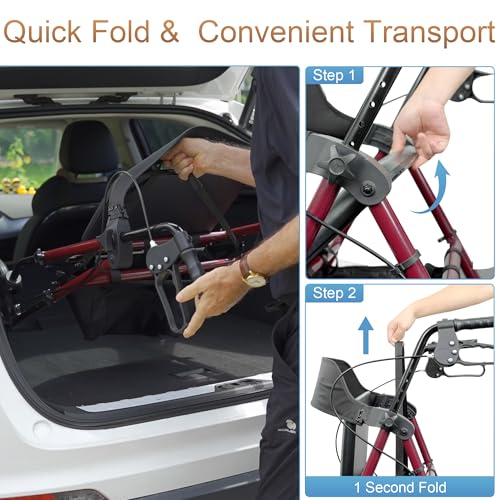
If I had to pick one rollator that balances performance, comfort, and smart design for most people, this HOMLAND model would be it. The 8-inch wheels make a noticeable difference, owners consistently praise how smoothly it rolls over curbs, gravel, and uneven sidewalks. That upgrade from 6-inch wheels is the kind of spec that actually changes the daily experience. Add in the memory foam seat, breathable backrest, and quick 3-second fold, and you’ve got a walker that feels thoughtfully engineered.
The cup holder and large storage pouch are small touches that users actually use, no one wants to juggle a water bottle while rolling. It supports up to 350 pounds and has double support bars, which adds to the confidence in its frame. The US-based support and lifetime frame warranty are strong trust signals. Honestly, for the price, it outperforms several pricier models.
Video review
HOMLAND Enlarged Seat Rollator Walker
Strengths
- Extra-wide 16″ seat
- PT-recommended loop brakes
- 8-inch puncture-proof wheels
- Lifetime frame warranty
Trade-offs
- Heavier than some
- No cup holder
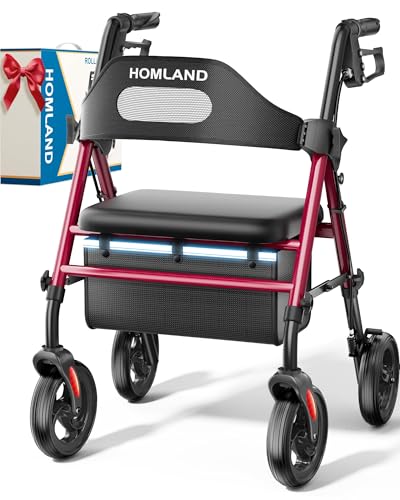
Tall users, finally, a rollator that doesn’t make you hunch. This HOMLAND model is built with a 16″x12″ extra-large seat and fully adjustable height (20″–23″), which makes a real difference for anyone over 5’10”. The wide seat and breathable backrest eliminate the “perch” feeling common on narrower models. Owners over 6 feet tall especially praise how natural it feels to sit and stand without contorting.
The 8-inch puncture-proof wheels handle curbs and uneven pavement well, and the PT-recommended loop brakes are easy to use for those with arthritis. The three-second fold is fast, and the 20.4 lb weight is reasonable given the durability. It’s not the lightest, but it’s one of the most inclusive designs here, engineered for real bodies, not averages.
Video review
soundfuse Premium All-Terrain Rollator Walker

Strengths
- 8-inch PU all-terrain wheels
- Memory foam seat
- Pinch-proof folding
Trade-offs
- No cup holder
- Slightly stiff fold mechanism
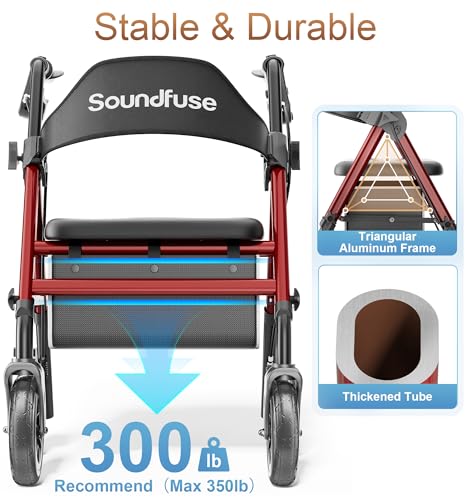
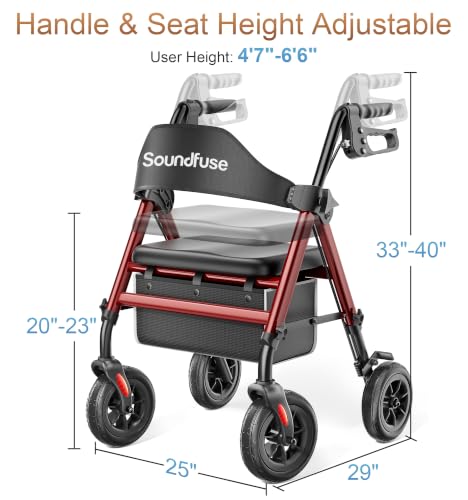
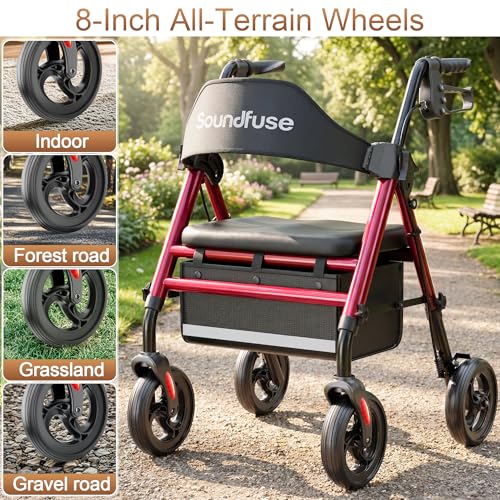
This soundfuse model is built for users who face uneven sidewalks, park paths, or backyard terrain on a regular basis. The 8-inch PU wheels are the highlight here, owners report they roll over bumps and cracks with noticeably less vibration than standard rubber wheels. That makes a real difference in joint comfort over time. The dual height adjustment covers a wide range, from 4’7″ to 6’6″, and the memory foam seat with widened backrest adds to the premium feel.
I like the two-mode braking system, squeeze to slow, push down to lock, it gives more control than basic loop brakes. The pinch-proof folding design is a subtle but important safety win, especially for users with limited dexterity. It’s not the lightest, but at 17.6 lb, it’s manageable. For anyone who spends time outdoors, this is one of the few walkers that doesn’t feel like a compromise.
Product photos



Drive Medical Lightweight Aluminum Rollator
Strengths
- Lightweight aluminum
- 300 lb capacity
- Folds upright
Trade-offs
- Small 6-inch wheels
- Basic seat padding
- No cup holder
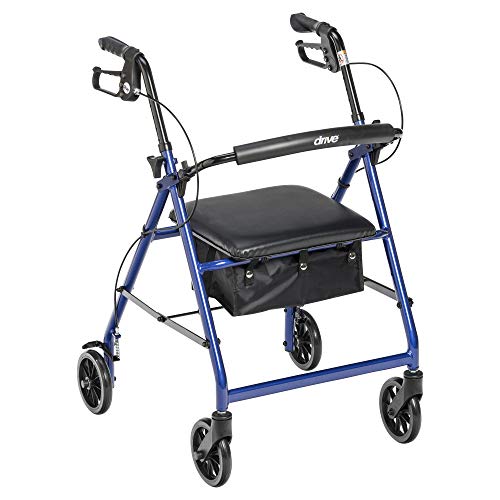
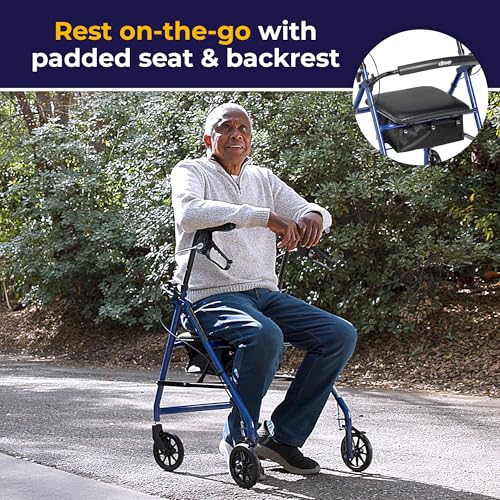
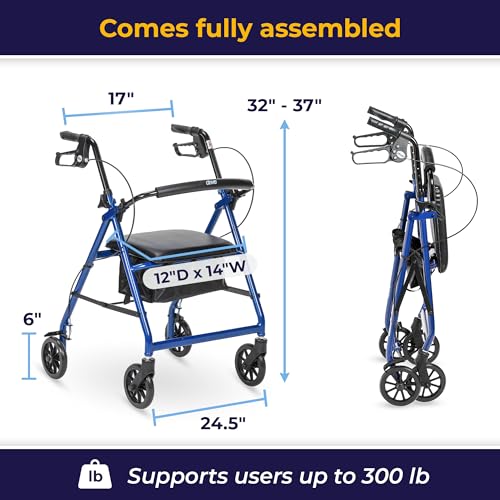
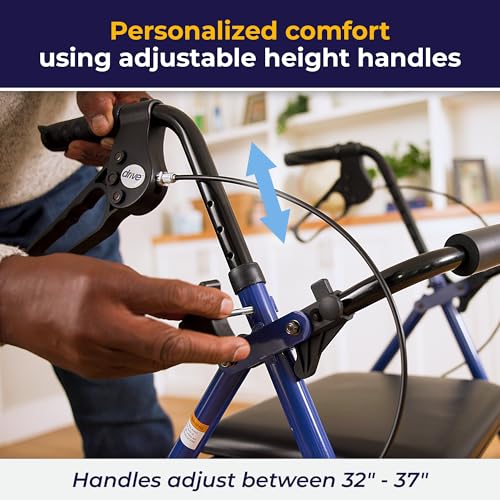
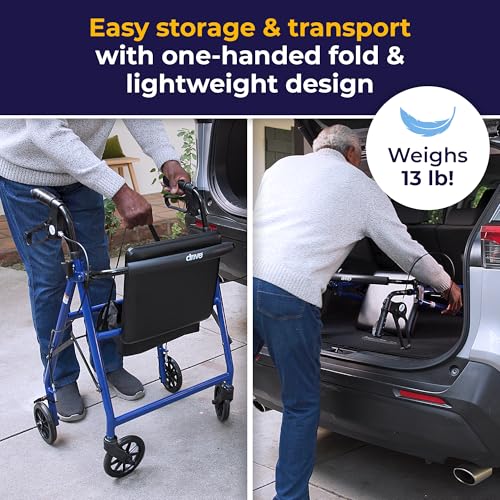
This is a no-frills rollator that does its job quietly and competently. On paper, it hits the basics, lightweight aluminum frame, 300-pound weight capacity, padded seat, and foldable design, making it a practical pick for occasional indoor or smooth outdoor use. Owners consistently report it’s easy to assemble and simple to maneuver in tight spaces, which matters when you’re navigating a grocery store or a narrow hallway.
That said, the 6-inch wheels feel undersized compared to others in this list, and reviewers note they struggle on uneven sidewalks or grass. The hinged backrest is a nice touch, but it’s not as supportive as wider, padded versions on newer models. For a budget-friendly entry-level walker, it’s solid. But if you’re walking regularly outdoors, you’ll feel the limitations.
Product photos

Medline Steel Rollator Walker with Seat

Strengths
- 350 lb capacity
- Steel frame
- Tool-free assembly
Trade-offs
- Heavier than aluminum
- Smaller wheels
- Basic seat comfort
Built like a tank, this Medline model stands out for its 350-pound capacity and steel frame, rare in a category where most go the aluminum route for weight savings. That makes it a go-to for heavier users who don’t want to compromise on stability. The tool-free assembly is a real win, and owners appreciate how straightforward it is to set up and start using right out of the box.
But that steel construction comes at a cost: it’s heavier than aluminum models, and while the 6-inch wheels roll fine indoors, they don’t inspire confidence on cracked pavement or gravel. The under-seat storage bag is handy, and the adjustable arms help with fit, but this walker feels more clinical than comfort-focused. It’s reliable, yes, but not plush.
Product photos


soundfuse Ergonomic Arc Seat Rollator
Strengths
- Ergonomic arc memory foam seat
- Three-mode brakes
- 8-inch all-terrain wheels
Trade-offs
- No cup holder
- Slightly heavier fold
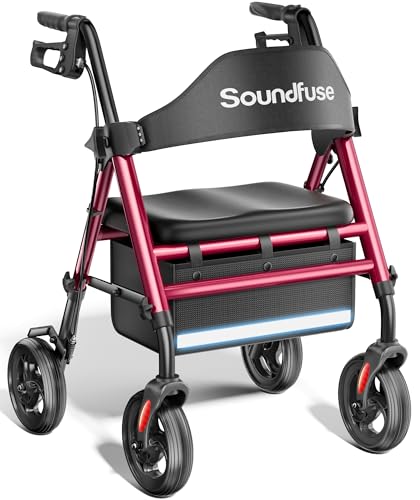
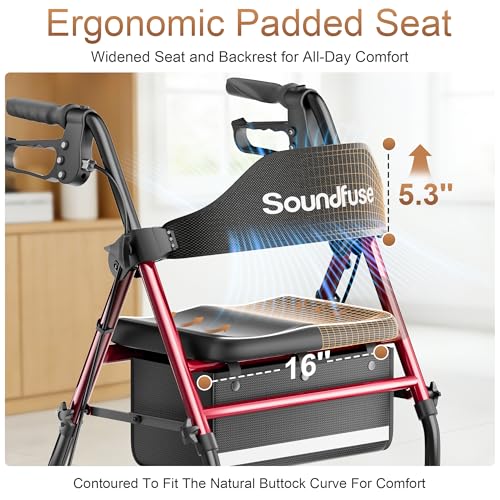
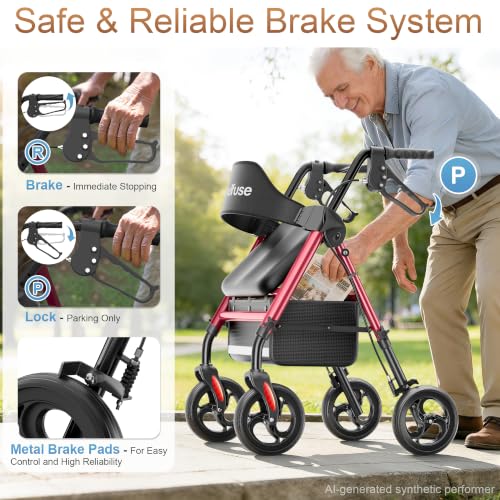
Seat comfort is where this soundfuse model truly shines. The arc-shaped memory foam seat is designed to cradle the hips and reduce pressure, owners who sit for more than a few minutes consistently call it a relief compared to flat, hard seats on budget models. The 16-inch width and thick padding make it one of the most comfortable options here, especially for longer outings. The 8-inch wheels handle bumps well, and the three-mode braking system (free, decelerate, stop) gives precise control.
The triangular frame and double crossbars add rigidity, so there’s less wobble when rolling over uneven ground. It folds down compactly, and the reflective strips boost safety at dusk. While it lacks a cup holder, the storage pouch is roomy. For someone who needs to sit often, due to fatigue, COPD, or recovery, this model delivers where it counts.
Product photos

How We Evaluated 4 wheel walkers with seat
My research into 4-wheel walkers with seat options began with a detailed comparison of published specifications and features across numerous models. I then weighed owner reviews – focusing on reported long-term reliability and ease of use – alongside expert opinions from physical therapy websites and senior care publications. Ultimately, I ranked each walker based on a set of criteria prioritizing safety, comfort, and practical features for everyday use. Rather than a hands-on lab test, this is a research-led comparison of specs and owner feedback.
For this category, the most heavily weighted factors were seat comfort and overall stability. A walker’s ability to provide secure support and reduce strain during rest periods is crucial. Equally important is the frame’s strength and the quality of the braking system; a stable walker prevents falls and builds confidence. Many users also consider portability, so a simple folding mechanism factored into my assessment. If you’re seeking alternatives for senior mobility, exploring options like bikes for seniors can also be beneficial.
Specifications reliably indicate weight capacity, dimensions, and adjustability ranges. However, owner feedback proved vital in assessing real-world comfort, particularly regarding seat padding and backrest design. Reputation also played a role; brands known for durability and solid customer service received more favorable consideration. While I also considered component quality – particularly wheel materials – I looked to reviews for insights into the long-term performance of items like Mevotech wheel bearings as indicators of overall build quality.
Choosing The Right 4 wheel walkers with seat
Finding the right rollator walker requires more than just picking a pretty color; it’s about matching features to individual needs and anticipating where you’ll be using it most.
A good rollator balances stability with maneuverability. Key considerations include weight capacity (matching the user’s weight), adjustability (seat height and handle position), wheel size and material (for terrain), braking performance, and overall folded dimensions for storage and transport. Prioritize models with a comfortable seat and backrest, especially if extended rest stops are anticipated.
Prioritize Wheel Performance
The wheels are where the rubber meets the road, and their quality dramatically impacts the rollator’s usability. Don’t assume all 8-inch wheels are created equal. Polyurethane (PU) wheels, like those on the soundfuse Premium All-Terrain Rollator, generally offer a smoother ride and better grip on varied surfaces than hard plastic. Larger wheels roll over obstacles more easily, but can also make the walker less stable on smooth indoor floors. Consider where you’ll be using the walker most – primarily indoors, outdoors, or a mix – and choose accordingly.
Understand Seat and Backrest Design
A comfortable seat is paramount, especially if you plan to use the rollator for longer outings. The HOMLAND Enlarged Seat Rollator, for example, highlights a larger seat size and thicker cushioning. However, comfort isn’t one-size-fits-all:
- A wider seat is better for larger individuals.
- Memory foam cushioning offers superior support compared to basic padding.
- A contoured or arc-shaped seat, like in the soundfuse Ergonomic Arc Seat Rollator, distributes weight more evenly, reducing pressure points and improving comfort on longer trips.
Don’t overlook the backrest. A supportive backrest can significantly reduce fatigue, but it needs to be positioned correctly for the user’s height.
A rollator is only as good as its brakes. Always test the braking system thoroughly before relying on it, and look for models with loop brakes – they’re generally easier to operate, particularly for those with limited hand strength.
Balance Portability and Robustness
Rollator walkers need to be both durable and easy to manage. Lighter models, such as the Drive Medical Lightweight Aluminum Rollator, are easier to lift and transport, but may lack the robustness needed for heavier users or rough terrain. Heavier-duty steel-frame models, like the Medline Steel Rollator Walker with Seat, offer greater stability and a higher weight capacity, but are less convenient to maneuver and store. If you need a walker capable of handling more weight or varied terrain, exploring options like heavy-duty walkers is a smart move. It’s also worth considering whether you’ll be traveling frequently with the walker – a quick-folding design is essential for ease of transport. Furthermore, before you head out on the road, make sure you understand the risks associated with bad wheel bearings and that your rollator is properly maintained.
4 Wheel Walkers with Seat Compared
Here’s a comparison of key specs to help you choose the right 4-wheel walker with a seat.
| Product Name | Weight Capacity (lbs) | Weight (lbs) | Seat Width (in) | Handle Height Adj. (in) | Folded Width (in) |
|---|---|---|---|---|---|
| HOMLAND Lightweight Rollator Walker with Seat | 350 | 17.6 | N/A | 33-40 | N/A |
| HOMLAND Enlarged Seat Rollator Walker | 350 | 20.4 | 16 | 33-40 | 25 |
| soundfuse Premium All-Terrain Rollator Walker | 350 | 17.6 | N/A | 33-40 | N/A |
| Drive Medical Lightweight Aluminum Rollator | 300 | 15.6 | N/A | N/A | N/A |
| Medline Steel Rollator Walker with Seat | 350 | N/A | N/A | N/A | N/A |
| soundfuse Ergonomic Arc Seat Rollator | 300 | N/A | N/A | 33-40 | 39 |
Frequently Asked Questions
What is the typical lifespan of a 4-wheel walker with a seat?
Generally, a well-maintained 4-wheel walker will last 3 to 5 years. However, the lifespan heavily depends on usage frequency, user weight, and the quality of the initial construction; regularly checking and potentially replacing wheel bearings can extend its usability.
How much weight can these walkers typically hold?
Most 4-wheel walkers with seats have a weight capacity of 300 to 350 pounds. It’s crucial to select a model that exceeds your weight for optimal safety and stability, and avoid exceeding the stated limit.
Are the seats on these walkers comfortable enough for extended use?
Seat comfort varies significantly between models. Look for features like wider seats, thicker padding, and contoured designs to maximize comfort, and consider owner reviews specifically addressing long-term sitting comfort.
Can I use a 4-wheel walker with a seat outdoors on uneven terrain?
Some models are designed for all-terrain use, featuring larger wheels and improved suspension. However, most are best suited for smooth, indoor surfaces or paved walkways; if you plan to use it frequently outdoors, choose a model specifically marketed as all-terrain.
What should I look for in a braking system?
Loop brakes, which resemble bicycle brakes, are generally easier to operate than traditional hand brakes, particularly for individuals with limited hand strength. Ensure the brakes engage firmly and hold the walker securely on a slight incline before relying on them. Knowing the potential for issues with Moog wheel bearings can also help with preventative maintenance.
The Bottom Line
Choosing a 4-wheel walker with a seat often comes down to balancing convenience with robust support. For the best overall combination of features and dependability, I recommend the HOMLAND Enlarged Seat Rollator Walker. It strikes a solid balance between weight capacity, comfort features like the wider seat, and a reasonable folded size for transport.
If specific needs take priority, there are excellent alternatives. Those seeking a lightweight and easily portable option should consider the Drive Medical Lightweight Aluminum Rollator, while individuals needing a heavy-duty walker capable of handling more weight will find the Medline Steel Rollator Walker with Seat a reliable choice. And for parents on the go, exploring options like car seat strollers can provide added versatility.
Ultimately, the specifications are less critical than ensuring the walker fits the user’s body and lifestyle. Prioritize a stable frame, reliable brakes, and a comfortable seat, and don’t hesitate to consider a professional assessment to ensure the best possible fit. Understanding the nuances of components, such as Duralast wheel bearings, can also help you gauge long-term quality and value.
