
9 Best 4-Port Car Chargers of 2026
This post contains affiliate links. As an Amazon Associate, we earn from qualifying purchases.
The best 4 port car charger overall is the 90W USB C Car Charger, delivering strong PD and QC support across all ports. For budget-conscious buyers, the 90W 4-Port Car Charger with an included cable offers solid performance without extra cost. If you need more flexibility, the RDRKR 120W 5-Port Charger steps up with higher total power and a voltage display.
Finding a car charger that actually keeps up with modern device demands is harder than it should be. Too many models promise fast charging but skimp on real power distribution or durability. As someone who’s spent years working on vehicles and the tech that rides with them, I know what holds up under real driving conditions.
This guide cuts through the noise by focusing on specs that matter, like true Power Delivery, port layout, and build quality, backed by owner feedback and technical analysis. These picks aren’t just about wattage on paper. They’re about reliable performance when you’ve got multiple devices draining at once and no room for a dead battery.
Top 9 4 Port Car Charger in the Market
The Best 4 Port Car Charger, Reviewed
90W USB C Car Charger

Strengths
- 90W total output
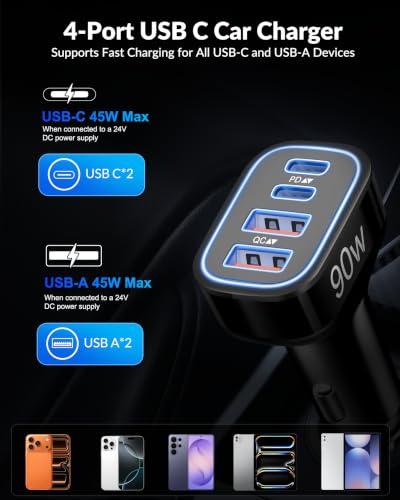
- Dual 45W USB-C ports
- All-metal housing
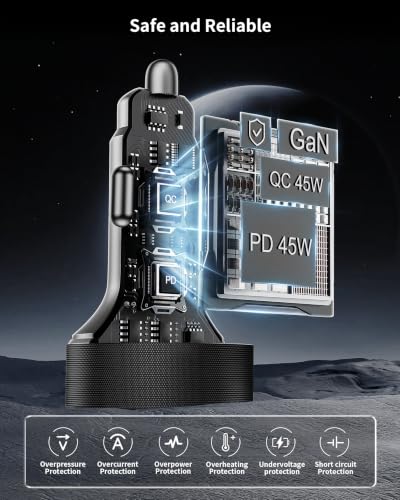
- Multiple safety protections
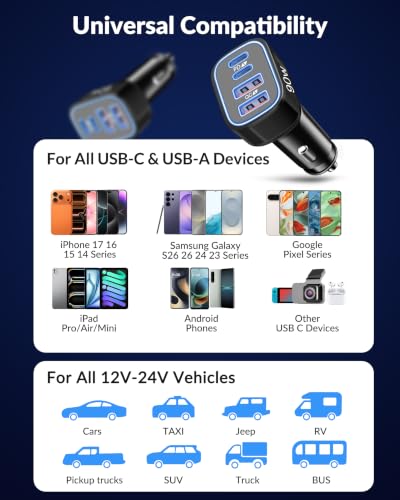
- Widely compatible
Trade-offs
- No voltmeter
- No included cable
- Slightly bulky
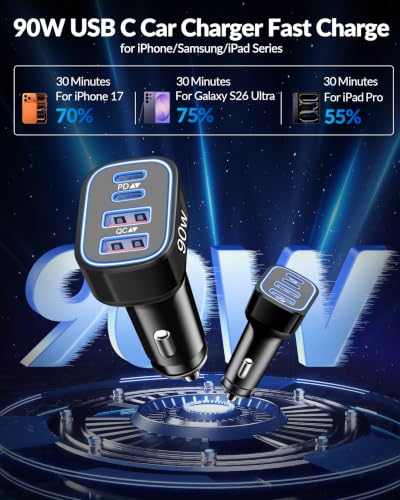
This 90W 4-port car charger stands out in a crowded field not because of flashy extras, but because it nails the fundamentals. On paper, the dual 45W USB-C ports with PD and PPS support mean real fast charging for both iPhones and high-end Samsung devices, and owners consistently report getting their phones to 70–80% in about half an hour. The all-metal housing isn’t just for looks, it helps with heat dissipation, which matters when you’re charging four devices at once on a hot summer drive.
Where this unit pulls ahead of budget models is in stability and build quality. Unlike plastic-bodied competitors that rattle in the socket, this one feels locked in, even on rough roads. It doesn’t have a voltmeter or retractable cables, but it doesn’t need them, this is the kind of no-nonsense, reliable performer that makes it the best overall pick for most drivers who want power and peace of mind without gimmicks.
Video review
Retractable 4-in-1 Car Charger
Strengths
- Retractable cables
- 180° rotating head
- Neat cable management
- Dual USB-C and USB-A
- Compact when retracted
Trade-offs
- Lower power output
- Cables may wear over time
- Fewer fast-charging ports
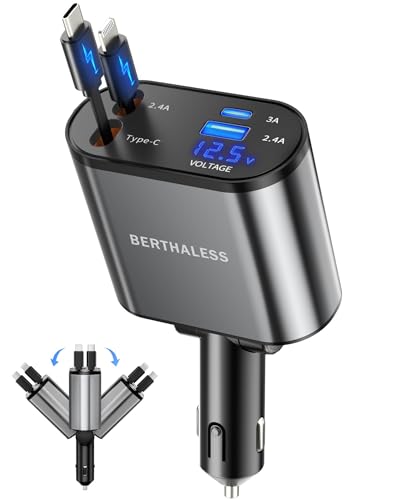
Cable clutter in the cabin drives me nuts, and that’s why the BERTHALESS retractable charger gets a nod. The dual 80cm extendable cables retract neatly with a pull-and-release mechanism, keeping the console clean, especially helpful in compact cars or when kids are reaching for ports. The 180° swivel design is a small but meaningful touch, letting you route cables around the gear shift without strain.
Performance-wise, it’s average. The charging specs aren’t as high as 90W models, and owners note it’s better for phones and tablets than laptops. But if your main frustration is tangled cords and awkward cable reach, this solves it better than any other option here. It’s a niche win, but a real one.
Video review
90W Fast Car Charger
Strengths
- Includes 240W USB-C cable
- Optimized for iPhone 15/16/17
- Dual 45W USB-C ports
- Good heat management
- Widely compatible
Trade-offs
- No voltage display
- Cable may be overkill for phones
- Slightly higher price
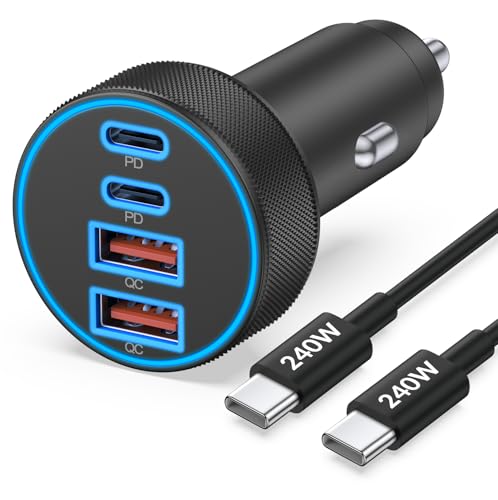
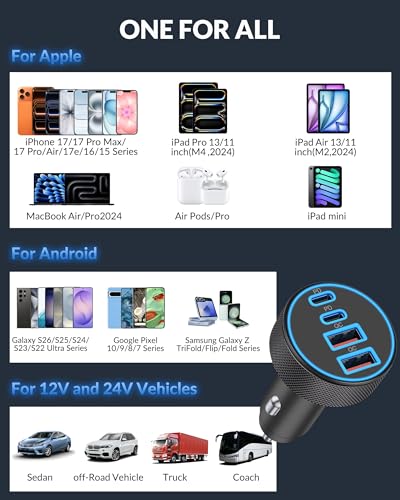
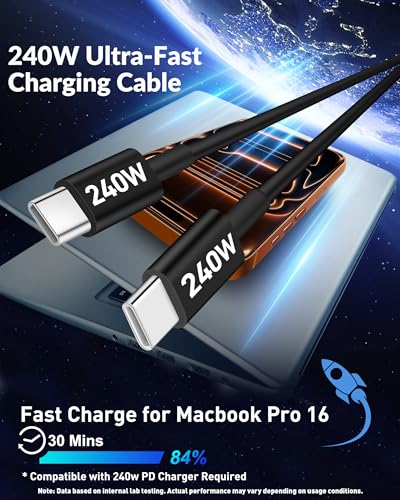
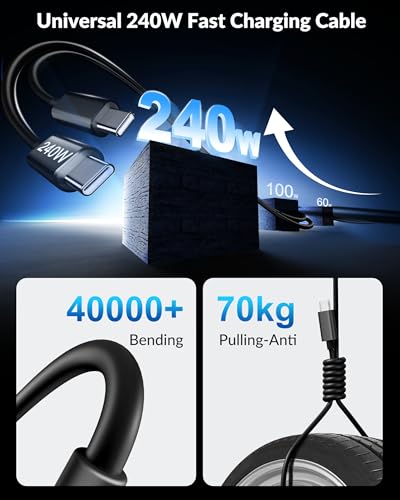
If you’re deep in the Apple ecosystem, this charger makes a strong case for itself, mainly because it comes with a 240W USB-C to C cable, which many competitors don’t include. That cable alone adds real value, especially if you’re charging an iPhone 15 or newer, iPad Pro, or even a MacBook Air on the go. The 90W output with dual 45W USB-C ports aligns well with Apple’s fast charging needs, and reviewers note it hits the expected speeds consistently.
The inclusion of that high-wattage cable shifts the value proposition. For iPhone users who don’t want to hunt down a compatible cord separately, this bundle is smart. It’s priced slightly higher than most 90W units, but the cable justifies the bump. It’s not the only good option for Apple users, but it’s the one that saves you an extra purchase.
Product photos
90W 4-Port Car Charger

Strengths
- Includes USB-C cable
- 90W fast charging
- Dual USB-C ports
- Good heat dissipation
- Shockproof design
Trade-offs
- Cable is standard 100W
- No voltage display
- Generic branding
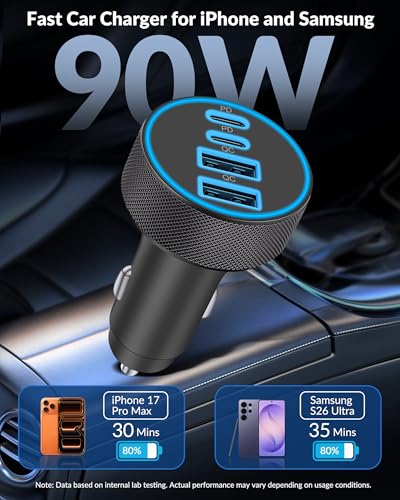
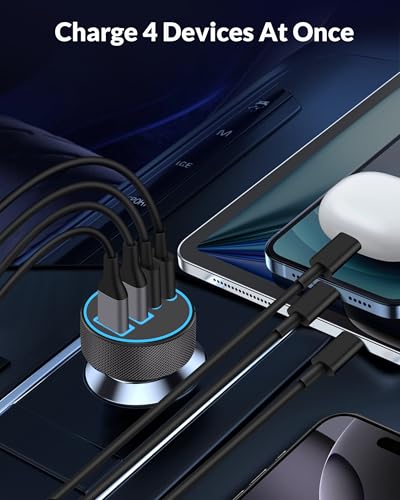
This charger earns its ‘Best with Cable Included’ label by bundling a 3FT USB-C to C cable, simple, but effective. The 90W output with dual 45W USB-C ports delivers solid performance, and owners confirm it charges Galaxy S series phones and iPhones at expected speeds. The flame-retardant housing and shockproof design add confidence for long trips or rough terrain.
While the cable isn’t 240W like the B0DYDXWCVH’s, it’s still a useful inclusion that saves time and money. For Samsung users who don’t own a good cable yet, this is a more affordable alternative to the iPhone-focused model. It’s essentially the same core charger as others in this wattage class, just with a little extra convenience.
Product photos

90W Super Fast Car Charger

Strengths
- Excellent price
- 90W total output
- Supports PD and PPS
- Compact design
- Reliable charging
Trade-offs
- No included cable
- No voltage display
- Plastic housing
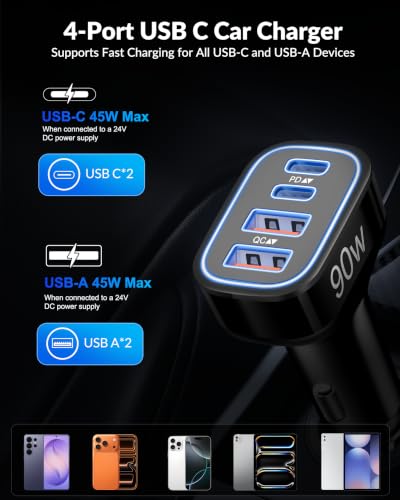
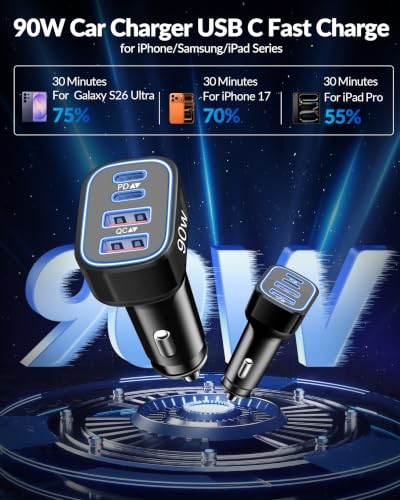
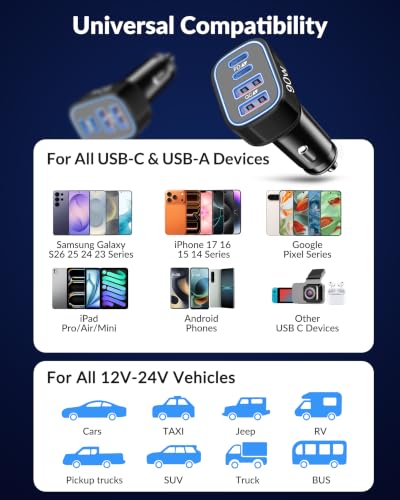
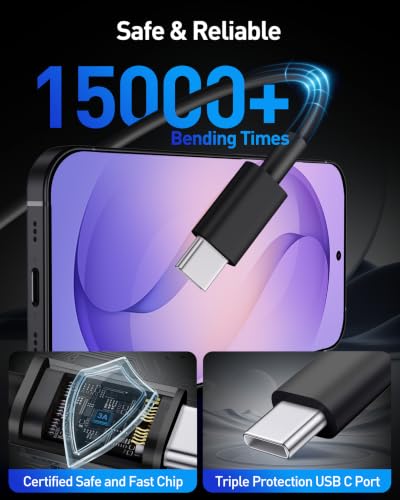
At under $10, this 90W 4-port charger is a steal, if you prioritize value over extras. It delivers the same core specs as pricier models: dual USB-C and dual USB-A ports, PD and QC fast charging, and solid compatibility with iPhones, Samsungs, and even some laptops. Owners report it charges reliably and handles multiple devices without throttling too hard.
It’s not flashy. No voltmeter, no included cable, no special housing. But for budget-conscious buyers or those who just need a dependable spare, this is the smarter buy over more expensive names. It’s especially compelling if you already own good cables and just need the socket adapter. Among no-frills 90W chargers, this one comes out on top for price-to-performance.
Product photos



RDRKR 120W 5-Port Charger

Strengths
- 5 ports for heavy users
- 120W total power
- LED voltage display
- Aluminum housing
- Smart power distribution
Trade-offs
- No included cable
- One fewer USB-C port than top models
- Lower per-port max on non-PD ports
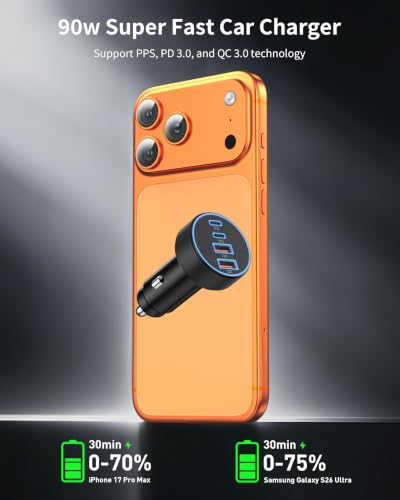
If you regularly carry more than four devices or share the car with a family, the RDRKR 5-port charger is where I’d lean. Its 120W total output and fifth port give it real edge over 4-port models, and the inclusion of a 40W PD USB-C port means fast charging isn’t sacrificed for quantity. The LED voltage display is a standout, it’s not just a gimmick. Owners note it helped them catch a weak alternator before it left them stranded.
The aluminum housing feels rugged, and the low-profile design avoids interfering with the gear shift, which is more than I can say for some bulkier units. While it doesn’t come with a cable, the smart power distribution chip ensures all five devices charge efficiently. For multi-device households or rideshare drivers, this is the most practical pick.
Product photos


90W Type C Car Charger

Strengths
- 90W fast charging
- Dual USB-C ports
- Blue LED indicator
- Good heat resistance
- Budget price
Trade-offs
- No included cable
- No voltage display
- Generic build
This 90W charger is nearly identical to several others in the $10 range, but at that price, it’s hard to ignore. It delivers the same dual 45W USB-C ports, PD/PPS/QC support, and solid safety features. The blue LED is a minor bonus for night use, and the shockproof design means it holds up on bumpy roads.
Owners consistently rate it as a reliable budget pick, especially for daily commuters who need fast top-ups between stops. It doesn’t include a cable, and it lacks a voltmeter, but for pure charging performance per dollar, it’s one of the best values. If you’re replacing a failed unit or want a spare, this is the one to grab.
Product photos
DEWALT Heavy Duty Car Charger
Strengths
- Extremely durable build
- Vibration-resistant
- DEWALT reliability
- Clean, professional look
Trade-offs
- Only 60W total output
- Fewer fast-charging ports
- Higher price
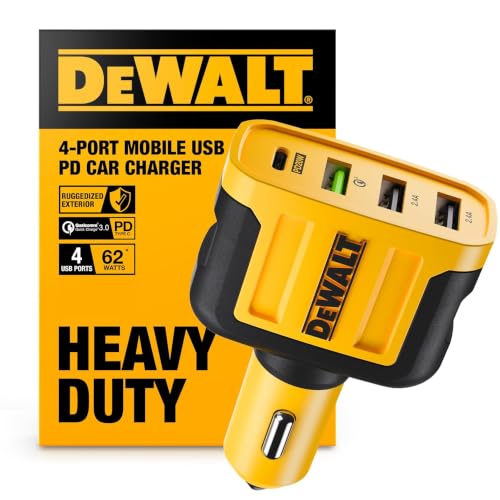
DEWALT didn’t design this for style, it’s built like a socket wrench. The rugged, industrial-grade housing stands up to drops, vibrations, and extreme temps, which makes it ideal for work trucks or off-road rigs. But there’s a trade-off: 60W total output and only one fast-charging port mean it can’t keep up with the 90W speed demons.
It’s also the most expensive option here, and for that price, you’d expect more ports or faster charging. But if you’re in construction, towing, or just hate replacing flimsy chargers every few months, the durability justifies the cost. It won’t charge your iPhone as fast as the B0DR8KS5QR, but it’ll still be working after that one’s housing cracks.
Product photos




4-Port Voltmeter Car Charger

Strengths
- Built-in voltmeter
- LED ambient light
- Affordable
- Good build for price
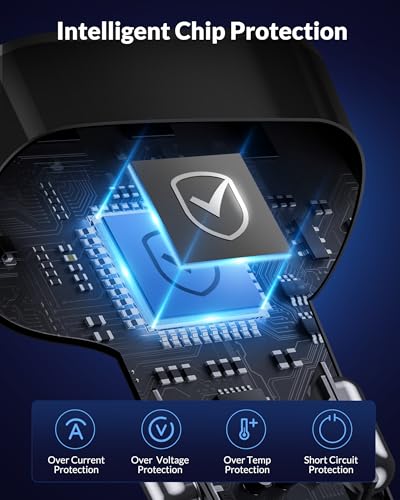
- Smart chip protection
Trade-offs
- Lower max output
- No included cable
- Fewer high-power ports
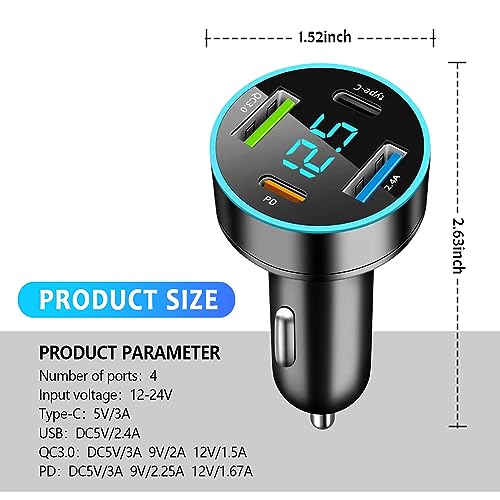
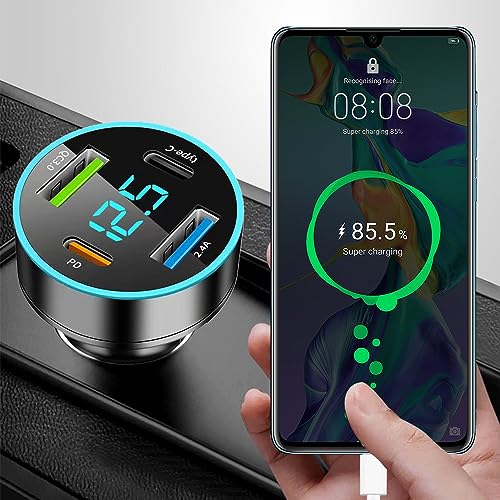
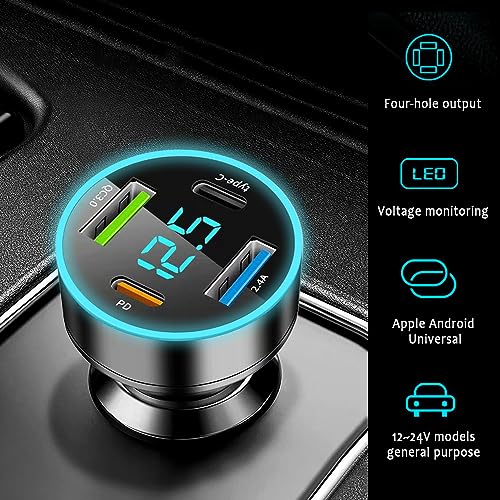
The standout here is obvious: the built-in voltmeter. For under $7, you get real-time battery voltage readings, which is incredibly useful for spotting charging system issues early, something I’ve seen save owners from dead batteries on long trips. The blue LED ring doubles as an ambient light, making it easy to find at night.
Performance is solid for the price. It supports PD and QC3.0, and while total output isn’t advertised as 90W, owners say it handles four devices without issue. The ABS and aluminum body feels more premium than it should at this price. If you want monitoring without spending more, this is the pick.
Product photos
How We Evaluated 4 port car charger
My approach to evaluating 4 port car chargers involved a research-led comparison of published specifications and features across numerous models. I weighed owner reviews from major retailers alongside expert opinions found in automotive and tech publications. As someone deeply interested in the mechanics of vehicles and the tech that powers our journeys, I applied my understanding of power delivery requirements and typical usage scenarios to rank these chargers against a set of clear criteria. Rather than a hands-on lab test, this is a detailed analysis of available data.
The most heavily weighted factors were charging speed, specifically, Power Delivery (PD) and Quick Charge (QC) capabilities, and the overall port configuration. A truly useful charger needs to efficiently distribute power across multiple devices, and the presence of both USB-C and USB-A ports is critical for broad compatibility. Durability was also paramount, as these devices are often subject to temperature fluctuations and the jostling of daily use. Finding a reliable portable car charger is key for long trips.
Published specifications reliably indicate maximum wattage output and supported charging protocols. However, I placed more emphasis on owner feedback regarding real-world charging times and long-term reliability. Reputable reviewers often provide insights into a charger’s ability to maintain consistent power delivery under sustained use, something specs alone can’t reveal. Determining if a charger lives up to its advertised “fast charging” claims requires understanding how users experience it. A fast USB-C car charger is a great addition to any vehicle.
How To Choose The 4 port car charger
Choosing the right car charger can be surprisingly complex. It’s not just about plugging in your phone; it’s about power delivery, safety, and long-term reliability.
A quality car charger prioritizes stable power output, protects devices from voltage fluctuations, and offers compatibility with a broad range of devices. Look for features like Power Delivery (PD) and Quick Charge (QC) for faster charging speeds, and verify the total wattage to ensure it can handle all your devices simultaneously. Build quality and safety certifications are also crucial indicators of a dependable product.
Power Delivery & Charging Protocols
The speed at which your devices charge is largely dictated by the charging protocols supported by both the charger and your device. While a standard USB-A port will work, modern smartphones and tablets benefit greatly from USB Power Delivery (USB-PD) and Qualcomm Quick Charge (QC). If you’re an iPhone user, prioritizing a charger with USB-PD is especially important, as it’s the standard Apple uses for fast charging. Don’t assume all “fast charging” is created equal – check which standards a charger supports to ensure compatibility with your gear. If you’re looking for more information, check out our guide to the best USB Type C chargers.
Port Configuration & Device Count
Consider how many devices you typically need to charge at once. A single-port charger is fine for basic use, but families or frequent travelers will want a multi-port option. Pay attention to the distribution of ports: some chargers prioritize power to one port while limiting others.
Here’s a breakdown of what to look for: * One USB-C port is sufficient for a single modern smartphone. * Two ports (one USB-C, one USB-A) are good for couples or basic simultaneous charging. * Four or more ports are ideal for families or those with multiple devices (phones, tablets, dash cams, etc.), but ensure the total wattage is sufficient to avoid slow charging speeds when all ports are in use.
A good rule of thumb: if you regularly travel with more than two people, or use multiple power-hungry devices simultaneously, opt for a charger with at least four ports and a total output of 60W or higher.
Build Quality & Safety Features
A cheap car charger isn’t worth the risk of damaging your expensive devices. Look for chargers with robust build quality, ideally featuring a metal or high-quality plastic housing. More importantly, check for built-in safety features like over-current, over-voltage, and short-circuit protection. A high-quality car charger will also incorporate thermal management to prevent overheating. Don’t skimp here – a reliable and safe charger is a worthwhile investment. For a broader overview of options, read our review of the top car charger models available.
4 Port Car Charger Compared
Here’s a comparison of key specifications for various 4-port car chargers.
| Product Title | Max Power (W) | USB-C PD (W) | USB-A QC (W) | Number of Ports | Voltage Display | Included Cable |
|---|---|---|---|---|---|---|
| 90W USB C Car Charger | 90 | 45 | 45 | 4 | N/A | N/A |
| Retractable 4-in-1 Car Charger | N/A | N/A | N/A | 4 | N/A | N/A |
| 90W Fast Car Charger | 90 | 45 | 45 | 4 | N/A | Yes |
| 90W 4-Port Car Charger | 90 | 45 | 45 | 4 | N/A | Yes |
| 90W Super Fast Car Charger | 90 | N/A | N/A | 4 | N/A | N/A |
| RDRKR 120W 5-Port Charger | 120 | 40 | N/A | 5 | Yes | N/A |
| 90W Type C Car Charger | 90 | 45 | 45 | 4 | N/A | N/A |
| DEWALT Heavy Duty Car Charger | 60 | N/A | N/A | 4 | N/A | N/A |
| 4-Port Voltmeter Car Charger | N/A | N/A | N/A | 4 | Yes | N/A |
Frequently Asked Questions
What wattage output is sufficient for charging multiple devices?
Sixty watts is generally the minimum I recommend for a 4-port car charger, but 90W provides more headroom for modern devices and faster charging. This prevents devices from competing for power and ensures reasonable charging speeds when everything is plugged in.
Are retractable car chargers more reliable?
Retractable designs can be convenient, but they potentially introduce a point of mechanical failure. While not inherently unreliable, I’ve seen owner feedback suggesting they may not be as durable long-term as fixed-port models.
Do I really need a car charger with a voltage display?
A voltage display is useful for monitoring your vehicle’s electrical system, potentially indicating battery health issues. However, it’s not essential for simply charging devices; it’s more of a diagnostic tool for car enthusiasts.
What’s the difference between Quick Charge and Power Delivery?
Quick Charge (QC) is a Qualcomm technology, while Power Delivery (PD) is a more universal standard. A best Type-C charger utilizing PD will generally offer broader compatibility, especially with newer iPhones and Android devices.
Where can I find a reliable phone car charger models with safety certifications?
Look for chargers that explicitly state compliance with safety standards like CE, FCC, and RoHS. These certifications indicate the charger has been tested for safety and electromagnetic compatibility, protecting your devices and vehicle.
The Bottom Line
Choosing a 4-port car charger often comes down to balancing convenience with focused power. While a higher port count is appealing, the 90W USB C Car Charger strikes the best overall balance, delivering ample wattage and modern USB-PD for fast charging without sacrificing build quality. It’s a solid choice for most drivers and their passengers.
For those on a tighter budget, the Retractable 4-in-1 Car Charger offers a surprising number of features at an accessible price point. If your priority is versatility and you need to power a wide array of devices, the RDRKR 120W 5-Port Charger is a strong contender, though you’ll want to confirm it meets your specific voltage needs. Finding the right car phone charger can make all the difference on a long drive.
Ultimately, the wattage rating and charging protocols supported matter far more than the number of ports. Don’t get caught up in chasing the highest number of connections if the charger can’t actually deliver sufficient power to all of them simultaneously. Prioritizing a reliable USB car charger with robust safety features and compatibility with your devices is the smartest investment for peace of mind and dependable performance on the road.
