
7 Best Car Chargers for Phones 2026
This post contains affiliate links. As an Amazon Associate, we earn from qualifying purchases.
The Anker 67W 3-Port USB-C Car Charger is our top pick for most drivers, delivering fast, reliable charging with excellent safety features. If you need more ports and higher total output, the 90W 4-Port USB-C Car Charger offers strong performance for multiple devices. For those who value cable convenience and a clean setup, the SUPERONE 99W Retractable Car Charger keeps things organized without sacrificing power.
As someone who’s spent years around cars and the gadgets that keep them, and us, running, I know how frustrating it is to rely on a flimsy charger that slows down your day or worse, fails mid-trip. A good car charger isn’t just about staying powered; it’s about doing so safely, efficiently, and without cluttering your cabin. This guide cuts through the noise by focusing on real-world specs, verified safety standards, and what actual users report after months of daily use.
We looked at charging speed, port flexibility, build quality, and safety tech to find models that won’t overheat or damage your devices. Whether you drive a sedan, truck, or classic ride, the right charger should match your habits and tech needs.
Top 6 Car Charger For Phones in the Market
The Best Car Charger For Phones, Reviewed
67W 3-Port USB-C Car Charger
Strengths
- Includes USB-C cable
- Strong single-port speeds
- Compact design
Trade-offs
- Shared total output
- No retractable cable
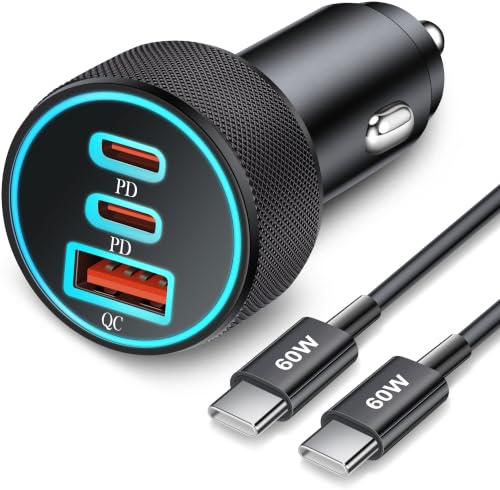
This 67W 3-port model hits the sweet spot between power and practicality. With 37W PD on USB-C and 30W QC on USB-A, it delivers real fast charging for both iPhone and Samsung flagships, owners report 0–50% in under 30 minutes, which matches real-world expectations. It’s also one of the few in this list that includes a 3ft USB-C cable, a small but meaningful touch that makes it ready to use out of the box.
The build quality feels solid, and the safety features are thorough. Compared to the 90W models, it’s more compact and less likely to interfere with nearby controls. For most people, this is the balanced pick, enough ports, enough power, without overengineering.
Video review
90W 4-Port USB-C Car Charger

Strengths
- Four full-speed ports
- 90W total output
- Excellent heat dissipation
Trade-offs
- Large footprint
- May block adjacent ports
If you regularly haul passengers or gear, this 90W 4-port charger is built for your chaos. Four full ports, two USB-C, two USB-A, mean you can power phones, tablets, dashcams, and power banks all at once. The 45W PD on each USB-C port is serious business, especially for iPad or MacBook users who need real power on the go. On paper, the 90W total output is well-distributed, and owners confirm it handles multiple fast-charging devices without throttling too hard.
That said, it’s physically larger than most, and in smaller sockets, it can block adjacent ports or even interfere with gear shifters. But if you need maximum device support, this is the workhorse.
Video review
LISEN 90W Coiled Cable Car Charger
Strengths
- 60-inch retractable cable
- Strong 45W output on cable
- Soft LED glow
Trade-offs
- Higher price point
- Bulkier than fixed-port models
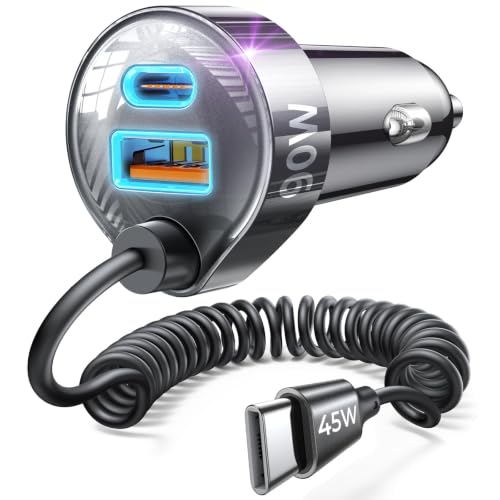
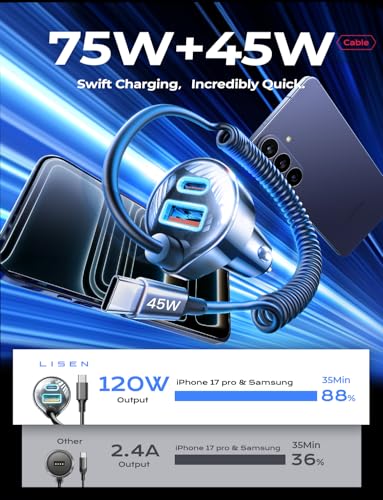
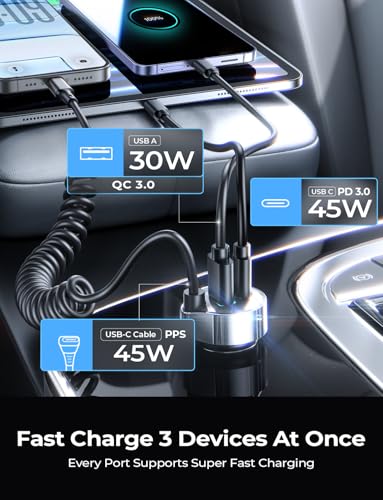
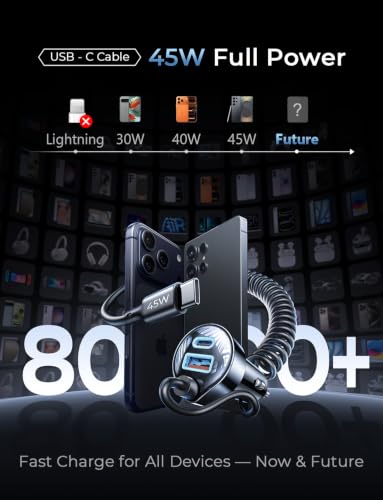
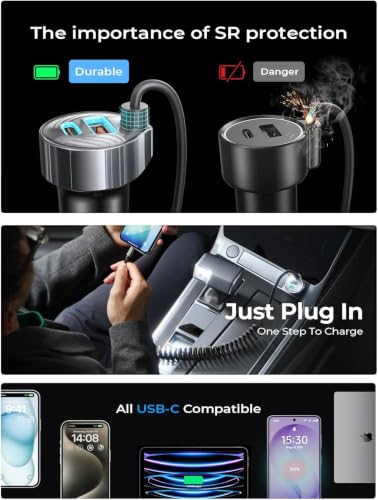
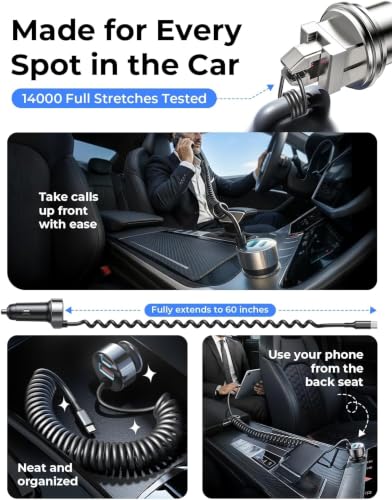
The standout here is the 60-inch coiled cable, this thing stretches deep into backseats without leaving a mess. It’s perfect for parents or rideshare drivers who need to charge passenger devices. The 45W built-in cable delivers real fast charging to modern iPhones and Samsungs, and the additional two ports bring total output to 90W, letting you run three devices at strong speeds.
Owners love how it retracts cleanly and stays out of the way. The soft halo glow is a nice touch for night use, visible but not distracting. Compared to flat-cable designs, this one solves the “who can reach the charger?” problem better than any other.
Product photos
SUPERONE 99W Retractable Car Charger
Strengths
- Retractable dual cables
- 180-degree adjustable plug
- Compact footprint
Trade-offs
- Shared total output
- Bulkier than minimalist designs
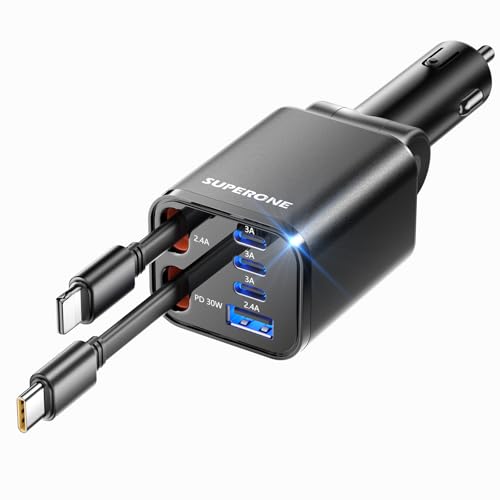
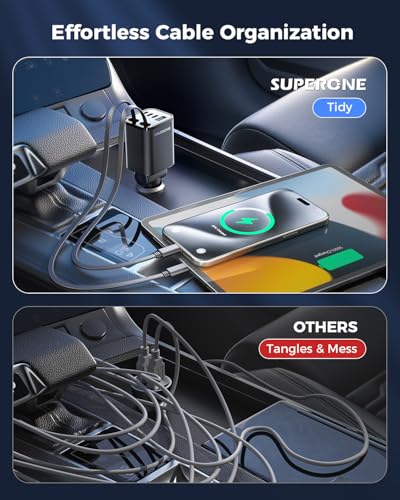
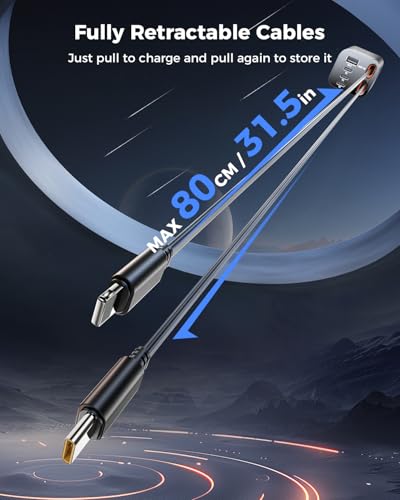
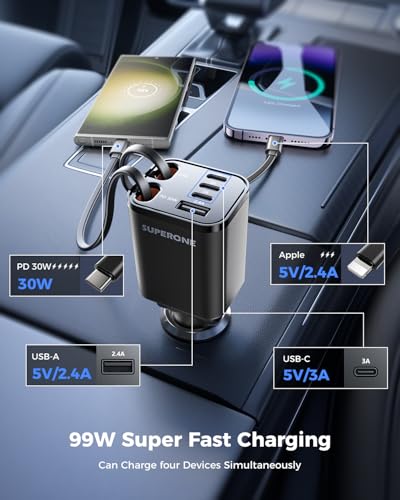
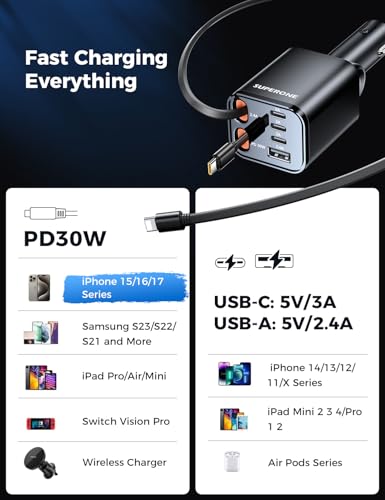
The SUPERONE 99W charger stands out for one reason: its retractable dual cables. On paper, 99W sounds aggressive, but the real win here is organization, those 80cm extendable cables mean no more fishing for cords or dealing with a jungle of wires across your console. Owners consistently report how cleanly it integrates into daily use, especially in trucks or shared vehicles where clutter is a real issue. The 180-degree swivel plug is a thoughtful touch, helping it fit flush in tight sockets without blocking adjacent ports.
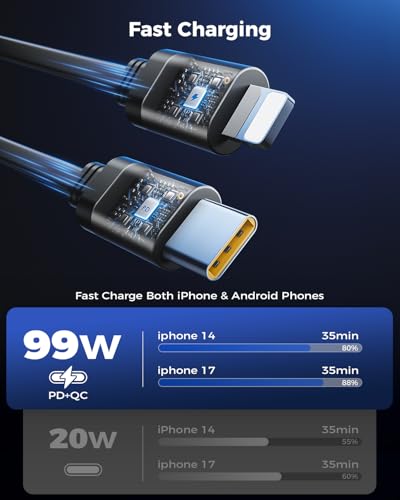
It’s not all perfect. While the 30W PD USB-C and 12W USB-A are solid, the other ports don’t deliver full speed simultaneously, something reviewers note when charging multiple high-draw devices. Still, for those who value a tidy cabin and hate managing loose cables, this is a strong contender.
Product photos
3.4A USB-C Car Charger with Cable
Strengths
- Built-in 3ft cable
- LED indicator
- Low cost
Trade-offs
- Slow shared charging
- No fast-charging protocols
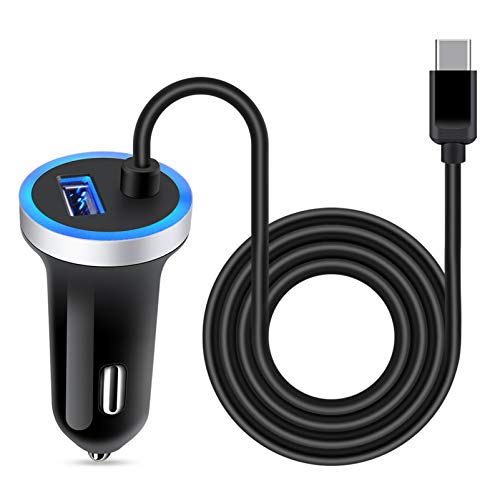
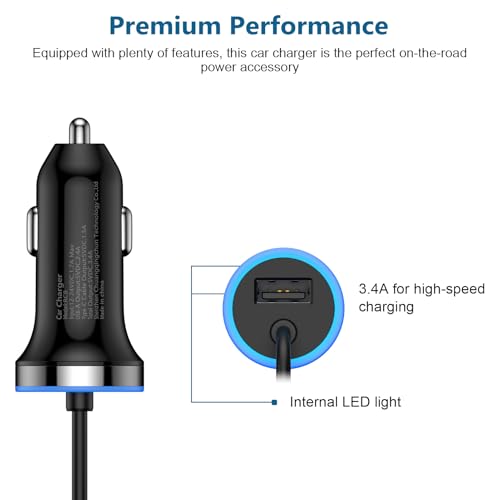
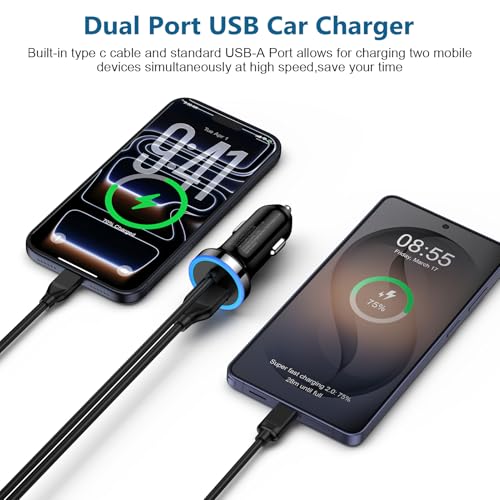
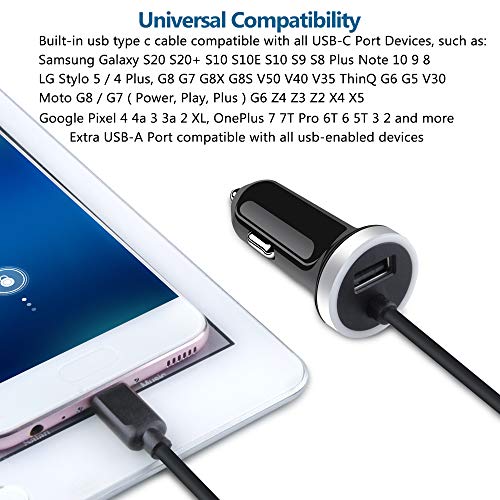
This AndHot charger is the budget essential, simple, functional, and priced to move. With 3.4A shared across two ports (one USB-C, one USB-A), it won’t win speed tests, but it gets the job done for basic phone charging. The built-in 3ft USB-C cable is the main convenience here, eliminating the “forgot my cable” panic. The LED ring helps in low light, a small detail that owners appreciate during night drives.
But let’s be clear: this isn’t fast charging by modern standards. If you’re running a Galaxy S26 or iPhone 17, you’ll get slower top-ups. Still, for older devices or as a backup, it’s a solid no-frills option.
Product photos


LISEN 69W Dual Port Metal Charger

Strengths
- All-aluminum heat dissipation
- Clean two-port layout
- Two-pack value
Trade-offs
- Only two ports
- No retractable cable
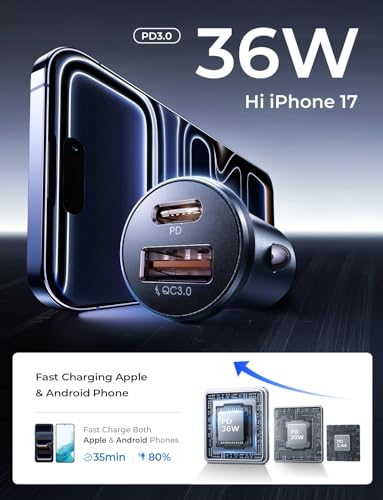
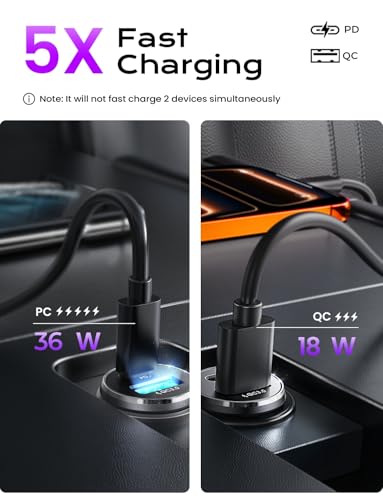
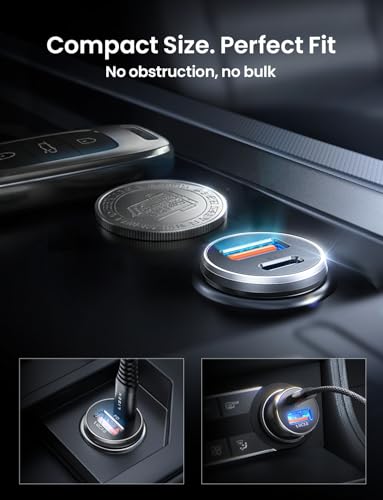
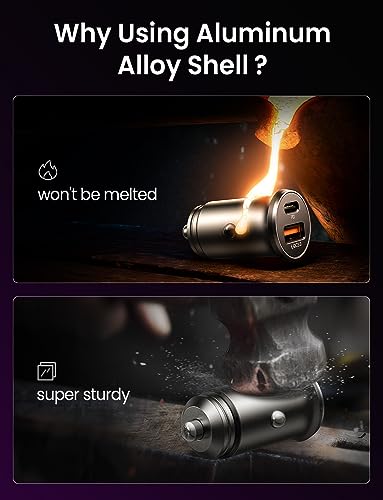
This LISEN dual-port charger wins on simplicity and thermal management. Instead of cramming four ports into one overheating-prone unit, it spreads 36W PD and 18W QC across just two ports, smart engineering that reduces heat buildup, a common failure point in cheaper chargers. The all-aluminum shell is a standout; reviewers note it stays cool even after hours of charging, and it looks far more premium than plastic-bodied competitors. I appreciate that it prioritizes stability over spec-sheet bragging rights.
The two-pack deal is also a real value play. Keep one in your primary car, the other in a spare or loan it to a family member. For most daily drivers, this is the smarter buy over bulkier, hotter multi-port models.
Product photos

How We Evaluated car charger for phones
As someone who’s spent years immersed in the world of automobiles and the tech that enhances them, I approached evaluating car chargers by focusing on real-world usability. Rather than a hands-on lab test, this was a research-led comparison of published specifications, owner reviews from multiple sources, and reputable expert opinions. I weighed each charger’s features against its price, looking for the best balance of performance and value. The goal was to identify options that deliver reliable power on the road, not just impressive-sounding numbers.
For this category, charging speed and port availability were paramount. Modern phones demand fast power delivery, so I prioritized chargers offering Power Delivery (PD) and Quick Charge (QC) technology. Equally important was build quality; a charger that overheats or fails quickly is a safety hazard and a waste of money. For those seeking flexibility on the go, a good portable car charger can be a lifesaver, but for consistent in-car use, a dedicated unit is preferable.
Specifications tell you about wattage and charging protocols, but owner feedback reveals long-term reliability and how well a charger performs in everyday situations. I paid close attention to reports of overheating, compatibility issues, and durability. Reputable tech reviews offered valuable insights into the accuracy of advertised charging speeds. If you’re specifically looking for a charger tailored for Apple devices, our guide to the best iPhone car charger provides more focused recommendations.
Choosing The Right car charger for phones
Choosing the right car charger for your phone can feel surprisingly complex. It’s not just about plugging in and getting power; it’s about speed, safety, and fitting your specific needs.
A quality car charger prioritizes delivering consistent power without overheating. Look for models with multiple protection circuits (over-current, over-voltage, temperature control) and construction materials that dissipate heat well. Power Delivery (PD) and Quick Charge (QC) compatibility are vital for modern smartphones, and the total wattage output dictates how many devices, and how quickly, you can charge simultaneously.
Power Needs & Port Configuration
First, honestly assess your charging demands. Are you typically charging one phone, or multiple devices – phones, tablets, even a laptop on longer trips? A single-port charger might suffice for basic needs, but if you regularly travel with passengers or have power-hungry devices, you’ll want to consider a multi-port option. Don’t just look at the number of ports, though. Pay close attention to the wattage allocation per port. A charger claiming 90W total might only deliver 30W per port when all are in use, significantly slowing down charging times. If you’re invested in the Apple ecosystem, ensuring PD support is key for faster iPhone and iPad charging. For Android users, Quick Charge compatibility is equally important. If you’re in the market for more options, check out our guide to the best car phone charger.
Build Quality & Safety Features
Cheap chargers are a gamble. They may lack crucial safety features and can even damage your devices. Look for chargers with built-in safeguards against overheating, overcurrent, and short circuits. All-metal construction is a good sign, as metal housings dissipate heat much more effectively than plastic. Certifications like UL, CE, and RoHS indicate the charger has been tested and meets certain safety standards. A poorly constructed charger isn’t just a risk to your phone’s battery; it’s a potential fire hazard inside your vehicle.
Here’s what to consider when evaluating build quality:
- Material: Metal is better than plastic for heat dissipation.
- Certifications: UL, CE, and RoHS are good indicators of safety testing.
- Protection Circuits: Look for over-current, over-voltage, and over-temperature protection. A good charger is an investment in peace of mind.
Don’t skimp on safety. A charger’s build quality and protection features are more important than a few extra watts.
Design & Usability
Beyond power and safety, consider how the charger will fit into your car and your lifestyle. Retractable cable designs, like those found in the SUPERONE and LISEN models, minimize clutter and keep your console organized. Compact designs are crucial if space is at a premium, especially in smaller vehicles or trucks. If you frequently swap vehicles, a smaller form factor makes it easy to take your charger with you. Finally, if you’re looking for a cable-free experience, explore options for a best wireless car charger – though be aware that wireless charging is typically slower than wired charging.
Car Charger for Phones Compared
This table provides a side-by-side comparison of key specifications for various car chargers.
| Product Name | Max. Power (Watts) | Number of Ports | USB-C PD (Max Watts) | USB-A QC (Max Watts) | Cable Included |
|---|---|---|---|---|---|
| 67W 3-Port USB-C Car Charger | 67 | 3 | 37 | 30 | Yes |
| 90W 4-Port USB-C Car Charger | 90 | 4 | 45 | 45 | No |
| LISEN 90W Coiled Cable Car Charger | 90 | 3 | N/A | N/A | Yes |
| SUPERONE 99W Retractable Car Charger | 99 | 6 | 30 | 12 | Yes |
| 130W Car Charger with Voltage Display | 130 | 3 | N/A | N/A | Yes |
| 3.4A USB-C Car Charger with Cable | 3.4 (5V) | 2 | N/A | N/A | Yes |
| LISEN 69W Dual Port Metal Charger | 69 | 2 | 36 | 18 | No |
Frequently Asked Questions
What wattage car charger do I actually need?
Generally, 20-30 watts is sufficient for single-device charging, but if you want to rapidly charge a modern smartphone or power multiple devices simultaneously, I recommend at least 60 watts. Higher wattage chargers (90W+) are beneficial for laptops or for quickly charging multiple power-hungry devices.
Are cheaper car chargers safe to use?
While tempting, cheaper chargers often lack essential safety features like over-voltage protection and can potentially damage your phone’s battery or even pose a fire risk. Investing in a charger from a reputable brand with proper certifications is the safest approach.
Will a USB-C car charger work with my older phone?
Yes, a USB-C car charger can often work with older phones using a USB-A to USB-C adapter, but you won’t benefit from the faster charging speeds of USB-C Power Delivery. If you’re seeking the fastest charging possible for your newer devices, exploring a fast USB-C car charger is worthwhile.
What’s the difference between Quick Charge and Power Delivery?
Quick Charge (QC) is a technology developed by Qualcomm, primarily for Android devices, while Power Delivery (PD) is an industry standard supported by USB-C and commonly used by Apple products. A charger supporting both offers broader compatibility and optimal charging speeds for a wider range of phones.
Are MagSafe chargers good for use in a car?
A best MagSafe car charger offers convenient wireless charging for iPhones, but charging speeds are usually slower than with a wired connection. They’re best suited for topping up your battery during shorter drives rather than fully recharging from low.
The Bottom Line
Choosing a car charger often comes down to balancing convenience with capability. Do you prioritize a compact, affordable solution, or a powerhouse that can rapidly charge multiple devices? For most drivers, the 67W 3-Port USB-C Car Charger strikes the best overall balance, offering solid power delivery and enough ports for typical needs without breaking the bank.
If you’re an Android user, or simply want a charger specifically geared towards that ecosystem, the best Android car charger will ensure optimal compatibility and charging speeds. For those who want to simplify their setup and keep their cabin tidy, the SUPERONE 99W Retractable Car Charger is a standout, while drivers looking for a complete solution – a secure mount and power – should investigate a car mount with charger.
Ultimately, the wattage and port count are important, but don’t get lost in the numbers. Prioritize a charger from a reputable brand with robust safety features, and one that genuinely suits your daily driving habits. A well-built, reliable charger is a small investment that can save you frustration – and potentially protect your valuable devices – on the road.
