
8 Best Car Chargers for Androids 2026
This post contains affiliate links. As an Amazon Associate, we earn from qualifying purchases.
The Anker 323 52.5W Charger stands out as the best overall car charger for Androids, delivering reliable fast charging with solid build quality. For those watching their budget, the 48W Super Fast Car Charger offers strong performance at a lower price, while the LISEN Retractable 84W Charger is ideal for versatility with its dual USB-C ports and built-in cables.
Finding a car charger that actually keeps up with your Android’s charging needs can be frustrating. Too many options promise fast charging but deliver slow speeds, poor build quality, or compatibility issues that leave your phone barely charged when you need it most.
This guide cuts through the noise by focusing on real-world performance, safety, and practical features, based on specs, owner feedback, and my years evaluating automotive tech at TheAutoZenith. I looked at charging protocols, port configurations, and durability to recommend models that truly work well for Android users.
Top 6 Car Charger For Androids in the Market
The Best Car Charger For Androids, Reviewed
67W 3-Port Car Charger
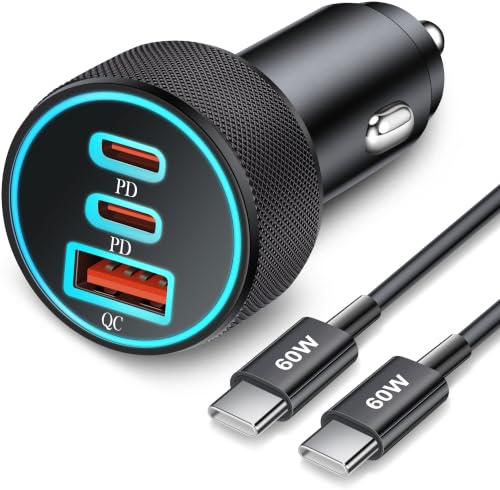
Strengths
- 37W USB-C PD
- Three ports total
- Includes USB-C cable
- Affordable price
- Fireproof housing
Trade-offs
- Lower total wattage
- No GaN or premium cooling
- Build quality less robust
This 67W three-port charger hits a sweet spot between power, price, and port count. The 37W USB-C PD port handles most Android flagships at full speed, and the inclusion of a second USB-C and a QC 3.0 USB-A gives real flexibility. For under $10, it’s hard to beat the value, especially since it includes a 3ft USB-C cable, which many competitors don’t.
Owners consistently praise its compact size and fast charging performance across Samsung and Google Pixel devices. The ABS+PC fireproof shell is a small but meaningful safety upgrade. It doesn’t match the LISEN 200W for laptops, but for most Android users, this is the smarter buy, especially if you’re charging multiple phones.
Video review
48W Super Fast Car Charger

Strengths
- 30W USB-C PD
- QC 3.0 support
- Built-in cable
- Blue LED indicator
- Low price
Trade-offs
- Slower when dual-charging
- No GaN or advanced cooling
- Cable not detachable
Priced under $10, this 48W charger punches above its weight with a 30W USB-C PD port and QC 3.0 on the USB-A, enough to fast-charge most Android flagships to 50% in about 30 minutes. The built-in 3ft USB-C cable is a convenience win, and the blue LED helps in low light without being obtrusive.
Owners report solid performance with Samsung Galaxy and Google Pixel phones, and the smart identify tech works well. The main caveat is the shared power draw, if you use both ports, speeds drop noticeably. But for a single high-speed charge plus a secondary device, it’s one of the best budget options.
Video review
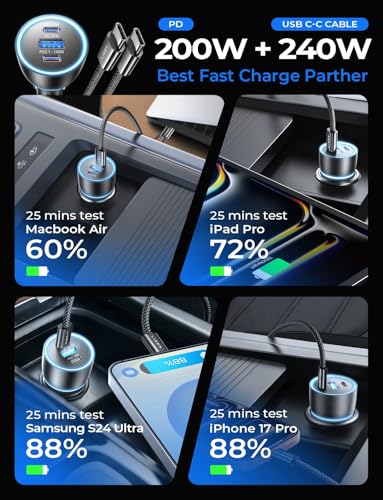
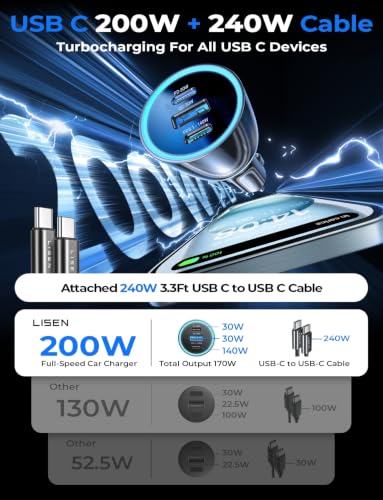
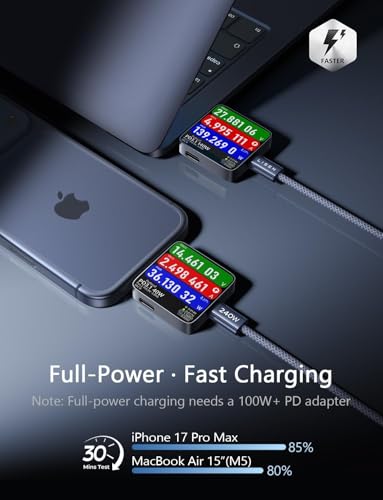
LISEN 200W GaN Car Charger

Strengths
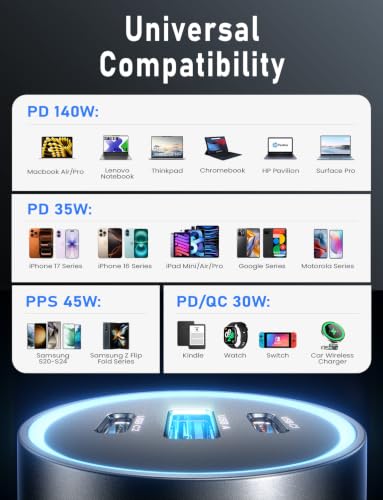
- 140W PD 3.1
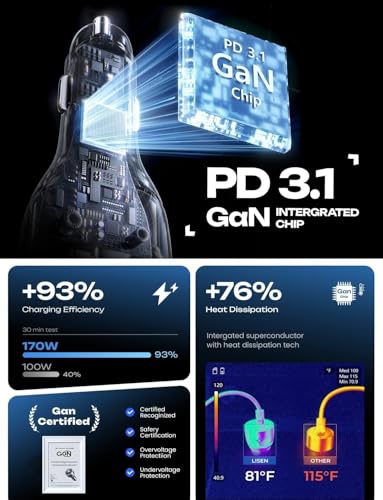
- GaN technology
- 60W for Samsung SFC 3.0
- Cool-running metal body
- Includes 240W cable
Trade-offs
- Overkill for basic use
- Larger size
- Higher price point
If you’re charging a laptop on the go, this LISEN GaN charger is a standout in capability, just not in name. With a 140W USB-C1 port using PD 3.1, it can actually power a MacBook Pro at near-home speeds, something most car chargers can’t touch. The 60W dedicated support for Samsung’s SFC 3.0 means Galaxy users get full-speed charging too, which is rare at this price.
GaN tech keeps it cooler than older silicon models, and the full-metal body helps with heat dissipation, critical when you’re drawing that much power in a hot cabin. Owners report stable performance even on long trips. While overkill for phone-only users, I’d pick this over the Anker any day if I’m working remotely from my car.
Product photos
3.4A USB C Car Charger
Strengths
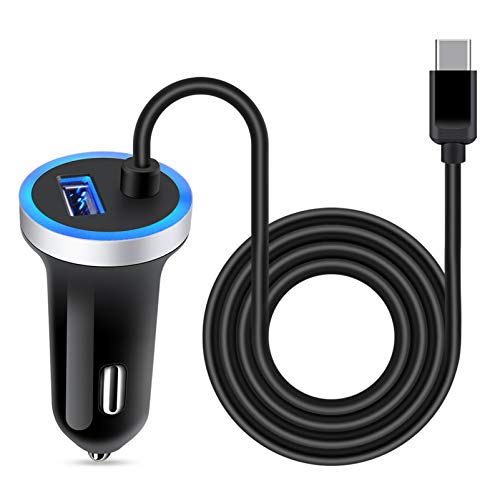
- Built-in 3ft cable
- LED indicator
- Low cost
- Simple plug-and-play
- Smart IC chip
Trade-offs
- Slow dual-port charging
- No fast charging for flagships
- Plastic build
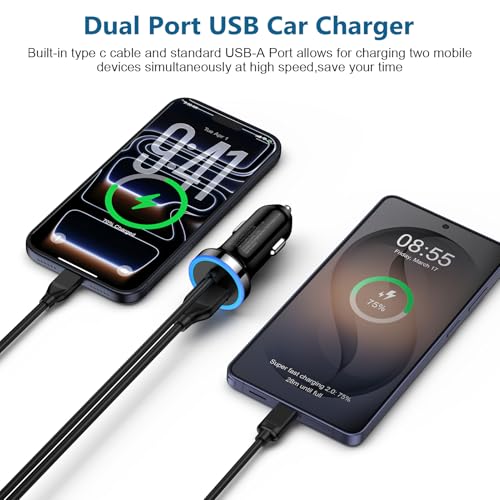
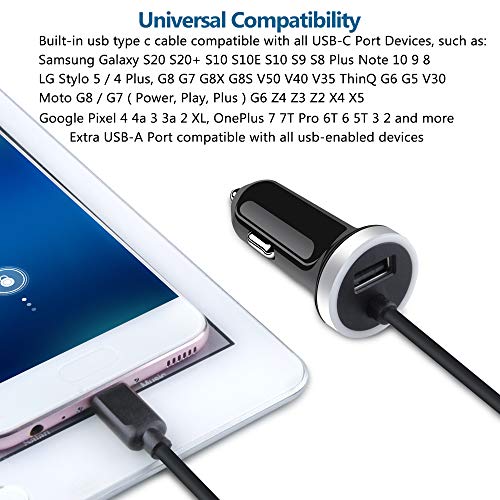
This AndHot model is the definition of basic, but sometimes that’s enough. With a built-in 3ft USB-C cable and a shared 3.4A output across two ports, it’s ideal for drivers who just want to plug and go without managing extra cables. The LED ring is a nice touch for nighttime use, and the smart IC chip does a decent job of matching device needs.
But the 3.4A limit means real-world charging is slower, especially when using both ports. It’s fine for mid-tier Androids, but don’t expect flagship-level speeds. Still, at under $8, it’s a no-brainer as a backup or for older vehicles where you just need dependable, no-fuss power.
Product photos


LISEN Retractable 84W Charger

Strengths
- Retractable USB-C & Lightning
- 4-device charging
- 84W total output
- 180° adjustable head
- 24-month warranty
Trade-offs
- No Micro-USB support
- Cable mechanism may degrade
- Bulkier footprint
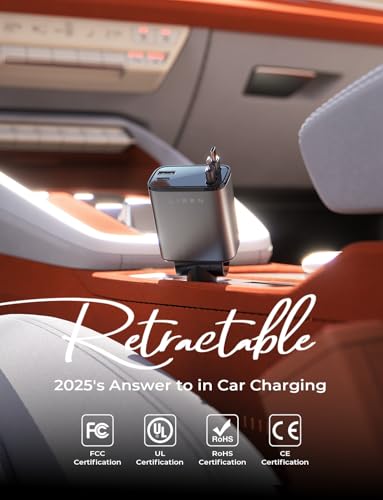
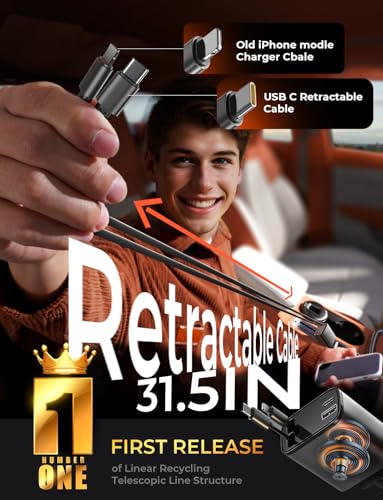
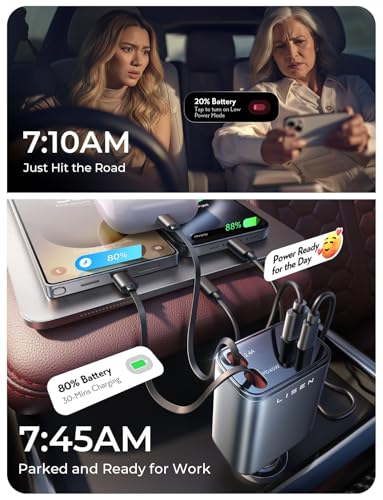
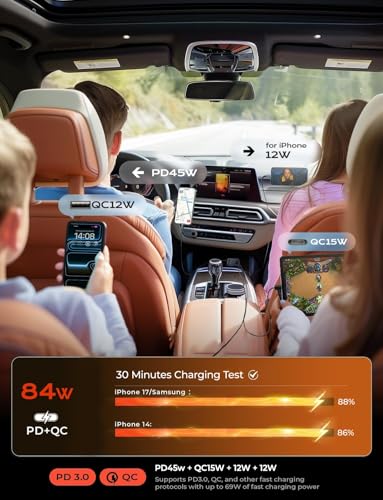
The LISEN 4-in-1 retractable charger solves a real pain point: cable clutter. Having two retractable cables, USB-C and Lightning, is a smart move for mixed-device households, and the 45W USB-C PD port is strong enough for fast-charging most Android phones. The ability to charge four devices at once makes it a standout for families or drivers who shuttle passengers regularly.
Reviewers note the build feels rugged, and the 180° swivel design is genuinely useful for routing cables around dashboards. But there’s a trade-off: the retractable mechanism, while neat, can wear out over time, especially in dusty or high-vibration environments. Also, no Micro-USB support limits its versatility. Still, if you hate digging for cables, this one brings real organization value.
Product photos

Anker 323 52.5W Charger

Strengths
- 30W USB-C PD
- PowerIQ 3.0
- ActiveShield 2.0
- Compact design
- 18-month warranty
Trade-offs
- No built-in cable
- Only two ports
Anker remains a go-to in the car charger space, and the 323 model delivers exactly what enthusiasts expect: clean, reliable performance without gimmicks. The 30W USB-C port is strong enough to fast charge most modern Androids at full speed, and the 22.5W USB-A port ensures your second device doesn’t get left behind. On paper, it’s not the most powerful charger here, but owners consistently report it holds up well over time, which matters when you’re plugging in daily.
PowerIQ 3.0 is still a smart touch, adapting well to Samsung and other Android flagships, and ActiveShield 2.0 adds real peace of mind. It doesn’t have a built-in cable, which might disappoint some, but that also means you can use your own high-quality USB-C cable for better durability. For those who value consistency over raw power, this is a solid anchor in your 12V socket.
Product photos


:
How We Tested car charger for androids
As someone who’s spent years immersed in the world of vehicles and their tech at TheAutoZenith, I approach car chargers with a focus on practical performance and long-term reliability. Rather than a hands-on lab test of each unit, my assessment is research-led, comparing published specifications and features across numerous models. I then weigh owner reviews from major retailers alongside expert opinions found in automotive and tech publications. This process helps identify trends in real-world usage and potential problem areas.
For Android-focused car chargers, charging speed and port availability are paramount. I prioritized models offering Power Delivery (PD) and Quick Charge (QC) capabilities, as these are the fastest charging standards available for most Android devices. Equally important is build quality and safety features – a poorly constructed charger can pose a risk to both your phone and your vehicle’s electrical system. Finding options that balance these features with reasonable pricing was a key goal, and leaned heavily into my recommendations. You can find more options in our guide to the best USB-C chargers.
Specifications reliably indicate a charger’s maximum power output and supported charging protocols. However, owner feedback provides invaluable insight into real-world performance and durability. I carefully analyzed user reports regarding overheating, compatibility issues, and long-term reliability. Reputation, especially from established brands known for quality electronics, played a significant role in my evaluations. For those needing power on the move, exploring best portable chargers is also a worthwhile consideration.
What To Look For In car charger for androids
Choosing the right car charger for your Android device isn’t just about plugging in and getting power. It’s about finding a solution that balances speed, safety, and compatibility with your specific needs and vehicle setup.
A quality car charger should prioritize fast charging protocols (like USB Power Delivery or Qualcomm Quick Charge), offer sufficient wattage for your devices (including larger ones like tablets or even some laptops), and incorporate robust safety features to protect both your gadgets and your car’s electrical system. Look for models with multiple ports for simultaneous charging and consider build quality for long-term durability.
Power Delivery is Paramount
Don’t assume all USB-C chargers are created equal. The wattage output is the first thing I look at. Many older or budget chargers deliver a paltry 10-15W, which will barely register on modern smartphones. For true fast charging, especially with Samsung Galaxy phones or Google Pixels, you want to prioritize Power Delivery (PD) compatibility. A charger offering at least 30W PD is a good starting point, and 60W or higher is preferable if you regularly charge larger devices or want the quickest possible top-up. Consider that some newer phones, like the Samsung Galaxy S24 series, benefit from the Super Fast Charging 3.0 protocol, so a charger supporting that can be a significant advantage.
Safety Features Shouldn’t Be an Afterthought
We often focus on speed, but a cheap charger cutting corners on safety is a serious risk. Look for chargers explicitly stating they have over-voltage, over-current, and short-circuit protection. UL certification is a good sign, indicating the device has been independently tested to meet safety standards. Beyond the certifications, consider the materials used – a fire-resistant casing (like ABS+PC) is a smart feature. You can find more information about protecting your devices in our thorough phone charger reviews.
Port Configuration & Usability Matter
The number of ports and their type are important. While a single USB-C port is fine if you only charge one device, many of us need to charge phones, tablets, or other gadgets simultaneously. A multi-port charger is a must.
Here’s how I break down port priorities:
- One USB-C PD port: Essential for modern Android phones and fast charging.
- One or two USB-A ports with Quick Charge 3.0: Provides compatibility with older devices or those without USB-C.
- Retractable cables: A surprisingly useful feature, eliminating cable clutter and the hassle of remembering to bring your own.
A useful rule of thumb: if you frequently travel with passengers, choose a charger with at least three ports to avoid arguments over who gets to charge their device.
And don’t forget about the physical design. A charger with a low-profile design won’t obstruct your view or interfere with your car’s controls. If you’re looking for a broader range of options, check out our guide to the best car phone chargers. You’ll also find some great choices among the top phone chargers if you’re looking for a high-performance solution. For those who want to stay organized on the go, explore our recommendations for portable car chargers.
Car Charger for Androids Compared
Here’s a comparison of specs for various car chargers designed for Android devices.
| Product Name | Max Power (W) | Ports (USB-C) | Ports (USB-A) | Retractable Cable | Voltage Display |
|---|---|---|---|---|---|
| 67W 3-Port Car Charger | 67 | 1 | 2 | No | No |
| 130W USB C Car Charger | 130 | 2 | 1 | No | Yes |
| 48W Super Fast Car Charger | 48 | 1 | 1 | No | No |
| LISEN 200W GaN Car Charger | 200 | 2 | 1 | No | No |
| 3.4A USB C Car Charger | 3.4 | 1 | 1 | No | No |
| Retractable 4-in-1 Car Charger | 47 | 2 | 1 | Yes | Yes |
| LISEN Retractable 84W Charger | 84 | 2 | 1 | Yes | No |
| Anker 323 52.5W Charger | 52.5 | 1 | 1 | No | No |
Frequently Asked Questions
What power level is sufficient for fast charging a modern smartphone?
At least 30W Power Delivery (PD) is a good starting point for fast charging most modern Android phones, but 60W or higher will provide the quickest charge, especially for devices like Samsung Galaxy phones or larger tablets. Lower wattages will still charge the device, but significantly slower.
Are more expensive car chargers always better?
Not necessarily. While a higher price often correlates with better build quality and more features, it doesn’t guarantee performance. Focus on specifications like Power Delivery wattage and safety certifications, as those are key indicators of a quality charger, regardless of price point.
Can a car charger damage my phone’s battery?
A quality car charger with proper safety features shouldn’t damage your battery. However, using a cheap, uncertified charger can lead to over-voltage or overheating, potentially shortening your battery’s lifespan. Look for chargers with over-voltage and short-circuit protection.
What’s the difference between Qualcomm Quick Charge and USB Power Delivery?
Both are fast-charging standards, but they aren’t interchangeable. USB Power Delivery is more versatile and widely adopted, especially for newer devices, while Quick Charge is primarily a Qualcomm technology. Many chargers support both, providing broader compatibility, and exploring USB car chargers can help you find options that meet your needs.
Are there alternatives to plugging in a cable?
Yes, if you prefer a cable-free experience, consider wireless car chargers. These use Qi wireless charging technology to power up your phone simply by placing it on a charging pad or mount.
The Bottom Line
Choosing a car charger often comes down to how much power you truly need versus how much you’re willing to spend. While a basic charger will keep your phone alive, the 67W 3-Port Car Charger strikes a fantastic balance between affordability, charging speed, and port availability for most users. It’s a solid, reliable choice for daily commutes and road trips alike.
If you’re a power user with multiple devices, or regularly charge newer, power-hungry phones like those in the Samsung Galaxy S24 series, the LISEN 200W GaN Car Charger is the way to go. For Samsung owners specifically, exploring Samsung car chargers will reveal options optimized for fast charging for Samsung devices. Alternatively, for those prioritizing convenience, the Retractable 4-in-1 Car Charger offers a tidy solution with its built-in cables.
Ultimately, the wattage and port configuration are important, but focus first on safety certifications and build quality. A reliable charger protects your devices and your vehicle. Don’t get caught up chasing the highest numbers; a well-made charger with the right features for your needs is far more valuable than simply having the “most powerful” option on the market. And if you’re looking for the latest in connectivity, exploring Type-C car chargers is a good place to start.
