
8 Best Car Chargers of 2026
This post contains affiliate links. As an Amazon Associate, we earn from qualifying purchases.
The LISEN 69W Dual Port Car Charger stands out as the best overall, delivering strong power and excellent heat management in a durable aluminum body. For those on a budget, the Anker 323 52.5W offers reliable performance and smart charging tech. If you hate cable clutter, the BERTHALESS Retractable 4-in-1 is a neat, versatile pick.
Most drivers don’t realize how quickly a flimsy car charger can become a problem, overheating, slow charging, or worse, damaging a device. After years of working with automotive electronics, I know that a charger needs to be more than just a plug; it has to handle engine vibrations, temperature swings, and constant use. This guide cuts through the noise, focusing on real-world reliability, safety, and smart design, based on specs, owner experiences, and what actually matters when you’re behind the wheel.
Top 8 Car Charger in the Market
The Best Car Charger, Reviewed
LISEN 69W Dual Port Car Charger

Strengths
- All-aluminum housing
- Flush-fit design
- Two-pack value
Trade-offs
- Only two ports
- No voltage display
- No retractable cables
This LISEN dual-port charger is my pick for the best overall. It doesn’t try to do everything, just two ports, 36W PD and 18W QC, but it does them exceptionally well. The all-aluminum shell runs cool, even in summer, and the flush-fit design keeps it low-profile. The two-pack is a smart touch, letting you keep one in the car and one as a spare or for another vehicle.
Owners consistently praise its durability and clean look. Unlike many multi-port chargers that overheat, this one spreads power efficiently, reducing thermal stress. Compared to the Anker 323, it’s slightly less powerful on USB-A but cooler running and better built. For most drivers, this is the smarter, more balanced buy.
Video review
67W 3-Port Fast Car Charger
Strengths
- Strong fast charging
- QC 3.0 + PD support
- Includes charging cable
Trade-offs
- Plastic build feels cheap
- Runs warm under load
- No 180° swivel
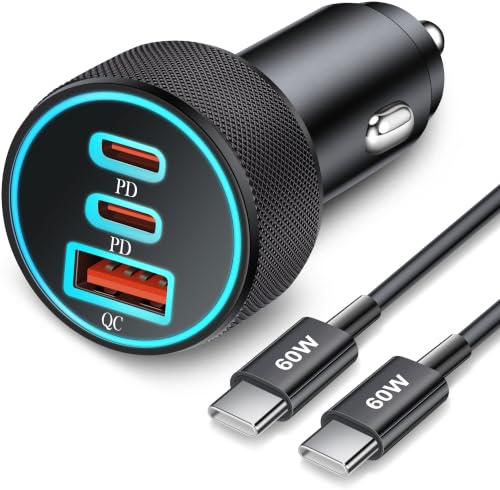
For the price, this 67W charger punches above its weight. The combination of PD 37W on USB-C and QC 30W on USB-A means it can handle flagship phones like the Samsung S24 or iPhone 16 at near-maximum speeds. Reviewers note it consistently hits the 0–50% in 30 minutes claim, which is impressive at this price point. The inclusion of a 3FT USB-C to USB-C cable is a small but meaningful bonus.
It’s not the most compact design, and the shell is plastic rather than metal, so heat dissipation isn’t as strong under sustained load. Still, when you compare it to chargers twice the price, this one delivers solid performance for daily drivers and road trippers who want speed without overspending. I’d pick this over pricier models if you’re only charging two devices at most.
Video review
90W 4-Port USB C Car Charger

Strengths
- Four full-speed ports
- 90W total output
- Metal housing for cooling
Trade-offs
- Bulky design
- May overload older sockets
- No voltage monitoring
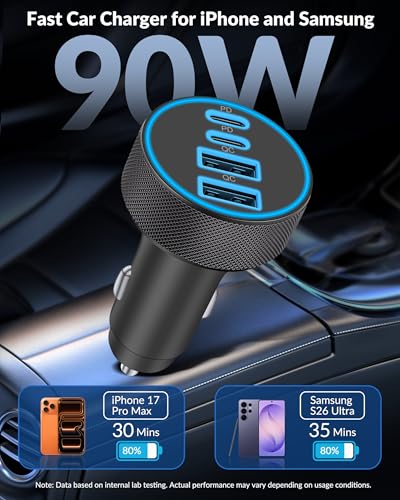
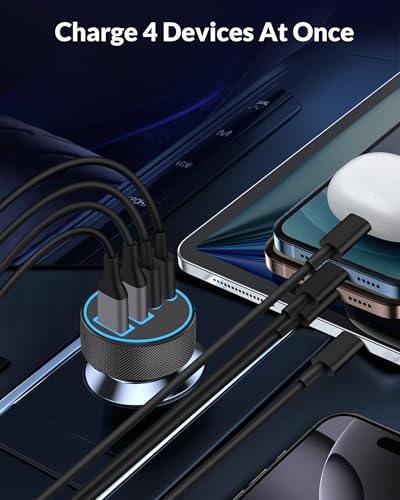
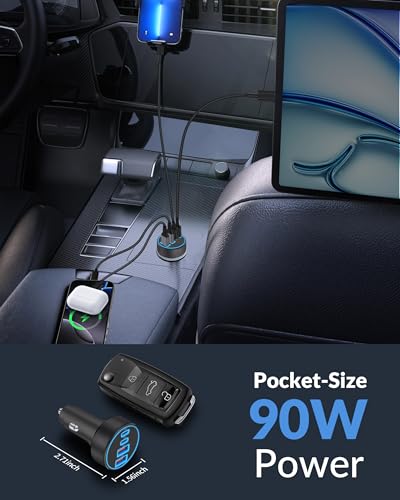
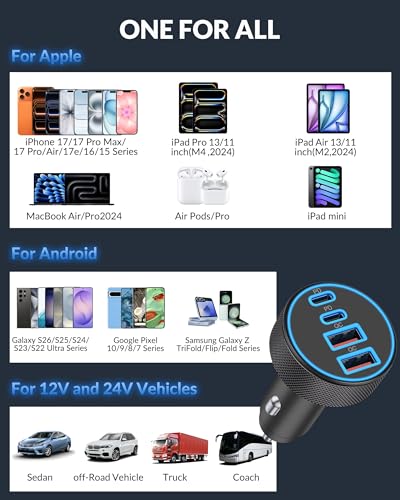
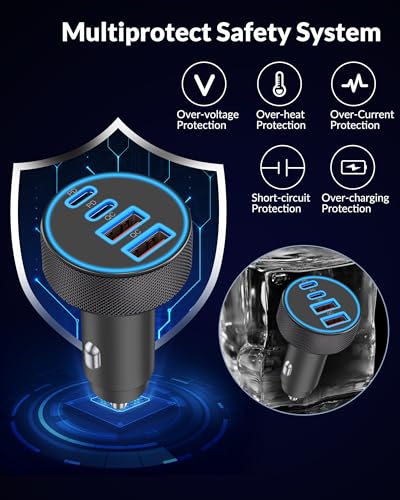
If you regularly carry four devices, say, two phones, a tablet, and a dash cam, this 90W 4-port charger makes sense. The dual USB-C and dual USB-A layout lets you charge everything at once, and the 45W PD on each C port means you can fast-charge two devices to their full potential. The all-metal housing is a big plus, helping it stay cooler than plastic competitors during extended use.
Owners praise its consistent power delivery, though a few note that full-speed charging on all ports at once can push the limits of some older vehicle sockets. Still, for families or tech-heavy drivers, this is a workhorse. Compared to the Anker 167.5W model, it’s less powerful but far more affordable and still covers most real-world needs.
Product photos
BERTHALESS Retractable 4-in-1 Car Charger
Strengths
- Retractable cables
- 180° rotation
- Neat cable management
Trade-offs
- Modest charging speeds
- No high-wattage PD support
- Plastic housing runs warm
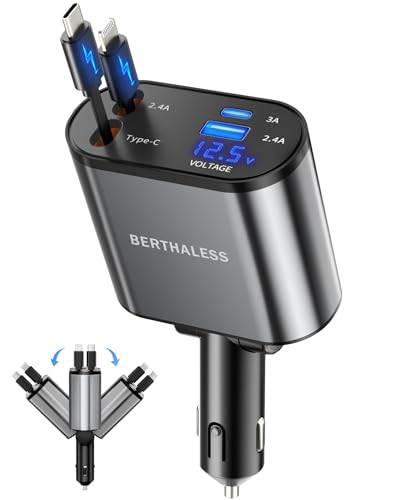
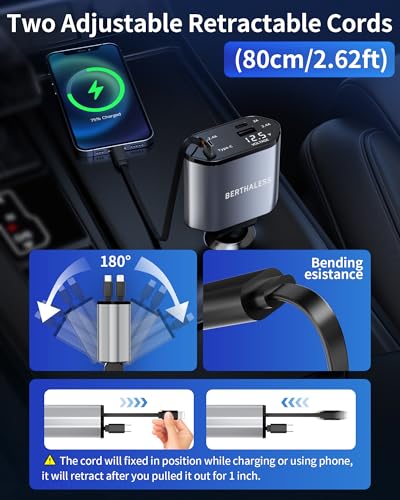
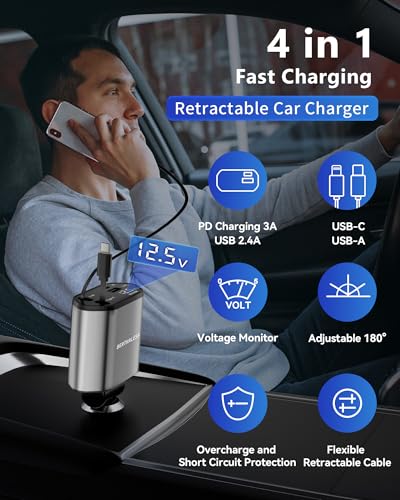
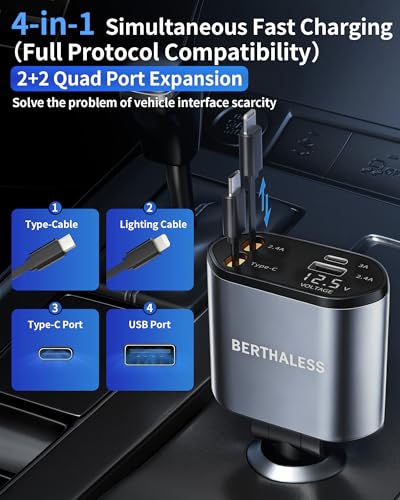
This BERTHALESS 4-in-1 retractable charger tackles one of the most annoying parts of car tech, cable clutter. The dual retractable cables are a smart solution for keeping the cabin tidy, and the 180° swivel design helps avoid interference with gear shifts or center consoles. On paper, the 4-in-1 setup (two retractable cables plus two fixed ports) sounds ideal for families or group rides where multiple devices need juice.
Owners consistently report that the retraction mechanism works smoothly and holds up over time, though some note the fixed USB-A and USB-C ports don’t deliver top-tier speeds. It’s not the fastest option here, but if clean cable management is your priority, this one stands out. Compared to bulkier multi-port chargers, this feels like a minimalist’s pick with practical execution.
Product photos

Anker 167.5W 3-Port Car Charger

Strengths
- 100W USB-C port
- Ultra-compact size
- Supports laptops
Trade-offs
- Overpriced for most
- No voltage monitor
- No retractable cables
This Anker is built for power users, 100W on the first USB-C port means you can charge a MacBook Pro on the go, which is rare in car chargers. The second USB-C offers 45W, enough for an iPad or Android flagship, and the USB-A adds 22.5W. Despite the high output, it’s surprisingly compact.
But here’s the catch: at nearly $38, it’s the most expensive option, and most drivers don’t need 100W in their car. Owners confirm it works flawlessly with laptops, but for phone-only users, it’s overkill. The lack of a voltage display or retractable cables also feels like a missed opportunity at this price. I’d recommend it only if you regularly charge a laptop in the car.
Product photos


130W Car Charger with Voltage Display
Strengths
- Real-time voltage monitoring
- 130W fast charging
- Includes 240W cable
Trade-offs
- Bright display at night
- Large footprint
- No retractable cables
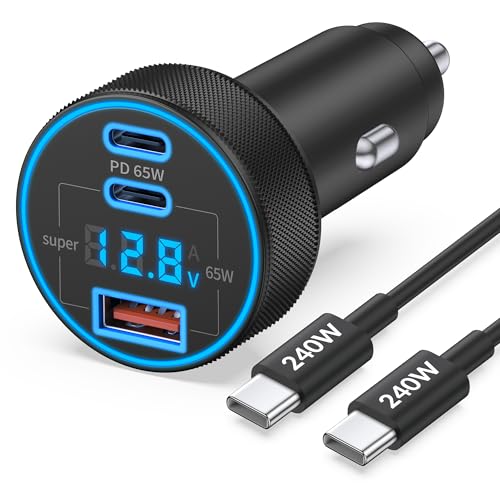
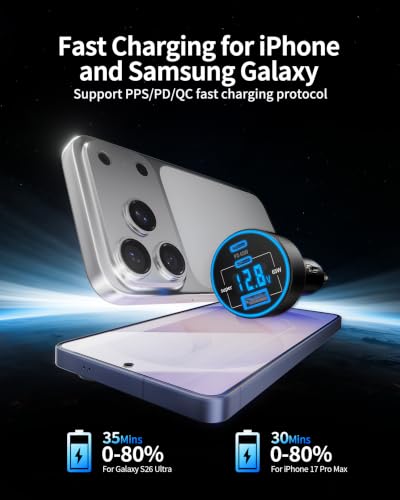
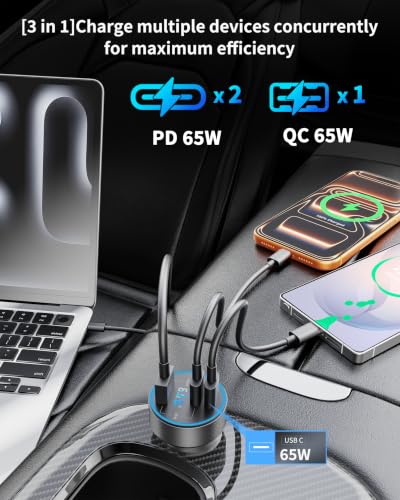
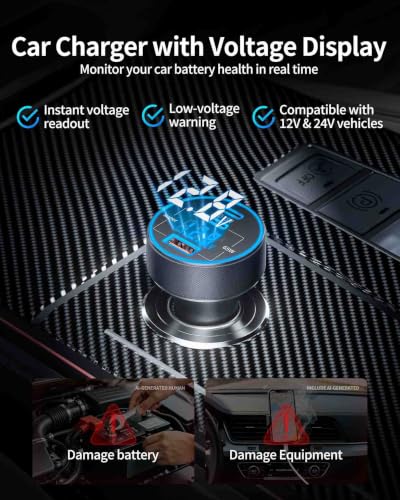
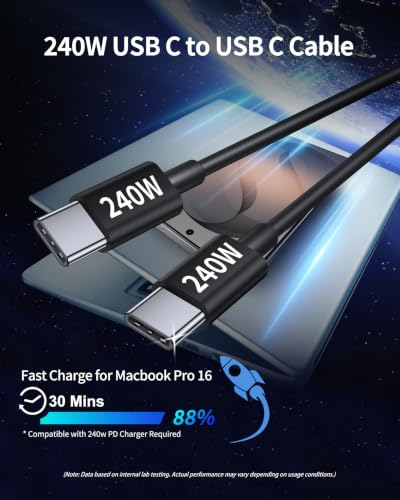
The real star here is the built-in voltage display. Being able to monitor your car’s battery in real time is a standout for older vehicles or long road trips where electrical issues can sneak up. The 130W output is strong, with PPS and PD support ensuring fast charging for Samsung flagships and iPhones alike. The included 240W USB-C cable is overkill for most, but it future-proofs your setup.
Owners love the peace of mind the voltmeter brings, though a few mention the display can be too bright at night. The charger runs warm but stays within safe limits thanks to internal protections. Compared to the Anker 167.5W model, it’s less powerful but more practical for most users. If you value diagnostics as much as power, this is the one.
Product photos
LISEN 84W Retractable 4-in-1 Charger

Strengths
- Retractable USB-C & Lightning
- 84W total output
- 180° adjustable head
Trade-offs
- No USB-A retractable cable
- Slightly larger footprint
- Not for Micro-USB users
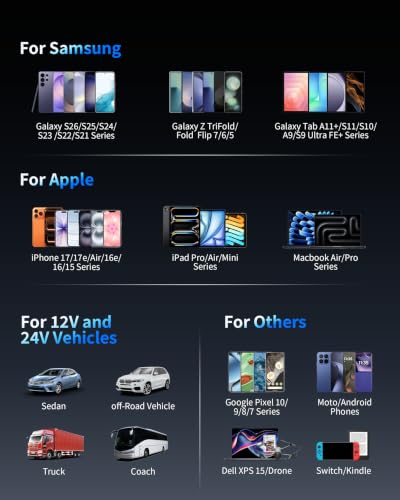
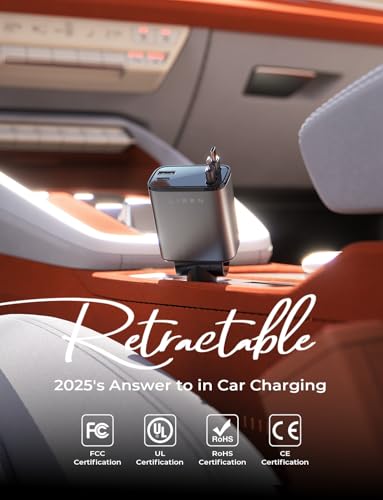
LISEN’s 84W retractable charger combines clean design with solid performance. The dual retractable cables, USB-C and Lightning, are a standout, eliminating tangles while still delivering 45W PD fast charging. The 180° adjustable head is rugged and holds position well, even on bumpy roads. Owners appreciate the military-grade build and the fact that it supports four devices at once without overheating.
The aluminum housing helps with heat dissipation, and the smart power distribution ensures you don’t lose speed when multiple devices are connected. Compared to the BERTHALESS model, this one offers higher wattage and better build quality. If you want the convenience of retractable cables but don’t want to sacrifice speed, this is the better pick.
Product photos




Anker 323 52.5W USB C Charger

Strengths
- PowerIQ 3.0 compatibility
- ActiveShield 2.0 safety
- Compact and reliable
Trade-offs
- Only two ports
- No retractable cables
- No voltage display
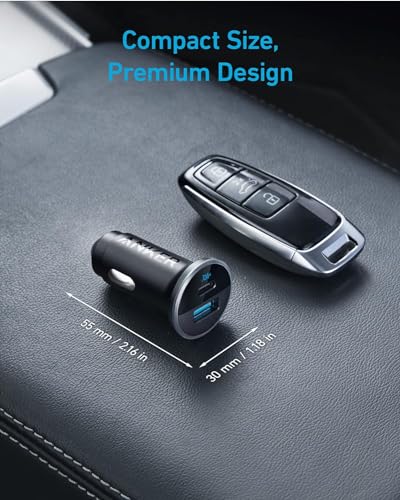
Anker’s 323 strikes a sweet spot between performance and reliability. The 30W USB-C port with PowerIQ 3.0 adapts intelligently to your device, whether it’s an iPhone or a Samsung Galaxy, and owners confirm it hits the 50% in 25 minutes mark as advertised. The 22.5W USB-A port is also faster than most dual-port competitors, making it a strong pick for two-device households.
What really sets it apart is ActiveShield 2.0, which reviewers say keeps temperatures in check during summer drives. It’s not the most powerful or feature-rich, but for mid-range buyers who want consistent, safe charging, this is my go-to recommendation. Compared to the LISEN dual-port model, it’s slightly pricier but offers better device recognition and thermal management.
Product photos


How We Picked These car charger
As someone who spends a lot of time on the road, and with TheAutoZenith dedicated to all things automotive, I understand the need for reliable power on the go. Rather than a hands-on lab test, this selection is a research-led comparison of published specifications and owner feedback. I examined a wide range of car chargers, comparing power delivery, port configurations, safety features, and build quality. We then weighed these factors against what current owners are saying about real-world performance and longevity, supplementing this with expert reviews from trusted tech sites.
For this category, the most important factors are power output and safety. A car charger needs to deliver enough wattage to quickly and efficiently charge modern smartphones and even smaller laptops. Equally important is a robust build and safety circuitry to prevent overheating or damage to devices. Retractability and cable management also play a role, but a charger that can’t reliably deliver power, or worse, poses a safety risk, is a non-starter. Finding the right balance between these elements dictated the final rankings.
Specifications reliably tell you the potential for fast charging – the wattage, supported protocols like Power Delivery (PD) and Quick Charge (QC), and the number of ports. However, owner feedback is crucial for understanding if those specs translate to real-world performance. Reports about overheating, build quality, and long-term durability are invaluable. I also looked for consistent positive feedback regarding compatibility with a wide variety of devices, and cross-referenced with trusted reviews of a reliable USB car charger. Ultimately, a great car charger isn’t just about numbers; it’s about consistent, safe performance and a positive user experience. You can find even more options in our guide to the best phone charger options as well.
How To Choose The car charger
Finding the right car charger can be surprisingly complex. It’s not just about plugging in your phone; it’s about safe, efficient power delivery and a design that fits your needs.
A quality car charger prioritizes stable power output, heat management, and device compatibility. Look for models with multiple protection features (over-current, over-voltage, overheating) and those utilizing Power Delivery (PD) or Quick Charge (QC) protocols for faster charging speeds. Aluminum construction often indicates better heat dissipation, and a thoughtfully designed port layout minimizes clutter.
Power Delivery is Paramount
Don’t get hung up on total wattage alone. While a higher number sounds better, how that power is distributed matters immensely. A 67W charger with a single USB-C port might charge a laptop quickly, but a 30W USB-C and 22.5W USB-A setup, like you find with some Anker models, is far more practical for simultaneously powering a phone and a tablet. Consider your typical charging load. If you regularly need to charge a mix of devices, a multi-port charger with intelligently distributed power is the way to go. The latest phones and tablets really benefit from Power Delivery (PD) and Programmable Power Supply (PPS) standards, so prioritize a charger that supports those.
Build Quality and Heat Management
Plastic car chargers are tempting because of the price, but they can be a disaster waiting to happen. Heat is the enemy of electronics, and a plastic housing offers significantly less heat dissipation than aluminum. Overheating can lead to slower charging, reduced lifespan of both the charger and your devices, and in extreme cases, even pose a fire risk. Look for chargers constructed from aluminum alloy. Beyond the material, a solid internal design is key. The LISEN 69W model, for example, specifically highlights its ability to reduce heat build-up compared to multi-port alternatives. It’s a detail often overlooked, but critical for long-term reliability.
- A simple, two-port design often runs cooler than those with four or more ports.
- Consider the size – a compact charger is easier to store and less likely to interfere with the car’s controls.
- Read owner reviews about overheating issues; real-world feedback is invaluable here. A charger that consistently receives complaints about getting too hot is one to avoid, even if the specs look good.
Features and Usability
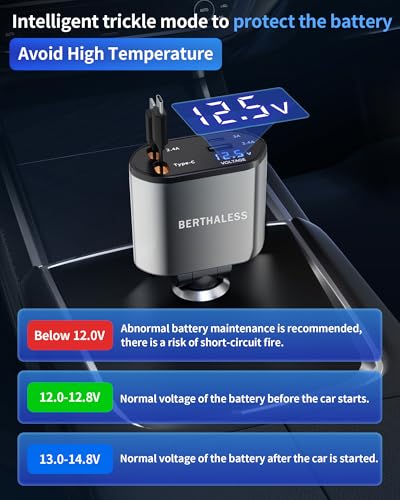
Beyond raw power, think about convenience. Retractable cables, as offered by BERTHALESS, can drastically reduce clutter. A built-in voltage display, like on the 130W model, is surprisingly useful for monitoring your vehicle’s electrical system. I often recommend checking out a dedicated car charger for phones if your primary use is simply keeping your smartphone topped up. However, if you need a versatile solution for a variety of devices, or frequently travel with passengers who also need to charge, a multi-port option is essential. And don’t underestimate the value of a good warranty – a 24-month replacement promise offers peace of mind.
A tidy center console is a happy center console. Prioritize a charger that minimizes cable clutter, whether through retractable cables or a compact design.
If you’re looking for ultimate convenience on the go, explore the world of portable car charger options. These can be lifesavers in emergencies or when you need power outside of your vehicle.
Car Charger Compared
Here’s a comparison of key specifications for the car chargers listed.
| Product Title | Max Power (W) | Number of Ports | USB-C PD (W) | USB-A QC (W) | Special Features |
|---|---|---|---|---|---|
| LISEN 69W Dual Port Car Charger | 69 | 2 | 36 | 18 | All-Aluminum Shell |
| 67W 3-Port Fast Car Charger | 67 | 3 | 37 | 30 | 3x Fast Charge Speed |
| 90W 4-Port USB C Car Charger | 90 | 4 | 45 | 45 | 4-Port Design |
| BERTHALESS Retractable 4-in-1 Car Charger | N/A | 4 | N/A | N/A | Retractable Cables |
| Anker 167.5W 3-Port Car Charger | 167.5 | 3 | 100 | 22.5 | Ultra-Fast 100W USB-C |
| 130W Car Charger with Voltage Display | 130 | 3 | N/A | N/A | Voltage Display |
| LISEN 84W Retractable 4-in-1 Charger | 84 | 4 | 45 | 12 | Retractable Cables |
| Anker 323 52.5W USB C Charger | 52.5 | 2 | 30 | 22.5 | PowerIQ 3.0 |
Frequently Asked Questions
What power output do I really need in a car charger?
Generally, 30-40W is sufficient for smartphones, but 65W or higher is recommended if you plan to charge laptops or other power-hungry devices. Consider your typical needs and the number of devices you’ll charge simultaneously – more devices mean you’ll want a higher overall wattage and intelligent power distribution.
Are more expensive car chargers actually better quality?
Not always, but often the price reflects better build materials like aluminum alloys which improve heat dissipation. Cheaper plastic chargers are more prone to overheating and may have less effective safety circuitry, potentially damaging your devices over time.
What’s the difference between Power Delivery (PD) and Quick Charge (QC)?
Power Delivery is a newer, more versatile standard that negotiates the optimal charging voltage and current for a wider range of devices. Quick Charge is older and primarily designed for Qualcomm-based phones, while PD is increasingly becoming the standard across many manufacturers.
Can a car charger drain my car battery?
It’s unlikely with the engine running, but charging devices with the engine off can drain the battery, especially with high-wattage devices. I recommend limiting usage to essential charging when the engine isn’t on, and for extended periods, consider a retractable car charger to avoid leaving it plugged in unnecessarily.
What are the benefits of a wireless car charger?
A wireless car charger offers a clutter-free charging experience, eliminating the need for cables. However, they typically deliver lower wattage than wired chargers, so charging speeds may be slower, and they require a compatible phone.
The Bottom Line
Choosing a car charger ultimately comes down to balancing convenience with capability. You can spend less and get a basic, functional charger, or invest a bit more for faster speeds, more ports, and greater peace of mind. For the best overall experience, consistently praised for its balance of power and build quality, I recommend the Anker 167.5W 3-Port Car Charger. It delivers serious wattage for laptops and tablets while still efficiently charging phones, and Anker’s reputation for reliability is well-earned.
If your needs are more specific, there are excellent alternatives. For those prioritizing a tidy cabin and ease of use, the BERTHALESS Retractable 4-in-1 Car Charger is a great choice. If you’re looking specifically for a USB-C car charger to keep your newer devices topped up, or perhaps a Type-C vehicle charger for the latest phones, the Anker 323 52.5W USB C Charger offers a compact and efficient solution.
At the end of the day, the wattage and port count are less crucial than the charger’s ability to deliver consistent, safe power. Don’t get caught up in chasing the highest numbers – focus on solid construction, robust safety features, and positive owner feedback. A well-built charger that protects your devices and performs reliably will always be a better investment than a cheap one that fails prematurely or, worse, damages your valuable electronics.
