
Are Cracks in Tires Bad? Vital Safety Guidance Drivers Need
This post contains affiliate links. As an Amazon Associate, we earn from qualifying purchases.
Most tire cracks are cosmetic and won’t cause a blowout, but some are a direct safety failure that demands immediate scrapping. The distinction lives in three places: the crack’s location (tread, sidewall, or bead), its depth, and the tire’s history of cold exposure or long-term storage.
That line between a surface blemish and a structural flaw is what the official bulletins exist to define. The NHTSA and manufacturers have published specific, dated guidance on exactly which cracks you can drive on and which ones will get you a flat-bed ride home. They name tire models, production date ranges, and failure mechanisms most owner’s manuals gloss over.
What follows is a breakdown of those official documents. GM’s cold-weather warnings, Audi’s superficial sidewall note, Lexus’s run-flat recall, and the one pattern that overrides them all: the crack that’s actually a split.
Key Takeaways
- Cosmic Ozone Cracks in the tread grooves are normal aging; they progress slowly and the tire can run to the wear bars.
- Cold-Weather Cracks on summer tire shoulders are damaging and the tire should be discarded even with no air loss, per a 2023 NHTSA bulletin.
- Sidewall Bulges or Deep Splits mean internal ply separation; the tire can fail at any speed and must be replaced immediately.
- Bead Area Cracks are from chronic underinflation and can grow into the steel belts; stop driving and check your pressure weekly.
- Low-Mileage Aging is a documented failure mode in 2025 technical service bulletins, tires on rarely-used cars crack faster than high-mileage ones.
The First Sign. Cracks You Can Ignore vs. Cracks That Demand Scrapping
The tire’s surface tells you everything if you know which zones to read. Cosmetic cracks look like fine, dry spiderwebs confined to the rubber’s top layer. Structural cracks are longer, deeper, and often paired with a bulge or a split that opens under pressure.
Where this goes sideways: Treating a cold-weather shoulder crack as “just cosmetic.” A 2023 NHTSA bulletin states these cracks are damaging, and the tire should be discarded even though it holds air. The rubber has lost flexibility, and traction plummets below 40°F.
Ozone Checking: The Cosmetic Wrinkles
These appear as a network of fine lines in the tread grooves or on the sidewall’s flexing area. They’re a natural reaction of rubber to atmospheric ozone, accelerated by sunlight and poor storage. The official Michelin analysis guide classifies them as a “normal phenomenon” that shouldn’t affect the tire’s ultimate service life. You’ll see them on nearly every tire over five years old. The key is depth. If you can’t catch a fingernail in the crack and no cord is visible, it’s surface-only. The tire can be run, but it’s a visual confirmation the rubber is hardening.
Shoulder & Tread Cracks from Cold or Age
This is the first serious category. When cracks appear on the tread blocks or the shoulder (the curve where tread meets sidewall), you’re looking at material failure. For summer performance tires, the NHTSA is blunt: driving below 20°F (-7°C) can cause these cracks. The rubber compound literally loses plasticity and fractures. The bulletin says they won’t leak air, but the tire is damaged and should be scrapped. For all-season or winter tires, deep tread cracks mean dry rot from age and exposure. The rubber’s protective waxes and oils have evaporated. It’s brittle. Hit a pothole, and that crack can propagate to the belts.
Sidewall Splits & Bulges: The Immediate Red Flag
A vertical split in the sidewall, or a localized bulge that looks like an aneurysm, is a terminal diagnosis. The sidewall’s internal plies, usually polyester or steel, have separated. The bulge is air pressure forcing its way between the layers. This isn’t a “maybe” situation. A bulging tire can fail catastrophically at highway speeds. The moment you see it, the tire is dead. This damage often traces to impact, hitting a curb or deep pothole, or a manufacturing defect like the one that triggered a recall for 2018 Lexus LS models with specific Bridgestone Turanza run-flats.
| Crack Location | Typical Cause | Official Severity | Required Action |
|---|---|---|---|
| Tread Grooves (fine lines) | Ozone aging, UV exposure | Cosmetic – normal phenomenon | Monitor, can run to wear limit |
| Tread/Shoulder (deep cracks) | Cold temp use (summer tires), dry rot | Damaging – per NHTSA TSB | Discard tire |
| Sidewall (bulge or split) | Impact, ply separation | Critical failure – recall-level defect | Replace immediately, do not drive |
| Bead Area (oblique cracks) | Chronic underinflation, over-deflection | Structural – can expose bead wires | Replace, correct inflation |
When Low Mileage Is the Enemy
Garaged cars with single-digit annual mileage crack faster than daily drivers. It sounds backwards, but the 2025 NHTSA technical service bulletins spell it out: low use prevents the tire’s compounding oils from circulating, letting the rubber dry out and harden. The casing can also develop flat spots that stress specific points.
A tire needs the flexing and warming of regular driving to keep its chemistry alive. Parked for months, it becomes a static object weathering from the outside in.
The mechanism is simple. Tires contain waxes and emollients that migrate to the surface to protect against ozone. Movement and heat from driving help that process. Without it, the surface dries, and microscopic cracks initiate. This is why you see severe weather checking on classic car tires with plenty of tread left. If your car sits for weeks, at least move it a few feet to rotate the tire’s load point. Better yet, put it on jack stands to take the weight off the rubber. Check the safety of old tires for the ten-year replacement rule, which applies regardless of tread depth.
The Cold, Hard Rules for Summer Tires
Summer performance tires are a special case with written rules. General Motors’ TSB 13-03-10-001J, dated February 2023, states these tires lose flexibility below 40°F (5°C). Driving on them in cold conditions “can cause damage.” Specifically, it may develop surface cracks in the tread and shoulder area. The bulletin is a primary source for what happens next. It includes a crucial, citable line: “While the cracking will not result in air loss, it is damaging to the tire. Tires that have been used in cold climates and exhibit tread cracks should be discarded.” Storage has a temperature threshold, too. The same bulletin, and others like it, recommend storing summer tires indoors above 20°F (-7°C). If they’ve been exposed to colder temps, they must be warmed in a heated space (above 40°F) for at least 24 hours before installation or driving. Mounting or inflating a frozen, brittle tire can crack the bead wire seat.
Bead Area Cracks: The Underinflation Signature
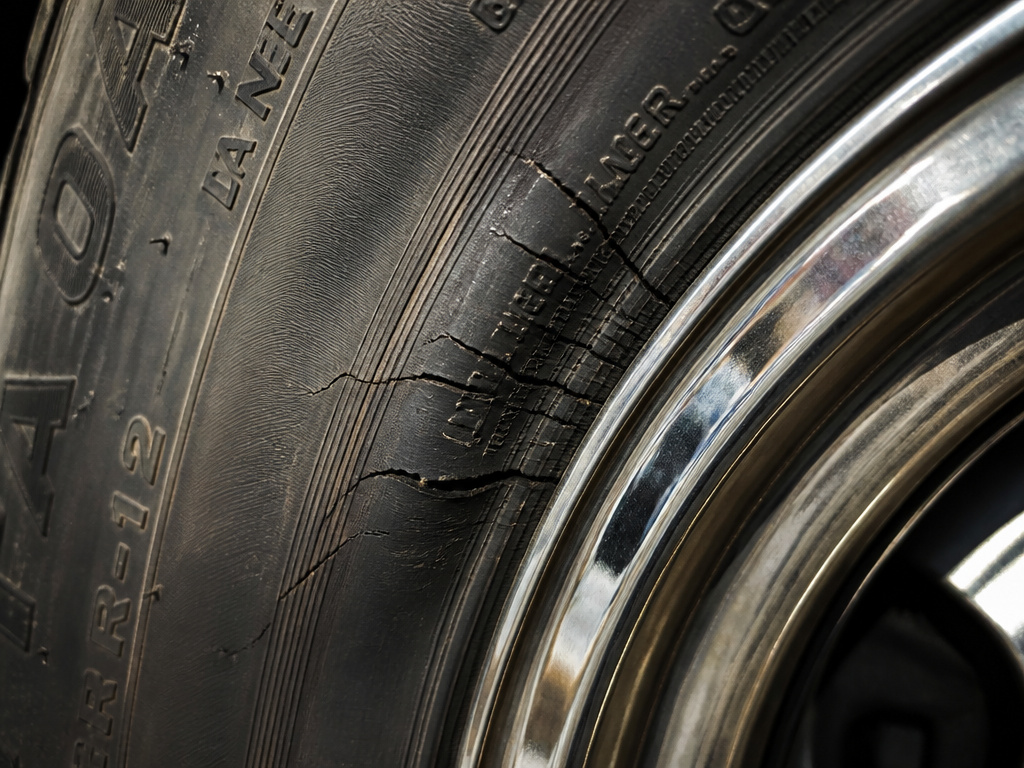
Look where the tire meets the wheel. Oblique cracks radiating from the bead seat are a direct message: this tire has been run underinflated, possibly under heavy load. The bead area handles tremendous stress, flexing against the rim with each rotation. Low pressure allows excessive flexing, overheating the rubber until it splits. The NHTSA Tire Maintenance and Safety Manual is clear on the consequence. These cracks can grow into the turn-up (where the casing plies wrap around the bead) or into a bead reinforcing ply. Once they reach the cord, the structural integrity is compromised. If you find bead cracks, you have two problems. First, that tire is likely finished. Second, your inflation habits, or a slow leak, need fixing. This kind of damage doesn’t happen from one low-pressure drive. It’s weeks or months of neglect. Pair that with a worn suspension, and you’ve got a recipe for rapid wear, as explained in our guide on how shocks and tire wear are connected.
The Tire Crack Repair Myth
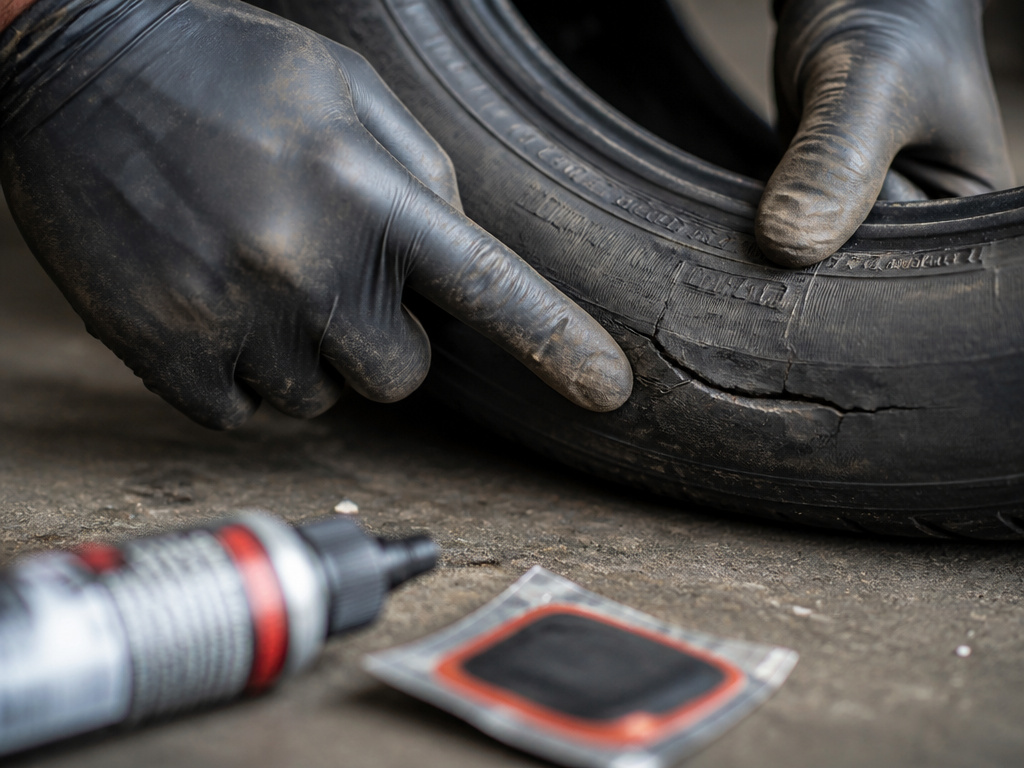
You cannot repair a crack. Full stop. A crack is a material failure of the rubber itself, not a puncture in a repairable zone. Tire repair kits and vulcanizing patches are designed for small holes in the tread crown, not for sealing splits along a sidewall or in a groove. Attempting to seal a crack with a liquid sealant or a patch is dangerous. The crack will continue to propagate around the repair. In the sidewall, flexing will quickly break any adhesive bond. In the bead area, the repair will not restore the structural integrity of the compromised rubber and cord. The only safe action is replacement. This is especially critical for run-flat tires, which have stiffer sidewalls that can hide internal damage. A crack on a run-flat is often a sign of deeper internal stress.
How to Inspect Your Tires Like a NHTSA Inspector
Forget the kick-and-glance method. A proper inspection is a slow, hands-on process.
- Clean the Tire. Wash off dirt and grime so cracks are visible. Dry it.
- Check the Tread Grooves. Run a finger along the base of the grooves. Feel for raised lips or deep, jagged splits. Fine, hairlike cracks are normal ozone checking.
- Examine the Shoulders. Look at the curved area where the tread meets the sidewall. This is a high-stress zone for cracks from cold or overload. Part the tread blocks with your fingers to see the base.
- Inspect the Entire Sidewall. Walk around the tire, looking for vertical lines, bubbles, or discolorations. A bulge often has a corresponding crack on its edge.
- Look at the Bead. You might need to crouch. Check the rubber right next to the wheel rim for those oblique, sunburst-pattern cracks.
- Check the Date Code. Find the DOT number. The last four digits are week and year of manufacture (e.g., “3523” is the 35th week of 2023). This tells you the tire’s age, a key factor in dry-rotted tires.
Common mistake: Inspecting only the outward-facing sidewall. The inner sidewall, facing the vehicle, sees the same stress and is often more exposed to road spray and debris. You must look at both sides.
When to Replace, Not Rotate
Rotation evens out wear patterns. It does nothing for age-related cracking or material degradation. Use this flowchart for the replace/rotate decision.
- Is there a bulge or deep sidewall split? → Replace. Do not drive.
- Are there deep cracks in the tread or shoulder? → Replace. Per the NHTSA tire service bulletin 2023, the tire is damaged.
- Is the tire 10 years old from its DOT date? → Replace. Industry guideline, regardless of crack appearance.
- Are there only fine ozone cracks in the grooves with >4/32″ tread? → Rotate as scheduled, but monitor.
- Is the tread worn to the wear bars (2/32″)? → Replace. This is the legal minimum in most states, a point covered in tread depth laws.
Remember, tires are a set. Mixing a cracked, hardened tire with three newer ones creates a handling imbalance. If one tire is cracked from age, the others are the same age. Replacing in pairs (at minimum) or as a full set is the standard for safety.
Frequently Asked Questions
Can I drive on a tire with small cracks?
You can drive on tires with fine, superficial ozone cracks confined to the tread grooves or sidewall surface. You should not drive on tires with deep cracks in the tread shoulders, sidewall splits, or any crack accompanied by a bulge. The latter indicate structural damage and risk sudden failure.
How long will a cracked tire last?
There’s no reliable timeline. A cosmetic ozone crack might progress slowly over years. A structural crack from underinflation or impact could propagate to a full separation in the next hundred miles, or on the next hard bump. If the crack is deep enough to catch a fingernail, the tire’s lifespan is unpredictable and unsafe.
Are new tires more prone to cracking?
No, quite the opposite. New tires have fresh, pliable rubber full of protective antiozonants. However, new tires have a mold-release lubricant on their surface that can make them slippery for the first 50-100 miles. Cracking is a function of age, exposure, and abuse, not newness.
Do tire warranties cover cracking?
It depends on the cause and the warranty’s fine print. Most manufacturer workmanship warranties cover cracking that occurs within the first few years under normal use. Cracks from improper storage, underinflation, or curb impacts are considered “owner-induced” and are not covered. Your best evidence is the tire’s maintenance record.
Should I replace all four tires if one is cracked?
Not always, but often. If the crack is due to age and the other three tires are from the same batch (check DOT codes), they are equally brittle and prone to future cracking. Replacing the full set is safest. If the crack is from a unique incident (like a curb strike) and the other tires are relatively new and undamaged, replacing just the damaged tire, and ensuring it matches the others, may be acceptable.
The Bottom Line
Tire cracks are a spectrum from harmless to lethal. The harmless ones are fine, dry lines in the grooves. The lethal ones are splits with depth, especially on the shoulder or sidewall, or the oblique cracks near the rim that shout chronic underinflation. Your inspection must separate the two. The official documents, the NHTSA bulletins, the manufacturer recalls, draw that line with specific examples: the Audi sidewall crack that’s only 2mm deep, the Lexus run-flat that cracks from improper mounting, the GM summer tire that’s damaged after one cold winter drive. Those are your ground truth. When in doubt, lean out. A tire is the single most critical safety component between your car and the road. A crack you gamble on doesn’t get you a warning shot. It just fails.
