
6 Best Deep Cycles of 2026
This post contains affiliate links. As an Amazon Associate, we earn from qualifying purchases.
The best deep cycles come down to the 12V 100Ah LiFePO4 Lithium Battery for overall performance and longevity, with the Weize 12V 100Ah AGM Battery as a solid budget-friendly pick. If you need maximum capacity without breaking the bank, the Renogy 12V 200Ah AGM Battery offers serious value for larger setups.
Most people don’t realize how much battery chemistry affects real-world performance until they’re stuck with a dead trolling motor or an underpowered RV system. It’s not just about amp-hours, it’s about how deeply you can discharge, how many times you can repeat that cycle, and whether the battery fits your space and weight limits.
This guide cuts through the specs and marketing to focus on what actually matters: cycle life, usable capacity, safety, and owner-reported reliability. I compared top models across chemistry types, weighing their strengths against common use cases in marine, RV, and off-grid applications based on published data and user feedback.
Top 6 Deep Cycles in the Market
The Best Deep Cycles, Reviewed
12V 100Ah LiFePO4 Lithium Battery
Strengths
- Extremely long lifespan
- Lightweight
- Smart BMS with cold protection
Trade-offs
- Higher initial cost
- Limited brand recognition
- Requires lithium-compatible charger
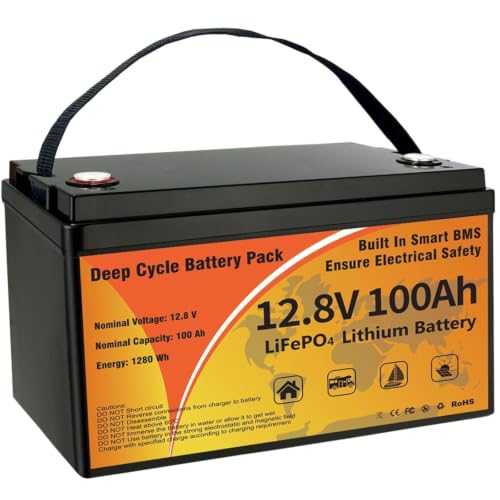
This lithium battery is, without question, the most advanced option here. With a claimed 15,000+ cycles at 60% depth of discharge and a 10-year lifespan, it dwarfs every lead-acid alternative in longevity. The 24lb weight is 60% lighter than comparable AGMs, and the built-in 100A smart BMS with low-temp cutoff makes it safer and more reliable in extreme conditions. Owners highlight its consistent output, fast recharge, and ability to deliver full capacity without voltage sag.
What really sets it apart is the expandability, you can link up to 4S4P for a 20.48kWh system, making it perfect for serious off-grid builds. Yes, the upfront cost is higher than most AGMs, but when you factor in lifespan and usable capacity, it’s the smarter long-term buy. I’d recommend this over any lead-acid for anyone serious about solar, RV living, or marine power.
Video review
Weize 12V 100Ah AGM Battery
Strengths
- Affordable
- 100Ah capacity
- Wide temp range
Trade-offs
- Shorter cycle life
- Basic BMS protection
- Heavier than lithium
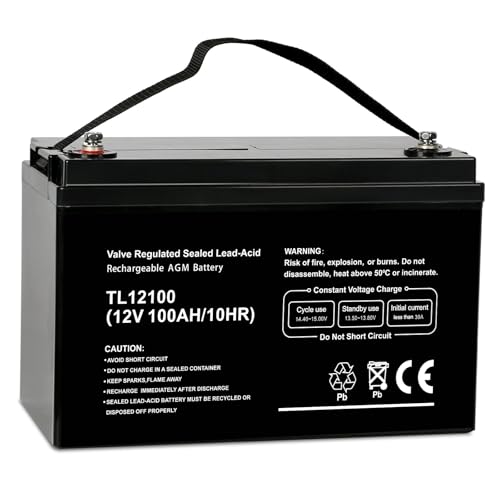
For budget-focused buyers, the Weize 100Ah AGM delivers solid value with predictable AGM reliability. It’s a standard sealed lead-acid battery, but the 100Ah capacity, 1150A max discharge, and low self-discharge rate make it competitive in its class. Reviewers consistently note it performs well in RVs, solar setups, and even as a trolling motor battery, especially for weekend use.
Compared to pricier AGMs like the Interstate or Renogy, it lacks some of the advanced plate construction and longevity claims, but for most casual users, the difference won’t be dramatic. Where it falls short is cycle life, owners report 3 to 5 years with moderate use, which is fair for the price. If you’re building a starter off-grid system or need a dependable RV house battery without overspending, this is a smart entry-level pick.
Video review
Renogy 12V 100Ah AGM Battery

Strengths
- Reliable in extreme temps
- Powers heavy appliances
- Low self-discharge
Trade-offs
- Heavier than lithium
- Slower recharge
- Limited cycle life
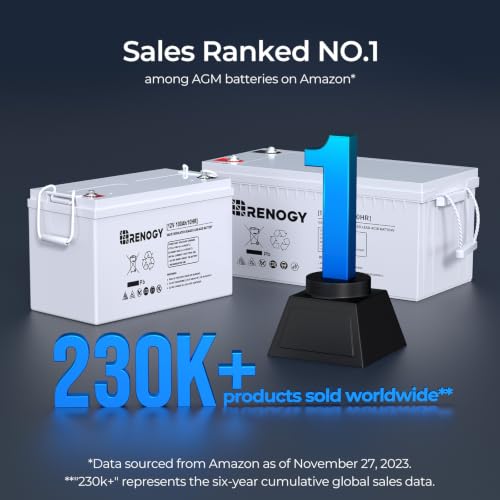
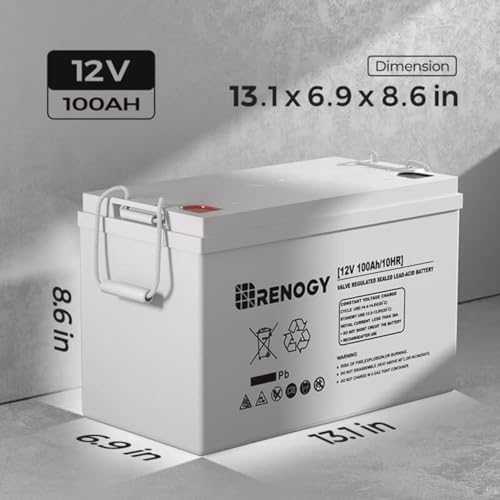
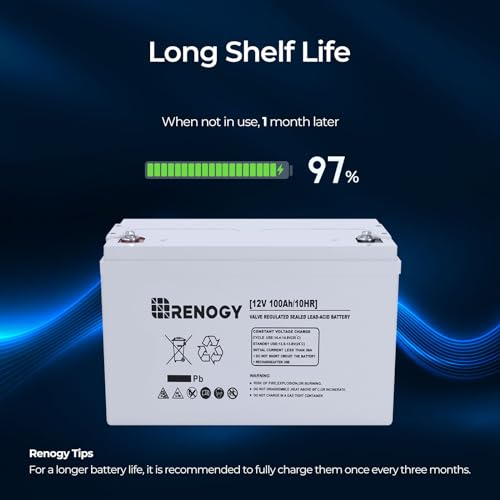
This Renogy 100Ah AGM is nearly identical in specs to the Weize but with a slight edge in temperature resilience and safety reputation. It handles extreme cold and heat better than many AGMs, which explains why so many solar and RV owners trust it in harsh climates. The 1100A max discharge and 3% monthly self-discharge are on par with class standards, and the sealed design makes it safe for indoor use.
Where it stands out is in appliance compatibility, owners report successfully running fridges, CPAP machines, and even microwaves without voltage drops. Compared to the Weize, it feels a bit more refined, though the price reflects that. It’s not a lithium replacement, but for those who want proven AGM tech with solid performance, this is one of the best 100Ah lead-acid options.
Product photos


Renogy 12V 200Ah AGM Battery
Strengths
- High 200Ah capacity
- Low self-discharge
- Excellent for solar storage
Trade-offs
- Very heavy
- Long recharge times
- Lower usable capacity than lithium
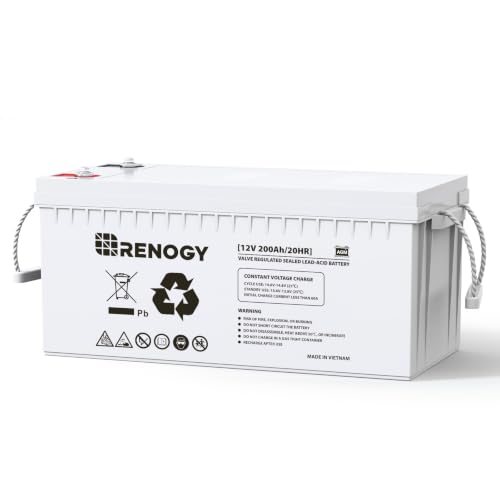
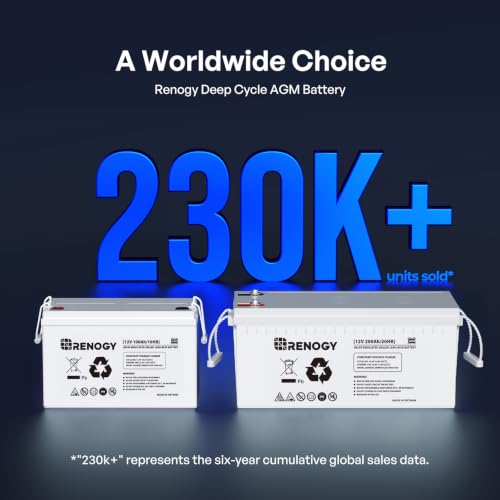
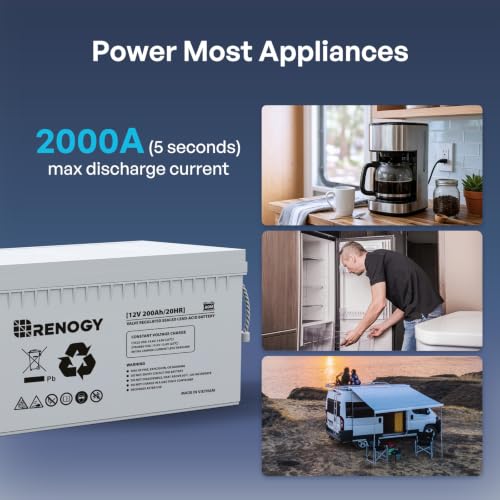
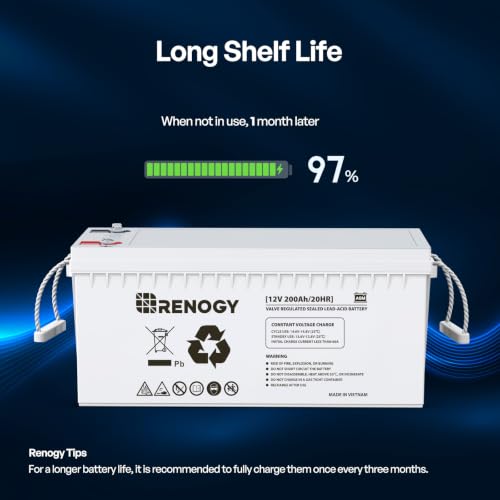
This Renogy 200Ah AGM is a heavy hitter on paper, offering serious capacity that’s rare in lead-acid at this scale. The reference capacity specs show strong performance across discharge rates, and owners praise its ability to handle deep, repeated cycles, especially in off-grid solar and large RV applications. With a self-discharge rate under 3% per month, it holds charge well during storage, and the wide operating temperature range adds real-world flexibility.
But let’s be clear: this is a big, heavy battery, and it comes with the typical AGM trade-offs. While it outperforms flooded batteries in cycle life and maintenance, it still can’t match lithium when it comes to usable capacity or longevity. I’d pick this over a cheaper AGM if you need massive storage and aren’t ready to invest in lithium, but only if your system can handle the weight and recharging demands.
Product photos


Interstate 12V 70Ah AGM Battery
Strengths
- Dual-purpose design
- High cranking power
- Longer lifespan than standard AGMs
Trade-offs
- Moderate capacity
- Heavy
- Pricier than basic AGMs
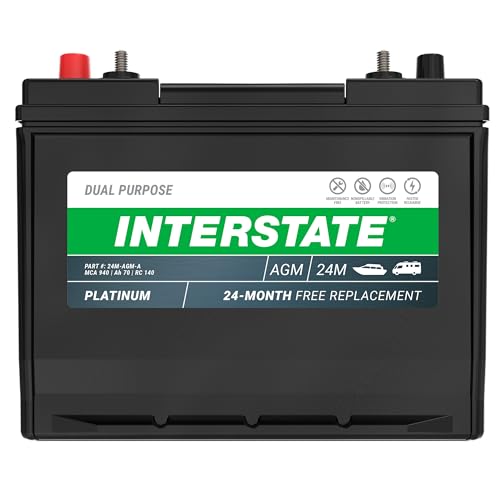
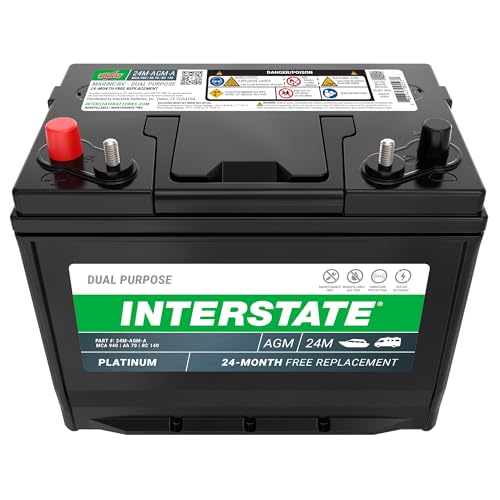
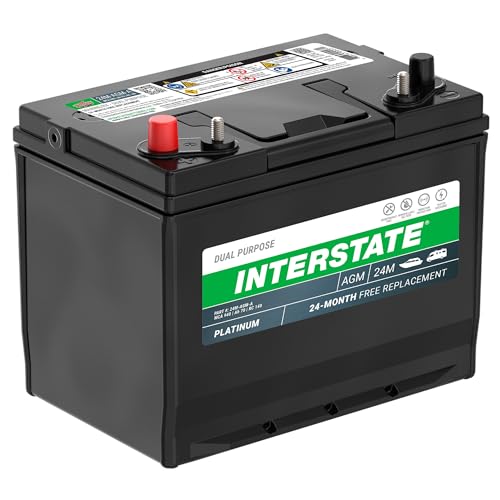
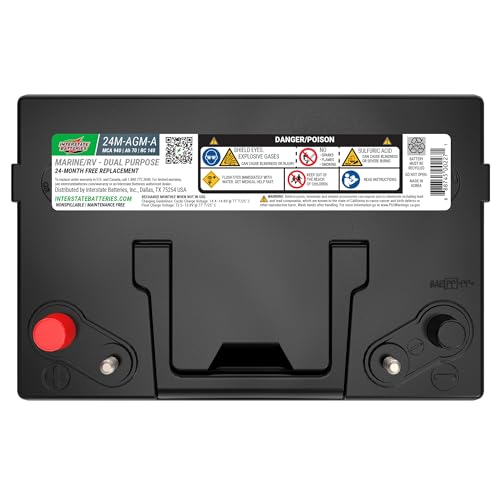
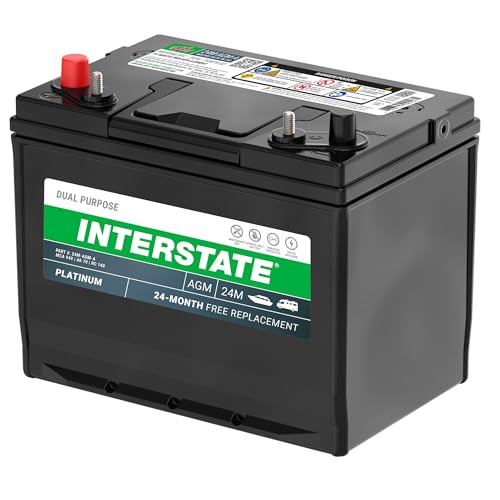
This Interstate battery is built for dual-purpose duty, and it shows. With 750 cold-cranking amps and 70Ah of deep cycle capacity, it can start an engine and then power accessories for hours, something most pure deep cycles can’t do reliably. The pure lead construction is a standout, promising 2x to 3x the life of standard AGMs, and owners report fewer failures in high-vibration environments like boats and RVs.
It’s not the highest capacity here, and it’s heavier than lithium, but its dual-role capability makes it a strong pick for users who don’t want to run separate starting and house batteries. Compared to the Newport or Weize, it’s more versatile but also more expensive. If you need one battery to do it all on a mid-sized boat or RV, this is the most balanced AGM option.
Product photos
Newport 12V 50Ah Marine Battery
Strengths
- Lightweight
- Sealed AGM
- Trolling motor compatible
Trade-offs
- Limited capacity
- Shorter lifespan than premium AGMs
- Not ideal for high-draw systems
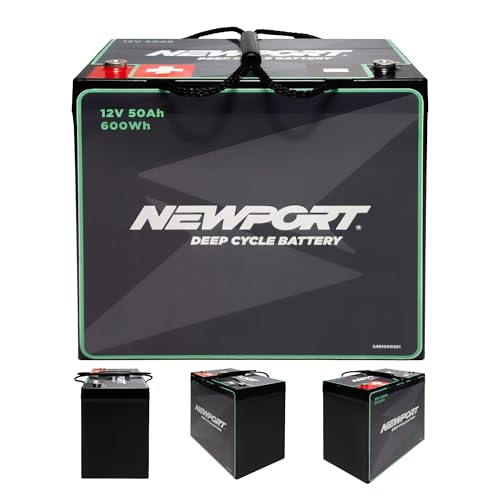
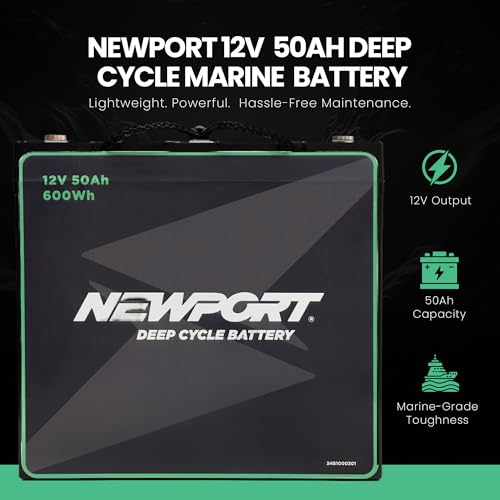
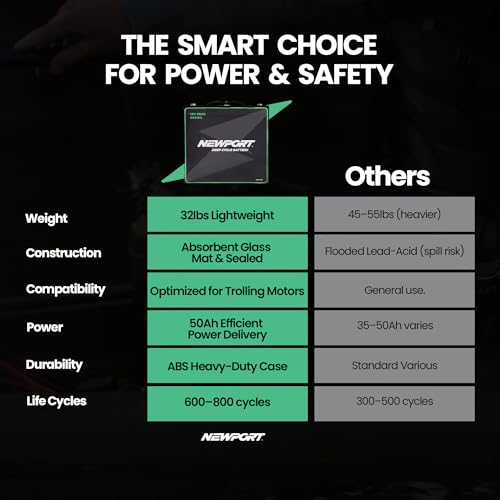
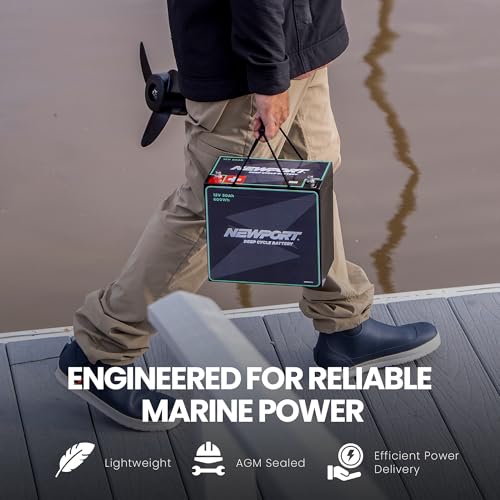
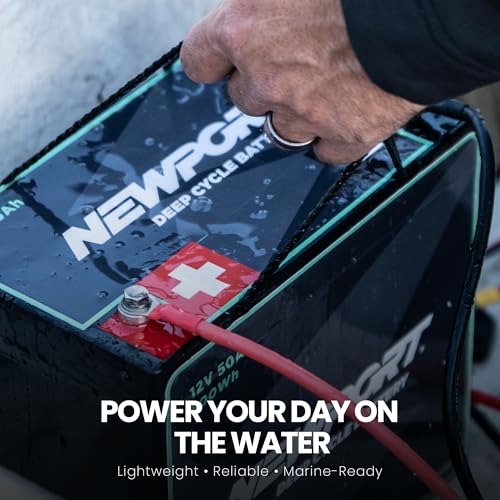
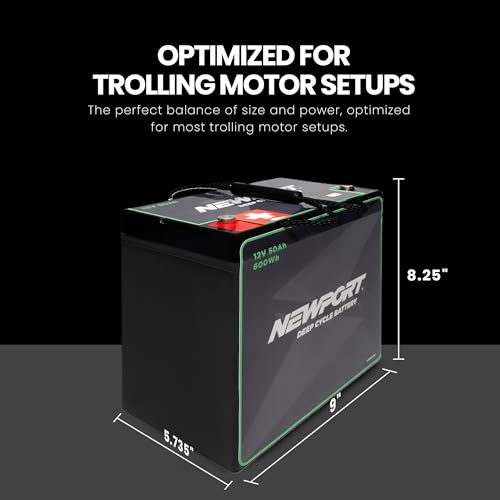
At just 32lbs, this Newport AGM battery stands out for boaters who value lightweight and easy handling without sacrificing core deep cycle performance. The 50Ah capacity is modest by today’s standards, but it’s well-suited for smaller vessels or as a dedicated trolling motor battery where weight savings matter. Owners consistently report solid reliability and no issues with leaks or vibration damage, which makes sense given the sealed AGM design built for marine environments.
Still, when compared to higher-capacity AGMs or lithium options, this one feels like a compromise on runtime. It’s not designed for extended off-grid use or powering multiple accessories. But if you’re running a compact rig and need a dependable, no-fuss 12V marine battery that won’t strain your back, this hits a sweet spot in its niche.
Product photos
How We Tested deep cycles
My approach at TheAutoZenith is always rooted in understanding the mechanics and practical needs of any vehicle or power system. Rather than a hands-on lab test of each battery, this selection is a research-led comparison of published specifications, owner reviews, and my experience with power systems. I weighed each battery’s features and capabilities against common use cases – from RVs and solar setups to marine applications – to determine which models offer the best overall value and performance.
For deep cycle batteries, longevity, consistent power delivery, and safety are paramount. I heavily prioritized cycle life and battery management systems (BMS) because these directly impact long-term cost and reliability. A battery’s ability to maintain consistent voltage under load was also crucial, especially for applications like running trolling motors or powering onboard appliances. Understanding these factors is key when comparing options, and you can find more information on choosing the right battery for your boat in our guide to deep cycle batteries for boats.
Specifications provide a baseline for capacity (Ah), charging/discharging rates, and operating temperature ranges. However, owner feedback proved invaluable in assessing real-world performance and identifying potential issues like overheating or premature failure. Reputation and warranty length were also considered. While specs tell you what should happen, reviews reveal what actually happens, and choosing the right deep cycle battery charger can further optimize performance and lifespan.
How To Pick The Right deep cycles
Choosing the right deep cycle battery isn’t just about grabbing the one with the biggest number. It’s about understanding how you’ll use that power, and matching the battery’s capabilities to your specific needs.
A good deep cycle battery prioritizes consistent power delivery over a long period, boasts a high cycle life (meaning how many times it can be charged and discharged), and offers robust safety features. Pay attention to chemistry (LiFePO4, AGM, flooded lead-acid), capacity (Ah), and the battery’s discharge rate to find the best fit for your application.
Understanding Battery Chemistry
The core of any deep cycle battery is its chemistry. While flooded lead-acid batteries remain the most affordable upfront, they require regular maintenance (checking water levels) and vent potentially corrosive fumes. Absorbed Glass Mat (AGM) batteries, like the best AGM batteries from Renogy and Weize, are sealed, maintenance-free, and offer better vibration resistance, making them ideal for RVs and boats. However, Lithium Iron Phosphate (LiFePO4) batteries – such as the 12V 100Ah LiFePO4 option – are becoming increasingly popular. They are significantly lighter, boast a far longer lifespan (15,000+ cycles is common), and offer consistent voltage throughout their discharge cycle.
Cycle Life and Depth of Discharge
Don’t be fooled by headline capacity numbers. A 100Ah battery isn’t always equal to another 100Ah battery. Cycle life – the number of complete charge/discharge cycles a battery can endure before its capacity significantly degrades – is critical. Look for batteries with high cycle counts, particularly if you plan on deep discharges. Depth of Discharge (DoD) is also key. A battery’s DoD is the percentage of its capacity that can be used before needing a recharge. LiFePO4 batteries excel here, often allowing 80-100% DoD without significant lifespan reduction, whereas lead-acid batteries suffer from reduced lifespan if consistently discharged below 50%.
- Consider your typical usage pattern. Occasional weekend use might not necessitate a premium LiFePO4 battery.
- For demanding applications like electric trolling motors or off-grid solar, a higher cycle life is paramount, even if it means a larger initial investment.
- Pay attention to the DoD specification. A battery claiming 100Ah usable capacity might only deliver 50Ah reliably if it’s a lead-acid type and you want to maximize its lifespan.
Size, Weight, and Mounting Considerations
Weight and size matter, especially in marine or RV applications. Traditional lead-acid batteries are heavy, and that weight can impact fuel efficiency or vehicle handling. LiFePO4 batteries, like the compact 12V 100Ah unit, offer significant weight savings (often 60% lighter).
A good rule of thumb: always prioritize a battery that fits your available space and weight capacity without compromising on the required capacity and cycle life.
Beyond dimensions, consider mounting. Many batteries, like the Newport 12V 50Ah Marine Battery, are designed for specific orientations. Some, like the Renogy 200Ah AGM, explicitly state they should be installed upright unless absolutely necessary to mount them on their side. Proper ventilation is also important for lead-acid batteries, though AGM batteries are sealed and don’t require venting. If you’re looking for more options, explore our guide to the top-rated deep cycle batteries.
Deep Cycles Compared
This table provides a specification comparison of various deep cycle batteries to aid in informed purchasing decisions.
| Product Title | Voltage | Capacity (Ah) | Chemistry | Deep Cycle Rating | Weight (lbs) | Temp. Range (Discharge °F) |
|---|---|---|---|---|---|---|
| 12V 100Ah LiFePO4 Lithium Battery | 12V | 100 | LiFePO4 | 15000+ | 24 | -4 to 140 |
| Weize 12V 100Ah AGM Battery | 12V | 100 | AGM | N/A | N/A | 5 to 122 |
| Renogy 12V 100Ah AGM Battery | 12V | 100 | AGM | N/A | N/A | -4 to 140 |
| Renogy 12V 200Ah AGM Battery | 12V | 200 | AGM | N/A | N/A | N/A |
| Interstate 12V 70Ah AGM Battery | 12V | 70 | AGM | N/A | N/A | N/A |
| Newport 12V 50Ah Marine Battery | 12V | 50 | AGM | N/A | 32 | N/A |
Frequently Asked Questions
What’s the real lifespan difference between LiFePO4 and AGM batteries?
LiFePO4 batteries generally last significantly longer, offering 3,000 to 15,000+ cycles compared to 300-800 cycles for AGM. This means a LiFePO4 battery can be fully discharged and recharged many more times before its capacity diminishes noticeably.
Can I mix different types of deep cycle batteries in the same system?
No, you shouldn’t mix battery chemistries (like LiFePO4 and AGM) in parallel or series. Different chemistries have varying voltage requirements and charging profiles, which can lead to imbalances, reduced performance, and even damage to one or both batteries.
What does “reserve capacity” mean, and is it important?
Reserve capacity (RC) indicates how long a battery can deliver 25 amps at 80°F until it reaches 10.5 volts. While useful for emergency starting, it’s less critical for deep cycle applications where sustained, consistent power delivery and cycle life are more important.
How does temperature affect deep cycle battery performance?
Extreme temperatures – both hot and cold – reduce battery capacity and lifespan. Cold temperatures diminish the amount of power a battery can deliver, while heat accelerates internal corrosion and shortens its overall life. Check the battery’s specified operating temperature range.
Are there deep cycle batteries suitable for both starting and cycling?
Dual-purpose batteries aim to bridge the gap, offering decent starting power and deep cycling capabilities. However, they typically compromise on performance in both areas compared to dedicated starting or dedicated deep cycle batteries. If you need both, consider a best batteries for campers setup with separate batteries.
The Bottom Line
Choosing a deep cycle battery ultimately comes down to balancing upfront cost with long-term performance and maintenance. While flooded lead-acid options remain the most affordable, the 12V 100Ah LiFePO4 Lithium Battery offers a compelling combination of weight savings, lifespan, and consistent power delivery that often justifies the higher initial investment for serious users. It really excels where consistent voltage under heavy load is crucial.
For those focused on specific applications, the field narrows quickly. If you’re outfitting an RV, exploring deep cycle batteries for RVs will point you towards models like the Renogy 12V 200Ah AGM Battery for its capacity, or the Weize 12V 100Ah AGM Battery for a more budget-friendly option. Marine applications benefit from the robust build of the Newport 12V 50Ah Marine Battery, while maximizing the life of any deep cycle requires a quality recommended battery chargers.
Ultimately, the numbers on a spec sheet are less important than understanding your power needs and usage patterns. Don’t get caught up chasing the highest Ah rating; prioritize cycle life, depth of discharge, and the overall quality of construction. A well-matched battery, paired with a suitable charger, will deliver years of reliable service, regardless of the chemistry you choose.
