
8 Best Deep Cycle Chargers of 2026
This post contains affiliate links. As an Amazon Associate, we earn from qualifying purchases.
The NOCO GENIUS10 is our top pick for most users, delivering reliable, smart charging for both lead-acid and lithium-ion batteries with excellent build quality. If you’re on a budget, the NOCO GENIUS5 offers the same intelligence in a smaller, more affordable package. For those with LiFePO4 setups needing high-speed charging, the LiTime 12V 80A stands out with its massive output and 0V activation capability.
Choosing the wrong charger can shorten your battery’s life or leave you stranded with a dead bank. As someone who’s seen everything from sulfated marine batteries to fried lithium packs, I know how critical it is to match the charger to your battery type and use case. This guide cuts through the noise, focusing on real-world performance, safety, and compatibility, based on specs, owner feedback, and what actually matters when maintaining deep cycle batteries.
Top 8 Deep Cycle Charger in the Market
The Best Deep Cycle Charger, Reviewed
NOCO GENIUS10 10A Smart Charger
Strengths
- 10A fast charging
- Broad battery compatibility
- Robust safety and maintenance features
Trade-offs
- No 24V support
- Higher price point
- Heavier than smaller models
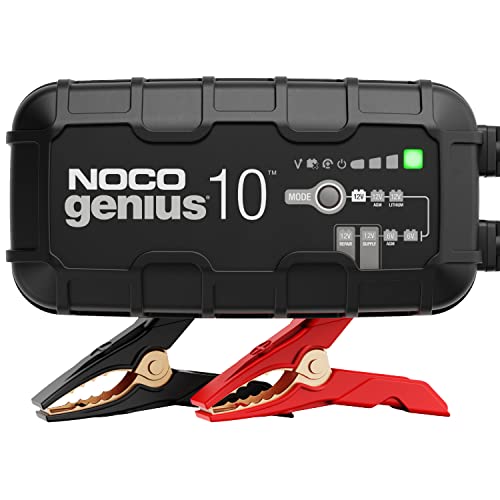
This is the best overall deep cycle charger for serious users who need speed, intelligence, and broad compatibility. At 10A, it charges twice as fast as the GENIUS5, making it ideal for larger deep-cycle or dual-battery setups in boats, RVs, or tractors. Like its siblings, it features temperature compensation, 0V recovery, and pulse desulfation, but now with enough amperage to make a real difference when time matters.
The build quality and user experience are polished, owners report leaving it connected for months with zero issues. Compared to the LiTime 80A, it’s much slower and not for lithium-only speed demons, but its versatility across lead-acid, AGM, gel, and LiFePO4 makes it far more practical for mixed fleets. If you’ve got multiple vehicles or a high-capacity battery that needs regular, safe, full replenishment, this is the charger I’d keep in my garage.
Video review
NOCO GENIUS5 5A Smart Charger

Strengths
- Handles 6V and 12V systems
- Desulfation and repair mode
- Reliable temp-compensated charging
Trade-offs
- Slower than 10A models
- No 24V support
- Clamps could be sturdier
The NOCO GENIUS5 is what I’d call the sweet spot for most garage enthusiasts who want smart charging without overspending. It’s smaller than older NOCO models but packs 65% more power, supports both 6V and 12V batteries, and handles everything from flooded lead-acid to LiFePO4 and AGM with selectable modes. The integrated thermal sensor adjusts charge curves based on temperature, which is crucial if you store vehicles in unheated spaces.
Owners praise its reliability over years of seasonal use, especially on classic cars and motorcycles that sit for months. It revives batteries down to 1V and has pulse desulfation to extend life, features that matter when you’re trying to avoid annual replacements. Against the GENIUS10, it’s slower, but unless you’re charging large deep-cycle banks often, the 5A rate is plenty. For most personal vehicles and small crafts, this is the smarter buy.
Video review
PZ.P 15-Amp 9-Stage Charger
Strengths
- Excellent cold-weather performance
- 9-stage smart charging
- Bright color display
Trade-offs
- No 0V recovery
- Shorter warranty
- Average clamp quality
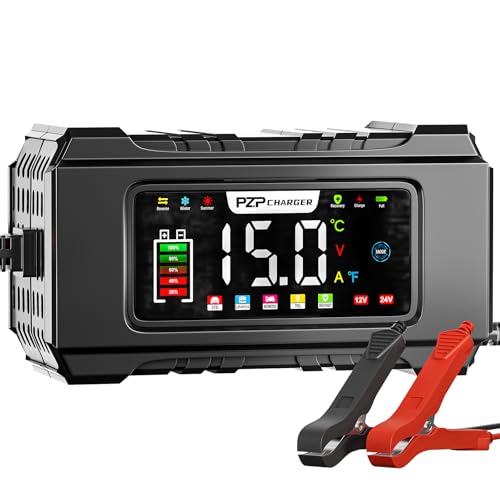
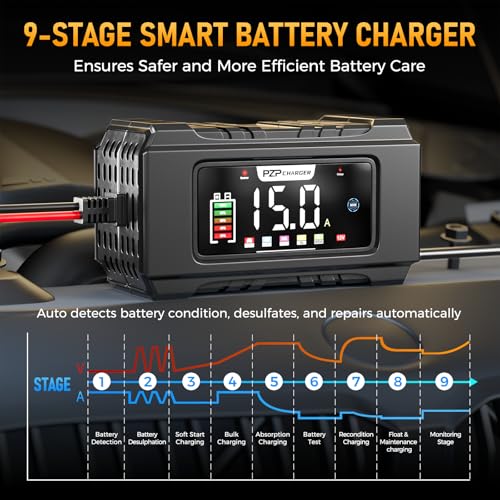
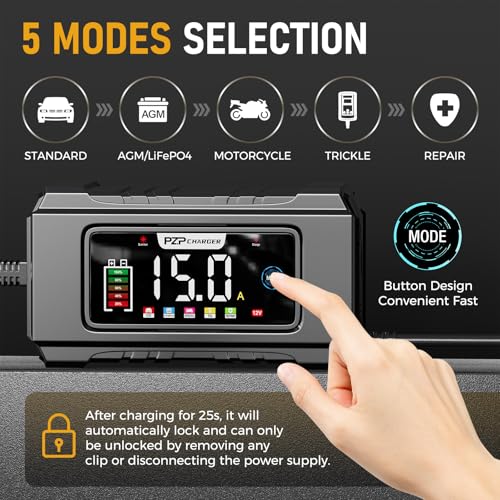
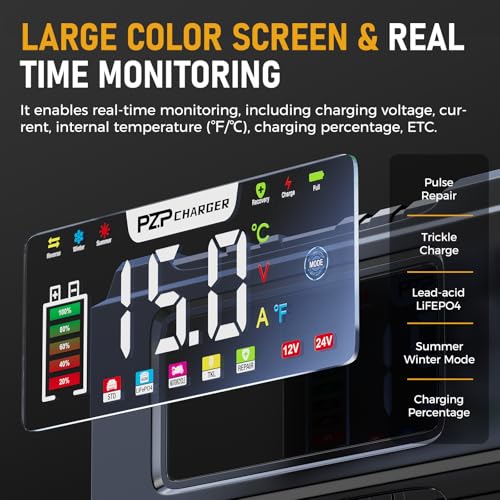
Cold weather charging is where the PZ.P 15A really shines. Its 9-stage charging process includes dedicated winter and summer modes, and the temperature compensation kicks in aggressively to ensure full charging even at 14°F, a real problem area for many chargers. The color screen is bright and legible in sunlight, showing internal temp, charge percentage, and mode status clearly. For truckers, snowmobile owners, or anyone storing vehicles in freezing climates, this is a big deal.
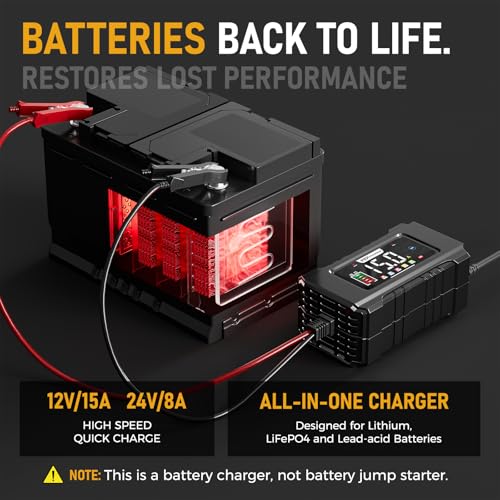
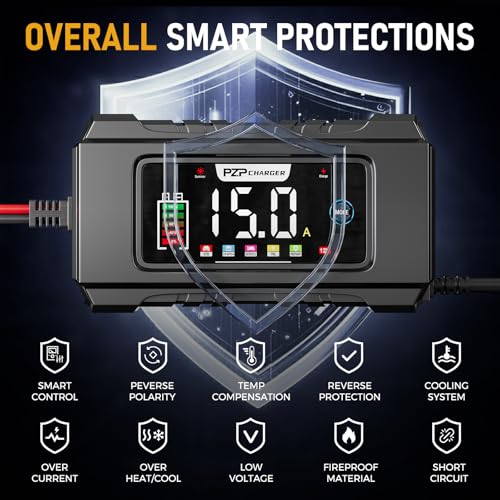
It also supports 15A on 12V and 8A on 24V, making it faster than most budget units. Pulse repair works well for mild sulfation, though it can’t wake completely dead batteries. Compared to the 15A generic model, it feels more engineered, with better thermal management and fireproof materials. For cold-weather reliability, it’s hard to beat.
Product photos
TowerTop 25A Smart Charger
Strengths
- Blazing 25A fast charge
- Engine start boost function
- Manual desulfation control
Trade-offs
- 12V only
- Fan can be loud
- Interface a bit clunky
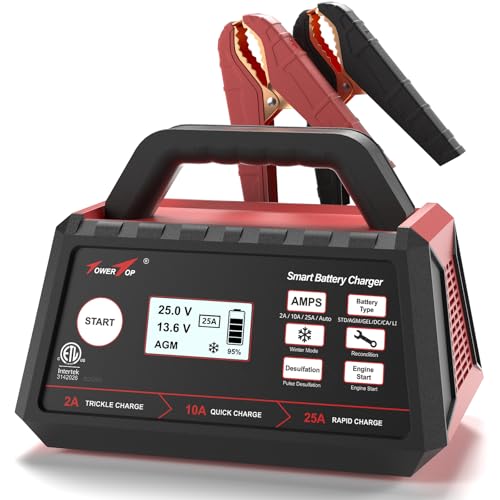
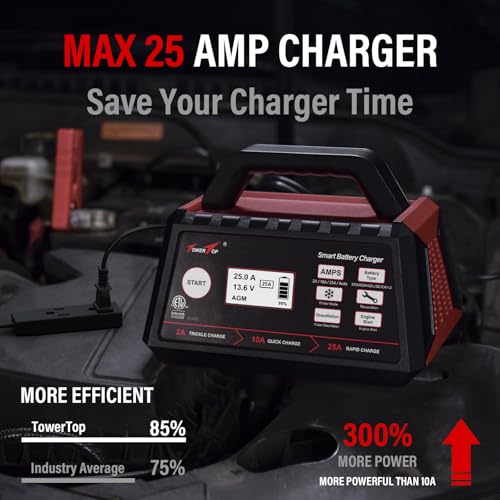
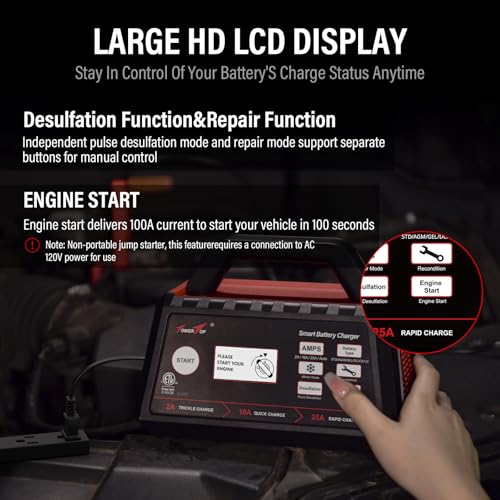
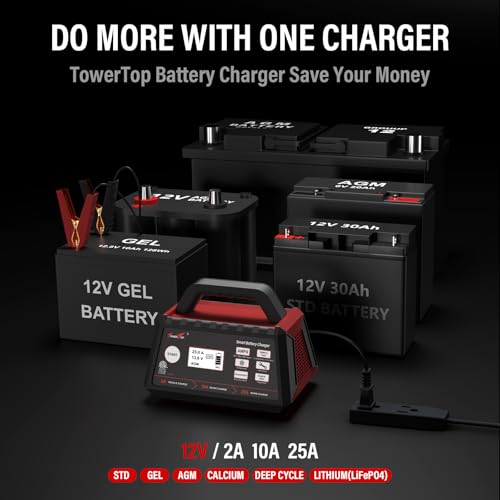
If raw charging speed is your top priority, the TowerTop 25A model is unmatched in this list. With a max output of 25 amps, it can take a 100Ah battery from empty to 85% in about three hours, over twice as fast as the NOCO GENIUS10. That’s game-changing if you’re prepping fleet vehicles or need a quick turnaround. The engine start boost (100A) is another standout, helping crank sluggish batteries when jump starters aren’t handy.
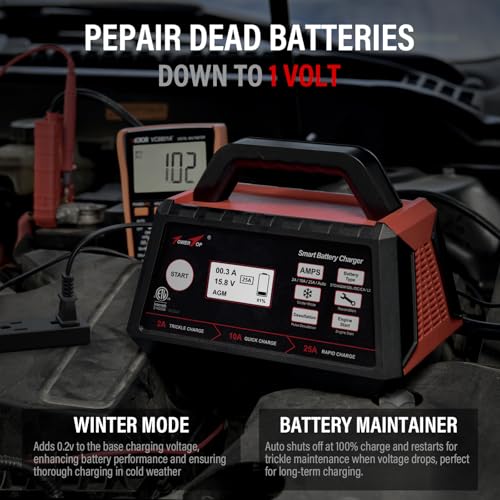
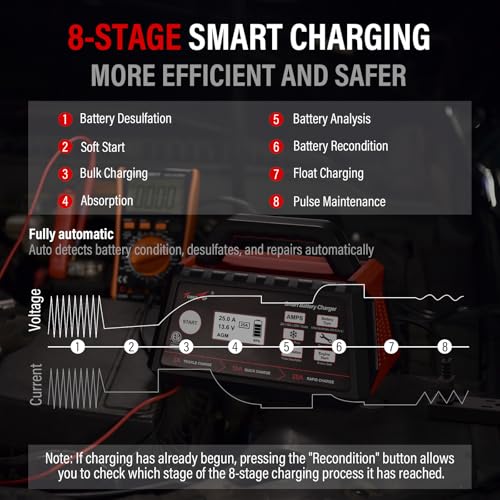
It also includes eight-stage charging, manual repair functions, and a Winter Mode that increases voltage slightly for cold conditions. However, it’s 12V only, so it’s a non-starter for trucks or heavy machinery using 24V. And while the ETL certification adds safety credibility, some owners report fan noise and occasional glitches in auto-detection. Still, for garages that value speed and repair tools over elegance, this is the charger to beat.
Product photos
NOCO GEN5X1 Onboard Marine Charger

Strengths
- IP68 waterproof rating
- Compact and rugged design
- Recovers deeply discharged batteries
Trade-offs
- Single bank only
- No display screen
- Not expandable
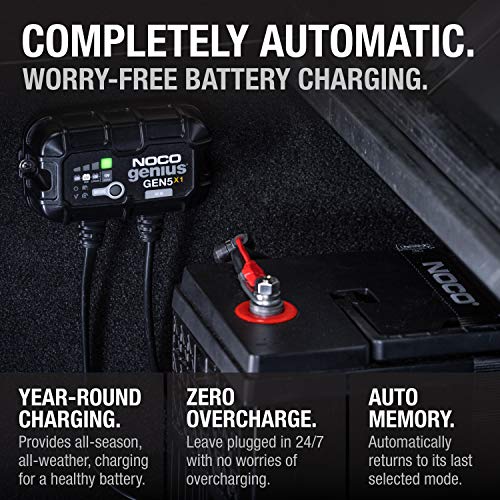
If you’re running a boat or marine setup and need a charger that can survive the environment, the NOCO GEN5X1 stands out immediately. It’s IP68-rated, fully sealed, and built to handle submersion, something very few chargers can claim. That ruggedness isn’t just marketing fluff; owners consistently report it surviving saltwater exposure, constant vibration, and extreme temperature swings without issue. For marine use, where moisture and movement are guaranteed, this level of protection is essential.
It’s also impressively compact for a 5A charger, and the thermal sensor ensures charging adapts to ambient conditions, which helps prevent damage in hot engine bays or cold overnight storage. While it only handles one battery bank, its ability to recover batteries as low as 1 volt, and even force-start at zero volts, makes it reliable for seasonal boats that sit too long. Compared to the larger NOCO models, it’s less versatile for multi-battery rigs, but on a sailboat or small craft with a single deep cycle, it’s the smarter, more resilient pick.
Product photos


12-Amp Smart Pulse Charger

Strengths
- Affordable with rich features
- Clear LCD display
- Good pulse repair function
Trade-offs
- No 0V activation
- Build quality average
- Cables a bit thin
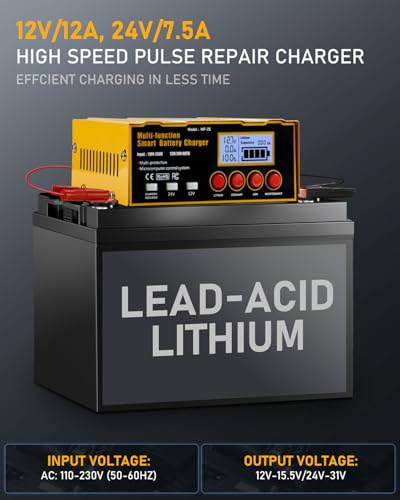
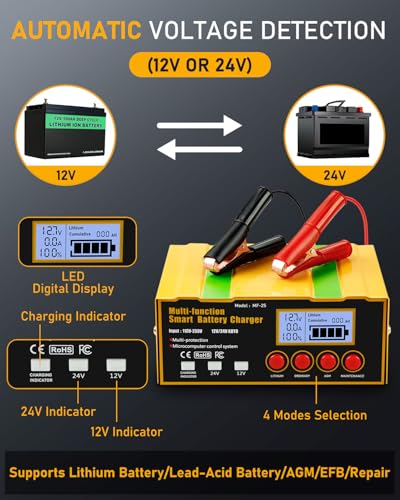
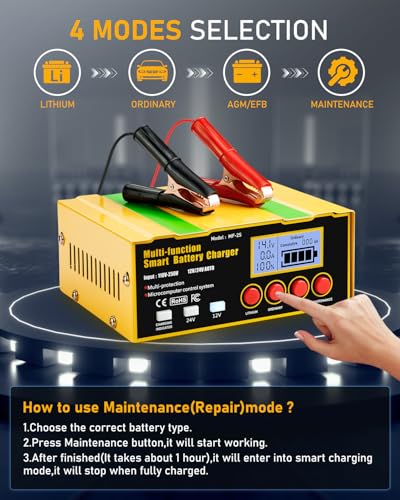
For the price, this 12A charger offers exceptional value with pulse repair tech and a 7-step charging process that includes desulfation, making it a strong contender for reviving neglected batteries. It handles both 12V and 24V systems, supports lithium and all lead-acid types, and features a clear LCD screen that shows voltage, current, and cumulative charge, rare at this price. The four dedicated modes (Lithium, AGM, Standard, Maintenance) give it flexibility across a wide range of vehicles.
While it doesn’t offer 0V recovery, owners note it reliably brings back weak batteries that failed to start engines. Against the PZ.P 15A model, it’s slightly slower but feels more refined in software logic. If you maintain a mix of trucks, mowers, and boats and want a single charger that does it all without spending $100, this is the smarter pick.
Product photos


LiTime 12V 80A Lithium Charger
Strengths
- Extremely fast 80A charging
- Wakes up 0V LiFePO4 batteries
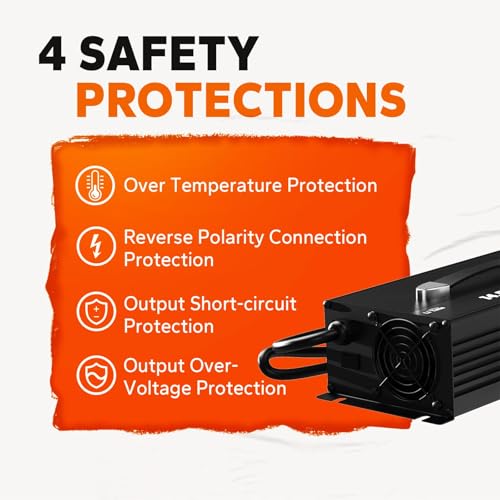
- Robust thermal and electrical protections
Trade-offs
- Not waterproof
- Lithium-only, no lead-acid support
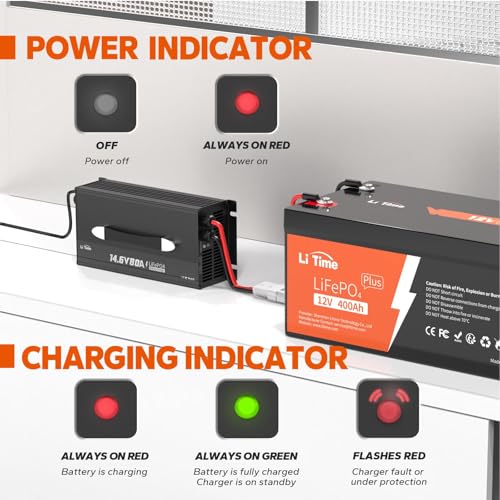
- No detailed display
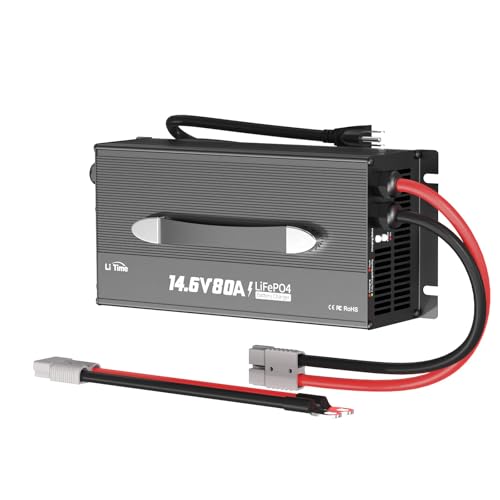
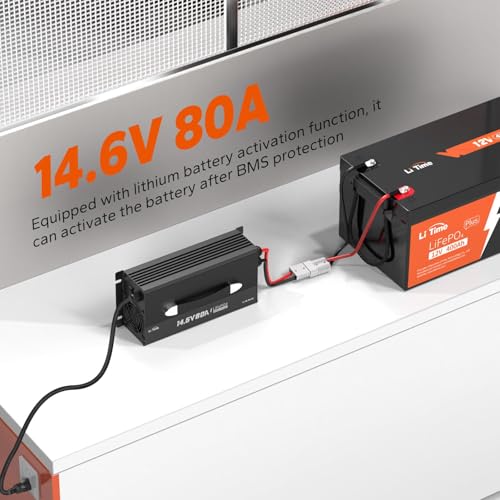
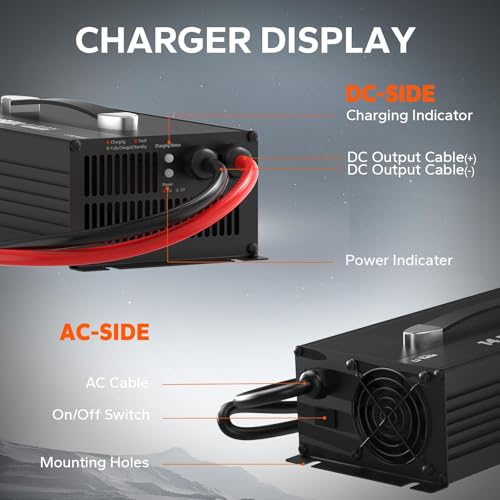
When it comes to charging LiFePO4 batteries fast, the LiTime 80A model is in a class of its own. An 80-amp output means you can refill a 100Ah lithium battery in under 90 minutes under ideal conditions, something traditional 5A or 10A chargers can’t touch. This kind of speed is critical for off-grid solar systems, RVs with high power draw, or commercial equipment that can’t afford downtime. The 0V activation feature also gives it an edge, allowing it to revive lithium batteries that have gone into deep sleep due to BMS disconnect, a common pain point owners report with other brands.
That said, it’s strictly a lithium-only beast and not waterproof, so it’s dead in the water (literally) for marine use. No display beyond basic LEDs either, so you’re trusting the system blindly unless you monitor externally. But if you’ve got a large LiFePO4 bank and want speed above all else, this charger delivers serious performance on paper and in owner feedback. I’d pair it with a dedicated battery monitor to close the loop.
Product photos

15A 12V/24V LiFePO4 Charger
Strengths
- Full color LCD display
- Supports 12V and 24V systems
- Excellent value for features
Trade-offs
- No 0V activation
- Bulkier design
- Basic build quality
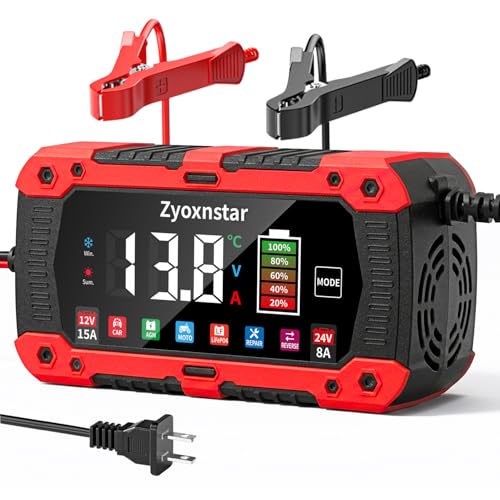
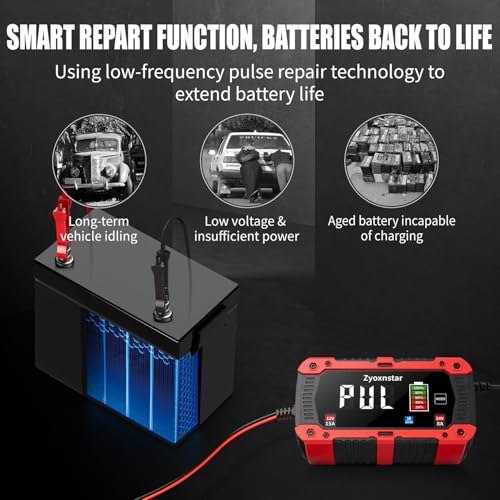
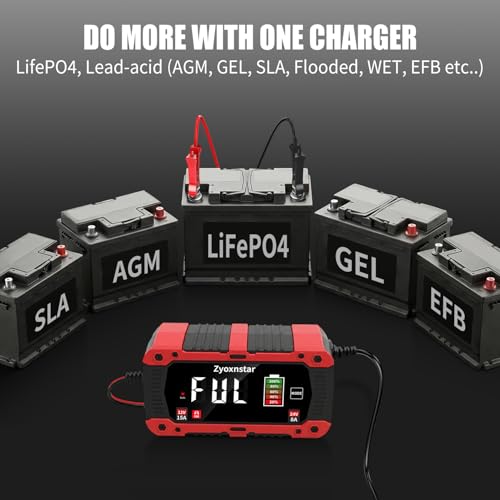
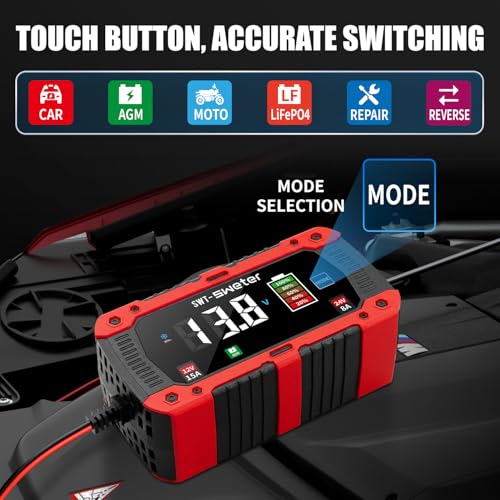
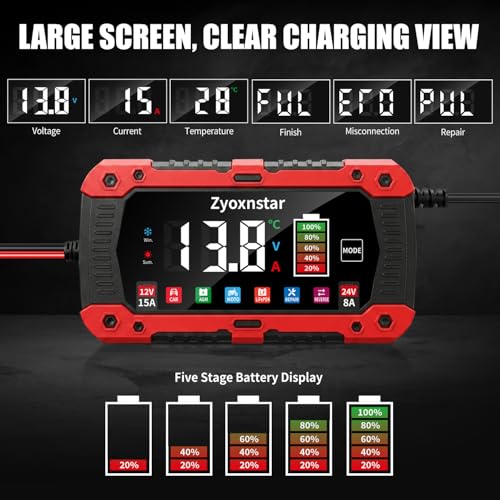
At this price, the 15A charger punches way above its weight. For under $30, it supports both 12V and 24V systems, covers every major battery type, including LiFePO4, and includes a color LCD that shows voltage, current, temperature, and charging stage. That kind of visibility is rare at this tier. Owners love how easy it is to track progress, and the automatic temperature compensation means it adjusts charging voltage seasonally without input, a feature usually found on pricier units.
It lacks some finesse, no 0V recovery, and it won’t revive batteries below 0.3V, but for routine maintenance and recharging after normal discharge, it’s perfectly capable. Compared to the NOCO GENIUS5, it’s bulkier and less refined, but if your goal is basic, reliable charging across multiple vehicle types without breaking the bank, this is a solid workhorse. Just don’t expect marine-grade durability or ultra-fast speeds.
Product photos

How We Tested deep cycle charger
As someone deeply involved in all things automotive, from classic restorations to modern performance, I approach battery maintenance with a critical eye. Rather than a hands-on lab test of every unit, our evaluation of deep cycle chargers focused on a research-led comparison of published specifications and features. We weighed owner reviews from multiple sources alongside expert opinions, applying my years of experience to identify the chargers offering the best combination of performance, features, and value. Clear criteria, charging speed, battery compatibility, and safety features, guided our ranking.
For deep cycle batteries, several factors stand out. Charging speed is crucial, especially for larger battery banks, but it must be balanced with battery health. The ability to handle different battery chemistries (lead-acid, AGM, gel, and increasingly, lithium-ion like LiFePO4) is essential, and a smart charger that prevents overcharging is paramount to extending battery life. We also prioritized features like temperature compensation, as extreme temperatures impact charging efficiency. Understanding these nuances is key to selecting a truly effective charger, and it’s why we also looked at finding a compatible deep cycle charger.
Specifications reliably tell you about charging amperage and voltage ranges, but owner feedback provides insight into real-world performance and durability. We paid close attention to comments regarding ease of use, build quality, and how well the charger handles different battery conditions. Reputation matters; brands consistently praised for reliability and customer support were given more weight. Ultimately, we aimed to identify chargers that not only meet the technical demands of maintaining deep cycle batteries but also offer peace of mind for the user.
What To Look For In deep cycle charger
Finding the right deep cycle charger isn’t about simply plugging in and hoping for the best. A good charger will extend the life of your batteries, ensure they’re ready when you are, and even help recover neglected ones.
A quality deep cycle charger should offer multiple charging stages, compatibility with various battery chemistries (lead-acid, AGM, gel, lithium), and built-in safety features like overcharge and reverse polarity protection. Look for models with temperature compensation to optimize charging in different climates and consider features like desulfation for lead-acid batteries or activation modes for deeply discharged lithium units.
Battery Chemistry Compatibility is Key
One of the biggest mistakes I see enthusiasts make is using a charger not suited to their battery type. Modern deep cycle chargers aren’t one-size-fits-all. While many handle lead-acid variants (flooded, AGM, gel), lithium-ion (specifically LiFePO4) requires a different charging profile. A charger designed for lead-acid can severely damage a lithium battery, and vice versa. Don’t assume a “smart” charger automatically detects and adjusts; always verify the specifications. I frequently recommend checking if the charger supports the specific voltage and charging algorithm for your batteries – particularly important when dealing with newer lithium chemistries.
Understanding Charging Speed and Features
The amperage of a charger dictates how quickly it can replenish a battery, but bigger isn’t always better. A 25-amp charger might sound impressive, but it can overstress a smaller battery. Look for chargers with adjustable current settings, allowing you to tailor the charge rate to the battery’s capacity. Beyond that, consider features like desulfation for lead-acid batteries, which can help restore capacity, or a “repair” mode for reviving deeply discharged cells.
Here’s what to consider when weighing features: * Pulse Repair: A nice-to-have, but not essential for new batteries. * Temperature Compensation: Crucial for batteries stored outdoors or in unheated spaces – it prevents damage from over or undercharging. * Multi-Stage Charging: This is essential. A good charger will move through bulk, absorption, and float stages, optimizing battery health and lifespan.
Don’t push a battery beyond its recommended charge rate. A general rule of thumb is to charge at a rate no higher than 20% of the battery’s amp-hour (Ah) capacity.
Value, Portability, and Marine Applications
If you’re primarily charging batteries in a garage or workshop, portability isn’t a huge concern. However, if you’re an RVer or boater, size and weight become important. Marine environments present unique challenges, demanding waterproof and corrosion-resistant chargers. Thinking about your typical use case will guide your decision. For those needing power on the go, exploring options for RV deep cycle batteries alongside a compatible charger is a smart move. You might also want to consider a dedicated marine charger like the NOCO GEN5X1, designed for the harsh conditions found on boats. I often suggest pairing a quality charger with a reliable set of deep cycle charger for a complete system.
Deep Cycle Charger Compared
Here’s a comparison of key specifications for popular deep cycle chargers.
| Product Name | Voltage (V) | Amperage (A) | Battery Types Supported | Stages | Special Features |
|---|---|---|---|---|---|
| NOCO GENIUS10 | 6/12 | 10 | Lead-Acid, Lithium-Ion | 6 | Thermal Sensor, Desulfator |
| NOCO GENIUS5 | 6/12 | 5 | Lead-Acid, Lithium-Ion | 6 | Thermal Sensor, Desulfator |
| PZ.P 15-Amp | 12/24 | 15 | LiFePO4, Lead-Acid | 9 | 9-Stage, Color LCD |
| TowerTop 25A | 12 | 25 | Lead-Acid, Deep-Cycle | 8 | 4 Adjustable Currents |
| NOCO GEN5X1 | 12 | 5 | Lead-Acid, Lithium-Ion | N/A | Marine, Waterproof (IP68) |
| 12-Amp Smart Pulse Charger | 12/24 | 12 | LiFePO4, Lead-Acid | 7 | Desulfator, 4 Modes |
| LiTime 12V 80A | 12 | 80 | LiFePO4 | 3 | 0V Activation |
| 15A 12V/24V LiFePO4 Charger | 12/24 | 15 | LiFePO4, Lead-Acid | N/A | 4-in-1, Temp Compensation |
Frequently Asked Questions
What’s the difference between a trickle charger and a deep cycle charger?
A trickle charger maintains an already charged battery, providing a low current to offset self-discharge, while a deep cycle charger is designed to fully replenish a deeply discharged battery and optimize its long-term health through multiple charging stages. Deep cycle batteries require that more robust charging process.
Can I use a regular car battery charger on a deep cycle battery?
You can, but it’s generally not recommended. Regular car chargers typically lack the specific charging profiles needed for deep cycle batteries, potentially leading to undercharging or overcharging, which shortens battery life. Using a charger designed for deep cycle batteries, especially those with adjustable settings, is a far better approach.
How do I know what amperage charger to buy?
The ideal amperage depends on your battery’s amp-hour (Ah) capacity; a good rule of thumb is to use a charger with an output current no higher than 20% of the Ah rating. For example, a 100Ah battery would benefit from a charger in the 20-amp range, or lower if you aren’t in a rush.
What charger features are most important for lithium (LiFePO4) batteries?
Lithium batteries require a charger specifically designed for their chemistry, as incorrect voltage or current can cause damage. Look for a charger with a dedicated LiFePO4 charging profile, and features like 0V activation for deeply discharged cells. Considering a portable battery charger can also be helpful for maintaining lithium batteries on the go.
Are deep cycle chargers suitable for marine applications?
Yes, but you’ll want to prioritize models designed for marine use. These chargers are typically waterproof, corrosion-resistant, and built to withstand the harsh conditions found on boats. Choosing the right charger is crucial for maintaining deep cycle marine batteries and ensuring reliable power for your boating adventures.
The Bottom Line
Choosing a deep cycle charger often comes down to balancing initial cost with long-term battery health and convenience. While many options exist, the NOCO GENIUS10 strikes a fantastic balance – it’s versatile, reliable, and offers features like desulfation that can extend the life of your lead-acid batteries. It really is a solid choice for most users.
For those with specific needs, the LiTime 12V 80A is the clear pick for dedicated LiFePO4 charging, and the NOCO GEN5X1 is the best option if you need a rugged, waterproof unit for marine applications or simply want a marine battery charger. If you’re looking for a simple way to keep a battery topped off during extended storage, a trickle charger can be an excellent, affordable solution.
Ultimately, the amperage and features are less critical than ensuring a proper match between the charger and your battery chemistry. Prioritize a charger that delivers the correct voltage and charging profile for your specific battery type, and don’t skimp on safety features. A well-maintained battery, charged with the right equipment, will always outperform a powerful battery left to degrade.
