
5 Best Dirt Bike Boots of 2026
This post contains affiliate links. As an Amazon Associate, we earn from qualifying purchases.
The best dirt bike boots deliver real protection without sacrificing control, and after comparing the field, the MSR M3X Motocross Boots stand out as the top choice for overall performance. For riders watching their budget, the Alpinestars Tech 5 Boots offer serious value without cutting critical corners.
Riding hard means your feet take a beating, rocks, roots, impacts, and twisted ankles are part of the game. A flimsy boot won’t just fail you on the trail, it could leave you injured. I looked at specs, owner feedback, and real-world durability to find boots that actually hold up when it matters.
This guide breaks down what matters most: ankle support, outsole grip, buckle reliability, and long-term build quality. These picks reflect what riders consistently report works, backed by solid engineering and real trail time.
Top 5 Dirt Bike Boots in the Market
The Best Dirt Bike Boots, Reviewed
MSR M3X Motocross Boots

Strengths
- Steel shank support
- Affordable price
- Replaceable buckles
Trade-offs
- No CE certification
- Basic liner comfort
- Less refined closure
At under 110, the MSR M3X delivers an impressive amount of core functionality. The steel shank support is a standout at this price, most budget boots skip it, but here it adds real torsional rigidity and foot protection. The microfiber upper holds up better than expected, and the debris-blocking gaiter works as advertised, sealing out mud and grit.
Adjustable buckles are glove-friendly, and owners note they survive repeated abuse without cracking. It doesn’t have CE certification or the refined flex of pricier models, but for weekend warriors and new riders, it covers the essentials without overreaching. Next to the Fly Maverik LT, it’s sturdier and more protective, though not as light.
Video review
Fly Racing Maverik LT Boots

Strengths
- Lightweight design
- Aggressive tread pattern
- Comfortable gaiter
Trade-offs
- No shank support
- Less impact protection
- Midsole durability questions
The Maverik LT is clearly designed with weight savings in mind, the one-piece ‘fish tail’ midsole and molded outsole shave off grams without collapsing under pressure. Riders who prioritize agility and quick footwork tend to favor this boot, and the aggressive lug pattern gives reliable grip on pegs and muddy terrain.
It’s not the most protective option here, lacking a steel or composite shank, but the heat shield and gaiter add useful touches. Compared to the Alpinestars Tech 3, it’s lighter but less armored. The fit runs roomy, which some appreciate, though others report less precision. If you’re chasing a nimble feel and don’t mind trading some durability, this one delivers.
Video review
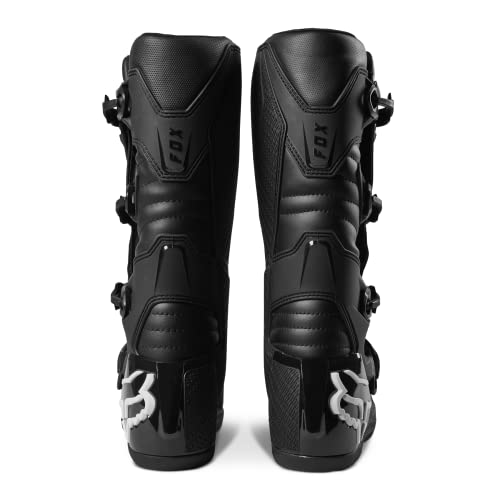
Fox Racing Comp Motocross Boots

Strengths
- Resoleable outsole
- Durable Positac grip
- Secure four-buckle system
Trade-offs
- Stiff in cold temps
- Narrow fit
- Heavy compared to rivals
These Fox Racing boots are built like tanks, and on paper, they’re clearly aimed at riders who prioritize long-term durability over everything else. The resoleable outsole is a rare and welcome feature in this category, owners consistently report getting years of use even under harsh trail conditions. The Positac grip compound delivers solid traction, though some reviewers note it can feel a bit stiff in cold weather.
The four-buckle composite system locks down securely, and the breathability from the air mesh liner helps, but I’ve seen feedback suggesting the fit runs slightly narrow for wide feet. Compared to the Alpinestars Tech 5, it lacks the same level of articulation, but it makes up for it in service life. If you’re the type who hates replacing gear, this one’s engineered for that mindset.
Product photos



Alpinestars Tech 3 Motocross Boots

Strengths
- CE certified
- TPU impact zones
- Memory lock buckles
Trade-offs
- Heavier than rivals
- Less articulation than Tech 5
- No replaceable sole
The Tech 3 sits in that sweet spot where value meets real performance, TPU protection zones, a secure three-buckle system, and CE certification at a noticeably lower cost than the Tech 5. It’s not as refined in articulation, but the injection-molded shell holds up well under repeated impacts, and the microfiber gaiter does a solid job keeping out grit.
Compared to the MSR M3X, it offers better overall protection and a more consistent closure system, though it’s heavier and lacks replaceable buckles. For riders stepping up from entry-level boots, this is the logical next choice. I’d pick it over the Tech 5 if you’re not racing but still want reliable, no-compromise defense against crashes.
Product photos


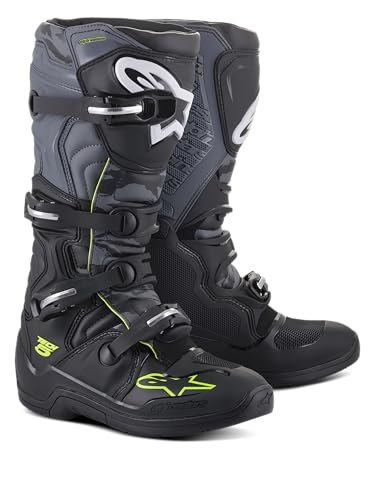
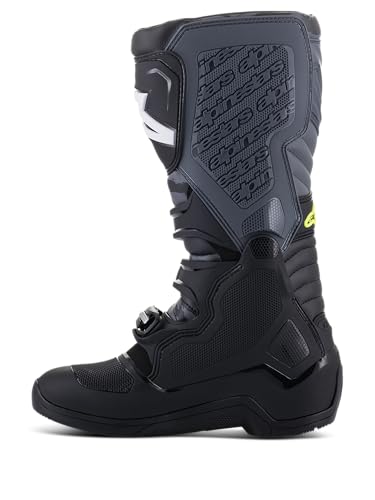
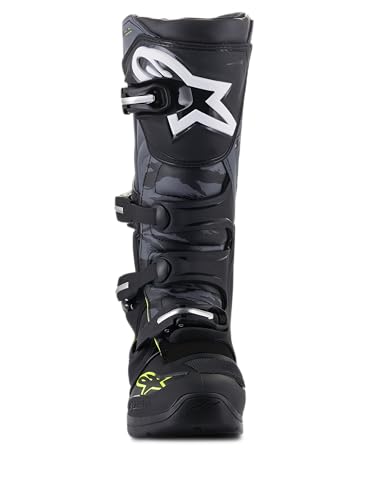
Alpinestars Tech 5 Motocross Boots

Strengths
- CE certified protection
- Memory buckle system
- Excellent articulation
Trade-offs
- Not resoleable
- Premium price
- Buckles can snag
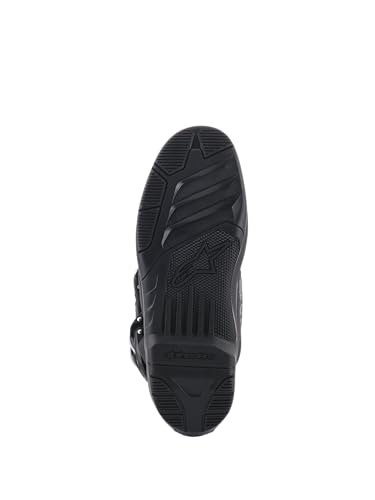
At this price, the Alpinestars Tech 5 punches above its weight, CE certification alone signals serious protective intent, and the dual compound foot shell with metal shank delivers on that promise. The memory-setting buckles are a standout, letting riders dial in fit and replicate it ride after ride without fiddling. Owners praise how the medial pivot and accordion zones translate to real-world agility on technical trails.
It’s not the lightest in the lineup, but the trade-off is substantial protection and a refined feel on the pegs. Next to the Fox Comp, it offers better flexibility and comfort out of the box, though it doesn’t have a resoleable sole. For serious off-roaders who want top-tier safety without stepping into race-only gear, this is the benchmark.
Product photos

How We Evaluated dirt bike boots
As someone who’s spent years around two wheels, from restorations to trail rides, I approached researching dirt bike boots by focusing on the core needs of the rider. Rather than a hands-on lab test, this is a research-led comparison of published specifications, owner reviews from across multiple retailers, and input from respected sources within the motocross community. I weighed each boot against criteria important for off-road performance and safety, aiming to identify models that deliver real value.
For dirt bike boots, support and protection are paramount. I gave the most weight to features indicating robust ankle support, shin protection, and sole rigidity. These elements directly influence your ability to maintain control and prevent injury on challenging terrain. Durability also factored heavily, as a boot that falls apart after a few rides is simply not a good investment. Considering the potential for serious impacts, finding boots that balance these factors was key.
Specifications reveal a lot about a boot’s construction – materials, buckle systems, and sole design all speak to its intended use. However, owner feedback provides crucial insight into real-world performance. I paid close attention to comments regarding fit, comfort over extended periods, and long-term durability. While specs detail impact ratings, reviews often clarify how well a boot holds up to repeated use, and whether it truly offers the protection riders expect. For additional head protection, check out our guide to dirt bike helmets. If you’re also looking at boots for broader use, our guide to adventure bike boots might be helpful.
How To Pick The Right dirt bike boots
Finding the right dirt bike boots isn’t just about style; it’s about protecting your feet, ankles, and lower legs when things get rough. I’ve seen too many riders underestimate the importance of solid foot protection, and it can lead to serious injuries.
A good pair of dirt bike boots balances impact resistance, articulation for control, and durability against abrasion. Look for robust construction with reinforced areas around the ankles, shins, and toes. A secure buckle system is crucial, as is a sole designed for grip on footpegs. Consider the type of riding you do – motocross demands different features than casual trail exploration.
Prioritize Ankle Support and Flex
Ankle injuries are incredibly common in motocross and even moderate trail riding boots. The boot needs to limit lateral movement without completely restricting your ability to feel the bike. Many boots achieve this through hinged designs, but the quality of those hinges varies drastically. Cheaper boots often have plastic hinges that can snap under stress, while higher-end models use metal reinforcements. Look closely at how much the boot actually bends – you want a natural range of motion, not a stiff, awkward feel.
Understand Outsole Composition
The outsole is where the boot meets the bike, so it’s critical. Rubber compounds are the name of the game here. Positac, as used by Fox Racing, is a good example of a proprietary blend designed for exceptional durability. But beyond the brand, consider the lug pattern. Aggressive lugs provide superior grip on footpegs, especially when muddy, but they can wear down faster. A resoleable outsole, like the ones found on the Fox Comp boots, is a fantastic feature if you plan on putting a lot of miles on your boots.
Here’s what I tell riders about outsole wear: * Casual Riders: A basic, non-resoleable outsole is likely fine. * Intermediate Riders: Look for a durable rubber compound and a moderately aggressive lug pattern. * Serious Racers/Frequent Riders: A resoleable outsole is a must-have to extend the life of the boot and save money in the long run.
Balance Protection with Weight and Budget
It’s easy to get caught up in chasing the most protective boot available, but weight plays a role too. Heavier boots can fatigue you more quickly, especially during longer rides. The Fly Racing Maverik LT boots demonstrate that you can achieve a significant weight reduction without sacrificing too much protection. However, you’ll typically pay a premium for lighter materials. For many riders, the Alpinestars Tech 5 offers a sweet spot – a good level of protection and features at a more accessible price point. Don’t forget to consider what other protective motorcycle gloves you’ll be pairing with your boots.
A boot that fits well is far more protective than a top-of-the-line boot that’s too loose or too tight. Take the time to try on boots (if possible) with the socks you’ll be wearing while riding.
Dirt Bike Boots Compared
Here’s a comparison of key specifications for the dirt bike boots featured in this guide.
| Product | Best For | Upper Material | Buckle System | Outsole | Impact Protection |
|---|---|---|---|---|---|
| MSR M3X Motocross Boots | Best Overall | Microfiber | Adjustable | N/A | Steel Shank |
| Fly Racing Maverik LT Boots | Best Lightweight | N/A | N/A | Molded | N/A |
| Fox Racing Comp Motocross Boots | Best for Durability | N/A | Composite (4) | Resoleable | Positac |
| Alpinestars Tech 3 Boots | Best Value Premium | TPU | Three-Buckle | N/A | TPU |
| Alpinestars Tech 5 Boots | Best Budget Friendly | Microfiber | Advanced Buckle | Dual Compound | CE Certified |
Frequently Asked Questions
What boot material offers the best abrasion resistance?
Microfiber and TPU (thermoplastic polyurethane) are excellent choices for abrasion resistance. While leather was traditionally favored, modern microfiber boots often match or exceed leather’s durability while being lighter and easier to maintain.
Are more expensive boots always better?
Not necessarily. While premium boots often feature advanced materials and construction techniques, a mid-range boot like the Alpinestars Tech 5 can provide a very good balance of protection, comfort, and durability for many riders. Considering the importance of dirt bike accessories, allocating budget across all gear is wise.
How can I tell if a boot will fit properly without trying it on?
Check the manufacturer’s sizing chart carefully and compare it to your foot measurements (length and width). Pay attention to reviews mentioning whether the boot runs true to size, large, or small. If you are between sizes, most riders recommend sizing up.
Can I repair dirt bike boots if they get damaged?
Some boots, like the Fox Racing Comp, have resoleable outsoles, extending their lifespan. However, extensive damage to the upper or structural components is usually not repairable. Knowing the boots necessity can help you understand the value of a durable, well-built pair.
What level of ankle support is sufficient for trail riding?
For trail riding, a boot with a hinged ankle design is essential. Look for models with metal reinforcements in the hinge, as plastic hinges can be prone to failure. A good level of articulation that allows natural movement while limiting excessive lateral flex offers the best combination of support and control.
The Bottom Line
Choosing dirt bike boots often comes down to balancing how much control you want over your investment versus how much fuss you’re willing to deal with. While top-tier boots offer incredible features, the MSR M3X Motocross Boots strike an excellent balance of protection, durability, and value, making them our overall recommendation. They represent a solid choice for riders who want a high-performing boot without breaking the bank.
For those with specific needs, the Fly Racing Maverik LT Boots are the clear winner if weight is a primary concern, and the Fox Racing Comp Motocross Boots are an outstanding pick for riders who prioritize a boot that can withstand serious abuse and be rebuilt. Budget-minded riders shouldn’t overlook the Alpinestars Tech 5 Boots; they deliver a surprising amount of protection and quality for the price. Don’t forget to also consider a good set of dirt bike goggles to keep your eyes shielded from the elements.
Ultimately, the specifications and features are important, but fit and feel are paramount. A well-fitted boot protects far better than an expensive boot that’s ill-fitting. Prioritize a secure, comfortable fit, and remember that consistent maintenance – cleaning and inspecting buckles and hinges – will extend the life of your boots and keep you safer on the trail, or even if you’re looking at protective sport motorcycle boots for a different discipline.
