
6 Best Downhill Bike Brakes of 2026
This post contains affiliate links. As an Amazon Associate, we earn from qualifying purchases.
The best downhill bike brakes deliver relentless stopping power and heat control when you need it most. After comparing the field, the IIIPRO R3X4 stands out as the top overall pick for its CNC-machined caliper and consistent 4-piston performance, while the DYISLAND SD-230X offers a solid budget-friendly alternative without sacrificing core functionality.
Downhill riders don’t just need brakes that stop, they need brakes that won’t quit when the trail gets steep and long. Too many riders learn the hard way that fade, poor modulation, or weak use can turn a controlled run into a white-knuckle gamble. In this guide, I’ll break down what actually matters in a downhill brake: piston count, heat management, lever feel, and real-world reliability, based on specs, owner feedback, and the kind of punishment these components face on the mountain.
Top 5 Downhill Bike Brakes in the Market
The Best Downhill Bike Brakes, Reviewed
DYISLAND SD-230X 4-Piston Hydraulic
Strengths
- 4-piston front caliper
- Supports 203mm rotors
- Double screw adjustment
Trade-offs
- Slightly heavier build
- Default left-front logic
- Mineral oil caution during swap
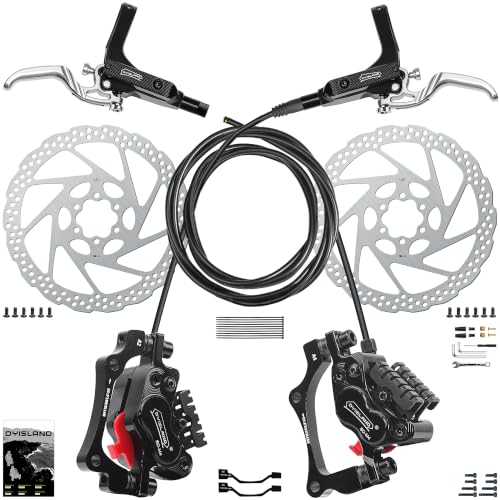
This is the sweet spot between performance and price. The DYISLAND SD-230X offers a 4-piston front caliper and 2-piston rear, giving you serious clamping power up front where you need it, without overkill in the back. The hoses come pre-filled with mineral oil, so installation is straightforward, and the double screw adjustment, both for lever angle and braking sensitivity, adds a level of customization rare at this price. Owners consistently praise the two-finger pull and the strong, predictable response, even in wet or gritty conditions.
It also supports rotors up to 203mm, which is a big deal for downhill riders needing extra use and cooling. While it doesn’t have the name-brand pedigree of Magura or Shimano, it matches or exceeds many mid-range kits in spec and real-world feedback. Against the TOBWOLF, it’s clearly the more capable system; against the IIIPRO, it trades some bling for broader compatibility and smarter tuning. My pick for most riders who want serious performance without overspending.
Video review
TOBWOLF Dual Piston Hydraulic Kit
Strengths
- True hydraulic operation
- Ceramic brake pads
- Vented stainless rotors
Trade-offs
- Basic bleed process needed
- Hose length may limit fit
- Durability concerns long-term
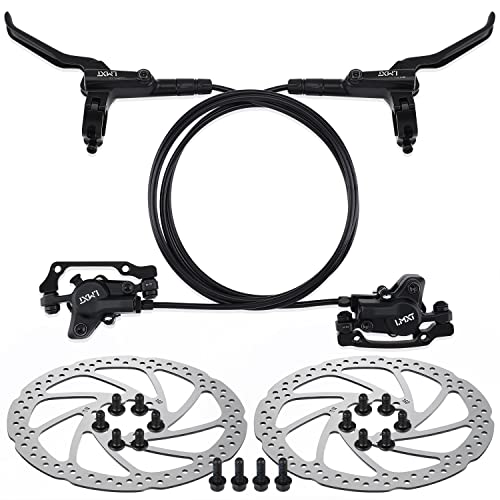
For the price, the TOBWOLF kit punches above its weight. It’s one of the most convincing budget hydraulic options I’ve seen, offering dual-piston calipers, pre-installed ceramic pads, and 160mm stainless rotors with vented spiders, all for well under $50. Owners consistently report solid initial performance, good lever feel, and strong resistance to squeal, even in damp conditions. The ceramic pads don’t chew up rotors, and the mineral oil system holds up better than low-end glycol-based alternatives in heat.
That said, longevity is where questions arise. Some reviewers note that while the brakes work well at first, fine-tuning the pad clearance takes patience, and the included hardware feels a bit flimsy compared to pricier brands. Still, for riders building a commuter or light trail bike, or anyone wanting hydraulic performance without breaking the bank, this kit is a smart starting point. It beats the LOOEEL mechanicals easily and even gives the more expensive DYISLAND set a run for its money in raw value.
Video review
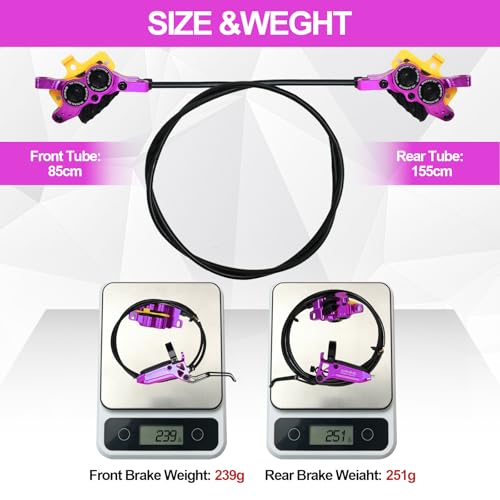
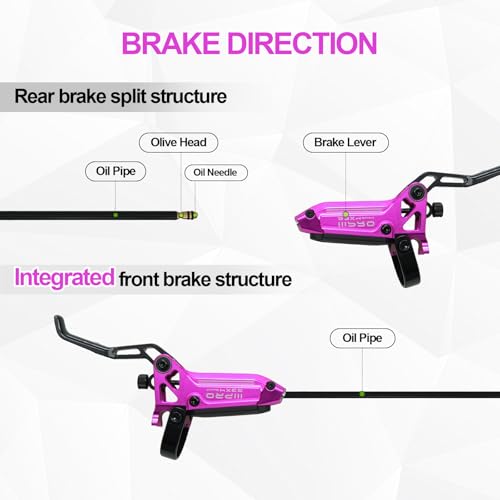
IIIPRO R3X4 4-Piston Hydraulic (Purple)

Strengths
- 4-piston caliper
- Pre-bled mineral oil
- Excellent heat management
Trade-offs
- Higher price point
- Purple finish not for everyone
- Heavier than race ultralights
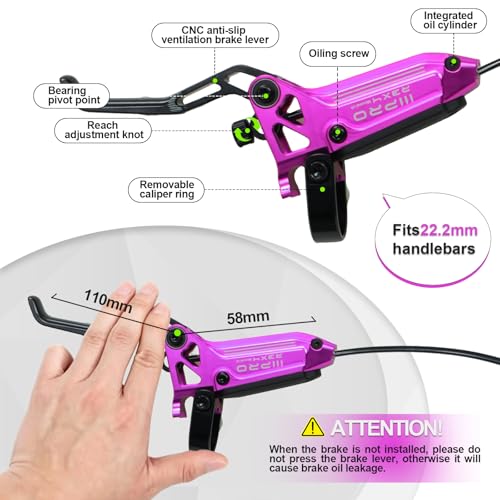
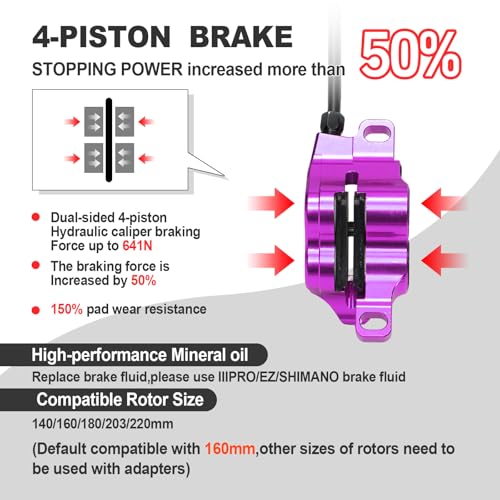
Let’s be honest, the purple finish grabs attention, but the IIIPRO R3X4 backs it up with solid engineering. This is a full 4-piston hydraulic system with CNC-machined aluminum levers and calipers, pre-bled with mineral oil, and built for riders who push their bikes hard. On paper, it checks all the boxes for downhill use: high clamping force, excellent heat dissipation, and strong modulation. The 4-piston design ensures even pad pressure, reducing fade on long descents, and owners report confident braking in technical terrain.
What really sets it apart is how little setup is required. Unlike many budget kits that demand careful bleeding, this one installs cleanly out of the box. The adjustable lever reach is a thoughtful touch, and the build quality feels closer to mid-tier Shimano or Tektro than typical Amazon-branded kits. Compared to the TOBWOLF, it’s clearly the more serious performer, though you pay for it. If color isn’t your thing, the performance alone still makes it a top pick for aggressive riders.
Product photos

Magura MT5 4-Piston Aluminum Brake

Strengths
- Premium aluminum build
- Ergonomic 2-finger design
- Adjustable lever reach
Trade-offs
- Lever only – no caliper
- High cost per function
- Limited standalone use
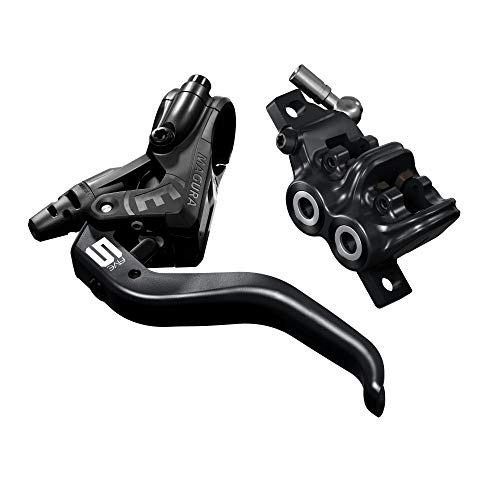
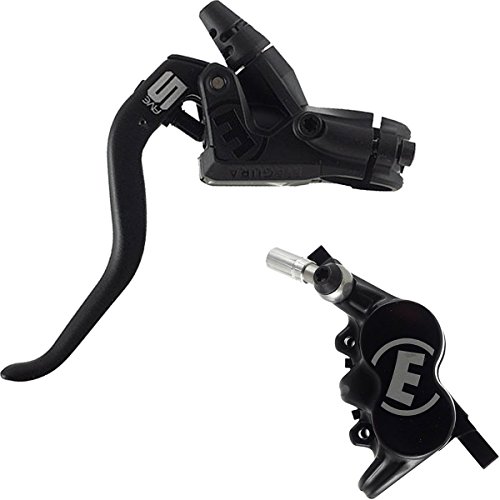
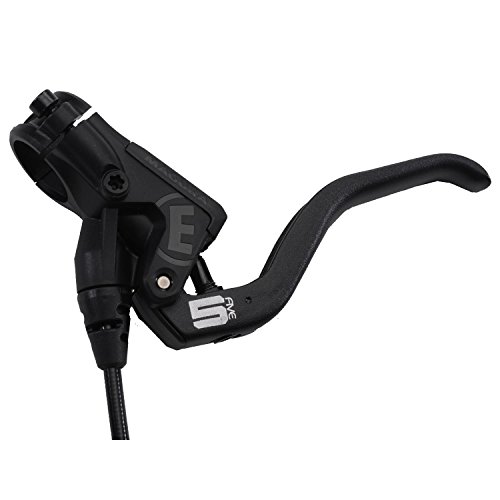
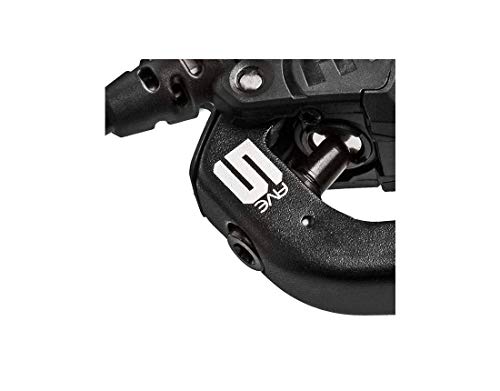
The Magura MT5 lever isn’t a full brake system, so I have to be clear, it’s just the lever assembly, not the caliper or hose. That means it’s only relevant if you’re building or upgrading a compatible hydraulic system, likely pairing it with a Magura MT5 or MT7 caliper. On paper, it’s impressively light and stiff, thanks to the forged aluminum and Carbotecture body, and the 2-finger design gives excellent use and control. Owners praise the ergonomic shape and adjustable reach, which helps smaller-handed riders get proper finger placement without strain.
But here’s the catch: at this price, you’re paying for premium materials and German engineering, but you’re not getting a complete braking solution. If you already run Magura hydraulics, this lever makes sense as a replacement or upgrade. But for most riders, especially those eyeing downhill performance, it’s a niche part, not a standalone fix. Compared to full kits like the IIIPRO R3X4, it doesn’t offer value unless you’re deep into component-level customization.
Product photos

LOOEEL Mechanical Disc Brake Caliper

Strengths
- Lightweight aluminum
- Easy installation
- Rust-resistant finish
Trade-offs
- Frequent tuning needed
- Limited modulation
- Not fade-resistant
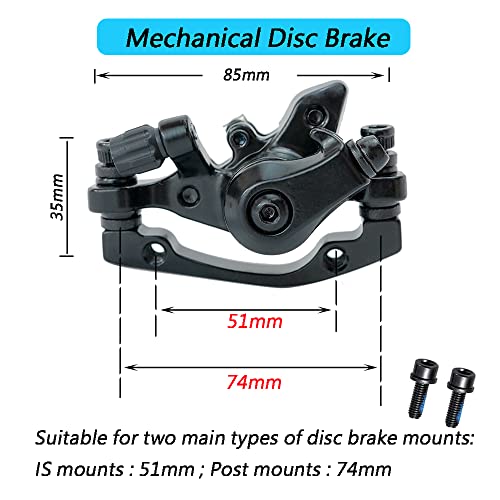
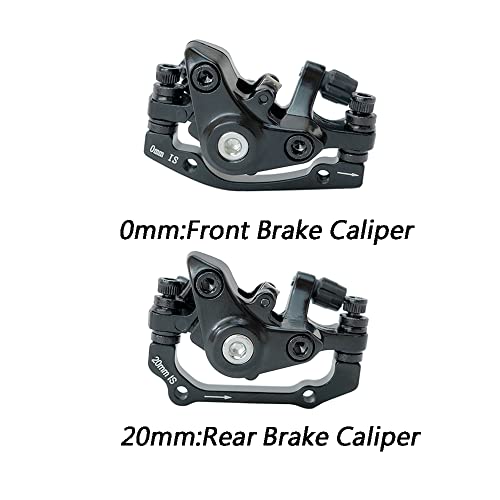
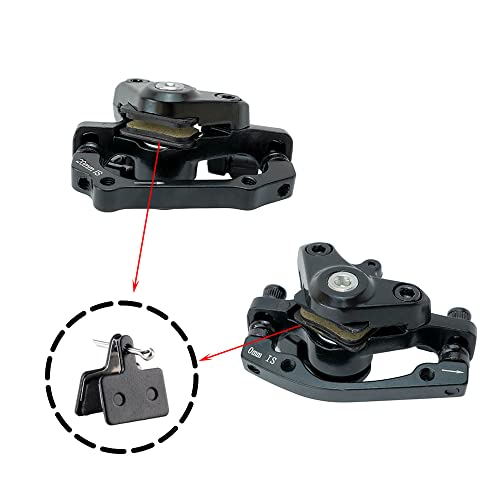
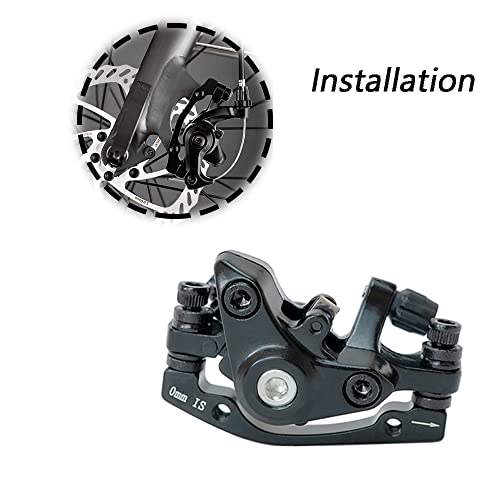
I won’t sugarcoat it, mechanical disc brakes are a step down from hydraulic systems, especially when you’re talking downhill riding where control and consistency matter. That said, for riders on a tight budget or those maintaining older or entry-level builds, the LOOEEL mechanical setup delivers what it promises: basic, functional stopping power with decent materials. The aluminum alloy construction is lightweight and corrosion-resistant, which owners appreciate in wet or muddy conditions, and the compatibility with both IS and post-mount standards makes it adaptable across many frames.
Still, this system shows its limits under hard use. Reviewers consistently report needing frequent adjustments, and the linear-pull design just can’t match the modulation or bite of even budget hydraulics. It’s best viewed as a reliable backup or upgrade over rim brakes, not a true downhill contender. Compared to the TOBWOLF or DYISLAND kits, it lacks the confidence-inspiring feel needed for aggressive terrain.
Product photos

How We Chose These downhill bike brakes
As someone who’s spent years immersed in the world of two-wheeled machines at TheAutoZenith, I approached researching downhill bike brakes with a focus on delivering reliable stopping power under demanding conditions. Rather than a hands-on lab test, this was a research-led comparison of published specifications, owner reviews from across multiple platforms, and insights from respected cycling publications. I weighed features against price point and considered the specific needs of downhill riding – consistent performance, heat management, and modulation.
For downhill applications, consistent braking force and heat dissipation are paramount. I prioritized brakes with 4-piston calipers because they naturally offer greater stopping power and better heat management than 2-piston designs. Durability also played a significant role; the aggressive nature of downhill riding demands components built to withstand substantial impact and consistent use. These features directly impact rider confidence and safety on challenging terrain.
Specifications provide a solid foundation – piston count, caliper material, rotor compatibility – but owner feedback proved crucial in understanding real-world performance. I focused on reports concerning brake fade on long descents, lever feel, and ease of maintenance. While specs indicate potential, long-term reliability and consistent performance are best assessed through the experiences of those using the brakes regularly. You can find more information on choosing the right brakes for your mountain bike at our guide to mountain bike brakes. Understanding how to maintain those brakes is also key; learning how to adjust bike brakes will keep you safe on the trails.
How To Pick The Right downhill bike brakes
Downhill bike brakes are a critical component, demanding more than just stopping power. They need to withstand immense heat, offer consistent modulation, and inspire confidence when everything is on the line.
A truly capable downhill brake system prioritizes consistent stopping force under sustained use. Look for 4-piston calipers for superior power and heat management, materials like CNC-machined aluminum for durability, and features like adjustable lever reach to optimize control for varied hand sizes. Pre-bled systems simplify installation, while effective heat dissipation is paramount to prevent brake fade on long, steep descents.
Piston Count & Caliper Material
The heart of any hydraulic brake is the caliper, and for downhill, four pistons are almost a necessity. More pistons mean a larger contact area with the rotor, delivering significantly more stopping force. Don’t assume all 4-piston brakes are created equal, though. The material the caliper is made from matters hugely. Full CNC-machined aluminum, as seen in options like the IIIPRO R3X4, offers a much better balance of strength, weight, and heat dissipation than cheaper cast alloys. While dual-piston brakes can work for lighter riders or less demanding trails, pushing your limits downhill requires the extra bite and consistency a four-piston system provides.
Modulation & Fluid Type
Downhill isn’t about locking up the rear wheel; it’s about controlling your descent. Modulation – the ability to finely adjust braking force – is where a good brake system truly shines. This isn’t just about the lever feel; it’s tied to the brake fluid used. Mineral oil, increasingly common (like in the IIIPRO and DYISLAND brakes), tends to be less prone to absorbing water, which can lead to spongy brake feel. DOT fluid offers higher operating temperatures, but requires more frequent flushing and is corrosive. Consider your maintenance habits and riding conditions when deciding which fluid type suits you best.
Here’s a quick rundown on what to prioritize:
- Lever Feel: Subjective, but crucial. A smooth, predictable pull builds confidence.
- Adjustability: Being able to fine-tune lever reach and bite point is a huge benefit.
- Heat Management: The longer the descent, the more important heat dissipation becomes – look for designs with improved venting.
A properly maintained brake system is far more important than a flashy, expensive one. Regular pad checks and fluid changes are essential for consistent performance and rider safety.
Value & Compatibility
Downhill riding is expensive enough without breaking the bank on brakes. While top-tier brands like Magura offer exceptional performance, you can find excellent value with options like the DYISLAND SD-230X or TOBWOLF kit. These often deliver comparable stopping power to more expensive systems, though they might not have the same refined modulation or lightweight construction. When looking at value options, pay close attention to rotor compatibility. Most modern downhill bikes use 6-bolt rotors, but it’s worth double-checking before you buy. Understanding the differences between disc vs rim brakes can also help you appreciate the advantages of a dedicated hydraulic disc setup for downhill.
Downhill Bike Brakes Compared
Here’s a comparison of key specifications for several downhill bike brake options.
| Product Name | Piston Count | Hydraulic | Lever Material | Rotor Compatibility | Hose Length (Front/Rear) |
|---|---|---|---|---|---|
| IIIPRO R3X4 4-Piston Hydraulic | 4 | Yes | Aluminum | N/A | N/A |
| DYISLAND SD-230X 4-Piston Hydraulic | 4 | Yes | N/A | 160-203mm | 900mm / 1650mm |
| TOBWOLF Dual Piston Hydraulic Kit | 2 | Yes | N/A | 6-Bolt | 85cm / 150cm |
| IIIPRO R3X4 4-Piston (Purple) | 4 | Yes | Aluminum | N/A | N/A |
| Magura MT5 4-Piston Aluminum Brake | 4 | Yes | Aluminum | N/A | N/A |
| LOOEEL Mechanical Disc Brake Caliper | N/A | No | N/A | 140-180mm | N/A |
Frequently Asked Questions
What rotor size should I choose for downhill braking?
Generally, 203mm rotors are the standard for downhill bikes, offering the best balance of stopping power and heat dissipation. However, some riders may benefit from 220mm rotors on particularly steep or fast tracks, while lighter riders might find 180mm sufficient.
How often should I bleed my downhill bike brakes?
You should bleed your brakes at least once a season, or more frequently if you notice a spongy lever feel. For riders tackling very demanding terrain, bleeding every few months is a good practice to maintain optimal performance and prevent brake fade.
Can I mix and match brake brands on my bike?
While technically possible, I don’t recommend mixing brake brands. Different brands use different hydraulic fluids (DOT or mineral oil) and mixing them can cause system failure. Maintaining a consistent system across both wheels simplifies maintenance and optimizes performance.
What’s the difference between DOT and mineral oil brake fluid?
DOT fluid boasts a higher boiling point, which is beneficial in extreme heat, but it’s corrosive and absorbs moisture quickly. Mineral oil offers a less aggressive profile and doesn’t absorb water as readily, but performs best in moderate temperatures. Choosing between them depends on your riding style and climate.
Will upgrading to downhill-specific brakes improve my overall riding experience, even if I already have decent mountain bike brakes?
Yes, upgrading to brakes specifically designed for downhill can noticeably improve your control and confidence. If you’re frequently riding challenging downhill trails, the increased stopping power, modulation, and heat management of dedicated downhill brakes will enhance your safety and enjoyment, especially when compared to the brakes discussed in our guide to enduro mountain bike brakes.
The Bottom Line
Choosing downhill bike brakes often comes down to balancing outright performance with your budget and maintenance willingness. While the top-end options offer refinements in modulation and weight, the IIIPRO R3X4 4-Piston Hydraulic brakes consistently stand out as offering a robust and powerful stopping solution for demanding trails, delivering a significant performance increase over entry-level systems.
For those on a tighter budget, or looking for a complete kit, the DYISLAND SD-230X 4-Piston Hydraulic brakes provide excellent value without sacrificing essential stopping power. If you’re prioritizing simplicity and a lighter wallet, the TOBWOLF Dual Piston Hydraulic Kit offers a functional, if less refined, braking experience – but remember it’s a 2-piston design, so it won’t match the consistency of a 4-piston setup on long descents. You can explore even more options in our guide to the best hydraulic brakes if you’re still searching.
Ultimately, the most expensive brakes won’t make you a faster rider, but reliable, well-maintained brakes will keep you safe and in control. Prioritize consistent performance, proper installation, and regular maintenance – checking pad wear and flushing fluid – over chasing the latest specifications. Don’t forget to also read our bike brake reviews to get a broader understanding of the market.
