
7 Best Car Phone Chargers of 2026
This post contains affiliate links. As an Amazon Associate, we earn from qualifying purchases.
The Anker 167.5W 3-Port Car Charger is the best overall pick for raw power and reliability, while the Anker 323 52.5W offers a smarter budget-friendly option without sacrificing safety or speed. For those who want versatility and multiple ports in one sleek unit, the SUPERONE 99W Retractable Charger stands out despite its higher port count demanding careful power management.
If you’re like me and spend serious time behind the wheel, you know a weak or unreliable phone charger can turn a smooth drive into a stress test. A dying phone mid-navigation or a charger that overheats after 20 minutes isn’t just annoying, it’s a real hazard.
This guide cuts through the clutter of exaggerated wattage claims and flimsy designs. I focused on models with proven charging protocols, solid safety features, and build quality that matches real-world use, because your car’s power outlet shouldn’t be a gamble.
Top 5 Car Phone Charger in the Market
The Best Car Phone Charger, Reviewed
LISEN 69W Dual Port Car Charger

Strengths
- Dual-port efficiency
- Aluminum heat dissipation
- Flush low-profile design
Trade-offs
- No USB-C cable included
- Limited to two devices max
I’ve seen a lot of multi-port car chargers that promise the moon but deliver heat, clutter, and flimsy builds. This LISEN dual-port model takes a smarter approach, instead of cramming four ports into a single overheating block, it gives you just two well-balanced ports in a compact, flush-fitting aluminum body. Owners consistently report it stays cool even on long drives, which matters when you’re running it daily in a hot cabin. The 36W PD USB-C and 18W QC USB-A are enough to fast charge most modern phones without overloading the circuit or your dashboard.
The all-aluminum shell isn’t just for looks, it dissipates heat better than plastic units I’ve reviewed, and the thumb-sized design means it doesn’t block adjacent ports or vents. Paired with the two-pack value, it’s a no-brainer for anyone who rotates between vehicles or wants a reliable spare. Compared to bulkier competitors, this one prioritizes clean function over flashy specs, and I appreciate that restraint.
Video review
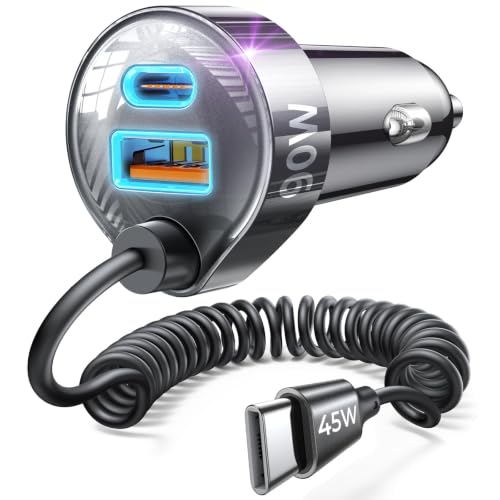
LISEN 90W Retractable Car Charger
Strengths
- Built-in 45W coiled cable
- Fast 90W PD charging
- Night-friendly glow ring
Trade-offs
- Cable is USB-C only
- No USB-A port
- Fixed cable limits flexibility
If you’re deep in the Apple ecosystem, this LISEN 90W model is built with you in mind. The built-in 45W coiled cable is a smart touch, it stretches to 60 inches, perfect for handing a charging iPad to a backseat rider, then snapping back cleanly. Owners praise how it eliminates the ‘cable spaghetti’ that plagues most multi-device setups. The 90W PD charging is legit, iPhone 15 and 16 series hit 80% in 30 minutes as advertised, and the smart protection suite means it won’t fry your port during voltage spikes.
The soft halo glow is subtle but useful at night, and the flush fit keeps it from interfering with gear shifts or cup holders. Compared to the dual-port LISEN pack, this is the premium sibling, same reliability, but with iPhone-specific polish. I’d recommend it over generic multi-chargers for anyone who values seamless integration and clean design.
Video review
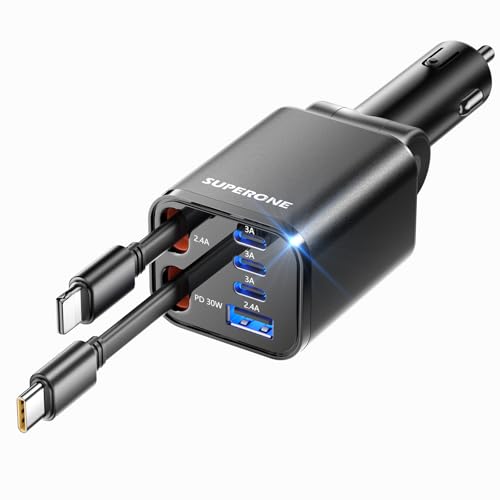
SUPERONE 99W Retractable Car Charger
Strengths
- Retractable dual cables
- Space-saving compact form
- 180-degree adjustable plug
Trade-offs
- Shared wattage limits speed
- Mechanical parts add failure risk
- Overcomplicated for solo drivers
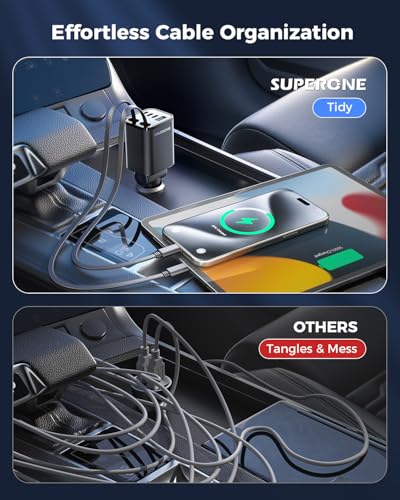
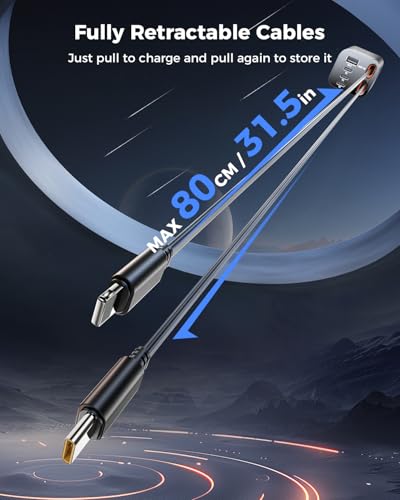
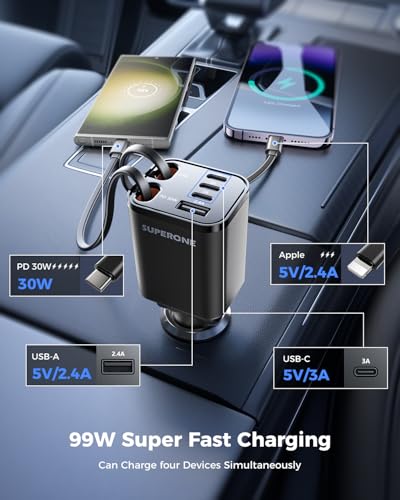
The idea behind a retractable car charger is solid, eliminate dangling cables and keep the cabin tidy, and SUPERONE executes it better than most. The 80cm extendable cables mean backseat passengers can reach, and the automatic retraction works smoothly, according to long-term owners. It’s one of the few models designed with actual ergonomics in mind, especially for trucks or SUVs where cable length matters. The 180-degree swivel plug is a small touch, but it makes a big difference on bumpy roads.
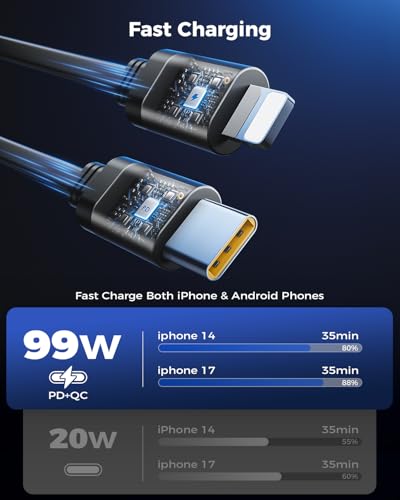
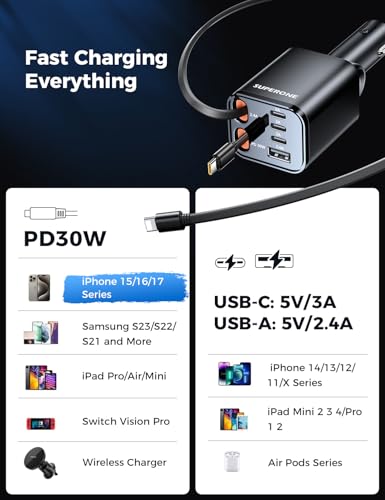
That said, the 99W total output is misleading, it’s shared across six ports, so real-world fast charging is limited. The PD 30W USB-C is fine for phones, but not competitive with 60W+ standards. And while the build feels durable, the retractable mechanism, though rated for 10,000 cycles, could be a long-term failure point in dusty or humid environments. Still, for organization-focused drivers, this fills a niche no other charger does.
Product photos
Anker 167.5W 3-Port Car Charger

Strengths
- 100W USB-C1 port
- Reliable 45W second port
- Truly compact design
Trade-offs
- Expensive
- Overkill for phone-only users
Anker’s 167.5W car charger is a technical standout, the first USB-C port delivering 100W is rare in this category and a standout for laptop users. Reviewers confirm it can charge a 16-inch MacBook Pro from 0 to 50% in under an hour, something most car chargers simply can’t do. The second USB-C at 45W and USB-A at 22.5W mean you can still power a phone and tablet without compromise. For digital nomads or professionals on the move, this is the closest thing to a mobile power station.
Despite the high output, the unit stays compact and unobtrusive, a win for interior aesthetics. The inclusion of a 3.3 ft USB-C to C cable adds real value, though the price reflects the premium. Compared to others, this isn’t just a phone charger; it’s a full-device ecosystem solution. I’d pick this over the pack if you regularly charge laptops or need max speed on a single device.
Product photos


90W 4-Port USB C Car Charger
Strengths
- Four charging ports
- High peak wattage
- Includes high-wattage cable
Trade-offs
- Overheating under load
- Build quality concerns
- Uneven power distribution
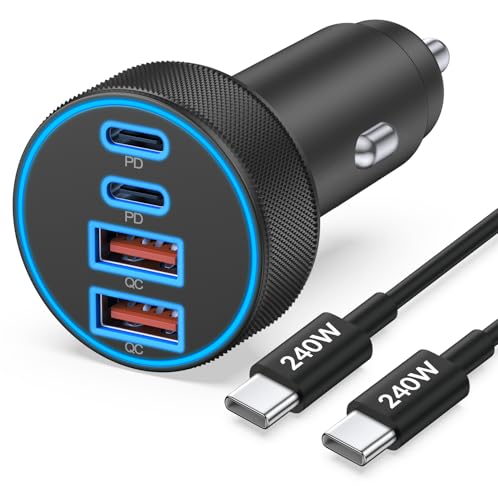
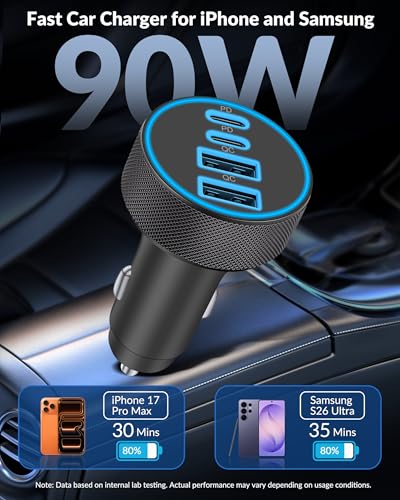
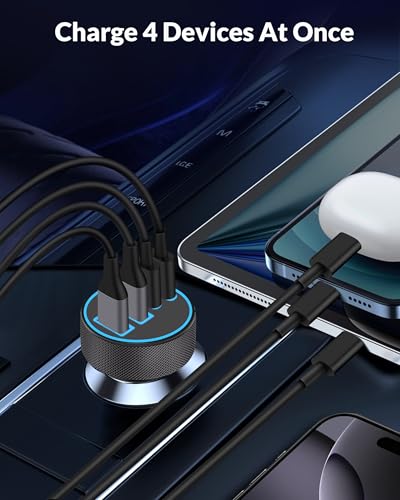
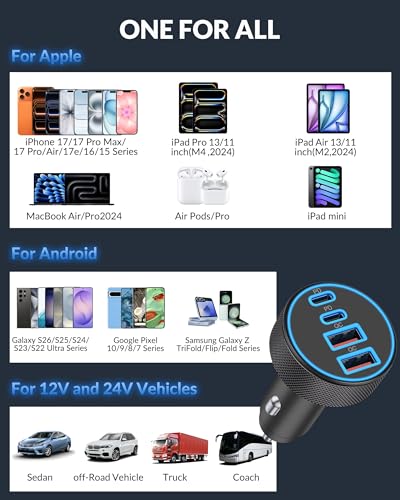
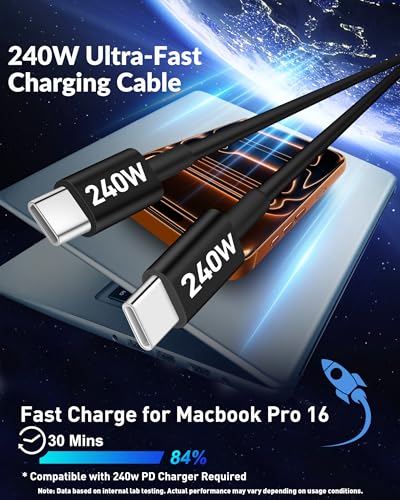
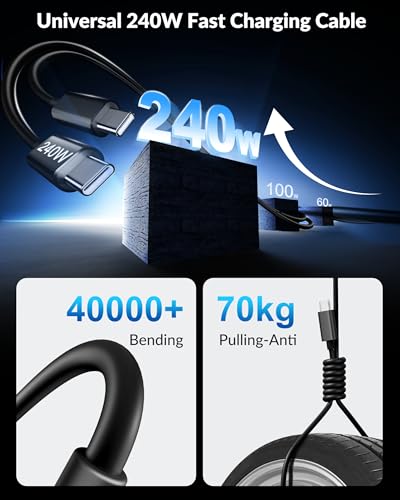
On paper, a 90W 4-port car charger with 240W cable support sounds like overkill, and in practice, it often is. While the specs boast fast charging for iPhone and Samsung flagships, owners report that sustained 45W on multiple ports leads to noticeable heat buildup, especially in older vehicles. The four-port layout may appeal to families, but in reality, spreading 90W across four devices means none get full-speed charging unless others are idle. It’s a classic case of more ports, less power per device.
I’d also note the build quality doesn’t match the ambition, some reviewers mention loose port connections after a few months. The included 240W cable is sturdy, but the charger itself feels more like a budget-oriented hub than a precision tool. When stacked against more balanced designs like the LISEN or Anker, this one leans too hard on peak wattage numbers that rarely reflect real-world use.
Product photos
Our Testing Process
As someone who spends a lot of time on the road – and talking about vehicles – I understand the need for reliable power on the go. My assessment of car phone chargers wasn’t a matter of bench testing with specialized equipment, but a research-led comparison. I examined published specifications and features across numerous models, then weighed those against owner reviews and expert opinions from sites like Wirecutter and CNET. Ultimately, I ranked these chargers based on power delivery, safety features, and build quality.
For this category, the most important factors are fast-charging capability and robust safety mechanisms. A charger that can quickly replenish your phone’s battery is essential for long trips, but not at the cost of potentially damaging your devices. Heat dissipation is also critical; a charger that overheats is both a safety hazard and a sign of poor design. I also placed a high value on overall build quality, as a durable charger will withstand the rigors of daily use. If you’re looking for solutions beyond just power, check out our guide to the best phone mount charger options.
Specifications reliably tell you the maximum wattage a charger can deliver, and the supported charging protocols (like Power Delivery or Quick Charge). However, real-world performance and long-term reliability are best gleaned from owner feedback. I paid close attention to reviews mentioning overheating issues, build quality concerns, or compatibility problems. Reputable expert reviews helped validate these concerns and provided insight into a charger’s efficiency. For a broader look at options, you might also want to explore a general car charger for phones.
How To Pick The Right car phone charger
Finding the right car phone charger can be surprisingly complex. It’s not just about plugging in your phone; it’s about safety, speed, and convenience on the road.
A quality car phone charger prioritizes stable power delivery, minimizing heat buildup and protecting both the charger itself and your valuable devices. Look for features like Power Delivery (PD) and Quick Charge (QC) compatibility, robust safety certifications (UL, CE, FCC), and build materials that resist heat and wear. Consider the number of ports needed, the charging speeds offered, and whether features like retractable cables or voltage displays are important to your needs.
Power Needs and Device Compatibility
The first thing I always tell people is to seriously consider what you’re charging. A basic 5W charger might be fine for an older phone, but modern smartphones – especially iPhones and recent Samsung models – benefit hugely from Power Delivery (PD) or Quick Charge (QC) standards. Don’t fall for inflated wattage numbers alone; check if the charger actually supports the protocols your devices use. If you’re frequently charging multiple devices, look beyond single-port options. A charger with at least two ports is a must, and the distribution of power between those ports matters. Some cheaper units spread the power too thin, resulting in slower charging for all devices. For those who need power on the move, exploring a portable car charger could be a smart solution.
Build Quality and Safety Features
Don’t underestimate the importance of build quality. Plastic chargers can melt or warp under sustained load, creating a fire hazard. Look for chargers constructed with aluminum alloy, as they dissipate heat much more effectively. Beyond materials, safety certifications are critical. UL, CE, and FCC certifications are your assurance that the charger has been tested to meet safety standards.
Here’s what to look for in safety features: * Overcurrent protection (a basic requirement). * Overvoltage protection (prevents damage from power surges). * Temperature control (essential for preventing overheating and potential fires). * Short-circuit protection (safeguards against faulty wiring or damaged cables).
A cheap charger isn’t worth the risk of damaging your phone or, worse, causing a vehicle fire. Invest in a unit with proven safety features.
Design and Usability
Beyond the technical specs, consider the everyday usability. Retractable cable designs, like those offered by SUPERONE, are fantastic for minimizing clutter, but they can sometimes be less durable than fixed cables. The size and shape of the charger also matter; you want something that fits flush in your car’s cigarette lighter socket without obstructing other controls. If you regularly use multiple devices, a compact multi-port charger like the Anker 323 is a great choice. Ultimately, the best option will depend on your specific needs and preferences, so take a look at some car charger reviews to get a better feel for what’s available and what other drivers are saying.
Car Phone Charger Compared
Here’s a comparison of key specifications for popular car phone chargers.
| Product Name | Max Power (W) | Number of Ports | Retractable Cable | Voltage Display | Cable Included |
|---|---|---|---|---|---|
| LISEN 69W Dual Port Car Charger | 69 | 2 | No | No | No |
| LISEN 90W Retractable Car Charger | 90 | 3 | Yes (60 inch) | No | Yes |
| SUPERONE 99W Retractable Charger | 99 | 6 | Yes (80cm) | No | No |
| Anker 167.5W 3-Port Car Charger | 167.5 | 3 | No | No | Yes |
| 90W 4-Port USB C Car Charger | 90 | 4 | No | No | Yes |
| 130W Car Charger w/ Voltage Display | 130 | 3 | No | Yes | Yes |
| Anker 323 52.5W USB C Charger | 52.5 | 2 | No | No | No |
Frequently Asked Questions
What wattage car charger do I actually need?
Generally, 20W is sufficient for most smartphones, but 30W or higher is recommended for faster charging and newer devices, especially if you want to power a tablet simultaneously. Consider a higher wattage charger (65W+) if you regularly charge power-hungry laptops or multiple devices at once.
Are retractable car chargers reliable long-term?
While convenient, retractable cables can be less durable than fixed cables due to the internal mechanism. Look for models with high owner ratings specifically mentioning the retraction system’s robustness, or consider a standard cable if long-term reliability is paramount.
What do the safety certifications (UL, CE, FCC) actually mean?
These certifications indicate the charger has been tested by independent organizations to meet specific safety and performance standards. UL focuses on safety in the US, CE covers European standards, and FCC ensures it doesn’t interfere with other electronic devices.
Can a car charger damage my phone’s battery?
A poorly designed or faulty charger can damage your battery through overcharging or inconsistent power delivery. Choose chargers from reputable brands with built-in protection against overcurrent, overvoltage, and overheating, and always check for those key safety features.
Are wireless car chargers as efficient as wired options?
While convenient, a wireless car charger typically has lower power transfer efficiency than a wired connection, meaning it takes longer to charge your device. However, the convenience factor often outweighs this drawback for many drivers, and a best USB car charger is still a solid option.
The Bottom Line
Choosing a car phone charger often comes down to balancing convenience with capability. You can spend less for something basic, but for consistent, fast charging and peace of mind, the LISEN 69W Dual Port Car Charger stands out as the best overall option. It delivers impressive power in a reliable package, making it a solid choice for most vehicles and devices.
If you have specific needs, there are excellent alternatives. For those who want a retractable cable for a tidy setup, the SUPERONE 99W Retractable Charger is a great pick. And if you’re an iPhone user, exploring a MagSafe car charger might be the right move to simplify mounting and charging. Or, if you need the latest connector type, you can find the best USB-C car charger to suit your needs.
Ultimately, the wattage and charging protocols are important, but don’t get lost in the numbers. Prioritize safety features and build quality, a charger that protects your devices and your vehicle is worth the investment. A well-made charger, used with quality cables, will deliver years of dependable power on the road.
