
Are Winter Tires Bad in the Summer? The 106% Risk Increase
This post contains affiliate links. As an Amazon Associate, we earn from qualifying purchases.
Winter tires are bad in the summer because they dramatically increase the risk of a fatal, grip-related accident, by 106% according to a 2022 Swedish traffic safety study, while also wearing out up to 60% faster, increasing fuel consumption, and delivering dangerously slow steering response on warm pavement.
The 106% figure has a wide confidence interval, from 12% to 280%. That statistical spread tells you the study’s sample size was limited by the fact these accidents are thankfully rare. But the central finding is unambiguous: using at least one winter tire in summer doubles your relative risk of a fatal crash where grip fails. The study controlled for factors like vehicle age and electronic stability control.
What follows is a breakdown of that data, the physical reasons winter tires fail in heat, the exact temperature thresholds where summer tires also become dangerous, and the two tire categories that let you avoid changing wheels twice a year.
Key Takeaways
- A Swedish study of fatal accidents from 2012–2021 found using winter tires in summer increased the relative risk of a fatal grip-related crash by 106%.
- Winter tire rubber compounds, designed to stay soft below 7°C (45°F), overheat and wear rapidly above that temperature, losing up to 60% of their tread life in a single summer season.
- Braking distances balloon. A 2019 test showed a car braking from 50 mph on worn winter tires was still moving at 25 mph when a new summer tire would have stopped.
- Summer tires have a cold limit too. GM and Ford warn against using high-performance summer tires below 40°F (5°C) and absolutely forbid driving below 20°F (-7°C) due to rubber cracking.
- The solution for most drivers in temperate climates is a 3PMSF-rated all-weather tire or a high-quality all-season tire, not a dedicated winter tire left on year-round.
The Safety Numbers Are Not Ambiguous
Do not treat this as a debate about slight performance differences. The peer-reviewed data treats it as a life-and-death variable.
The 2026 study “Summer use of winter tyres and the effect on fatal passenger car accidents,” analyzing Swedish crash data from 2012–2021, found that passenger cars using at least one winter tire during summer had a 106% increased relative risk of a fatal grip-related accident compared to cars on four summer tires. For newer cars (0–10 years old), the estimated risk increase was 236%.
That is not a marketing claim from a tire company. It is a forensic analysis of real fatal crashes, published on an academic platform. The researchers isolated grip-related accidents, cases where the car left the road or collided due to lack of traction, and compared tire types.
The VTI (Swedish National Road and Transport Research Institute) provides the mechanical explanation. Their tests show new Nordic winter tires have 15–45% longer braking distances than new summer tires on wet or dry summer asphalt. That gap widens as the pavement gets hotter.
Where this goes sideways: The risk isn’t linear. It spikes during emergency maneuvers. A Continental tire test found a car on winter tires could only complete an avoidance maneuver at 43 mph; the same car on summer tires managed it at 50 mph. That seven-mph difference is the gap between a near miss and a guardrail.
What Actually Breaks Down in the Heat
Winter tires use a soft rubber compound laced with silica and special oils. This mix stays flexible in deep cold, allowing the tread blocks to conform to ice and snow. That flexibility is a liability in heat.
The compound gets too soft. It deforms excessively under load on hot pavement. This creates more rolling resistance, you burn about 15% more fuel, and generates internal heat. The tread rubber literally starts to tear itself apart from the inside.
You will see the wear first on the outer edges of the tread blocks. They develop a feathered, almost serrated pattern. The tire also gets louder, humming on the highway. This is the rubber degrading. By mid-summer, a winter tire can lose a significant portion of its tread depth, which then compromises its snow performance next winter.
The blocky, heavily siped tread pattern of a winter tire is another weak point. Those deep grooves and biting edges are designed to evacuate slush and grip snow. On dry pavement, they reduce the rubber’s contact patch and make the tread less rigid. The tire steers slowly and feels vague. You make constant small steering corrections just to go straight, which is fatiguing and masks the tire’s delayed response in a real emergency.
| Component | Winter Design Purpose | Summer Consequence |
|---|---|---|
| Rubber Compound | Stays soft below 7°C (45°F) for ice grip | Over-softens, overheats, wears 60% faster |
| Tread Pattern | Deep grooves & sipes evacuate snow, bite ice | Reduced contact patch, slow steering, instability |
| Tread Blocks | Flexible to conform to uneven snow pack | Over-flex, feather, cause noise & vibration |
The Forgotten Side: Summer Tires Have a Cold Limit Too
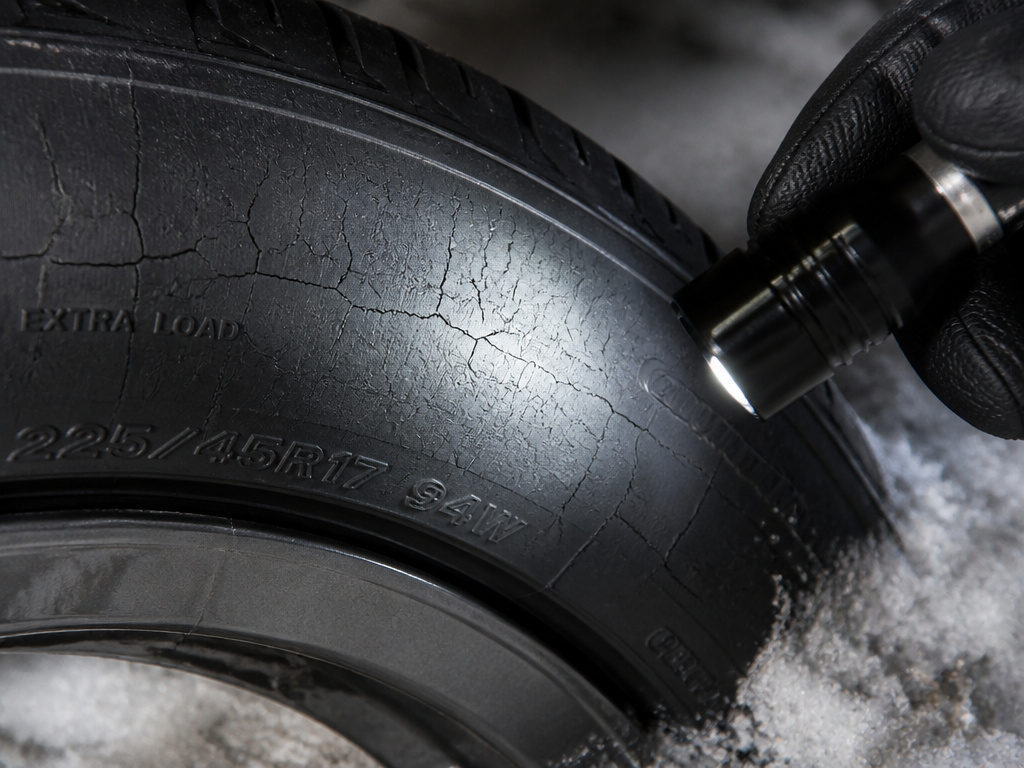
The conversation always focuses on winter tires in summer. But the inverse is equally dangerous, and automakers issue specific bulletins about it.
GM’s technical service bulletin 13-03-10-001K, published in October 2023, is explicit. Vehicles equipped with ultra-high performance summer tires like the Michelin Pilot Sport 4S ZP have “reduced capability below 5°C (40°F).” It recommends fitting winter tires below that temperature. More critically, it states you must avoid driving, moving, or even test-driving these cars below -7°C (20°F) because “operating at these temperatures can cause damage to the tires.”
Ford’s owner manuals give a similar warning: don’t use summer tires when temperatures drop to about 7°C or below.
The damage is physical. Summer tire rubber hardens like plastic in extreme cold. If you flex it, by driving, or even by rolling the car a few feet, the compound can develop surface cracks. These cracks are often invisible until the tire warms up. Next summer, that cracked sidewall is a blowout risk.
Before you start: If your car has summer tires and the forecast drops near freezing, do not drive it. Summer tires stored in sub-20°F conditions must be warmed to at least 40°F for 24 hours before installation or use. Never apply direct heat.
The Worn Winter Tire Trap
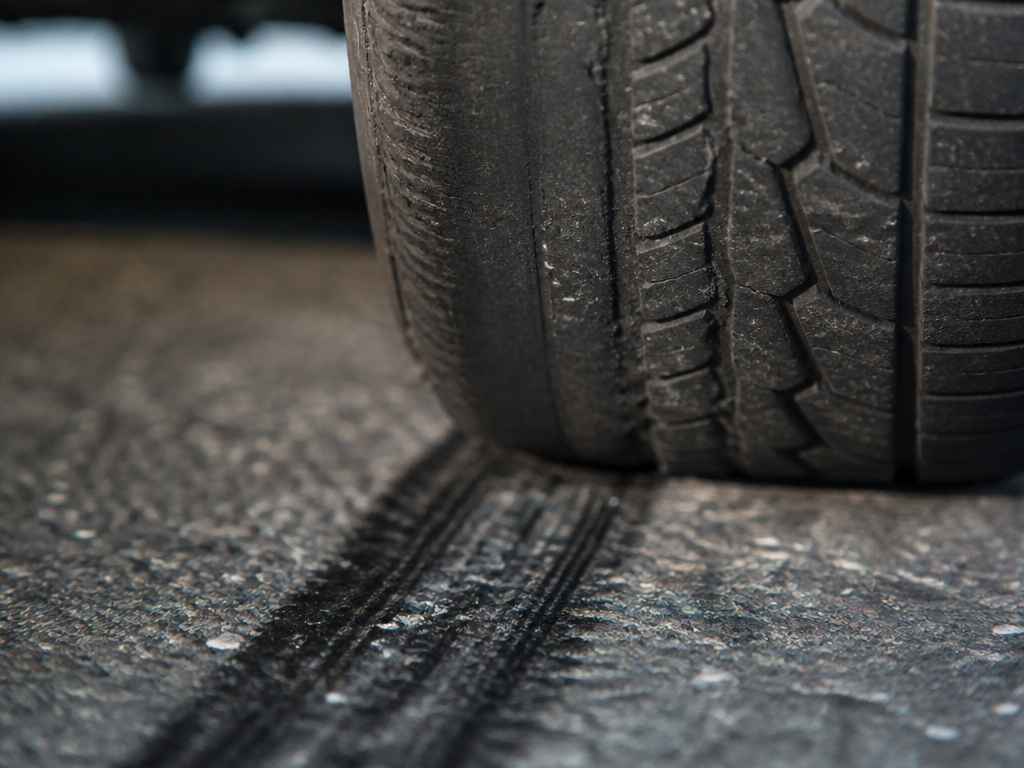
Maybe you think you can get away with it for a month in spring. The tread looks fine. The weather is mild.
A Finnish automotive magazine, Tekniikan Maailma, ran a test on March 6, 2019, that shatters that assumption. They braked a car from 80 km/h (50 mph) on dry asphalt. A new summer tire stopped the car as expected. A worn non-studded winter tire left the car still traveling at 40 km/h (25 mph).
That is not a minor increase in stopping distance. It is a catastrophic failure. On wet pavement, the situation was worse. Control was nearly impossible; the car slid without warning.
The lesson is brutal. A winter tire’s performance degrades long before the tread wears to the legal limit. The soft compound loses its integrity. Those deep sipes that once provided grip close up as the tread wears. What looks like a tire with 5/32″ of tread left is actually a slick in waiting.
Your Real-World Alternatives
You have three paths. The right one depends on your climate, budget, and tolerance for seasonal work.
Path 1: Two Sets of Dedicated Tires (The Gold Standard)
This means a set of winter tires like the Bridgestone Blizzak WS90 or Michelin X-Ice Snow mounted on cheap steel rims, and a set of summer tires like the Continental ExtremeContact Sport 02 or Michelin Pilot Sport 4 S. You swap them when average daily temperatures consistently cross the 45°F threshold. This gives you peak performance and safety in both seasons. The downside is cost for the extra wheels and the storage space for the off-season set.
Path 2: All-Season Tires Year-Round (The Compromise)
Modern all-season tires like the Michelin CrossClimate 2 or the Continental CrossContact LX25 are competent in mild climates. They carry the M+S (Mud and Snow) marking but not necessarily the Three-Peak Mountain Snowflake (3PMSF) symbol. They work if your winters involve rain and occasional cold snaps, not sustained snow and ice. You give up ultimate snow traction and ultimate summer dry grip for convenience.
Path 3: The 3PMSF All-Weather Tire (The Smart Middle Ground)
This is the category that solves the “are winter tires bad in summer” question definitively. All-weather tires carry the 3PMSF symbol, meaning they are certified for severe winter service. But their compound is engineered to handle summer heat without rapid wear. The Nokian WR G4 and Michelin CrossClimate 2 are benchmarks here. They are designed to be driven year-round, eliminating seasonal changes. For most drivers in temperate zones with real but not extreme winters, this is the single best answer.
| Tire Strategy | Best For | Winter Performance | Summer Performance | Biggest Compromise |
|---|---|---|---|---|
| Dedicated Summer/Winter Sets | Performance drivers, severe climates | Excellent (with proper winter tires) | Excellent (with proper summer tires) | Cost, storage, seasonal labor |
| All-Season Tires Year-Round | Mild climates, minimal snow | Adequate for light snow | Good in wet & dry | Poor in deep snow & ice, less sharp handling |
| 3PMSF All-Weather Tires | Temperate climates with real winter | Very Good (certified) | Very Good | Not as sharp as a summer tire, not as tenacious as a deep-snow winter tire |
Frequently Asked Questions
Do winter tires wear out faster in summer?
Yes, dramatically faster. The soft winter compound abrades on hot pavement. Continental states running winter tires all summer can reduce their service life by up to 60%. You might destroy a $800 set of tires in one season to save $80 on a seasonal changeover.
Is it illegal to drive with winter tires in summer?
In most of the United States and Canada, no specific law bans it. Sweden doesn’t ban studless winter tires in summer either, which is why the fatal accident study was possible. However, several European countries have laws based on tread pattern or mandated changeover dates. Legality is not the point, safety is.
Can I use all-terrain tires instead?
All-terrain tires like the BFGoodrich All-Terrain T/A KO2 are a different category. They often carry the M+S marking and some even have the 3PMSF symbol. Their heavy, blocky tread is better in snow than a standard all-season tire but worse than a dedicated winter tire. Their compounding is usually more heat-resistant than a winter tire’s, so they won’t melt away in summer. They are a legitimate four-season choice for trucks and SUVs, but their on-road manners and noise are the trade-off.
What about “all-season” tires that have the 3PMSF symbol?
That is the definition of an all-weather tire. The 3PMSF symbol is a regulated, standardized test for severe snow traction. If a tire passes, it earns the symbol regardless of what the marketing department calls it. The Michelin CrossClimate 2 is marketed as an all-season but has the 3PMSF; it is functionally an all-weather tire. This is the category to shop if you want one set year-round.
How do I store my off-season tires correctly?
The storage rules cut both ways. Summer tires must be kept above 20°F (-7°C) to prevent cracking. Winter tires should be stored in a cool, dry, dark place out of direct sunlight to prevent ozone degradation and drying of the rubber. Clean them, deflate to about half pressure, and stack them horizontally or hang them on a rack, never stand them upright on the tread for months.
Before You Go
The data from Sweden is not a gentle suggestion. Winter tires in summer double your risk of a fatal loss-of-control crash. The mechanical reasons are clear: soft rubber, high wear, long braking distances, and vague steering.
The fix does not have to be expensive or labor-intensive. For the vast majority of drivers, a set of 3PMSF-rated all-weather tires is the correct, safe, year-round solution. Brands like Michelin, Nokian, and Continental have perfected this category. If you drive a performance car with summer tires, you must own a second set of wheels with winter tires, the NHTSA technical service bulletin leaves no wiggle room.
Your tires are the only thing connecting your car to the road. Match them to the season.
