
Are Bridgestone WeatherPeak Tires Good? | Expert Review & Verdict
This post contains affiliate links. As an Amazon Associate, we earn from qualifying purchases.
Bridgestone WeatherPeak tires are a capable all-weather touring tire with excellent wet and winter performance, but real-world wear often falls well short of the 70,000-mile warranty, and some drivers report vague steering on grooved roads.
That 70,000-mile number is the headline, but it’s also the line that separates expectation from reality. The warranty is a promise, but the rubber hitting the road tells a different story for many owners. You’re not just buying a tire. You’re buying into a specific trade-off: strong snow and wet grip in exchange for predictable dry-road feel and a lifespan that might be half of what’s advertised.
What follows is a breakdown of where these tires excel, where they stumble, and who should walk away. We’ll look at the specs, the documented owner experiences, and how they stack up against the two tires you’re probably also considering: the Michelin CrossClimate 2 and the Goodyear Assurance WeatherReady. By the end, you’ll know exactly what the WeatherPeak is, and what it isn’t.
Key Takeaways
- Real-world tread life often clocks in around 35,000 to 45,000 miles, not the advertised 70,000. Owner reports show replacements needed as early as 20,000 miles on some vehicles.
- Wet and winter performance is the tire’s strong suit, thanks to a full-depth sipe design and a 3PMSF rating. It handles slush and light snow confidently.
- Dry-road feel can be vague, with multiple owners reporting “mushy” steering and a tendency to wander or “tramline” on grooved highway pavement.
- Compared to the Michelin CrossClimate 2, the Bridgestone offers a longer warranty and a lower price but gives up some dry-road precision and overall refinement.
- It’s a solid choice for drivers in variable climates who prioritize winter readiness over sporty handling, but not for those who expect the advertised mileage or razor-sharp steering response.
The Numbers Behind the Claim
The Bridgestone WeatherPeak arrives with a full spec sheet. The most prominent number is the 70,000-mile limited treadwear warranty. It’s a bold promise for an all-weather tire, a category known for trading some longevity for its winter prowess. The Uniform Tire Quality Grade (UTQG) rating backs this up: 700 for Treadwear, A for Traction, and A for Temperature. A 700 treadwear rating is high, suggesting a long-lasting compound.
This UTQG 700 A A rating is the manufacturer’s laboratory-based projection. It’s not a guarantee of real-world mileage, which depends on alignment, driving style, road surfaces, and climate.
The tire carries the Three-Peak Mountain Snowflake (3PMSF) symbol, certifying it meets specific snow traction performance standards, a step above a standard M+S (mud and snow) designation. This is the core of its “all-weather” claim, bridging the gap between all-season and dedicated winter tires. Available rim sizes range from 15 to 20 inches, covering most sedans, crossovers, and minivans.
| Specification | Bridgestone WeatherPeak | What It Tells You |
|---|---|---|
| Treadwear Warranty | 70,000 miles | Manufacturer’s durability promise (conditions apply) |
| UTQG Rating | 700 A A | High projected tread life, excellent wet traction, high temp resistance |
| Winter Certification | 3PMSF & M+S | Meets severe snow service requirements; suitable for year-round winter use |
| Tread Depth | 10/32″ | New, deep tread for water evacuation and snow traction |
| Speed Ratings | T, H, V | Covers typical highway speeds (T: 118 mph, H: 130 mph, V: 149 mph) |
The engineering focus is clear in the tread pattern. Bridgestone uses what it calls a NanoPro-Tech compound, designed to stay flexible in the cold. The tread features full-depth sipes, grooves that run the entire depth of the tread block, which maintain biting edges as the tire wears down. This is a key differentiator from many all-season tires, whose sipes are only partial-depth and disappear halfway through the tire’s life.
How Do They Handle Dry Roads?
Dry performance is where the Bridgestone WeatherPeak makes its first compromise. The trade-off for its winter and wet capability is a less communicative, sometimes vague feeling on dry pavement.
The central tread ribs are squared-off and packed close together for stability, but the broader circumferential grooves needed for water clearance reduce the rubber-to-road contact patch. According to a tire engineer’s analysis from TireDriver, this design choice prioritizes long tread life and water clearance over ultimate dry grip. The result is braking distances that are adequate but not class-leading.
Steering feedback is the bigger issue for many drivers. The term “mushy” comes up repeatedly in owner forums. The tire doesn’t transmit sharp, immediate turn-in cues to the steering wheel. For a grand touring tire focused on comfort, this isn’t a deal-breaker for everyone. But if you enjoy a connected feel from your car, you’ll notice its absence.
Common mistake: Expecting sporty handling from a tire engineered for winter traction and comfort. The WeatherPeak’s blocky tread and flexible compound are tuned for grip in low temperatures, not for crisp cornering on a sunny day.
The dry braking performance is competent, not exceptional. You won’t feel unsafe, but you also won’t be setting any personal bests for stopping distance. For daily commuting and highway cruising, it’s perfectly fine. The ride quality is where the tire shines in dry conditions, it’s comfortable and remarkably quiet for a tire with such an aggressive-looking tread pattern.
Where This Goes Wrong: Real-World Wear & Wobbles
The warranty number and the UTQG rating paint one picture. Owner experiences paint another. This is the non-commodity core of the review: the gap between marketing and mileage.
Treadwear is the most reported disconnect. While the warranty promises 70,000 miles, aggregated owner data from sites like Tire-Reviews.com suggests a real-world average closer to 38,667 miles. Individual reports are more stark: * A Honda Odyssey owner saw wear indicators at 20,000 miles. * Another owner reported needing replacement after 38,000 km (approx. 23,600 miles). * A third noted the tires were down to 5/32nds of tread after 45,000 km (approx. 28,000 miles) of highway driving.
These aren’t outliers; they’re a pattern. The tires wear faster than the 70,000-mile claim leads you to believe. The cause isn’t necessarily a defective tire. It’s the inherent challenge of a soft, winter-capable compound meeting the friction of dry pavement day after day.
Groove wander, or “tramlining,” is the second major gripe. Multiple owners report the car feeling unsettled on grooved or rutted highways, describing it as being “pulled around by the grooves” or a “mild shimmy.” One owner stated it felt like “driving over rumble strips” and led to a loss of steering control on rough patches, forcing them to slow down significantly. This is likely due to the tread block design and the tire’s compliant sidewall, which excels at comfort but can lack the rigidity to resist following pavement irregularities.
Where this goes sideways: Installing these tires without checking your vehicle’s alignment. The soft compound and specific tread design amplify any existing toe or camber misalignment, accelerating wear and potentially worsening the tramlining sensation. Get an alignment with installation.
A handful of owners in the 2023 model year reported an unusual spike in flat tires shortly after installation. While not a widespread failure, it underscores the importance of buying from a reputable installer like Discount Tire or Costco, who will often handle warranty claims or adjustments proactively if you encounter early issues.
The Wet & Winter Performance That Justifies the Name
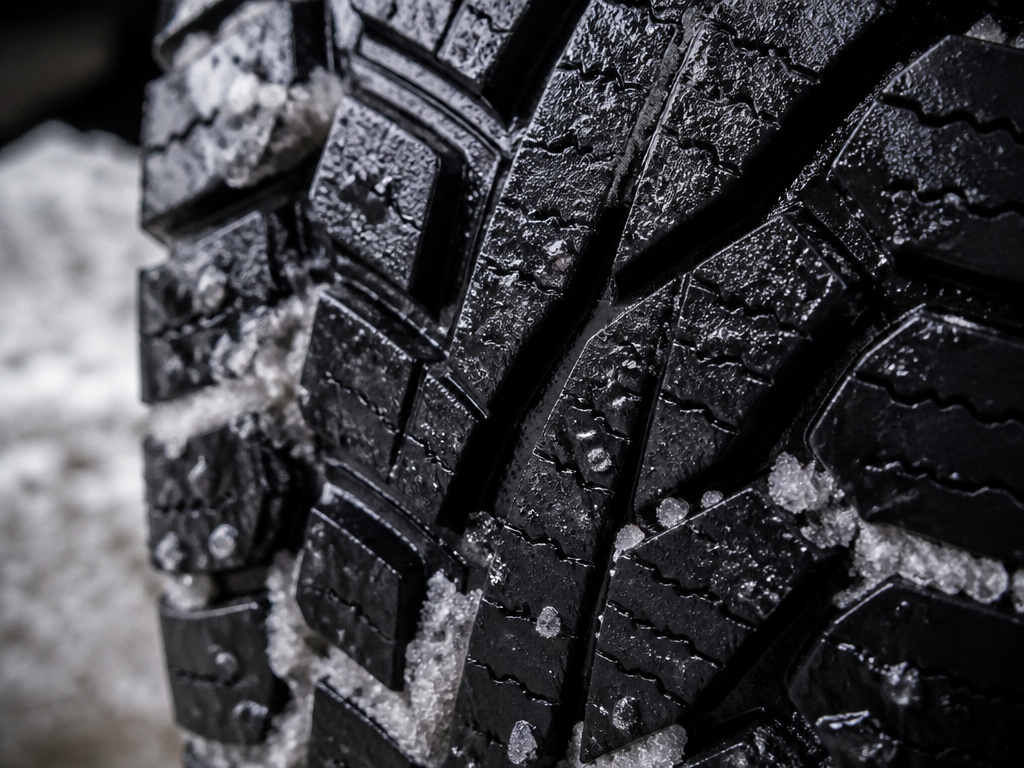
This is where the Bridgestone WeatherPeak earns its keep and why many buyers choose it over a standard all-season tire. The performance in rain, slush, and light snow is genuinely impressive for a tire you can leave on your car year-round.
The full-depth sipes are the star of the show. As the tire wears, these tiny grooves remain open, continually creating biting edges for snow and ice. They also flex to pump water out from the contact patch, resisting hydroplaning. Bridgestone’s internal testing claims a 5% advantage in wet acceleration over the Michelin CrossClimate 2. In the real world, that translates to confident pulls away from stoplights in a downpour and stable feel during highway driving in heavy rain.
Snow traction is where the 3PMSF rating proves its worth. The tire handles several inches of snow with composure. It won’t replace a dedicated studless winter tire in deep powder or on sheer ice, but for the “plowable” snowfalls common in many northern and mountain regions, it’s more than sufficient. Bridgestone also claims a 14-foot shorter snow-braking distance versus the CrossClimate 2. For drivers who see occasional winter weather but don’t want the cost and hassle of a seasonal tire swap, this capability is the main event.
| Condition | WeatherPeak Performance | Key Technology |
|---|---|---|
| Heavy Rain | Excellent hydroplaning resistance, stable handling | Deep circumferential grooves, interlocking full-depth sipes |
| Wet Roads | Strong grip and traction for acceleration and cornering | High-silica NanoPro-Tech compound, sipe flexibility |
| Light Snow & Slush | Confident traction and braking, suitable for most commutes | 3PMSF-certified compound, aggressive shoulder blocks |
| Packed Snow | Capable, but with limits on steep grades or ice | Full-depth sipes maintain edges as tread wears |
The tire’s weakness in winter is sheer ice. The compound, while flexible, lacks the ultra-soft specialized polymers and micro-biting technology of top-tier winter tires. On glare ice, you’ll feel the limits of its grip. For true ice-road dominance, you still need a dedicated winter tire.
Bridgestone WeatherPeak vs. The Competition
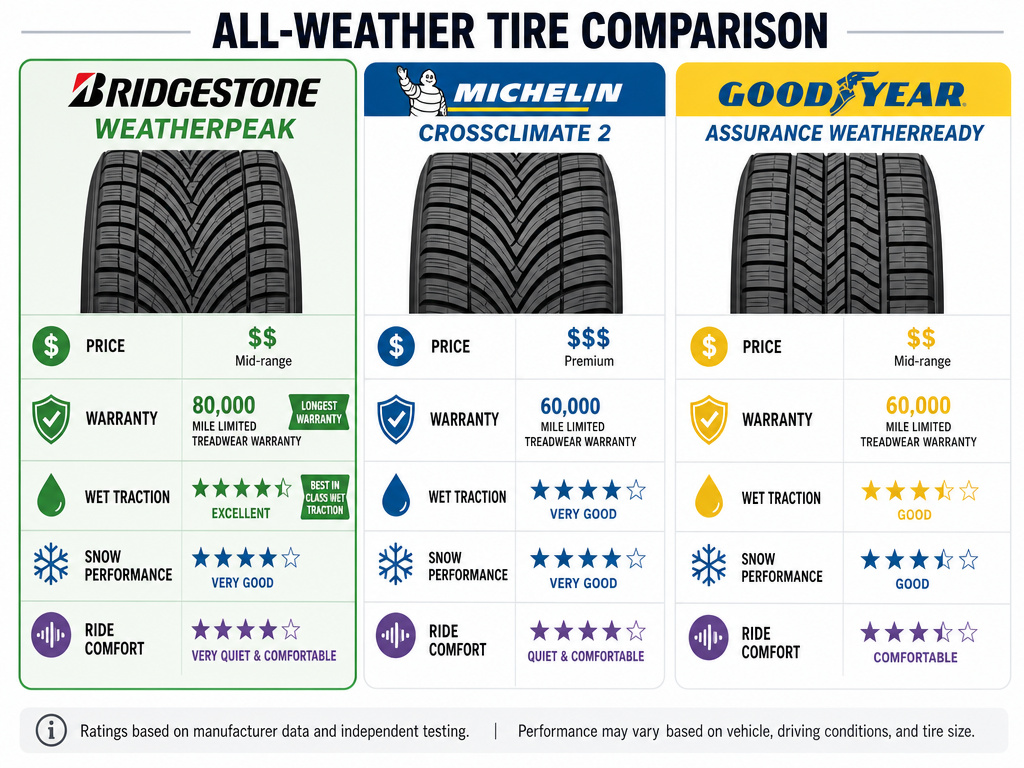
You’re likely cross-shopping this with two other names: Michelin and Goodyear. Here’s how the battle plays out in the key areas that matter.
Vs. Michelin CrossClimate 2: This is the heavyweight champion of the all-weather category. The Michelin typically offers crisper dry handling, slightly better steering feedback, and a quieter, more refined ride. However, it usually carries a shorter 60,000-mile warranty and a higher price tag per tire. The Bridgestone fights back with its longer warranty, lower cost, and claims of superior wet and snow braking in Bridgestone’s own testing. The choice boils down to budget versus ultimate refinement. If you want the best all-weather tire money can buy and are willing to pay for it, the Michelin CrossClimate 2 is it. If you want 90% of the winter performance for less money and a longer warranty promise, the WeatherPeak is compelling.
Vs. Goodyear Assurance WeatherReady: This is a much closer fight. Both tires are priced similarly and target the same driver. In back-to-back assessments, the Bridgestone often edges out the Goodyear in wet traction and generates less road noise, contributing to a more comfortable touring experience. The Goodyear may feel a touch more responsive in dry cornering for some drivers. It’s a split decision, but the Bridgestone’s advantages in wet weather quietness give it a slight edge for the daily commuter.
Against Standard All-Season Tires: This isn’t a fair fight. Any 3PMSF-rated all-weather tire like the WeatherPeak will demolish a standard all-season tire in snow and slush. The trade-off is the potential for faster dry-road wear and the steering quirks mentioned earlier. If you never see snow, a standard all-season like many Bridgestone all-season tires might be a more suitable and longer-lasting choice.
Who Should (and Shouldn’t) Buy Them
The Bridgestone WeatherPeak isn’t for everyone. It solves specific problems for a specific driver.
The Ideal WeatherPeak Buyer:
- Lives in a region with distinct seasons, including regular snow that gets plowed, but doesn’t face extreme ice or deep snow drifts regularly.
- Values the convenience of a single tire year-round and wants to avoid the cost and storage of a second set of winter tires.
- Prioritizes safety and confidence in wet and winter conditions over sporty handling.
- Drives a sedan, crossover, or minivan primarily for commuting, family trips, and daily errands.
Look Elsewhere If:
- You expect to get anywhere near 70,000 miles from the set. Plan for 35,000-50,000 miles based on driving style.
- You enjoy spirited driving or want razor-sharp steering feedback. The Mushy steering feel will disappoint you.
- You drive primarily on grooved concrete highways. The tramlining may become a constant annoyance.
- You face severe ice storms or unplowed deep snow regularly. A dedicated winter tire is a safer investment.
Frequently Asked Questions
Are Bridgestone WeatherPeak tires good in snow?
Yes, they are very good in light to moderate snow and slush, earning the 3PMSF severe snow service rating. They provide confident traction for most winter commutes. For extreme ice or deep snow, a dedicated winter tire is still superior.
How many miles do Bridgestone WeatherPeak tires last?
The treadwear warranty is for 70,000 miles, but real-world owner reports suggest a typical lifespan of 35,000 to 45,000 miles. Some drivers report needing replacement as early as 20,000 to 25,000 miles, depending on the vehicle and driving conditions.
Are Bridgestone WeatherPeak tires quiet?
Yes, they are notably quiet for an all-weather tire with a winter-aggressive tread pattern. Bridgestone engineered them as touring tires, and road noise suppression is one of their strengths, contributing to a comfortable highway ride.
What’s the difference between all-season and all-weather tires?
All-season tires are designed for three-season use (spring, summer, fall) and carry an M+S rating for light snow. All-weather tires like the WeatherPeak carry the 3PMSF symbol, meaning they meet stricter snow traction performance standards and are designed for year-round use, including sustained winter conditions. It’s a significant step up in winter capability.
The Bottom Line
The Bridgestone WeatherPeak is a competent, confidence-inspiring tire for the driver caught between seasons. It delivers excellent wet and winter performance in a comfortable, quiet package. Just don’t let the 70,000-mile warranty dictate your decision. See it as a best-case scenario.
Buy these tires for their 3PMSF-rated snow grip and their rain-clearing ability. Buy them for the convenience of one set of tires year-round. Do not buy them expecting Michelin-sharp dry handling or the full advertised tread life. For the right driver, one who values safety in bad weather over sportiness and understands the real-world mileage trade-off, the WeatherPeak is a solid all-weather choice that lives up to its name where it counts most.
