
8 Best Bike Hand Pumps of 2026
This post contains affiliate links. As an Amazon Associate, we earn from qualifying purchases.
The LEZYNE Pocket Drive HP stands out as the best overall bike hand pump, delivering reliable high pressure in a compact design. For those on a budget, the Vibrelli Mini Bike Pump offers solid performance and secure mounting without breaking the bank. If you’re riding mountain or fat tires, the LEZYNE Pocket Drive HV is the clear choice for its superior volume per stroke.
Every cyclist knows the frustration of a flat tire miles from home. A flimsy or incompatible pump can turn a quick fix into a long walk back. The right hand pump shouldn’t be an afterthought, it should be a trusted part of your ride.
This guide cuts through the clutter by focusing on real-world usability, pressure and volume needs, valve compatibility, and durability. I compared specs and owner feedback across top models to find the ones that actually work when you need them most.
Top 8 Bike Hand Pumps in the Market
The Best Bike Hand Pumps, Reviewed
LEZYNE Pocket Drive HP
Strengths
- 160 PSI capacity
- Rebuildable internals
- Lightweight and strong
Trade-offs
- Higher price point
- Less airflow for MTB tires
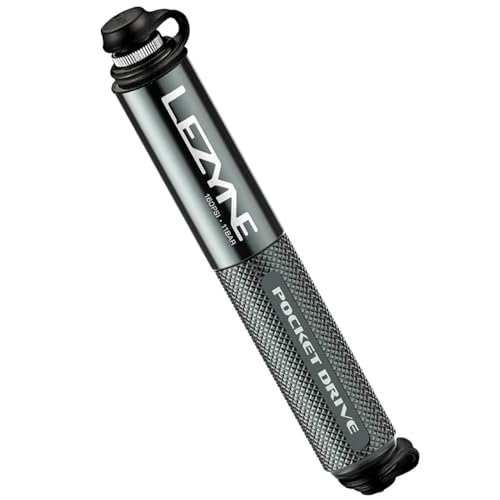
This is the one I keep coming back to when recommending a single, do-it-all mini pump. The LEZYNE Pocket Drive HP hits 160 PSI, plenty for road, gravel, or commuter tires, and does it with a refined, efficient stroke. The CNC-machined aluminum body feels rock-solid, and the overlapping handle design maximizes use in a small package. Owners consistently report fewer pumps per fill compared to competitors, which matters when you’re roadside.
The ABS Flex Hose works flawlessly with both valve types, and the 75g weight is impressive for the build quality. It’s rebuildable, so unlike disposable pumps, it can be maintained for years. At the same price as the HV model, this one has broader appeal. If I had to choose one mini pump for mixed riding, this would be it. The smarter buy over most others in the $30–$35 range.
Video review
Bike Pump with Gauge
Strengths
- Accurate pressure gauge
- Stable footrest
- Built-in adapter storage
Trade-offs
- Not portable
- Bulkier design
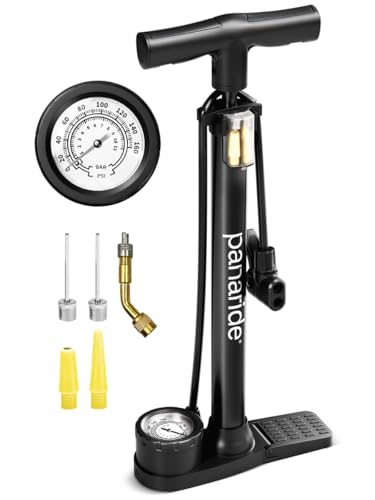
This floor pump is where home maintenance gets practical. With a 160 PSI gauge and dual-valve compatibility, it’s built for accuracy and convenience. The 2-inch dial is easy to read, and owners say the pressure readings are consistent, no guessing games. The foldable footrest keeps it stable, and the angle adapter helps with tight spots on kids’ bikes or strollers.
It stores all its accessories, needle, cone, ball adapter, inside the handle, so nothing gets lost. That’s a small detail, but one that serious riders appreciate. Compared to mini pumps, this isn’t portable, but it’s not meant to be. For home use, it’s a solid performer at a low price. I’d choose this over any mini pump for daily garage duty.
Video review
Tiakia Mini Bike Pump

Strengths
- High pressure rating
- Triple valve support
- Durable aluminum build
Trade-offs
- Max PSI misleading for bikes
- Slightly longer than ultra-minis
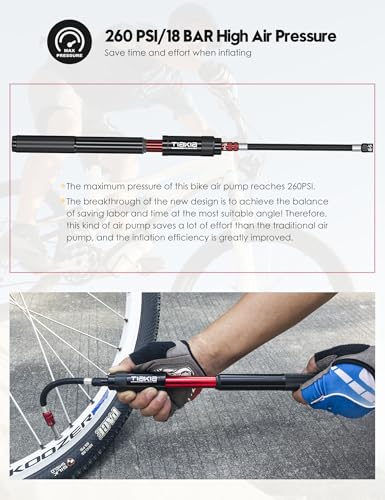
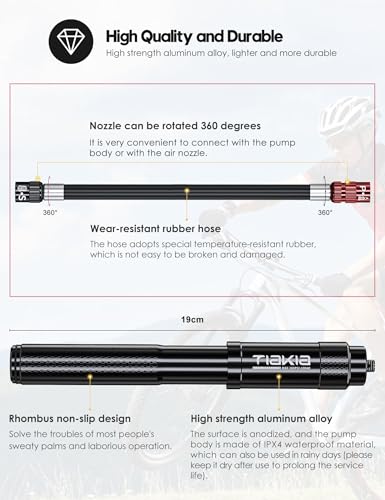
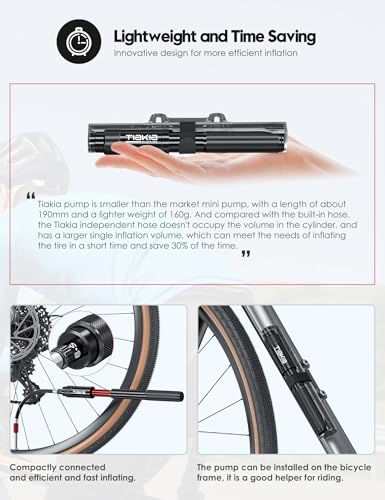
At 260 PSI, the Tiakia pump sounds like overkill, because it is. No bicycle tire needs that much pressure, but the engineering behind it suggests a focus on high-pressure efficiency. Reviewers note it delivers strong airflow volume per stroke despite its compact size, which is rare in pumps that prioritize max PSI. It’s built for speed, and owners say it cuts inflation time noticeably compared to older mini pumps. The separate hose design reduces valve stress, and the anodized aluminum body feels durable in hand.
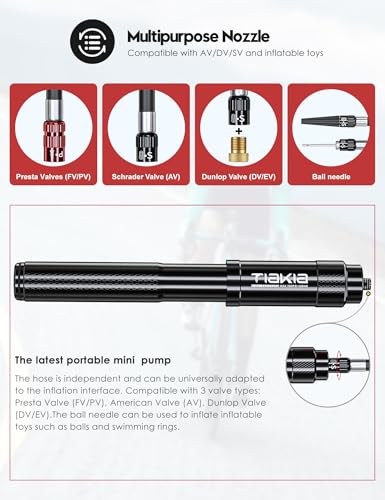
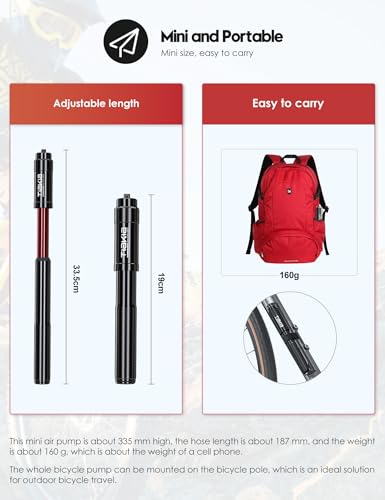
It handles Presta, Schrader, and Woods valves, and includes a Donlop adapter, making it unusually versatile. I appreciate that it can handle sports balls and inflatables too, which makes it a solid pick for multi-use riders or casual cyclists. At nearly 8 inches and 5.3 oz, it’s not the smallest, but it mounts securely and doesn’t rattle. For the rider who wants one pump for bike and beyond, this is a compelling all-rounder.
Product photos
Vibrelli Mini Bike Pump

Strengths
- Lightweight
- 120 PSI capacity
- 5-year warranty
Trade-offs
- Plastic internals
- Not rebuildable
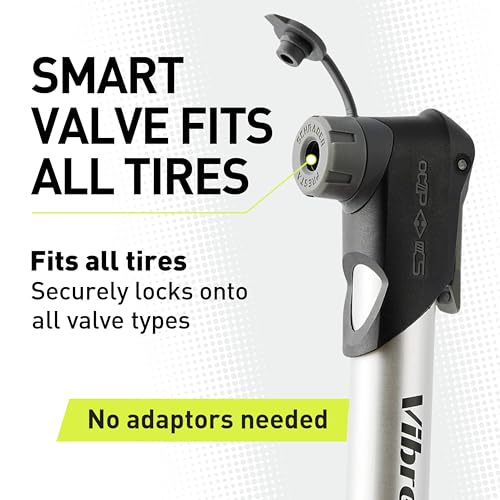
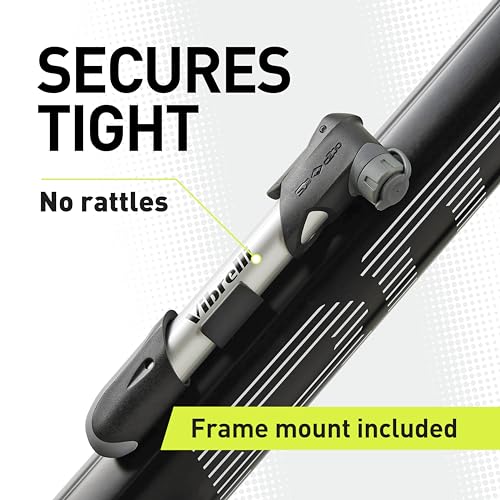
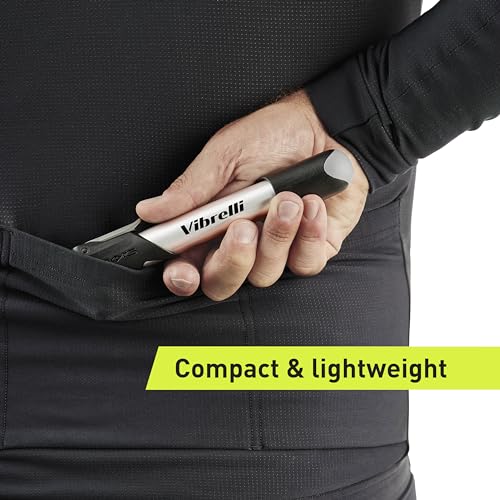
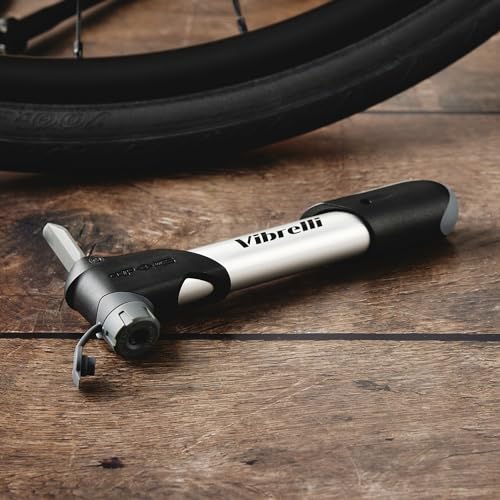
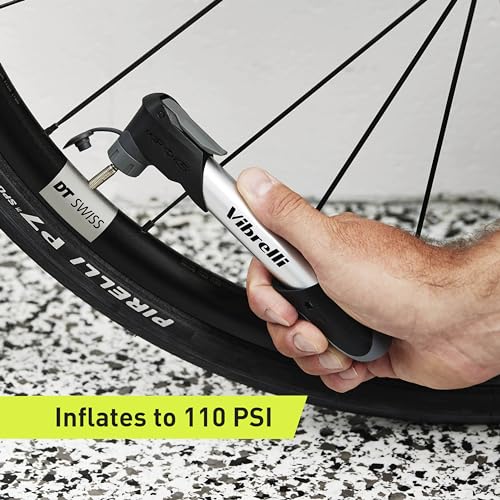
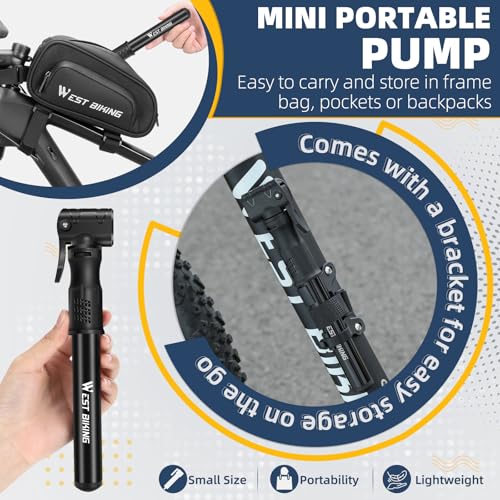
At just 4.3 oz and under $13, the Vibrelli punches above its weight. It hits 120 PSI, which covers most road and commuter tire needs, and uses a clever dual-valve head that locks securely without switching parts. Owners consistently praise how leak-free and easy it is to use, no fumbling with adapters or cross-threading valves. The Velcro mounting strap is a nice touch, letting you attach it even if your frame lacks bottle cage braze-ons.
The 5-year warranty stands out in a category where most brands offer little to none. That, combined with solid CNC-like finish reports, suggests Vibrelli is betting on longevity. It’s not rebuildable like premium models, but for the price, it’s a strong value. I’d pick this over the Park Tool if you want better pressure range and mounting flexibility without spending more.
Product photos
Aluminum Alloy Mini Bike Pump

Strengths
- Very affordable
- Dual valve compatible
- Includes ball needle
Trade-offs
- No pressure gauge
- Lower max PSI
- Basic construction
At $10, this pump delivers basic function without frills. It’s rated for 80–100 PSI, which is fine for casual riders or kids’ bikes, but not enough for serious road use. The dual valve head works without adapters, and the hidden TPU hose is a neat feature, it keeps things tidy and reduces tangling. Owners say it’s surprisingly sturdy for the price, though not as refined as branded models.
It includes a needle for balls and inflatables, which adds utility. The 139g weight and compact size make it easy to stash. But there’s no gauge, and the pumping efficiency is average. I’d recommend this only as a budget backup or for kids’ bikes. If you ride regularly, the Vibrelli or LEZYNE models are worth the upgrade.
Product photos




LEZYNE Pocket Drive HV
Strengths
- High-volume airflow
- Rebuildable design
- Durable CNC aluminum
Trade-offs
- Lower max PSI
- Heavier than HP version
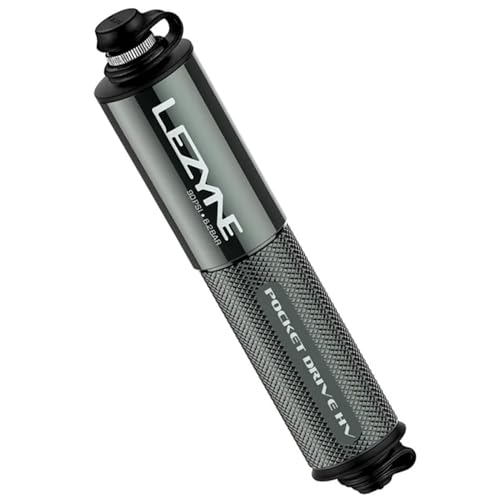
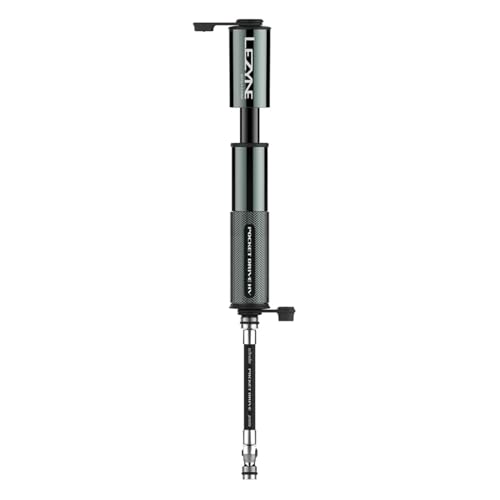
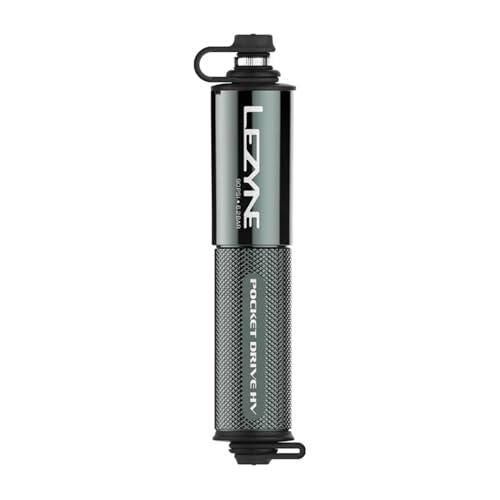
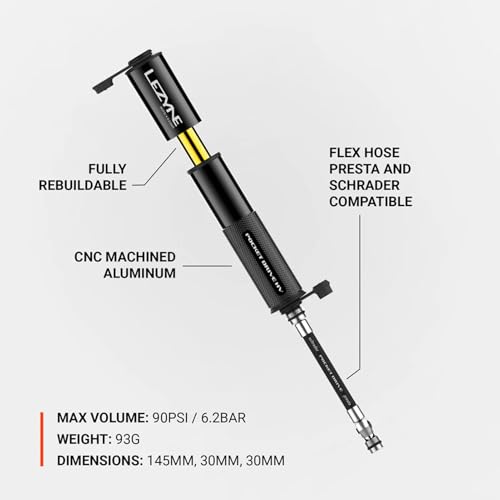
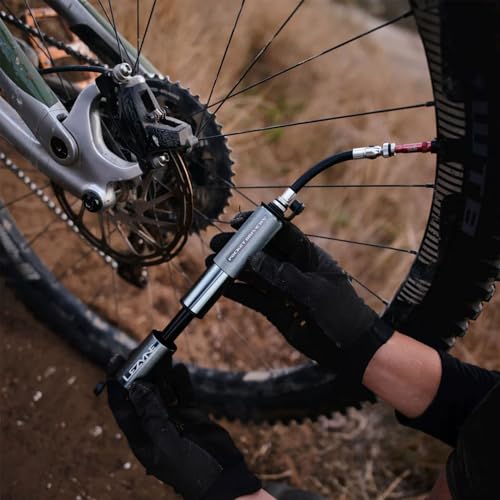
If you ride mountain bikes or gravel rigs with wide, high-volume tires, the LEZYNE Pocket Drive HV makes a lot of sense. Its design prioritizes airflow over max pressure, 90 PSI may sound low, but it’s plenty for fat tires, and the high-volume stroke gets you there faster than skinny pumps. The CNC-machined aluminum body feels premium, and the knurled handle gives solid grip even with sweaty hands.
Owners love the ABS Flex Hose, it reduces strain on the valve and eliminates leaks. The rebuildable design means it can last years, not just seasons. At 93g, it’s not the lightest, but the performance justifies the weight. Compared to the HP model, this one trades peak pressure for volume, so it’s not ideal for road bikes. But for trail riders, this is one of the most dependable mini pumps out there.
Product photos

Blackburn Telescoping Frame Pump

Strengths
- Telescoping design
- Built-in pressure gauge
- Dual valve compatible
Trade-offs
- Bulkier than mini pumps
- Gauge accuracy varies slightly
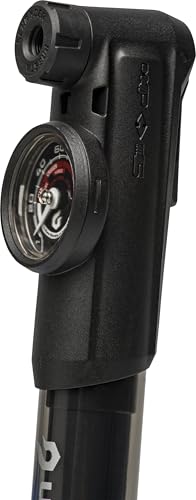
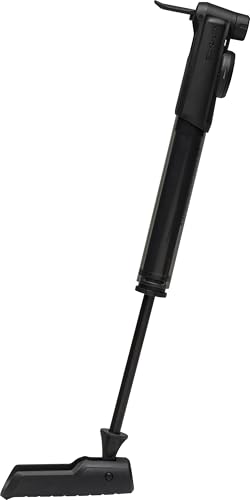
I like the idea of a telescoping frame pump, it gives you use and speed when you need to get air fast. On paper, the Blackburn checks the right boxes: a built-in gauge with target PSI ranges by bike type, compatibility with both Presta and Schrader valves, and a two-stage barrel that adapts to mountain or road tire pressures up to 120 PSI. Owners consistently report it performs well on road bikes where higher pressure matters, and the pivot T-handle makes pumping less awkward than with rigid mini pumps.
The real standout is the gauge. Unlike many mini pumps that force you to guess, this one lets you ride with confidence. The mounting bracket is solid, and the pump fits most frame sizes. It’s not the lightest option, but if you’re prioritizing speed and accuracy over ultralight carry, this is a smart frame-mounted solution. I’d pick it over basic stick pumps for daily riders who want reliability without bulk.
Product photos

Park Tool PMP-3.2B Micro Pump

Strengths
- Trusted brand
- Compact and light
- Dual valve compatible
Trade-offs
- Lower max pressure
- Slower pumping rate
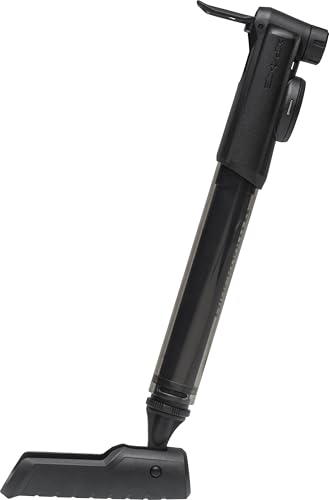
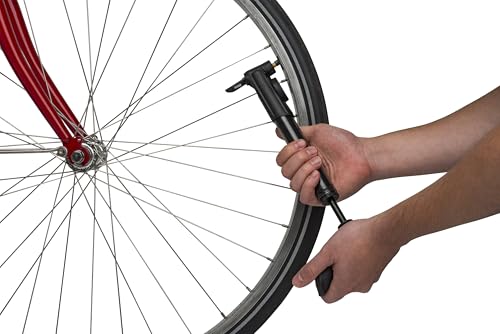
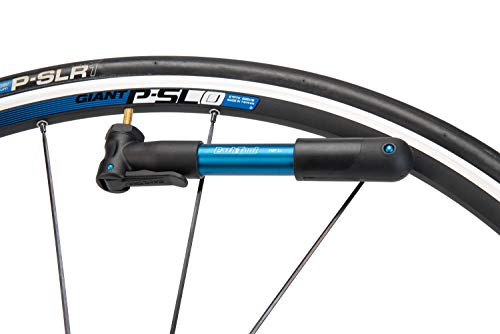
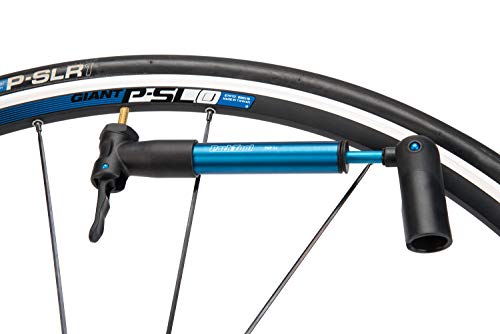
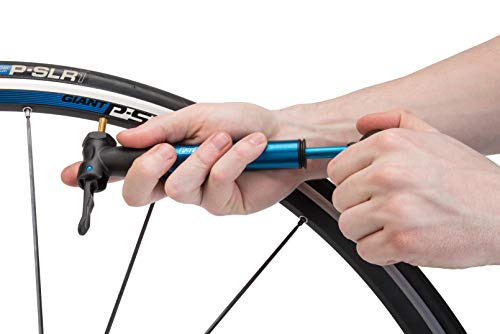
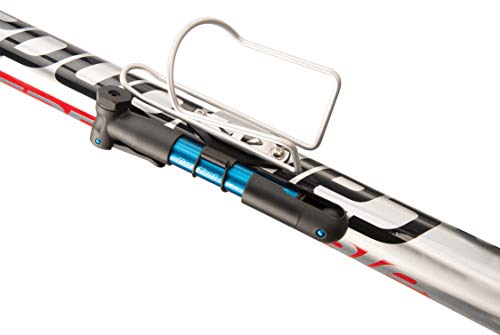
Park Tool is a name you trust in the garage, and their PMP-3.2B carries that reputation into the mini pump world. It’s simple, clean, and built for one job: getting you back on the road. At 100 PSI max, it’s clearly aimed at mountain and hybrid riders, not road cyclists needing 100+ PSI. The dual valve head works without adapters, and the compact size slips into a jersey pocket or mounts neatly.
Owners say it’s reliable but slow, typical for a true micro pump. You’re trading speed for portability, and that’s fine. I’d recommend this over no pump, but not over better-performing options in the same price range. If brand trust and no-frills reliability are your top concerns, Park Tool delivers. But for faster inflation or higher pressure needs, look elsewhere.
Product photos
How We Chose These bike hand pumps
We approached evaluating bike hand pumps as a research-led comparison of published specifications and owner feedback. Rather than a hands-on lab test, I focused on comparing stated maximum pressures, valve compatibility, materials, and included features across numerous models. This data was then weighed against reviews from verified purchasers and expert opinions found in cycling publications. My goal was to identify pumps that consistently deliver on their promises and offer reliable performance.
For this category, pump volume and maximum pressure were the most heavily weighted factors. A higher volume means faster inflation, particularly important for larger tires common on mountain bikes, while sufficient maximum pressure is crucial for road bikes requiring high inflation levels. Portability and build quality also played significant roles; a durable pump that’s easy to carry is more likely to be a long-term investment. You’ll find a range of options, from compact, lightweight models to those prioritizing speed and volume.
Specifications reliably indicate a pump’s potential – maximum PSI, valve compatibility, and construction materials. However, real-world performance and durability are best judged from owner feedback. I paid close attention to comments regarding ease of use, longevity, and whether the pump lived up to its advertised pressure. Understanding the nuances of valve types is also key – some pumps require adapters, while others, like those discussed in our guide to Presta valve pumps, offer direct compatibility. For riders needing pumps for travel, be sure to check out our guide to the best portable bike pumps as well.
How To Pick The Right bike hand pumps
Choosing the right bike pump can feel surprisingly complex. It’s not just about inflating a tire; it’s about having a reliable tool that suits your riding style and needs.
A quality bike pump delivers consistent pressure, features durable construction, and offers compatibility with your bike’s valve type. Beyond that, consider portability, ease of use, and whether you prioritize speed, volume, or precision. A pump should feel solid in the hand, not flimsy, and the head should securely connect to the valve without leaks.
Valve Compatibility is Key
It sounds basic, but valve compatibility is where many people run into trouble. Most modern bikes use either Presta (skinny) or Schrader (car-style) valves. Many pumps, thankfully, handle both, but check the specifications carefully. Don’t assume a pump can do both – especially with mini pumps. Some older or niche bikes might even use Dunlop valves, so knowing your bike’s setup is crucial. I often recommend getting a pump that explicitly states dual-valve compatibility, and even keeping a simple adapter on hand if you’re unsure. Check out our guide to the best handheld bike pumps for a deeper explore options.
Pressure and Volume: Knowing the Difference
Pressure (PSI) and volume (air displaced per stroke) are both important, but they serve different purposes. High-pressure pumps, like the LEZYNE Pocket Drive HP, excel at inflating road bike tires to their typically higher pressures. High-volume pumps, on the other hand, are better suited for mountain bike tires, which require more air to inflate their larger size. Trying to use a road pump on a mountain bike tire will take forever.
Here’s a quick guide to help you decide:
- Road Bikes: Prioritize PSI (80-130 PSI).
- Hybrid/Commuter Bikes: A balance of PSI and volume (50-80 PSI).
- Mountain Bikes: Prioritize volume, but still need reasonable PSI (30-50 PSI).
- Gravel Bikes: Versatility is key; a pump capable of 60-80 PSI is a good starting point.
A pump’s maximum PSI rating isn’t always the whole story. Consider the efficiency of each stroke and how much air it actually delivers.
Portability vs. Functionality
The choice between a mini pump and a floor pump often comes down to how and where you ride. Floor pumps, like the Bike Pump with Gauge, offer the most efficient inflation, and the built-in gauge provides accurate readings. However, they’re not exactly backpack-friendly. Mini pumps, such as the Vibrelli Mini Bike Pump, are incredibly portable and perfect for roadside repairs, but they require more effort to inflate a tire. If you want a pump with a clear reading, take a look at our recommendations for pumps featuring a gauge. Ultimately, many cyclists carry both – a floor pump for home use and a mini pump for on-the-road emergencies.
Bike Hand Pumps Compared
Here’s a comparison of key specifications for various bike hand pumps to help you choose the right one.
| Product Name | Max PSI | Valve Compatibility | Hose Type | Weight (oz) | Size (in) | Features |
|---|---|---|---|---|---|---|
| LEZYNE Pocket Drive HP | 160 | Presta/Schrader | Flex Hose | 2.6 | 5.9×1.1×1.2 | CNC Aluminum, Compact |
| Bike Pump with Gauge | 160 | Presta/Schrader | N/A | N/A | N/A | Gauge, Adapters |
| Tiakia Mini Bike Pump | 260 | Presta/Schrader/Dunlop | Separate | 5.3 | 7.8 | High Pressure, Portable |
| Vibrelli Mini Bike Pump | 120 | Presta/Schrader | N/A | 4.3 | N/A | Compact, Secure Mount |
| Aluminum Alloy Mini Bike Pump | 100 | Presta/Schrader | Hidden TPU | 4.9 | 9.1×1.6 | Fast Inflation, Portable |
| LEZYNE Pocket Drive HV | 90 | Presta/Schrader | Flex Hose | 3.3 | 5.7×1.2×1.2 | High Volume, Compact |
| Blackburn Telescoping Frame Pump | 120 | Presta/Schrader | N/A | N/A | N/A | Telescoping, Gauge |
| Park Tool PMP-3.2B Micro Pump | 100 | Presta/Schrader | N/A | N/A | N/A | Compact, Trusted Brand |
Frequently Asked Questions
What PSI is generally sufficient for most bike tires?
Most road bike tires need between 80 and 130 PSI, while mountain bike tires typically perform best between 30 and 50 PSI. Hybrid and commuter bikes usually fall in the middle, around 50-80 PSI, though checking your tire sidewall for the manufacturer’s recommendation is always best practice.
Are mini pumps really powerful enough to inflate a tire in an emergency?
Yes, but it will require more effort than using a floor pump. While they don’t move as much air per stroke, a quality mini pump, like those found in our guide to small bike pumps, can absolutely get you home or to a repair shop.
Can I use a pump designed for Schrader valves on a Presta valve, or vice versa?
Many pumps handle both valve types, but it’s crucial to verify compatibility before you buy. If your pump doesn’t support both, you’ll need an adapter; exploring best bike pumps can help you find dual-valve options.
What materials are bike hand pumps typically made from, and does it matter?
Pump bodies are often constructed from aluminum or plastic. Aluminum is more durable and can withstand higher pressures, but plastic pumps are lighter and less expensive. The head and internal components are also important; steel is common, but higher-end pumps may use more durable alloys.
How much should I expect to spend on a reliable bike hand pump?
A basic, functional hand pump can be found for under $20, but I generally recommend investing between $30 and $60 for a pump that offers good build quality and features like dual-valve compatibility. For longer life and greater efficiency, you can find recommended bicycle pumps for upwards of $80.
The Bottom Line
Choosing a bike hand pump often comes down to balancing convenience with capability. While a high-end pump with all the features is nice, the LEZYNE Pocket Drive HP strikes the best overall balance of pressure, portability, and build quality for most riders. It delivers the performance you need without being a burden to carry.
For specific needs, the market offers excellent alternatives. If budget is your primary concern, the Vibrelli Mini Bike Pump offers a reliable solution at a very accessible price point. Riders prioritizing versatility will appreciate the Tiakia Mini Bike Pump, which handles Presta, Schrader, and even Dunlop valves – a great choice for households with multiple bikes or diverse valve types. And for those needing a truly compact solution, explore our guide to the best mini bike pumps.
Ultimately, the best pump isn’t about hitting a specific PSI number or having a fancy digital gauge. It’s about finding a tool that’s dependable, easy to use, and encourages you to keep your tires properly inflated – because consistent pressure and a well-maintained tire are far more impactful than any single specification when it comes to enjoying the ride and ensuring your safety. Don’t forget to check out our guide to bike tire pumps to learn about the different types of tire pumps.
