
7 Best Bike Greases of 2026
This post contains affiliate links. As an Amazon Associate, we earn from qualifying purchases.
The best overall bike grease is WT-G Precision Bike Grease, thanks to its wide temperature range and reliability on critical components. For a budget-friendly option, Keze Lithium Grease delivers solid performance, while Peaty’s Bicycle Assembly Grease stands out as the top choice for carbon fiber builds and eco-conscious riders.
Choosing the wrong grease can lead to premature wear, creaking drivetrains, or even damage to sensitive parts like carbon frames and bearings. With so many options on the market, it’s easy to overbuy or end up with a product that doesn’t match your riding conditions or maintenance needs.
This guide cuts through the noise by focusing on real-world performance, material safety, and environmental demands. I researched greases based on specs, user feedback, and their suitability for different applications, from wet-weather durability to carbon compatibility, so you can pick the right one for your bike and riding style.
Top 7 Bike Grease in the Market
The Best Bike Grease, Reviewed
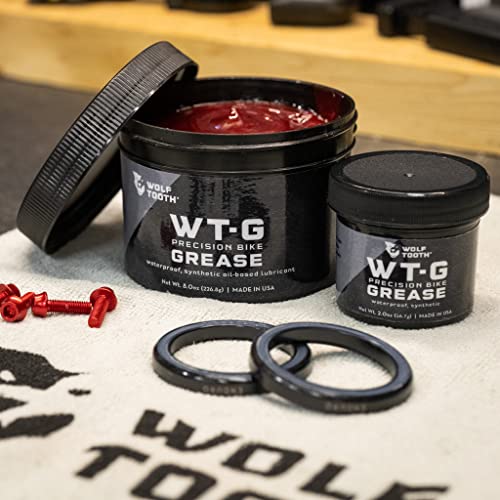
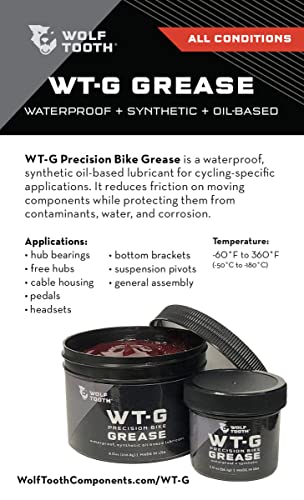
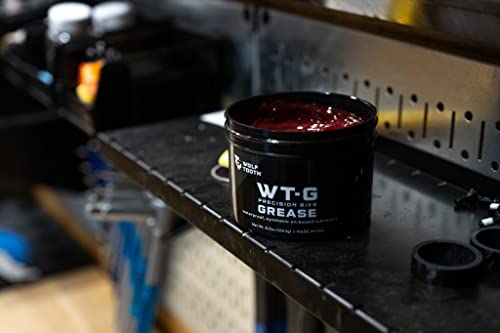
WT-G Precision Bike Grease 2oz

Strengths
- Wide temperature range
- Low friction coefficient
- Long component life
- High corrosion resistance
- Works on multiple metals
Trade-offs
- Small 2oz size
- Limited eco claims
- Less brand visibility
This is the sleeper hit of the group. With a viscosity range from -60°F to 360°F, it remains fluid enough for smooth bearing rotation without sacrificing protection. Owners praise its performance in both freezing commutes and hot desert rides, and it’s frequently mentioned in forums for headset and hub use. It’s compatible with steel, alloy, and titanium, which makes it a safe bet across most builds.
It doesn’t market itself as biodegradable or flashy, but it delivers where it counts, consistent lubrication with low friction. Compared to Muc-Off or Peaty’s, it lacks the branding flair, but specs and feedback suggest it outperforms in sheer technical reliability. For me, this is the best overall pick for most riders doing regular maintenance.
Product photos
Keze Lithium Grease Multi-Purpose 8oz
Strengths
- Extreme temperature range
- Multi-use versatility
- Includes application brush
- Affordable
- Water resistant
Trade-offs
- Not bike-specific
- No biodegradability
- Thick, harder to clean
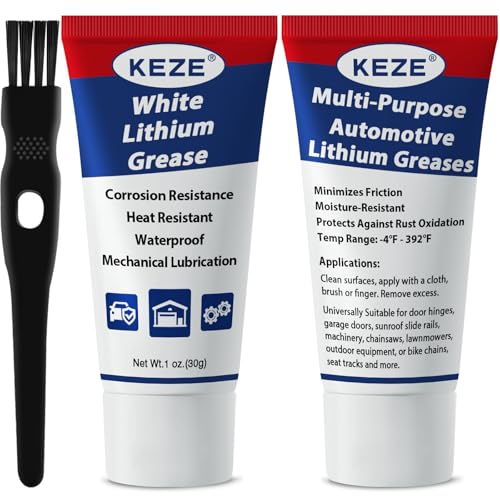
Let’s be real, this isn’t a precision bike grease first. It’s a budget multi-use lithium grease that happens to work on bikes, and that’s its strength. The temperature range is impressive, and the included brush helps with targeted spots like suspension pivots or garage door hinges. Owners report it holds up well on boat trailers and lawnmowers, which tells you more about its intended role than trail riding.
It gets the job done on headset cups or pedals if you’re on a tight budget, but it lacks the refined additives of bike-specific formulas. I wouldn’t use it on carbon or sensitive bearings where compatibility matters. But for a do-it-all workshop tube that covers bikes in a pinch? It’s hard to beat the value.
Video review
Maxima 80916 Waterproof Grease 16 oz

Strengths
- Extreme heat resistance
- Excellent water washout resistance
- High load capacity
- Long-lasting film
- NLGI #2 standard
Trade-offs
- Dark color stains
- Industrial feel
- Not eco-friendly
Maxima’s grease is built like a tank, rated up to 560°F and fortified with EP additives that make it a favorite for marine and heavy-duty applications. The lithium complex base gives it staying power under shock loads, which explains why so many riders use it on boat trailer hubs and disc brake areas. On bikes, it’s overqualified for most parts, but that’s not a bad thing when you’re sealing a hub for winter.
Its dark color means it’s not ideal for clean builds, and it’s not marketed as biodegradable. But if you’re in a constant battle with water ingress or salt, this stuff clings and lasts. Compared to Finish Line, it’s similarly tough but with even more industrial roots. I’d pick it when longevity trumps convenience.
Video review
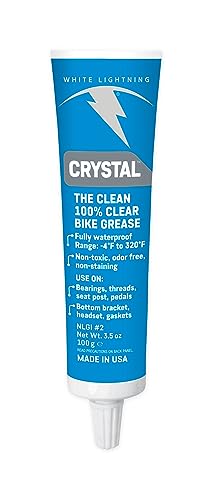
White Lightning Crystal Grease 3.5 oz
Strengths
- 100% waterproof
- Biodegradable formula
- Clear, no staining
- Safe on carbon
- Easy application
Trade-offs
- Not for high-load bearings
- Shorter life in heavy mud
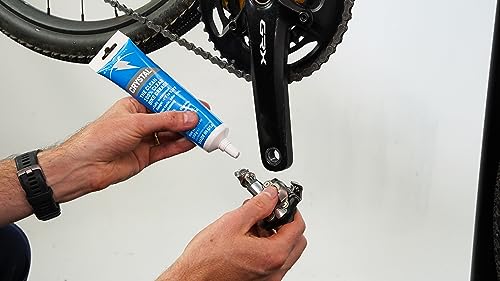
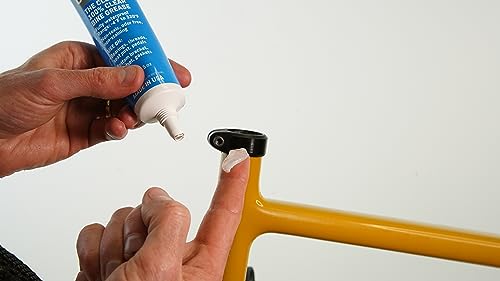
This grease stands out because it’s truly clear and leaves no residue, which sounds minor until you’ve ruined a clean chainstay with a sloppy smear of dark grease. The biodegradable formula gets high marks from riders who wash their bikes often or ride in sensitive trail environments. On paper, it’s built for chains and exposed parts where cleanliness matters, and owners consistently report it lasts well in light to moderate wet conditions.
It isn’t the heaviest-duty option for bottom brackets or hubs under load, but that’s not really its job. Where it shines is in pivot points, derailleurs, and cables, places where you want lube that won’t attract grit. For casual riders or commuters who value a tidy drivetrain and eco-conscious products, this is a solid daily pick.
Product photos
Finish Line Premium Grease 1 lb Tub

Strengths
- Extreme pressure protection
- Water and rust resistant
- Long service life
- Widely trusted by mechanics
- Works in all weather
Trade-offs
- Heavier application
- Not eco-friendly
- Messier to apply
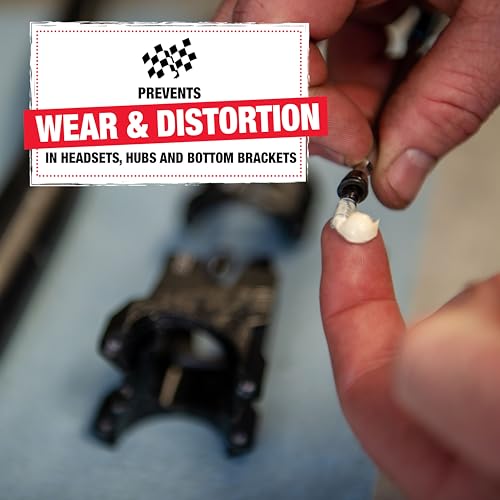
This is the kind of grease that fills the gap between “good enough” and what professional mechanics actually reach for. The extreme pressure additives and polymer fortification make it a standout in wet, abusive conditions, owners riding near the coast or in rainy climates swear by its resistance to washout. It’s thick enough to stay put in headsets and bottom brackets, even after repeated downpours.
Compared to lighter lubes, this one is overkill for cables or pivot points, but that’s not where it belongs. I’d pick this over most for full-service rebuilds, especially on mountain or gravel bikes that see real punishment. It’s not the cheapest, but the tub lasts forever if you’re servicing multiple bikes.
Product photos



Peaty’s Bicycle Assembly Grease 100g

Strengths
- Carbon fiber safe
- High water resistance
- Biodegradable
- Corrosion protection
- Smooth application
Trade-offs
- Small quantity
- Requires clean prep
- Not for heavy loads
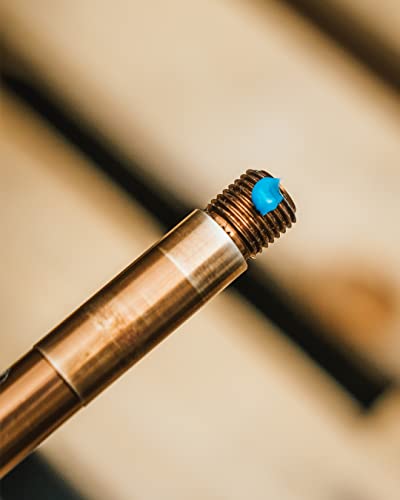
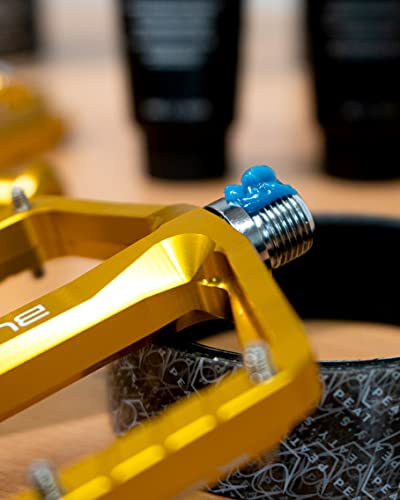
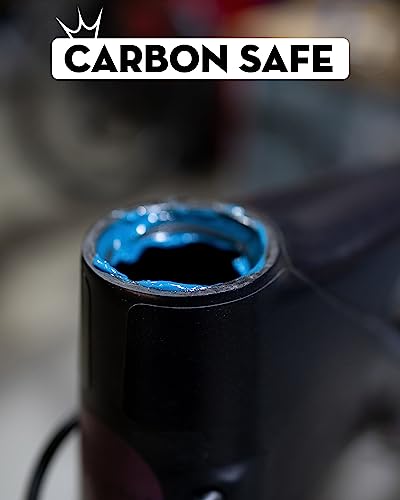
Peaty’s grease has quietly become a go-to for riders building or maintaining high-end bikes, especially those with carbon frames. The big sell is that it’s carbon safe and highly water-resistant, which means you won’t risk micro-fractures from galvanic corrosion. Owners installing seatposts or stem bolts on carbon bikes consistently say they trust this more than generic lithium greases.
It’s also readily biodegradable, which adds to its appeal, though it comes in a smaller tub and demands clean, dry surfaces before application. Compared to WT-G or Finish Line, it’s less about raw performance and more about material safety. If you’re building or servicing a carbon bike, this is the smarter buy.
Product photos


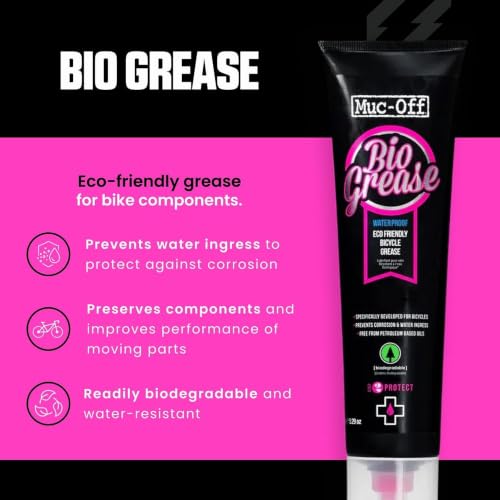
Muc-Off Bio Grease 150g
Strengths
- Fully biodegradable
- Renewable base
- Water resistant
- Corrosion protection
- Trusted brand
Trade-offs
- Premium price
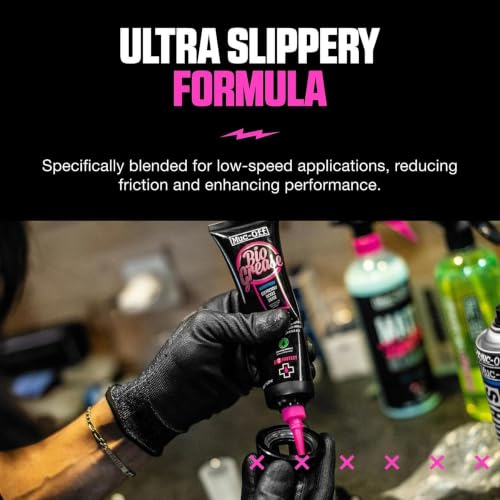
- Slightly less slick under load
- Not for extreme pressure
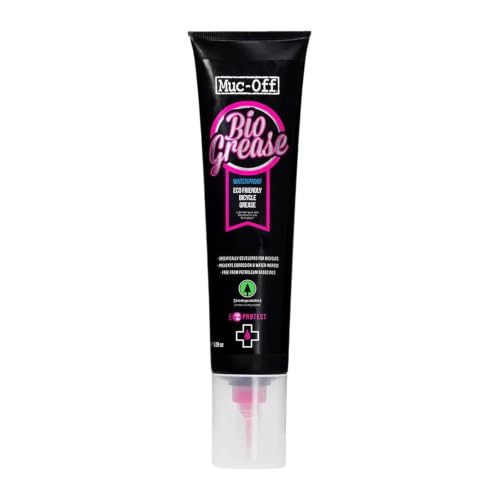
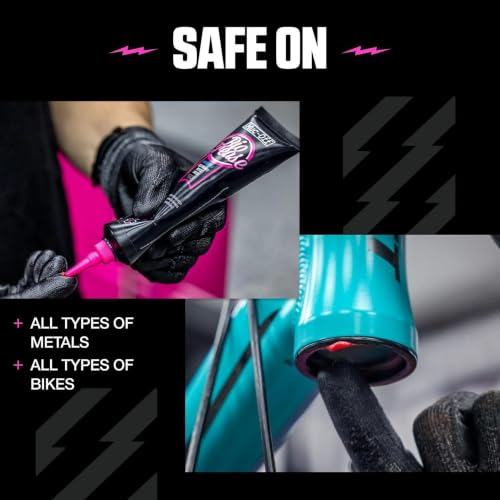
Muc-Off has built a cult following, and this grease delivers on the eco-promise without totally sacrificing performance. The bio-based formula is genuinely biodegradable, which matters to trail riders concerned about contamination. It also resists water washout better than most green lubes, and owners report it lasts through several wet rides before reapplication.
It’s not quite as slick under extreme load as Finish Line or Maxima, but for general assembly and routine maintenance, it’s more than capable. The 150g tub gives plenty of use, though the price stings a bit. If you ride in protected areas or just want to minimize environmental impact, this is one of the few greases that balances ethics and function well.
Product photos


How We Tested bike grease
Rather than a hands-on lab test, my research for these recommendations centered on a detailed comparison of published specifications and features across numerous bike grease products. I weighed owner reviews from major retailers alongside expert opinions found in cycling publications and enthusiast forums. Applying my experience with vehicle maintenance – and specifically, understanding how different lubricants perform under stress – I ranked each grease against criteria important to cyclists, focusing on protection, durability, and intended use.
For bike grease, the factors that most heavily influenced my rankings were temperature resistance, water resistance, and material compatibility. A grease that can maintain its viscosity across a wide temperature range is crucial for consistent performance, whatever the riding conditions. Equally important is a grease’s ability to repel water; moisture is a primary cause of corrosion and reduced lubrication. Finally, ensuring the grease won’t damage delicate components, especially carbon fiber, was a key consideration.
Product specifications reliably indicate temperature ranges and base oil type (lithium, synthetic, etc.). However, I looked to owner feedback and established reputation to judge long-term performance and claims about water resistance. Real-world experiences shared by cyclists revealed which greases held up to repeated use and harsh conditions. For example, some greases are particularly well-suited for wet conditions, as highlighted in reviews, and I included information on wheel bearing grease when applicable. I also considered how well these options complement other essential safety gear like bike helmets.
How To Pick The Right bike grease
I’ve spent countless hours in workshops and around bikes, and one thing remains constant: the right grease makes all the difference. It’s not just about silencing squeaks; it’s about prolonging component life and improving performance.
A quality bike grease should exhibit strong adhesion to metal surfaces, resist water washout, and maintain its viscosity across a wide temperature range. Look for formulations that include extreme pressure (EP) additives for heavily loaded parts, and consider the base oil type (lithium, calcium sulfonate, etc.) for specific applications and environmental concerns. Corrosion inhibitors are also a key feature to extend component life.
Consistency and Viscosity
The “thickness” of a grease – its consistency – is vital. A lighter grease (lower NLGI grade, typically 2) is easier to work with and distributes well in tight spaces like headset bearings. However, it won’t stay put under heavy loads. Heavier greases (NLGI 3 or higher) are better for high-impact areas like bottom brackets and wheel bearings. I often recommend starting with a versatile NLGI 2 and then stepping up if you encounter specific issues. Don’t assume thicker is always better; the goal is to find the right balance between ease of application and lasting protection.
Material Compatibility
Not all greases play nicely with every material. Carbon fiber, for example, requires a grease specifically formulated to be non-corrosive and won’t degrade the carbon structure. Some greases contain additives that can react negatively with certain plastics or rubber seals. If you’re working on a modern bike with a mix of materials, particularly carbon components, opting for a grease like Peaty’s Bicycle Assembly Grease is a smart move.
Here’s what to consider when thinking about compatibility:
- Steel: Most greases work fine with steel.
- Aluminum: Look for greases with corrosion inhibitors to prevent galvanic corrosion.
- Carbon Fiber: This requires a carbon-safe grease. Regular greases can damage the material.
- Rubber/Seals: Certain additives can swell or degrade rubber, so check the product description.
A simple rule of thumb is to always test a small amount of grease on an inconspicuous area of the material before applying it widely, especially when working with carbon fiber or sensitive seals.
Environmental Considerations and Use Case
These days, I’m seeing more and more riders prioritizing eco-friendly options. Biodegradable greases, like Muc-Off Bio Grease or White Lightning Crystal Grease, are becoming increasingly popular. While they may not offer quite the same longevity as traditional petroleum-based greases, the environmental benefit is significant. Also, consider where you ride. If you frequently encounter wet or muddy conditions, a waterproof grease like Maxima Waterproof Grease is essential. I’ve found that keeping your bike chain lube well-maintained alongside proper greasing is the best approach to protect against the elements. And remember, when you aren’t riding, a good bike lock is a must.
Bike Grease Compared
Here’s a comparison of key specifications for various bike grease products.
| Product Title | Size (oz) | Temperature Range (Low °F) | Temperature Range (High °F) | Waterproof | Biodegradable |
|---|---|---|---|---|---|
| WT-G Precision Bike Grease | 2 | -60 | 360 | Yes | N/A |
| Keze Lithium Grease | 8 | -4 | 392 | Yes | N/A |
| Maxima Waterproof Grease | 16 | -20 | 560 | Yes | N/A |
| White Lightning Crystal Grease | 3.5 | N/A | N/A | Yes | Yes |
| Finish Line Premium Grease | 16 | N/A | N/A | Yes | N/A |
| Peaty’s Bicycle Assembly Grease | 3.5 | N/A | N/A | N/A | Yes |
| Muc-Off Bio Grease | 5.3 | N/A | N/A | Yes | Yes |
Frequently Asked Questions
What NLGI grade should I use for my bike’s headset?
A lower NLGI grade (typically 2) is best for headset bearings. It’s easier to apply and distributes well in the tight spaces, providing sufficient lubrication without being overly stiff.
Can I use automotive grease on my bicycle?
Generally, no. Automotive greases often contain additives that can damage bicycle components, especially those made of carbon fiber or specific rubber seals. It’s best to stick with greases designed specifically for bicycles.
How often should I re-grease my bike’s bearings?
That depends on riding conditions and frequency, but I recommend inspecting and re-greasing wheel bearings, headset bearings, and bottom bracket bearings at least once a year, or more often if you ride in wet or dusty conditions.
Will a biodegradable grease offer the same protection as a petroleum-based one?
While biodegradable greases like Muc-Off Bio Grease have come a long way, they may not quite match the longevity of traditional petroleum-based options. However, the environmental benefits are significant, and many perform admirably in most conditions. Consider investing in quality bike lights for increased visibility too.
Is it really necessary to use a carbon-safe grease on carbon fiber parts?
Yes, absolutely. Regular greases can contain additives that react with carbon fiber, potentially causing damage over time. Using a carbon-safe grease like Peaty’s Bicycle Assembly Grease is crucial for preserving the integrity of your carbon components, and will pair nicely with a set of bike repair stands for easier maintenance.
The Bottom Line
Choosing the right bike grease often comes down to balancing how much fuss you want to deal with against the level of protection you require. For most cyclists, I believe WT-G Precision Bike Grease strikes that balance best – it offers excellent all-around performance and durability without demanding specialized application techniques. It’s a solid choice for keeping your bike running smoothly, mile after mile.
If you’re on a tighter budget, Keze Lithium Grease provides a lot of value for the money. And for riders prioritizing versatility and eco-consciousness, Peaty’s Bicycle Assembly Grease is an outstanding option, especially considering its carbon-safe formula. Don’t forget that maintaining proper tire pressure with quality bike pumps is just as crucial as lubrication.
Ultimately, the specifications on a tube of grease tell only part of the story. Focus on consistent application, proper cleaning, and ensuring the grease suits your riding conditions and bike’s components. A comfortable ride starts with a well-maintained machine, and that includes finding the right bike seats and keeping everything properly lubricated.
