
7 Best Bicycle Tire Pressure Gauges of 2026
This post contains affiliate links. As an Amazon Associate, we earn from qualifying purchases.
The JACO ElitePro Digital is the best overall bicycle tire pressure gauge, combining high accuracy, a broad pressure range, and useful features like a bleeder valve. For riders on a budget, the AstroAI Pencil 2-Pack offers solid analog performance at a low price, while the Topeak SmartGauge D2 stands out for versatility with its rotating head and wide 0-250 PSI range.
Getting the right tire pressure is one of the simplest ways to improve ride quality, reduce flats, and extend tire life, but that only works if your gauge is trustworthy. Too many riders rely on cheap, inaccurate tools that undermine their efforts from the start.
This guide cuts through the noise, highlighting gauges that deliver reliable readings based on specs, owner feedback, and real-world usability. I focused on accuracy, durability, valve compatibility, and practical features that make checking pressure quick and consistent.
Top 7 Bicycle Tire Pressure Gauges in the Market
The Best Bicycle Tire Pressure Gauges, Reviewed
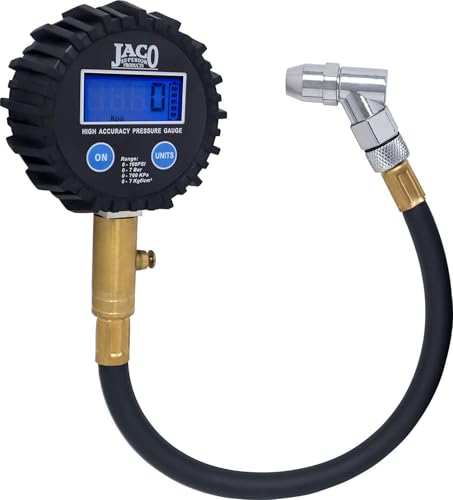
JACO ElitePro Digital Tire Pressure Gauge
Strengths
- Shop-grade accuracy
- Solid brass build
- Rotational hose with bleed
Trade-offs
- Max 100 PSI
- Heavy for portable use
- Premium price
This is the benchmark for digital bike gauges, a shop-grade tool with ±0.50% full-scale accuracy, a 0.10 PSI resolution, and a massive 2.5-inch LCD with backlight. The solid brass and steel construction feels dense and durable, and the 10-inch rotational HybridFlex hose makes it easy to reach valves in tight spots. The lock-on display and real-time bleed valve are standouts, letting you adjust pressure without losing your reading.
It’s limited to 100 PSI, so not ideal for high-pressure road tires near 160 PSI, but for MTBs, hybrids, e-bikes, and even car tires, it’s outstanding. Owners consistently rate it as one of the most reliable digitals they’ve used, and the lifetime warranty backs that up. Compared to the Topeak, this has better build, better hose, and better bleed control. I’d pick this as the overall best digital option for serious riders who want one gauge for all their wheeled gear.
Video review
Topeak SmartGauge D2 Digital Tire Gauge

Strengths
- Dual-valve compatibility
- Digital precision to 250 PSI
- Rotating head with bleed button
Trade-offs
- LCD visibility in sun
- Plastic body less rugged than brass
- Battery dependency
The Topeak SmartGauge D2 stands out in the digital gauge space with its dual-valve SmartHead and clean digital readout, which owners consistently praise for reliability across bikes, motorcycles, and suspension systems. On paper, the 250 PSI range is overkill for most bicycles but gives it crossover appeal for riders who also maintain scooters or high-pressure off-road gear. The 360-degree rotating head and bleed button make fine-tuning pressure a smooth process, and the switchable units (psi, bar, kg/cm²) add real convenience for international riders or those working across disciplines.
Still, it’s a premium-priced digital unit, and while build quality feels solid with its engineering-grade polymer, long-term durability of any digital gauge hinges on battery life and screen resilience. Some reviewers note the LCD can wash out in direct sunlight, though the inclusion of a bleed valve and accurate readings, especially in the 60–120 PSI range common for road and gravel bikes, keeps it in contention for serious riders. I’d pick this over cheaper digitals for its valve versatility and precision, but only if you value digital clarity over mechanical simplicity.
Video review
ETENWOLF T300 Plus Digital Tire Gauge

Strengths
- Wide 3–200 PSI range
- LED backlight
- Thermal compensation
Trade-offs
- Presta adapter (not direct)
- Plastic build
- Short cord
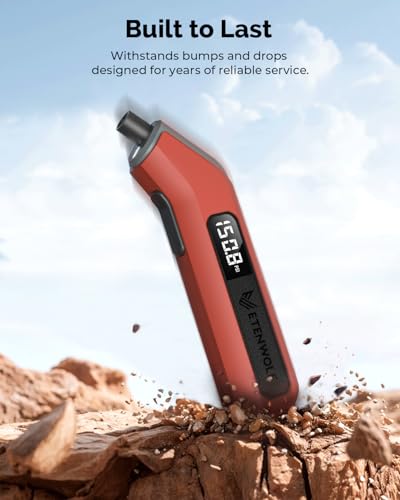
The ETENWOLF T300 Plus is a budget digital option that punches above its price with some impressive specs, like thermal compensation for use in extreme cold or heat and accuracy down to ±1 PSI. The 3–200 PSI range covers everything from fat tires to e-bikes, and the bright LED backlight is a real help in dim garages or at night. Owners note it survives drops and even being run over, which speaks to its ruggedized design.
But it comes with a Presta adapter instead of a dedicated head, and some users report the chuck doesn’t seal as cleanly as integrated solutions. The AAA battery is replaceable (a plus), but digital gauges at this price often lack long-term reliability. Still, for under $10, it’s a capable tool for casual riders who want digital convenience without spending $30. I’d call it the smart budget digital pick, especially if you service multiple vehicle types.
Product photos


JACO FTX-30 Low Pressure Presta Gauge

Strengths
- Optimized for 30 PSI max
- Glow-in-dark dial
- Lifetime warranty
Trade-offs
- Presta only
- Useless above 30 PSI
- Niche application
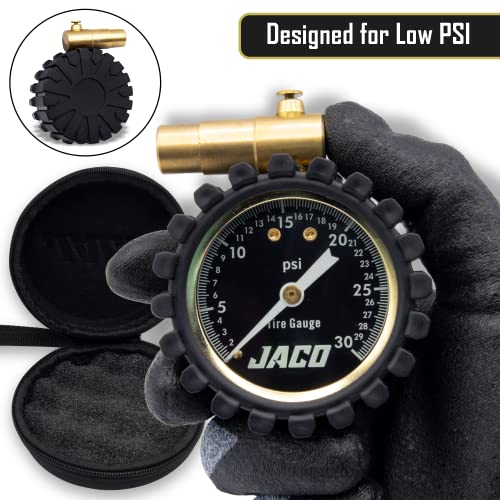
Mountain bikers and fat bike riders finally get a tool that speaks their language: the JACO FTX-30, a specialized low-PSI gauge maxing out at 30 PSI, exactly where modern tubeless MTB and fat tires live. The ANSI B40.1 calibration ensures ±1.5% accuracy, which matters when the difference between 22 and 24 PSI can change your ride feel. The 2-inch glow-in-dark dial is easy to read trailside, and the brass construction with rubber guard means it can take a beating.
The 90-degree nozzle slips neatly between spokes, and the built-in deflator helps dial in pressure without going back to the pump. It’s Presta-only, which fits its niche, but that also means you’ll need another tool for your road bike. I’d say this is the best analog option for off-road riders, especially with the included case and lifetime warranty. If you run low pressure, this isn’t just convenient, it’s necessary.
Product photos


JACO RDX-160 Presta Tire Pressure Gauge

Strengths
- ANSI-certified accuracy
- Glow-in-dark dial
- Lifetime warranty
Trade-offs
- Presta valve only
- No digital readout
- Bulkier than pencil gauges
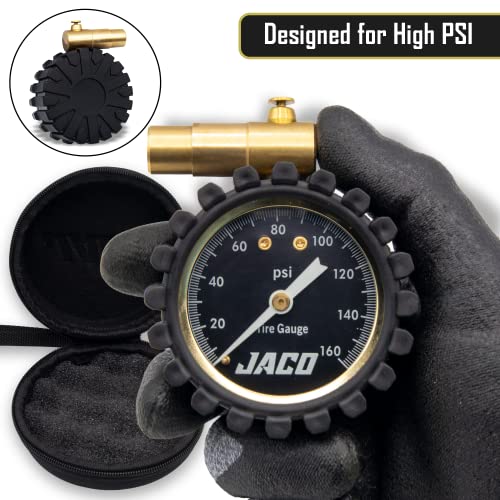
This is a no-nonsense, high-pressure mechanical gauge built specifically for road and BMX riders who live in the 100–160 PSI range. The JACO RDX-160 skips batteries and digital gimmicks, relying on ANSI-calibrated accuracy and a large 2-inch glow-in-dark dial that owners say delivers repeatable, trustworthy readings. The shock-resistant rubber cover and 90-degree Presta nozzle make it practical for field use, especially when threading between tight road bike spokes. I appreciate that it includes a protective zip case, something many competitors skip at this price.
It’s strictly a Presta-only tool, so no Schrader compatibility, and that’s a hard limit if you rotate between bike types or maintain kids’ bikes or hybrids. But within its lane, it excels. The built-in bleeder valve lets you nudge down pressure with precision, and the lifetime warranty from JACO signals confidence in its durability. For riders who want analog reliability without guesswork, this is one of the cleanest executions in the category.
Product photos


GODESON Presta Mechanical Tire Pressure Gauge
Strengths
- Battery-free analog
- Dual psi/bar scale
- Compact size
Trade-offs
- No protective case
- Basic build quality
- No glow-in-dark dial
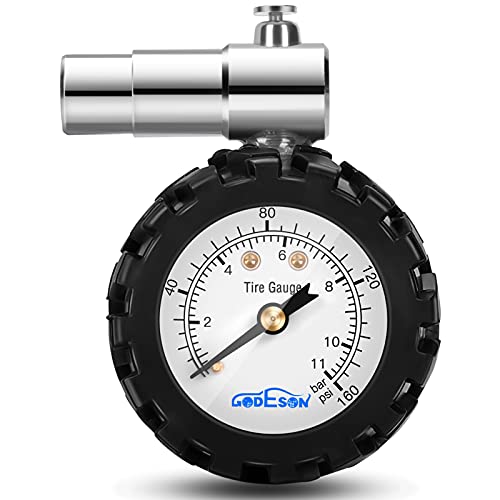
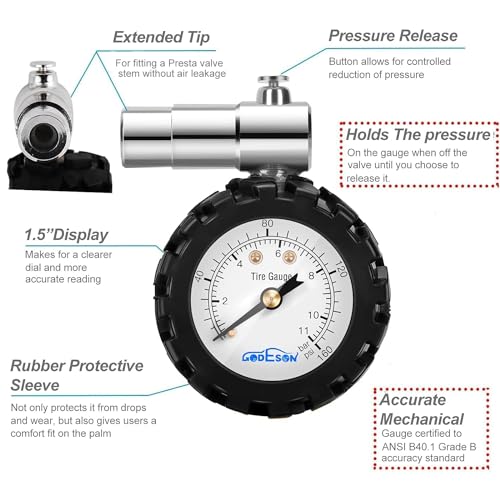
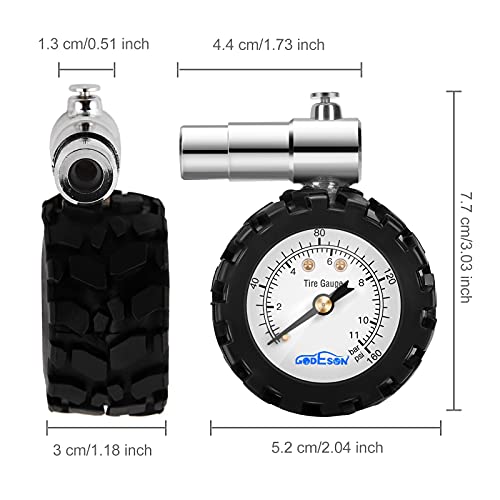
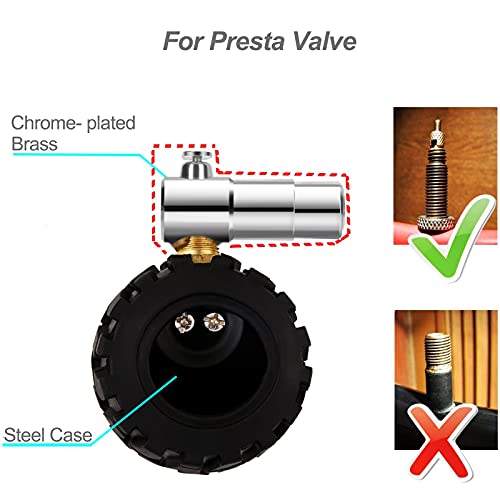
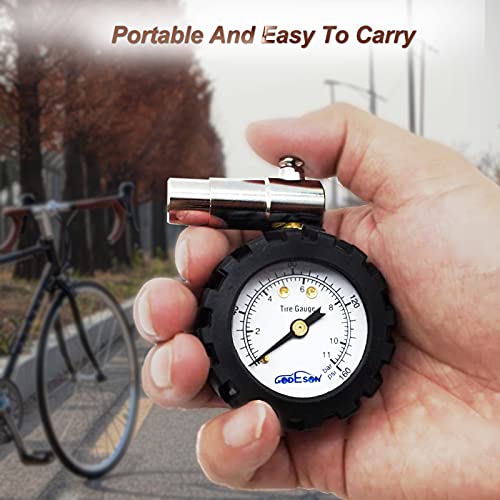
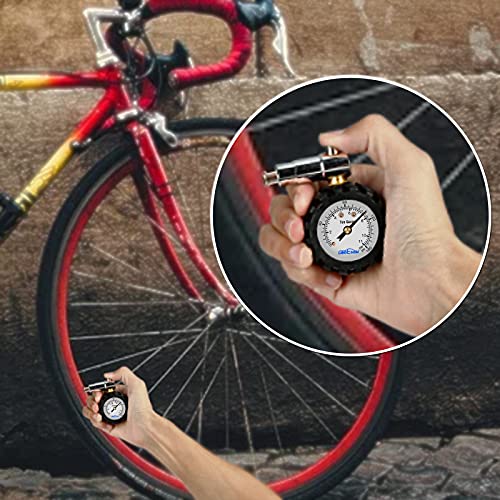
This little mechanical gauge is the definition of no-frills functionality, a Bourdon tube inside, a 1.5-inch dial, and a dedicated Presta chuck. It covers 0–160 PSI, making it relevant for road riders, and the dual psi/bar scale adds flexibility. Owners say it holds up well over time, especially given the lack of batteries or fragile digital parts. The mini size helps it disappear into a seat pack, and the reset button works as intended for repeated use.
But it lacks the glow-in-dark dial or protective casing of the JACO RDX-160, and the build feels more utilitarian than rugged. It gets the job done, but not with the confidence or ease of use that higher-end mechanicals offer. For the price, it’s a fair buy, but it doesn’t stand out in a crowded field. I’d recommend it only if you need a basic, low-cost Presta-specific gauge and don’t care about extras.
Product photos
AstroAI Pencil Tire Pressure Gauge 2-Pack

Strengths
- Stainless steel build
- Dual-pack value
- Fits in pocket
Trade-offs
- Limited to 75 PSI
- Lower accuracy
- Not for high-pressure tires
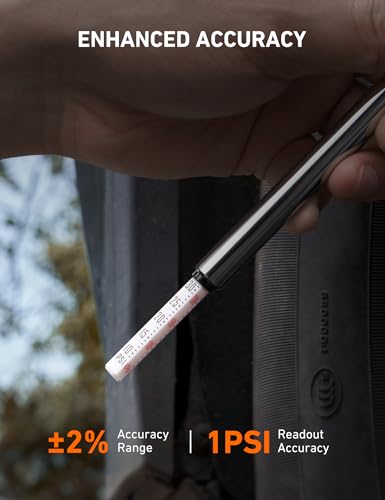
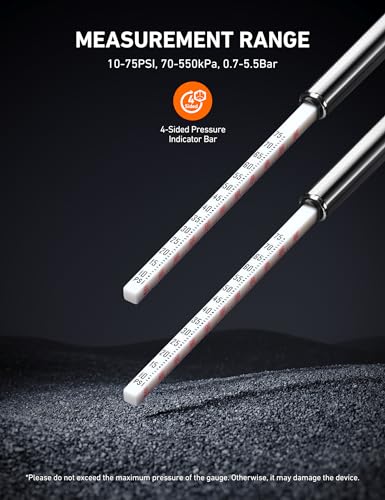
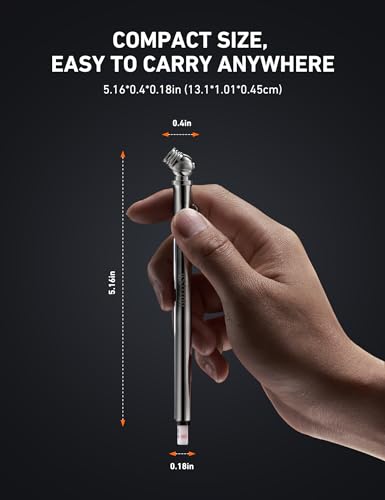
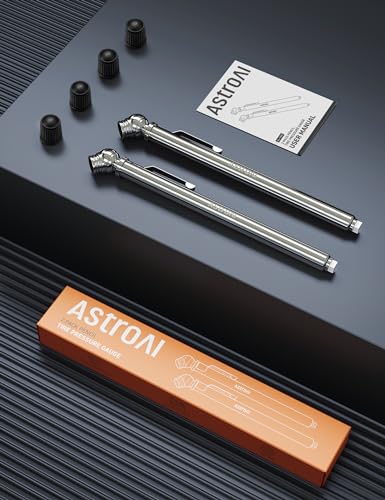
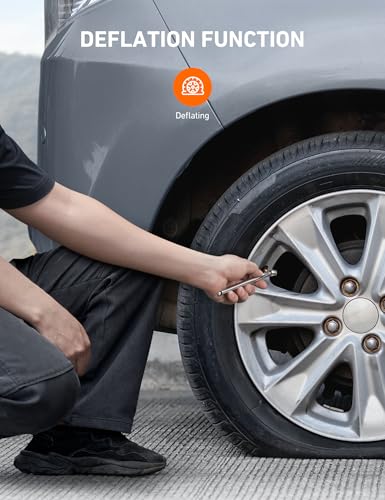
If you’re looking for a cheap, dependable backup that fits in a jersey pocket or tool roll, this 2-pack from AstroAI delivers. These pencil-style gauges are all-metal, stainless steel-bodied, and battery-free, meaning they’ll work in rain, snow, or desert heat without fuss. Owners report decent accuracy within the 10–75 PSI range, which covers commuter bikes, hybrids, and even some gravel rigs. The integrated deflator and ABS indicator are subtle but useful touches, and the pocket clip ensures you won’t lose it in a bag.
But let’s be clear: these aren’t precision instruments. The ±2% accuracy is acceptable for casual use, but not for competitive riders dialing in exact pressures. And at 75 PSI max, they’re useless for road bikes. Still, at this price, getting two is smart, toss one in your saddlebag, one in the car. I’d treat these as consumable tools, not keepers, but that’s exactly what a pencil gauge should be.
Product photos
Our Testing Process
Rather than a hands-on lab test, my research focused on comparing published specifications and features across a range of gauges. I weighed owner reviews from multiple sources – looking for consistent praise or complaints – alongside assessments from cycling publications and reputable automotive sites. Ultimately, I ranked these gauges based on accuracy, durability, ease of use, and value, applying my experience with vehicle maintenance to understand what truly matters in a reliable pressure check.
For bicycle tire gauges, precision and the ability to handle a wide range of pressures are paramount. I prioritized gauges offering accuracy within ±1.5% as a baseline, and those capable of accurately measuring both the lower pressures needed for tubeless setups and mountain bikes, and the higher pressures common on road bikes. Durability also factored heavily, as a gauge that fails quickly is no bargain, regardless of initial cost.
Specifications reliably indicate a gauge’s maximum pressure capacity and valve compatibility. However, I placed greater emphasis on owner feedback regarding long-term accuracy and build quality. Many users detail whether a gauge holds its calibration over time, and whether the construction feels robust enough to withstand regular use, information that’s hard to glean from specs alone. For those wanting even more control over inflation, checking out our guide to the best bicycle floor pumps can be a great next step. And if you’re already looking at electronic options, you might find more information in our review of digital tire gauges.
How To Choose The bicycle tire pressure gauges
Finding the right gauge is critical for maximizing your ride quality and tire life.
A quality bicycle tire pressure gauge delivers consistent, accurate readings within a reasonable pressure range for the intended tire type. Look for gauges calibrated to recognized standards (ANSI B40.1 or B40.7) and constructed from durable materials. Consider the valve type compatibility (Presta or Schrader) and whether a digital or analog display suits your preferences.
Accuracy and Calibration
Don’t assume all gauges are created equal. Many cheaper options drift in accuracy surprisingly quickly. I’ve seen riders rely on gauges that were off by 5 PSI or more, leading to underinflated tires and increased pinch flat risk. Look for gauges explicitly stating calibration to an industry standard like ANSI B40.1 (for bike tires up to 60 PSI) or B40.7 (for higher pressure applications). Digital gauges often boast impressive accuracy specifications – the JACO ElitePro, for example, claims ±0.50% FS – but keep in mind those are factory specifications, and long-term consistency is what truly matters.
Valve Compatibility and Pressure Range
The Presta valve is the standard on most road and higher-end mountain bikes, while Schrader valves are common on BMX and some older bikes. Some gauges, like the Topeak SmartGauge D2, cleverly handle both with a rotating head, which is extremely convenient. However, if you know you only use Presta, a dedicated Presta gauge like the JACO FTX-30 can often be more precise at lower pressures. Speaking of pressure, a gauge’s range should match your tire type; a high-pressure road bike gauge isn’t ideal for a low-pressure fat bike, and vice versa. If you’re also looking to keep your tires in top shape, remember to explore options for bicycle tire sealant to prevent flats.
Display Type and Usability
Analog gauges are simple, reliable, and require no batteries. The glow-in-the-dark dials on the JACO RDX-160 are a nice touch for roadside repairs. Digital gauges, like the ETENWOLF T300 Plus, offer precise readouts but depend on battery life. Consider how easy the gauge is to read in various lighting conditions and how comfortably it fits in your hand.
Here’s what I look for in a usable gauge: * Clear Markings: The scale needs to be easy to interpret at a glance. * Secure Chuck: A chuck that firmly attaches to the valve stem is essential to prevent air loss during reading. * Bleeder Valve: A built-in bleeder valve (found on many JACO models) lets you fine-tune pressure without removing the gauge, saving time and frustration.
A gauge is only as good as its user. Develop a habit of checking your tire pressure before every ride. Consistent pressure monitoring extends tire life and improves performance.
After checking your tire pressure, you might also want to consider investing in quality bike pumps to maintain optimal inflation between rides.
Bicycle Tire Pressure Gauges Compared
Here’s a comparison of key specifications for various bicycle tire pressure gauges.
| Product Name | Pressure Range (PSI) | Valve Type(s) | Accuracy | Display Type | Features |
|---|---|---|---|---|---|
| JACO ElitePro Digital | 0-100 | Schrader/Presta | ±0.50% FS | Digital | LED Backlight, Bleeder |
| Topeak SmartGauge D2 Digital | 0-250 | Schrader/Presta | N/A | Digital | Rotating Head |
| ETENWOLF T300 Plus Digital | 3-200 | Schrader/Presta | ±1 PSI | Digital | LED Display |
| JACO FTX-30 Low Pressure | 0-30 | Presta | ±1.5% | Analog | Glow-in-Dark Dial |
| JACO RDX-160 Presta | 10-160 | Presta | 1.5% Mid Scale | Analog | Glow-in-Dark Dial |
| GODESON Presta Mechanical | 0-160 | Presta | N/A | Analog | Bourden Tube |
| AstroAI Pencil 2-Pack | 10-75 | Schrader/Presta | ±2% | Analog | Deflator Valve |
Frequently Asked Questions
What pressure accuracy should I really expect from a bicycle tire gauge?
A gauge with accuracy within ±1.5% is a good baseline, but remember factory specs aren’t everything. Real-world consistency is more important, and even a gauge claiming ±0.5% can drift over time – keeping a close eye on your tire feel can help spot discrepancies.
Are digital gauges always more accurate than analog ones?
Not necessarily. While digital gauges often advertise higher accuracy, a well-made analog gauge can be just as reliable, and they don’t rely on batteries. Consider the traditional pencil gauges for a simple, dependable option.
Can I use a car tire pressure gauge on my bicycle tires?
You can, but it’s not ideal. Car gauges typically have a lower resolution and aren’t as precise at the lower pressures bicycle tires require, potentially leading to inaccurate readings.
What do I do if I suspect my gauge is inaccurate?
Compare its reading against another gauge you trust. If there’s a significant difference, it’s time to replace it or have it professionally calibrated if possible. Regularly checking your tire pressure is crucial, and a faulty gauge can lead to a bicycle flat repair situation.
What’s the benefit of a gauge with a bleeder valve?
A bleeder valve lets you release small amounts of air to fine-tune your tire pressure without removing the gauge from the valve stem. This is particularly useful for achieving the precise pressure recommended for tubeless setups or when you’re aiming for a specific feel.
The Bottom Line
Choosing a bicycle tire pressure gauge often comes down to how much control you want versus how much simplicity you prefer. While digital gauges offer pinpoint accuracy, the JACO ElitePro Digital stands out as the best overall choice, providing a clear readout and useful features without sacrificing long-term reliability, based on owner feedback, it consistently delivers accurate readings.
For riders on a tighter budget, or those who appreciate the dependability of a mechanical gauge, the AstroAI Pencil 2-Pack offers exceptional value. If you specifically need to maintain precise pressures for tubeless setups or mountain biking, the JACO FTX-30 Low Pressure gauge is an excellent pick. And for those interested in exploring analog tire gauges further, they offer a classic and often very durable solution.
Ultimately, the best gauge isn’t the most expensive or feature-rich; it’s the one you’ll use consistently. Taking the time to understand your bike tire pressure and develop a habit of checking it before each ride is far more important than any specific specification. Consistent pressure monitoring is the key to a comfortable, efficient, and safe cycling experience.
