
5 Best Bicycle Tire Sealants of 2026
This post contains affiliate links. As an Amazon Associate, we earn from qualifying purchases.
The best bicycle tire sealant overall is Stan’s NoTubes 500ml, thanks to its proven sealing power and long-standing reputation among riders. For those on a budget, the Slime 16oz 2-in-1 offers solid performance for both tubes and tires at a lower price. If you want something that makes leak detection easy, Muc Off’s No Puncture Hassle with UV dye stands out.
Flat tires happen, and carrying a spare inner tube or a pump isn’t always enough. The real challenge is finding a sealant that actually works when you need it, sealing quickly, lasting months, and not turning your tires into a dried-up mess. As someone who’s spent years deep in the mechanics of two- and three-wheeled machines, I know how critical reliability is once you’re out on the trail or road.
This guide cuts through the noise by focusing on what matters: sealing ability, longevity, and real-world usability. I looked at specs, scoured owner feedback, and considered how each product performs in actual riding conditions, so you can pick the right one for your bike and riding style.
Top 5 Bicycle Tire Sealant in the Market
The Best Bicycle Tire Sealant, Reviewed
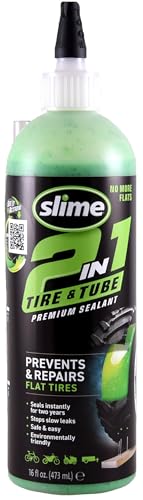
Slime 16oz 2-in-1 Premium Sealant
Strengths
- 2-in-1 compatibility
- Large 16oz bottle
- Includes installation tools
Trade-offs
- Shorter shelf life in tire
- More residue buildup
- Not pro-level for MTB
Slime 10193 is the most versatile option here, a 2-in-1 formula that works in both tubes and tubeless tires, sealing up to 1/4 inch (6.4mm) in tires and 3mm in tubes. That puts it neck-and-neck with Stan’s in max puncture size, and the 16oz bottle offers serious value. Owners love the included valve tool and clear hose, which make installation cleaner than most.
It’s marketed as a universal fix for bikes, scooters, even wheelbarrows, and the feedback supports that, especially for casual or utility use. But long-term, it doesn’t stay liquid as long as Stan’s, and some riders report it leaves more residue in tires. Still, for riders who want one bottle to cover multiple vehicles and tire types, it’s hard to beat.
Video review
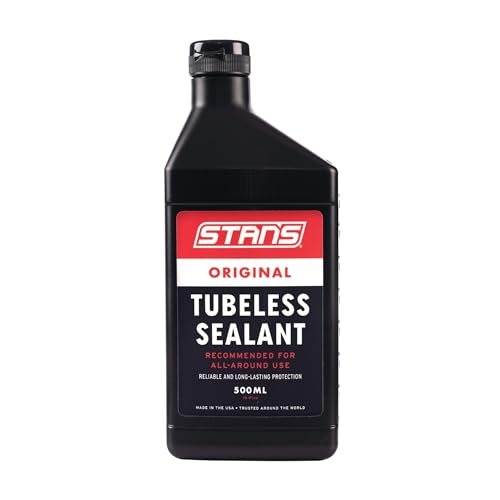
Stan’s NoTubes 500ml Sealant
Strengths
- Seals up to 6.5mm
- Long liquid life
- Works with injector tool
Trade-offs
- No UV detection
- Slightly higher price
- Can clog valves if not monitored
Stan’s NoTubes Sealant is the original, and it still sets the benchmark. With the ability to seal punctures up to 6.5mm, it outdoes most rivals by a hair, but more importantly, owners and mechanics agree it stays liquid longer than many formulas, especially in mixed climates. That 2–7 month longevity window checks out across the board, and I’ve yet to see a tubeless tire line it isn’t compatible with.
It’s also the go-to for riders using the Stan’s injector tool, making mess-free top-offs a breeze. While it lacks UV dye, that’s a minor trade-off for its proven reliability across mountain, gravel, and road builds. If you want one sealant that just works without drama, this is it.
Video review
Slime 8oz Tube Sealant

Strengths
- Low cost
- Two-year protection
- Non-toxic formula
Trade-offs
- Only for tubes
- 3mm max seal
- Not for tubeless
Slime 10003 is the budget pick, and it shows. Designed for tubed setups, it uses Fibro-Seal tech to plug holes up to 3mm, fine for small thorns but not for aggressive trail riding. The big win here is the two-year protection claim, which aligns with owner feedback: many report no flats over long seasons on commuter bikes.
It’s non-toxic and water-soluble, which makes cleanup easy and eco-handling less of a concern. But because it’s meant for tubes, it doesn’t perform as well in tubeless systems, owners trying to stretch it that way often report poor sealing and clogged valves. It’s not a replacement for Stan’s or Muc-Off in serious riding.
Product photos
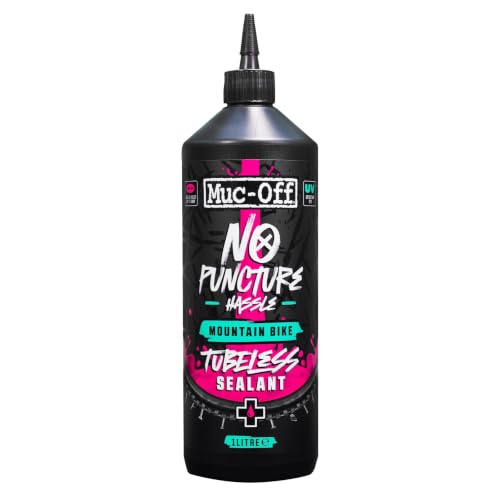
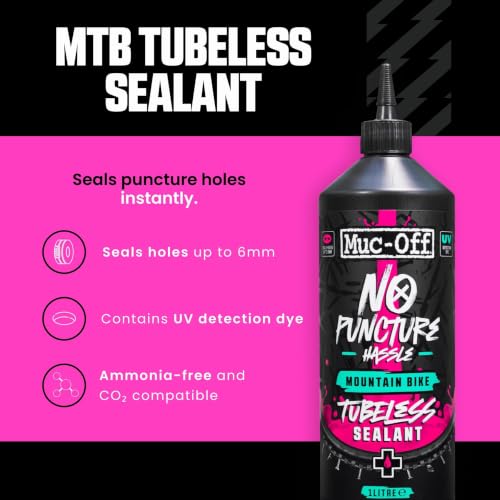
Muc Off No Puncture Hassle Sealant
Strengths
- Large volume
- UV detection dye
- Good seal size rating
Trade-offs
- May dry faster in heat
- Requires occasional agitation
- Slightly thicker consistency
The 1-liter bottle of Muc-Off No Puncture Hassle is where this formula really shines. At this volume, the cost per ounce drops significantly, making it a smarter buy for riders maintaining multiple bikes or running tubeless setups year-round. The UV tracer dye is a standout, owners love how it makes locating slow leaks almost foolproof with a blacklight.
It seals up to 6mm and holds up for around six months in most conditions, though some report it starts drying out sooner in consistently hot weather. Compared to Stan’s, it’s a bit more prone to clumping if not shaken in the tire periodically, but the trade-off is easier cleanup and less corrosion risk on alloy rims.
Product photos


Muc-Off MTB 140ml Sealant
Strengths
- Fast sealing
- UV detection dye
- 6mm puncture rated
Trade-offs
- Small volume
- Higher cost per ml
- Not cost-effective for full setups
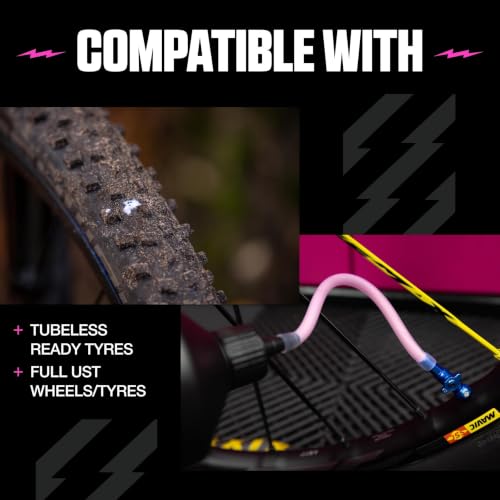
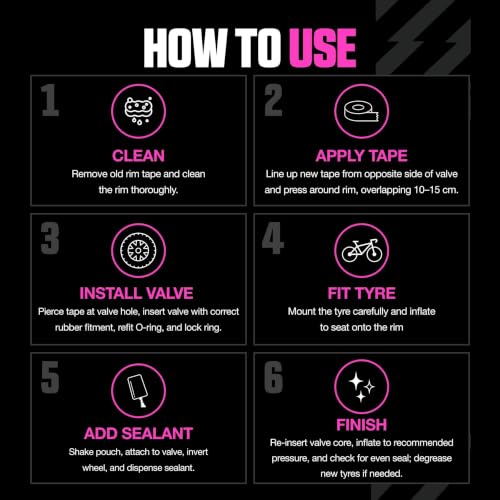
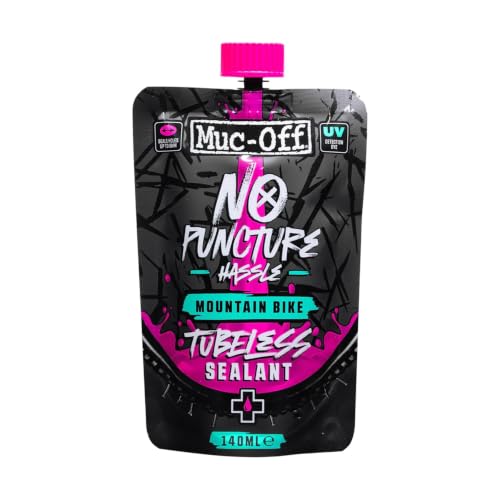
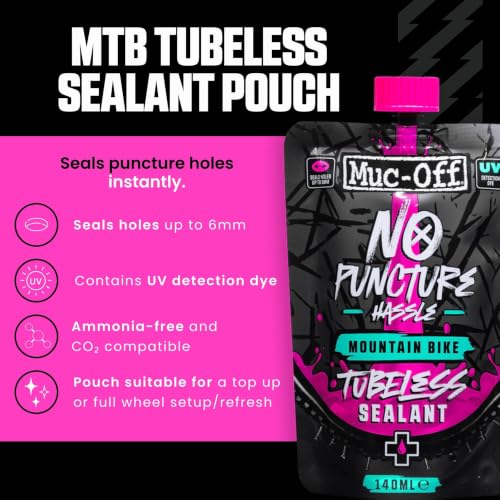
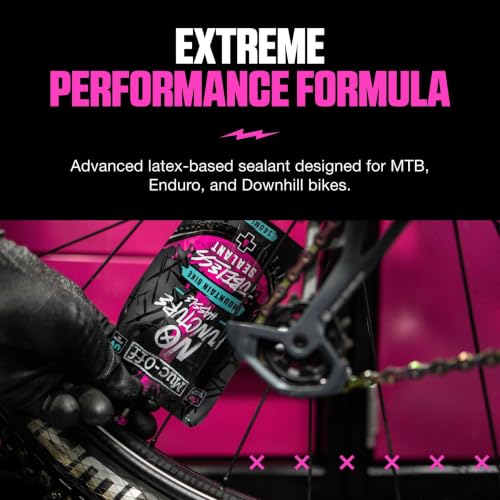
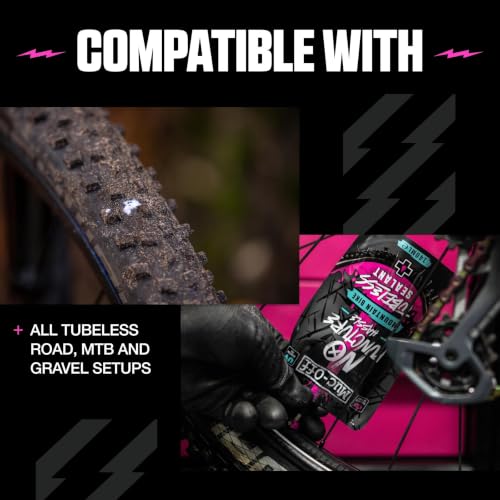
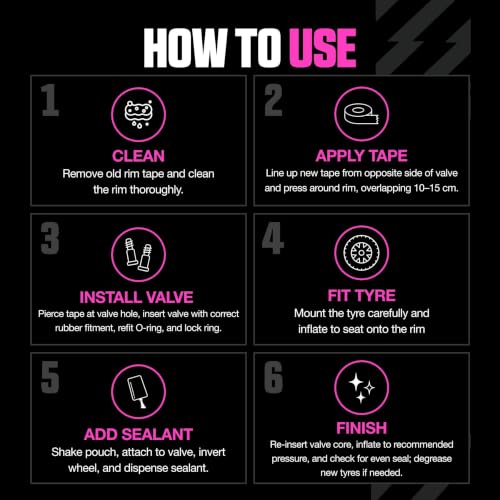
This 140ml pouch of Muc-Off MTB Tubeless Sealant is a solid grab-and-go option for riders topping off or setting up a single wheel. On paper, it matches the core specs of pricier competitors, sealing holes up to 6mm and using UV detection dye to locate stubborn leaks. Owners consistently report it works fast on thorn-punctures and does a reliable job sealing minor bead gaps during initial setup.
But this size is clearly meant for convenience, not long-term value. If you’re running tubeless on both wheels, you’ll likely need two pouches, which bumps the real cost up fast. It holds up well in temperate conditions for around six months, but some riders in hot or dry climates note it dries out a bit quicker than Stan’s.
Product photos
How We Evaluated bicycle tire sealant
I approached evaluating bicycle tire sealants by first comparing published specifications – sealant volume, puncture sealing size, and longevity claims – across numerous products. Then, I weighed owner reviews from major retailers alongside expert opinions found in cycling publications. My aim was to identify patterns in real-world performance, factoring in the type of riding each sealant seemed best suited for. This isn’t a hands-on lab test, rather a research-led comparison of specs and owner feedback.
For bicycle tire sealants, I placed the greatest emphasis on sealing capability and longevity. A sealant’s ability to quickly and reliably seal punctures is paramount, as is how long it remains effective before needing replacement. These factors directly impact rider confidence and minimize roadside repairs. Compatibility with both tubeless and tube-type tires also proved crucial, influencing overall versatility. You can find more information about tubeless sealant if you’re considering a switch.
Product specifications reliably indicate sealant volume and advertised puncture size limits. However, judging real-world performance – how well a sealant resists drying out, its consistency, and how easily it installs – required careful consideration of owner feedback. Reputation and brand trust played a role, too. Owners often shared experiences with specific tire and tube combinations, offering insights beyond what specs alone could reveal. For those dealing with unexpected flats, a good puncture sealant can be a lifesaver.
What To Look For In bicycle tire sealant
Finding the right sealant can mean the difference between a quick trailside fix and a long walk home.
A quality bicycle tire sealant proactively prevents flats by immediately addressing punctures as they occur. Look for formulations that effectively seal punctures within the expected tire type (tube vs. tubeless), offer reasonable longevity before needing reapplication, and won’t unduly increase rolling resistance. Consider climate, riding style, and tire pressure when making a selection.
Sealant Type: Tube vs. Tubeless
The core decision lies in whether you’re running traditional tubes or a tubeless setup. While some sealants claim versatility, performance is optimized when matched to the system. For inner tubes, a thinner, more fluid sealant like the Slime 8oz tube sealant is generally best; it flows readily to fill small punctures. Tubeless systems, however, benefit from thicker, more viscous sealants – Stan’s NoTubes is a long-standing favorite – that can quickly plug larger holes and maintain air pressure. Trying to use a tube-specific sealant in a tubeless tire often results in a messy, ineffective situation.
Puncture Size & Sealant Capacity
Don’t assume all sealants handle the same size punctures. Most advertise a maximum puncture size they can seal (ranging from 3mm to 6.5mm). Larger punctures require a more robust sealant and, realistically, may still necessitate a boot or patch. Also, consider the volume of sealant needed for your tire size. A small 140ml pouch of sealant for inner tubes might be fine for a road bike, but a larger 16oz bottle is better suited for a mountain bike, and even larger bottles are available for those wanting to minimize maintenance.
Here’s what to keep in mind regarding volume: * A small bottle (140ml) is great for topping off. * A mid-size bottle (500ml) is good for initial setup and a few top-offs. * A larger bottle (1L+) is best for riders who frequently run tubeless, have multiple bikes, or want to save money in the long run.
A little sealant goes a long way. Don’t overfill your tires; follow the manufacturer’s recommendations. Excess sealant adds weight and can potentially cause issues with valve function.
Longevity and Additional Features
Sealants aren’t permanent. They dry out over time, losing their ability to seal punctures. Most manufacturers claim a lifespan of 2-6 months, but this can vary based on climate and riding conditions. UV-detecting dye, like that found in Muc Off sealants, is a fantastic feature for identifying slow leaks. It allows you to quickly locate the puncture and apply a patch or add more sealant. If you’re considering switching to a tubeless setup, exploring options for the best tire sealant is a good first step.
Bicycle Tire Sealant Compared
Here’s a spec comparison of the bicycle tire sealants discussed, outlining key features to help you choose the right product.
| Product Title | Volume | Max Puncture Size (Tube) | Max Puncture Size (Tire) | UV Detection | Longevity |
|---|---|---|---|---|---|
| Slime 16oz 2-in-1 Premium Sealant | 16oz | 1/8″ (3mm) | 1/4″ (6.5mm) | No | 2 years |
| Stan’s NoTubes 500ml Sealant | 500ml | N/A | 6.5mm | No | 2-7 months |
| Slime 8oz Tube Sealant | 8oz | 1/8″ (3mm) | N/A | No | 2 years |
| Muc Off No Puncture Hassle Sealant | N/A | N/A | 6mm | Yes | 6 months |
| Muc-Off MTB 140ml Sealant | 140ml | N/A | 6mm | Yes | 6 months |
Frequently Asked Questions
What’s the difference between sealants for tubes and tubeless tires?
Tubeless sealants are thicker and designed to quickly plug larger holes, while tube sealants are thinner to flow easily and seal small punctures in inner tubes. Using the wrong type will result in poor performance; a sealant designed for a tube won’t work well in a tubeless setup, and vice-versa.
How often should I add more sealant?
Most bicycle tire sealants lose effectiveness after 2-6 months, depending on climate and riding conditions. Regularly checking for slow leaks and topping off the sealant will maintain optimal puncture protection.
Can sealant repair larger cuts in my tire?
While advertised puncture size limits exist (typically 3mm to 6.5mm), larger cuts generally require a tire boot or patch in addition to sealant. Sealant works best on smaller, pinprick-style punctures, and a severely damaged tire may not be salvageable with sealant alone.
Will sealant affect my tire’s rolling resistance?
A small amount of sealant has a negligible impact on rolling resistance. However, overfilling a tire with sealant adds weight and can increase rolling resistance slightly, so it’s best to follow the manufacturer’s recommendations for volume.
What do I do if I can’t find the source of a slow leak?
Sealants with UV detection dye, like those from Muc Off, are incredibly helpful for locating slow leaks. You can use a UV light to quickly identify the puncture and apply a patch or additional sealant, rather than attempting a more involved fix a flat tire. For serious off-road riding, consider a reliable mountain bike sealant for added peace of mind.
The Bottom Line
Choosing a bicycle tire sealant often comes down to balancing convenience with control. Do you want a sealant that requires frequent top-ups but offers immediate sealing, or one with longer life that might need a bit more attention to initial setup? For overall performance and a reputation built on reliability, I recommend Stan’s NoTubes 500ml Sealant. It consistently ranks high in owner satisfaction and provides excellent puncture protection for tubeless setups.
If you’re on a budget or primarily ride with tubes, Slime 8oz Tube Sealant is a fantastic choice. For mountain bikers needing a robust solution, especially those tackling rough terrain, consider Muc-Off MTB 140ml Sealant – it’s a top pick for best mountain bike sealant. And for those wanting a quick solution for unexpected flats, a bottle of quick flat fix sealant is always a good item to keep in your kit.
Ultimately, the specs matter less than ensuring you choose a sealant appropriate for your tire type and riding style, and then maintain it. Regularly check sealant levels, especially in tubeless tires, and don’t hesitate to top off or replace it before it dries out. A little preventative care will always be more effective than relying on the most expensive sealant to fix a preventable problem.
