
7 Best Balance Bikes for 1 Year Old 2026
This post contains affiliate links. As an Amazon Associate, we earn from qualifying purchases.
The Radio Flyer Steady Start is the best balance bike for 1 year olds, offering unmatched stability with its three-wheel design and wide base. For a lighter, more portable option, the XBONFOE Baby Balance Bike stands out, while the SEREED Baby Balance Bike is a strong budget pick that doesn’t skimp on safety features like the 135° steering limiter.
Choosing the right balance bike for a one-year-old can feel overwhelming, especially when you’re trying to balance safety, size, and your child’s developing coordination. At this age, confidence comes from stability – they need to feel secure while learning how to steer and glide.
This guide cuts through the noise by focusing on what actually matters: seat height, weight, wheel type, and real-world feedback from parents. I looked at specs, design details, and owner experiences to find bikes that support early development without complicating the ride.
Top 7 Balance Bikes For 1 Year Old in the Market
The Best Balance Bikes For 1 Year Old, Reviewed
Radio Flyer Steady Start Balance Bike
Strengths
- Stable 3-wheel design
- Tool-free seat adjustment
- Quiet, grippy wheels
Trade-offs
- Higher price
- Slightly bulkier frame
- Not ultra-lightweight
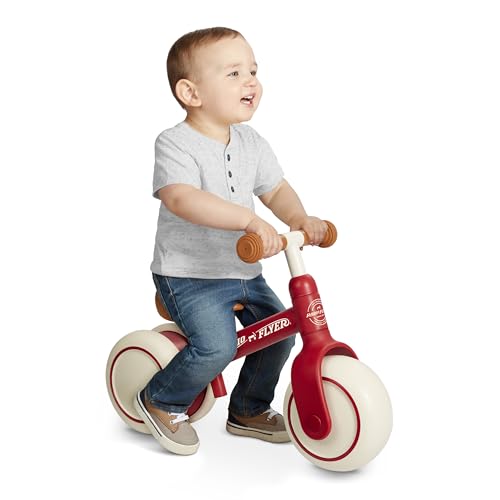
Radio Flyer has been in the kids’ ride-on game for over a century, and that legacy shows in the Steady Start. The three-wheel setup, wide front wheel with dual rear stabilizers, gives it a stable, self-standing design that’s perfect for wobbly beginners. Unlike four-wheel models that can turn into glorified walkers, this one encourages actual scooting motion while still minimizing falls. Owners consistently praise how well it works on both hardwood and pavement, thanks to its wide, treaded tires that roll quietly and grip reliably.
The tool-free adjustable seat is a standout, making it usable across more growth stages than most competitors. While it’s one of the pricier options, the build quality and brand reputation back up the cost. Compared to the Umatoll or SEREED models, this isn’t just a toy, it feels like a developmental tool. I’d pick this over others for a child who’s ready to move beyond cruising furniture.
Video review
XBONFOE Baby Balance Bike
Strengths
- Low price
- Adjustable seat height
- Lightweight and portable
Trade-offs
- Cheaper plastic build
- Limited brand support
- Less refined finish
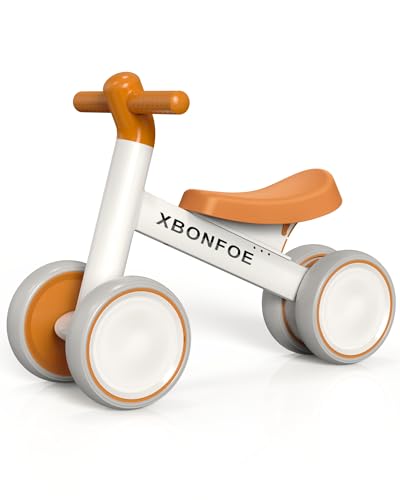
For under $25, the XBONFOE packs a surprising amount of value. It hits all the key safety standards, CE, EN71, ASTM F963-23, and includes a 135° steering limiter, enclosed wheels, and a low center of gravity that helps it stop when the child dismounts. The seat adjusts in height, which extends its usability, and the 3.5 lb weight makes it easy for both kids and parents to move around.
Owner feedback is generally positive, with many calling it “perfect for the price.” It’s not as polished as the Radio Flyer, and the plastic components feel thinner, but for a first-time user or a gift on a budget, it’s hard to beat. Compared to the Colorful Lighting model, it’s more functional than flashy. My pick for the best budget option that doesn’t sacrifice core safety.
Video review
Umatoll Baby Balance Bike with Light
Strengths
- Battery-free glowing wheel
- Light aluminum frame
- Non-slip EVA wheels
Trade-offs
- Minimal seat adjustment
- Plastic feel in joints
- Less long-term fit range
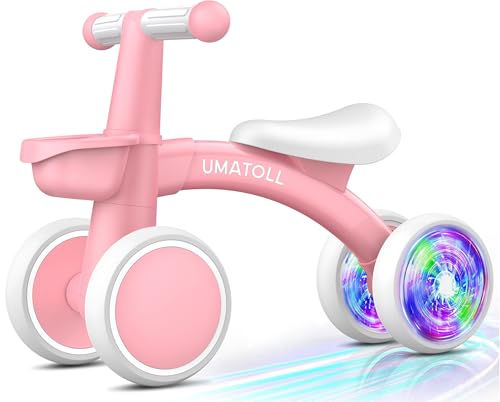
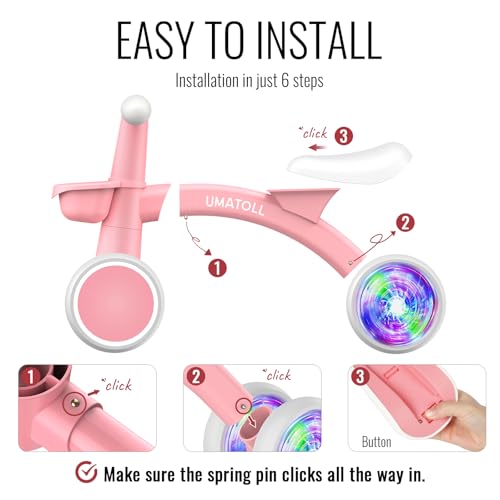
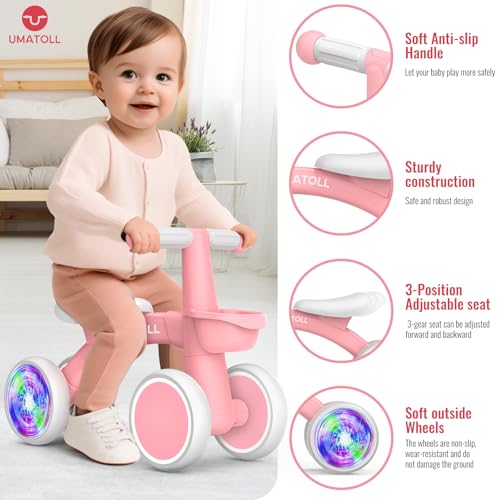
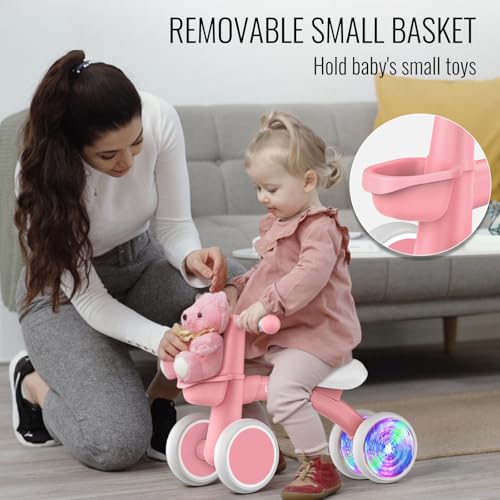
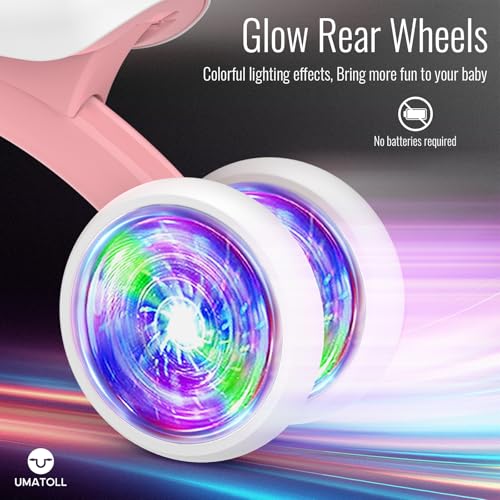
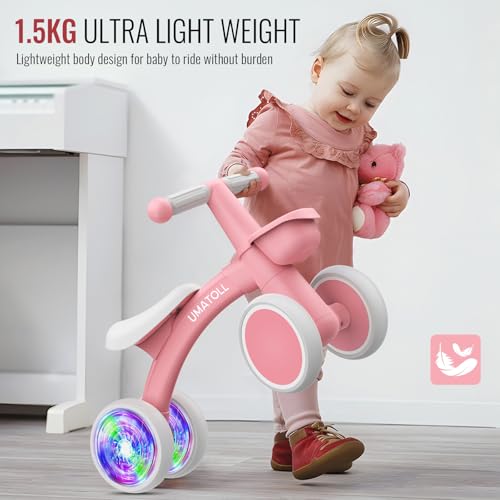
The light-up rear wheel is the headline feature here, and it works without batteries, just motion-activated LEDs that glow as the wheel spins. That’s a clever touch, and from owner feedback, it genuinely keeps toddlers engaged longer. The aluminum frame keeps it light at just 3.3 lbs, making it easy for little ones to maneuver, and the EVA wheels are quiet on floors, which parents appreciate during indoor play.
Specs-wise, it hits the usual safety checkboxes: 135° steering limit, enclosed wheels, no sharp edges. But the seat adjustability is limited to three positions and only a 0.8-inch range, less flexible than the Radio Flyer. Still, for pure fun and visual appeal, this one wins. If you’re buying a first birthday gift that needs to wow both kid and relatives at the party, this delivers.
Product photos
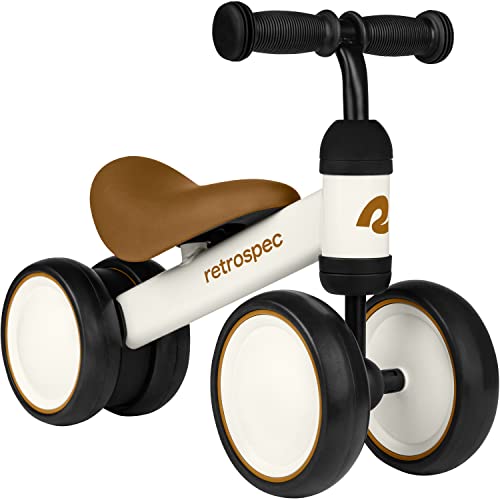
Retrospec Cricket Baby Balance Bike
Strengths
- No-scratch indoor wheels
- Arrives nearly assembled
- Supports heavier toddlers
Trade-offs
- Four-wheel stability limits balance learning
- Less skill transfer to bikes
- Bulkier footprint
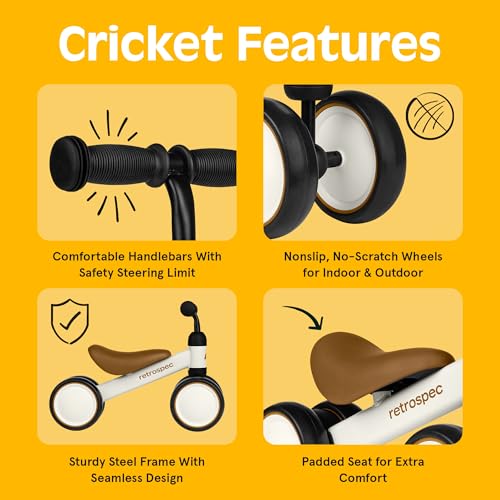
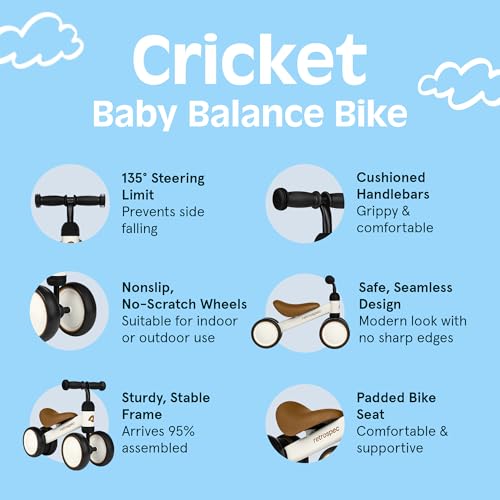
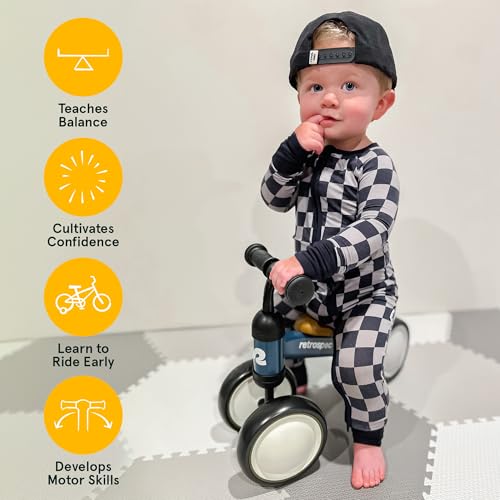
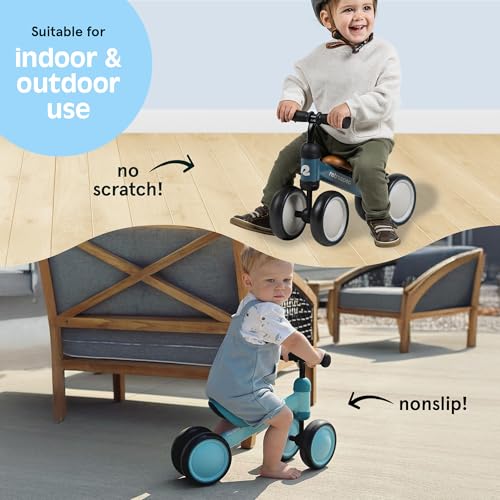
The Retrospec Cricket is built for indoor use first, and it shows. The four no-scratch wheels glide smoothly on hardwood and tile, and owners report zero scuffing, big plus for parents worried about floors. The feet-to-floor design gives toddlers full control, and the built-in steering limiter keeps turns manageable. At 44 lbs max weight, it supports older or heavier toddlers better than most in this category.
Assembly is a breeze, 95% pre-built, which is a relief compared to models requiring full setup. But the four-wheel layout again raises the same issue: it’s stable, but does it teach balance? Many reviewers say their kids treat it like a walker, not a balance trainer. Compared to the Radio Flyer, it’s less developmental. I’d recommend this only if your priority is indoor safety and quiet play, not actual riding skills.
Product photos

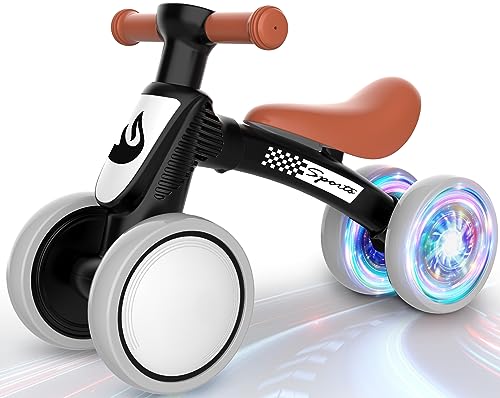
Colorful Lighting Baby Balance Bike
Strengths
- Motion-activated light wheel
- Durable steel frame
- Gift-ready packaging
Trade-offs
- No seat adjustment
- Heavier than rivals
- Single fit profile
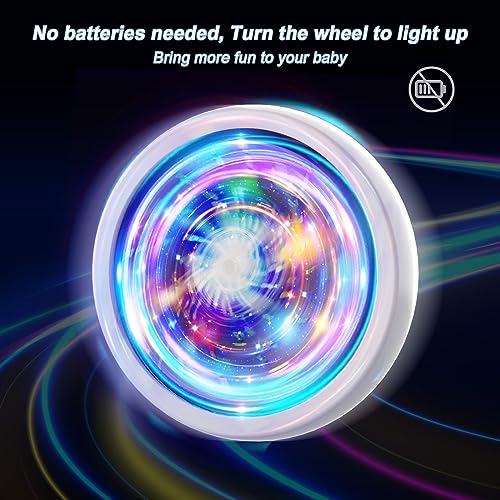
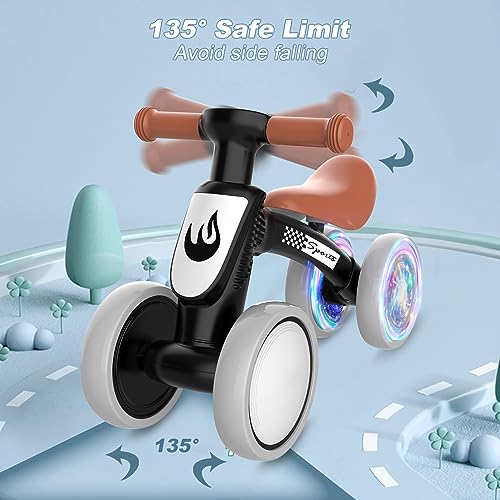
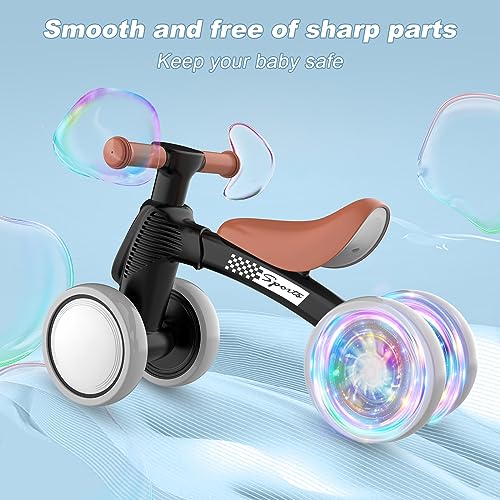
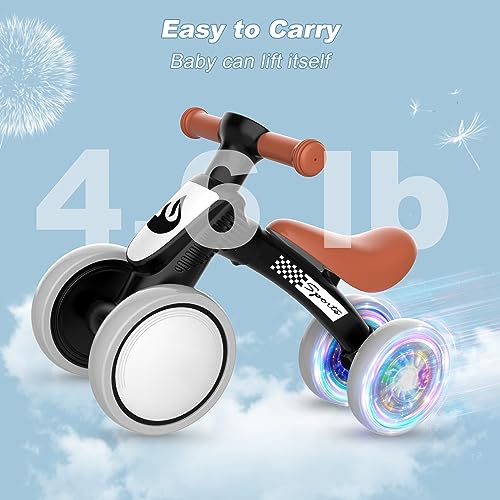
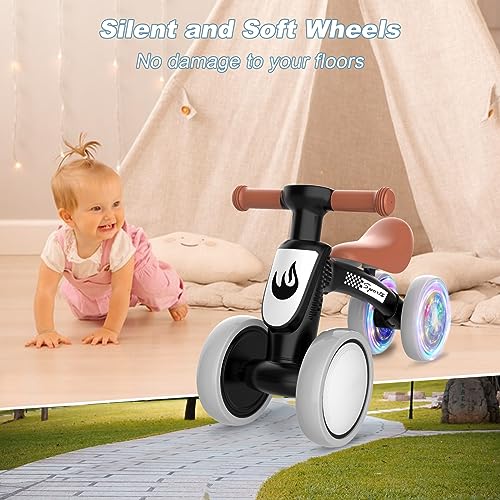
The light-up wheel is the main event here, and like the Umatoll, it activates without batteries, just spin and glow. That feature alone makes it a hit at birthday parties and in low-light playrooms. The 4.6 lb weight is still manageable, though heavier than aluminum models, thanks to the carbon steel frame. It’s stable, with the usual 135° steering lock and enclosed wheels, and the EVA tires are quiet on floors.
But the steel frame adds bulk, and the seat isn’t adjustable, only one height setting. That means it fits a narrower window of toddlers, especially since it’s designed for 10–36 months. Owners say taller 2-year-olds sit awkwardly. It’s a fun gift, but not a practical long-term ride. If you want lights and charm over function, this delivers. But for real development, look elsewhere.
Product photos
Bobike Baby Balance Bike
Strengths
- Strong safety certifications
- Fully enclosed wheels
- Easy assembly
Trade-offs
- Heavy steel frame
- Four wheels limit balance training
- Less effective skill transfer
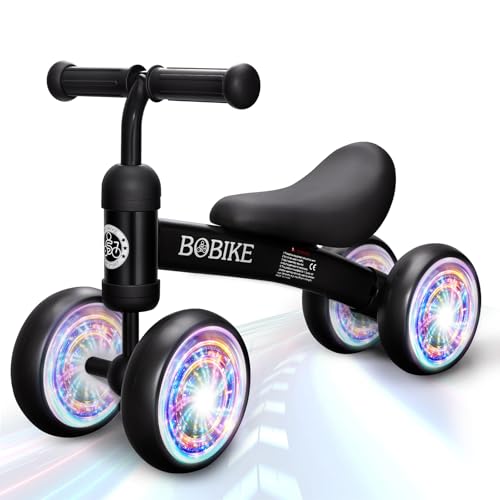
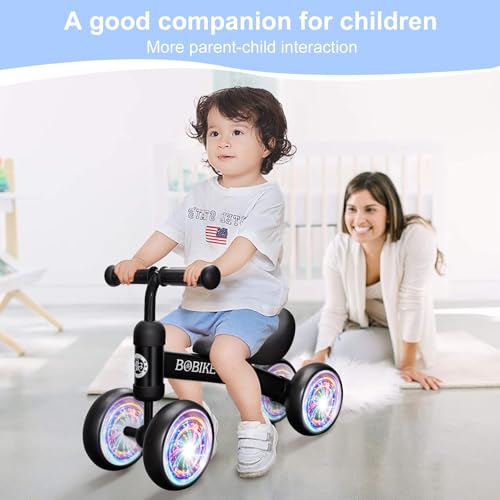
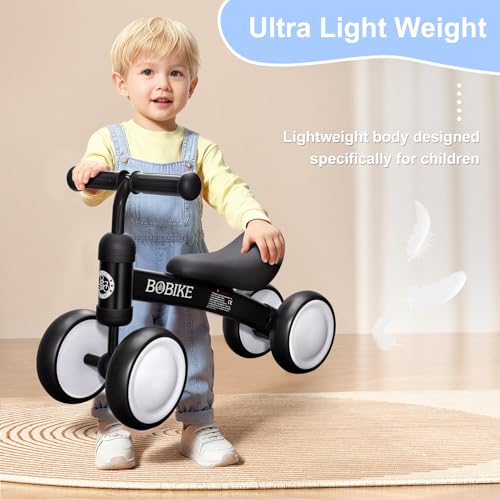
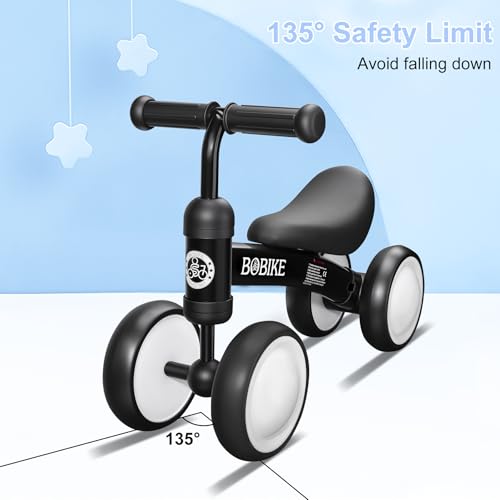
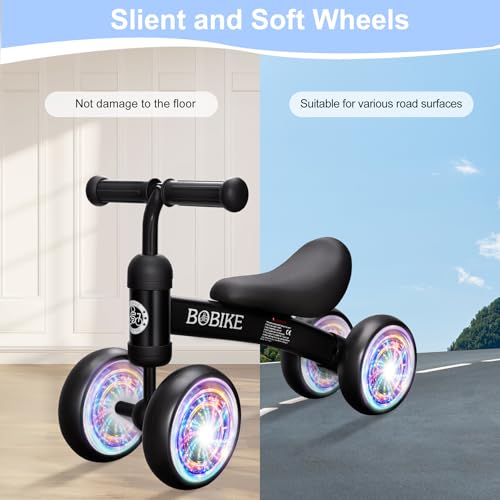
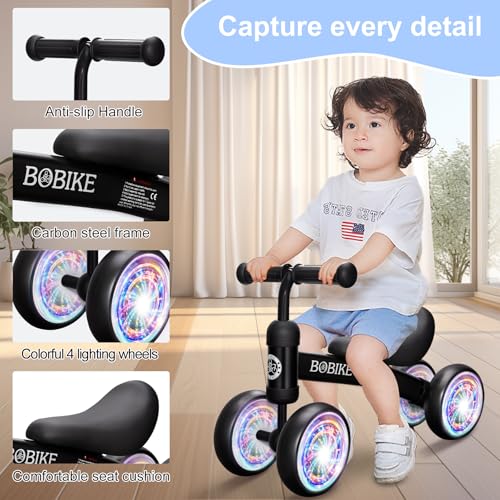
This bike stands out for its strong safety credentials, with both ASTM F963-11 and EN71 certifications, rare at this price point. The 135° steering limiter and fully enclosed wheels are consistent across several models in this category, but Bobike implements them well, and owners report fewer tip-overs during early scooting attempts. On paper, the steel frame offers durability, though it does add a bit more weight compared to aluminum rivals.
Still, the four-wheel design raises questions about how well it actually teaches balance. Some parents note their toddlers treat it more like a walker than a ride-on, which defeats the purpose of a balance bike. It works fine indoors, but I’d question whether it’s pushing real skill development or just keeping kids occupied.
Product photos
SEREED Baby Balance Bike
Strengths
- Ultra-lightweight design
- Sturdy aluminum frame
- Non-slip handlebars
Trade-offs
- No seat height adjustment
- Shorter growth window
- Basic aesthetics
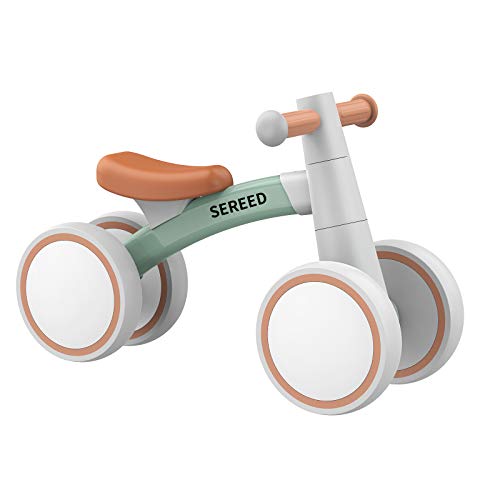
At 3.6 lbs, this is one of the lightest in the lineup, and that makes a real difference for 1-year-olds with limited strength. The aluminum alloy frame is thin but reportedly holds up well under normal indoor use, and parents say their toddlers can actually drag it across the floor without help. The 135° steering limiter and enclosed wheels are standard, but the TPU handlebars add a nice grippy touch that prevents slipping.
It doesn’t have flashy features like lights or baskets, but it nails the basics: lightweight, safe, and easy to carry. Compared to the XBONFOE, it’s slightly sturdier in feel, though both are in the same weight class. Where it falls short is adjustability, the seat isn’t height-adjustable, which limits its lifespan. If your child is near the upper end of the 12–24 month range, they might outgrow it fast.
Product photos


How We Evaluated balance bikes for 1 year old
My research into balance bikes for one-year-olds centered on a detailed comparison of published specifications and features across numerous models. I then weighed owner reviews – paying close attention to recurring issues and praises – alongside assessments from reputable sources within the parenting and gear review space. As someone who’s always been fascinated by the mechanics of two-wheeled vehicles, I applied my understanding of stability, ergonomics, and appropriate developmental stages to rank these options based on what truly matters for this age group. Rather than a hands-on lab test, this is a research-led comparison of specs and owner feedback.
For very young riders, stability and safety were paramount. I heavily weighted the design features intended to prevent tipping – things like wider wheelbases and steering limiters. Equally important was the bike’s weight; a lighter bike is easier for a small child to manage and for a parent to carry. Ultimately, a bike’s ability to build confidence and coordination, as reported by owners, heavily influenced the final rankings. If a bike seemed overly complicated or fragile based on reviews, it lost points.
Specifications reliably tell you about frame materials, seat height adjustability, and wheel construction. However, I found owner feedback crucial for judging real-world durability, ease of assembly, and how well a bike performs on different surfaces. Reputation and brand trust also played a role; brands with a history of safety and quality consistently scored higher. For those looking to expand their search, we also have a guide to balance bikes for 3 year olds. And eventually, you’ll want to consider transitioning to a pedal bike!
How To Pick The Right balance bikes for 1 year old
Picking the right balance bike for your little one feels bigger than it is. It’s not just a toy; it’s a foundational step toward independent mobility.
A good balance bike prioritizes safety through stable geometry and enclosed components. Look for adjustable seat height to accommodate growth, lightweight materials for easy maneuverability, and durable construction to withstand enthusiastic use. Consider wheel material for both indoor/outdoor versatility and floor protection, and a steering limiter to prevent overcorrection.
Seat Height & Adjustability
The single most frequent mistake I see parents make is buying a bike that’s too big. A balance bike is about building confidence, and that starts with being able to comfortably plant both feet flat on the ground while seated. This allows the child to learn steering and balance without the fear of tipping. Look for a seat height range that aligns with your child’s current and anticipated growth during the next 6-12 months. Avoid bikes with overly complicated seat adjustments; a simple, secure mechanism is best.
Wheel Material and Terrain
While many bikes can be used indoors and out, the wheel material dictates how well they perform on different surfaces. Hard plastic wheels are generally fine for smooth indoor floors, but they can struggle on rougher outdoor terrain. Air-filled tires offer a smoother ride on varied surfaces, but require maintenance and aren’t ideal for pristine hardwood. EVA foam wheels strike a nice balance – they are quiet, provide good grip, and are generally non-marking. If you anticipate primarily indoor use, a bike like the Retrospec Cricket, with its focus on quiet, no-scratch wheels, is a strong contender.
Weight & Portability
A lightweight bike is essential. A heavy bike will be difficult for a small child to control, and even harder for you to carry when they inevitably get tired. Aluminum alloy frames are generally lighter than steel, but can add to the cost. Beyond the bike’s overall weight, consider its portability. Will you be taking it to the park or on trips? A bike weighing under 4 pounds is much easier to manage. For parents who want a truly lightweight option, the SEREED Baby Balance Bike is worth a look. And as your child grows and gains confidence, you might find yourself looking at balance bikes for 2 year olds as their skills develop.
A balance bike shouldn’t weigh more than 25-30% of your child’s body weight. This will ensure they can easily control and maneuver it.
Finally, remember that a balance bike is often a stepping stone. Eventually, your little one will be ready for a “real” bike. Preparing for that transition is smart, so exploring best first bikes for toddlers now can save you time later.
Balance Bikes for 1 Year Old Compared
Here’s a comparison of key specifications for balance bikes designed for one-year-olds to help you find the right fit.
| Product Name | Age Range | Weight (lbs) | Seat Adjustment | Wheel Type | Safety Features |
|---|---|---|---|---|---|
| Radio Flyer Steady Start | 18m – 5yr | N/A | Adjustable | Wide Treaded | 3-Wheel Design, Stable Base |
| XBONFOE Baby Balance Bike | 10-24mo | 3.5 | 10.6-11.4 in | N/A | Enclosed Wheels, 135° Steering Limit |
| Umatoll Baby Balance Bike | 12-24mo | N/A | 3-Position | EVA | 135° Steering Limit, Enclosed Wheels |
| Retrospec Cricket Baby Balance Bike | 12-24mo | N/A | N/A | Non-Slip | 4 Stable Wheels, Feet-to-Floor |
| Colorful Lighting Baby Balance Bike | 10-36mo | 4.6 | N/A | N/A | 135° Steering Limit, Enclosed Wheels |
| Bobike Baby Balance Bike | N/A | N/A | N/A | N/A | 135° Steering Limit, Enclosed Wheels |
| SEREED Baby Balance Bike | 12-24mo | 3.6 | N/A | Non-Slip TPU | 135° Steering Limit, Enclosed Wheels |
Frequently Asked Questions
What’s the ideal seat height for a one-year-old’s balance bike?
The ideal seat height allows your child to sit with both feet flat on the ground with a slight bend in their knees. This builds confidence and allows them to learn to steer and balance without the fear of tipping, typically falling between 10.6 and 11.4 inches for this age group.
Are air-filled tires really necessary for a one-year-old’s balance bike?
Air-filled tires aren’t essential, but they provide a smoother ride on uneven terrain. For many users, EVA foam wheels offer a good balance of grip, quiet operation, and low maintenance, making them a practical choice for varied surfaces.
How much should a balance bike for a one-year-old weigh?
A balance bike should weigh no more than 3.5 to 4.6 pounds. A lighter bike is much easier for a small child to control and maneuver, and also easier for you to carry when they get tired.
What does a 135-degree steering limiter actually do?
A 135-degree steering limiter restricts how far the handlebars can turn, preventing overcorrection and helping your child maintain control. This is a valuable safety feature for beginners still developing their coordination.
When should I consider upgrading from a balance bike to a pedal bike?
You can start thinking about transitioning to a pedal bike once your child demonstrates good balance and steering control on the balance bike, and can confidently glide for a distance. Many parents find that looking at bikes for 3 year olds is a logical next step as their child nears age two or three.
The Bottom Line
Choosing a balance bike often comes down to balancing ease of use with long-term growth. While many options exist, the Radio Flyer Steady Start stands out as the strongest overall pick – its three-wheel design provides exceptional stability for the newest riders, building confidence before transitioning to two wheels. It’s not the lightest, but for a first bike, that stability is key.
For parents prioritizing affordability, the XBONFOE Baby Balance Bike offers a fantastic feature set at a competitive price. If you anticipate a lot of indoor use, or want something truly portable, the SEREED Baby Balance Bike is a standout choice due to its extremely light weight and maneuverability. And as your child progresses, you may find yourself looking at bikes for 2 year olds to keep up with their growing skills.
Ultimately, the specs matter less than finding a bike that fits your child and encourages them to enjoy the experience. Prioritize a comfortable seat height, a manageable weight, and features that build confidence rather than frustration. A solid foundation in balance and coordination is far more valuable than any fancy feature, and will set them up for success when it’s time to move on to bikes for 5 year olds.
