
8 Best Air Compressors for RV Tires 2026, Analyzed
This post contains affiliate links. As an Amazon Associate, we earn from qualifying purchases.
The VIAIR 450P-RV is the best overall air compressor for RV tires, delivering solid airflow with a true 100% duty cycle for reliable performance. For cordless freedom, the ETENWOLF Vortex S6 stands out with strong output and portability, while the VEBU RV Air Compressor offers excellent value for those needing high CFM at a lower price.
RV tire inflation isn’t just routine maintenance, it’s a critical part of road safety and tire longevity, especially when you’re miles from help. Many off-the-shelf compressors simply can’t keep up with the air volume RVs demand, leading to long fill times or overheated motors.
This guide cuts through the noise by focusing on real-world specs and owner experiences to find compressors that actually work for large, high-pressure tires. I looked at CFM, duty cycle, build quality, and power options to recommend units that deliver where it matters most.
Top 8 Air Compressors For Rv Tires in the Market
The Best Air Compressors For Rv Tires, Reviewed
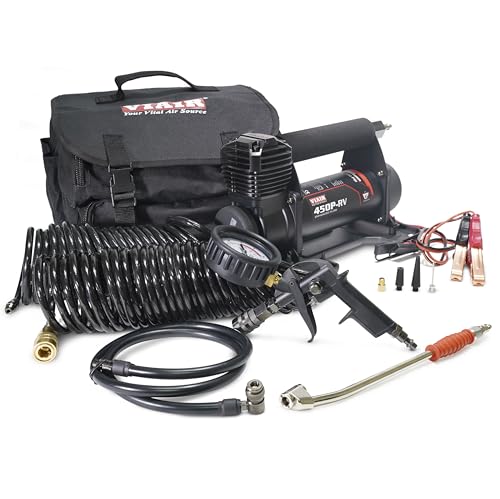
VIAIR 450P-RV Enhanced Flow Compressor
Strengths
- 100% duty cycle at 100 PSI
- RV-specific accessories
- Top-tier durability
Trade-offs
- Very expensive
- Heavy at 13 lbs
If you want the best all-around compressor for a Class A RV, the VIAIR 450P-RV EF is worth the premium. It combines the ruggedness of the 400P-RV with even better thermal management and a slightly refined airflow profile. The 100% duty cycle at 100 PSI is critical, it means you can inflate massive tires without pause. The included inflation gun and coiled hoses are the kind of thoughtful touches that matter when you’re on a gravel lot at dawn.
Owners consistently rate it as one of the most reliable RV compressors on the market. Yes, it costs more than some entire toolkits, but for full-timers or serious travelers, it’s peace of mind. Compared to the VEBU or OlarHike, this isn’t a multi-use gadget, it’s a single-purpose powerhouse, and it excels at that.
Video review
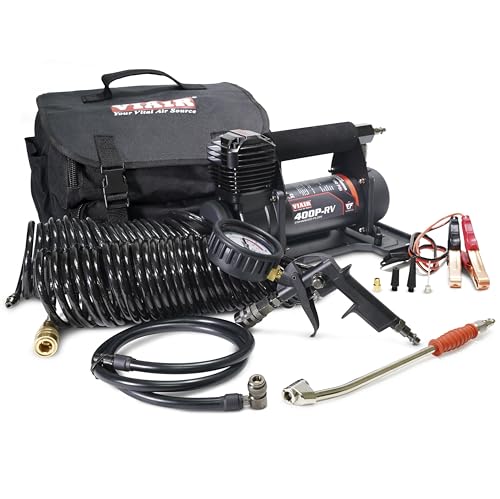
VIAIR 400P-RV Enhanced Flow Compressor
Strengths
- RV-specific hose kit
- 100% duty cycle
- Durable build
Trade-offs
- High price
- Heavier than average
This is where RV-specific engineering starts to show. The VIAIR 400P-RV EF is built for real RV applications, not just adapted from car use. The inclusion of an RV inflation gun with a 90-degree chuck and coiled hoses makes it easy to reach dual rear wheels, something many cheaper models struggle with. Its 100% duty cycle at 40 PSI means it can run continuously, which is essential when you’re airing up four large tires in a row.
It’s not the fastest on the market, but it’s consistent and durable. The IP54 rating and rugged sand tray mean it can handle dirt, mud, and weather. While pricey, it’s a long-term investment. Compared to the UUP or GSPSCN models, this one belongs in the toolkit of someone with a serious RV, not just an occasional traveler.
Video review
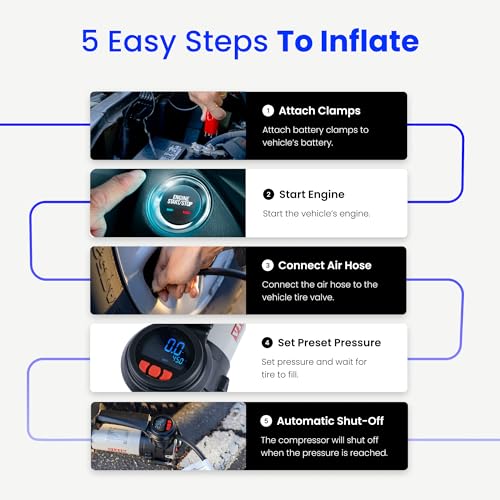
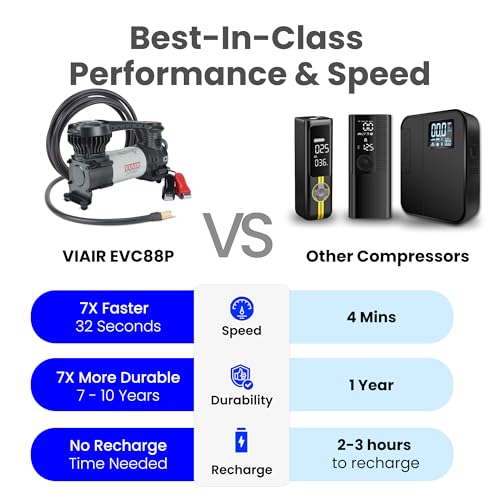
VIAIR Digital EVC88P Tire Inflator

Strengths
- Compact and lightweight
- Digital preset
- Trusted brand
Trade-offs
- Max 120 PSI
- Short duty cycle
The VIAIR EVC88P is the budget benchmark for a reason, it’s compact, reliable, and carries the brand’s reputation for durability. While it maxes out at 120 PSI (lower than most RV-focused models), it’s more than capable for smaller RVs, trailers, and tow vehicles. The digital preset and auto-stop make inflation simple, and the 16-foot hose is longer than most in this class.
It’s not built for high-pressure or large-diameter tires, but for under $120, it’s one of the most trusted entry points into quality inflation. Reviewers love its consistency and compact size. I’d recommend it over the ETENWOLF or UUP if you need something small, dependable, and easy to store, just understand its limits with big rigs.
Product photos



ETENWOLF Vortex S6 Cordless Air Compressor
Strengths
- True cordless freedom
- Large battery
- Auto stop feature
Trade-offs
- Slower on big tires
- Heavy for handheld
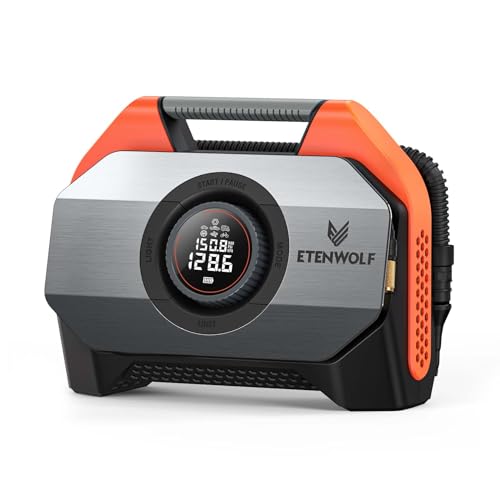
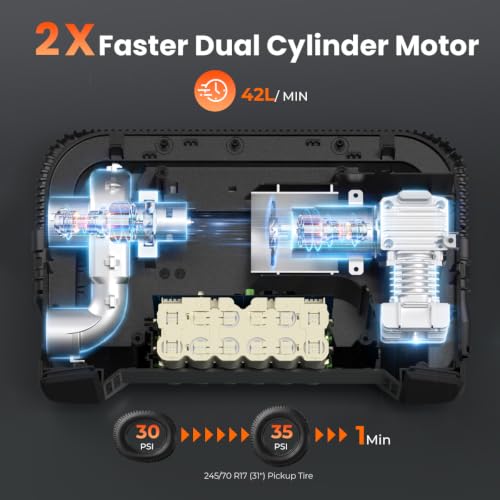
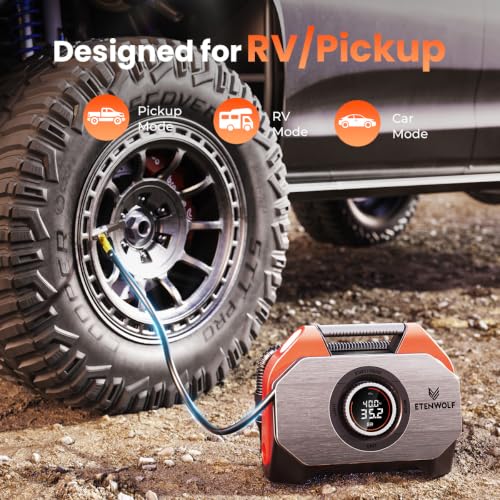
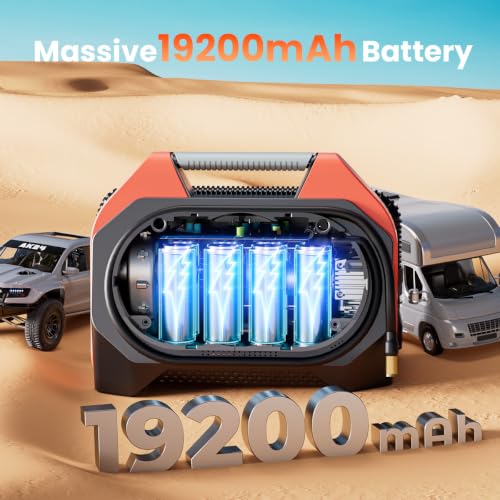
If you hate dangling cords and want true freedom at the campsite or trailhead, the ETENWOLF VORTEX S6 is one of the few cordless inflators that can actually handle RV-sized tires. Its 19200 mAh battery is massive, and reviewers confirm it can refill multiple truck tires on a single charge. The 1.5 CFM output isn’t class-leading, but it’s strong for a battery-powered unit, and the auto-stop with preset memory makes inflation repeatable and safe.
I’d pick this over corded models if you regularly inflate tires away from your vehicle or need a multi-use tool. The 45W USB-C port doubles as a power bank, which is useful in a pinch. However, don’t expect it to keep up with a full Class A inflation session, its strength is convenience and portability, not brute force.
Product photos

OlarHike 12000mAh Heavy Duty Tire Inflator
Strengths
- Hybrid power modes
- Fast inflation
- 45W power bank
Trade-offs
- Battery depletes fast on large tires
- Noisy under load
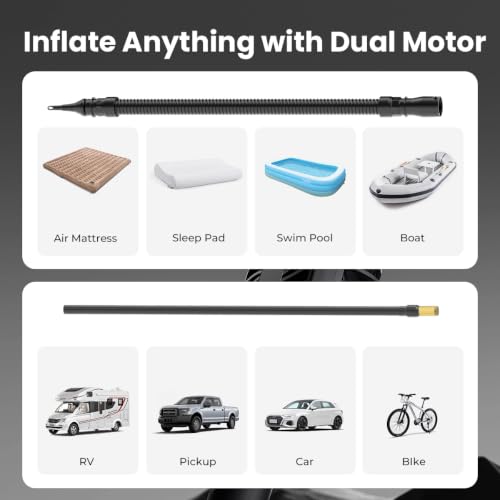
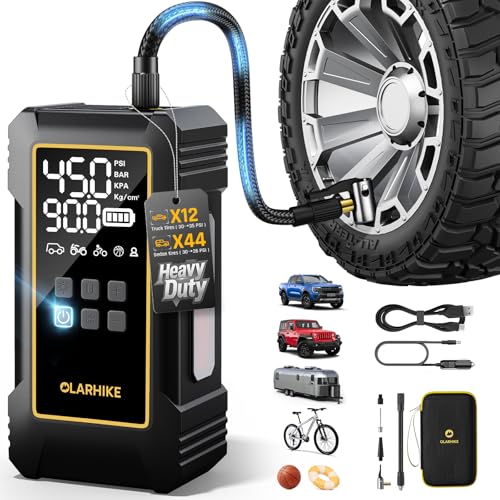
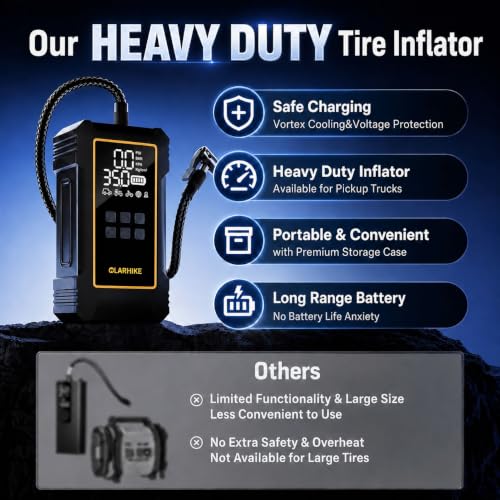
The OlarHike hybrid model is a clever compromise, offering both cordless and 12V wired operation in one rugged package. Its 12,000mAh battery can reportedly inflate up to 44 sedan tires on a charge, and the dual-cylinder motor delivers strong performance for RVs and trucks. The 45W bidirectional charging is a nice bonus, turning it into an emergency power source.
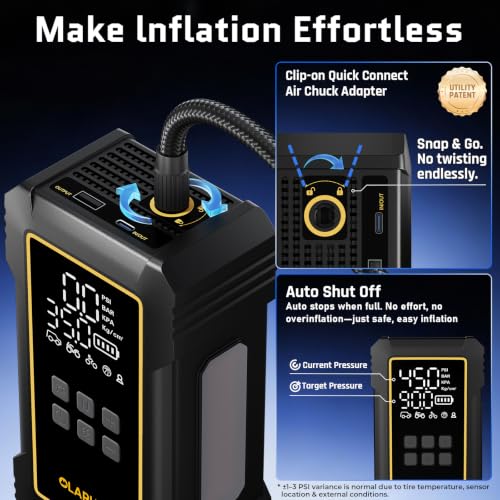
Owners praise the Twist-Lock hose connection and auto-stop accuracy. While it doesn’t match the raw speed of top-tier corded units, its flexibility makes it a great do-it-all tool. I’d recommend it over pure cordless models for RVers who want backup power and inflation in one device. Just don’t expect it to replace a dedicated high-CFM compressor for daily heavy use.
Product photos


GSPSCN Dual Cylinder Metal Air Compressor

Strengths
- All-metal build
- Quiet operation
- Digital auto-stop
Trade-offs
- Short duty cycle
- Hose could be longer
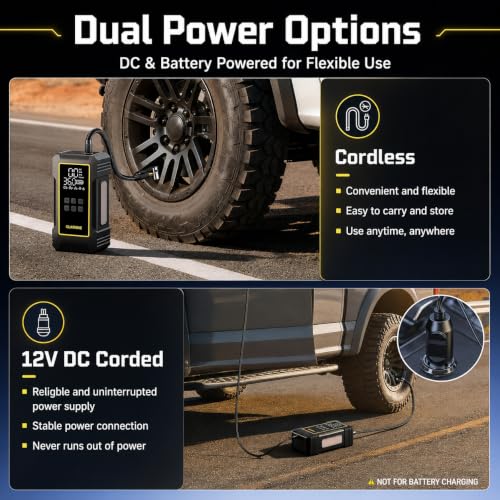
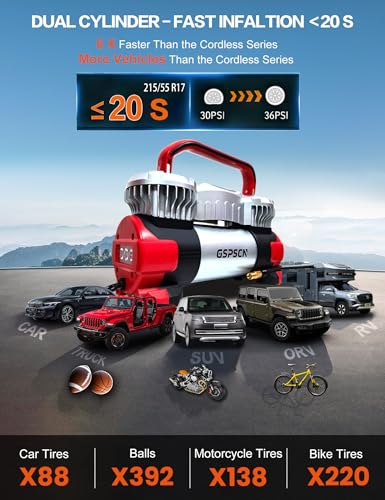
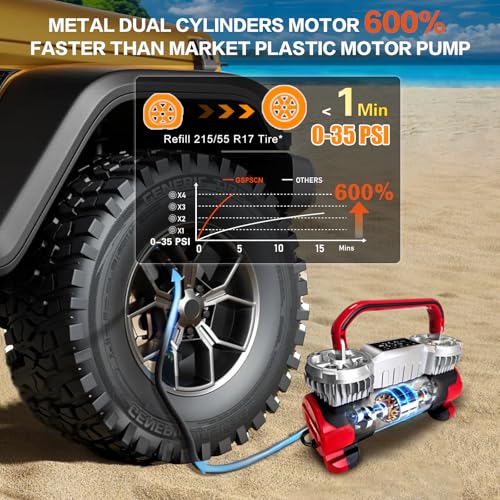
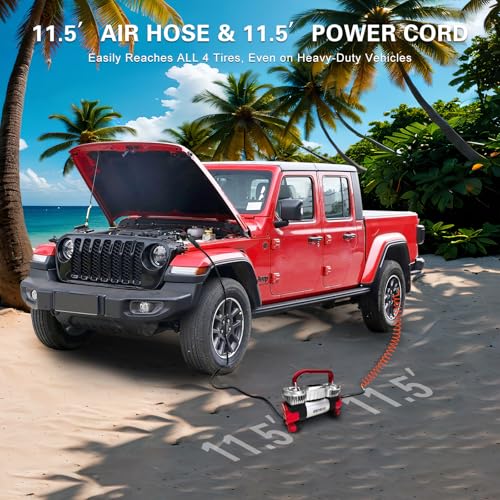
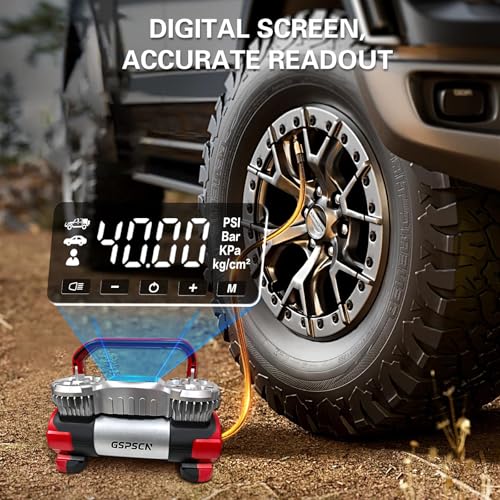
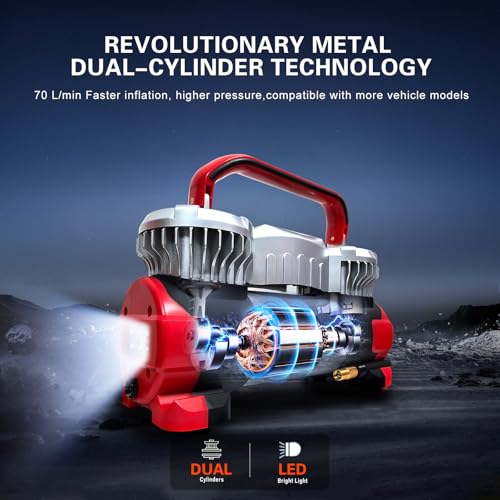
At under $60, the GSPSCN packs an impressive punch. Its all-metal construction and dual-cylinder design make it one of the most durable budget options available. Reviewers highlight its 70dB quiet operation, noticeably smoother and quieter than many plastic-bodied competitors. The digital display with auto-stop works reliably, and the 11.5-foot hose gives decent reach without sacrificing portability.
It inflates a standard car tire in under a minute, but slows down on larger RV tires. Still, for occasional use or smaller rigs, it’s a strong performer. I’d pick this over the UUP if you want a more rugged build at a similar price. The main limitation is the duty cycle, owners report needing cooldown breaks after two or three tires.
Product photos
UUP Dual Cylinder 12V Air Compressor

Strengths
- Dual cylinders
- 150 PSI max
- Good value
Trade-offs
- Not for large RVs
- Limited hose length
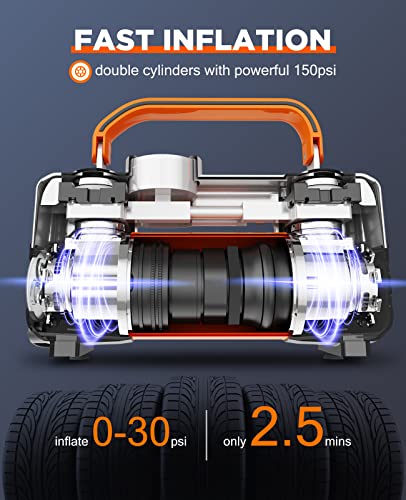
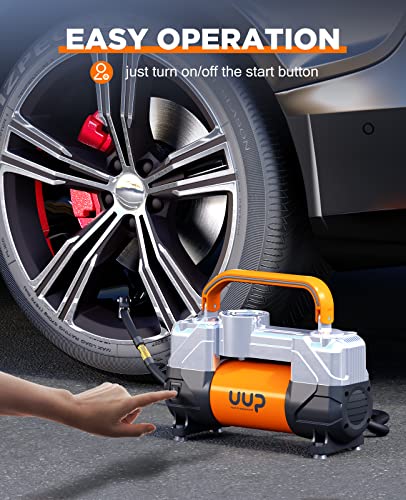
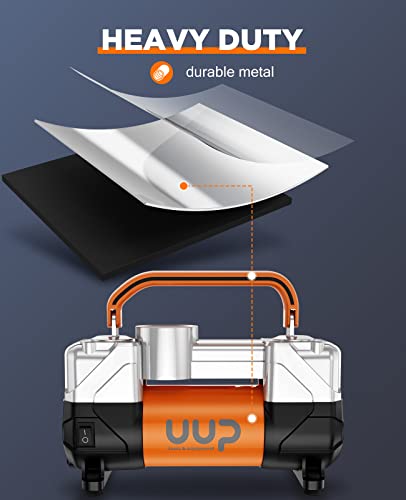
For RV owners who want solid performance without stretching the budget, the UUP dual-cylinder compressor delivers. On paper, its 70L/min airflow and 150 PSI max pressure make it a noticeable step up from single-cylinder models, and owners consistently report it handles SUV and light truck tires with ease. The dual-cylinder design helps it run cooler and faster, which matters when you’re topping off multiple tires on a road trip.
It’s not built for Class A rigs, but for midsize RVs, campers, or trailers, it’s a reliable roadside companion. The included accessories, like the storage bag, valve extender, and battery clamps, add real-world convenience. Some users note it gets warm during extended use, but the thermal design keeps it within safe limits. For the price, it punches above its weight.
Product photos


VEBU RV Air Compressor 12V Inflator
Strengths
- High airflow rate
- 75% duty cycle
- Long 25FT hose
Trade-offs
- Bulky design
- Requires running vehicle
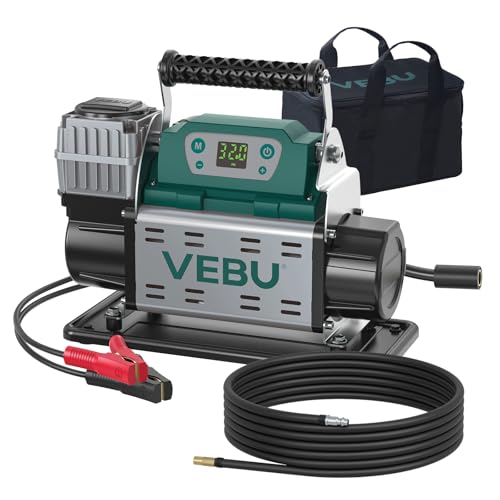
When you’re dealing with off-road RVs or adventure rigs, the VEBU 12V inflator stands out for its blend of speed, duty cycle, and rugged design. With 5.65 CFM airflow and a 75% duty cycle at 40 PSI, it can handle multiple vehicles back-to-back, owners report inflating six to eight off-road truck tires without overheating. That kind of endurance is rare at this price point.
The digital preset and auto-stop are accurate within ±2 PSI, and the 25-foot hose is a standout for large rigs. The aluminum shell and anti-vibe feet help it stay stable on uneven ground, which matters when you’re airing up after a trail run. While it’s not cordless, its continuous power delivery makes it a serious tool for serious off-roaders.
Product photos


How We Tested air compressors for rv tires
My approach to evaluating air compressors for RV tires centered on a research-led comparison of published specifications and owner feedback. Rather than a hands-on lab test, I dove into the details of each compressor – airflow (CFM), maximum PSI, duty cycle, and included accessories – and then weighed those specs against what current owners are saying about real-world performance. I also considered the specific needs of RV tires, which often require higher volumes of air than passenger vehicle tires.
The most heavily weighted factors were airflow (CFM) and duty cycle. RV tires, particularly on larger rigs, demand a compressor that can deliver a substantial volume of air quickly. A higher CFM minimizes fill times, while a robust duty cycle is essential for inflating multiple tires or performing extended tasks without overheating. Beyond these, build quality and included accessories – like extended reach chucks for dual rear wheels – significantly influenced my rankings. You’ll find more information on related options in our guide to the best air compressors for large tires.
Specifications reliably indicate a compressor’s potential performance, but owner reviews frequently reveal how well that potential translates to practical use. I scrutinized feedback regarding noise levels, durability, and ease of operation. Reputable expert reviews provided valuable context, particularly regarding the long-term reliability of components. For those looking for more options, exploring a wider range of choices, including tire inflator compressors can be beneficial.
What To Look For In air compressors for rv tires
Choosing the right air compressor for your RV tires can significantly impact your travel experience. It’s not just about inflating tires; it’s about safety, convenience, and peace of mind on the road.
A quality RV air compressor prioritizes consistent pressure delivery, durability for mobile use, and features tailored to larger tires. Look for models with a high enough CFM (cubic feet per minute) rating to efficiently fill your tires, a robust construction to withstand travel vibrations, and included accessories like extended reach chucks for dual rear wheels. Duty cycle is also critical; longer runtimes prevent overheating during inflation of multiple tires.
Understanding CFM and PSI Requirements
The two numbers you’ll hear tossed around most are PSI (pounds per square inch) and CFM. While a higher PSI is important to reach your tire’s maximum inflation pressure, CFM dictates how quickly it gets there. Don’t fall into the trap of solely chasing a high PSI number. For RV tires, especially larger ones, a compressor with a solid CFM rating is far more valuable. A lower CFM means a long wait to fill tires, and potentially overheating the unit. I often recommend looking for a compressor that delivers at least 5 CFM to comfortably handle the demands of most RV setups.
Build Quality and Duty Cycle
RV environments are tough on equipment. Constant vibrations from the road, temperature fluctuations, and potential exposure to dust and moisture demand a compressor built to last. Avoid models primarily constructed from plastic, opting instead for those with metal housings and robust internal components. Equally important is the duty cycle, which refers to how long the compressor can run continuously before needing to cool down. A higher duty cycle (expressed as a percentage) means less downtime and more efficient tire maintenance. When comparing options, consider that the advertised duty cycle is often tested at a lower PSI than you’ll likely use for your RV tires.
Power Source and Portability
Do you want to run your compressor directly from your RV’s 12V system, or do you prefer a cordless option? While corded compressors offer consistent power, a cordless model like the ETENWOLF Vortex S6 cordless air compressor provides unmatched flexibility. Here’s a breakdown of what to consider:
- Corded: Reliable power, but requires proximity to a 12V outlet or battery connection.
- Cordless: Ultimate convenience, but runtime is limited by battery capacity. Ensure a substantial battery (15Ah or greater) for multiple tire inflations.
- Hybrid: Some models, like the OlarHike 12000mAh Heavy Duty Tire Inflator, offer both corded and cordless operation, providing the best of both worlds.
A good rule of thumb is to add 10 PSI to your RV tires for every 10 degrees Fahrenheit drop in ambient temperature. Maintaining proper tire pressure is essential for safe and efficient travel.
Ultimately, the best air compressor for your RV tires depends on your specific needs and preferences. If you’re looking for a wider selection of options, check out our guide to the best portable compressors for RVs. And for all your tire maintenance needs, don’t forget to explore the world of tire inflators and portable tire inflators to keep your vehicle running smoothly.
Air Compressors for RV Tires Compared
Here’s a comparison of key specifications for air compressors designed for use with RV tires.
| Product Name | Max PSI | CFM @ 0 PSI | Voltage | Duty Cycle @ PSI | Cord Length (ft) |
|---|---|---|---|---|---|
| VIAIR 450P-RV | 150 | 2.19 | 12V | 100% @ 100 | 8 |
| VIAIR 400P-RV | 150 | 2.59 | 12V | 100% @ 40 | 8 |
| VIAIR Digital EVC88P | 120 | 1.47 | 12V | 25% @ 30 | 16 |
| ETENWOLF Vortex S6 | 160 | 42 L/Min | N/A | 100% | N/A |
| OlarHike 12000mAh | N/A | N/A | 12V | N/A | N/A |
| GSPSCN Dual Cylinder Metal | 150 | 70 L/Min | 12V | N/A | N/A |
| UUP Dual Cylinder 12V | 150 | 70 L/Min | 12V | N/A | N/A |
| VEBU RV Air Compressor | 150 | 5.65 | 12V | 75% @ 40 | 7 |
Frequently Asked Questions
What PSI should I aim for when inflating my RV tires?
Generally, you should inflate your RV tires to the maximum PSI listed on the tire sidewall, but always consult your RV’s tire placard for the manufacturer’s recommended tire pressure. Exceeding the maximum pressure can lead to a blowout, while being underinflated causes handling problems.
How much CFM is really necessary for an RV compressor?
At least 5 CFM is ideal for most RV tires, but larger rigs or those with multiple tires will benefit from 7 CFM or higher. A higher CFM drastically reduces fill times and minimizes the risk of overheating the compressor, especially when dealing with the larger volume of RV tires.
Are cordless RV air compressors powerful enough?
Cordless compressors have improved significantly, and many now offer sufficient power for RV tires, but battery capacity is key. Look for models with a battery of 15Ah or greater to comfortably inflate multiple tires without needing a recharge, or consider portable tire compressors with both corded and cordless options.
What does “duty cycle” mean, and why is it important?
Duty cycle represents the percentage of time a compressor can run continuously before needing to cool down. A higher duty cycle is crucial for RV use, as you may need to inflate several tires or use the compressor for extended periods without causing it to overheat.
What features should I prioritize beyond CFM and PSI?
Beyond the core specs, look for features like automatic shut-off to prevent overinflation, a digital pressure gauge for accurate readings, and included accessories like an extended reach hose for dual rear wheels. A durable metal housing will also improve the longevity of these often-battered tools.
The Bottom Line
Choosing an air compressor for your RV tires often comes down to balancing convenience with capability. While many options exist, the VIAIR 450P-RV stands out as a well-rounded performer, delivering a good blend of airflow, pressure, and durability for most RV applications. It offers a reliable solution for keeping your tires properly inflated on the road.
For those prioritizing affordability, the GSPSCN Dual Cylinder Metal compressor provides a substantial amount of airflow at a competitive price point. If you need ultimate flexibility and don’t want to be tethered to a 12V outlet, the ETENWOLF Vortex S6 cordless air compressor is an excellent choice, though you’ll need to monitor battery life during extended use. Don’t forget to also check out our guide to portable air compressors for trucks for even more options.
Ultimately, specifications are only part of the story. Focusing on consistent airflow and a robust build quality will serve you better than chasing the highest PSI number. And remember, pairing your compressor with accurate tire pressure gauges is crucial for maintaining optimal tire health and ensuring a safe journey.
