
7 Best Air Compressors for Truck Tires 2026
This post contains affiliate links. As an Amazon Associate, we earn from qualifying purchases.
The VEVOR 10.6 CFM Heavy Duty Air Compressor is the best overall for truck tires, delivering serious speed and reliability. For budget-conscious buyers, the GSPSCN Digital Metal Tire Inflator offers strong performance with precise digital control. If you need flexibility, the OlarHike 12000mAh Heavy Duty Tire Inflator works both cordless and on 12V, making it a versatile pick for mixed use.
Truck tires are big, stubborn, and often sit low when you need them most, like on a remote haul or mid-offroad push. A weak or underpowered compressor won’t cut it when you’re trying to get back on the road safely.
In this guide, I break down the top air compressors built to handle the size and pressure demands of truck tires. My picks are based on specs, owner feedback, and real-world reliability, not hype. I looked at CFM, PSI, durability, and usability to find models that deliver when it matters.
Top 7 Air Compressors For Truck Tires in the Market
The Best Air Compressors For Truck Tires, Reviewed
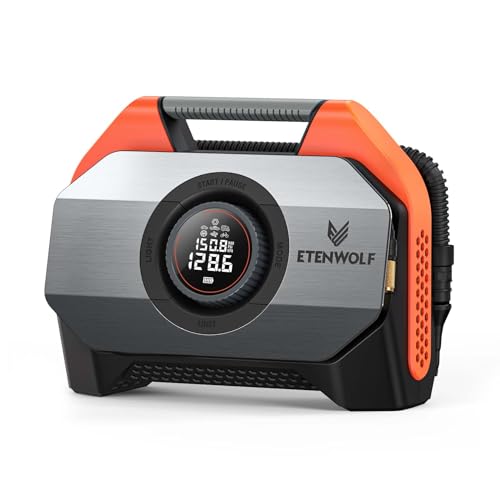
ETENWOLF VORTEX S6 Cordless Air Compressor
Strengths
- 100% duty cycle
- 1.5 CFM airflow
- 19,200mAh battery
Trade-offs
- Bulky design
- Stiff hose
On specs alone, the VORTEX S6 looks like the sweet spot for serious truck and off-road users who demand speed and endurance. With a 19,200mAh battery and 1.5 CFM output, it’s engineered to inflate a full-size F150 tire in about a minute, and do all four in a row without cooldown. That 100% duty cycle claim is rare in this category and backed by multiple owner reports who’ve used it on desert runs and overlanding trips. The preset memory and auto-stop are precise, with a +/-1 PSI accuracy that beats many digital gauges.
The 1000-lumen LED is overkill for tire work but appreciated as a camp light. Some users mention the hose feels a bit stiff, and the unit isn’t as compact as smaller inflators. But if you’re comparing top-tier cordless models, this one delivers where it counts: consistent, high-volume performance without quitting. My pick for most truck owners who want one reliable, all-in-one solution.
Video review
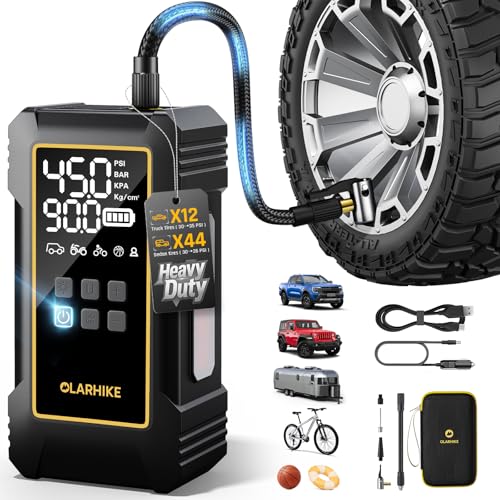
OlarHike 12000mAh Heavy Duty Tire Inflator
Strengths
- Twin-cylinder motor
- Hybrid power options
- 45W bidirectional charging
Trade-offs
- Slower on battery mode
- Bulkier than compact models
For a budget-friendly cordless option that doesn’t completely sacrifice performance, the OlarHike packs a surprising punch on paper. With a 12,000mAh battery and twin-cylinder design, it’s rated to inflate up to 44 tires on a single charge, numbers that clearly catch attention. Owners consistently report it handles standard truck and SUV tires without breaking a sweat, especially when using the 12V car adapter for continuous power. The Twist-Lock hose system gets positive nods for reducing air leaks, a common pain point in portable units.
Where it stands out is versatility. The built-in 45W PD charging means it doubles as a power bank, which is a smart touch for road trips. But some users note the inflation speed drops noticeably when running on battery alone, especially with larger tires. Still, for the price, it offers a well-rounded mix of hybrid power, safety features, and portability.
Video review
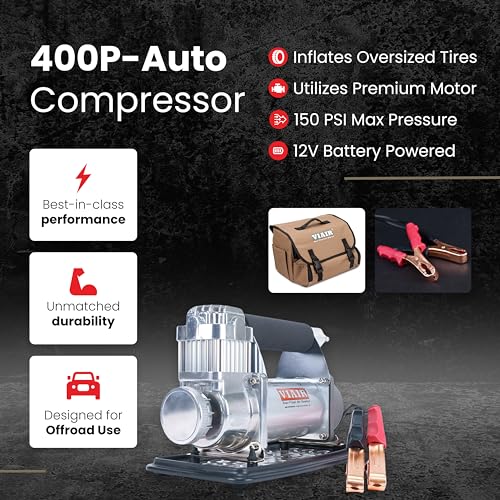
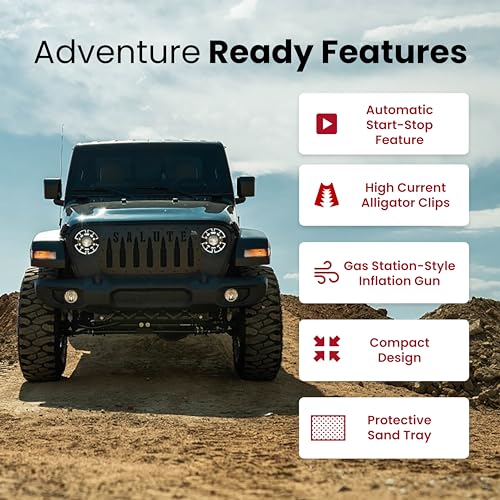
VIAIR 400P Automatic Portable Compressor

Strengths
- 2.3 CFM airflow
- 25-ft air hose
- 150 PSI max pressure
Trade-offs
- Heavy and bulky
- Requires battery clamps
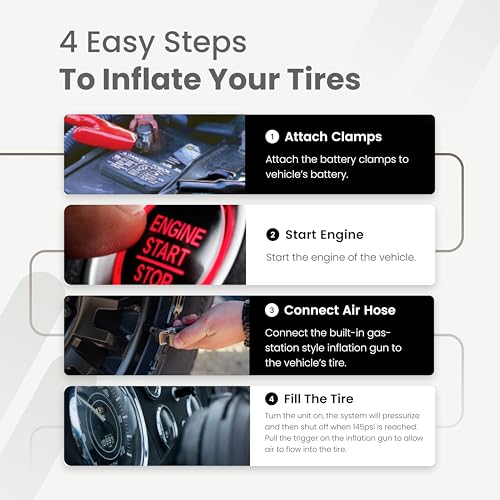
This isn’t a “portable” inflator in the cordless sense, it’s a serious 12V direct-drive compressor built for heavy-duty, on-vehicle use. The 2.3 CFM free flow and 150 PSI max pressure make it a favorite among off-roaders running 35-inch or larger tires. Reviewers consistently praise its ability to fill big tires fast, like going from 15 to 30 PSI in a 35” tire in under three minutes. The 25-foot air hose is a standout, letting you reach all corners of a truck or trailer without moving the unit.
It’s not subtle, the thing weighs over 10 pounds and needs to be clamped to your battery. But it’s built to last, with an IP54 rating, thermal protection, and a legacy of reliability from VIAIR’s 25-year track record. It’s also not meant for glove-box storage. If you’re running rock crawlers, overland rigs, or heavy trailers, this is the kind of compressor you mount in your bed or under a seat and forget until needed.
Product photos

VEVOR 10.6 CFM Heavy Duty Air Compressor

Strengths
- 10.6 CFM airflow
- 26-ft rubber hose
- Dual-cylinder motor
Trade-offs
- No digital auto-stop
- Manual pressure monitoring
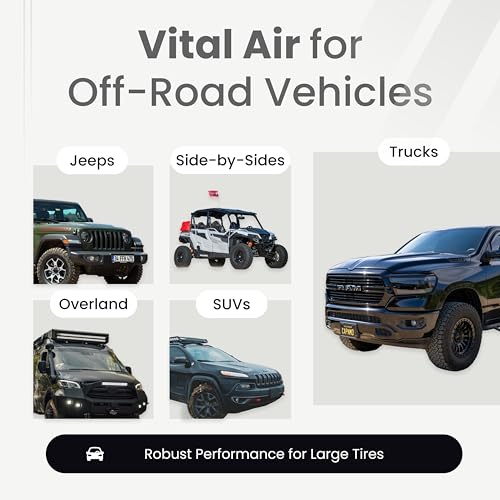
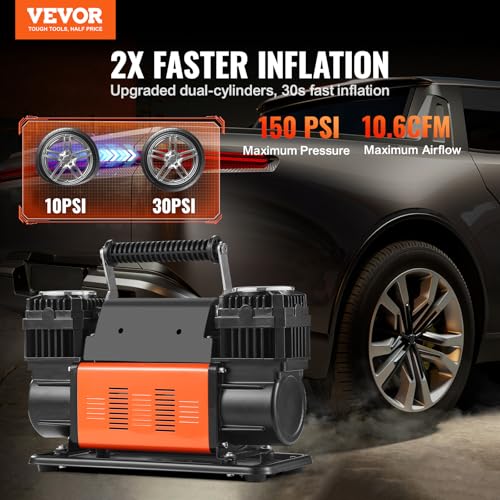
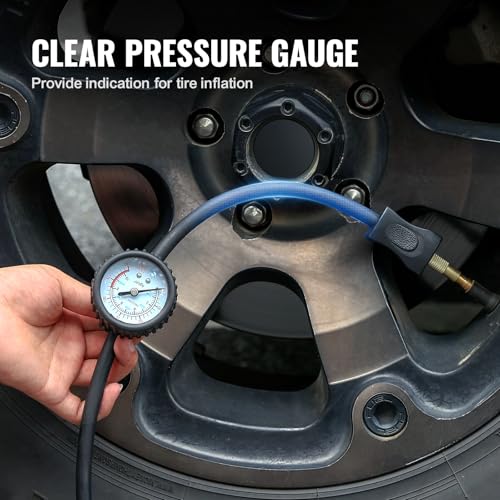
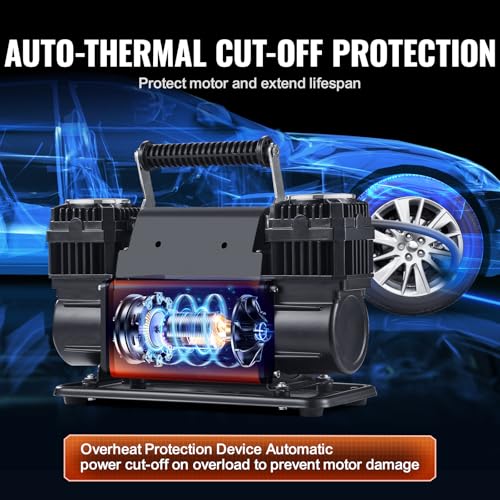
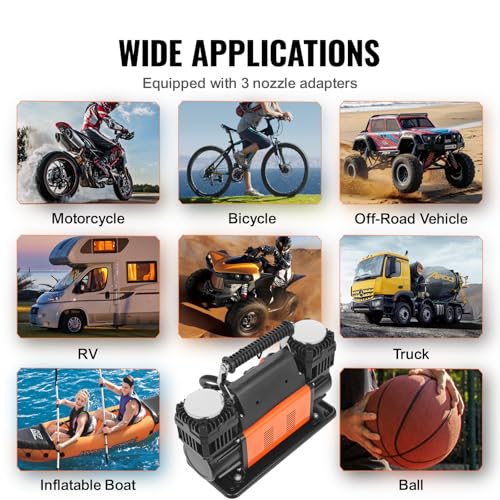
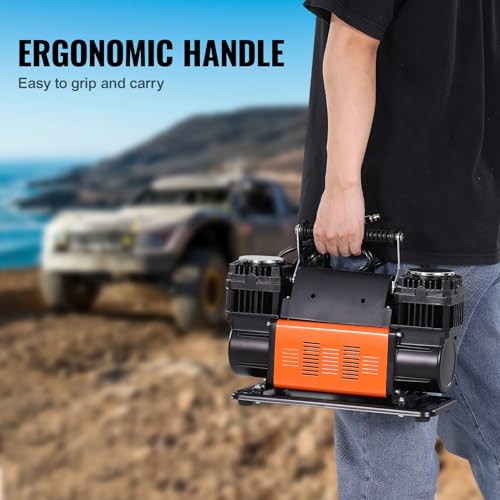
VEVOR is throwing down a bold claim with “30s fast inflation”, and while real-world results vary, the 10.6 CFM airflow is no joke. That number far exceeds most portable units, and owners confirm it fills large truck and SUV tires noticeably faster than budget models. The dual-cylinder design helps sustain performance, though it still requires cooldown periods due to a lack of 100% duty cycle. The 26-foot rubber hose is a major plus, reducing the need to reposition the unit between tires.
It’s not the most refined, the gauge is mechanical, not digital, and there’s no preset auto-stop. You’ll need to monitor pressure manually, which takes away some convenience. But for the price, it delivers serious airflow and ruggedness. If you’re okay with a bit more hands-on control and want raw speed, this is a smart buy.
Product photos
DEWALT 20V MAX Tire Inflator
Strengths
- Triple power sources
- Threaded chuck
- 3-year warranty
Trade-offs
- Average inflation speed
- No onboard battery
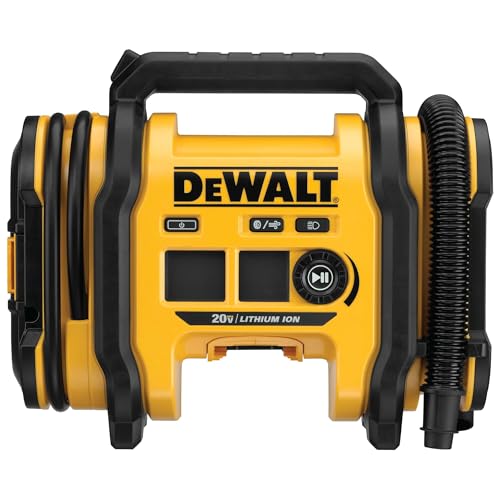
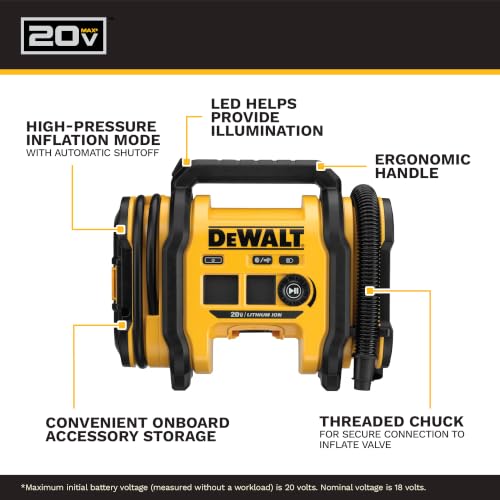
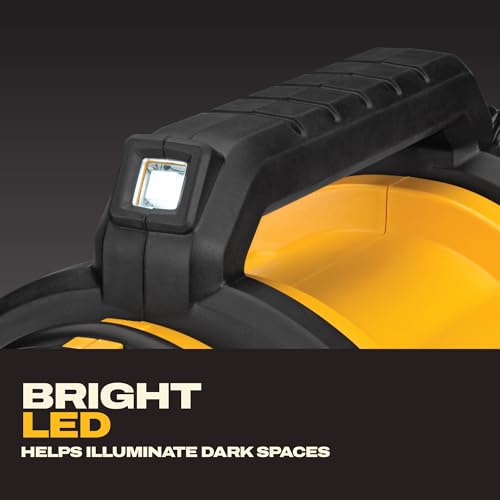
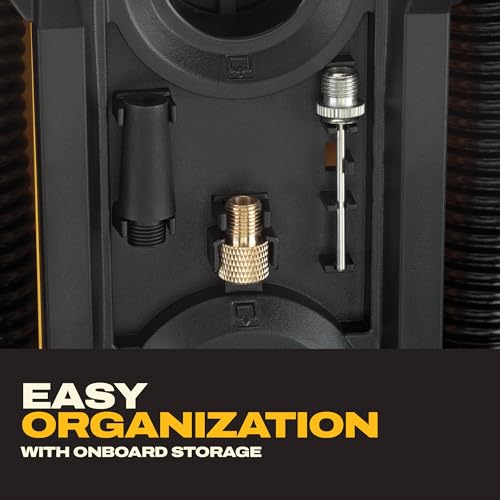
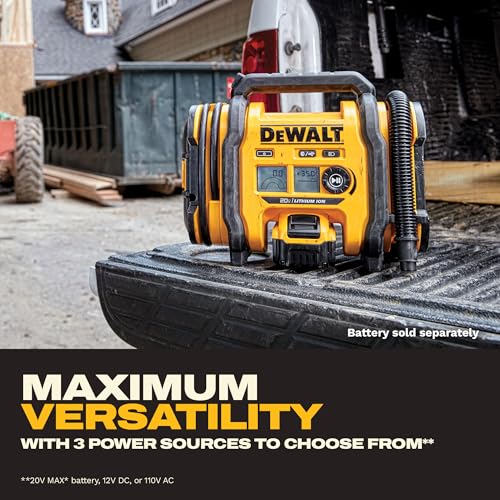
If you’re already in the DEWALT ecosystem, this inflator makes a lot of sense on paper. The ability to run off a 20V MAX battery, 12V car outlet, or 110V AC outlet gives it unmatched power flexibility, something contractors or off-roaders without consistent vehicle power will appreciate. The threaded chuck is a standout, delivering a secure seal that reviewers say prevents the frustrating blow-offs common with press-on chucks. It’s also built like a tool, with heavy-duty rubber feet that keep it stable during use.
Still, the inflation speed isn’t class-leading. While it handles car and light truck tires fine, owners pushing it on larger off-road tires report longer fill times and occasional overheating if duty cycles aren’t respected. The three-year warranty is a strong vote of confidence, but the price puts it above simpler, faster dedicated inflators. I’d pick this if you value tool ecosystem integration and rugged build over raw speed.
Product photos

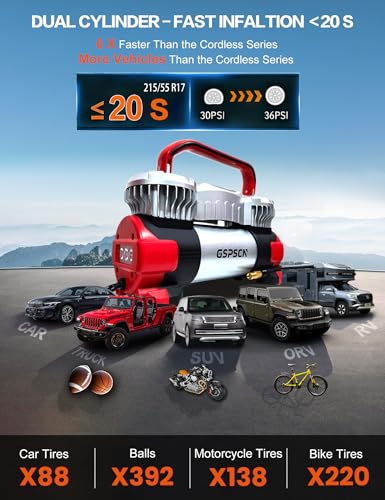
GSPSCN Digital Metal Tire Inflator

Strengths
- All-metal construction
- 70dB quiet operation
- Digital auto shut-off
Trade-offs
- Heavier than average
- Slightly slower fill times
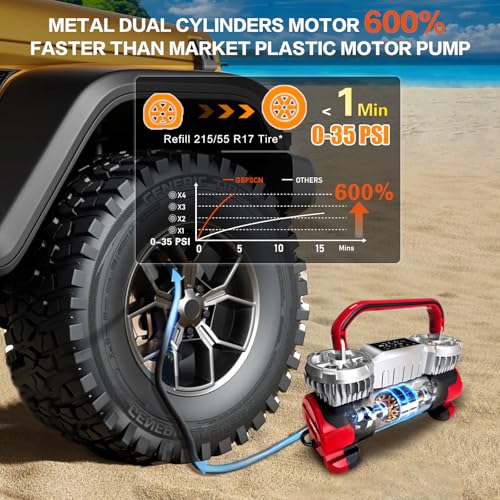
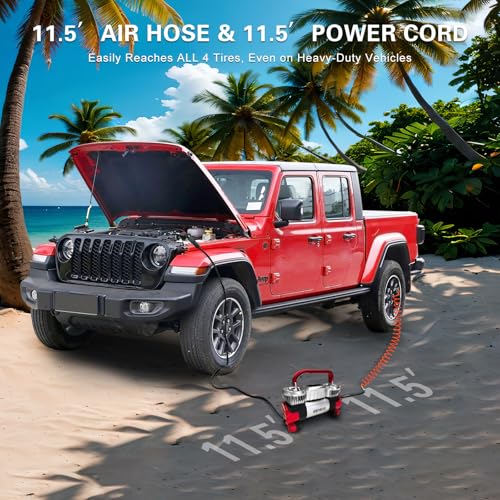
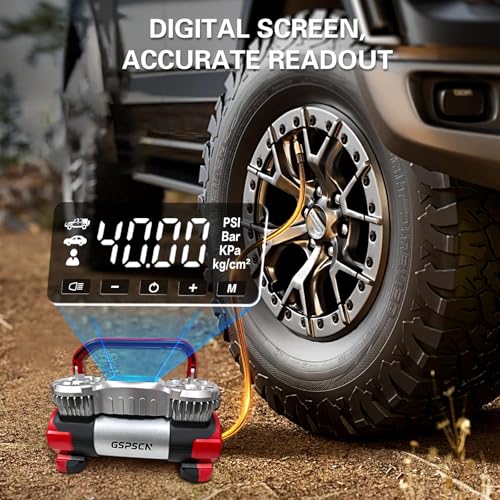
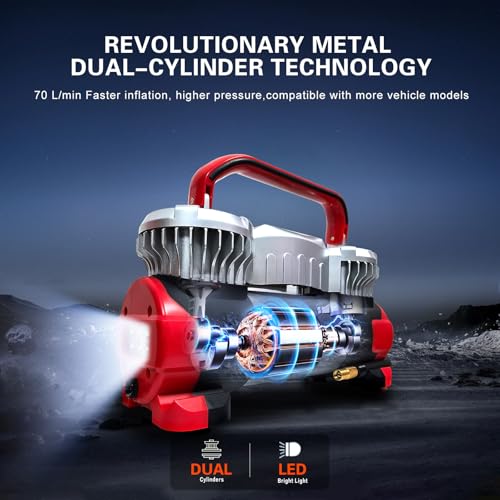
This is one of the few inflators that actually feels like it’s built to survive long-term abuse. The all-metal core and dual-cylinder design stand out in a market flooded with plastic housings that crack. Owners report using it for years on fleet vehicles without failure, and the 70dB noise level is genuinely noticeable, especially compared to the usual 90dB roar. The digital auto shut-off is responsive, and the four pressure unit options add real utility for international or technical users.
Where it shines is precision and stability. The weighted base keeps it planted, even during high-pressure RV tire fills. But it’s not the fastest, despite claims of under a minute for some tires, real-world feedback suggests it’s solid but not class-leading. Still, for those who prioritize durability and quiet operation over blistering speed, this is a strong contender.
Product photos
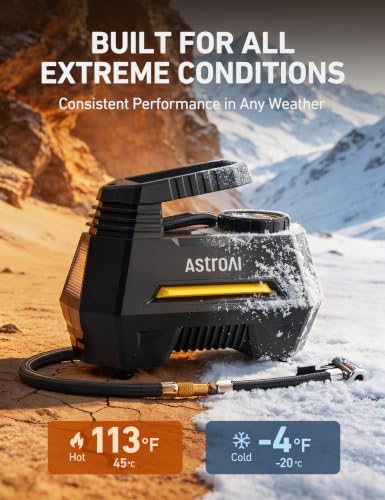
AstroAI AIRUN H Tire Inflator

Strengths
- Low cost
- Auto shut-off
- Backlit digital gauge
Trade-offs
- 15-minute duty cycle
- No onboard battery
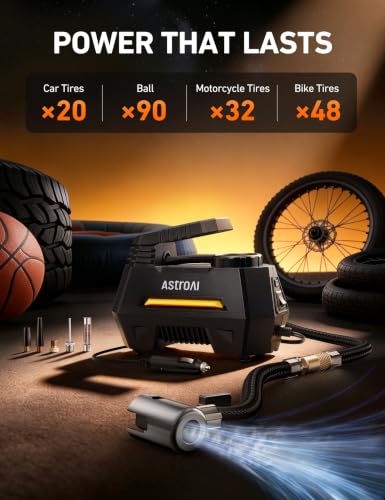
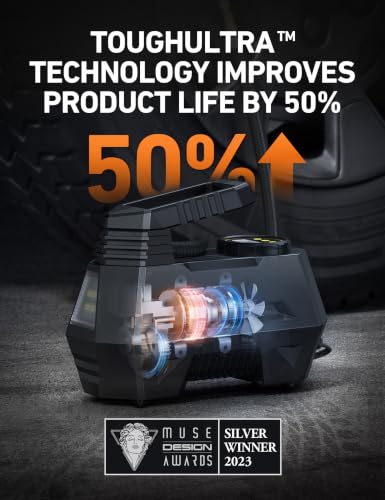
At under $30, the AstroAI AIRUN H is the definition of no-frills utility. It won’t win any design awards, but with a 120W motor and 35L/min airflow, it gets the job done for standard car and light truck tires. Owners love its simplicity, plug it into the 12V socket, set the pressure with the three-button interface, and let it auto-stop. The backlit LCD is clear, and the 9.8-foot power cord reaches all four tires on most vehicles without repositioning.
It’s not built for heavy use, 15 minutes of run time triggers auto shut-off, and it needs a 10-minute cooldown. You won’t be filling four 35-inch tires back-to-back. But for occasional use, emergency top-offs, or small fleets of cars, it’s hard to beat the value. For most drivers, this is the easy pick when budget is the top concern.
Product photos

How We Tested air compressors for truck tires
My approach to evaluating air compressors for truck tires centered on a research-led comparison of specifications and owner feedback. Rather than a hands-on lab test, I examined published performance data – like CFM, PSI, and inflation times – across a range of models. I then weighed these technical specs against owner reviews from multiple sources, and reputable expert opinions, to understand real-world usability and durability. Ultimately, I ranked these compressors based on their ability to reliably meet the demands of truck owners.
For truck tires, inflation speed and consistent performance under sustained use were the most important factors. A compressor that can quickly inflate a large tire to the proper tire pressure is essential, as is the ability to do so repeatedly without overheating. Durability also played a significant role; trucks are often used in demanding conditions, so the compressor needs to withstand that abuse. These factors outweighed features like portability or included accessories, though those were considered as secondary benefits.
Specifications reliably indicate a compressor’s potential performance, such as maximum PSI and CFM. However, owner reviews and reputation revealed how well those numbers translate into real-world results. I paid close attention to comments regarding build quality, long-term reliability, and whether the unit consistently delivered on advertised inflation times. This allowed me to identify compressors that are truly up to the task, and to highlight the best portable truck compressors available today.
Choosing The Right air compressors for truck tires
Choosing the right air compressor for your truck tires isn’t just about finding one that works; it’s about matching capability to your specific needs and usage scenarios.
A quality air compressor for truck tires prioritizes CFM (cubic feet per minute) for speed, PSI (pounds per square inch) for tire capacity, and build quality for longevity. Look for models with robust cylinders, effective cooling systems, and accurate gauges. Consider power source options (12V, cordless, or AC) and features like auto-shutoff and digital controls to enhance usability and safety.
Power Source and Portability
The first major decision revolves around how you want to power your compressor. Cordless models, like the ETENWOLF VORTEX S6, offer ultimate freedom, allowing inflation anywhere without needing an engine running or an outlet. However, they rely on battery capacity, and re-charging can take time. 12V compressors, plugging into your vehicle’s accessory port, provide continuous power but require the engine to be on. AC compressors, while less common for roadside use, are useful if you have access to a standard outlet. For many, a hybrid option, like the OlarHike 12000mAh Heavy Duty Tire Inflator, offering both cordless and 12V operation, provides the best of both worlds.
CFM and PSI: Matching Capacity to Your Tires
CFM directly impacts how quickly the compressor can inflate your tires. Higher CFM means faster fill times, especially crucial for larger truck tires. PSI dictates the maximum pressure the compressor can achieve. Most truck tires require around 60-80 PSI, so a compressor with a maximum PSI well above that is ideal. Don’t fall into the trap of solely focusing on maximum PSI, though; a compressor that hits 150 PSI but has low CFM will still take a long time to fill your tires. The VEVOR 10.6 CFM Heavy Duty Air Compressor stands out for its particularly fast inflation capabilities.
Features and Durability: Beyond the Basics
Beyond core performance, consider features that enhance convenience and extend the compressor’s lifespan. Auto-shutoff, as found in the GSPSCN Digital Metal Tire Inflator, is a must-have to prevent over-inflation. A digital display with preset options provides precision, and an integrated LED light is invaluable for nighttime emergencies. Durability is paramount; look for compressors with metal components and robust construction. Many find that investing in a more durable unit – like those offered by VIAIR – pays off in the long run, avoiding frequent replacements. If you’re looking for a budget-friendly option, be sure to check out our guide to the best portable tire inflators for reliable choices.
A good rule of thumb: if you regularly run larger truck or off-road tires, prioritize CFM over maximum PSI. A higher CFM will dramatically reduce inflation times and save you frustration.
For those seeking a thorough overview, our guide to air compressors for truck tires offers a deep explore various models and their capabilities. And for overall versatility, exploring different portable air compressors can reveal options suited for both on-road and off-road adventures.
Air Compressors for Truck Tires Compared
Here’s a comparison of key specifications for air compressors designed for inflating truck tires.
| Product Title | Max PSI | CFM @ 0 PSI | Power Source | Battery Capacity | Auto Shut-Off |
|---|---|---|---|---|---|
| ETENWOLF VORTEX S6 | 160 | 1.5 | Cordless | 19200 mAh | Yes |
| OlarHike 12000mAh | N/A | N/A | 12V/Cordless | 12000 mAh | Yes |
| VIAIR 400P | 150 | 2.3 | 12V | N/A | Yes |
| VEVOR 10.6 CFM | 150 | 10.6 | 12V | N/A | Yes |
| DEWALT 20V MAX | N/A | N/A | 20V/12V/110V | N/A | Yes |
| GSPSCN Digital Metal | 150 | 70 L/Min | 12V | N/A | Yes |
| AstroAI AIRUN H | N/A | 35 L/Min | 12V | N/A | Yes |
Frequently Asked Questions
What PSI is typically needed for truck tires?
Most truck tires require between 60 and 80 PSI for optimal performance and safety(check your tire sidewall for the manufacturer’s recommendation). However, the precise pressure depends on the load, tire size, and driving conditions – consulting a LT tire guide is always best.
How much CFM do I really need for truck tires?
For truck tires, aim for at least 5 CFM to avoid excessively long inflation times. Larger tires and those requiring higher pressures will benefit from compressors offering 7 CFM or more, especially if you frequently air down for off-road use.
Can a cordless compressor handle large truck tires?
While cordless compressors are convenient, many lack the sustained power to efficiently inflate larger truck tires. Look for models with high battery capacity (10,000 mAh or greater) and a CFM rating of at least 1.5 to increase your chances of success.
What’s the difference between max PSI and CFM, and which is more important?
Maximum PSI indicates the compressor’s upper pressure limit, while CFM measures the volume of air delivered per minute. For truck tires, CFM is generally more important because it determines inflation speed; a high PSI with low CFM means slow filling.
Are more expensive air compressors always better?
Not necessarily. While higher-priced units often boast superior build quality and durability, a well-reviewed, moderately priced compressor can be perfectly adequate for occasional use. Consider your typical use case and whether features like auto-shutoff or a digital gauge justify the extra cost, or if portable tire compressors will suit your needs.
The Bottom Line
Choosing an air compressor for truck tires often comes down to balancing convenience with capability. While cordless options offer freedom, the VEVOR 10.6 CFM Heavy Duty Air Compressor strikes the best overall balance, delivering impressive speed and power for consistently reliable inflation. It’s a unit built to handle the demands of truck tires without leaving you waiting around.
If you’re on a tighter budget, the GSPSCN Digital Metal Tire Inflator provides excellent value, and the ETENWOLF VORTEX S6 is the clear choice for those prioritizing portability and cordless operation. For owners who need maximum versatility, running everything from passenger cars to heavy-duty trucks, the DEWALT 20V MAX offers multiple power source options. Don’t overlook the importance of checking tire pressure gauges as well.
Ultimately, the best air compressor isn’t about chasing the highest PSI number, but about finding a unit with sufficient CFM and a reputation for durability. Prioritizing a robust build and consistent performance will serve you far better in the long run than any flashy feature. Investing in quality compressors for vehicle tires is an investment in peace of mind, and keeping your tires properly inflated is the single best thing you can do for your vehicle’s safety and efficiency.
