
8 Best Adventure Motorcycle Jackets of 2026
This post contains affiliate links. As an Amazon Associate, we earn from qualifying purchases.
The Alpinestars Andes V3 Drystar Jacket stands out as the best overall adventure motorcycle jacket, combining reliable weather protection, solid armor, and long-term durability. For riders on a budget, the HWK 600D Cordura Adventure Jacket delivers strong protection and ventilation at a lower price, while the Alpinestars Ardent 3In1 Touring Jacket offers unmatched versatility with its removable thermal and rain liners.
Adventure riding means facing everything from desert heat to mountain downpours, and your jacket has to keep up. Too many riders end up with gear that either traps heat or fails in the rain, leaving them uncomfortable or worse, unprotected.
As someone who’s spent years analyzing riding gear across all types of two-wheeled travel, I focused this guide on what actually matters: real protection, proven weather resistance, and the flexibility to handle changing conditions. These picks are based on specs, owner feedback, and design features that reflect the demands of actual adventure riding.
Top 8 Adventure Motorcycle Jackets in the Market
The Best Adventure Motorcycle Jackets, Reviewed
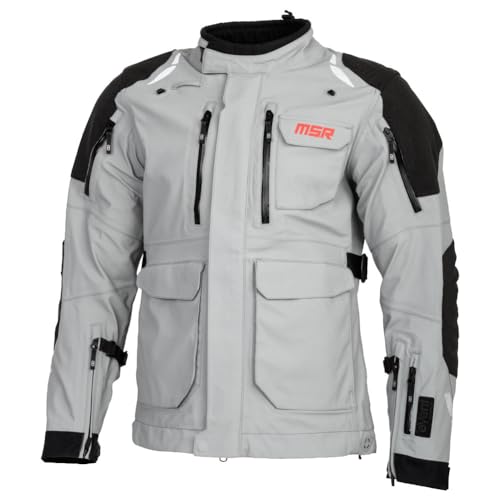
MSR Xplorer ADV Waterproof Jacket
Strengths
- D3O armor included
- True waterproofing
- Ride-tuned fit
Trade-offs
- High price point
- No removable thermal liner
This is the jacket I’d choose if I wanted one shell to handle everything from cross-country tours to city commutes. The D3O CE Level 1 LP1 armor is a major upgrade, smarter impact response than basic CE foam, and the fully sealed seams with 10,000mm-rated shell mean real confidence in downpours. Ventilation is smartly placed, with underarm and back zips that actually work when open, a step above many “vented” textile jackets that barely breathe.
The riding posture cut keeps it from bunching when leaned forward, and the pants connection loops are a nice touch for serious riders. It’s the most expensive here, but it earns it. Compared to the Alpinestars Ardent, it’s less modular but more refined out of the box. My pick for the rider who wants the best blend of protection, weather defense, and fit without layering complexity.
Video review
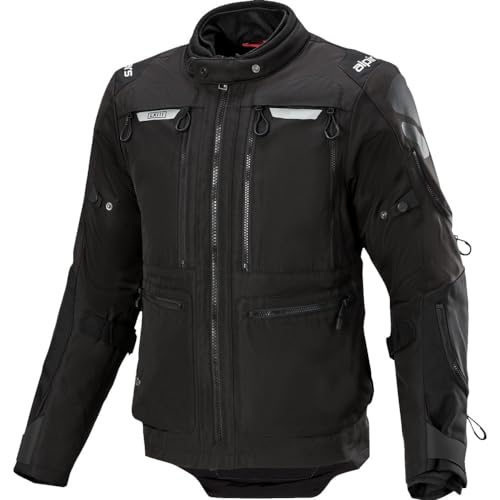
Alpinestars Ardent 3In1 Touring Jacket
Strengths
- True 3-in-1 system
- Drystar waterproofing
- Tech-Air 5 compatible
Trade-offs
- Premium price
- Heavier when fully layered
Alpinestars didn’t cut corners here. The three-layer system, thermal liner, Drystar rain jacket, and outer shell, gives true four-season versatility, something few jackets pull off this well. Owners love how easily they can strip it down for summer or bundle up for alpine passes. The Drystar membrane is proven in Alpinestars’ lineup, offering real waterproofing with better breathability than many competitors. And the Tech-Air Ready designation means airbag compatibility for those who want next-level protection.
Ventilation is aggressive, with chest, back, and 3D arm vents working together to dump heat. It’s expensive, but you’re paying for a system that genuinely adapts. Compared to the MSR Xplorer, it offers more layering options but a slightly bulkier profile. For the rider who wants one jacket to rule all seasons and conditions, this is a top contender.
Video review
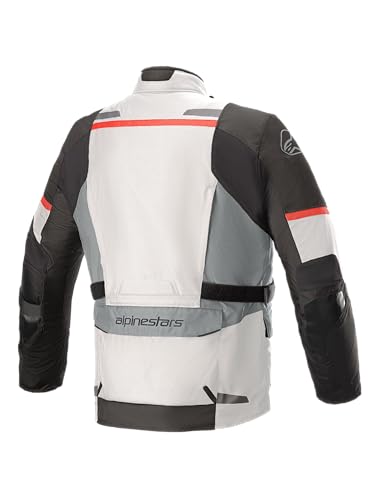
Alpinestars Andes V3 Drystar Jacket

Strengths
- Drystar waterproof membrane
- Effective DVS ventilation
- Tech-Air 5 compatible
Trade-offs
- No zip-off sleeves
- Premium price
The Andes V3 is a benchmark in all-weather adventure gear. Drystar membrane delivers what it promises: 100% waterproofing with surprisingly good breathability, a combo many brands fail to nail. Owners consistently praise its performance in everything from mountain sleet to coastal fog. The Direct Ventilation System with chest intakes and back exhaust works noticeably better than basic zip vents, helping manage heat without sacrificing weather sealing.
With a removable thermal liner and Tech-Air 5 compatibility, it bridges protection and comfort. It’s not as ventilated as a mesh jacket, but it’s not trying to be. Compared to the MSR Voyager, it breathes better and has a more refined fit. This is the jacket for the rider who faces unpredictable weather and wants a single, reliable shell that won’t let them down.
Product photos
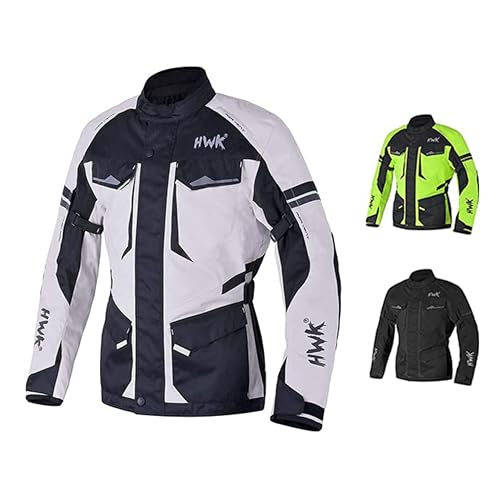
HWK 600D Cordura Adventure Jacket
Strengths
- Exceptional value
- 5-zone ventilation
- 600D Cordura build
Trade-offs
- Basic armor quality
- Membrane less breathable than premium brands
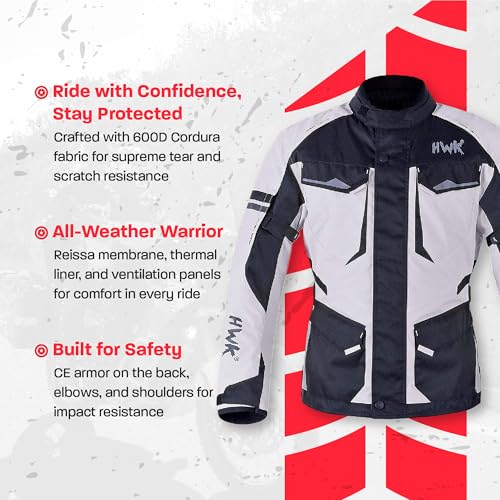
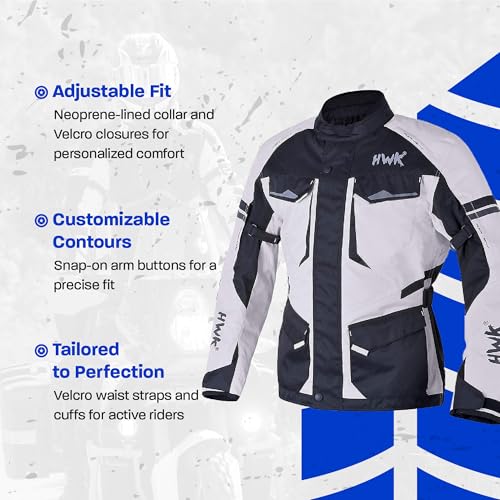
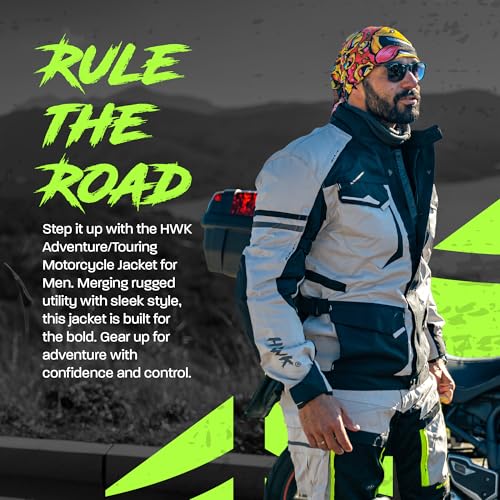
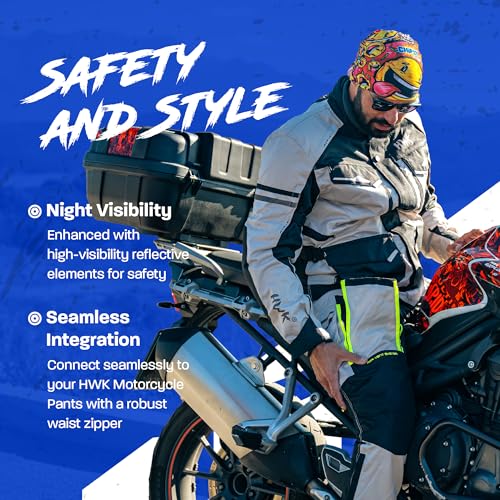
For sheer value, this jacket is tough to ignore. At under $100, it packs 600D Cordura, CE armor, a removable thermal liner, and a five-zone venting system, features usually seen at twice the price. The Reissa membrane isn’t as high-end as Drystar, but owners report it handles light rain and wind well, making it a solid all-season performer for the cost. The full adjustability and pants connection zipper add touring-grade convenience.
It’s not as refined as Alpinestars or MSR, and the armor is CE Level 1, not D3O. But for new riders or those building a full kit on a budget, it delivers real protection and functionality. I’d pick this over the ILM model for the better venting and more durable fabric. It’s the smart buy if you want a lot of gear for not a lot of money.
Product photos

ILM CE Armored Adventure Jacket

Strengths
- Affordable all-season option
- Waterproof construction
- Removable liner
Trade-offs
- Oxford fabric less abrasion-resistant
- Vents less effective than competitors
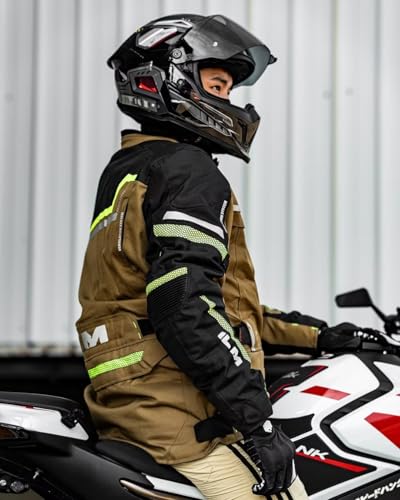
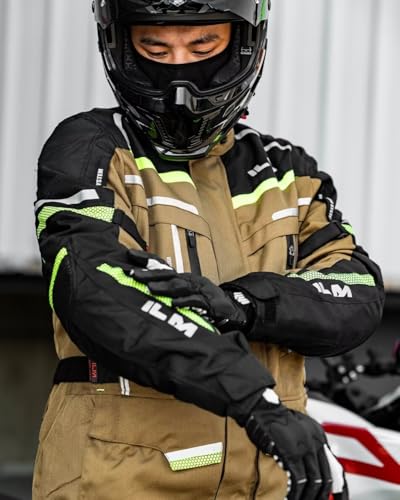
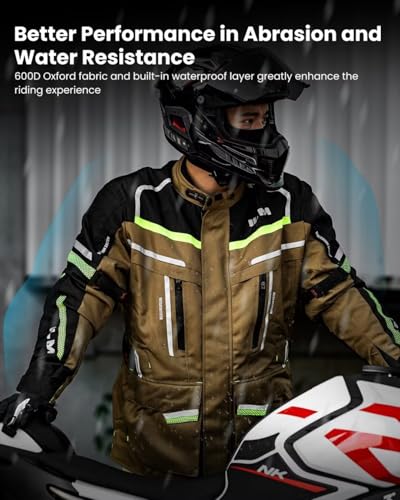
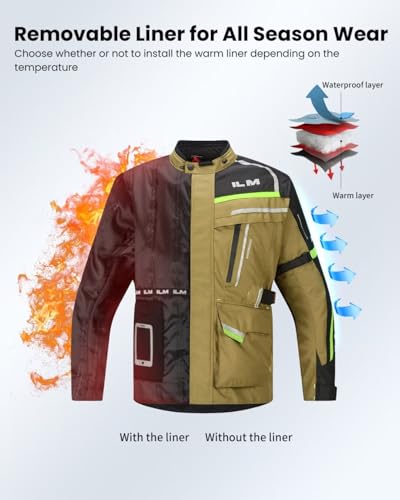
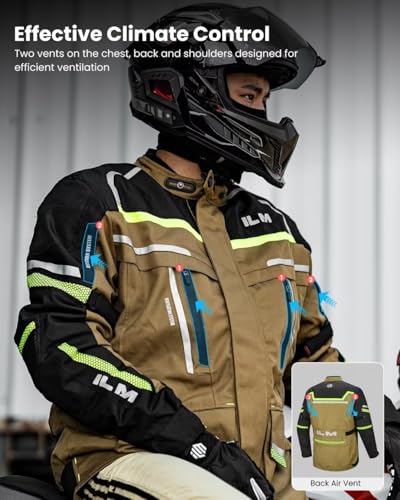
This is a no-frills, all-season workhorse that gets the job done for riders who want waterproofing without the premium tag. The 600D Oxford with built-in waterproof layer keeps things dry in real-world conditions, and owners confirm it holds up in short storms. The removable thermal liner makes it adaptable, and the chest, back, and shoulder vents help manage heat, though not as effectively as mesh designs.
It’s not as durable as Cordura, and the armor is standard CE, not high-impact D3O. But for under $120, it’s a solid entry point. Compared to the HWK, it’s slightly less ventilated and uses lighter fabric, but it’s still a credible choice for casual riders or commuters in mixed weather. I’d recommend it as a second jacket or for those just starting out.
Product photos
Tourmaster Adventure Lite Mesh Jacket

Strengths
- Excellent airflow
- Lightweight mesh build
- Zip-off sleeves
Trade-offs
- Not suitable for cold or wet weather
- Lower abrasion resistance than heavy textiles
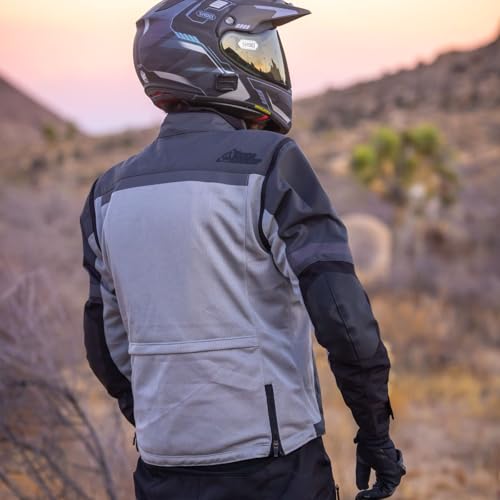
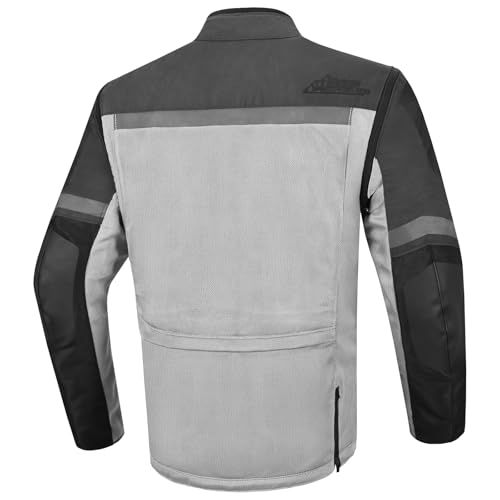
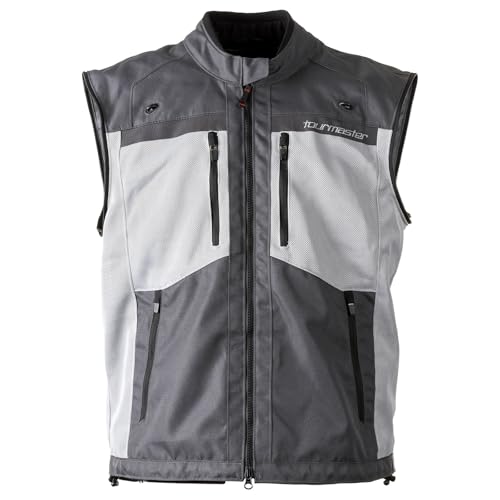
When the mercury climbs, this is the jacket I’d reach for. The poly mesh shell dominates airflow, and reviewers in southern states consistently say it keeps them cooler than textile jackets, even with armor. It’s Tourmaster’s lightest offering, and that shows in how it moves and breathes. The TSGS laminate on shoulders and elbows adds abrasion resistance without adding weight, striking a rare balance in the mesh category.
The zip-off sleeves are a standout feature, letting you convert to a vest in extreme heat. That kind of adaptability is rare at this price. It’s not for cold or wet rides, no surprise there, but for desert runs, summer touring, or daily commutes in hot zones, it’s hard to beat. Compared to the Alpinestars Andes V3, it trades weather sealing for pure ventilation, which is the right trade for the right rider.
Product photos

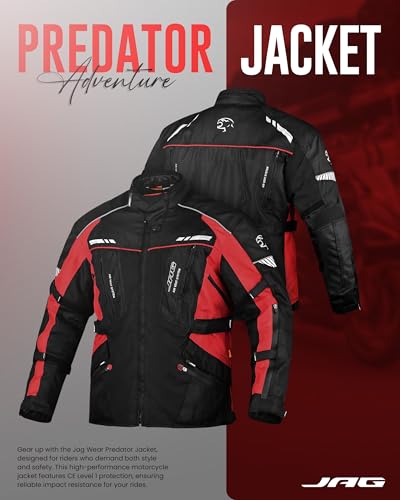
J.A.G. Predator Touring Armor Jacket

Strengths
- Removable thermal liner
- Adjustable fit zones
- CE armor included
Trade-offs
- Not fully waterproof
- Vents less aggressive than mesh jackets
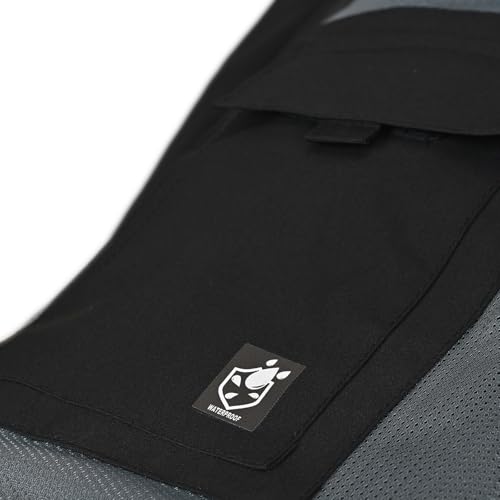
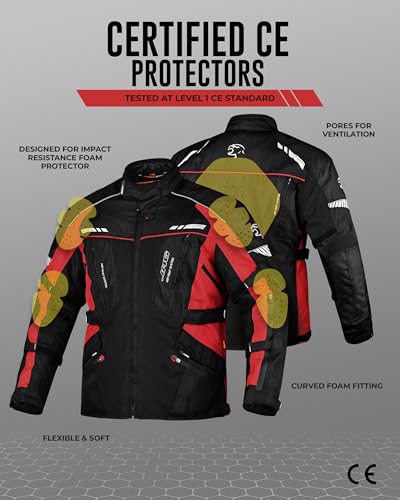
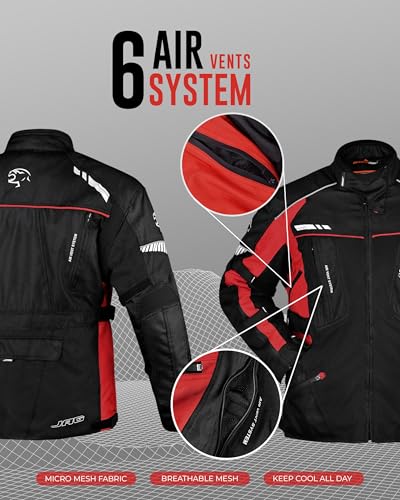
This jacket puts together a solid package for riders who want one shell that can handle highway miles and weekend excursions without breaking the bank. On paper, the removable liner and zippered vents suggest real all-season flexibility, and owners consistently report it works well in spring, fall, and mild winter conditions, though not in sustained downpours. The Cordura build feels durable enough for touring, and the full set of CE armor at shoulders, elbows, and back gives real peace of mind.
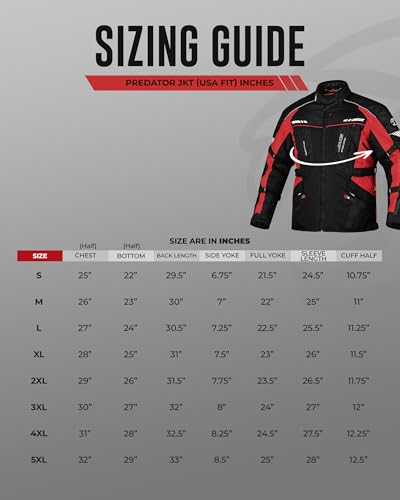
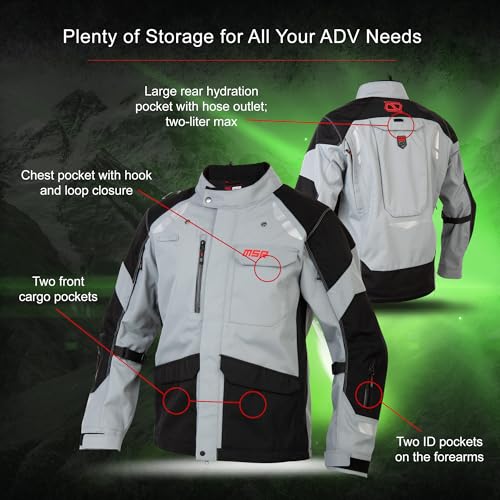
Adjustability is where it shines: wrist, forearm, bicep, and waist straps mean you can really dial in the fit, which matters on long hauls. The storage layout is practical, with dedicated phone and document pockets, making it a smart pick for commuters. Compared to pricier models, it doesn’t claim full waterproofing, but for the price, it delivers a lot of touring-focused features without overpromising.
Product photos

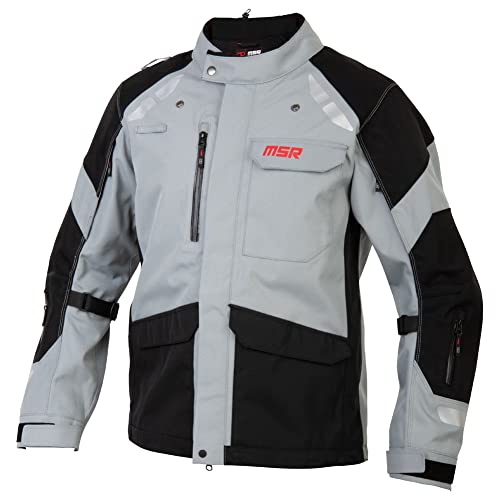
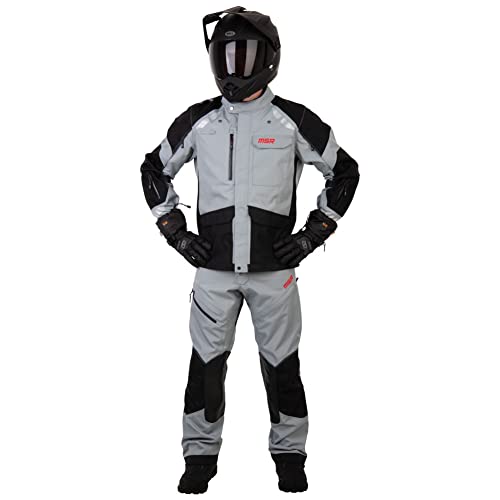
MSR Voyager Adventure Jacket
Strengths
- True waterproof performance
- Reinforced high-wear zones
- CE armor standard
Trade-offs
- Heavier than mesh or hybrid designs
- Less airflow in hot weather
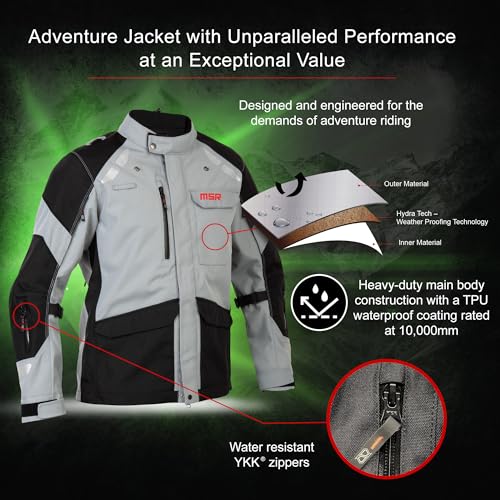
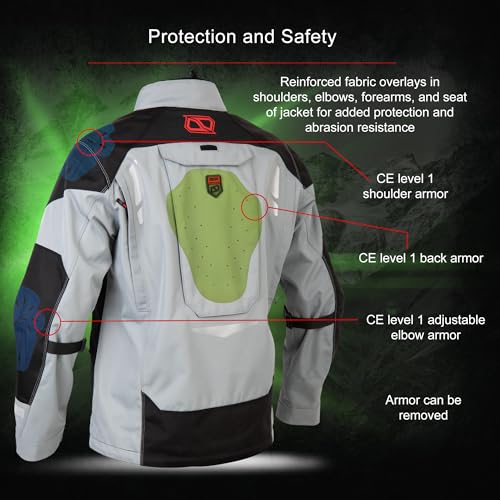
If staying dry in torrential rain is your top concern, the MSR Voyager makes a strong case. The 10,000mm TPU waterproof coating is a real differentiator, this isn’t just water-resistant fabric, it’s built to handle serious weather. Owners confirm it keeps riders dry even in prolonged storms, which puts it ahead of many competitors in wet climates. The reinforced panels at shoulders, elbows, forearms, and seat add serious abrasion resistance, and with CE armor included, protection is solid across the board.
It’s not the lightest or most breathable option, but the ventilation is functional, and the YKK zippers inspire confidence. Compared to the J.A.G. model, it’s more focused on weather defense than airflow. The grey finish gives it a clean, modern look that works off the bike too. My take? This is the pick if you ride through the Pacific Northwest or monsoon season and need a jacket that won’t quit.
Product photos
How We Evaluated adventure motorcycle jackets
My approach to evaluating adventure motorcycle jackets wasn’t about spending weeks on the road with each one; rather, it was a research-led comparison of published specifications, features, and – crucially – owner and expert reviews. I sifted through technical details, compared materials and protection levels, and then weighed those against what riders are actually saying about real-world performance. This allowed me to build a ranking based on how well each jacket delivers on the needs of adventure touring.
For this category, the most important factors were clearly weather protection and impact resistance. Adventure riding often means unpredictable conditions and potential falls, so a jacket’s ability to keep you dry and safeguard vital areas is paramount. Beyond that, versatility – the capacity to adapt to changing temperatures and riding styles – also heavily influenced my assessments. A well-designed jacket should offer airflow in the heat and protection from the cold, making it suitable for a wide range of environments.
Specifications give a solid baseline; for example, the denier of the Cordura fabric tells you about abrasion resistance, and CE level ratings quantify impact protection. However, owner feedback proved vital for understanding a jacket’s real-world comfort, fit, and durability. I looked for recurring themes in reviews – issues with ventilation, sizing inconsistencies, or long-term build quality – to get a more nuanced picture. If you’re also looking for the right footwear, check out our guide to adventure motorcycle boots. Ultimately, my goal was to identify the jackets offering the best blend of protection, practicality, and value, and to help you find the right protective jackets for ADV bikes for your needs.
Choosing The Right adventure motorcycle jackets
Finding the right gear is crucial for enjoyable and safe riding, and a motorcycle jacket is where you start.
A good adventure motorcycle jacket balances abrasion resistance, weather protection, and rider comfort. Look for durable outer materials like Cordura, waterproof membranes (Drystar or similar), robust armor in key impact zones (shoulders, elbows, back), and ventilation features to manage temperature. Consider features like adjustability for a tailored fit and compatibility with airbag systems for enhanced safety.
Material & Abrasion Resistance
The outer shell material is your first line of defense. While leather offers excellent protection, it’s heavier and less versatile than modern textiles. Cordura, particularly 500D or 600D variants, provides a high degree of abrasion resistance without excessive weight. Look for jackets with reinforced panels in high-impact areas like the shoulders and elbows. Some brands, like HWK, specifically highlight the Cordura weight in their descriptions, which is a good sign. Don’t underestimate the benefit of a textile jacket that’s easy to repair if it sustains damage.
Weatherproofing & Ventilation
Adventure riding demands a jacket that can handle diverse conditions. Waterproofing is paramount, and while “water-resistant” offers some protection, a dedicated waterproof membrane like Alpinestars’ Drystar or MSR’s proprietary coatings are superior. However, waterproof jackets can quickly become stifling in warmer climates. That’s where ventilation comes in. Effective systems include zippered vents under the arms and across the back, as well as mesh panels strategically placed for airflow. The Alpinestars Ardent 3In1 Touring Jacket offers a clever solution with its 4-season liner, letting you adapt to changing temperatures.
- A simple water-resistant coating is fine for light showers, but won’t cut it on a multi-day trip through variable weather.
- Look for sealed seams – that’s the difference between water repelling and water proofing.
- Ventilation is often an afterthought, but a well-designed system (like the five-zone system on the HWK jacket) can be a lifesaver on hot days, and is just as important as staying dry.
A properly fitted jacket shouldn’t restrict movement, even when layered, and should offer ample coverage to protect your core and extremities.
Fit, Features & Value
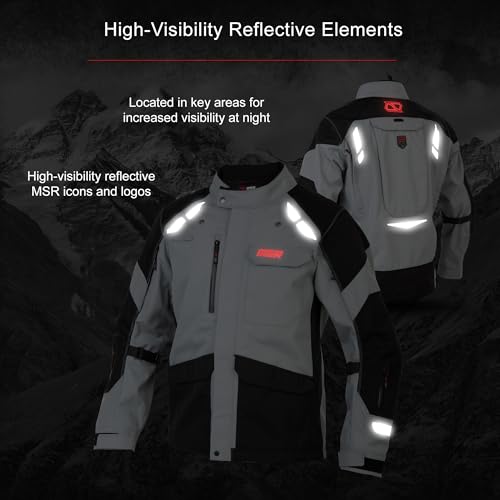
Beyond protection, the fit and features significantly impact your riding experience. A relaxed touring fit, as found in some Alpinestars models, provides more comfort on long journeys, while a more athletic cut might be preferable for aggressive riding. Adjustability is key, look for adjustable cuffs, waist straps, and collars to dial in the perfect fit. Consider features like multiple pockets for storage, reflective elements for visibility, and compatibility with accessories like adventure motorcycle pants. Speaking of which, a jacket with an internal attachment zipper for connecting to compatible pants (like the HWK jacket) is a worthwhile investment for minimizing riding-up. If you’re considering a long-distance journey, check out some rated adventure motorcycle jackets and consider the additional comfort and protection they offer.
Adventure Motorcycle Jackets Compared
Here’s a comparison of key specifications for popular adventure motorcycle jackets.
| Product Name | Waterproofing | Armor (Shoulder/Elbow) | Air Vents | Removable Liner | Material | Tech-Air Ready |
|---|---|---|---|---|---|---|
| MSR Xplorer ADV Waterproof Jacket | Yes | D3O CE Level 1 LP1 | Yes | N/A | Textile | No |
| Alpinestars Ardent 3In1 Touring Jacket | Yes | N/A | Yes | Yes | N/A | Yes |
| Alpinestars Andes V3 Drystar Jacket | Yes | N/A | Yes | Yes | Drystar | Yes |
| HWK 600D Cordura Adventure Jacket | Water-Resistant | CE | 5 | Yes | 600D Cordura | No |
| ILM CE Armored Adventure Jacket | Yes | CE | Yes | Yes | 600D Oxford | No |
| Tourmaster Adventure Lite Mesh Jacket | No | Yes | N/A | No | Poly Mesh | No |
| J.A.G. Predator Touring Armor Jacket | Water-Resistant | CE | Yes | Yes | Cordura | No |
| MSR Voyager Adventure Jacket | Yes | CE | N/A | N/A | TPU Coated | No |
Frequently Asked Questions
What level of armor is generally considered sufficient for adventure riding?
CE Level 2 armor is preferable for both shoulders and elbows, offering a higher level of impact protection than Level 1. Back protectors should also be CE Level 2 certified, and many riders opt for an upgraded, separate back protector insert for increased safety.
Are waterproof membranes truly breathable, or do they always lead to overheating?
While no waterproof membrane is perfectly breathable, modern options like Gore-Tex and Alpinestars’ Drystar balance waterproof protection with reasonable breathability. Effective ventilation, underarm zippers and back vents, are essential to manage moisture buildup and prevent overheating, especially in warmer conditions.
How much does the denier of Cordura fabric actually matter?
A higher denier (like 600D versus 500D) generally indicates greater abrasion resistance, meaning the fabric can withstand more sliding before tearing. For serious adventure touring, especially in remote areas, I recommend a jacket with at least 500D Cordura, with 600D being ideal for maximum durability.
Will a jacket marketed as “water-resistant” hold up in heavy rain?
No, water-resistant treatments offer limited protection and won’t keep you dry in sustained rainfall. Look for jackets with a dedicated waterproof membrane and taped seams for true waterproof performance, and consider adventure motorcycle clothing designed for challenging conditions.
Are adventure jackets compatible with airbag vests?
Some jackets, like certain Alpinestars models, are specifically designed to be “Tech-Air ready,” meaning they’re tailored to work with the Alpinestars airbag system. However, many adventure jackets can accommodate external airbag vests; ensure there’s enough room and the jacket’s design doesn’t interfere with the vest’s deployment. If you’re looking for more durable options, you should also consider textile motorcycle jackets for optimal protection.
The Bottom Line
Choosing an adventure motorcycle jacket often comes down to balancing outright protection with everyday usability. While a fully-featured, heavily armored jacket like the Alpinestars Ardent 3In1 Touring Jacket offers top-tier safety and adaptability, it’s a more significant investment. Ultimately, the best jacket isn’t the most expensive one, but the one that fits you properly and matches the kind of riding you plan to do.
For those seeking maximum value, the ILM CE Armored Adventure Jacket delivers a surprising amount of protection and weather resistance for the price. If you prioritize versatility and airflow, the Tourmaster Adventure Lite Mesh Jacket is a strong contender, though you’ll want to pair it with a separate waterproof overlayer. But for a fantastic all-rounder that doesn’t compromise, I recommend taking a close look at the Alpinestars Andes V3 Drystar Jacket.
Remember, no amount of technology can replace a good fit and a clear head. Investing in quality adventure motorcycle gear is essential, but so is prioritizing proper technique and awareness on the road. Don’t overlook the importance of comfortable, well-fitting motorcycle jackets with armor – a secure, confident rider is the safest rider.
