
The Truth: Are Older Cars Cheaper to Insure? Data Revealed
This post contains affiliate links. As an Amazon Associate, we earn from qualifying purchases.
Older cars are generally cheaper to insure because their lower market value reduces an insurer’s potential payout, making comprehensive and collision coverage less expensive. The rule of thumb is that vehicles over 10 years old see the biggest savings, but a car’s make, model, and specific risk factors can override age and make an older vehicle more expensive to insure than a newer one.
The gap between a car’s age and its insurance cost is a curve that flattens after a decade, and the math behind it is published by the government.
What follows: the 10-year depreciation rule, the exact test for dropping full coverage, and the named exceptions, like a 2021 Buick Encore versus a 2015 Porsche, that prove age is just one number on the bill.
Key Takeaways
- Insurers peg “older” at 10 years, the point where depreciation often makes full coverage financially questionable.
- Use the 10% test: if your annual full-coverage premium exceeds 10% of your car’s current private-party value, drop collision and comprehensive.
- A 2021 Buick Encore can be the cheapest used model to insure, while a 2015 Porsche 918 Spyder costs three times more than a brand-new Honda, proving make and model trump age.
- Federal data from the NHTSA shows a vehicle’s damage susceptibility ranking shifts a total premium by less than 10%, so your driving record and location matter more.
- Older cars with rare parts, high theft rates, or poor safety ratings can defy the rule and cost more to insure.
The 10-Year Rule and the Depreciation Math
Most insurance companies draw the line at ten years. A vehicle crossing that threshold is officially “older” in their rating books, distinct from a classic or vintage car. This isn’t an arbitrary number. It aligns with the steepest part of a car’s depreciation curve.
According to industry benchmarks, a new car loses about 30% of its value in the first two years and then 8-12% annually after that. By year ten, it’s often retained only 15-20% of its original sticker price. This plummeting value is the primary engine behind lower premiums.
The cost of optional coverages, such as collision and comprehensive, may decrease as the vehicle’s market value declines. Since insurers typically settle total loss claims based on a vehicle’s actual cash value, an older vehicle usually costs less to replace.
The financial logic for you is straightforward. Paying $1,200 a year to insure a car worth $5,000 is a losing bet. The insurance company’s maximum exposure is that $5,000, so your premium for coverages that protect your car should reflect that capped risk.
The 10% test is your tool here. Look up your car’s private-party sale value on Kelley Blue Book. Take your annual premium for comprehensive and collision coverage. Divide the premium by the car’s value. If the result is above 0.10, you’re paying more to insure it than you could ever collect. That’s your signal to drop full coverage.
When “Cheaper” Doesn’t Apply: The Exceptions That Break the Rule
Age is a factor, not a verdict. An insurance algorithm evaluates a symphony of risk variables, and a loud instrument can drown out the age section. Thinking an old car is automatically cheap to insure is how people get surprised by a $250 monthly bill for a 15-year-old European sedan.
The make, model, and its attendant history can completely override the age discount. A 2015 Porsche 918 Spyder, for example, carries an average annual premium over $5,200. A brand-new 2024 Honda HR-V can be insured for about $1,670. The Porsche is nine years older, but its insurance costs three times as much. The reason is the cost of those carbon-ceramic brakes and the scarcity of a certified mechanic who can touch them.
Where this goes sideways: Assuming a paid-off car equals cheap insurance. A theft-prone model or one with astronomically expensive parts will keep your premium high even with liability-only coverage, because the insurer’s risk of a liability payout from an accident you cause is also tied to repair costs.
Other factors that can make an older car more expensive include a poor safety rating, a salvage or rebuilt title (which some insurers won’t cover at all), and simply living in a zip code with high claim rates. The car’s story matters as much as its birthday.
| Factor | Why It Inflates an Older Car’s Premium |
|---|---|
| Hard-to-Find Parts | Repairs take longer, labor rates are higher, and aftermarket parts may not be certified. |
| High Theft Rate | Certain older models are targeted for parts or as easy thefts, increasing statistical risk. |
| Limited Safety Features | No electronic stability control or side airbags means higher injury claims in a crash. |
| Luxury or Performance Brand | Higher baseline repair costs and more complex systems, regardless of age. |
Collision vs. Comprehensive: The Coverage Triage for an Aging Car
As your car ages, your insurance needs to evolve from protection to practicality. The mandatory coverage, your state’s minimum liability limits, never changes. The optional coverages, collision and comprehensive, become a question of math.
Collision coverage pays for damage to your car from an accident you cause. Comprehensive coverage handles non-crash incidents: theft, vandalism, fire, hail, a fallen tree. Together, they form “full coverage.”
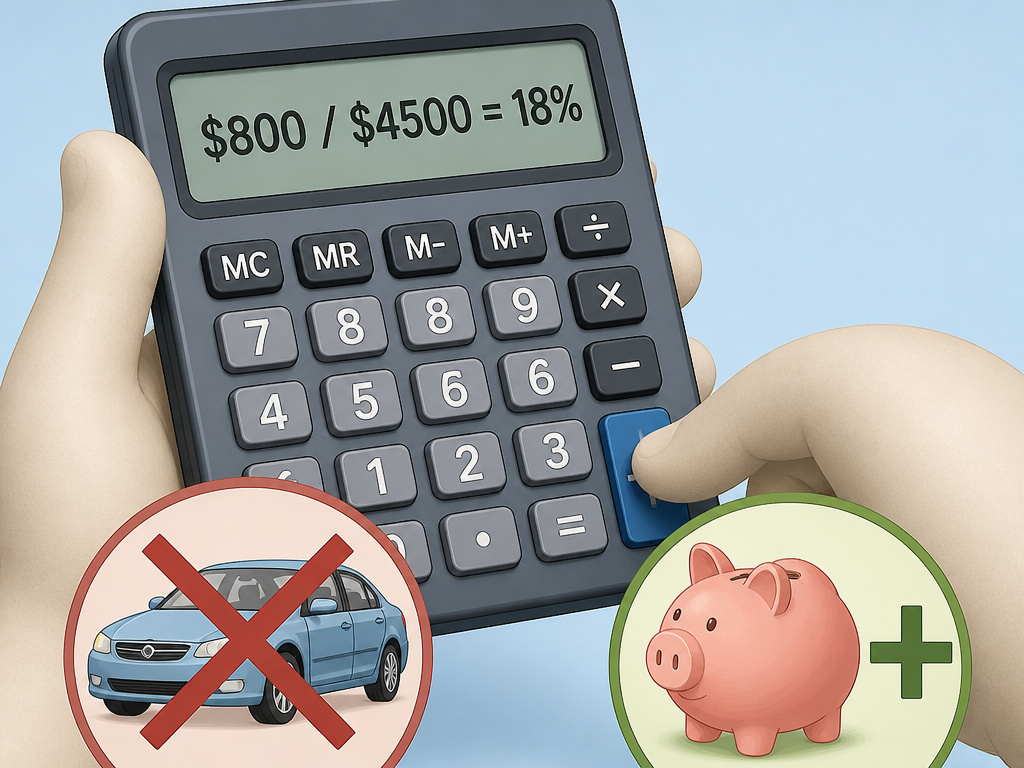
On a new car, you need both. On a ten-year-old Honda Civic worth $4,500, you need to run the numbers. If your combined annual premium for these coverages is $800, you’re spending nearly 18% of the car’s value each year just on this protection. In the event of a total loss, you’d only get $4,500. After a few years, you’ve paid the insurer more than the car is worth.
The pragmatic move is to increase your deductibles first, this lowers the premium. If the math still doesn’t work, you drop the coverages. You become self-insured for damage to your own car. The substantial savings get banked for your next down payment.
I’ve seen folks keep full coverage on a twenty-year-old truck out of habit, paying more in three years than the truck’s blue-book value. That’s loyalty to a policy, not to your wallet. The moment you own the title free and clear, your insurance strategy should shift.
This is also where knowing your car’s condition is critical. A pristine, garage-kept classic might justify specialized agreed-value coverage, not a standard policy. A daily-driven beater does not.
The Government Data on What Really Moves Your Premium
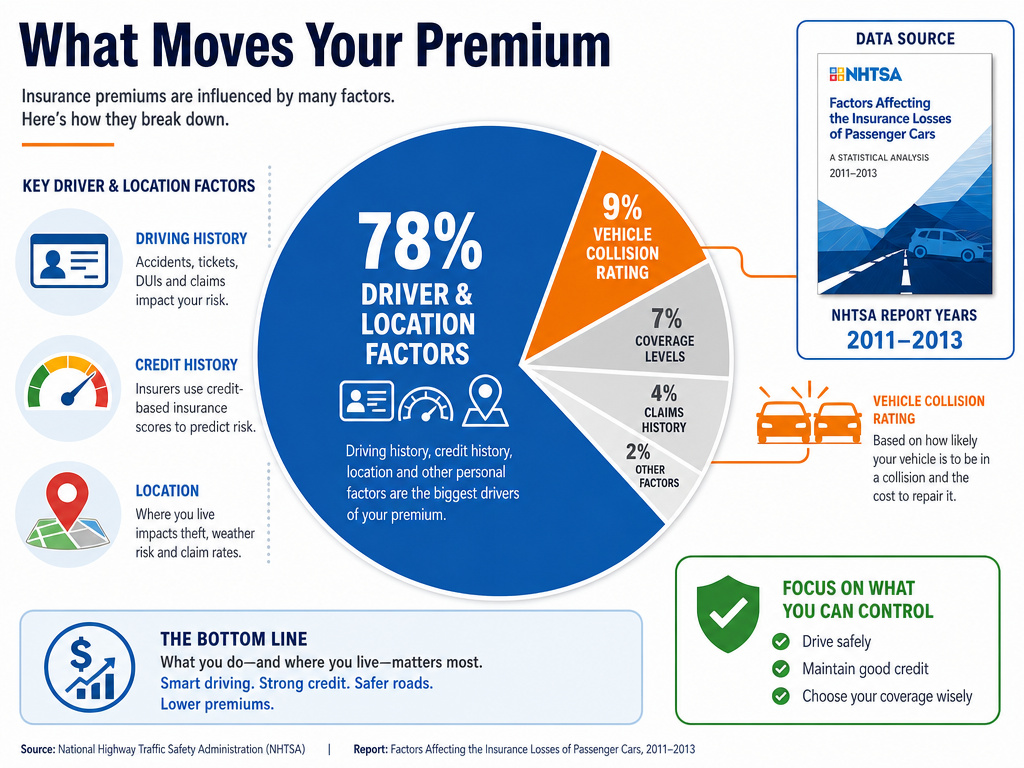
The link between a car’s design and its insurance cost is so established that the federal government once mandated dealers share the data. The National Highway Traffic Safety Administration (NHTSA) published a comparison booklet using loss data from the Highway Loss Data Institute (HLDI).
That NHTSA insurance cost comparison study is a snapshot of how vehicles from the 2011-2013 model years compared. While the law requiring its distribution was repealed in 2013, the underlying mechanism remains. Insurers use HLDI data to adjust the “base rate” for collision coverage.
But here’s the crucial, non-commodity insight from the NHTSA report itself: the impact is limited. The report states that this adjustment “is usually small” and that “your total premium will not vary more than 10 percent depending upon the collision loss experience of a particular vehicle.”
This is the part most articles miss. Your car’s specific damage rating is a tweak to the premium, not the foundation. The foundation is you, your driving record, your credit-based insurance score (where permitted), your age, and your location. Shopping your policy every two years will likely save you more than buying a different model of car.
How to Actually Lower Your Bill on an Older Car
Knowing the rules lets you game the system. If you’re driving a car past the ten-year mark, you have levers to pull that a new-car buyer doesn’t.
- Execute the 10% test. This is step one. Value your car, then divide your full-coverage premium by that number. Over 10%? Call your insurer and remove collision and comprehensive. This single move can cut your bill in half.
- Raise your deductibles. If you keep comprehensive for peace of mind against hail or theft, raise the deductible from $500 to $1,000 or higher. The premium drop is significant.
- Shop around, aggressively. A MoneyGeek analysis found a $156-per-month difference between the highest and lowest major insurers for the same coverage on a used car. Companies weigh factors differently; one might penalize your zip code less or offer a better discount for your modern infotainment for classic cars.
- Ask about low-mileage discounts. If your older car is a weekend cruiser, you might qualify. Usage-based programs can also benefit a lightly driven vehicle.
- Bundle policies. This is a standard discount, but it’s often overlooked when you’re just insuring an old second car.
- Invest in preventative security. A visible steering wheel lock or a confirmed alarm system can sometimes trigger a discount, even on an old model. It shows risk mitigation.
Remember, the goal is adequate liability coverage paired with a sensible financial decision about protecting your own asset. For most older cars, that means robust liability limits and no comprehensive or collision.
Frequently Asked Questions
Does a car’s color affect insurance cost?
No, not directly. The car insurance color myth is persistent, but insurers don’t ask for or rate based on paint color. Your premium is based on quantifiable risks like make, model, driver history, and location.
Is it harder to get insurance on a very old car?
Not for a standard policy with liability coverage. However, getting comprehensive or collision coverage can be difficult or prohibitively expensive on a vehicle over 15-20 years old, as insurers may not want to underwrite repair costs for rare parts. For a true classic, you’d seek a specialty agreed-value policy.
Should I get full coverage if I have a loan on an older car?
Yes, absolutely. The lender is the legal owner until you pay off the loan, and they will require you to carry full coverage to protect their asset. This requirement overrides any cost-benefit analysis.
Can adding safety features like a backup camera lower my rate?
Sometimes, but don’t count on a major discount. While adding a retrofit backup camera system is a fantastic safety upgrade, most insurers offer discounts for factory-installed safety tech, not aftermarket additions. The primary value is in preventing accidents, which protects your no-claim discount.
Are electric cars more expensive to insure than older gas cars?
Usually, yes. The insurance for electric vehicles is typically higher due to costly battery packs and specialized repair networks. A ten-year-old electric car might have a low market value, but its potential repair cost remains high, which can keep premiums elevated compared to a same-year gasoline model.
What’s the single biggest factor in my insurance cost?
Your driving record. A clean record over three to five years is the most powerful discount you can earn. It tells the insurer you’re a predictable risk, which matters far more than whether your car is a 2012 or a 2022.
The Bottom Line
Older cars are cheaper to insure, right up until they’re not. The default answer is yes, thanks to depreciation. The real answer lives in the specifics of your garage.
Run the 10% test on your car today. If it passes, drop the full coverage and bank the savings. If you’re shopping, know that a 2021 Buick Encore will be cheap, but a 2015 BMW M3 will not. And remember the federal fine print: your car’s design impacts the premium, but your own history behind the wheel impacts it more.
Insurance is a bet. On an older car, the smart move is to bet on your own driving and stop overpaying to protect an asset that’s no longer worth the premium.
