
ATV Trail Speed Limits: What You Must Know to Ride Legally
This post contains affiliate links. As an Amazon Associate, we earn from qualifying purchases.
The speed limit for ATVs on trails is not a single number. It is a three-layer stack of rules: manufacturer-set speed governors based on rider age, state or provincial regulations that set maximums (often 20-50 km/h or 35 mph), and local municipal ordinances that can override everything. The most important limit is the one posted by the trail authority or local government where you are riding right now.
That local rule is the one that gets people. State law might say 50 km/h, but the town you’re riding through can drop it to 20. Or a trail club like the Kawartha ATV Association can set a blanket 20 km/h limit on trails adjacent to roads. Ignoring that posted sign because you know the provincial rule is how you get a ticket, or worse, lose trail access for everyone.
What follows is a breakdown of those three layers, the manufacturer categories that physically limit your machine, the critical exception for paved roads, and how to find the exact rule for your next ride.
Key Takeaways
- Trail speed limits are dictated by the most restrictive rule in place: local ordinance, state/provincial law, or land manager policy.
- Manufacturer speed governors are based on rider age categories (Y-10+, T-14, G & S) and physically prevent the ATV from exceeding set speeds, like 15 mph for a youth model.
- On paved surfaces, even when crossing is legal, speed must drop to a crawl—often under 10 mph—due to severe handling risks.
- Always check for posted signs at trailheads and know that municipal rules can be stricter than state regulations.
- Operating at a “reasonable and prudent” speed for conditions is a universal legal requirement, regardless of posted numbers.
The Three Layers of ATV Trail Speed Limits
Forget searching for one universal answer. The real speed limit is the lowest number produced by this hierarchy. Think of it as a set of filters, each one potentially cutting the maximum speed you can legally and safely run.
The first filter is the land manager or trail club. Organizations like the Kawartha ATV Association (KATVA) in Ontario set specific rules for their sanctioned trails. Their official ATV rules state that on roads with a posted limit of 50 km/h or less, your ATV speed cannot exceed 20 km/h. If the road’s posted limit is over 50 km/h, your ATV cap is 50 km/h. These club rules exist for insurance, landowner agreements, and safety with other trail users. Disregard them, and you risk the club losing its trail access.
The second filter is state, provincial, or federal law. This sets the broadest legal framework. For example, Maine’s statute is famously open-ended: a person may not operate an ATV at greater than a reasonable and prudent speed for the existing conditions. That’s a Class E crime if violated. It means dry, wide-open fire roads could legally allow more speed than wet, single-track trails, even if no number is posted.
The third filter is local municipal ordinance. This is where riders get caught. A state may permit ATVs on roads under 35 mph, but a town within that state can pass a stricter law. As the Wisconsin DOT highway ATV rules clarify, towns can authorize ATV use on highways with speed limits of 35 mph or less without state approval. Crucially, they can also post lower speed limits that apply only to ATVs. Your state permit doesn’t override that town’s sign.
The part nobody mentions: The trailhead sign posted by a local club or municipality is the final, binding law for that stretch of land. The state handbook is just a suggestion if a local rule says otherwise.
| Rule Layer | Who Sets It | Typical Limit Range | How It’s Enforced |
|---|---|---|---|
| Land Manager / Club | Trail association, private landowner | 10-30 mph (16-48 km/h) | Posted signs, trail patrols, revocation of membership/access |
| State / Province | Transportation or natural resources agency | 20-50 mph (32-80 km/h) on roads, “reasonable & prudent” on trails | Law enforcement, fines, potential criminal charges |
| Local Municipality | City, town, or county government | Can be any limit, often lower than state rules | Local police, ordinances, fines |
Manufacturer Limits: The Physical Governor You Can’t Ignore
Before you even think about legal limits, your machine has a hard, physical ceiling. ATV manufacturers install speed governors based on the engine size and the recommended rider age category. These aren’t suggestions; they are electronic or mechanical stops.
The categories are standardized. A Y-10+ model, intended for riders 10 and older, typically has a “Limited” speed setting of 15 mph (24 km/h) and a “Maximum” of 30 mph (48 km/h). A T-14 model (14+) might have limits of 20 mph, 30 mph, and a top of 38 mph (61 km/h). For adult models in the G & S (16+) category, the governor is often removed, leaving speed “According to Local Regulations.”
Worth knowing before you start: These manufacturer limits are calibrated for off-road traction and stability. Hitting 38 mph on a youth-model ATV on loose gravel can easily overwhelm the short wheelbase and knobby tires, leading to a rollover. The governor is a safety device, not a challenge.
This is a primary reason for youth ATV safety guidelines. Putting a child on an adult machine without a governor isn’t just illegal; it’s a direct path to loss of control. The right ATV for kids matches their age and skill to a machine with appropriate physical speed restriction.
How Fast Can You Go on Public Roads and Highways?
Riding on roads is a different rulebook entirely, and it’s where the most specific numerical limits appear. Permission is never assumed. It is granted by specific statutes or local ordinances.
In Iowa, the Iowa public road ATV regulations allow operation on state two-lane or county highways only to reach a trail, park, or residence, with a maximum speed limit of 35 mph. Crossing multi-lane highways is permitted only at intersections. This is a classic “access route” rule: the road is a connector, not a riding area.
Wisconsin’s system highlights the local control. The ATV operation on Wisconsin highways is permitted on roads with a speed limit of 35 mph or less, but only if the local municipality has passed an authorizing ordinance. Furthermore, that town can then post a separate, lower speed limit that applies only to ATVs and UTVs.
The common thread is that road use is a privilege with strict conditions. Speed must be kept down to minimize conflicts with automotive traffic and account for the ATV’s poor pavement handling.
The Paved Surface Exception: When 10 MPH is Too Fast
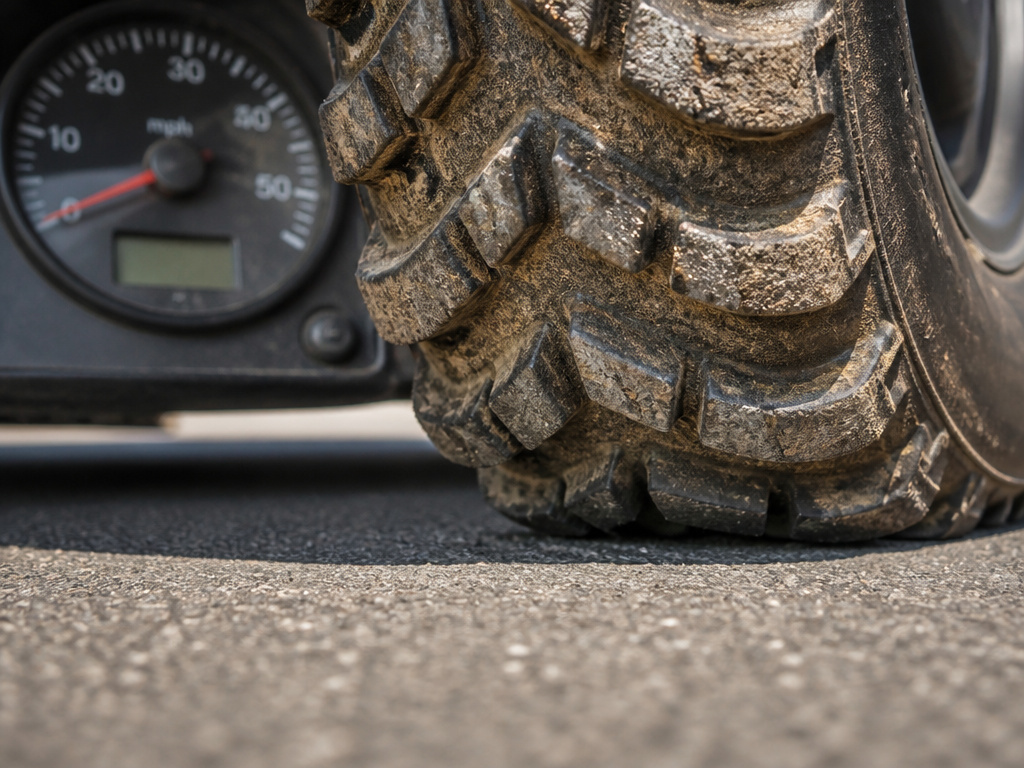 This is the non-negotiable mechanical truth every rider needs to understand. ATV tires are not designed for pavement. They are soft, knobby, and lack the rubber compounds and tread patterns for asphalt grip.
The Arctic Cat owner’s manual states it bluntly: operation on paved surfaces can seriously affect handling and control. If you must cross pavement, travel slowly at less than 10 mph (16 km/h) and avoid sudden turns or stops.
Why? – Reduced Traction: Knobby tires have minimal contact patches on hard surfaces. Braking distances double or triple. – Overheating: The soft rubber compounds can overheat and degrade rapidly. – Handling Instability: The tall, flexible sidewalls and aggressive tread cause unpredictable wandering and slow steering response.
Common mistake: Treating a paved road crossing like a trail. Even if the legal road speed limit is 35 mph, your safe ATV speed on that asphalt is under 10 mph. This isn’t a legal limit; it’s a physics limit. Exceed it, and a sudden stop or swerve becomes impossible.
This rule is critical when considering ATVs for farm work, where crossing a county road between fields is common. It also impacts the utility of side-by-sides vs ATVs on mixed terrain, as some UTVs are equipped with more pavement-friendly tires.
Finding the Exact Law for Your Riding Area
 You cannot rely on forums or hearsay. The correct speed limit is a verifiable fact found in one of three places.
First, check the website of the trail association or managing agency (e.g., U.S. Forest Service, state DNR). Look for a “Rules & Regulations” or “Motorized Use” page. Second, investigate the municipal code for the county or town where the trail is located. Search for “ATV” or “Off-Road Vehicle” ordinances. Third, review the official Maine ATV rules or your own state’s analogous publication from the department of natural resources or transportation.
Where this goes sideways: Assuming your registration or safety certificate means you know the rules. Regulations change. A trail that allowed 45 mph last year might have a new 25 mph posted limit this season due to erosion or new landowner agreements.
When in doubt, the universal fallback is the “reasonable and prudent” standard. Can you stop within the distance you can see? Is your speed appropriate for trail traffic, visibility, and surface conditions? If a warden or officer questions you, “It felt safe” is not a defense. “I could stop for any obstacle in my path” is.
Speed Limits and ATV Safety Gear
Your speed dictates your safety margin, and your gear is your last line of defense. The faster you go, the less time you have to react and the more severe any impact becomes.
Helmets are non-negotiable at any speed. Goggles protect your vision from roost and branches. For trail riding above 25 mph, consider a chest protector and riding boots with ankle support. Your ATV safety for kids checklist must be even more stringent, as their reaction times are slower and their bodies more vulnerable.
The relationship is simple: higher legal speeds demand higher personal safety standards. A best trail ATV isn’t just about power; it’s about one with a stable chassis, good suspension, and reliable brakes that let you manage that speed confidently.
Frequently Asked Questions
What is a typical ATV trail speed limit?
There is no typical limit. On managed trail systems, expect posted limits between 15-25 mph (24-40 km/h). On open public land like some BLM areas, the limit may be the state maximum of 50 mph or just the “reasonable and prudent” standard. Always look for posted signs.
Can I get a ticket for speeding on an ATV trail?
Yes. Law enforcement officers patrol popular trail systems. Violations can result in fines, points on your driver’s license (in some states), and even having your ATV impounded. On private club trails, speeding can lead to immediate expulsion and loss of riding privileges.
Do speed limits change for different types of ATVs?
Sometimes. Regulations for utility ATVs used for work might be more lenient on access roads. Electric ATVs, which are often quieter, don’t get special treatment. The primary legal differentiators are usually the machine’s width (e.g., the 64-inch rule for some trails) and whether it’s street-legal, not its power source.
How do I find out if a local ordinance changes the speed limit?
Contact the local town or county clerk’s office, or the sheriff’s department non-emergency line, for the area you plan to ride in. The website for the local ATV club or tourism board is also a good resource. Do this research before you load up your 4WD ATVs for a trip.
What’s the penalty for riding an ATV too fast in Maine?
In Maine, operating an ATV at greater than a reasonable and prudent speed is a Class E crime. Penalties can include fines of over $1,000 and potential jail time. The state takes this seriously because excessive speed is a primary factor in serious ATV accidents.
Before You Go
The real answer to ATV trail speed isn’t in a handbook. It’s on the sign at the trailhead and in your own judgment of the terrain. Respect the manufacturer’s governor, know that local rules trump state ones, and treat every paved crossing as a hazard zone. Your right to ride depends on it. For the majority of recreational trail riders, keeping it under 25 mph isn’t just legal—it’s how you see the scenery and get home in one piece. If you need raw speed, that’s what closed-course racing is for.
