
What Is the Difference Between a Cruiser and Sport Bike?
This post contains affiliate links. As an Amazon Associate, we earn from qualifying purchases.
The core difference between a cruiser and a sport bike is rider posture, a design decision that dictates everything from engine character and suspension tuning to daily usability. A cruiser positions the rider upright with feet forward for a relaxed stance, powered by a torquey, low-revving engine built for smooth cruising. A sport bike leans the rider forward over the tank for an aerodynamic, aggressive posture, powered by a high-revving engine tuned for cornering agility and peak speed.
That separation in posture isn’t just about comfort versus performance. It’s a fundamental design fork that shows up in where the footpegs mount, how the suspension reacts to bumps, and even how you manage fatigue after an hour on the road. The rider’s body is the central component around which each platform is engineered.
What follows is a breakdown of the five specs that actually matter: posture angles, power delivery, suspension behavior, daily practicality, and the surprising exceptions that blur the lines. By the end, you’ll be able to look at any motorcycle’s geometry chart and predict exactly where it will ache.
Key Takeaways
- Your torso angle, not just seat height, decides long-term comfort, with cruisers near 85° and sport bikes near 65° from the horizontal.
- Engine choice follows posture: cruisers use V-twins for low-end torque you feel immediately; sport bikes use inline-fours for power that builds at high RPMs.
- A sport bike’s stiff suspension handles corners precisely but transmits every crack in the pavement to your spine.
- Running costs hinge more on the specific model’s complexity and displacement than on whether it’s called a cruiser or sport bike.
- North American-designed sport bikes often borrow cruiser ergonomics, making them a hybrid option that defies simple labels.
Posture & Ergonomics: Why You Feel the Difference
Look past the chrome and fairings. The first thing your body notices is posture.
Cruiser posture positions the rider with a near-vertical torso angle (approximately 85 degrees from horizontal), feet placed forward or mid-mounted, and hands reaching up to relatively high handlebars. This creates a relaxed, commanding seating position.
Sport bike posture tucks the rider forward, with a torso angle around 65 degrees from horizontal, feet set rearward under the hips, and hands low on clip-on bars. This compact, aggressive stance prioritizes aerodynamics and control for cornering.
The difference is measured in degrees and inches, but felt in your wrists, back, and knees after thirty minutes. A cruiser’s upright seat reduces wrist pressure but can load your lower back and tailbone, especially with a pronounced feet-forward layout. A sport bike’s forward lean supports the upper body with wind resistance at speed, but concentrates weight on the wrists and neck in slow traffic or at stops.
Seat height is a related but deceptive number. Cruisers typically sit between 25 and 28 inches, sport bikes between 30 and 33 inches. Yet a narrow 31-inch sport bike seat can be easier to plant a foot on than a wide 28-inch cruiser seat that forces your leg to reach around bulky styling. The real question isn’t which posture is more comfortable in a showroom, but which geometry works with your inseam, arm reach, and the kind of riding you actually do.
Engine Character: Torque vs. Horsepower
The engine doesn’t just move the bike. It matches the posture.
Cruisers almost exclusively use V-twin engines. Think Harley-Davidson’s Milwaukee-Eight or Indian’s Thunder Stroke. The design prioritizes low-end torque, the twisting force that pulls you away from a stoplight with minimal throttle. You feel the shove in your back, not the scream in your ears. This suits the cruiser mission: relaxed, effortless power for highway cruising and city traffic, delivered smoothly without needing to rev the engine highly.
Sport bikes favor inline-four or V4 engines, like those in a Honda CBR600RR or Ducati Panigale V4. These engines are built to rev. Their power, measured in horsepower, builds exponentially in the upper half of the tachometer. The experience is about winding the engine out, holding a gear, and using that high-RPM rush for acceleration and top speed. It rewards an active, engaged riding style.
This table shows how the design intent translates to the riding experience:
| Engine Characteristic | Cruiser (e.g., V-twin) | Sport Bike (e.g., Inline-Four) |
|---|---|---|
| Power Peak | Low-to-mid RPM | High RPM |
| Throttle Response | Immediate, punchy | Linear, building with revs |
| Ideal Use | Relaxed cruising, roll-on acceleration | Aggressive cornering, track days |
| Sound & Vibration | Chunky, low-frequency pulse | High-pitched, mechanical scream |
Trying to use a sport bike engine like a cruiser’s, short-shifting at low RPM, leaves it feeling gutless and boggy. Trying to rev a cruiser’s V-twin to its redline is often pointless and can be mechanically stressful. The engines are tuned for the postures they support.
Suspension & Handling: Plush vs. Precise
Suspension is the second half of the ride-quality equation, and it’s tuned in direct opposition between these categories.
Cruiser suspension is soft and long-travel. It’s designed to soak up highway seams and bridge expansion joints, giving a plush, isolated ride. The trade-off is body roll in corners and a general lack of feedback. You feel the bike float over bumps, not communicate through them. This complements the relaxed posture, you’re not fighting for millimeter-perfect line placement.
Sport bike suspension is firm and short-travel. It’s calibrated for immediate response to rider input, keeping the bike stable and planted during hard braking, acceleration, and cornering. You feel every tar strip and pavement crack. The firmness transmits road imperfections directly to your body, which is why sport bike seats are often thinner and harder, they’re part of a chassis feedback system, not a sofa.
Where this goes sideways: Choosing a cruiser for its “comfortable ride” on exclusively rough city streets. The soft suspension that glides over highway bumps will bottom out on successive potholes, sending a jarring shock through the frame and into your spine. The plush ride has a lower limit than most buyers expect.
Daily Usability & Running Costs
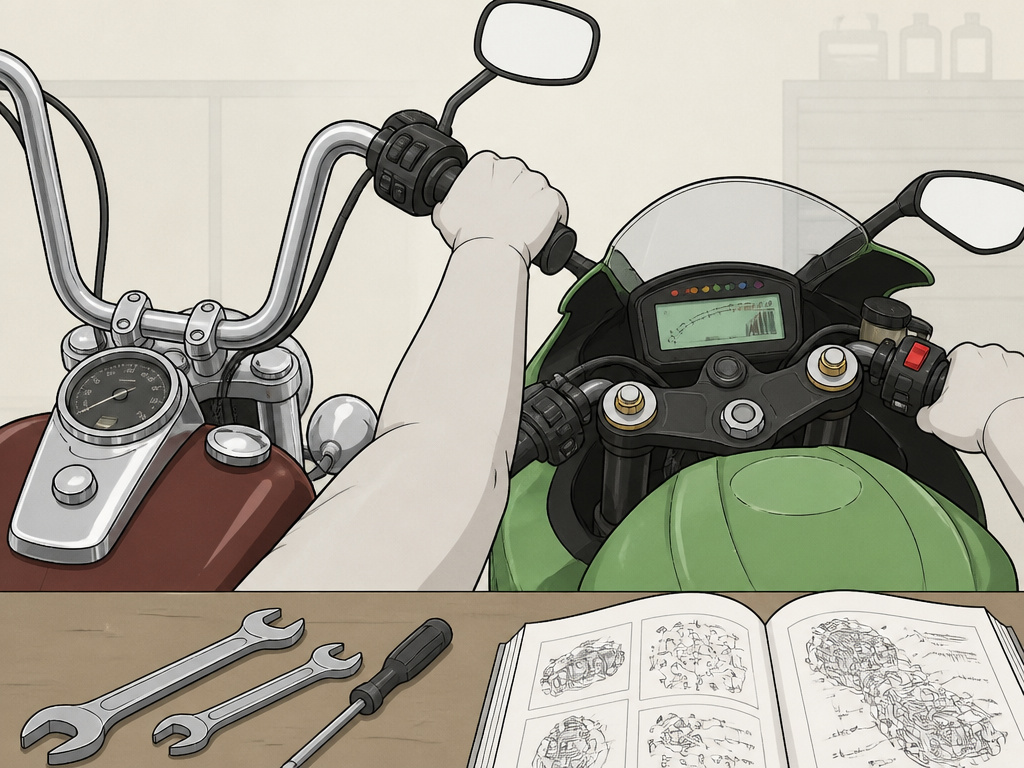 Forget the brochure promises. How a bike works day-to-day depends on details most overviews skip.
In traffic, a lightweight sport bike like a Kawasaki Ninja 400 can feel flickable and easy to filter through gaps. But its aggressive ergonomics, limited steering lock, and heat from a high-output engine can become exhausting over a one-hour commute. A cruiser like a Honda Rebel 500 offers a calmer throttle response and a lower seat that aids confidence at stoplights, but its longer wheelbase and heavier weight make U-turns and parking-lot maneuvers more deliberate.
| Aspect | Cruiser Consideration | Sport Bike Consideration |
|---|---|---|
| Commuting | Low seat aids confidence; weight hampers agility. | Light weight aids filtering; posture causes fatigue. |
| Maintenance | Often simpler air-cooled engines; belt drive is clean. | Higher-revving engines demand precise valve checks. |
| Two-Up Riding | Often standard with spacious passenger seat. | Cramped passenger pegs and seat are an afterthought. |
| Storage | Aftermarket luggage easy to mount on frame. | Tail section may not support weight of heavy bags. |
Running costs depend more on the specific model than its category. A small parallel-twin sport model can be inexpensive to service and insure. A large, tech-heavy cruiser with liquid cooling and multiple drive modes may cost significantly more. Before buying, check the individual model’s service intervals, tire replacement cost (wide cruiser rear tires are expensive), and insurance grouping.
Blurred Lines & Notable Exceptions
 The cruiser vs. Sport bike dichotomy is a useful starting point, not a universal law. Several key exceptions prove the categories are more fluid than they appear.
North American sport motorcycles were found in an SAE study to be more similar to cruisers than to their Asian and European counterparts, featuring a lower seat and higher handgrips for a more vertical rider back angle.
This is the standard motorcycle or “naked bike.” Models like the Triumph Street Triple or Yamaha MT-07 borrow the sport bike’s upright, neutral posture but often use torquey, mid-range engines that feel more accessible. They are the compromise platform, offering sporty handling without the extreme ergonomics.
Then there’s the power cruiser segment, exemplified by bikes like the Ducati Diavel or Harley-Davidson Sport Glide. These take a cruiser’s basic posture and low-slung stance, then graft on sport bike-level horsepower, brakes, and suspension. They are fast in a straight line and can corner respectably, creating a hybrid that serves neither master perfectly but offers a unique thrill.
The takeaway is that adjustable features matter more than a label. European motorcycles historically offered the most adjustability in rearsets and handlebar position. If you can move the footpegs or bars even an inch, you can tailor the bike to your body, which is more valuable than any marketing category.
Frequently Asked Questions
Can a beginner start on a sport bike?
Yes, but pick the model carefully. A lightweight, lower-powered sport bike like a Honda CBR300R or Yamaha YZF-R3 has manageable power and is easier to control than a 600cc supersport. However, its sporty posture still requires core strength and can be tiring. Many instructors recommend a standard or dual-sport motorcycle as a first bike for their neutral ergonomics and forgiveness. Our guide on the suitability of dual-sport bikes for beginners explores this in detail.
Are cruisers really more comfortable than sport bikes?
Not necessarily. “Comfort” is specific to the rider’s body and the road. A cruiser’s upright posture is easier on the wrists but can strain the lower back on long rides, especially with a feet-forward layout. A sport bike’s forward lean is demanding at low speeds but can be supported by wind pressure at highway speeds. The seat, suspension, and your own proportions matter more than the category name. Test rides are non-negotiable.
Which type of motorcycle is cheaper to maintain?
Maintenance costs are model-specific, not category-specific. A simple, air-cooled V-twin cruiser might have longer service intervals and a durable belt drive. A complex, liquid-cooled sport bike with high-performance components will demand more frequent and costly servicing. Always compare the specific service schedules and part prices for the models you’re considering, not the categories they belong to.
Can you tour on a sport bike?
You can, but you’ll be adapting the bike to a job it wasn’t designed for. Adding saddlebags, a taller windscreen, and a seat pad can make a sport touring model like a Suzuki GSX-S1000GT+ viable for long distances. A pure supersport like a Kawasaki Ninja ZX-6R, with its extreme posture and firm seat, will be punishing beyond a few hours. The sport touring tire models that balance mileage with grip are a popular upgrade for riders who do mix sport riding with distance.
What about insurance costs?
Insurance companies rate risk based on displacement, power, value, theft rates, and the rider’s age/experience, not strictly on whether a bike is a “cruiser” or “sport bike.” A 1800cc flagship cruiser can be more expensive to insure than a 400cc entry-level sport bike. Get quotes for the exact models you’re considering; assumptions based on category will be wrong.
Before You Go
The choice between a cruiser and a sport bike isn’t about raw specs or brand loyalty. It’s about how your body fits the machine’s geometry over the distances you actually ride. A cruiser rewards a relaxed, smooth style with effortless torque. A sport bike rewards engagement, precision, and a tolerance for physical demand with thrilling performance.
The best next step is to sit on them. Feel where the pegs hit your ankles, how far you have to reach for the bars, and how the seat supports your weight. Then, if possible, ride them. Your spine and wrists will deliver the final verdict long before the sales brochure does. And remember, the right gear is part of the equation, whether that’s protective boots for sport bike riding or stylish cruiser boots that work on and off the bike.
