
Solid vs. Pneumatic Tires: How to Choose for Your Scooter
This post contains affiliate links. As an Amazon Associate, we earn from qualifying purchases.
Choose solid tires for zero-maintenance commuting on glass-strewn streets. Choose pneumatic tires for a comfortable ride on anything else. The decision hinges on your willingness to check pressure weekly and your tolerance for vibration through the handlebars.
That pressure check is the whole game. Levy Electric‘s service manual states tubeless tires need at least 120 PSI to reseat the bead after a repair, a pressure most portable bike pumps can’t reach. You either own a high-pressure compressor or you pay a shop. Solid tires skip that entirely, but they transfer every pavement crack straight to your wrists.
What follows: the three specs that actually matter (size, pressure, compound), the documented failure modes for each type, and the one retrofit rule that changes the cost calculus overnight. By the end, you’ll know which tire goes on your scooter and why the other option stays in the box.
Key Takeaways
- Solid tires eliminate flats and weekly pressure checks but can wear out in under six months on abrasive pavement, transferring harsh vibration.
- Pneumatic tires require consistent pressure between 45-55 PSI; letting it drop causes sidewall leaks and increases puncture risk dramatically.
- Retrofitting solid tires onto a pneumatic rim is possible for 8.5″ and 10″ wheels, but the official procedure demands heating the rubber and specific tools.
- Tubeless tire repairs aren’t simple, manufacturer guidance requires a full deflation, bead break, and a 120 PSI compressor to reseat, contradicting simpler claims.
- For mixed urban commuting, 10-inch pneumatic tires offer the best balance of comfort and efficiency; reserve solid tires for documented, debris-heavy routes.
The Core Trade-Off: Comfort vs. Maintenance
Your tire choice dictates your relationship with the scooter. Pneumatic tires are a partnership. You check the pressure, they absorb the bumps. Solid tires are a transaction. You ignore them, they ignore potholes, but they don’t soften the blow.
A 2023 performance study using 3D Finite Element models found solid tires exhibit high, concentrated stresses at the base where they meet the rim. Pneumatic tires distribute impact stress more evenly but experience higher peak forces during curb strikes.
That stress concentration is why solid tires can feel unforgiving. The rubber doesn’t flex; it transmits. On a scooter without independent suspension, that means your arms and knees become the shock absorbers. A 20-minute commute on cracked concrete becomes a workout.
Pneumatic tires work by using compressed air as a primary suspension layer. The air cushion allows the tire to conform to small imperfections, maintaining better contact with the road. This conformity is also why traction, especially in wet conditions, is superior. The trade-off is the air needs managing. The recommended 45-55 PSI range isn’t a suggestion. Riding just 10 PSI under that spec increases rolling resistance enough to dent your range and makes the tire sidewall vulnerable to pinch flats.
Common mistake: Treating tubeless tires like simple bicycle tubes. Levy Electric’s support page is clear: fixing a puncture means deflating fully, breaking the bead from the rim, adding sealant, and reinflating to 120 PSI to reseat it. Most home pumps tap out at 90 PSI.
Decoding the Specs: Size, Pressure, and Construction
You can’t choose a tire by type alone. The three numbers on the sidewall decide compatibility, and the construction method decides your repair options.
Tire Size and Compatibility: 8.5×2 Isn’t Just a Number
The alphanumeric code on your tire, like 8.5×2 or 50/75-6.1, is a non-negotiable match. The first number (8.5) is the tire diameter in inches. The second (2) is the width. Getting this wrong means the tire won’t seat on the rim. Solid tire retrofits, like those offered for Levy scooters, are only confirmed for specific 8.5″ and 10″ wheel diameters.
For a successful swap, the rim diameter must also match. Most common scooter rims, like those on Xiaomi or Gotrax models, are 6.5 to 6.65 inches. A mismatch here leaves you with a tire that spins loosely or won’t fit at all.
Pneumatic Types: Tubed vs. Tubeless
Not all air-filled tires are the same. This distinction changes your flat repair from a 10-minute job to a potential shop visit.
| Type | How It Works | Repair Reality |
|---|---|---|
| Inner Tube | A separate rubber bladder holds air inside the tire. | Punctures are often fixed with a standard patch kit on the roadside. Simple. |
| Tubeless | Tire seals directly against the rim; air is held in the well. | Requires sealant and high-pressure air (120 PSI) to reseat the bead after repair. Complex. |
Most modern commuter scooters ship with tubed tires because they’re user-serviceable. Performance or off-road models may use tubeless for better puncture resistance with sealant, but as the specs show, that resistance comes with a repair hurdle.
The Third Option: Foam-Filled and Honeycomb Tires
These try to split the difference. Foam-filled tires are pneumatic tires injected with a solidifying foam, eliminating the air chamber. Honeycomb tires use a rubber lattice structure. Both aim to be puncture-proof while offering more damping than solid rubber.
The long-term data is thin. Anecdotal reports suggest the foam can degrade or settle unevenly over time, leading to a lumpy ride. They are a viable “set-and-forget” option if your scooter model offers them OEM, but retrofitting them carries the same complexity as solid tires.
What the 3D Finite Element Models Show (And What They Miss)
The cited Finite Element study gives a mechanical reason for what riders feel. High stress at the base of a solid tire means that energy has to go somewhere, it travels up the fork. Higher impact stress in pneumatics during a curb strike is absorbed by the air volume, protecting the rim but potentially causing a sudden blowout.
Where this goes sideways: Assuming solid tires last forever because they can’t puncture. Community reports collated by EScooterNerds note replacements happening in six months or less on abrasive urban routes. The rubber wears down, thinning the tread and reducing the already modest wet grip.
The models are great for impact physics. They don’t model real-world variables like broken glass, oily manhole covers, or winter road salt. For that, you need the owner forums.
For harsh, debris-covered routes, the choice is made for you. If your daily path is littered with construction debris or broken glass, the flat-proof guarantee of solid tires outweighs the comfort penalty. The vibration is the price of admission. For everyone else, the comfort and performance of pneumatics is the default.
The Retrofitting Reality: Converting Your Scooter
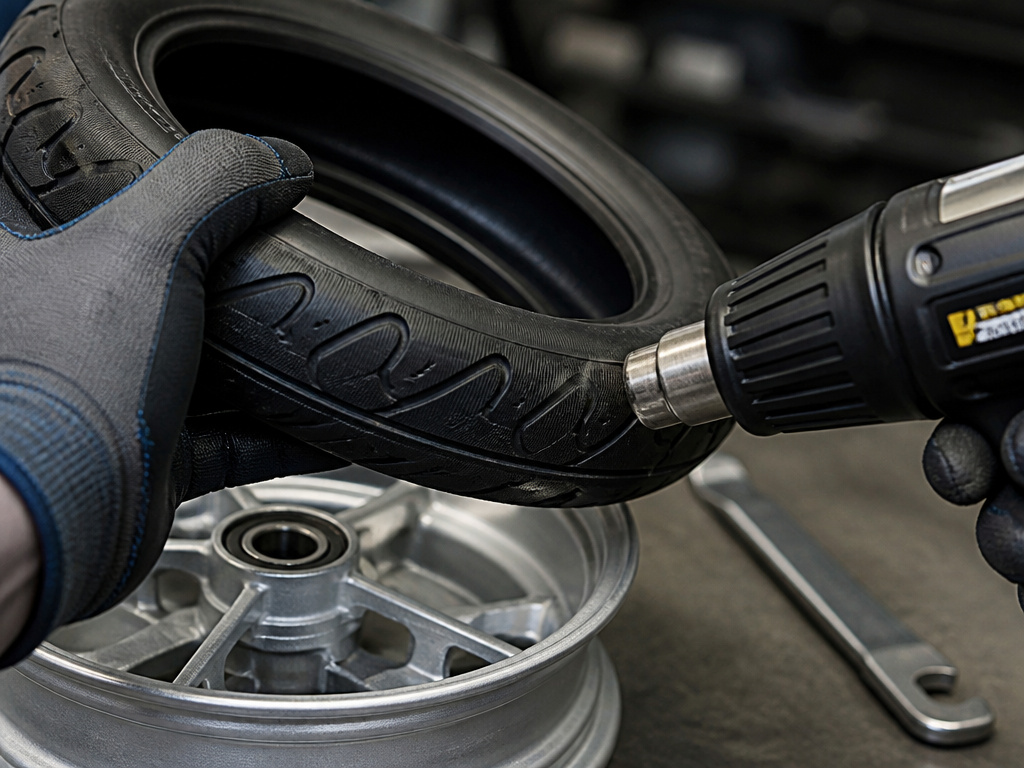
Swapping your pneumatic wheels for solid ones is technically possible. It is rarely easy.
Levy’s official guidance is telling: “We recommend having them installed by an experienced mechanic, as they require the proper tools and heating methods.” This isn’t corporate legalese. The rubber is incredibly stiff. Forcing it onto a cold rim can damage the tire bead or the rim itself. The heating process makes the rubber pliable enough to stretch into place.
The required tools aren’t in a standard bike kit. You need tire levers capable of handling thick rubber, a heat gun or hairdryer, and a way to secure the wheel. If you lack these, the cost of a professional install must be factored into your “low-maintenance” decision. It often negates the savings of avoiding a few flat repairs.
Before you buy, confirm two things: 1. The exact tire size match for your model (e.g., 8.5×2). 2. That your scooter’s rim width is compatible with the solid tire’s profile. A mismatch causes poor handling.
How Your Choice Affects Battery and Range
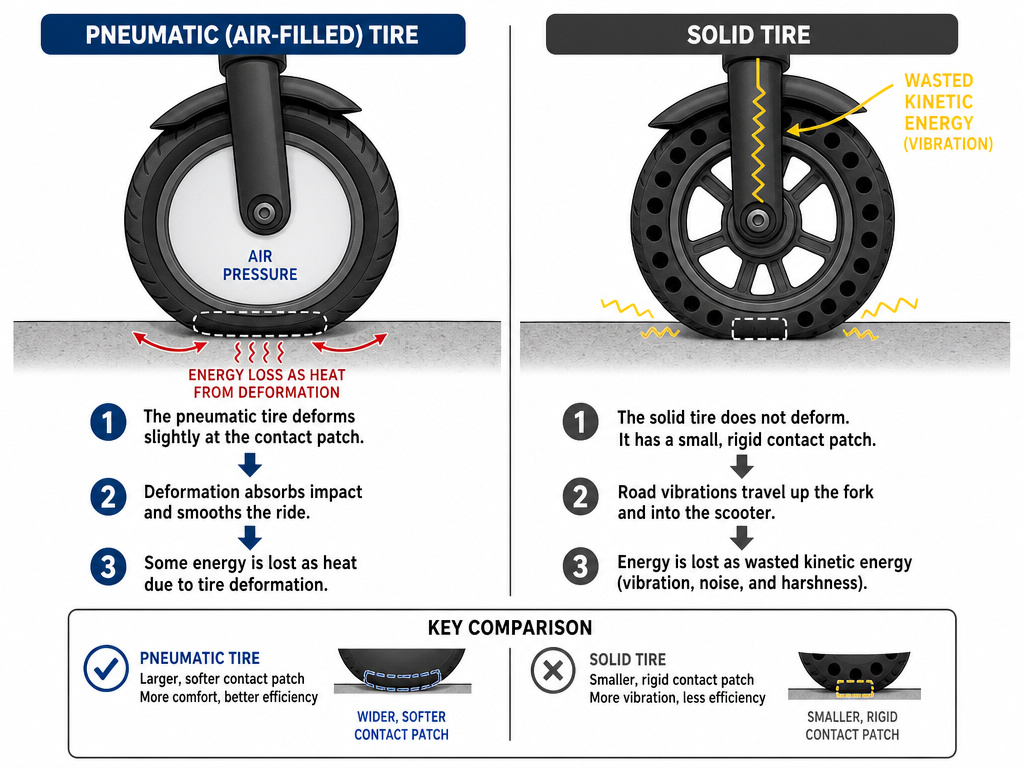
Tires are the scooter’s first point of contact with the road, and rolling resistance is a direct drain on the battery.
Under-inflated pneumatic tires are the biggest range killer. A soft tire creates a larger contact patch, increasing friction. The motor works harder to maintain speed, which can cut your expected range by 10-15% on a single charge. Checking pressure weekly isn’t just for comfort, it’s for efficiency.
Solid tires have consistent, and often higher, rolling resistance. There’s no air to soften the interface, so the rigid rubber deforms less, creating more constant drag. This is why scooters with solid tires sometimes have slightly lower range ratings than their pneumatic counterparts, all else being equal.
The part nobody mentions: Vibration is wasted energy. The harsh buzz from solid tires on rough pavement is kinetic energy that isn’t being used for forward motion. It’s dissipated through the frame and into your hands, which is why longer rides on solid tires feel more tiring.
If you’re considering an electric off-road scooter, this calculus changes. Those models are built with suspension and powerful dual motors to handle the extra drag of knobby tires. For a standard commuter, sticking to the correct pressure in pneumatic tires is the simplest way to protect your battery life.
Scooter Tire Recommendations by Use Case
This is where you stop thinking about tires and start thinking about your life. Match the tire to your actual commute, not your ideal one.
| Your Primary Route | Recommended Tire Type | Named Example Scooter | Why It Wins |
|---|---|---|---|
| Smooth bike paths, short commute | Solid or Honeycomb | Ninebot ES2 | Zero maintenance, no flats. Comfort is adequate on perfect pavement. |
| Mixed urban streets, daily rider | 10-inch Pneumatic (Tubed) | Xiaomi Mi Scooter Pro 2 | Balances comfort, grip, and user-repairable flats. The default for most adults. |
| Rough roads, debris, potholes | Solid (on a model with suspension) | Segway Ninebot Max G30LP (Mod) | Flat-proof security. Suspension mitigates the harsh ride. |
| Off-road trails, gravel | Pneumatic Off-Road Tread | Any dedicated off-road scooter | Deep tread for loose terrain, air cushion for bumps. Solid tires fail here. |
For the urban commuter who values comfort, the default pick is a scooter with 10-inch pneumatic tubed tires. The larger wheel rolls over obstacles more easily, and the tube system lets you fix a flat with a $5 kit. Models like the Xiaomi Pro 2 or the Segway Ninebot Max series set this standard.
If you need maximum stability due to mobility concerns, a three-wheel scooter with solid tires is a safer bet, as the extra wheel compensates for the reduced grip. For adults seeking a more relaxed, seated ride, focusing on scooters with seats for adults is wiser than fixating on tire type alone.
Frequently Asked Questions
Are solid scooter tires safer than pneumatic ones?
Not inherently. Solid tires have less grip, especially when wet, which can increase stopping distance. Their safety comes from eliminating sudden deflation. Pneumatic tires offer better overall traction and control, making them safer for most riding conditions, provided they are properly inflated.
How often should I replace my scooter tires?
Check tread monthly. Pneumatic tires typically need replacement every 1,000 to 2,000 miles. Look for worn tread, cracks, or frequent leaks. Solid tires wear more slowly but can become hard and slick over time; replace them if you see significant flattening of the tread profile or deep cracks.
Can I put air in solid tires?
No. Solid tires are made of dense rubber or foam and have no air chamber. You never need to check their pressure, which is their main maintenance advantage. This also means you cannot adjust their firmness.
Do I need suspension if I have solid tires?
Yes, it is highly recommended. Since solid tires provide no cushioning, a scooter’s suspension system (springs or shocks) becomes the only way to absorb road impacts. Without it, the ride will be extremely harsh and can lead to discomfort and fatigue on anything but perfectly smooth surfaces.
Is it worth upgrading to solid tires to avoid flats?
Only if flats are a frequent, documented problem on your specific routes. The upgrade cost and potential ride quality loss are significant. For most people, carrying a small puncture repair kit and maintaining proper 45-55 PSI in pneumatic tires is a more balanced solution.
How does tire choice affect a scooter’s weight capacity?
The tire itself is rarely the limiting factor. The weight limit for electric scooters is determined by the frame, motor, and brakes. However, under-inflating pneumatic tires to try to soften the ride for a heavier rider will actually reduce safety and hasten tire failure. Always follow the manufacturer’s load rating.
The Bottom Line
Your route chooses your tire. Map it honestly. If it’s littered with hazards that eat tubes, commit to solid tires and invest in a model with good suspension. For the other ninety percent of rides, the comfort, efficiency, and grip of pneumatic tires win every time.
Just remember the 120 PSI rule. If your scooter has tubeless tires and you don’t have a high-pressure air source, you’ve already chosen a more complicated relationship. In that case, the simplicity of solid tires might be worth the trade, or you should seek out a model with old-fashioned, repairable inner tubes. Choose for the roads you have, not the roads you want.
