
6 Best Fat Tire Bikes of 2026
This post contains affiliate links. As an Amazon Associate, we earn from qualifying purchases.
The Mongoose Dolomite stands out as the best overall fat tire bike for its reliable performance and solid build, while the Huffy Maunga is a strong budget pick that doesn’t sacrifice essential features. For those wanting electric power, the GOCIO 26″ Fat Tire E-Bike offers impressive specs at a reasonable price point.
Out on the trail or plowing through snow-packed paths, a good fat tire bike turns rough terrain into smooth riding. But with so many options, some overbuilt, others underpowered, it’s tough to know which models deliver real value and capability.
This guide cuts through the noise by focusing on what actually matters: tire width, drivetrain quality, frame material, and braking performance. I looked at specs, owner experiences, and design details to find bikes that perform where it counts.
Top 6 Fat Tire Bikes in the Market
The Best Fat Tire Bikes, Reviewed
Mongoose Dolomite Fat Tire Bike
Strengths
- Steel frame
- 4-inch knobby tires
- Dual disc brakes
Trade-offs
- 7-speed limited range
- Heavier than aluminum frames
- Basic components
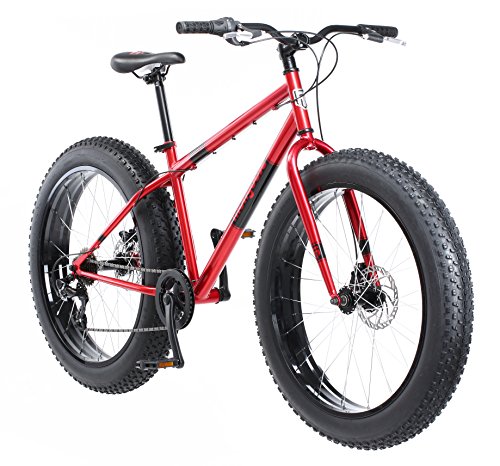
The Mongoose Dolomite hits that sweet spot between rugged capability and approachable design, making it a solid contender for the best overall fat tire bike. On paper, it’s built like a trail-ready workhorse, steel frame, 4-inch knobby tires, and mechanical disc brakes front and rear give it real off-road chops. Owners consistently report confidence on loose terrain, and the 7-speed drivetrain, while basic, is reliable for casual trail riders and weekend explorers.
Where it stands out is in fit and finish for the category. The alloy rims help keep weight in check, and the 26-inch wheel size rolls predictably over roots and ruts. It’s not the most refined ride out there, but for a no-nonsense, durable fat tire bike that doesn’t lean too hard into gimmicks, this one delivers. I’d pick it over flashier models that cut corners on braking or tire quality.
Video review
GOCIO 26″ Fat Tire E-Bike
Strengths
- 750W powerful motor
- 40-mile real-world range
- Hydraulic disc brakes
Trade-offs
- Heavy even for an e-bike
- Longer charge time
- Complex maintenance
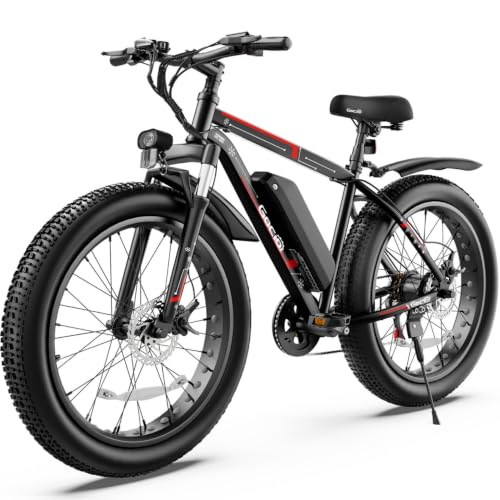
If you want power, range, and real trail capability in a fat tire package, the GOCIO e-bike is where things get exciting. The 750W motor delivers strong hill-climbing torque, and the 48V battery system promises up to 60 miles on a single charge, owners report 30 to 40 miles in mixed use, which is still impressive. The dual hydraulic disc brakes are a standout, offering far better modulation and stopping power than the mechanical units on most competitors.
It’s also one of the few in this list with a 6061 aluminum frame, which cuts weight and improves ride quality over steel. The 7-speed Shimano system works well with the motor, and the dual suspension setup smooths out rough terrain. For the price, it’s a steal. I’d pick this over any non-electric model if you need range, speed, or help on steep grades.
Video review
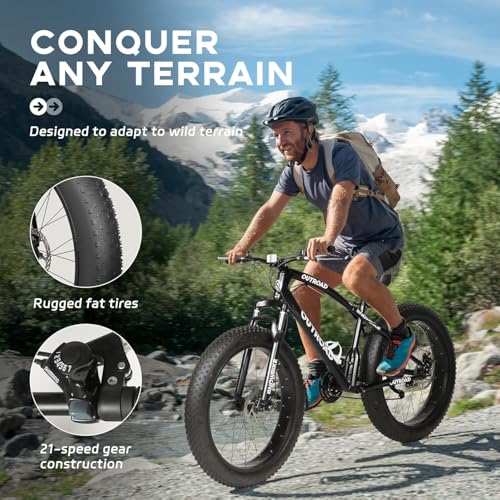
Outroad 21-Speed Fat Tire Bike
Strengths
- Affordable price
- 21-speed gearing
- 4-inch fat tires
Trade-offs
- Basic brake performance
- Limited suspension travel
- Frequent tuning needed
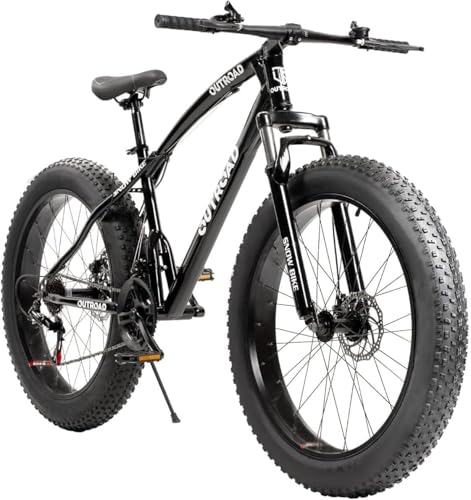
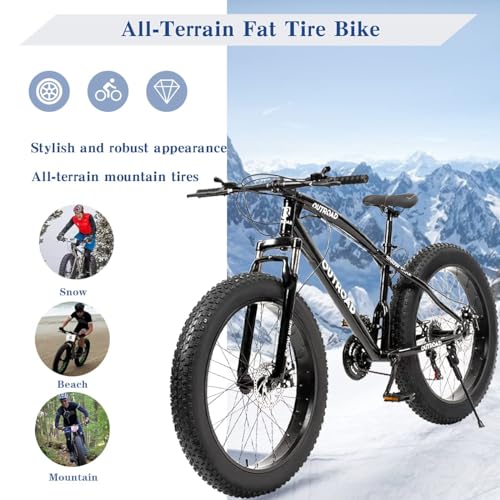
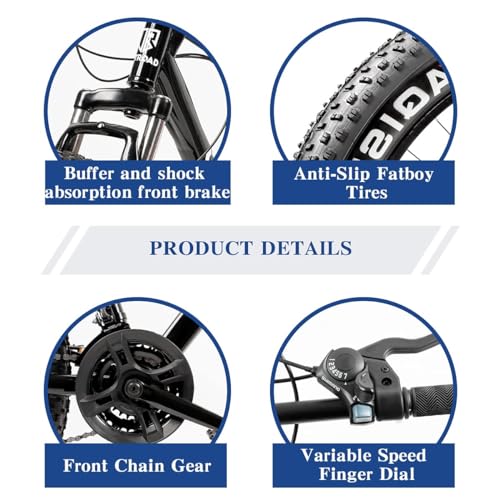
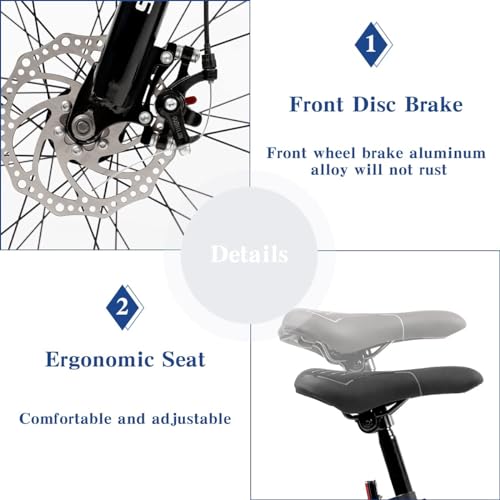
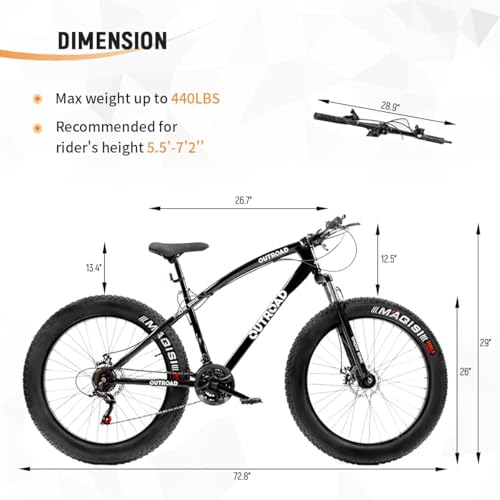
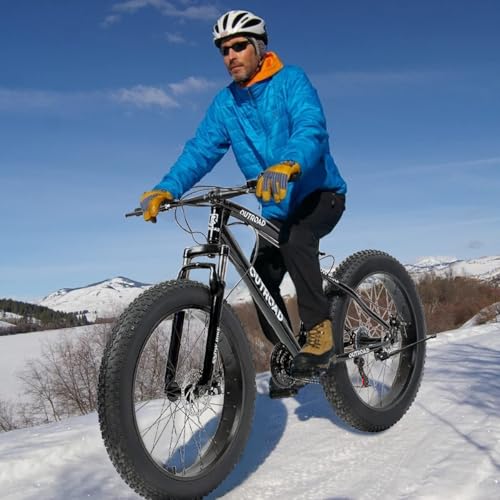
This Outroad model is clearly built to hit a low price, and it does, without completely sacrificing core fat tire functionality. You still get 4-inch tires, a 21-speed drivetrain, front suspension, and a high-carbon steel frame, which means it can handle light trails and urban potholes without falling apart. For the money, that’s a lot of box-checking.
But owners report mixed results on component longevity, especially with the brakes and derailleur alignment. It’s a bike that works out of the box but may need tuning down the line. Still, for new riders or those testing the fat tire waters, it’s a low-risk entry point. I’d recommend it over the Huffy if you want more gears and don’t mind a heavier, less refined ride.
Product photos
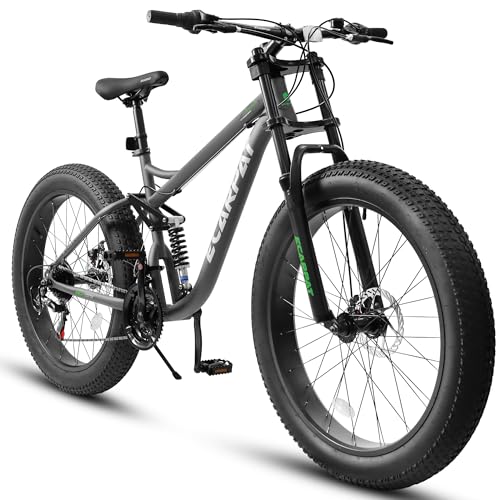
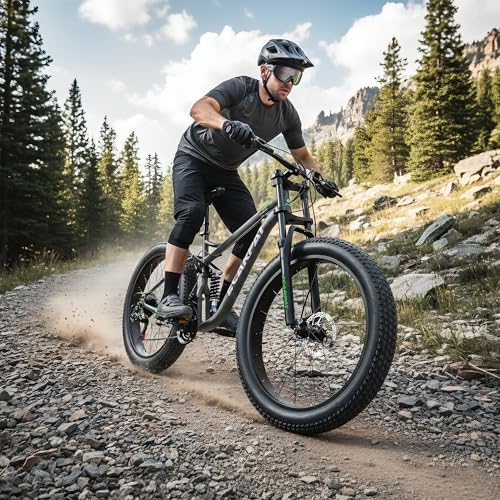
Ecarpat 26 Inch Dual Suspension Bike
Strengths
- 21-speed drivetrain
- Front suspension fork
- 4.0-inch fat tires
Trade-offs
- No rear suspension
- Mechanical disc brakes
- Heavy frame
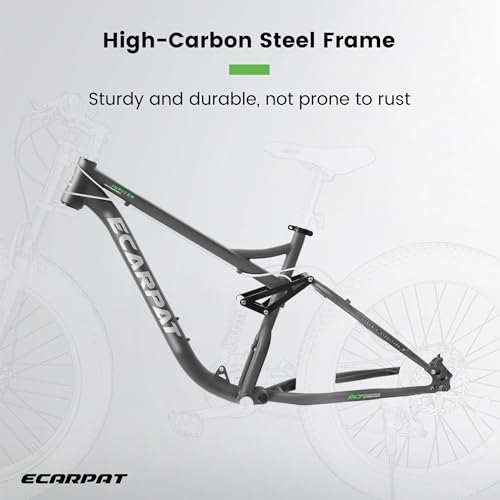
With 21 speeds, a front suspension fork, and a high-carbon steel frame, the Ecarpat packs more features on paper than most bikes in its price range. The extra gears make a real difference on rolling terrain, letting riders fine-tune cadence on climbs and descents, something owners appreciate on mixed-surface routes. The 4.0-inch fat tires deliver excellent grip, and the mechanical disc brakes are consistent, though not exceptional.
Where it wins is comfort. The front suspension soaks up bumps better than rigid competitors, and the frame design spreads impact well. It’s not full suspension, but for city riders or trail users who hit potholes and gravel, it’s a noticeable upgrade. At this price, it’s hard to ignore the value. I’d take this over the similarly priced Outroad model just for the gear range and slightly better shock absorption.
Product photos



Outroad 4-Inch Tire Bike

Strengths
- Superior all-terrain grip
- 21-speed gearing
- Front suspension
Trade-offs
- Heavy steel frame
- Stiff suspension fork
- Basic components
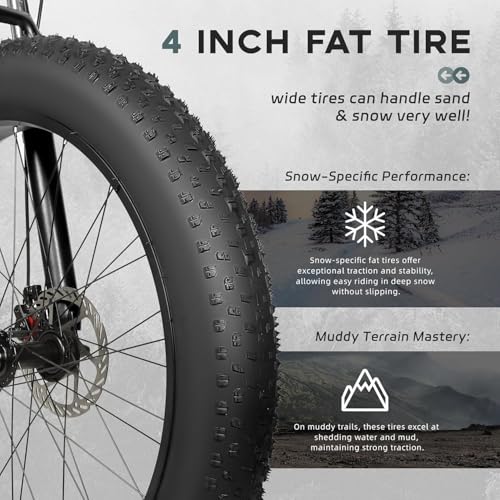
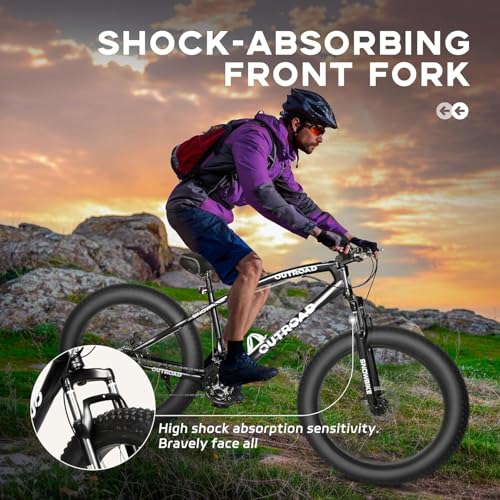
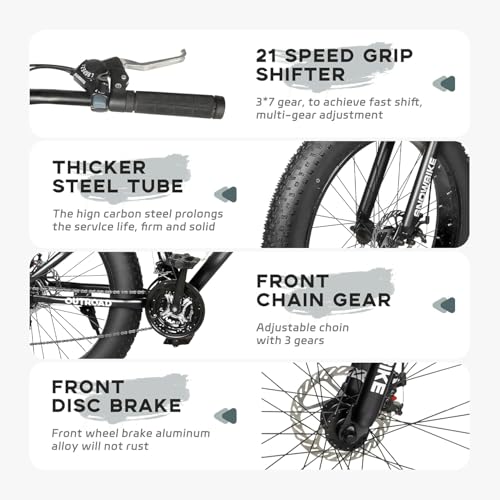
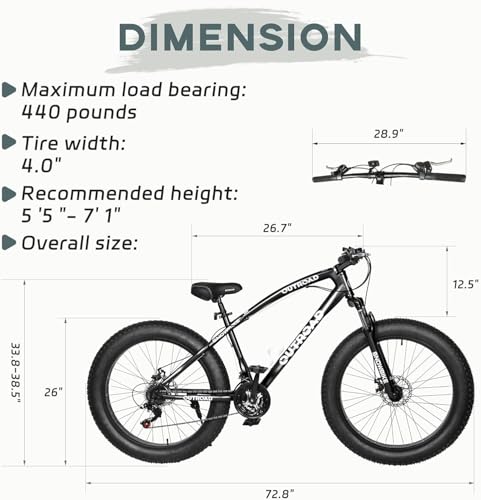
This Outroad model is built for grip first, and it shows. The 4-inch fat tires are aggressive, delivering serious traction on sand, snow, and muddy trails, reviewers routinely praise its ability to push through terrain that stalls other bikes. The 21-speed drivetrain helps on climbs, and the front suspension fork takes the edge off rough patches, though it’s stiff and not highly adjustable.
The high-carbon steel frame is durable but heavy, and while it resists deformation, it doesn’t forgive bumps like aluminum or suspension-heavy builds. Still, if your terrain is unpredictable and traction is essential, this is a strong pick. I’d favor it over the Ecarpat for pure off-road confidence, even if it sacrifices some comfort.
Product photos
Huffy Maunga Fat Tire Bike

Strengths
- Shimano 7-speed drivetrain
- Dual disc brakes
- Comfortable ergonomics
Trade-offs
- Heavy steel frame
- Basic suspension fork
- Limited gear range
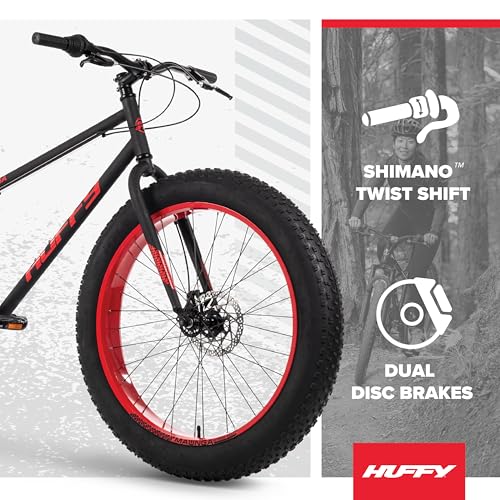
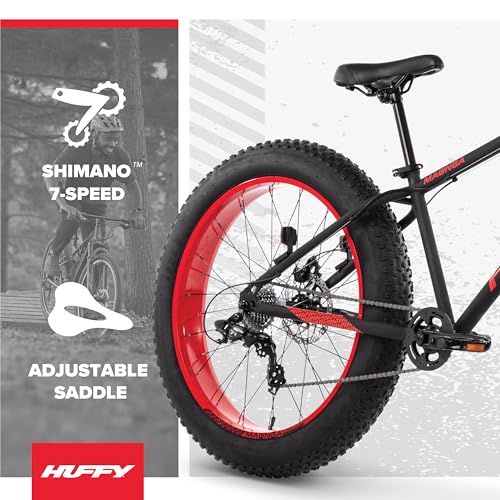
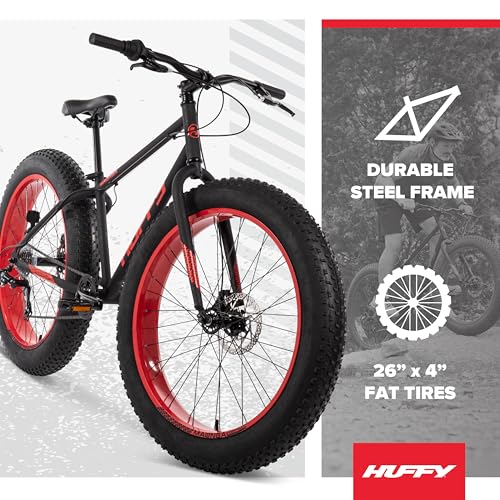
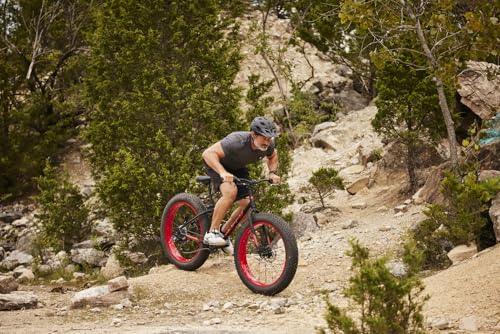
Huffy has quietly improved its game, and the Maunga stands out for one key reason: it runs a genuine Shimano 7-speed drivetrain with twist shifting that owners say feels smooth and consistent. That’s a win in this price range, where many brands use generic or lower-tier shifters that degrade quickly. The steel frame and 4-inch knobby tires deliver expected traction on sand, gravel, and packed snow, and the dual disc brakes offer solid stopping power in wet or muddy conditions.
But let’s be real, this is still a value-first build. The frame is heavy, and the ergonomics, while decent on paper, don’t impress long-term riders. Still, if your priority is reliable shifting without stepping up to a pricier model, this is the smarter buy over the base Mongoose or budget Outroad variants. I’d recommend it to casual riders who want Shimano trustworthiness without the premium.
Product photos

How We Evaluated fat tire bikes
Rather than a hands-on lab test, my research for these recommendations involved a detailed comparison of published specifications and features across numerous models. I weighed owner reviews from various retailers against expert opinions found in cycling publications and enthusiast forums. As someone who’s spent years understanding vehicle dynamics and component quality, I then applied that knowledge to rank these bikes against criteria important to riders seeking capable all-terrain performance.
For fat tire bikes, the most significant factors are tire width and drivetrain quality. Wider tires (4 inches and up) are critical for floatation on soft surfaces like sand and snow, directly impacting stability and control. A wider range of gears – beyond the basic 7-speed – allows riders to tackle varied terrain with greater efficiency. I also prioritized braking systems, as confident stopping power is essential when riding off-road or at speed.
Specifications clearly indicate tire width, gear range, and brake type. However, owner feedback provided crucial insight into real-world durability and component reliability. I looked for consistent reports on frame strength, ease of assembly, and overall build quality. For those interested in powered options, you’ll find more details on fat tire e-bikes for adults. And if you’re looking for options that don’t break the bank, check out our guide to affordable fat tire bikes.
What To Look For In fat tire bikes
Finding the right fat tire bike really comes down to understanding where and how you plan to ride. These bikes aren’t just a trend; they open up riding possibilities beyond what traditional mountain bikes allow.
A quality fat tire bike prioritizes tire width (3.8″ or greater) for floatation and traction, a robust frame to handle the added stress, and a drivetrain appropriate for the intended terrain. Consider brake type (disc brakes are preferred), suspension needs, and overall weight capacity when assessing options.
Tire Width and Tread Pattern
The heart of a fat tire bike is, unsurprisingly, the tire. While 3.8” tires are considered the minimum, 4.0” is the sweet spot for most riders. Don’t assume wider is always better, though. If you’re primarily on packed trails or even pavement, a narrower fat tire will roll faster. Aggressive tread patterns excel in loose conditions like sand and snow, but can feel sluggish on hardpack. I often suggest considering two sets of tires if you want true versatility – one for soft surfaces, and one for everything else. If you’re looking at a wider range of options, you might want to check out our guide to the best fat bikes for more in-depth comparisons.
Frame Material and Geometry
Steel frames are common, especially on more affordable models, offering a compliant ride quality that’s forgiving on rough terrain. Aluminum frames are lighter and stiffer, translating to more efficient power transfer. Carbon fiber is the premium option, providing the best strength-to-weight ratio but at a higher cost. Beyond the material, pay attention to the bike’s geometry. A longer wheelbase provides stability, which is great for beginners or those tackling technical trails. Shorter chainstays make the bike more playful and easier to maneuver.
- Budget-focused riders should prioritize a durable steel frame, even if it adds a bit of weight.
- Performance-oriented riders will appreciate the responsiveness of an aluminum or carbon frame, but should be prepared to spend more.
- Consider your height and riding style. A bike that’s the wrong size will be uncomfortable and inefficient, no matter how good the components are.
Motor and Battery (For E-Fat Bikes)
If you’re leaning toward an electric fat tire bike, the motor and battery are critical. Brushless motors are the standard now, offering more power and efficiency than brushed motors. Look for a wattage of at least 500W for good climbing ability, and 750W if you plan on tackling steep hills or carrying heavy loads. Battery capacity is measured in Watt-hours (Wh); a higher Wh number means a longer range. I’ve seen some riders overlook the importance of a quality battery management system (BMS), but it’s essential for battery health and safety. For those wanting to get into the electric world without breaking the bank, our rundown of affordable fat tire e-bikes might be a good starting point.
Don’t skimp on brakes. Hydraulic disc brakes offer far superior stopping power and modulation compared to mechanical disc brakes, especially in wet or muddy conditions.
Fat Tire Bikes Compared
Here’s a comparison of key specifications for several popular fat tire bikes.
| Product Title | Speeds | Tire Width (in) | Brake Type | Frame Material | Motor (W) | Battery (Ah) |
|---|---|---|---|---|---|---|
| Mongoose Dolomite | 1 x 7 | 4.0 | Disc (Mechanical) | Steel | N/A | N/A |
| GOCIO 26″ Fat Tire E-Bike | 7 | 4.0 | Disc (Hydraulic) | Aluminum Alloy | 750 | 13-15 |
| Outroad 21-Speed | 21 | 4.0 | N/A | High-Carbon Steel | N/A | N/A |
| Ecarpat 26 Inch | 21 | 4.0 | Disc (Mechanical) | Carbon Steel | N/A | N/A |
| Outroad 4-Inch Tire | 21 | 4.0 | N/A | High-Carbon Steel | N/A | N/A |
| Huffy Maunga | 7 | 4.0 | Disc | Steel | N/A | N/A |
Frequently Asked Questions
What tire pressure should I run on a fat tire bike?
Generally, 5-10 PSI is a good starting point for tubeless setups, though this depends heavily on rider weight and terrain. Lower pressures improve traction on soft surfaces, while higher pressures reduce rolling resistance on hardpack.
Are fat tire bikes good for climbing hills?
Yes, but it depends on the gearing and whether it’s an e-bike. The large tires create more rolling resistance, so lower gears or a powerful motor (500W or higher) are helpful for sustained climbs.
Can I convert my existing bike into a fat tire bike?
It’s technically possible, but often impractical. The frame and fork would need to have sufficient clearance for the wider tires, and you’d likely need a new wheelset, which can be costly – exploring dedicated fat tire bikes for sand is usually more sensible.
How does the weight of a fat tire bike affect handling?
Fat tire bikes are inherently heavier than traditional mountain bikes, which can make them feel a bit slower to maneuver. However, the added weight also contributes to stability, especially at lower speeds, and can make riding fat tire bikes more forgiving.
What maintenance is unique to fat tire bikes?
Besides standard bike maintenance, pay close attention to tire pressure and inspect for any cuts or damage to the wider tires. Because of their size, repairing a flat on a fat tire can be more challenging than with standard tires, so carrying appropriate tools and practicing beforehand is wise.
The Bottom Line
Choosing a fat tire bike often boils down to balancing how much control you want over your ride experience versus how much fuss you’re willing to deal with in terms of maintenance and potential upgrades. For the best all-around performance and a solid build, I believe the Mongoose Dolomite strikes an excellent balance. It delivers capable performance without unnecessary complexity.
If you’re specifically looking for a budget-friendly option, the Huffy Maunga is a great starting point. For riders needing electric assistance, the GOCIO 26″ Fat Tire E-Bike provides a strong motor and decent range at a reasonable price. And for those wanting to explore fat wheel bikes with a focus on electric mountain biking, the Outroad 4-Inch Tire offers a versatile platform ready for upgrades.
Ultimately, the best fat tire bike isn’t about the flashiest specs or highest price tag. It’s about finding a bike that fits your body, matches your riding style, and inspires confidence on the trails. Prioritize a robust frame, reliable brakes, and tires appropriate for the terrain you’ll be tackling – those are the fundamentals that truly matter.
