
Best Electric SUV Cars – Our Top Picks for Exceeding Range
This post contains affiliate links. As an Amazon Associate, we earn from qualifying purchases.
The best electric SUV electric cars for 2026 balance verified real-world range, proven reliability from owner surveys, and features that fit daily life. Top picks include the Tesla Model Y for its charging network and efficiency, the Ford Mustang Mach-E for its driving dynamics, and the Hyundai IONIQ 5 for its rapid charging and warranty coverage, though a recent technical service bulletin for certain 2025 models highlights the importance of checking your VIN.
That gap between the advertised number and the distance you actually get is where the whole EV buying decision lives. A spec sheet promises 300 miles; a cold morning with the heater on delivers 240. The difference isn’t a lie. It’s physics, battery chemistry, and how the EPA test cycle works.
The rest walks the choice between compact, midsize, and luxury electric SUVs — with the real-world data, common failure modes, and warranty fine print that actually frame the purchase. By the last section you’ll be able to read any model’s review in ten seconds and know whether it fits the miles you drive and the weather you face.
Key Takeaways
- Real-world highway range at 70 mph can be 10-15% lower than the EPA estimate; Consumer Reports testing found some models fall short by up to 50 miles.
- Battery warranties are critical: GM’s propulsion battery warranty, for example, covers 8 years/100,000 miles and replacement if capacity falls below 75% of original.
- Cold weather reduces range primarily by increasing the energy demand to heat the cabin and keep the battery pack in its optimal temperature window.
- Always check for open technical service bulletins (TSBs) before purchase; a February 2026 NHTSA bulletin for certain Hyundai IONIQ 5 models addresses a high-voltage battery charging issue requiring potential assembly replacement.
- For most households, the Tesla Model Y remains the default recommendation due to its extensive Supercharger network, high efficiency, and consistently strong owner satisfaction scores.
How Do You Compare Real-World EV Range to EPA Estimates?
The Environmental Protection Agency’s (EPA) range figure is a laboratory composite of city and highway driving cycles. It’s a standardized benchmark, not a prediction for your specific highway commute. At a steady 70 mph, aerodynamic drag increases exponentially, consuming more energy. The cabin climate system—especially resistive heating in winter—draws significant power directly from the propulsion battery.
Common mistake: Assuming the EPA range is a highway figure. It’s a blended average. On a 70-mph highway trip in moderate weather, expect roughly 90% of the EPA number. In freezing temperatures with the heat on, that can drop to 70-80%.
Consumer Reports’ real-world 70-mph highway testing provides a crucial corrective. Their data shows which models meet or exceed their EPA ratings and which fall meaningfully short. This testing accounts for the constant energy draw of high-speed travel that the EPA cycle underweights.
The takeaway is to subtract a buffer. If your regular trip is 200 miles roundtrip with no charging, a 250-mile EPA-rated SUV is the absolute minimum you should consider. Aim for 280 to 300 miles of EPA range to build in a margin for weather, speed, and battery degradation over time.
What Separates a Good Electric SUV Battery Warranty from a Marketing Promise?
A battery warranty is a contract, not a goodwill gesture. The strong ones have three components: a long duration (8+ years), a high mileage cap (100,000+ miles), and a defined capacity retention threshold. Weak warranties are vague, short, or lack a clear performance standard.
The GM Electric Vehicle Propulsion Battery Warranty is a clear example. It covers the battery for 8 years or 100,000 miles and obligates Chevrolet to repair or replace it if its capacity falls below 75% of the original value. That number matters. It gives you a measurable claim if the pack degrades excessively.
| Warranty Aspect | Strong Example | Weak Example |
|---|---|---|
| Duration | 8 years / 100,000 miles | 5 years / 60,000 miles |
| Capacity Threshold | Replaced if below 75% of original | Vague language about “excessive degradation” |
| Transferability | Fully transferable to subsequent owners | Voids upon sale |
| Component Coverage | Covers entire Battery System Assembly (BSA) | Excludes individual cell modules |
Hyundai’s 10-year/100,000-mile battery warranty is also competitive, but it’s essential to check for active service campaigns. A February 2026 NHTSA Technical Service Bulletin (TSB 26-EV-002H) outlines a condition in some 2025 IONIQ 5 vehicles where a voltage difference between cells can prevent full charging, potentially requiring a BSA replacement. This doesn’t make it a bad vehicle, but it underscores the importance of a robust warranty and proactive dealer service.
Worth knowing before you start: Battery warranty coverage is almost always separate from the vehicle’s bumper-to-bumper warranty. Damage from external causes like flooding, physical impact, or improper charging equipment is typically excluded, as noted in the GM warranty’s fine print.
The Top Electric SUV Contenders for 2026
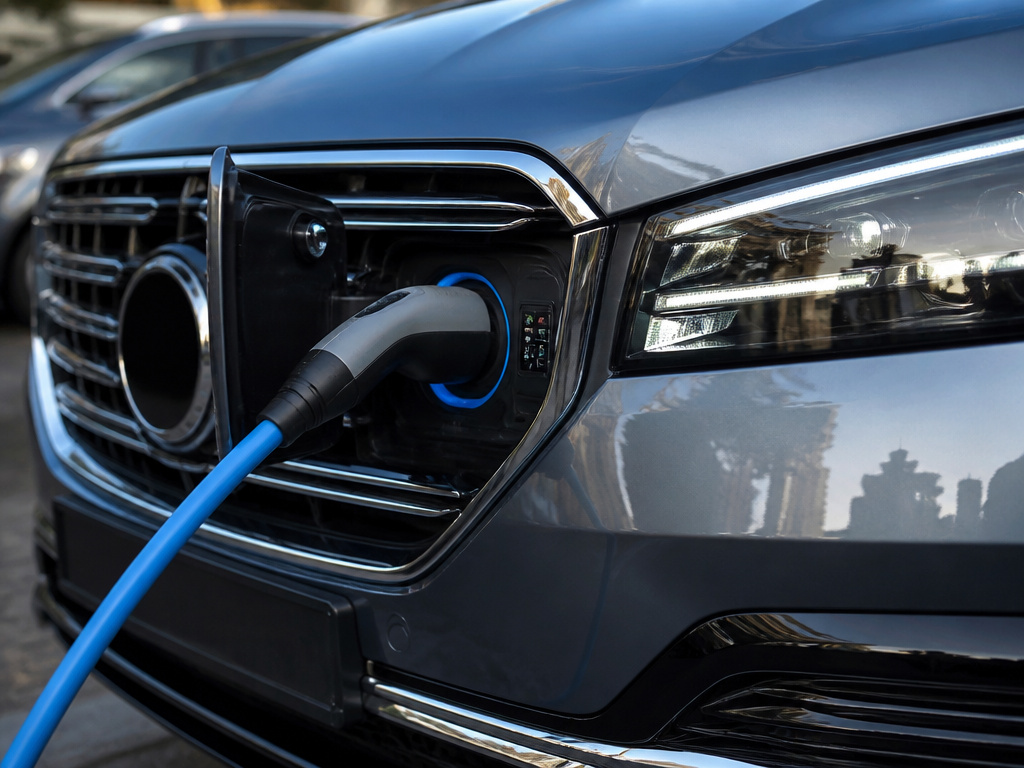 This isn’t about listing every model. It’s about matching the right vehicle to the right driver based on verified performance, owner-reported reliability, and daily usability. The electric SUV market is crowded, but a few models consistently rise to the top in critical categories.
The Default Choice: Tesla Model Y
The Tesla Model Y wins on infrastructure and efficiency. Its real-world range is often close to its EPA estimate thanks to a highly aerodynamic shape and a thermally managed heat-pump climate system that reduces winter range loss. The nationwide Supercharger network remains its killer feature for long-distance travel.
The cabin is minimalist to a fault, and ride quality can be firm. Owner satisfaction scores, however, are consistently among the highest for any electric vehicle. For a household buying its first EV, the charging convenience and straightforward ownership experience are hard to beat.
The Driver’s Choice: Ford Mustang Mach-E
The Ford Mustang Mach-E prioritizes engagement. Its steering weight, chassis balance, and acceleration deliver a more traditional, connected driving feel compared to the isolated efficiency of the Tesla. Recent updates have improved its charging speed and refined the interior materials.
Its real-world range in GT performance trim can dip further below its EPA rating. The BlueCruise hands-free highway assist system is a strong offering, but it requires a subscription after an initial period. This is the pick for someone who still enjoys the act of driving but wants an electric powertrain.
The Value & Tech Play: Hyundai IONIQ 5
The Hyundai IONIQ 5 offers exceptional value through its combination of ultra-fast 800V charging capability, a generous standard warranty, and distinctive, spacious interior design. On a capable 350kW charger, it can add miles faster than nearly any competitor.
Where this goes sideways: The 12V auxiliary battery. A separate NHTSA vehicle defect bulletin (Campaign LA25) addresses drainage issues in certain 2025-2026 models related to the scheduled climate feature, requiring a VCU software update. It’s a fixable quirk, but it highlights the complexity of these vehicles’ low-voltage systems.
Its ride is comfortable, though handling is less sharp than the Mach-E. For buyers with regular access to fast public chargers, the IONIQ 5’s combination of tech, space, and charge speed is compelling. It’s also one of the better EVs for winter due to a standard heat pump and available all-wheel drive.
What Are the Hidden Ownership Costs Beyond the Sticker Price?
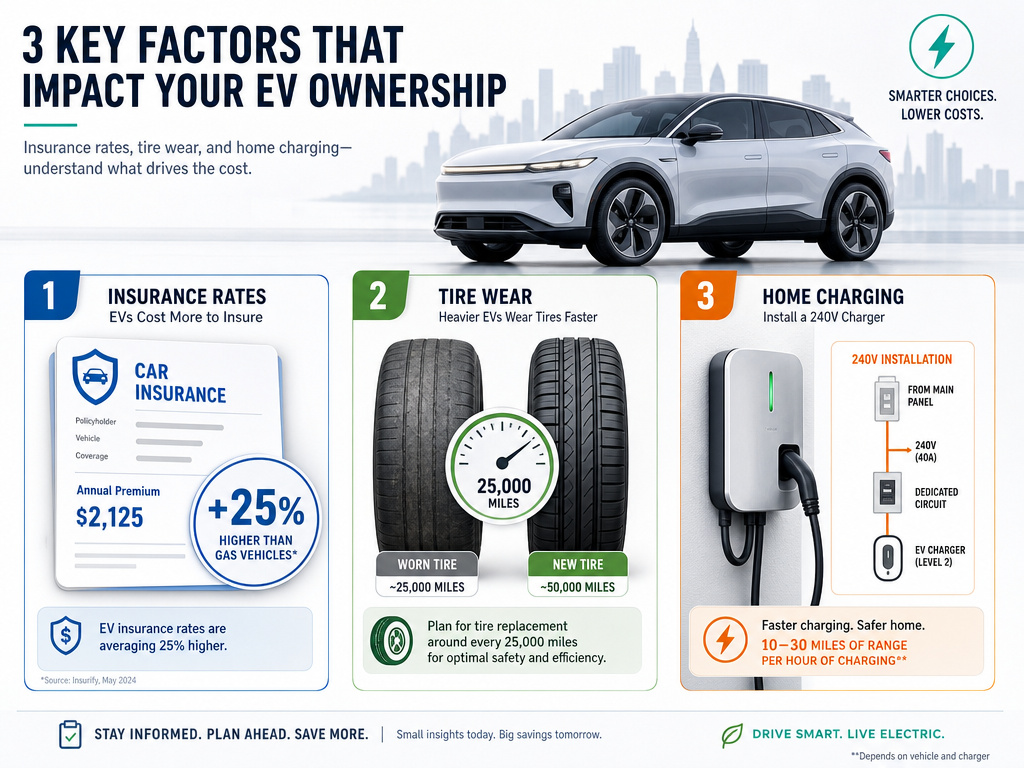 The fuel savings are real, but they aren’t the whole financial picture. Three costs often surprise new EV owners: insurance, tire replacement, and home charging installation.
Insurance: Premiums for electric cars are typically 15-30% higher than for comparable gas models. The reason is simple: repair costs. High-voltage components, specialized aluminum bodywork, and expensive sensor arrays make minor collisions more costly to fix.
Tires: Electric SUVs are heavy and generate instant torque. This combination eats tires. Expect to replace the original set every 20,000 to 30,000 miles, sometimes sooner. All-season tires are standard, but investing in a dedicated set of winter electric cars can preserve your all-seasons and improve cold-weather safety.
Charging Setup: A Level 2 home charger (240V) is a near-necessity. The unit itself costs between $500 and $700. Professional installation, which may require a panel upgrade and running conduit, can add another $1,000 to $2,500. This upfront investment is critical for daily convenience.
| Ownership Cost | Typical Range | Why It’s Higher |
|---|---|---|
| Insurance Premium | +15% to +30% annually | High repair costs for batteries, sensors, and specialized body panels |
| Tire Replacement | Every 20K-30K miles | Vehicle weight and instant torque cause accelerated wear |
| Home Charger Install | $1,500 – $3,200 total | Cost of 240V charger unit plus potential electrical panel upgrade and labor |
The math still favors electricity over gasoline for most drivers, but the savings take longer to materialize than a simple “cents per mile” calculation suggests. Factor these in from the start.
How Does Cold Weather Actually Reduce Electric Car Range?
The range drop in freezing temperatures is a two-part problem: cabin heating and battery chemistry.
First, heating the cabin. Gas cars waste about 60% of their energy as heat, so warming the interior is essentially free. An EV must create heat intentionally, using energy from the battery. Resistive heating (like a space heater) is very inefficient. Most modern EVs, like the Tesla Model Y and Hyundai IONIQ 5, use a heat pump, which moves existing heat from the outside air into the cabin, using far less energy. It’s more efficient, but it still draws significant power.
Second, the battery itself. Lithium-ion batteries operate most efficiently between 20°C and 25°C (68°F to 77°F). In the cold, chemical reactions within the cells slow down, increasing internal resistance and reducing the amount of available power and capacity. The car’s thermal management system will actively warm the battery pack to improve performance, which consumes even more energy.
The combined effect is substantial. It’s not unusual to see a 30-40% total range reduction on a very cold day with the heat on full blast. Preconditioning the cabin and battery while the car is still plugged in is the single best mitigation strategy. It uses grid power, not battery power, to get everything up to temperature before you unplug.
The Bottom Line
Choosing the best electric SUV means matching the vehicle’s verified capabilities to your specific life, not its marketing claims to your aspirations. Ignore the peak range number and look for real-world highway test results. Read the battery warranty’s capacity clause, not just its duration. Budget for tires and a home charger, not just the monthly loan payment.
For the majority of buyers seeking a seamless, efficient daily driver with unmatched travel flexibility, the Tesla Model Y is the rational default. If driving enjoyment tops your list, the Ford Mustang Mach-E delivers. For cutting-edge charging tech and spacious interior design, the Hyundai IONIQ 5 stands out, provided you verify any open service bulletins.
The electric vehicle landscape is evolving fast, with new models and improved batteries arriving constantly. The fundamentals of range, reliability, and cost of ownership, however, remain the bedrock of a good decision. Focus on those, and you’ll find an SUV that works for years, not just on paper.
Frequently Asked Questions
What is the most reliable electric SUV?
Reliability data from annual owner surveys, like those from Consumer Reports, consistently show the Tesla Model Y and the Ford Mustang Mach-E scoring above average for the electric vehicle segment. Reliability can vary by model year, so checking the latest survey data for the specific year you’re considering is crucial.
How long do electric SUV batteries last?
Most manufacturers warranty the high-voltage battery for 8 to 10 years or 100,000 miles, with a capacity retention guarantee (often 70-75%). Real-world data suggests well-cared-for batteries can retain 80-90% of their capacity after 200,000 miles. Factors like frequent DC fast charging and constant exposure to extreme heat accelerate degradation.
Are electric SUVs good for long road trips?
Yes, but with planning. Modern electric SUVs with 300+ miles of range can comfortably handle 3-4 hours of highway driving between stops. The key is the charging network. Tesla’s Supercharger network is the most seamless. For non-Tesla vehicles, using apps like PlugShare to plan routes around reliable, high-speed CCS chargers is essential to avoid delays.
What is the cheapest electric SUV to maintain?
Electric SUVs generally have lower maintenance costs than gas counterparts—no oil changes, spark plugs, or transmission fluid. The Tesla Model Y often ranks as one of the cheapest to maintain due to its simple drivetrain and over-the-air updates that can address issues without a service visit. Tire replacement will be your most frequent maintenance cost.
Can you tow with an electric SUV?
Many electric SUVs, like the Ford Mustang Mach-E, Tesla Model Y, and Rivian R1S, have respectable tow ratings (2,000 to 7,700 lbs). However, towing a heavy trailer will drastically reduce your range, often by 40-50%. You must plan your route around high-power charging stations capable of supporting a vehicle with a trailer, as stall access can be tricky.
