
7 Best Electric Scooters with Removable Battery 2026
This post contains affiliate links. As an Amazon Associate, we earn from qualifying purchases.
The Segway Ninebot MAX G2 stands out as the best overall electric scooter with a removable battery, combining strong 1000W power, a long 43-mile range, and solid build quality. For budget-focused riders, the Hiboy S2 offers reliable basics with its 350W motor and puncture-proof solid tires, while the NAVEE GT3 strikes a smart balance between performance, comfort, and portability at a mid-range price.
Choosing an e-scooter isn’t just about speed or looks, it’s about finding something that fits your daily routine, terrain, and storage needs. Too many riders end up frustrated by short battery life, heavy frames, or bone-jarring rides on rough pavement.
This guide cuts through the noise by focusing on real-world usability, prioritizing models with truly removable batteries for convenient charging and backup options. I researched each scooter based on motor strength, verified range, ride comfort, and what actual owners report after months of use, so you can make a confident choice without overpaying for hype.
Top 7 Electric Scooters With Removable Battery in the Market
The Best Electric Scooters With Removable Battery, Reviewed
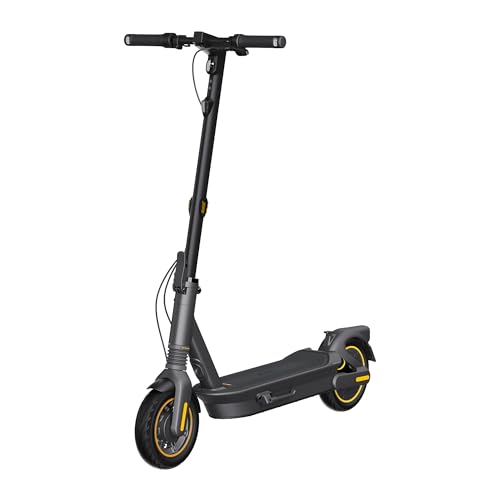
Segway Ninebot MAX G2
Strengths
- 43-mile range
- Hydraulic suspension
- Apple Find My
Trade-offs
- Heavy at 65 lbs
- Expensive
- Longer charge time
The Segway Ninebot MAX G2 is the benchmark for what a premium urban e-scooter should be, and it justifies its position with a 43-mile range, 22 mph top speed, and front hydraulic suspension. The 1000W motor delivers strong acceleration, and the RideyLONG tech actually makes a difference in real-world efficiency, with owners regularly reporting 35+ miles in mixed use. The dual suspension system is a standout on potholed streets, and the TCS traction control adds real confidence in wet conditions.
It’s also one of the few with Apple Find My integration, a feature I consider essential for theft-prone urban areas. Compared to the iScooter, it’s slightly slower but more refined, with better braking balance and a more predictable ride. The 65-pound weight is hefty, but the 3-step fold is still manageable. If you want one scooter to handle everything, commuting, weekend trips, all weather, this is the one I’d trust most. It’s not the cheapest, but it’s the most complete package.
Video review
iScooter 1000W Motor Scooter

Strengths
- 28 mph top speed
- Off-road tires
- 40-mile range
Trade-offs
- Very heavy
- No Apple Find My
- Bulky fold
The iScooter lives for adventure. With a 1000W motor, 28 mph top speed, and 40-mile range, it’s built for riders who want moped-level performance without the license. The 11-inch off-road tires and dual front shocks make it one of the few scooters here that can genuinely handle gravel, grass, or uneven trails. Owners praise its aggressive grip and stable handling at high speeds, and the dual disc brakes inspire confidence when descending.
But that power comes with compromises. The 68-pound weight makes it one of the heaviest, and the folding mechanism isn’t as clean as the Segway or NAVEE. It also lacks Apple Find My, which feels like a miss at this price. Still, if you’re comparing it to the NAVEE GT3, this one wins on raw speed and off-road readiness. I’d pick it over the Segway G2 if I were regularly riding beyond paved paths. Just don’t expect nimble city maneuvering.
Video review
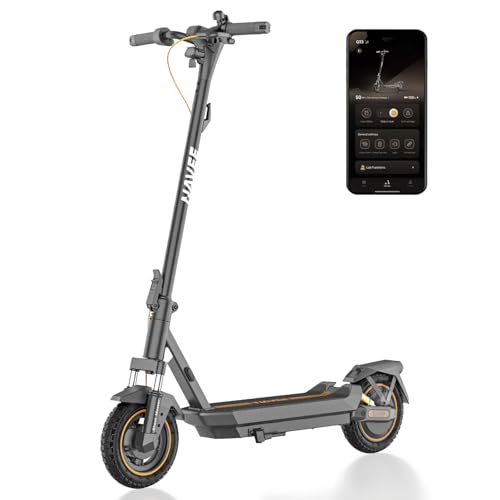
NAVEE GT3 Electric Scooter
Strengths
- All-terrain tires
- Quadruple suspension
- Traction control
Trade-offs
- 31-mile range
- 46 lbs heavy
- No regen braking
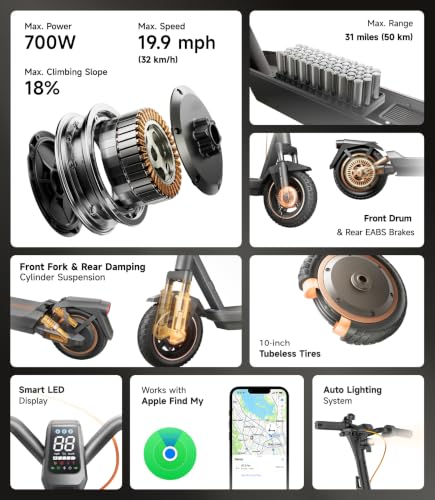
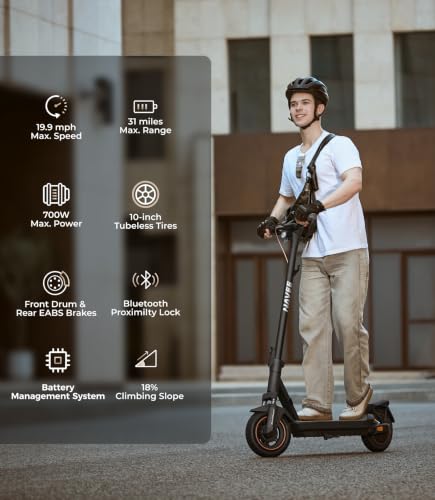
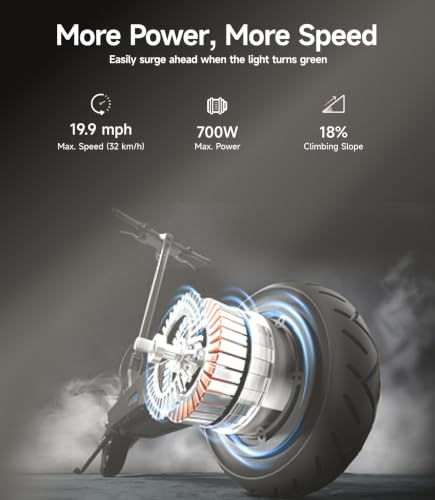
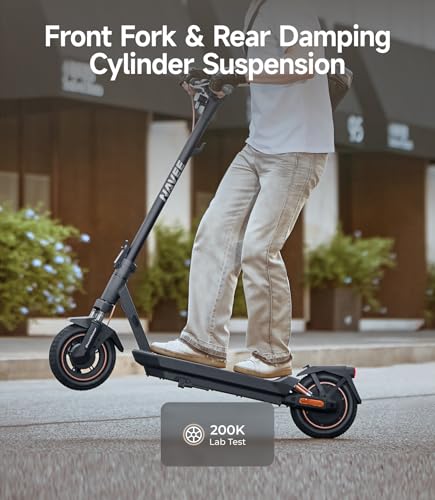
The NAVEE GT3 is the all-terrain workhorse of this lineup, blending rugged build quality with serious off-pavement capability. The 700W motor and 20% hill climb rating mean it won’t bog down on steep inclines, and the 10-inch tubeless fat tires provide excellent grip and puncture resistance. The quadruple suspension system, dual damping arms plus front and rear shocks, delivers a remarkably smooth ride, even on cracked sidewalks or dirt paths. Owners consistently praise its stability and confidence in wet conditions, thanks to TCS and IPX5 rating.
It’s not the fastest or longest-ranged, but at 31 miles and 19 mph, it’s more than capable. Compared to the iScooter, it trades top speed for better handling and a tighter fold. The NAVEE app and Apple Find My integration add smart convenience, and the 3.6-inch display is one of the clearest in class. For riders who face mixed terrain daily, this is the most balanced pick. I’d take it over the Segway G2 for rougher environments, even if the range is shorter.
Product photos

VOLPAM Electric Scooter
Strengths
- Flat-free solid tires
- Low price
- Smart app included
Trade-offs
- No suspension
- Shortest range
- Basic ride quality
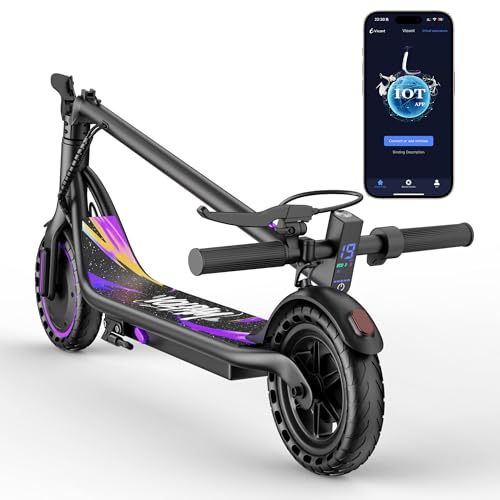
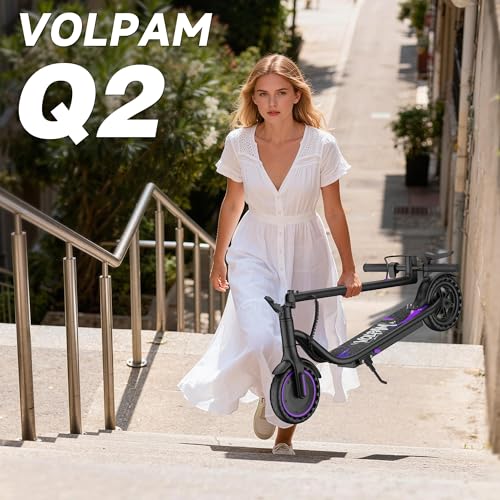
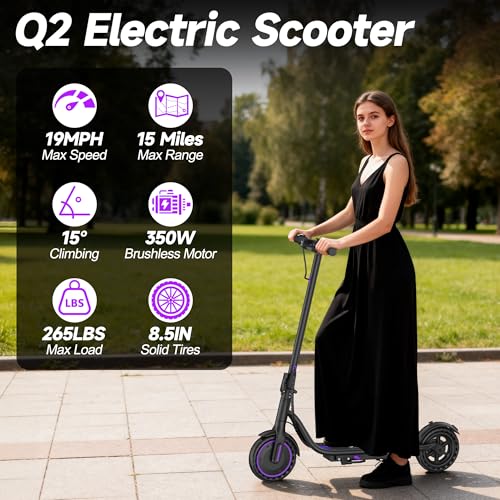
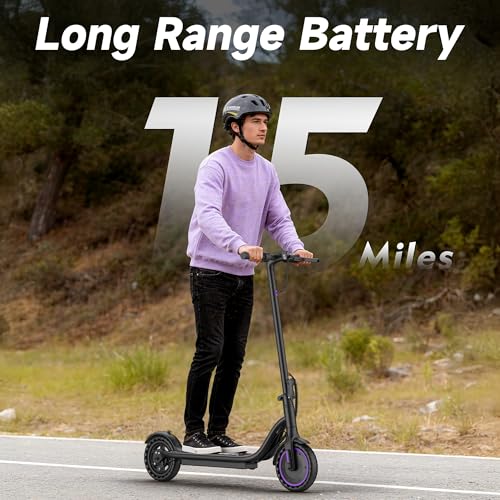
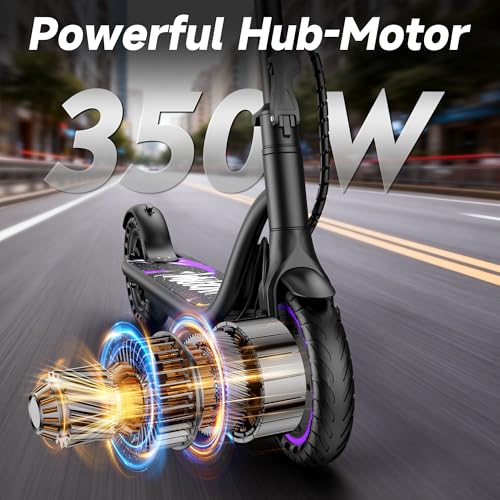
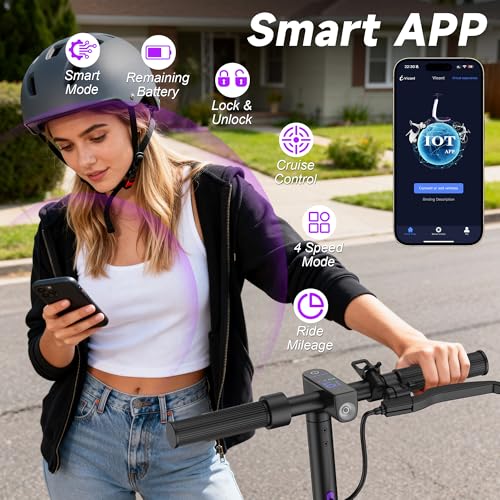
At this price, the VOLPAM delivers surprising value, especially for first-time riders or teens needing a no-frills commuter. The 350W motor and 15-mile range won’t win races, but it’s adequate for short commutes or campus rides. The standout feature is the solid rubber tires: no flats, no inflation, and minimal maintenance, which owners love for hassle-free use. The app is basic but functional, offering ride modes, cruise control, and remote locking, which is impressive at this tier.
That said, the trade-offs are clear. The range is the shortest here, and the lack of suspension means every bump is felt, this isn’t a scooter for rough sidewalks. Compared to the Hiboy S2, it’s similarly priced but less refined in braking and build. Still, for someone on a tight budget who just needs to get from A to B without worrying about tire upkeep, this is the smarter buy. I wouldn’t recommend it for daily urban pounding, but as a starter or backup scooter, it holds its ground.
Product photos
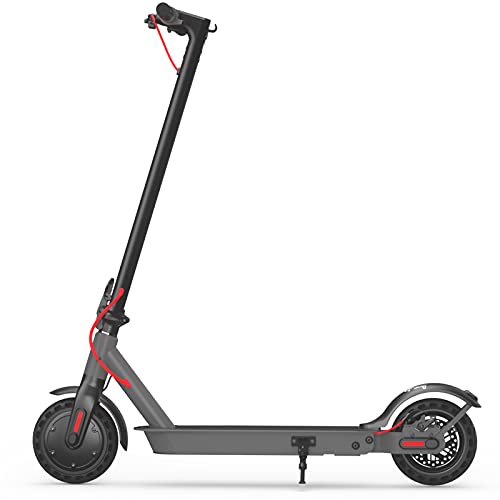
Hiboy S2 Solid Tires
Strengths
- Lightweight at 28 lbs
- Solid tires
- Triple lighting
Trade-offs
- No suspension
- Short range
- Basic app
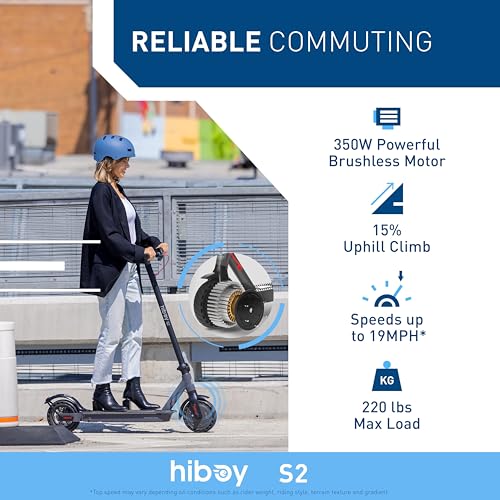
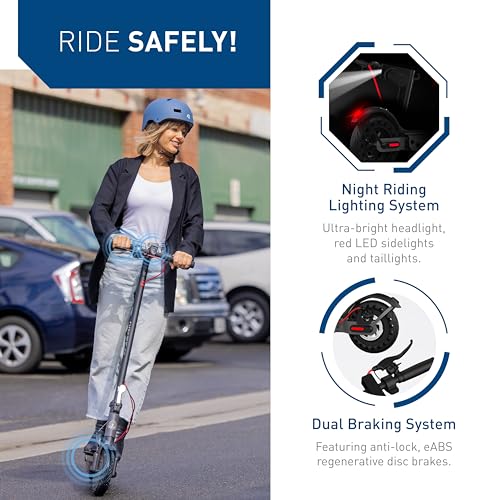
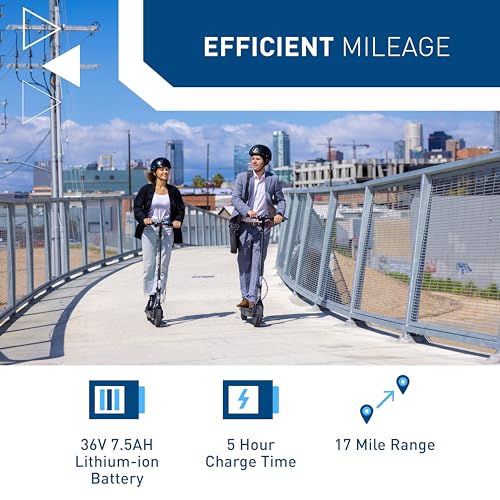
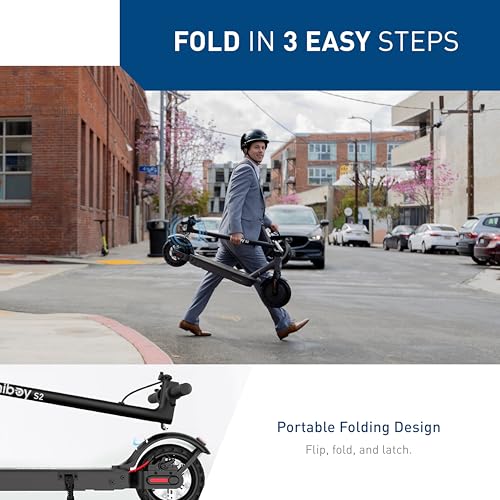
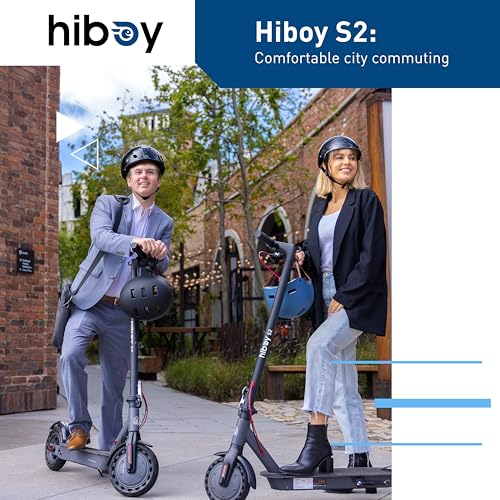
The Hiboy S2 is the definition of a no-nonsense commuter, lightweight, simple, and reliable. At 28 pounds and with a quick fold, it’s one of the easiest to carry onto buses or stash under a desk. The 350W motor and 17-mile range are adequate for short urban trips, and the solid tires mean zero flat worries. The triple-light setup and eABS braking system add real safety value, especially for night riders.
But it’s showing its age. The lack of suspension makes for a jarring ride on anything but smooth pavement, and the app is basic compared to NIU or Segway. Against the VOLPAM, it’s similarly priced but feels sturdier, though the range is nearly identical. I’d still recommend it for light-duty use, especially with the optional seat, but it’s not a long-term solution for rough commutes. For most buyers, the Segway or NAVEE are better investments if budget allows.
Product photos
Gyroor C1S with Seat
Strengths
- Comfortable seat
- Pet-friendly basket
- 12-inch tires
Trade-offs
- Bulky folded size
- No regen braking
- Slower acceleration
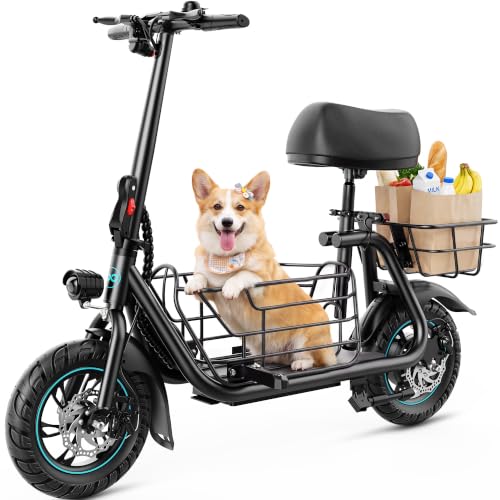
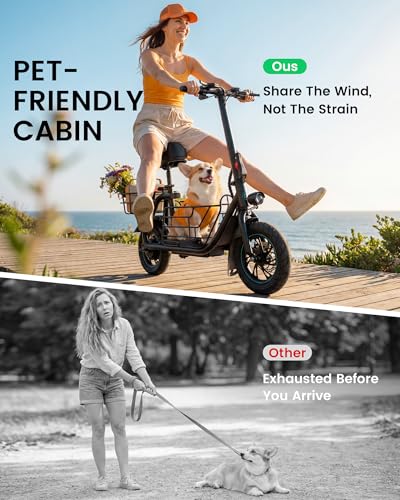
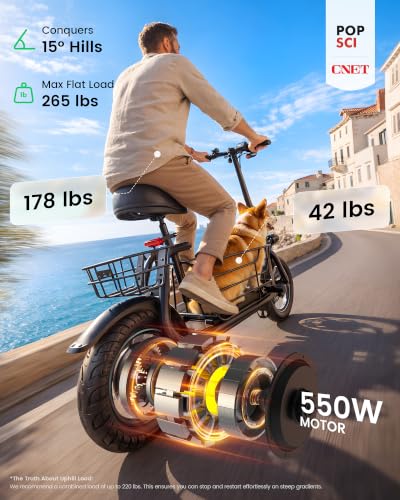
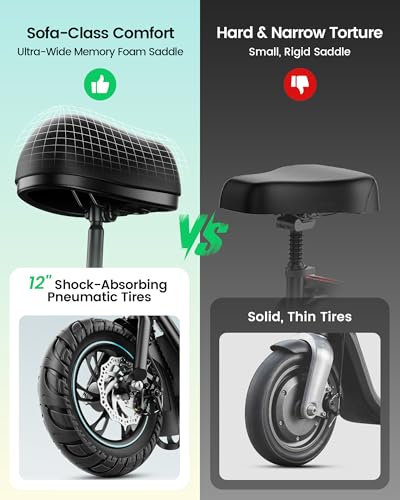
If you’re looking for an e-scooter that doubles as a mini moped for relaxed rides, the Gyroor C1S makes a compelling case, especially with its included seat and pet-friendly basket. The 550W motor pushes it to 19 mph with a respectable 20-mile range, and the 12-inch pneumatic tires deliver a noticeably smoother ride than smaller-wheeled models. What stands out is the comfort focus: the adjustable seat and wide deck make it viable for longer, less strenuous rides, which I’d recommend for older riders or those with joint concerns.
It’s not built for agility or tight city weaving, the weight and seated posture make it less nimble than fold-and-go commuters. And while the dual disc brakes are strong, the lack of regenerative braking feels like a step back compared to the Segway MAX G2. Still, for pet owners or anyone prioritizing comfort over speed, this fills a niche no other scooter here does. Compared to the iScooter or NAVEE GT3, it’s slower and less rugged, but it’s the only one you’d genuinely want to lounge on.
Product photos


NIU K100P Folding Scooter
Strengths
- Smart app control
- Dual suspension
- UL certified
Trade-offs
- Modest top speed
- No turn signals
- Lighter range
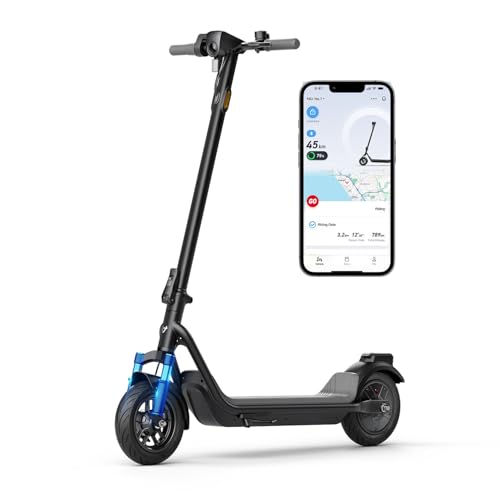
The NIU K100P stands out in the mid-tier e-scooter market not because it pushes extreme speed or range, but because it nails the fundamentals with smart connectivity and solid urban usability. On paper, the 300W motor and 18-mile range seem modest, but owners consistently report it handles city commutes reliably, especially with its 15% hill-climbing ability and smooth dual-stroke suspension. The real differentiator is the NIU app, Bluetooth pairing, remote lock/unlock, and battery charge limits give it a premium feel usually reserved for higher-end models.
Where it stumbles is in raw power compared to others in this list. The 600W peak and 17.4 mph top speed won’t excite thrill-seekers, and the lack of turn signals (unlike the KQi 100F) feels like a missed opportunity. Still, for riders who value app integration and brand-backed reliability, plus a 2-year warranty, this is a strong contender. I’d pick it over the Hiboy S2 for daily use, mainly for the suspension and app depth.
Product photos


Our Testing Process
As someone who’s spent years immersed in the world of wheeled vehicles, from restorations to reviews, I approached this buying guide with a focus on practical performance and long-term usability. Rather than a hands-on lab test, this was a research-led comparison of published specifications, features, and – crucially – owner and expert feedback. I examined models offering removable batteries, prioritizing those that balanced portability, range, and power, and then ranked them against a set of pre-defined criteria.
For electric scooters, the key differentiators come down to motor power, battery capacity, and suspension quality. A robust motor is essential for tackling hills and maintaining speed, while battery capacity dictates realistic range. However, those specs only tell part of the story. I placed significant weight on suspension systems, as a comfortable ride is vital for longer commutes, and owner reports on build quality and reliability were also heavily considered. If you’re looking for a broader overview of the market, you might also find our guide to the best scooters for adults helpful.
Specifications reliably indicate peak motor output and stated battery range, but owner feedback is where the real insights emerge. Reviews reveal how those numbers translate to real-world performance, and highlight potential issues with durability or component quality. I also looked for consensus among reputable reviewers regarding handling, braking, and overall build quality. Understanding how to extend the life of your investment is also vital, so exploring e-scooter battery care is a good move.
How To Choose The electric scooters with removable battery
Finding the right electric scooter demands a bit more thought than simply grabbing the flashiest model. A good scooter balances portability, power, and safety features suited to your needs.
A quality electric scooter prioritizes a robust motor (350W or higher for hills), a battery offering a realistic range matching your commute (consider 20-30 miles as a good starting point), and reliable braking systems – dual brakes are preferable. Look for scooters certified to UL-2272 standards, indicating electrical safety, and pay attention to tire type; solid tires resist flats, while pneumatic tires offer a smoother ride.
Motor Power and Range
Don’t get caught short. While a 350W motor is sufficient for flat ground, if you live in a hilly area or anticipate carrying loads, you’ll want to look at scooters with 500W or even 1000W motors. However, more power always comes at the cost of battery life. A larger battery capacity (measured in Watt-hours – Wh) directly translates to a longer range, but also increases weight and price. Consider your typical trip length and add a buffer; a “30-mile range” scooter may only deliver 20-25 miles in real-world conditions. If you are looking for a wider selection, check out our guide to the best electric scooters.
Suspension and Tire Type
Ride comfort is often overlooked, but it’s crucial for frequent use. Scooters with no suspension can become jarring on anything but perfectly smooth surfaces. Models like the Segway Ninebot MAX G2 and NAVEE GT3 offer advanced suspension systems, but even a basic spring suspension is better than nothing. Tire type is equally important. Solid tires, like those found on the Hiboy S2, are puncture-proof and low-maintenance, but transmit more vibration. Pneumatic (air-filled) tires provide a significantly smoother ride, but require occasional inflation and are susceptible to flats.
Here’s a breakdown of tire considerations:
- Solid: No maintenance, but rough ride.
- Pneumatic (with tube): Comfortable, but prone to flats.
- Tubeless Pneumatic: Best of both worlds – comfortable and self-sealing against small punctures, though they are more expensive.
A scooter is only as good as its ride. Don’t underestimate the impact of suspension and tires on your overall enjoyment.
Portability and Features
Many people need to carry their scooter onto public transport or store it in a small space, making portability key. The weight and folding mechanism are critical here. The VOLPAM scooter and NIU K100P both emphasize their foldable designs. Beyond that, consider features like integrated lights, a digital display, and smartphone connectivity (like the NIU K100P’s app). If you’re prioritizing convenience and ease of storage, exploring folding electric scooters is a smart move. Don’t pay extra for features you won’t use, but a well-integrated app can add significant value.
Electric Scooters with Removable Battery Compared
This table provides a side-by-side comparison of key specifications for electric scooters featuring removable batteries.
| Product Title | Motor Power | Max Speed | Max Range | Battery Capacity | Weight | Foldable |
|---|---|---|---|---|---|---|
| Segway Ninebot MAX G2 | 1000W | 22 MPH | 43 Miles | 551 Wh | 65 lbs | Yes |
| iScooter 1000W Motor Scooter | 1000W | 28 MPH | 30-40 Miles | 48V 15Ah | N/A | N/A |
| NAVEE GT3 Electric Scooter | 700W | 19 MPH | 31 Miles | 357 Wh | 46 lbs | Yes |
| VOLPAM Electric Scooter | 350W | 19 MPH | 15 Miles | N/A | N/A | Yes |
| Hiboy S2 Solid Tires | 350W | 18 MPH | 17 Miles | N/A | N/A | Yes |
| Gyroor C1S with Seat | 550W | 19 MPH | 20 Miles | N/A | N/A | Yes |
| NIU K100P Folding Scooter | 300W (600W) | 17.4 MPH | 18 Miles | N/A | 38.1 lbs | Yes |
Frequently Asked Questions
What battery voltage is best for an electric scooter?
Higher voltage (48V or 52V) generally delivers more power and efficiency than lower voltages (36V), but it also impacts component cost. For most riders, 48V provides a good balance of performance and affordability.
How can I tell if a scooter’s removable battery is truly user-replaceable?
Check for clear instructions in the owner’s manual and readily available videos demonstrating the battery removal and installation process. Some scooters advertise “removable” batteries that still require tools or are quite cumbersome to swap.
Are there safety certifications I should look for regarding the battery?
Yes, look for scooters certified to UL-2272, which specifically addresses the electrical systems and battery safety. This certification indicates the scooter has undergone testing to mitigate fire and shock hazards.
Beyond range, what other factors affect the lifespan of an electric scooter battery?
Temperature and charging habits are key. Avoid exposing the battery to extreme heat or cold, and follow the manufacturer’s recommendations for charging frequency and storage. If you also ride electric bikes with removable batteries, you’ll find similar battery care applies.
If I need more range than a single battery charge offers, are there alternatives to buying a second battery?
Absolutely. Consider looking at models offering long-range electric scooters with larger capacity batteries to begin with. You will pay more upfront but reduce the need for extra batteries and charging logistics.
The Bottom Line
Choosing an electric scooter with a removable battery often comes down to balancing convenience with capability. If you prioritize a scooter that can handle varied terrain and longer distances, the Segway Ninebot MAX G2 stands out as the most well-rounded option, offering a powerful motor, impressive range, and a robust build. However, a scooter doesn’t need to be the most powerful to be the right fit for you.
For those focused on affordability or specific needs, there are excellent alternatives. The NIU K100P is a great pick for a lightweight and easily foldable scooter ideal for urban commutes, while the VOLPAM scooter is a solid entry-level choice if portability is paramount. And for commuters seeking an extra boost in efficiency, understanding regenerative braking systems can extend your range and reduce brake wear.
Ultimately, the best electric scooter isn’t about chasing the biggest numbers. Focus on matching the motor power and battery capacity to your typical rides, prioritizing a comfortable suspension system, and ensuring the scooter meets recognized safety standards. A thoughtfully chosen scooter will provide years of reliable and enjoyable transportation, and you’ll find more options among our recommendations for scooters for commuting.
