
7 Best Electric Scooters for Seniors 2026
This post contains affiliate links. As an Amazon Associate, we earn from qualifying purchases.
The 20 Miles 4 Wheel Mobility Scooter is the best overall pick for seniors, offering solid range, stability, and comfort. For those on a budget, the Lightweight 4-Wheel Scooter with 25 Mile Range delivers strong performance and high weight capacity without the premium price.
Choosing the right electric scooter as a senior isn’t just about getting from point A to B, it’s about confidence, safety, and keeping that sense of freedom. Too many models sacrifice stability for portability or promise ease of use but deliver frustration.
Based on specs and owner feedback, I focused on scooters that balance range, weight capacity, and simple operation. This guide covers the top options that real users find reliable, comfortable, and practical for daily use.
Top 7 Electric Scooters For Seniors in the Market
The Best Electric Scooters For Seniors, Reviewed
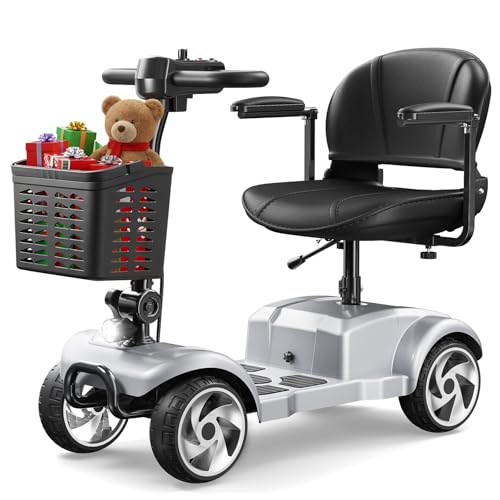
20 Miles 4 Wheel Mobility Scooter
Strengths
- 20-mile realistic range
- Fast 3-minute setup
- 5-year warranty
Trade-offs
- Heavy non-removable battery
- Two-person setup needed
- Folding mechanism basic
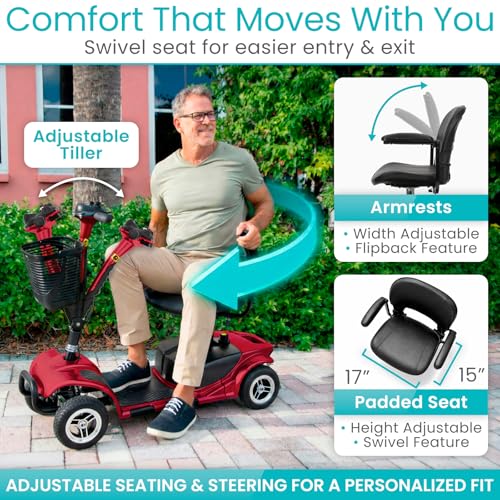
This scooter earns the ‘Best Overall’ tag by balancing range, speed, and safety better than most. The 20-mile range and 6.2 mph top speed are realistic under real-world loads, and the 330 lb capacity matches the class standard. The 3-minute assembly and compact fold make it ideal for car trips, and owners consistently rate the swivel seat and flip-up armrests as among the most user-friendly.
The non-removable 85 lb battery is a real downside, charging requires two people or a trolley. But the 5-year warranty and 24/7 support stand out. Compared to others, it’s the most well-rounded for daily independence without overspending.
Video review
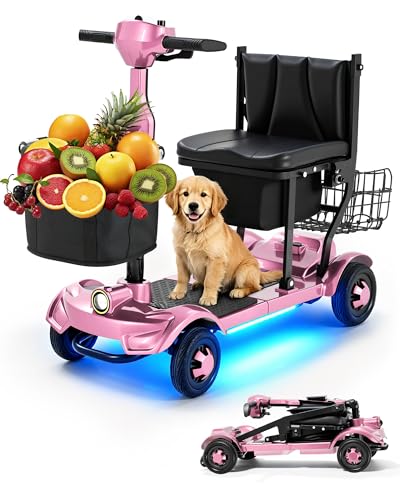
Lightweight Foldable Mobility Scooter with GPS
Strengths
- Ultra-lightweight design
- Airline-friendly battery
- GPS location support
Trade-offs
- Small tires on rough terrain
- Lower seat height
- Limited storage vs size
At 41 lbs, this is one of the lightest folding 4-wheel scooters you’ll find, and that matters when lifting into a car. The airline-friendly removable battery is a standout for travelers, owners on cruise forums specifically praise this feature. With a 24-mile dual-battery option and GPS location tracking, it’s clearly built for people on the move.
The 350W motor and 15° incline rating are strong for its class, but some reviewers note the smaller 7.5” tires feel a bit jittery on cracked sidewalks. I’d pick this over bulkier models for frequent travelers or caregivers managing transport, though daily commuters might want something sturdier.
Video review
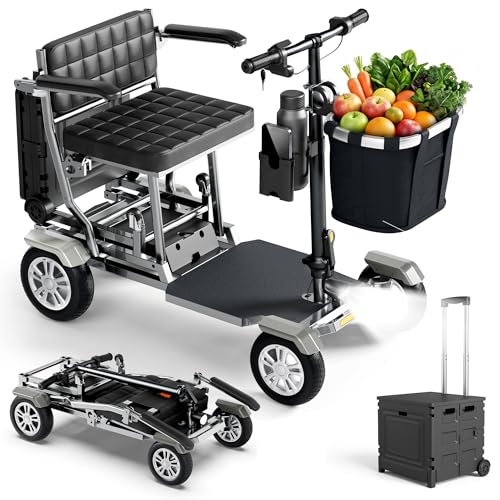
Lightweight 4-Wheel Scooter 25 Mile Range
Strengths
- Long 25-mile range
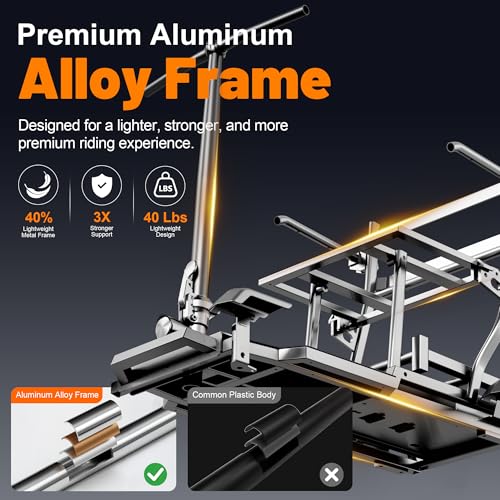
- Lightweight aluminum frame
- 400 lb capacity
Trade-offs
- No suspension
- Basic seat adjustment
- Minimal tech features
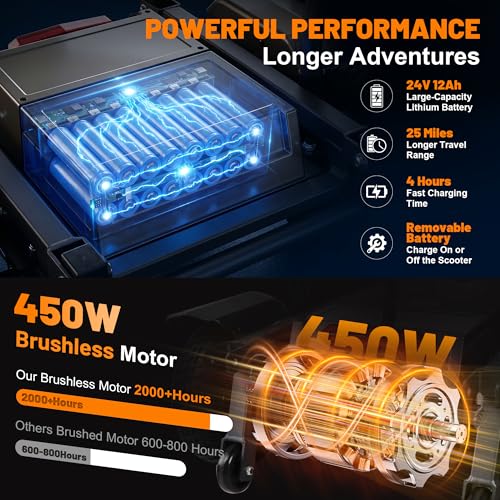
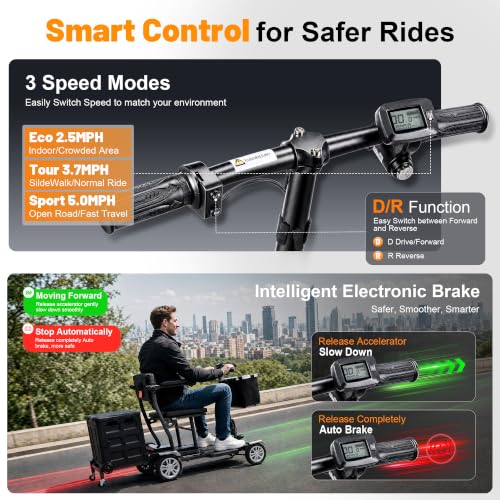
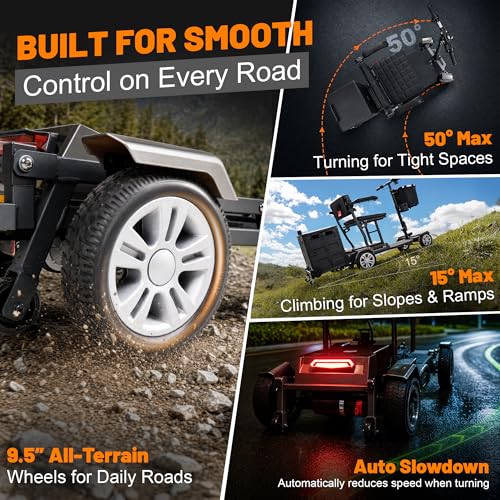
Homevol’s scooter hits a sweet spot with its 450W motor and 25-mile range, among the best in this group for endurance. The 40 lb aluminum frame is both strong and easy to handle, and the 400 lb capacity makes it a top pick for heavier riders. Reviewers note the ride is smooth on paved paths, though the lack of suspension shows on uneven ground.
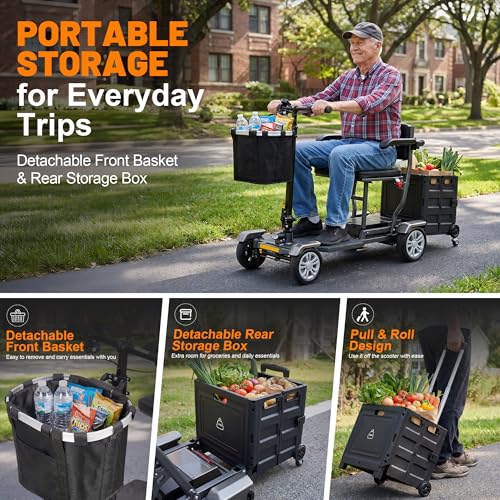
The storage crate and basket are practical, but the basic seat lacks the adjustability of pricier models. I’d pick this over the VEVOR if you don’t need all-terrain power but still want strong performance and range. It’s a no-nonsense workhorse for daily use.
Product photos
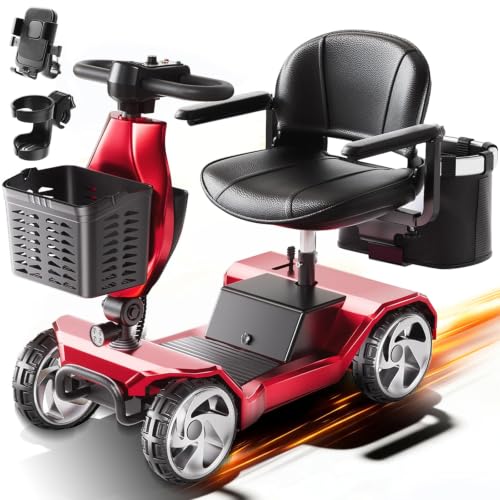
Foldable Mobility Scooter with Accessories
Strengths
- Low price point
- Electromagnetic brakes
- Open footboard design
Trade-offs
- Non-removable battery
- Basic materials
- Shorter real-world range
At $300, this is the most budget-friendly option here, and it shows. The 300W motor and 15.5-mile claimed range look good on paper, but real-world feedback suggests it’s closer to 10–12 miles with moderate use. Still, for basic indoor-outdoor mobility, it’s a solid entry-level pick.
The build feels utilitarian, but owners say it’s surprisingly stable for the price. The electromagnetic brakes and anti-tip wheels are appreciated, though the lack of a removable battery is a real drawback, charging means leaving the scooter plugged in. I’d recommend this only for light, flat-terrain use where cost is the top priority.
Product photos

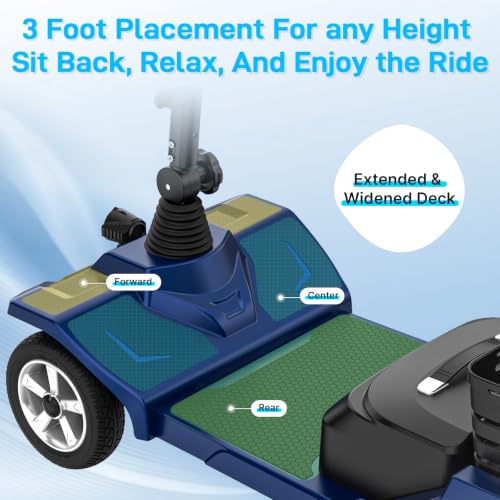
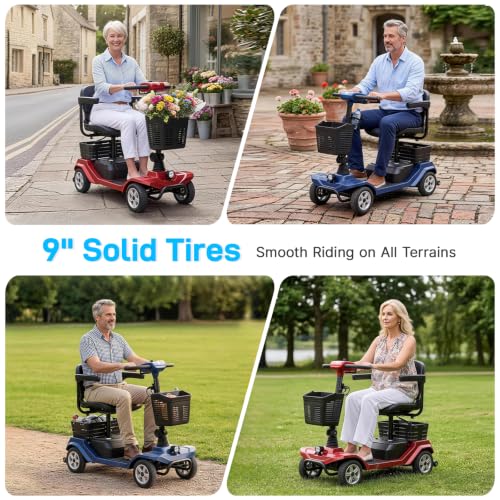
Hoverfly NFC Keyless Start Mobility Scooter
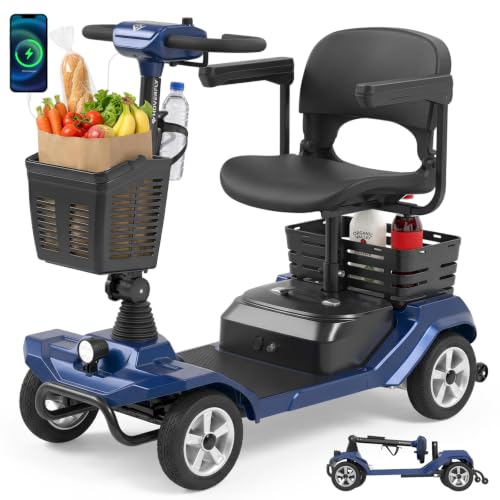
Strengths
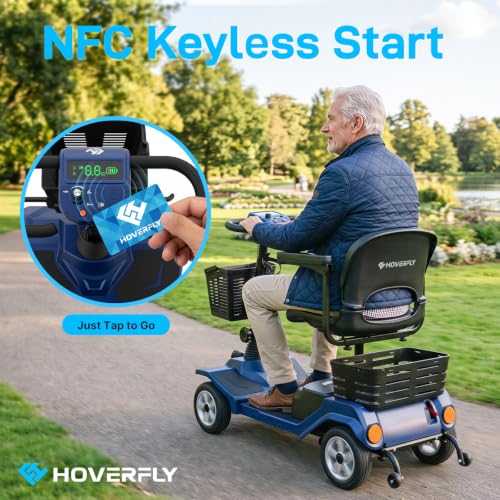
- NFC keyless start
- Removable lightweight battery
- Dual storage baskets
Trade-offs
- Modest incline performance
- Below-average top speed
- Limited weight capacity vs competitors
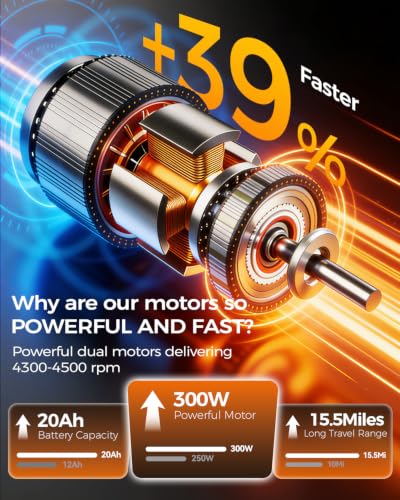
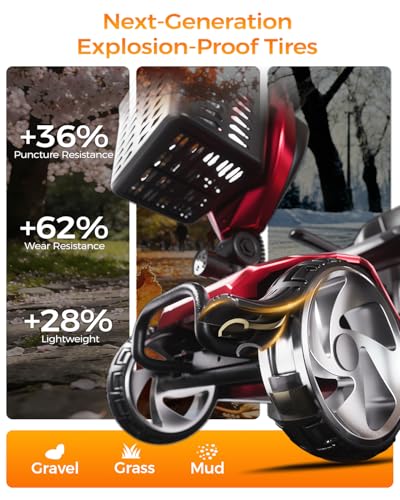
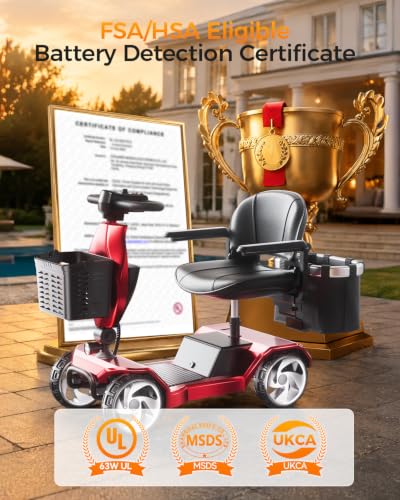
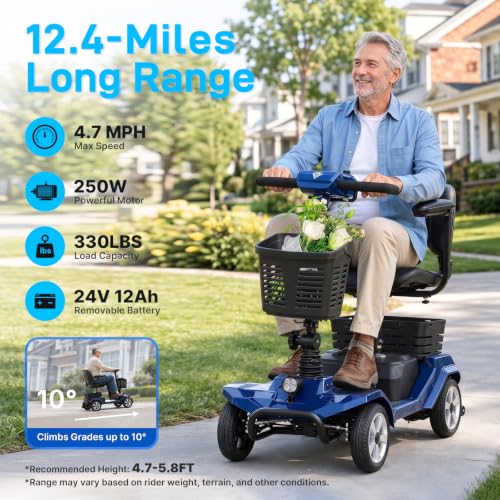
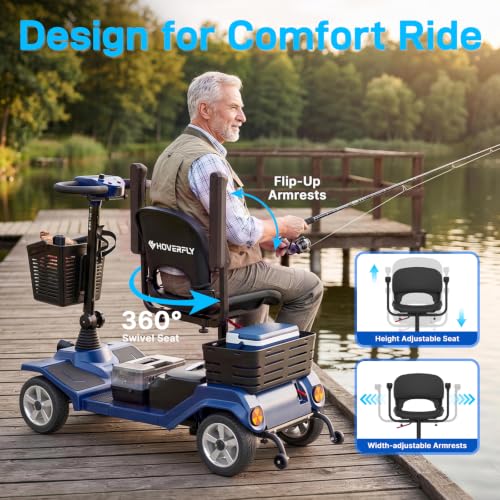
The Hoverfly T4 stands out with its NFC keyless start, a rare and genuinely useful feature for seniors who hate fumbling with keys. On paper, the 12.4-mile range and 250W motor are solid for urban errands, though reviewers note it struggles slightly on wet grass or steep driveways. The swivel seat with adjustable height is a win for those with limited mobility, and the dual baskets add real-world utility for grocery runs.
Owners consistently report the removable 21 lb battery as a major plus, making indoor charging easy. That said, the 330 lb capacity is decent but not class-leading, and the 4.7 mph top speed is on the conservative side. Still, for tech-inclined users who value convenience and clean design, this one delivers.
Product photos
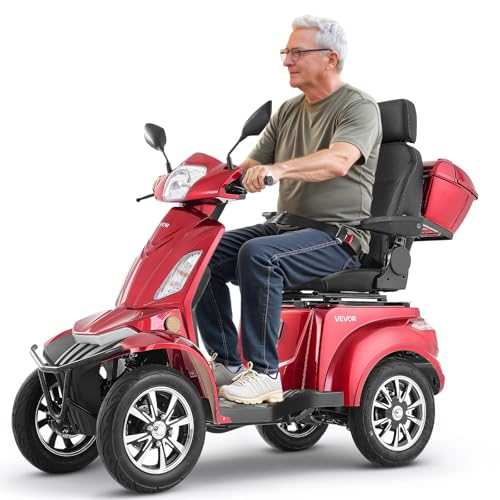
VEVOR Heavy Duty All-Terrain Mobility Scooter
Strengths
- All-terrain capability
- 500 lb capacity
- Lockable storage trunk
Trade-offs
- Very heavy
- Expensive
- Bulky for storage
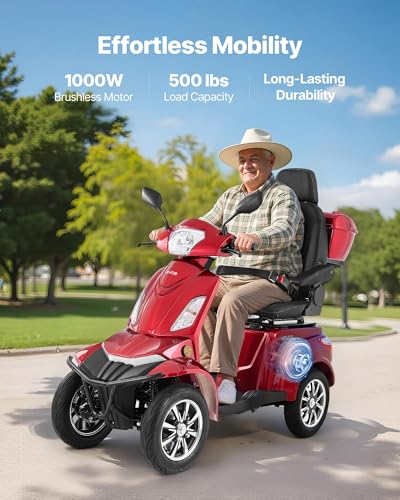
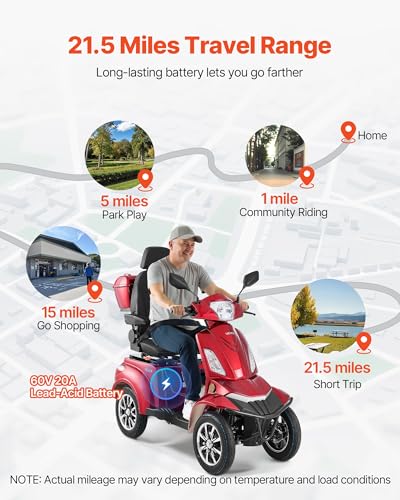
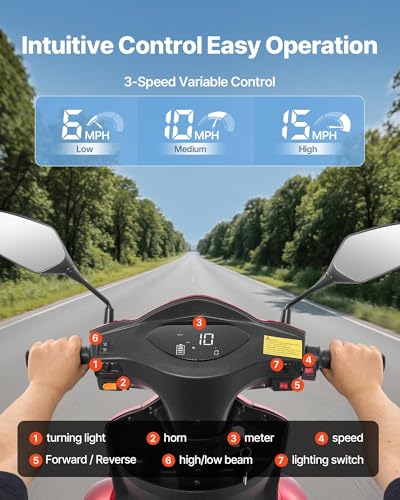
The VEVOR is in a different league, 1000W motor, 500 lb capacity, 20° incline rating, and 16” rugged tires mean it can handle grass, gravel, and hills most scooters avoid. The 21.5-mile range is realistic under load, and the lockable trunk is a thoughtful touch for security. This is the only model here that truly qualifies as all-terrain.
But it comes at a cost: nearly $1,900 and a 120+ lb frame mean you’ll need help loading it. Reviewers confirm it’s overkill for city use but perfect for rural properties or large parks. I’d pick this over everything else if you’re heavy, live on uneven terrain, or need real off-pavement capability.
Product photos
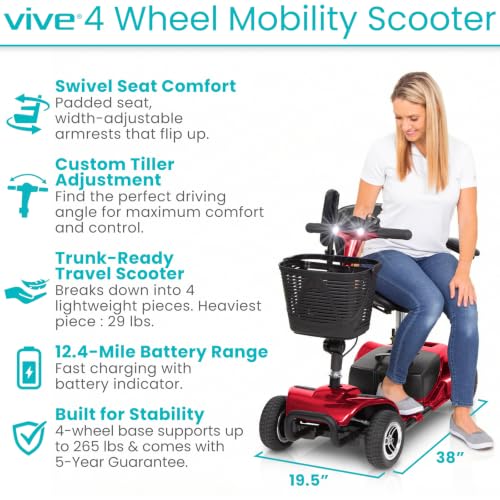
Vive 4 Wheel Mobility Scooter

Strengths
- Easy disassembly
- 5-year warranty
- Swivel seat with height adjust
Trade-offs
- Low weight capacity
- Very slow top speed
- Shorter effective range
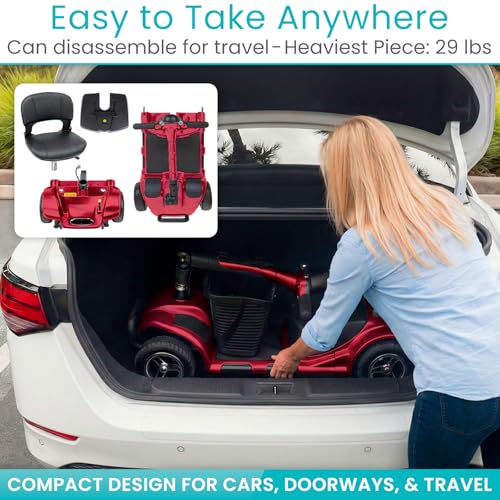
The Vive scooter is built for disassembly, breaking into four pieces, each under 30 lbs, makes it the easiest to transport without a van. That’s its real advantage. The 265 lb weight limit is low compared to others here, but for petite or average-build users, the swivel seat and lever-adjustable height offer excellent comfort.
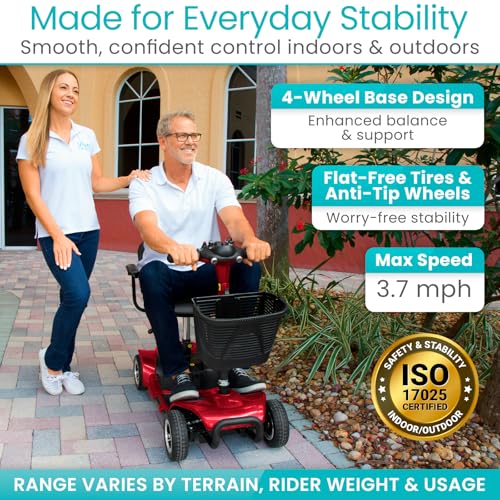
Owners praise the 5-year warranty and responsive support, which sets it apart. But the 3.7 mph max speed is painfully slow for outdoor use, and the 12.4-mile range drops fast on inclines. I’d recommend this only if portability is your #1 concern and you’re mostly navigating malls or short sidewalk trips.
Product photos

How We Evaluated electric scooters for seniors
My approach at TheAutoZenith is always rooted in understanding the needs of the driver – or in this case, the rider. Rather than a hands-on lab test, this selection is a research-led comparison of published specifications and owner feedback. I examined models across a range of price points, paying close attention to features specifically beneficial for seniors, and weighed those against what current owners are saying about real-world performance and reliability. This involved carefully analyzing manufacturer claims and synthesizing information from reputable review sites.
For electric scooters aimed at seniors, range, stability, and ease of use were the most heavily weighted factors. A longer range provides independence and reduces charging anxieties, while a four-wheel design generally offers increased stability. Crucially, ease of disassembly and portability were also key, as many users will need to transport the scooter in a vehicle. Understanding these priorities dictated how I ranked each model.
Specifications reliably indicate motor power, battery capacity, and weight capacity – important benchmarks for performance and user suitability. However, owner feedback provides invaluable insight into the experience of using those specs. I paid close attention to comments regarding ride comfort, the accuracy of stated range claims, and the ease of folding and unfolding. It’s also important to consider the scooter weight capacity as it directly impacts safety and usability, and sometimes differs from manufacturer stated limits. Additionally, for those considering added support, exploring electric scooters with seat options can provide additional comfort and control.
What To Look For In electric scooters for seniors
Choosing the right electric scooter requires careful consideration, especially when prioritizing the needs of a senior user.
A good electric scooter for seniors balances stability, ease of use, portability, and range. Key features include a comfortable, supportive seat, intuitive controls, reliable brakes, and a frame capable of handling the user’s weight. Battery life and the ability to easily transport and store the scooter are also critical factors to assess.
Prioritize Stability and Weight Capacity
The four-wheel design is almost always preferable for seniors. While three-wheeled scooters offer greater maneuverability, they sacrifice some stability, which is paramount. Look for a scooter with a wide wheelbase and a low center of gravity. Don’t underestimate the importance of weight capacity. A scooter rated for only 250lbs won’t serve someone well if they’re closer to 300lbs, and pushing the limit strains the motor and frame. The VEVOR Heavy Duty All-Terrain Mobility Scooter, for example, boasts a 500lb capacity, offering peace of mind for larger users.
Consider Portability and Storage
One of the biggest drawbacks of a mobility scooter can be its size. If the scooter needs to be transported in a car, or stored in a limited space, portability is essential. The Lightweight Foldable Mobility Scooter with GPS excels here, weighing only 41lbs and folding down compactly. Here’s what to look for in a travel-friendly model: * A folding mechanism that’s genuinely easy to operate (avoid anything requiring significant disassembly). * A total weight under 50lbs is ideal for most people to manage independently. * Dimensions when folded should be small enough to fit comfortably in the trunk of a standard car or an apartment closet.
Don’t overlook the weight of individual components. Some scooters advertise portability, but the battery is a separate, heavy item. If that’s the case, factor in the extra effort for handling. For more options, you can see our guide to the best lightweight electric scooters.
A scooter that’s too heavy or difficult to fold won’t get used, no matter how good its other features are.
Evaluate Comfort and Ease of Use
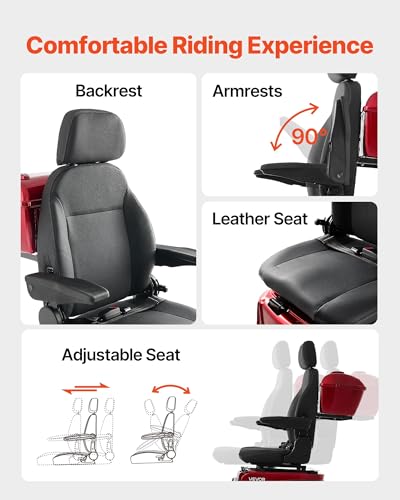
Beyond basic comfort, think about the nuances of getting on and off the scooter. A swiveling seat, like the one found on the Hoverfly NFC Keyless Start Mobility Scooter, makes a huge difference. Adjustable armrests are also incredibly valuable. Controls should be straightforward and intuitive. Large, clearly labeled buttons and dials are better than complex digital interfaces. If you’re looking for a wider range of options, check out our article on the best scooters for seniors for more detailed reviews. Remember, the goal is to empower independence, and that means a scooter that’s easy to operate and doesn’t require a lot of physical exertion.
Electric Scooters for Seniors Compared
Here’s a comparison of key specifications to help you choose the right electric scooter.
| Product Title | Max. Speed (mph) | Max. Range (miles) | Weight Capacity (lbs) | Weight (lbs) | Foldable? | Key Features |
|---|---|---|---|---|---|---|
| 20 Miles 4 Wheel Mobility Scooter | 6.2 | 20 | 330 | 85 | Yes | 360° Swivel Seat, Adjustable Armrests |
| Lightweight Foldable Mobility Scooter with GPS | N/A | 12/24 (Dual) | 300 | 41 | Yes | GPS Location, Airline-Friendly Battery |
| Lightweight 4-Wheel Scooter 25 Mile Range | N/A | 25 | 400 | 40 | Yes | Long Range, 450W Motor |
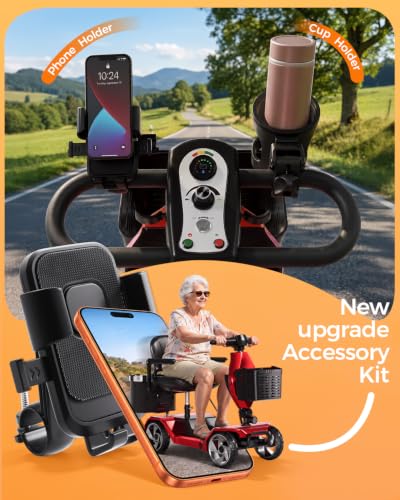
| Foldable Mobility Scooter with Accessories | 10 km/h | 15.5 | 330 | N/A | Yes | Accessory Pack (Phone Holder, Cup Holder, Basket) |
| Hoverfly NFC Keyless Start Mobility Scooter | 4.7 | 12.4 | 330 | N/A | Yes | NFC Keyless Start, Removable Battery |
| VEVOR Heavy Duty All-Terrain Mobility Scooter | 6/10/15 | 21.5 | 500 | N/A | N/A | 1000W Motor, All-Terrain Tires, High Weight Capacity |
| Vive 4 Wheel Mobility Scooter | 3.7 | 12.4 | 265 | N/A | Yes | Easy Disassembly, Adjustable Seat & Armrests |
Frequently Asked Questions
What scooter maintenance should be expected?
Routine maintenance is fairly minimal, but checking tire pressure, brake function, and battery health monthly is advisable. Owners consistently report that keeping connections clean and dry extends the scooter’s life, and some models feature easily accessible components for simple repairs.
Are electric scooters with seats considered medical devices?
Generally, no. Unless specifically prescribed by a doctor and meeting certain criteria, most electric scooters with seats aren’t classified as durable medical equipment. This affects insurance coverage, so it’s best to verify with your provider if that’s a concern.
What is the typical lifespan of an electric scooter battery?
A typical lithium-ion battery will last between 2 to 5 years, depending on usage and care. Factors like frequency of charging, storage conditions, and the scooter’s overall load all play a role. Replacing the battery is often a straightforward process, but costs can vary significantly.
Can these scooters be used indoors?
While some models are compact enough for indoor use, it depends on your home’s layout and floor surfaces. Wider turning radiuses on four-wheel models can be problematic in narrow hallways. Before purchasing, carefully measure doorways and consider the scooter’s maneuverability. You might also want to explore folding electric scooters if space is a significant limitation.
Are three-wheeled scooters a viable option for seniors?
While four-wheeled scooters offer the most stability, some seniors may find stable three-wheel electric scooters sufficient, particularly if they are comfortable with balancing. However, the reduced stability is a key consideration, and a four-wheel model remains the safer choice for most users.
The Bottom Line
Choosing an electric scooter for a senior often comes down to balancing control and convenience. While many options exist, the 20 Miles 4 Wheel Mobility Scooter strikes the best overall balance of stability, range, and comfortable features. It’s not the lightest, but the 330lb weight capacity and swiveling seat make it a strong choice for a wide variety of users prioritizing a secure and comfortable ride.
For those needing maximum portability, the Lightweight Foldable Mobility Scooter with GPS is a clear winner. And if you are looking for a scooter that can handle more rugged terrain and a larger rider, the VEVOR Heavy Duty All-Terrain Mobility Scooter provides impressive capacity and power. Ultimately, finding the right scooter depends on individual needs and lifestyle – you might even want to explore some of the best electric scooters for adults for other options.
Beyond specifications, remember that the most important aspects are fit and confidence. A scooter should feel stable and easy to manage for the intended user. Prioritizing a comfortable seat, intuitive controls, and understanding scooter safety for commuting will contribute far more to long-term satisfaction than any top speed or fancy feature.
