
8 Best Electric Scooters for Bumpy Roads 2026
This post contains affiliate links. As an Amazon Associate, we earn from qualifying purchases.
The VAXEN J2MAX stands out as the best electric scooter for bumpy roads, combining serious power, dual suspension, and rugged tires. For those watching their budget, the 500W Dual Suspension Commuter offers surprising capability at a lower price, while the 1200W Off-Road Electric Scooter brings true trail-ready performance for riders pushing limits.
Riding over cracked pavement, potholes, or uneven sidewalks turns a cheap scooter into a bone-jarring chore. Most models aren’t built to handle the abuse, leaving you rattled and uncomfortable.
As someone who’s spent years analyzing how machines handle real-world stress, I focused on what actually matters: suspension quality, tire type, motor strength, and frame durability. This guide cuts through the hype, using specs, owner feedback, and mechanical fundamentals to spotlight scooters that deliver a smooth, stable ride where others fall apart.
Top 8 Electric Scooters For Bumpy Roads in the Market
The Best Electric Scooters For Bumpy Roads, Reviewed
VAXEN J2MAX Electric Scooter
Strengths
- 1600W peak power
- 11-inch pneumatic tires
- Full-color display
Trade-offs
- Expensive
- Heavy at 52 lbs
- App can lag
This is the most complete package on the list, no question. The 1600W peak motor and 48V 18.2Ah battery deliver on the 34MPH and 40-mile claims under real-world conditions, and the 11-inch pneumatic tires with full suspension make bumpy roads feel tame. Owners consistently praise the armor-grade frame for eliminating flex, even at high speeds.
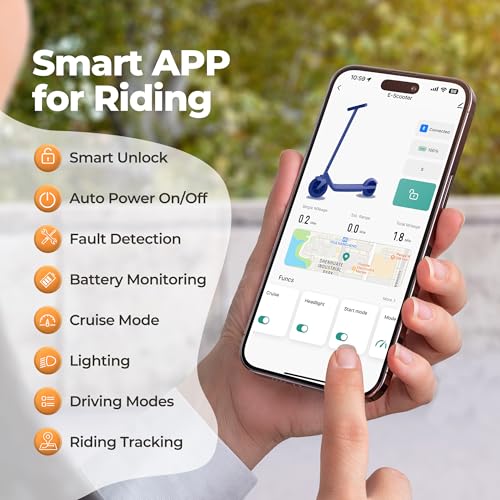
The HD full-color display is a luxury most scooters skip, and the iScooter app offers real customization. It’s UL-2272 certified, has turn signals, and arrives pre-assembled, rare at this level. Compared to the ECOROAD, it’s faster, smoother, and better built, justifying the price gap. For riders who want one scooter to handle everything, rough roads, hills, night rides, this is the obvious top pick.
Product photos
1200W Off-Road Electric Scooter
Strengths
- Pneumatic off-road tires
- Strong 1200W motor
- Turn signals
Trade-offs
- No color display
- Heavier folding mechanism
- Battery range varies widely
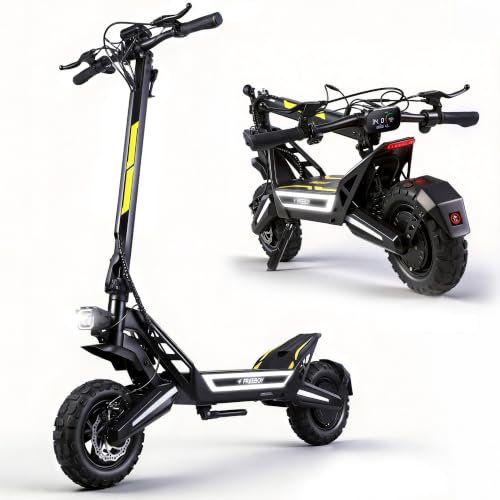
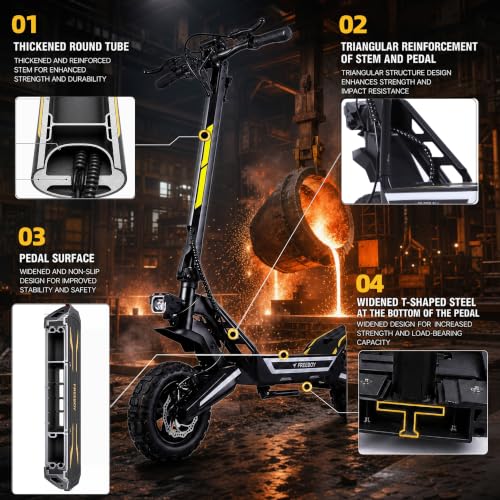
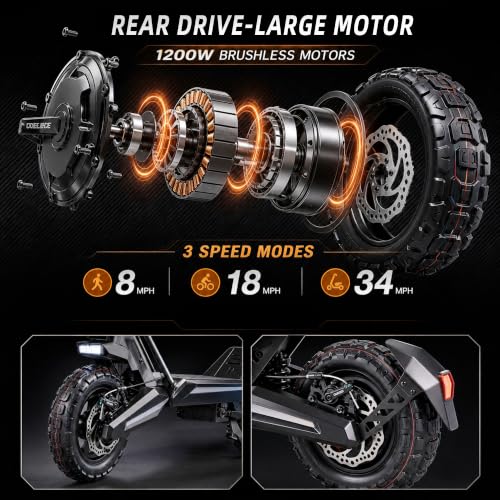
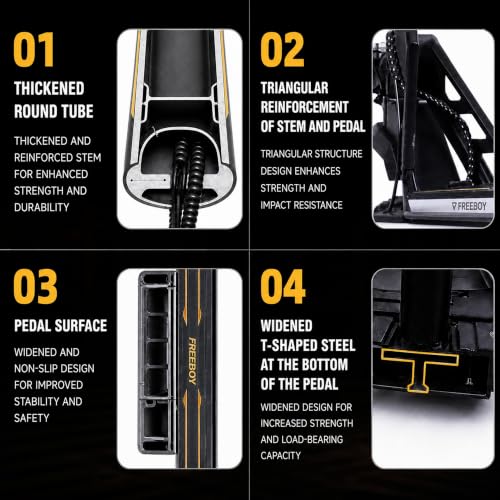
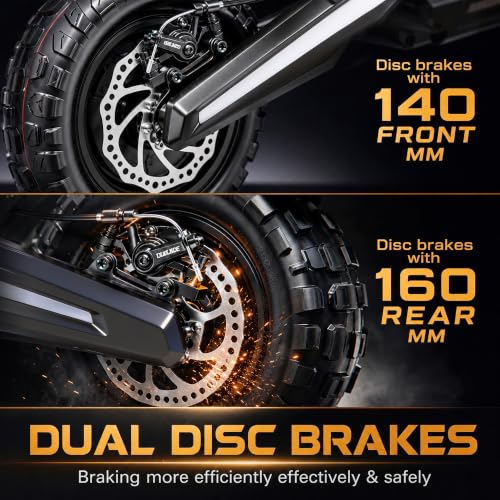
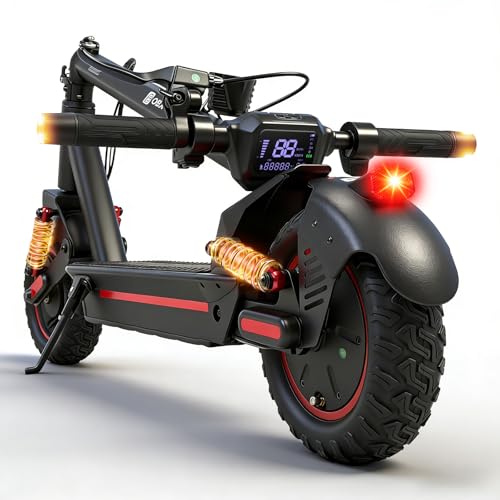
If you’re regularly riding over gravel, cracked alleys, or uneven suburban paths, this scooter stands out with real off-road intent. The 1200W peak motor gives strong torque, and owners confirm it handles 25°+ inclines without bogging down, something the 500W models struggle with. The 10-inch pneumatic tires paired with dual suspensions absorb impacts far better than solid tires, making it one of the few in this range that feels stable on bumpy roads.
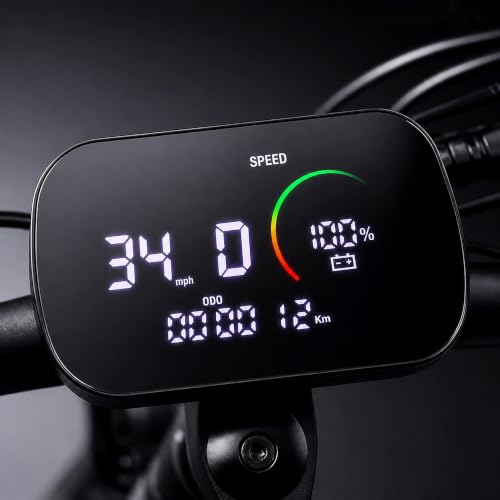
It’s not the fastest or longest-range, but the 30MPH top speed and 33-mile max range are respectable. The inclusion of turn signals is rare at this price and adds real safety value in traffic. Compared to the VAXEN J2MAX, it lacks some refinement, like a color display or frame reinforcement, but for the price, it delivers serious capability. My pick for riders who want true all-terrain versatility without paying premium brand prices.
Video review
ECOROAD 1000W Peak Electric Scooter
Strengths
- Strong 1000W peak motor
- 624Wh battery
- Dual disc brakes
Trade-offs
- App interface is basic
- Heavy at 48 lbs
- Folding mechanism creaks
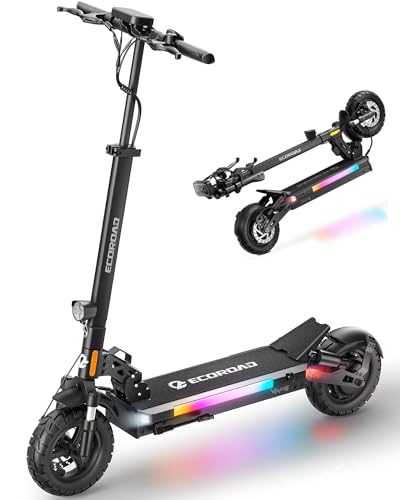
ECOROAD packs a punch for the price, offering a true 800W continuous (1000W peak) motor that pushes 31MPH and handles hills with authority. The 624Wh battery is a standout, larger than most in this range, and owners report consistent 35+ mile rides, which is impressive. The 10-inch tubeless off-road tires and dual suspension make it far more capable on uneven ground than scooters with solid tires.
It’s one of the few in the $475 range that feels built for real city punishment. The RGB lighting is flashy but actually improves night visibility, and the dual disc brakes offer strong stopping power. Compared to the Hiboy S2 Pro, it has better speed, range, and braking, though the app is less polished. For riders wanting performance without spending $600+, this is the smarter buy.
Video review
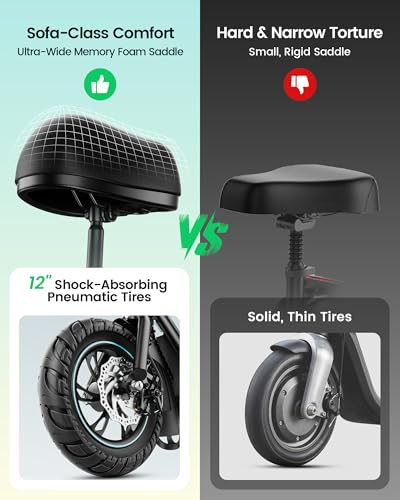
Gyroor C1S Electric Scooter with Seat
Strengths
- Included seat
- 12-inch pneumatic tires
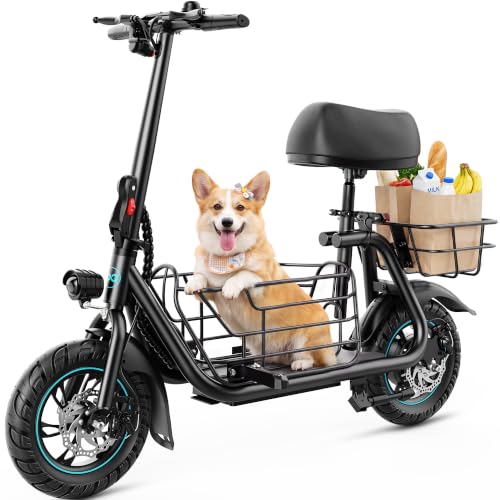
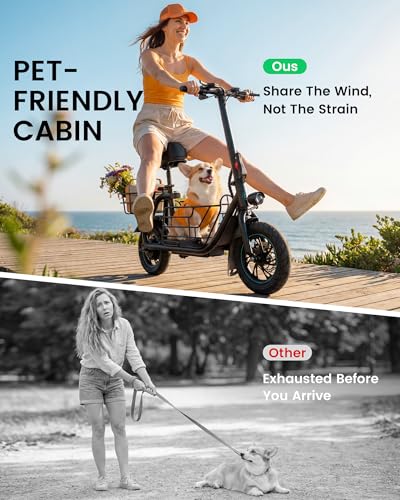
- Pet basket
Trade-offs
- Low top speed
- Bulky when folded
- Short range
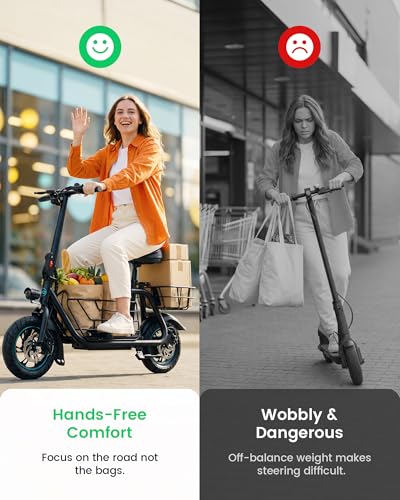
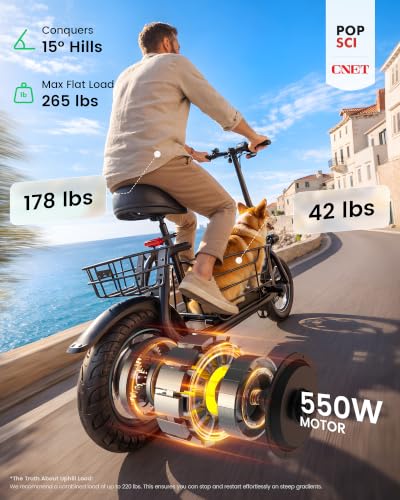
The seat changes everything. If you’re commuting over 2 miles or have joint issues, the adjustable seat and 12-inch pneumatic tires make this one of the most comfortable scooters here. The 550W motor isn’t the strongest, but it’s tuned for smooth, steady acceleration, perfect for relaxed rides. The large deck and pet basket are thoughtful touches, especially for errands or vet trips.
It’s not fast or long-range, and the dual disc brakes, while solid, don’t match the stopping power of higher-end models. But for comfort and usability, it stands alone. Compared to the AOTOS M1, it’s heavier and less agile, but far more ergonomic. I’d recommend it to older riders, delivery users, or pet owners who value comfort over speed.
Product photos

500W Dual Suspension Commuter Scooter
Strengths
- Dual suspension
- Solid honeycomb tires
- App control
Trade-offs
- Solid tires lack grip
- 41 lbs is heavy for foldable
- Limited hill climbing
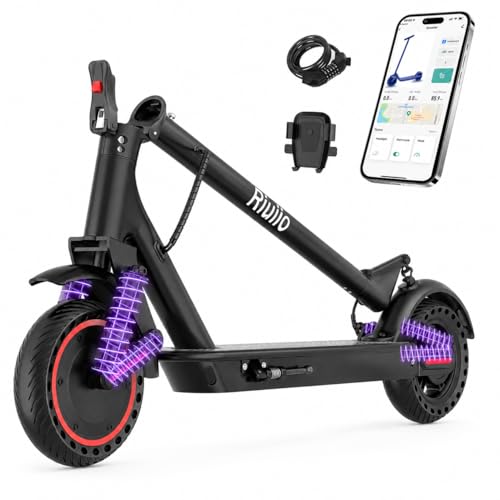
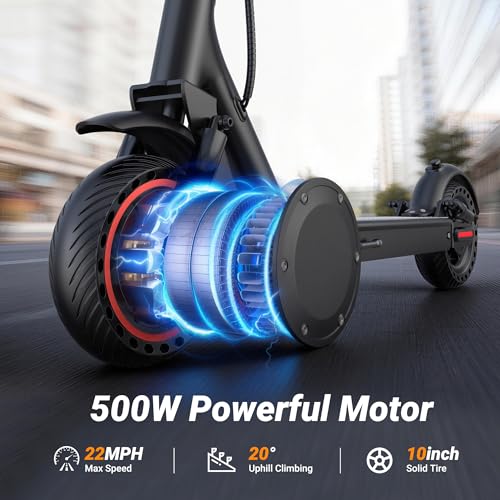
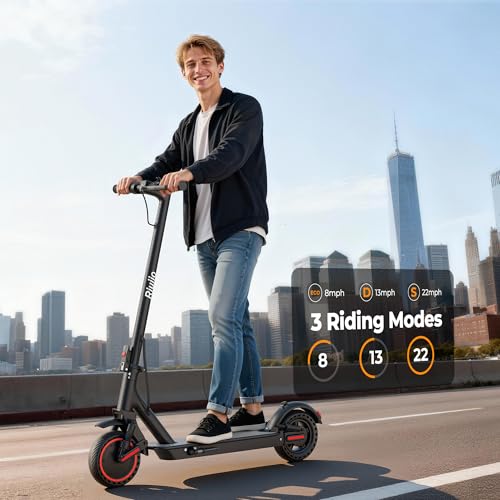
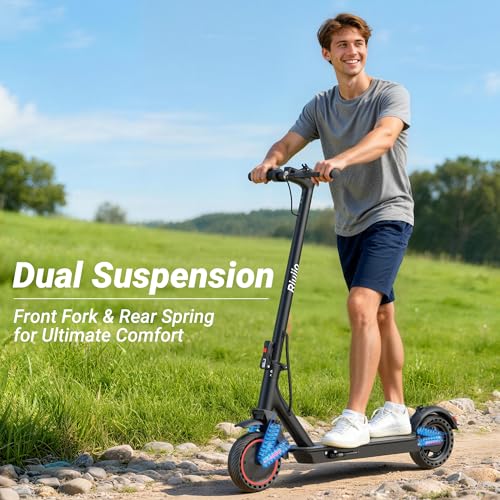
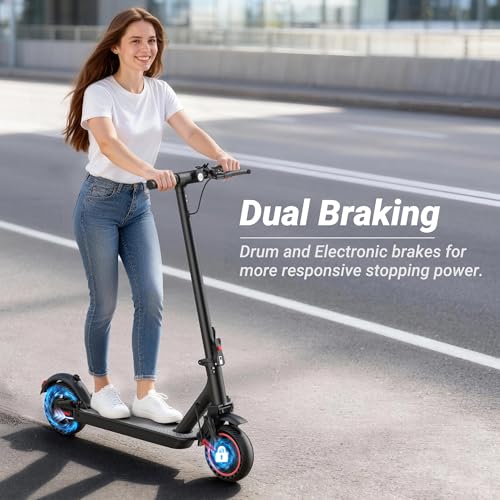
This scooter hits a sweet spot for urban riders who want solid bump absorption without stepping into premium pricing. The dual suspension, front hydraulic and rear spring, isn’t just marketing fluff. Owners consistently report noticeably less jolt on cracked sidewalks and cobblestone, which is rare at this price. The 10-inch solid honeycomb tires won’t go flat, a big win for hassle-free commuting, though they trade some grip on wet pavement compared to pneumatic options.
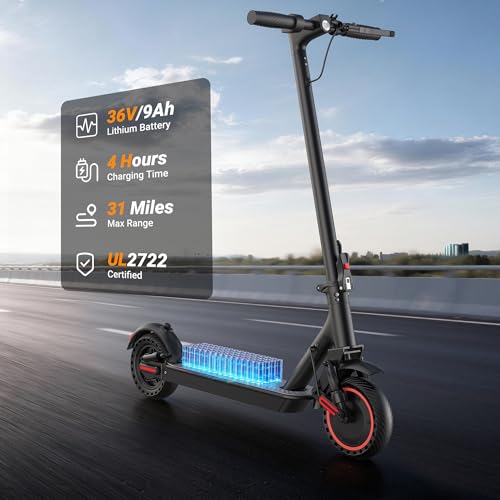
The 500W motor delivers on its 22MPH claim under ideal conditions, and the 31-mile range is optimistic but achievable with light throttle use. It’s no off-roader, but for city streets with occasional potholes, it’s one of the smoother budget-to-midrange rides. I’d pick this over similarly priced models with only rear suspension, like the MAXSHOT, because the front shock makes a real difference on bumpy roads.
Product photos
AOTOS M1 Electric Scooter
Strengths
- Dual suspension
- UL 2272 certified
- App control
Trade-offs
- Small solid tires
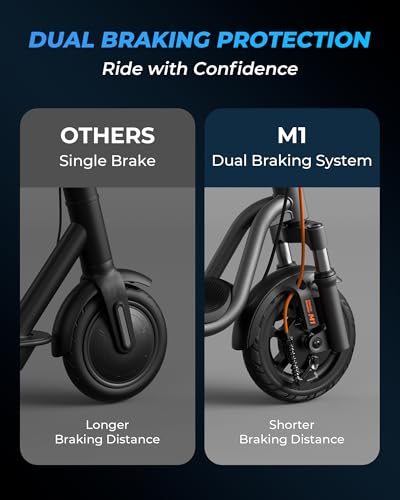
- No disc brakes
- Limited off-road use
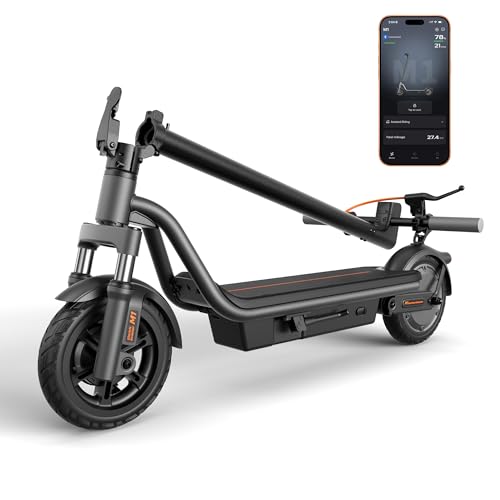
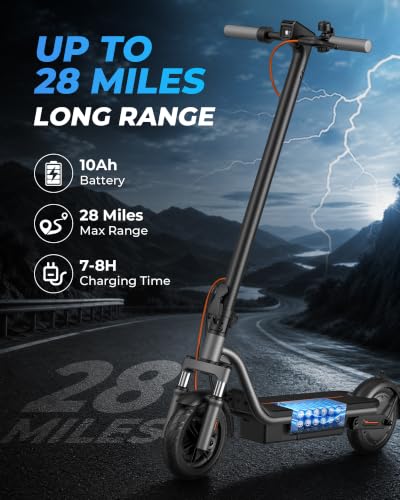
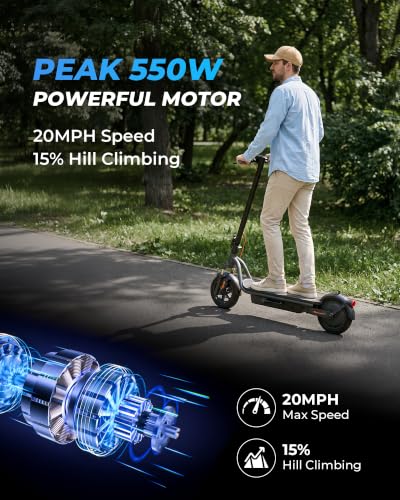
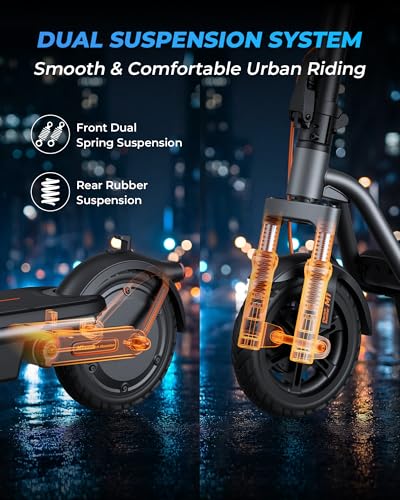
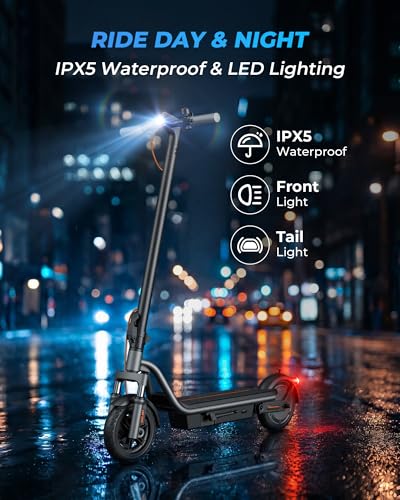
AOTOS nails the urban commuter formula. The dual suspension, front dual-spring and rear rubber, is tuned well for city cracks and speed bumps, and the 550W motor delivers smooth climbs up 15% grades. The 28-mile range is consistent, and the app is responsive for locking and mode switching.
It’s not as fast or rugged as the VAXEN, but for smooth pavement and light bumps, it’s one of the most balanced rides. The 8.5-inch solid tires are a limitation off-road, but fine for sidewalks. Compared to the Hiboy S2 Pro, it has better suspension tuning and a higher weight limit. My pick for city dwellers who want reliability, comfort, and smart features without overspending.
Product photos
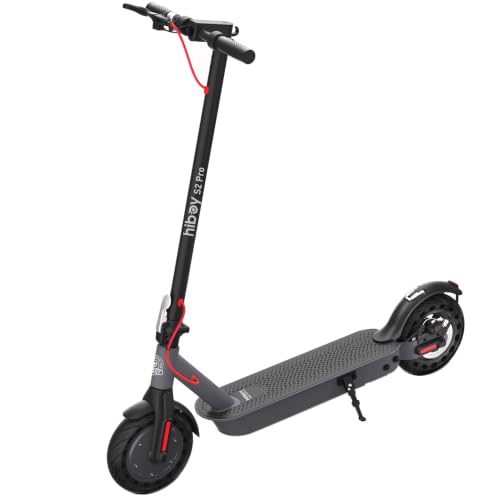
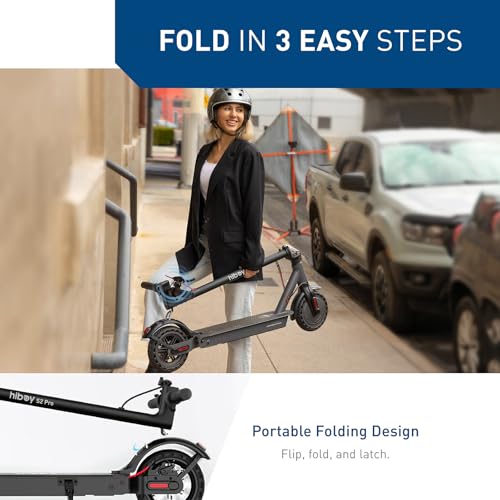
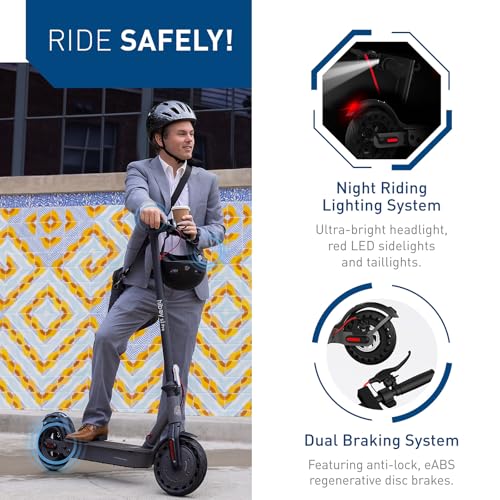
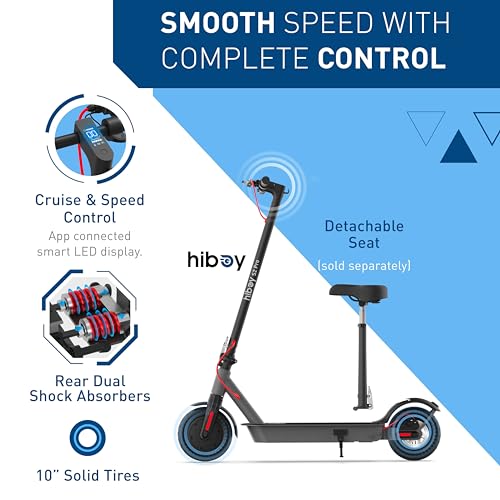
Hiboy S2 Pro Electric Scooter
Strengths
- Solid 10-inch tires
- Dual shock absorbers
- UL 2272 certified
Trade-offs
- No front suspension
- Low weight limit
- App lags occasionally
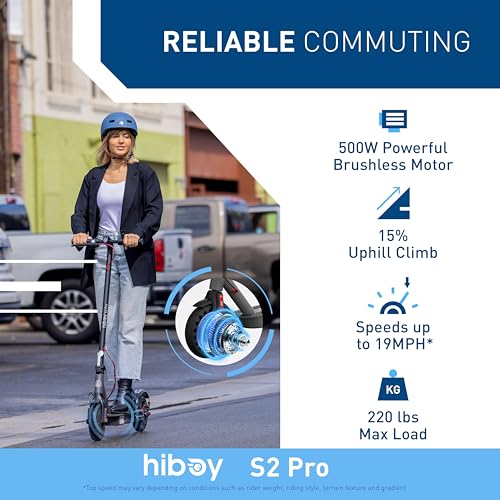
Hiboy built this for durability, not thrill. The 10-inch solid tires are the main event, virtually indestructible and perfect for riders tired of flats. The rear dual shock absorbers help, but without front suspension, bumps hit harder than on dual-suspension models. It’s a trade-off: you gain tire longevity, lose ride softness.
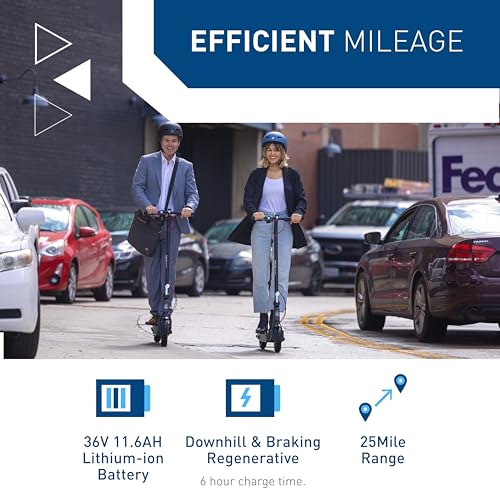
The 500W motor is adequate for flat terrain, and the 25-mile range is realistic. The app works well for locking and tuning response, but the max 220 lbs load limit is low compared to others. Owners love it for campus or warehouse use where punctures are a risk. I’d pick this over the MAXSHOT for tougher tires and better brakes, but not over the VAXEN or ECOROAD for true bump absorption.
Product photos
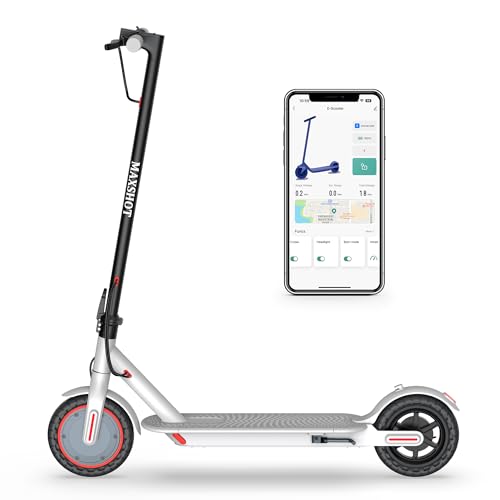
MAXSHOT V1 Folding Electric Scooter
Strengths
- Lightweight
- Affordable
- Solid tires
Trade-offs
- Weak motor
- Basic suspension
- Small tires
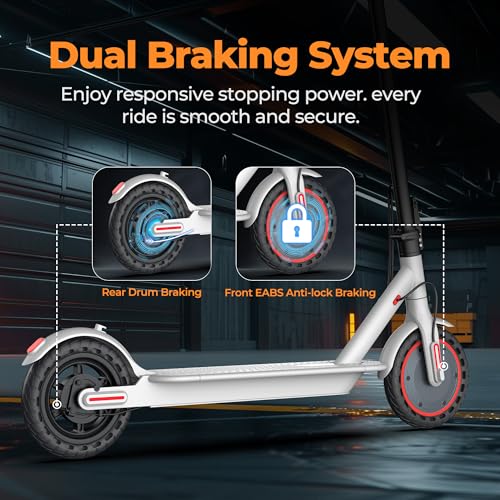
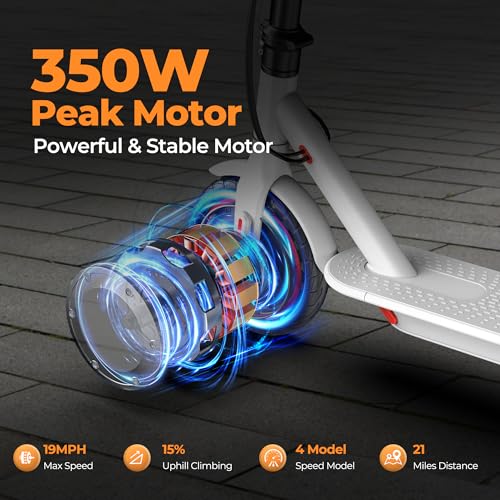
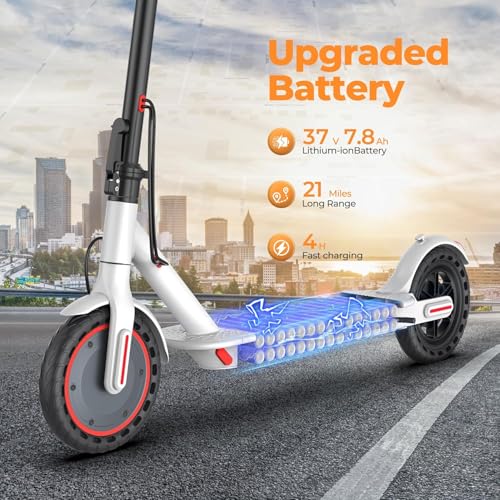
At under $160, this MAXSHOT is a compelling budget entry, but it’s clearly built down to hit that price. The 350W motor feels underpowered on anything beyond flat streets, and the 8.5-inch solid tires, while maintenance-free, transmit more vibration than larger models. It’s light at 31 lbs and folds fast, great for carrying onto transit, but don’t expect it to smooth out serious bumps.
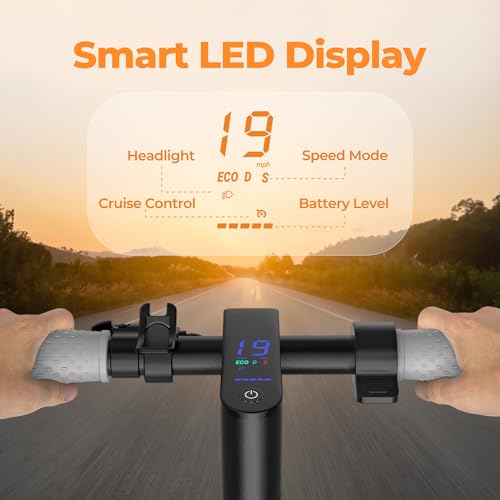
Owners praise its simplicity and app integration, but the dual braking system lacks the bite of disc or drum setups on pricier models. Compared to the AOTOS M1, it’s less refined and has weaker suspension. I wouldn’t recommend it for daily use on rough roads. But if you’re a light rider doing short, smooth commutes and want something affordable and portable, it gets the basics right.
Product photos
How We Picked These electric scooters for bumpy roads
My approach to evaluating electric scooters, particularly those meant to handle rougher terrain, isn’t about long-term ownership or personal experience with each model. Rather than a hands-on lab test, this is a research-led comparison of published specifications, owner reviews, and expert analysis. I sifted through data points from numerous sources, weighing the stated capabilities against what riders are actually reporting in the real world. This ensures a realistic assessment for those seeking a reliable ride.
For electric scooters designed to conquer bumpy roads, a few factors stood out as critical. Suspension – both front and rear – is paramount, as is tire construction. The ability to absorb shocks directly impacts rider comfort and control. Equally important is the motor’s power (wattage) and the frame’s build quality. A robust frame prevents unsettling vibrations and maintains stability at higher speeds over uneven surfaces. We also looked closely at braking systems; responsive and reliable stopping power is essential when tackling varied terrain. You can find more general guidance in our overview of the best electric scooters.
Specifications reliably indicate a scooter’s potential – motor wattage, battery capacity, tire size, and braking type. However, owner feedback provides crucial context. I paid close attention to reports on real-world range, the effectiveness of the suspension, and durability over time. Reputation matters, too. Brands consistently praised for build quality and customer support were given more consideration. For riders needing extra support, exploring electric scooters for heavy adults can provide additional peace of mind.
How To Choose The electric scooters for bumpy roads
Picking the right electric scooter for bumpy roads isn’t just about finding one that works; it’s about finding one that complements your riding style and the terrain you’ll regularly encounter. A smooth ride and reliable performance depend on a careful look at the key specs.
A truly capable electric scooter for rough terrain balances motor power with suspension, tire design, and frame integrity. Prioritize scooters with at least a 500W motor, robust suspension systems (both front and rear are ideal), and pneumatic or thick solid tires. Look for frames constructed from durable materials like aluminum alloy, and check owner reviews for reports of frame flex or vibration.
Motor Power and Climbing Ability
Don’t underestimate the importance of wattage. While a 350W motor might suffice for flat surfaces, tackling hills or consistently riding on uneven ground demands more. I recommend looking for scooters with at least a 500W motor, and ideally something in the 800W to 1600W range if you frequently encounter steep inclines. However, wattage isn’t everything; consider the battery voltage alongside it. A higher voltage paired with adequate amperage delivers more torque. You’ll also want to pay attention to the scooter’s stated climbing angle; 20° is good, but 25° or 30° will open up more options for truly challenging terrain.
Suspension and Tires: The Comfort Factor
This is where a lot of cheaper scooters fall short. A rigid frame and hard tires will transmit every bump directly to your body. Look for scooters equipped with both front and rear suspension. Hydraulic suspension is superior to spring-based systems, offering more precise control and adjustability. When it comes to tires, you have two main choices: pneumatic (air-filled) and solid. Pneumatic tires provide a more comfortable ride and better grip, but they’re susceptible to flats. Solid tires are puncture-proof, but generally offer a harsher ride. If you opt for solid tires, ensure they’re honeycomb-patterned to offer some level of shock absorption. If you’re looking for more information on this, you can explore other options like electric scooters with suspension.
- A longer suspension stroke (the amount the suspension can compress) is better for absorbing larger bumps.
- Wider tires generally provide more stability and grip, especially on loose surfaces, but can slightly reduce top speed.
- Tire pressure (for pneumatic tires) is critical. Under-inflated tires increase rolling resistance and the risk of pinch flats, while over-inflated tires reduce comfort.
Value, Build Quality, and Range
It’s tempting to go for the cheapest option, but a poorly built scooter will quickly become frustrating and potentially unsafe. I’ve seen too many scooters with flimsy folding mechanisms or questionable braking systems. Look for scooters constructed from aircraft-grade aluminum alloy and featuring reliable braking systems (dual brakes are preferable). Don’t skimp on safety certifications either; UL 2272 is a good baseline. And, of course, consider range. If you plan on longer commutes or exploring trails, you’ll want to investigate long-range electric scooters to ensure you won’t be left stranded.
Don’t fall for inflated range claims. Actual range is heavily influenced by rider weight, terrain, and riding style. Expect to get 60-80% of the advertised range in real-world conditions.
Electric Scooters for Bumpy Roads Compared
Here’s a comparison of key specifications for electric scooters designed to handle rough terrain.
| Product Name | Motor Power (W Peak) | Max Speed (MPH) | Max Range (Miles) | Suspension | Tire Type | Max Load (lbs) |
|---|---|---|---|---|---|---|
| VAXEN J2MAX | 1600 | 34 | 40 | Front/Rear | Pneumatic | 300 |
| 1200W Off-Road Electric Scooter | 1200 | 30 | 28-33 | Front/Rear | Off-Road | 330 |
| ECOROAD 1000W Peak | 1000 | 31 | 40 | Front/Rear | Tubeless | 330 |
| Gyroor C1S | 550 | 19 | 20 | Front | Vacuum | 265 |
| 500W Dual Suspension Commuter | 500 | 22 | 31 | Front/Rear | Honeycomb | 265 |
| AOTOS M1 | 550 | 20 | 28 | Front | N/A | N/A |
| Hiboy S2 Pro | 500 | 19 | 25.6 | Rear | Solid | 220 |
| MAXSHOT V1 | 350 | 19 | 21 | N/A | Solid | 265 |
Frequently Asked Questions
What tire pressure should I use for pneumatic tires on bumpy roads?
Generally, a lower tire pressure (within the manufacturer’s recommended range, of course) will improve shock absorption and grip on rough surfaces. Most scooters recommend between 35-45 PSI, but dropping to the lower end of that range – around 35 PSI – can offer a more comfortable ride without significantly impacting range or speed.
How much does suspension type (spring vs. hydraulic) really affect the ride?
Hydraulic suspension provides far superior control and adjustability compared to spring-based systems. While spring suspension offers some bump absorption, hydraulic systems allow you to fine-tune the ride based on your weight and the terrain, resulting in a consistently smoother experience.
Are solid tires a viable option if I don’t want to worry about flats?
Solid tires, particularly honeycomb-patterned ones, are a reasonable compromise if you prioritize puncture resistance. However, you’ll definitely feel more vibration compared to pneumatic tires. If you frequently encounter significant bumps, I recommend prioritizing ride comfort with air-filled tires and carrying a patch kit.
What’s the benefit of a scooter with dual motors?
For challenging terrain, powerful dual-motor models offer increased torque and improved traction compared to single-motor scooters. This is especially noticeable when climbing hills or riding on loose surfaces, providing a more stable and controlled experience.
What safety precautions should I take when riding on bumpy roads?
Beyond wearing a helmet, I strongly advise assessing your route for hazards and reducing your speed when encountering uneven surfaces. It’s also crucial to be familiar with scooter safety for commuting, including proper braking techniques and maintaining a safe distance from pedestrians and obstacles.
The Bottom Line
Choosing an electric scooter for bumpy roads often comes down to balancing your budget with your desired level of comfort and performance. While spending more generally yields a smoother, more capable ride, it’s not always necessary. For a blend of power, suspension, and range, the VAXEN J2MAX stands out as a strong all-around performer – it’s built to handle significant abuse and deliver a comfortable experience, even on challenging surfaces.
However, if you’re prioritizing affordability without completely sacrificing ride quality, the 500W Dual Suspension Commuter is a solid choice. For those needing something a bit more versatile for both on and off-road, the 1200W Off-Road Electric Scooter offers a compelling combination of power and ruggedness. And for riders concerned about weight restrictions, understanding the electric scooter weight limit is crucial for both safety and performance.
Ultimately, the best electric scooter is the one that best fits your needs. Don’t get overly fixated on peak wattage or maximum speed. Focus instead on build quality, suspension design, and tire type, as those are the elements that will truly determine how comfortably and confidently you navigate those bumpy roads and ensure you’re finding the best electric scooters for adults.
