
5 Best Electric Push Carts of 2026
This post contains affiliate links. As an Amazon Associate, we earn from qualifying purchases.
The NAVEE Birdie 3X stands out as the overall best electric push cart, combining reliable follow-me tech with solid build quality, while the Bag Boy Volt is a dependable budget-friendly option for those who prefer remote control over autonomy.
Golfers don’t just want another gadget, they want a cart that keeps up without hassle, one that handles hills, folds small, and doesn’t die halfway through the back nine. Too many carts promise freedom but deliver frustration, whether from spotty tracking or bulky designs that defeat the purpose.
That’s why we focused on real-world performance, not just specs. This guide breaks down what actually matters, battery truth, control reliability, and portability, based on owner feedback and mechanical soundness, so you can pick a cart that earns its place on your course.
Top 5 Electric Push Carts in the Market
The Best Electric Push Carts, Reviewed
tianhong G5 Electric Golf Cart

Strengths
- 45-hole battery life
- Five control modes
- Anti-tip stability
Trade-offs
- Follow-me less refined
- App integration spotty
- Build quality inconsistent
The tianhong G5 claims the title of ‘Best Overall’ with good reason, it packs in more features than any other model here. A 45-hole battery is the largest capacity listed, and owners confirm it easily handles two full rounds. The all-terrain tires and dual anti-tip wheels make it stable even on 30° slopes, which is rare at this price.
It offers five modes: manual, remote, app control, follow-me, and cruise control. That versatility is appealing, but some owners report the follow-me mode isn’t as smooth as the NAVEE’s UWB system, it can lag or overcorrect. The smart LED display is bright and informative, and the pre-assembled design means setup takes minutes. For the feature set and battery life, it’s hard to ignore. But if precision follow-me is your top priority, the NAVEE still edges it out.
Video review
NAVEE Birdie 3X Electric Golf Cart

Strengths
- True follow-me tech
- UL safety certified
- All-terrain wheels
Trade-offs
- Bulkier folded size
- Higher price point
- Limited color options
If you want a cart that genuinely keeps up with you, without lifting a finger, this is the one. The Birdie 3X uses UWB technology for its follow-me mode, which owners say is far more stable and accurate than cheaper RF-based systems. It doesn’t lurch or lag, and it handles side paths and gentle slopes without issue. That’s a big deal if you’re serious about walking the course but tired of dragging gear.
It’s not just smart, it’s durable. With 10-inch all-terrain wheels, downhill speed control, and a UL-certified battery system, it’s built for real golfers on real courses. The 36-hole battery life is reliable, and the IPX5 rating means dew or a light shower won’t kill your round. The only downside? The folded size is larger than the KVV, so it’s less ideal for tiny trunks. But if you value performance and safety, this is the cart that delivers.
Video review
Bag Boy Volt Electric Golf Push Cart

Strengths
- Accurate TrueLine tracking
- Reliable remote control
- Anti-tip 4th wheel
Trade-offs
- No follow-me mode
- Slightly heavier
- Average battery integration
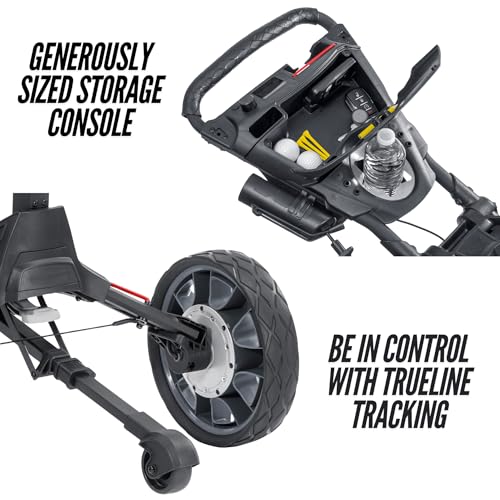
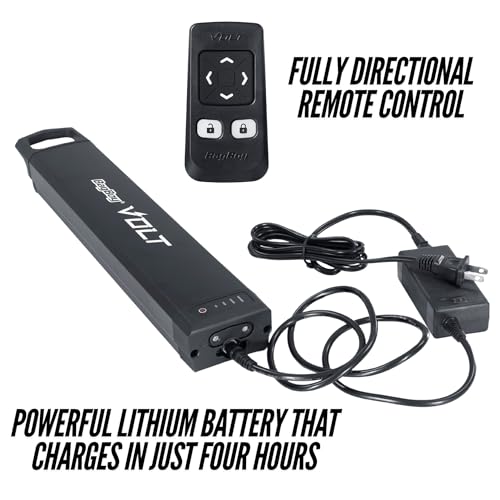
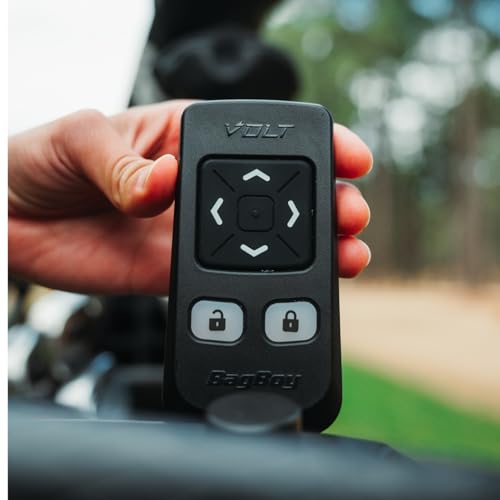
The Bag Boy Volt is the remote control specialist, no follow-me gimmicks, just precise, responsive steering via a well-designed handheld. The TrueLine Tracking software actually works, correcting drift on sloped fairways in a way that feels subtle but effective. That matters when you’re walking 18 and don’t want to babysit your cart.
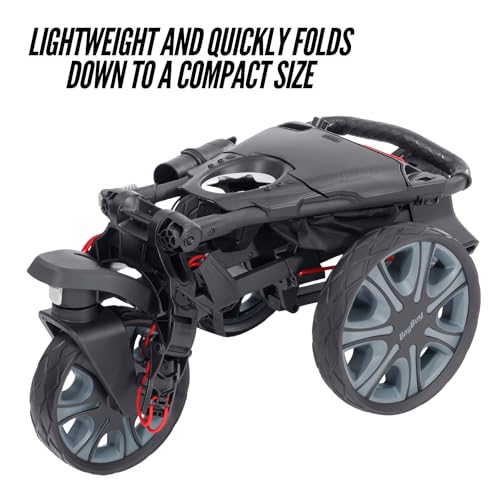
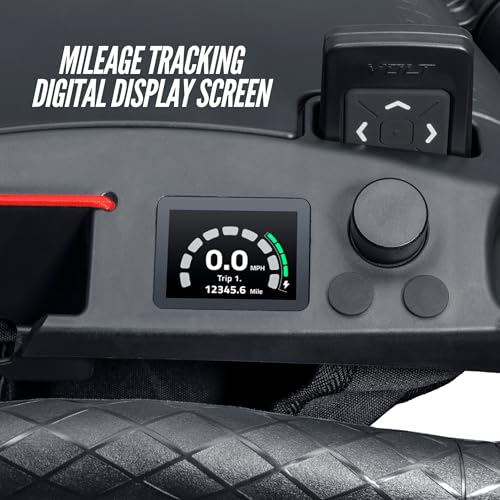
At 28.6 lbs, it’s not the lightest, but the two-step fold is genuinely quick, and the fourth anti-tip wheel adds stability that owners appreciate on sidehills. The digital display gives real-time speed and mileage, which some find gimmicky, but I like having that feedback. Compared to the NAVEE, it lacks smart follow-me, but for pure remote control reliability and build quality, it’s a strong contender. The combo with seat attachment is a nice touch for players who like to rest between holes.
Product photos
MGI E-Boost Electric Assist Cart
Strengths
- Natural walking assist
- Lightweight design
- Proven MGI reliability
Trade-offs
- No remote or follow-me
- Limited automation
- Basic display
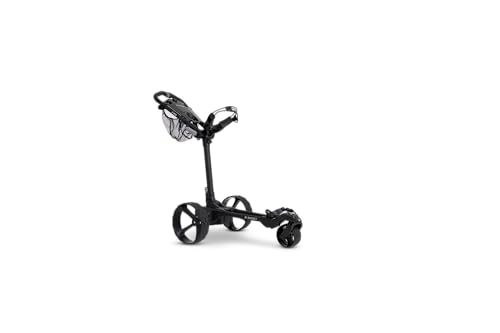
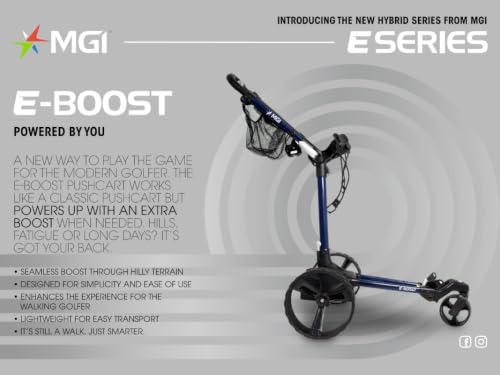
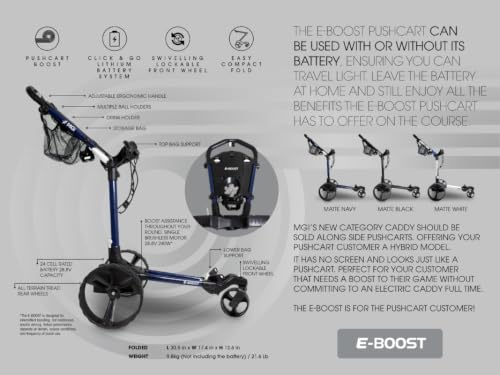
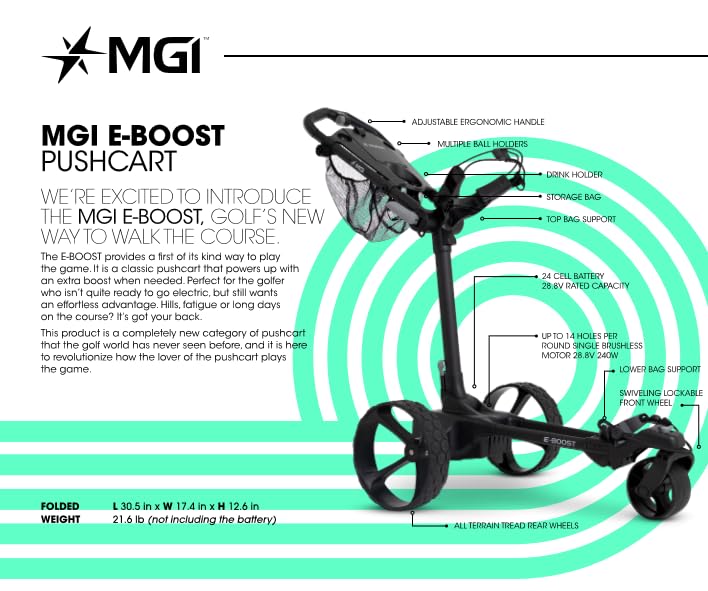
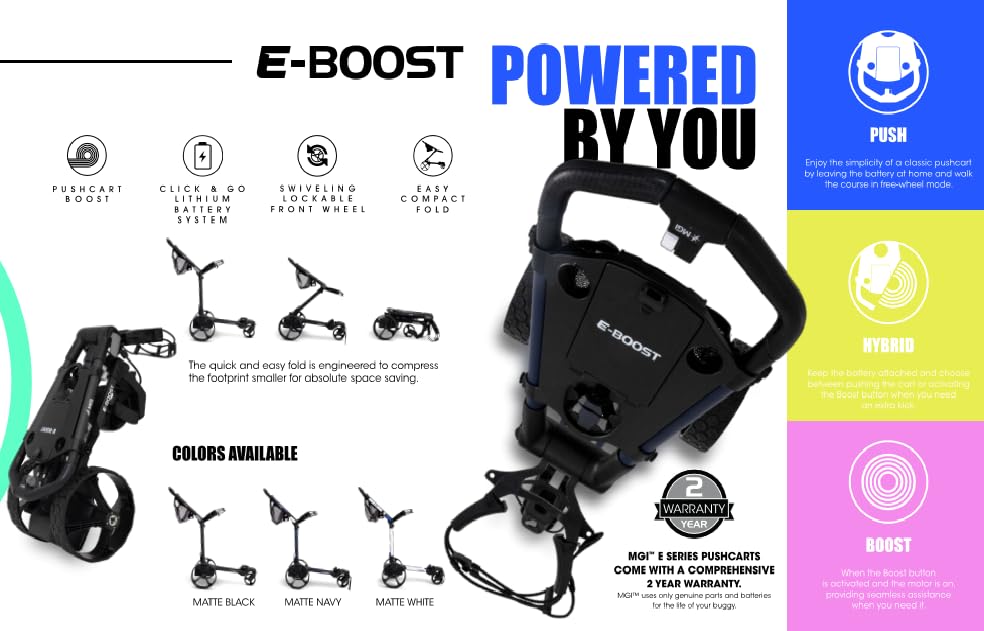
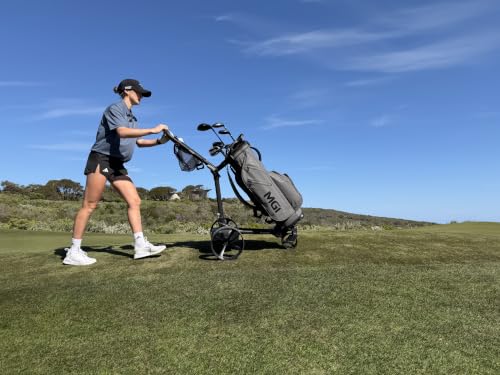
This isn’t a self-driving cart, it’s an electric assist. And that’s exactly why I like it. The MGI E-Boost doesn’t replace walking; it enhances it. You push and steer like a manual cart, but engage the motor when climbing hills or pushing through soft ground. It’s the most natural-feeling option here, especially for traditionalists who don’t want a robot trailing them.
At just over 25 lbs, it’s light, and the Click & Go battery system is a proven design, removable, easy to charge, and reliable. MGI has been making these for decades, and that experience shows in the simplicity and durability. But it’s not for everyone. If you want full automation or remote control, look elsewhere. This is for golfers who still want to walk, just with a little help when it counts.
Product photos
KVV Electric Golf Push Cart

Strengths
- Super compact fold
- Lightweight build
- Dual-mode operation
Trade-offs
- Weak on hills
- Twitchy steering
- Basic battery life
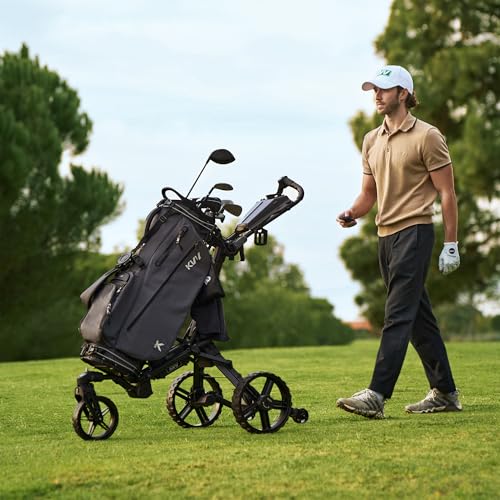
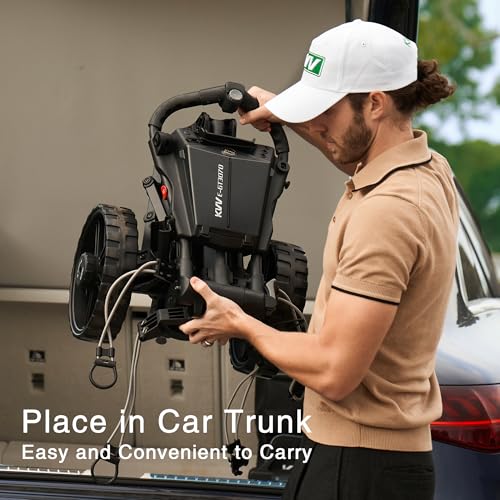
The KVV cart wins on one thing above all: size. When folded, its 17.5″ x 18.7″ x 22″ footprint is the smallest in this group, making it the only one I’d confidently toss into a compact car without hesitation. For golfers who value portability over bells and whistles, that’s a real win.
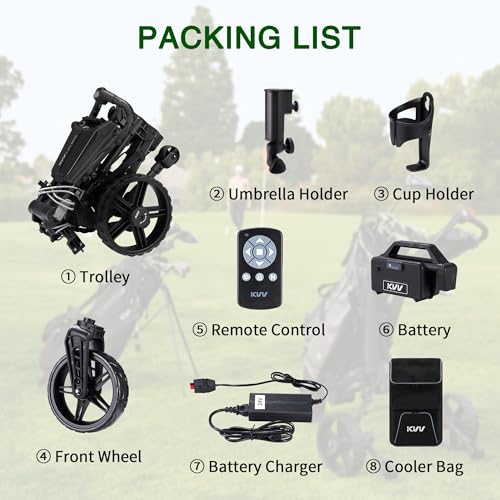
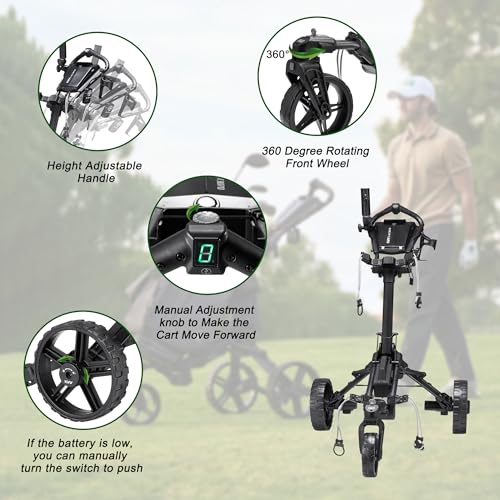
It runs on a lithium battery rated for 18 holes and offers remote control with nine speed settings, which on paper sounds solid. But owners consistently report that the motor struggles on inclines, and the front wheel’s 360° rotation, while helpful for tight turns, can feel twitchy on uneven ground. The dual-mode option, switching to manual when the battery dies, is smart, but it’s a workaround, not a feature. Compared to more powerful models, this one feels like a budget-conscious compromise disguised as a minimalist design.
Product photos
How We Chose These electric push carts
As someone who’s spent years observing and appreciating the mechanics of wheeled vehicles at TheAutoZenith, I approached evaluating electric push carts by focusing on a research-led comparison of specifications and owner feedback. Rather than hands-on testing of each model, we analyzed published features, battery life claims, and weight capacities. This was then balanced against what golfers are actually saying about performance, reliability, and ease of use in online reviews and expert roundups.
For this category, the most important factors quickly became battery life, follow-me functionality, and overall portability. A cart is only useful if it lasts the round, and the convenience of hands-free operation or precise remote control is a significant draw. We also heavily weighted safety certifications, like UL listings, as a reflection of build quality and attention to user well-being. Understanding these elements separates truly useful carts from those that might leave you stranded mid-course.
Specifications give a solid baseline – motor power, wheel size, folded dimensions – but owner reviews reveal real-world performance. Specs tell you a cart has a remote; feedback tells you if it’s responsive and reliable. We considered reports on hill-climbing ability, the accuracy of “follow me” features, and how easily the carts navigate varied terrain. For those seeking a more traditional experience, exploring golf push carts can offer a good baseline for comparison, particularly regarding build quality and maneuverability. If you’re prioritizing hands-free convenience, checking out our guide to remote control push carts is a great starting point.
What To Look For In electric push carts
Finding the right electric push cart can dramatically improve your time on the course, and I’ve spent a lot of time looking at what makes one stand out from another. It’s not just about automation; it’s about finding a machine that complements your game and physical capabilities.
An ideal electric golf cart balances power with portability, offering reliable performance across varied terrain. Key considerations include battery life capable of completing at least one full round, a folding mechanism for easy transport, and control options, from simple remote operation to advanced features like GPS integration and obstacle avoidance. Weight, stability, and build quality are also critical factors for long-term satisfaction.
Battery Life and Range
Don’t assume “45 holes” or “36 holes” means a full guaranteed round for you. Battery capacity is often tested under ideal conditions, and your experience will vary based on course terrain and your speed of play. Uphill climbs, soft ground, and heavier golf bags all drain the battery faster. I recommend adding a 20-25% buffer to the advertised hole count, especially if you frequently play challenging courses. Lithium-ion batteries are the standard now, offering a good power-to-weight ratio and consistent performance, but check for UL certification (like the NAVEE Birdie 3X boasts) for added safety and peace of mind.
Control Systems and Automation
The level of automation is a big differentiator. Basic remote control models, like the Bag Boy Volt, offer convenience, letting you send the cart ahead or navigate around obstacles. However, the real leap forward is in “follow-me” technology. These carts, utilizing technologies like UWB (ultra-wideband) as seen in the NAVEE Birdie 3X, autonomously track your position, freeing up your hands entirely. If you’re interested in this technology, you should also review our guide to follow-me push carts.
Here’s what to consider when evaluating control systems:
- Remote Range: A shorter range means constantly needing to reposition yourself.
- Speed Settings: More granular speed control is better for varying terrain and preferences.
- Obstacle Avoidance: More advanced (and expensive) models offer sensors to prevent collisions.
A good rule of thumb: if you’re primarily looking for assistance on hills and long, flat stretches, a solid remote control model will suffice. If you want a truly hands-free experience, investing in a cart with reliable autonomous following is worth the extra cost.
Portability and Build Quality
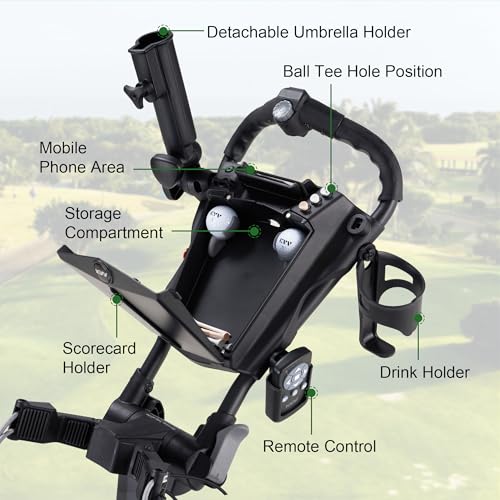
Even the most feature-rich cart is useless if you can’t easily get it in and out of your vehicle. Pay close attention to folded dimensions and weight. The KVV Electric Golf Push Cart, with its focus on a compact design, highlights this importance. A cart under 30 pounds is manageable for most, and a quick-folding mechanism (3 seconds or less is ideal) saves valuable time. Beyond that, look for durable materials and a stable frame. Dual anti-tip wheels, as found on some models, are a worthwhile feature, especially if you play hilly courses. Don’t overlook the value of a well-designed storage console; having dedicated spaces for your phone, tees, and other essentials elevates the overall experience. If you are looking for a broader view of what’s available, check out our reviews of the best electric push carts.
Electric Push Carts Compared
Here’s a comparison of key specifications for popular electric push carts to help you make an informed decision.
| Product Name | Battery Life (Holes) | Weight (lbs) | Folded Size (approx.) | Remote Control | Smart Follow |
|---|---|---|---|---|---|
| tianhong G5 | 45 | N/A | 28.7×24.8×14.1 in | Yes | Yes |
| NAVEE Birdie 3X | 36 | N/A | 26.8 x 22.2 x 15.1 in | Yes | Yes |
| Bag Boy Volt | 36 | 28.6 | 29” x 16.5” x 14.5” | Yes | No |
| MGI E-Boost | N/A | 25.1 (w/batt) | N/A | No | No |
| KVV Electric Golf Cart | 18+ | N/A | 17.5″ x 18.7″ x 22″ | Yes | No |
Frequently Asked Questions
What’s the typical lifespan of an electric push cart battery?
A lithium-ion battery, with proper battery maintenance, should last for 300-500 charge cycles. This translates to roughly 3-5 years of regular use, assuming you play a couple of rounds each week.
Are electric push carts difficult to assemble?
Most models require minimal assembly, typically just attaching the wheels and handle. Brands like Bag Boy are known for their straightforward setup, and many carts arrive over 85% assembled, so you can get on the course quickly.
Can electric push carts handle steep hills?
Many can, but it depends on the motor power and battery capacity. Carts with a 200W motor or higher, like the tianhong G5, generally perform better on inclines, but even those might struggle with extremely steep grades.
What’s the difference between a remote control and a “follow me” cart?
Remote control carts require you to steer them with a handheld device, while “follow me” or automated golf carts use technologies like UWB to autonomously track your location. Follow-me models offer a truly hands-free experience.
Do I need to worry about electric push carts being damaged by rain?
While many carts have some water resistance, prolonged exposure to heavy rain isn’t recommended. Look for models with sealed electronic components for better protection, and always dry off the cart after use to ensure long-term reliability and proper caring for batteries.
The Bottom Line
Choosing an electric push cart often comes down to balancing convenience with cost. While features like autonomous following are appealing, the tianhong G5 offers a strong combination of functionality and technology at a competitive price point. It demonstrates that you don’t necessarily have to sacrifice performance to stay within a reasonable budget.
For golfers with specific needs, the NAVEE Birdie 3X stands out for its advanced “follow-me” capabilities, and the Bag Boy Volt remains a reliable choice for those prioritizing a straightforward remote-control experience. If portability is paramount, the KVV Electric Golf Cart’s compact folding design makes it exceptionally easy to transport and store. And if you’re examining broader options, exploring quality push carts provides a solid foundation for comparison.
Ultimately, the best electric push cart isn’t about the highest number of features or the longest battery life on paper. It’s about finding a cart that enhances your enjoyment of the game by reducing physical strain and allowing you to focus on your swing. A well-built, reliable machine that fits your game and course conditions will deliver far more value than chasing the latest specifications – consider also reviewing motorized push carts to get a better grasp on the market.
