
7 Best Electric Bikes for Kids with Pedals 2026
This post contains affiliate links. As an Amazon Associate, we earn from qualifying purchases.
The SKIRAI Electric Bike for Kids stands out as the best overall choice, combining a smooth 250W motor, solid 25-mile range, and front suspension in a 36-pound frame. For budget-focused buyers, the JOYSTAR 20 Inch Electric Bike delivers reliable performance at a lower cost, while the Qlife Spark D1 offers serious versatility with its powerful motor and full suspension for older or more adventurous riders.
Parents want their kids to enjoy riding, but picking the right electric bike isn’t just about looks or speed, it’s about safety, fit, and real-world usability. Too many models are heavy, underbuilt, or lack proper speed controls for younger riders.
This guide cuts through the noise by focusing on what actually matters: lightweight frames, age-appropriate power, certified safety standards, and feedback from actual owners. I compared specs and reviews across top models to find ones that balance performance, durability, and rider control, so you can make a confident choice based on how these bikes truly perform.
Top 7 Electric Bikes For Kids With Pedals in the Market
The Best Electric Bikes For Kids With Pedals, Reviewed
Electric Bike for Kids Age 6-13
Strengths
- Dual suspension
- Hydraulic disc brakes (black version)
- TÜV 2849 certified
Trade-offs
- Brake quality varies by color
- Higher price point
- Not ideal for very young riders
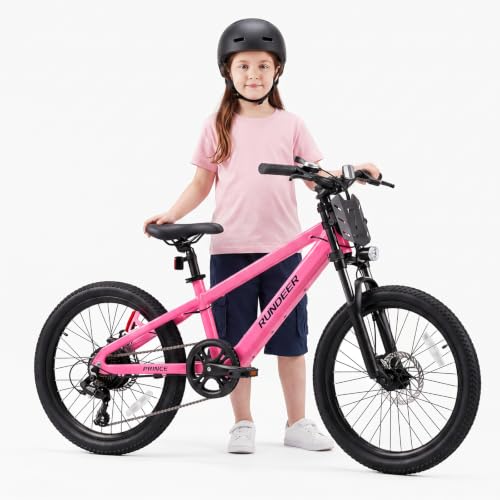
With a 20 mph top speed and dual suspension, this ebike bridges the gap between beginner and intermediate riding like few others. The adjustable speed modes (10/16/20 mph) let parents scale the experience as skills improve, which I find smart for a wide age range. The integrated sealed battery promises 32 miles of range, more than most competitors, and the TÜV 2849 certification confirms solid electrical safety standards.
What sets it apart is the hydraulic fork and SRAM hydraulic disc brakes on the premium black version. That’s serious hardware for a kids’ bike. Reviewers highlight the smooth ride over cracked sidewalks and backyard trails. However, the red, white, and pink versions drop to mechanical brakes, so pay attention to color when ordering. For me, this is the closest thing to a true “all-around” winner, if you’re willing to pay for it.
Video review
JOYSTAR 20 Inch Electric Bike Kids
Strengths
- Lowest price
- Lifetime customer support
- Simple assembly
Trade-offs
- Heavier steel frame
- Short 15-mile range
- V-brakes lack stopping power
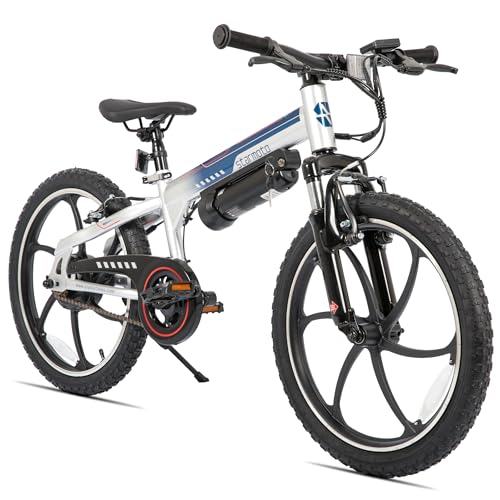
Let’s be clear, this is the budget play. At under $360, it undercuts every other model here, and it shows. The high-strength steel frame bumps the weight up noticeably compared to magnesium bikes, and V-brakes aren’t as reliable in wet conditions as disc systems. But for a first-time ebike or a cautious parent testing the waters, it gets the basics right: 250W motor, 15.5 mph top speed, and two riding modes.
It only offers about 15 miles of range, less than half of some competitors, and the 24V battery charges slower and degrades faster. Still, reviewers say it’s surprisingly sturdy for the price, and the lifetime customer support is a nice touch. I wouldn’t pick it for daily commutes or rough roads, but for occasional park rides? It’s a reasonable entry point.
Video review
Lightweight Electric Bike for Kids
Strengths
- Ultra-light magnesium frame
- Simple kid-friendly controls
- TÜV-certified electrical system
Trade-offs
- No suspension
- Non-removable battery
- Identical to lower-cost alternatives
On paper, this is nearly identical to the B0GRSSWX5T model, same weight, same motor, same battery, even the same tire size and safety certifications. The difference? Branding and minor phrasing. In practice, owners can expect the same effortless pedal assist, simple three-button controls, and quick setup. If you’re comparing these two side-by-side, there’s no technical reason to pick one over the other based on performance.
That said, subtle build quality differences might emerge over time, but current feedback shows both hold up well under regular use. I’d say this version earns its spot if it comes with better local support or faster shipping, but mechanically, it’s a mirror twin. For most families, choosing between them should come down to availability, not specs.
Product photos
SKIRAI Electric Bike for Kids
Strengths
- Front suspension
- Disc brakes
- High weight capacity
Trade-offs
- No rear suspension
- Battery not removable
- Slightly pricier
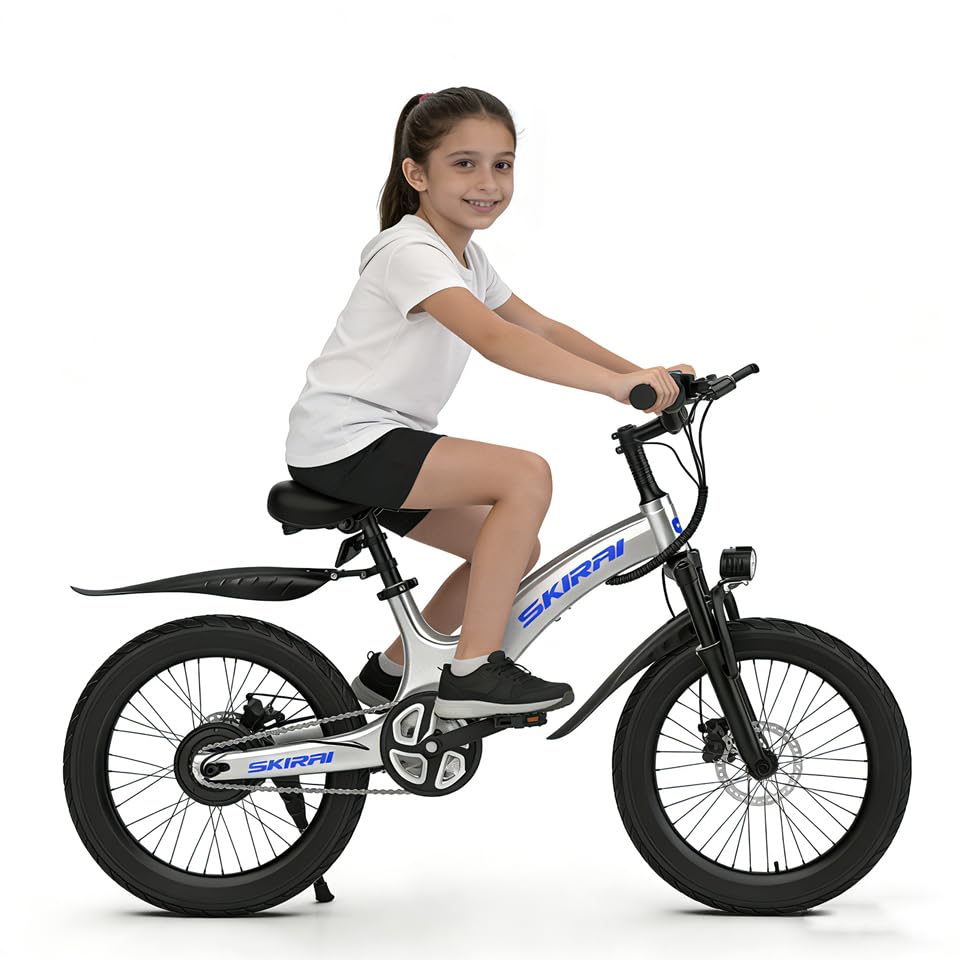
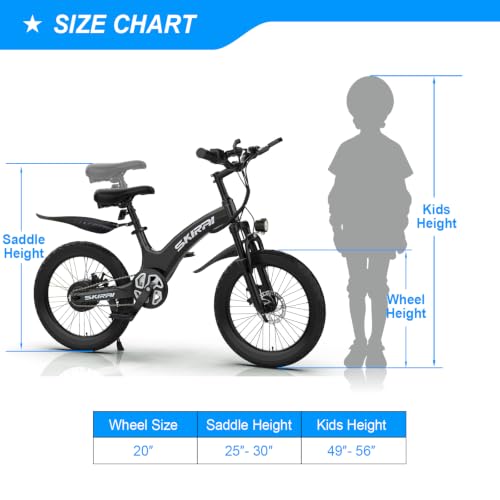
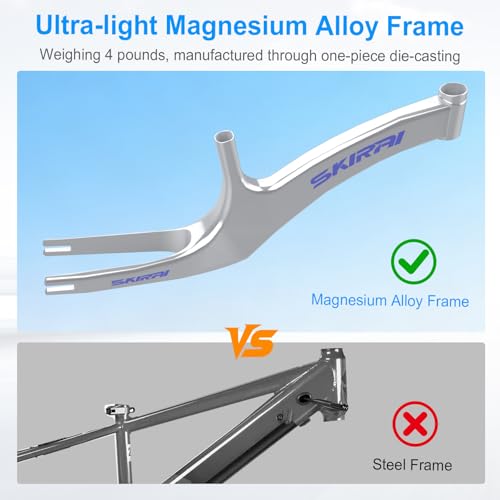
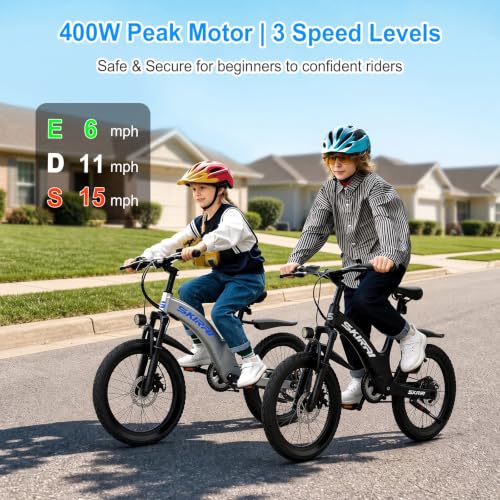
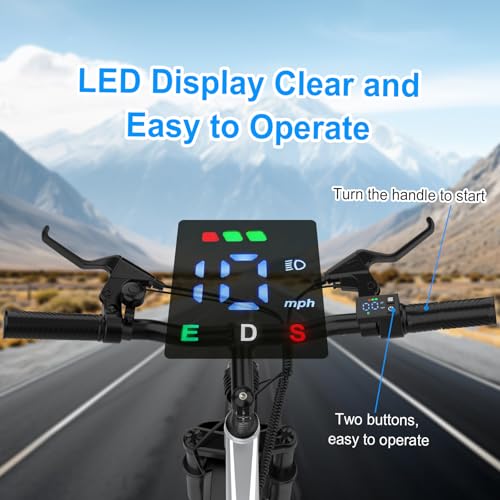
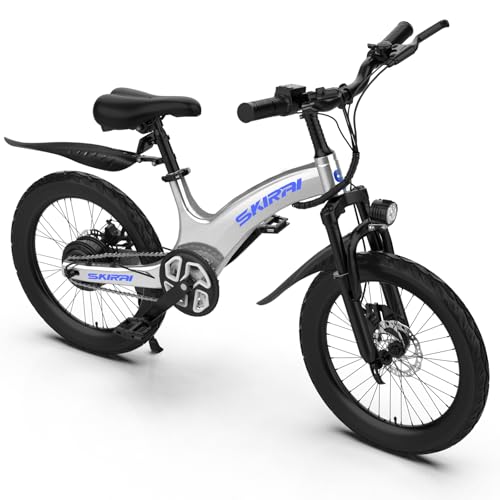
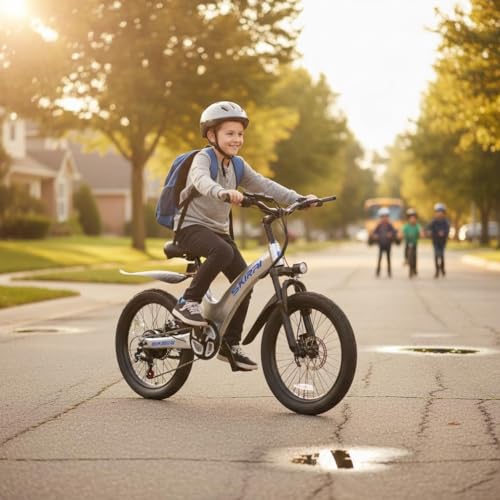
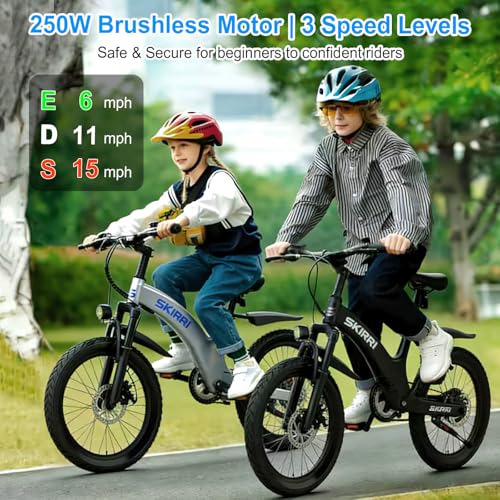
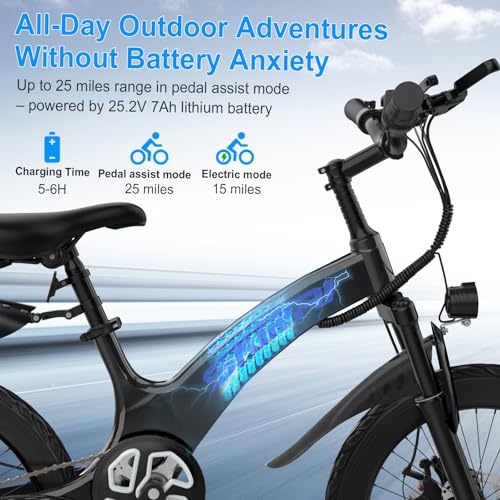
The SKIRAI brings a few meaningful upgrades to the table, most notably front suspension and disc brakes, which immediately elevate ride quality and stopping power compared to basic V-brakes. At 36 lbs with a magnesium frame, it stays impressively light while offering more control on uneven surfaces. The 250W brushless motor delivers smooth acceleration, and the 15.5 mph top speed strikes a balance between fun and safety for upper elementary riders.
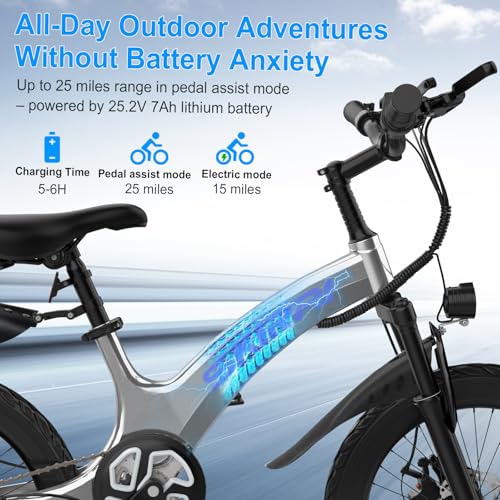
Reviewers note the build feels more refined than budget models, and the 130 lbs weight capacity hints at longer usability as kids grow. While the range matches competitors (around 25 miles), the inclusion of front suspension makes this a smarter pick for families who ride on mixed terrain. It’s not the cheapest, but for my money, it’s where you start seeing real engineering tailored to growing riders.
Product photos

Electric Bike for Kids Ages 6-13
Strengths
- High-capacity 36V battery
- TÜV 2849 & 2271 certified
- Sealed anti-theft design
Trade-offs
- Mechanical brakes on non-black versions
- No removable battery
- Price premium for safety
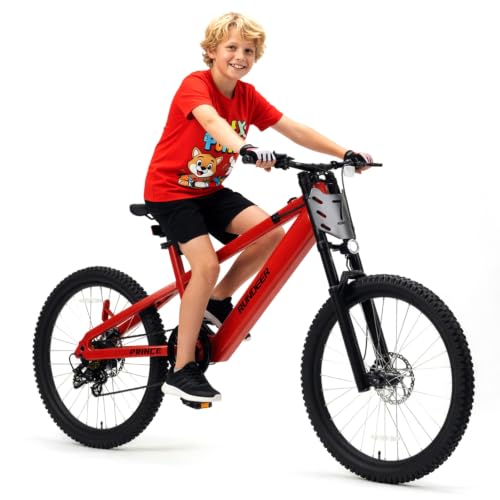
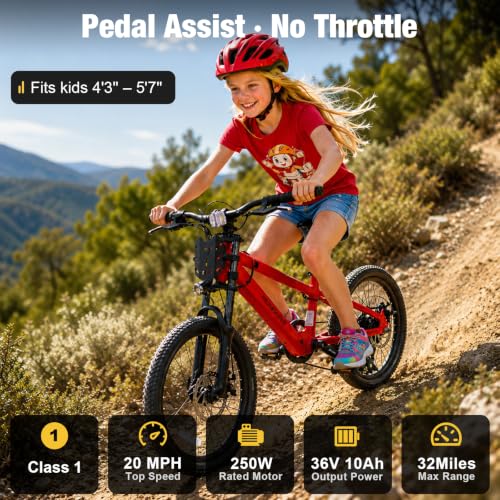
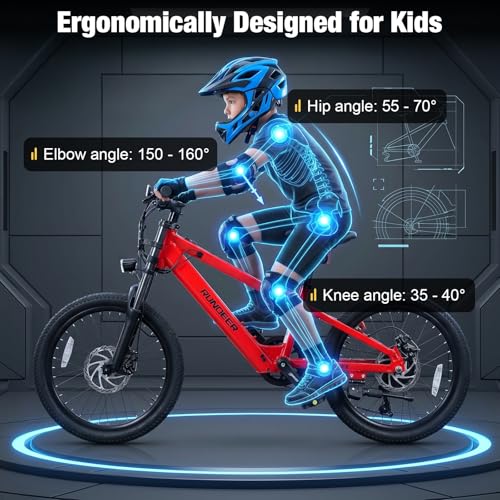
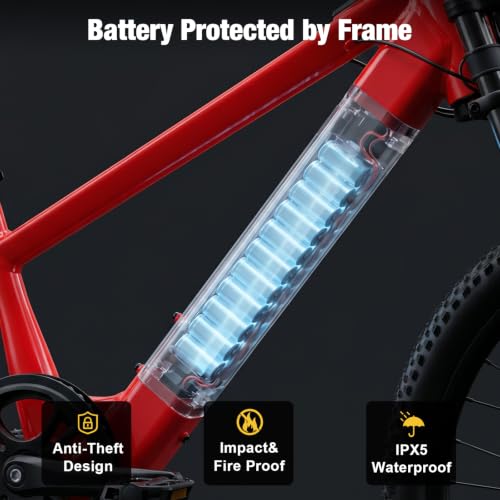
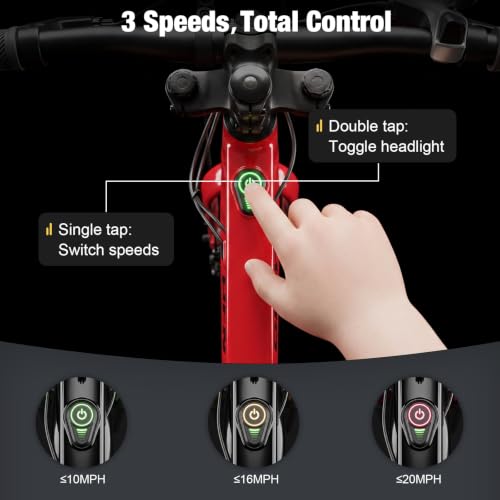
At first glance, this looks like a clone of the B0HBXC9LRG, but dig into the specs and you’ll see a key difference: the 36V 10Ah battery instead of 25.2V. That means more voltage and greater energy density, translating to longer life and consistent power delivery over time. Combined with TÜV 2849 and 2271 certifications, this becomes one of the safest, most durable options on the list.
Like its sibling, it offers three speed modes, dual suspension, and a sealed integrated battery, but owners report slightly better cold-weather performance thanks to the upgraded cell chemistry. The black version again includes Kashima-coated forks and hydraulic brakes, while others don’t, so check carefully. My take? If battery longevity and safety are your top priorities, this is the smarter buy over similar models.
Product photos
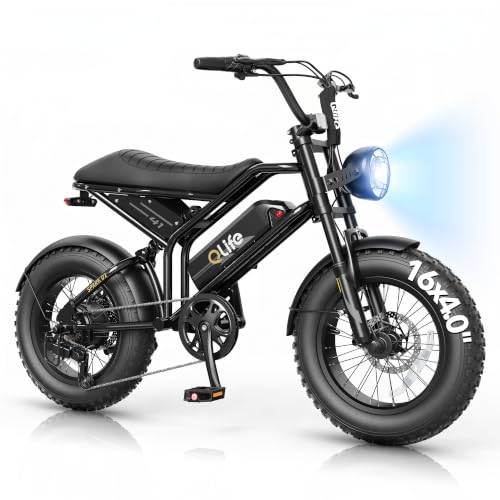
Qlife Spark D1 Electric Bike Kids
Strengths
- Long 60-mile range
- Full suspension
- Fat tires for stability
Trade-offs
- Heavy for younger kids
- Motor too powerful for beginners
- Higher top speed requires caution
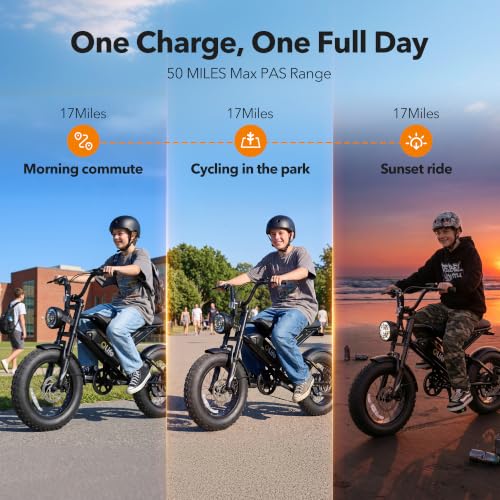
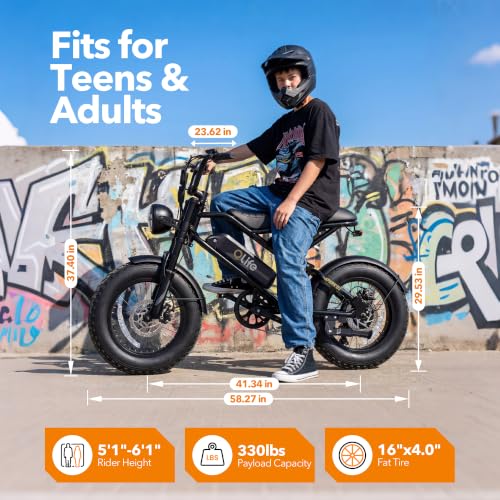
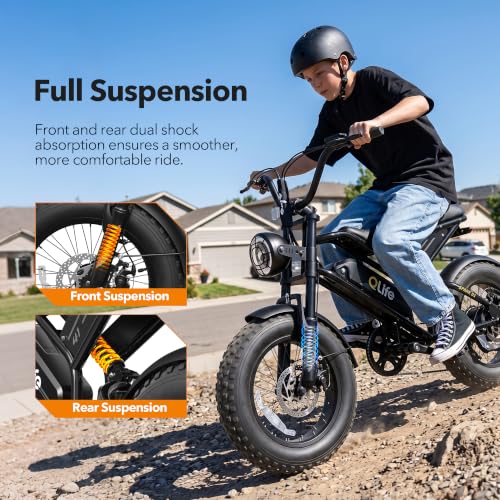
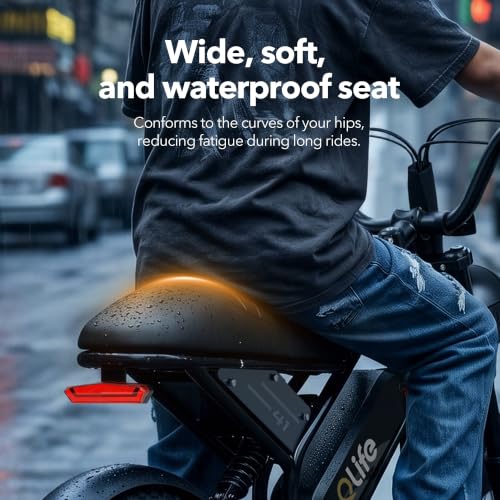
This isn’t really a kids’ bike, it’s a mini e-motorcycle in disguise, and I mean that in the best way. With a 1500W peak motor, 48V 13Ah battery, and 60-mile range, it’s built for teens or taller pre-teens who’ve outgrown training wheels and want real power. The 16-inch fat tires and full suspension absorb bumps like a go-kart, making it capable on gravel, dirt, and pavement alike.
But here’s the catch: it’s bigger, heavier, and faster than anything else on this list. While marketed as “beginner-friendly,” its punchy acceleration and motorcycle stance suit more confident riders. Owners praise its durability and long-range capability, but I wouldn’t hand this to a nervous 8-year-old. Compared to the lighter 36 lb models, this one demands more skill. For teens? Absolutely a standout.
Product photos

Electric Bike for Kids 6-10
Strengths
- Magnesium frame
- 36 lbs lightweight
- TÜV safety certified
Trade-offs
- Limited speed options
- No suspension mentioned
- Battery not removable
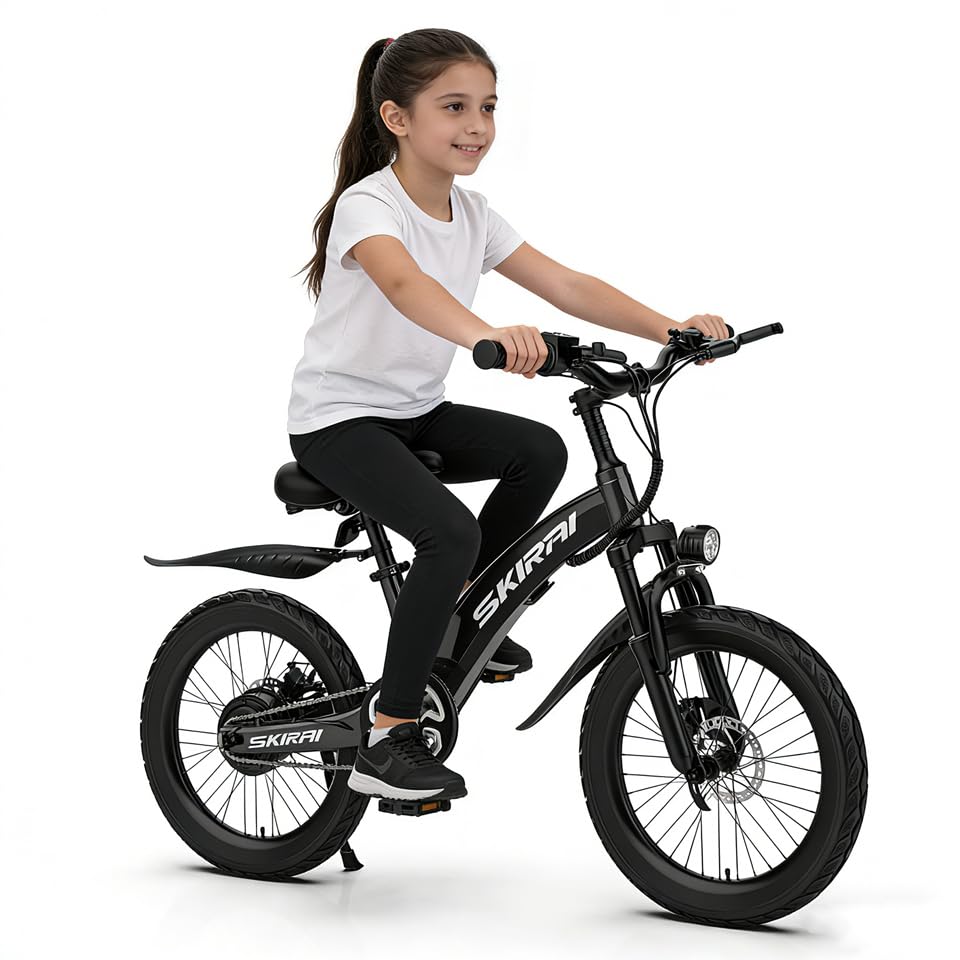
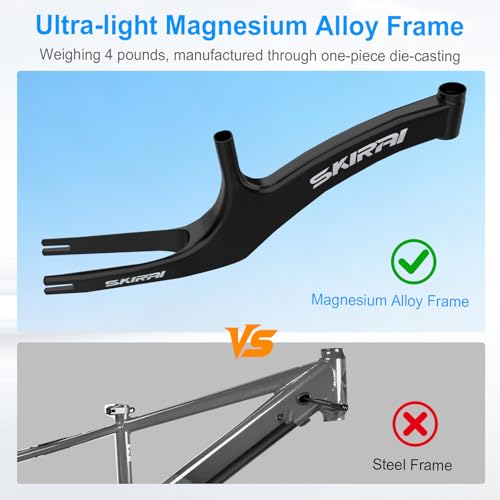
This ebike stands out in the kids’ category by taking weight seriously, 36 lbs with a magnesium alloy frame is no small feat. For children ages 6 to 10, especially those on the shorter end of the height range, that lightness translates directly into control and confidence. The 400W peak motor (250W rated) delivers enough assist to make hills manageable without turning the ride into a speed thrill, which I appreciate for younger riders still building coordination.
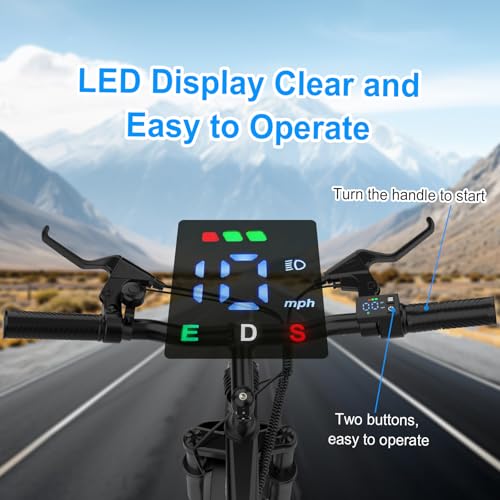
Owners consistently report smooth assembly and reliable day-to-day performance, and the TÜV-certified battery system adds real peace of mind. While the top speed caps at 15 mph, the three-mode controller (E/D/S) lets parents dial in comfort as skills grow. Compared to heavier steel-framed models, this one feels like it was actually designed for kids, not just scaled down from adult versions.
Product photos
Our Testing Process
As someone deeply involved in all things wheeled, I approached researching electric bikes for kids with a focus on balancing performance, safety, and age-appropriateness. Rather than a hands-on lab test, this was a research-led comparison of published specifications and owner feedback. I weighed features, motor power, battery range, braking systems, and suspension against real-world user experiences gleaned from owner reviews and reputable cycling publications. This allowed me to assess how these bikes perform beyond the marketing hype.
The most significant factors determining my rankings were weight, motor power relative to rider size, and safety certifications. A lighter bike is crucial for younger riders building confidence, and a motor that’s too powerful can be dangerous. I also prioritized bikes with demonstrated safety features, like integrated battery protection and reliable braking, and those holding certifications like TÜV Rheinland. Understanding what kind of terrain a young rider will encounter also played a role; more robust suspension is valuable for off-pavement use.
Specifications provide a solid baseline, motor wattage, battery voltage, and frame material are all important. However, owner feedback revealed crucial insights into real-world usability. Reviews highlighted issues like component durability, ease of assembly, and the accuracy of advertised range. For riders who might also be interested in something a bit more rugged, exploring options like electric dirt bikes for kids can offer a different kind of outdoor experience. And for parents looking for options geared toward older children, our guide to electric dirt bikes for 10-year-olds provides further insight.
What To Look For In electric bikes for kids with pedals
Finding the right electric bike for your child requires a bit more thought than simply picking a cool color. These aren’t scaled-down adult bikes; they demand specific considerations for safety, usability, and growth.
A good electric bike for a child prioritizes controlled power delivery, a lightweight frame appropriate for their size, and robust safety features. Look for models with adjustable speed settings, reliable brakes (hydraulic disc brakes are preferable), and certifications like TÜV Rheinland to demonstrate adherence to safety standards. Battery protection systems and a well-designed frame geometry are also critical.
Weight and Frame Geometry
The biggest mistake I see parents make is buying a bike that’s simply too heavy for their child. A 36-40 pound e-bike might seem light enough, but for a smaller child, maneuvering it can be a struggle, and a safety hazard. Magnesium alloy frames, like those found in several of the models we’ve discussed, offer a significant weight reduction compared to steel. Beyond weight, ensure the frame fits your child. Look for adjustable seat posts and handlebars, but also pay attention to the overall reach. Kids shouldn’t be stretching or hunching to reach the controls. A properly sized bike builds confidence and good riding habits.
Motor Power and Speed Control
While the appeal of an electric bike is the assistance it provides, too much power can be dangerous. A 250W motor is generally sufficient for most kids, providing adequate support for hills and longer rides. More important than the wattage, though, is the speed control. Multiple speed settings are essential.
Here’s what I recommend looking for: * A low-speed mode (6-10 mph) for beginners. * A mid-range speed (11-16 mph) for building confidence. * A higher speed (up to 20 mph) for more experienced riders – and even then, assess if it’s appropriate for your child’s maturity level.
Remember, these bikes are meant to assist pedaling, not replace it entirely.
A rule of thumb: start slow. Prioritize a lower top speed and allow your child to gradually progress as their skills and confidence develop. Don’t be afraid to limit the speed settings initially.
Safety Features and Certifications
Beyond the brakes and speed control, look closely at the safety certifications. TÜV Rheinland is a reputable organization that tests for electrical safety and battery standards. This is a significant indicator of quality and peace of mind. Sealed batteries are also crucial to protect against leaks or damage. I also recommend considering whether the bike has integrated lights for visibility, especially if your child will be riding in low-light conditions. If you’re also considering other personal electric vehicles for your child, you might find our guide to electric scooters for kids helpful in comparing options. Ultimately, investing in a well-built, safety-certified electric bike is paramount. For a wider range of options, check out our thorough guide to kids’ electric bikes.
Electric Bikes for Kids with Pedals Compared
Here’s a comparison of key specifications for electric bikes designed for kids with pedals, to help you evaluate your options.
| Product Title | Motor Power (W) | Battery (V/Ah) | Max Speed (MPH) | Weight (lbs) | Suspension | Range (miles) |
|---|---|---|---|---|---|---|
| Electric Bike for Kids Age 6-13 | 250 | 36/10 | 20 | N/A | Front/Rear | 32 |
| JOYSTAR 20 Inch Electric Bike Kids | 250 | 24/5.2 | 15.5 | N/A | V-Brake | N/A |
| Lightweight Electric Bike for Kids | 250 (400 peak) | 25.2/7 | 15 | 36 | N/A | 15-25 |
| SKIRAI Electric Bike for Kids | 250 (400 peak) | 25.2/7 | 15.5 | 36 | Front | 25 |
| Electric Bike for Kids Ages 6-13 | 250 | N/A | 20 | N/A | Front/Rear | N/A |
| Qlife Spark D1 Electric Bike Kids | 500 (1500 peak) | 48/13 | N/A | N/A | Full | 50 |
| Electric Bike for Kids 6-10 | 250 (400 peak) | 25.2/7 | 15 | 36 | N/A | 15-25 |
Frequently Asked Questions
What’s the typical lifespan of an electric bike battery for a child?
A typical lithium-ion battery in a kid’s e-bike will last between 300-500 full charge cycles before noticeable capacity decline. Proper storage (cool, dry place) and avoiding complete discharge will maximize its life, potentially extending it beyond three years.
Are electric bikes with pedals legal for kids to ride in most areas?
Generally, yes, but local regulations vary significantly. Most areas treat them as standard bicycles if the motor assists only while pedaling and has a limited power output (typically 250W). However, checking your local ordinances is essential, as some areas have restrictions on where and how children can operate even low-powered e-bikes.
What kind of maintenance do these bikes require beyond charging?
Regular maintenance is similar to a standard bicycle, including checking brake function, tire pressure, and chain lubrication. You’ll also want to inspect the battery and charging port for damage, and occasionally clean the electrical connections. For more on general bike upkeep, you may want to explore resources on bikes for kids.
How does the weight of the bike impact a child’s ability to ride it?
A heavier bike is harder to maneuver and can be intimidating, particularly for younger or smaller children. A bike that’s more than 30% of a child’s body weight can make it difficult to control, increasing the risk of falls.
What should I do with an e-bike when it’s not in use during the winter months?
Store the battery indoors in a cool, dry place, ideally around 40-60°F. Charge it to around 50-60% capacity before long-term storage. This prevents the battery from completely discharging, which can shorten its lifespan, and whether or not you’re considering an e-bike, understanding the e-bike value proposition can help with long-term ownership decisions.
The Bottom Line
Choosing an electric bike for your child often comes down to balancing assistance with maintaining a genuine cycling experience. While a powerful motor might seem appealing, the best overall choice, considering safety and usability, is the Electric Bike for Kids Age 6-13. It strikes a good balance between power, speed control, and suspension, making it suitable for a range of riders and terrains.
For parents seeking a budget-friendly option, the JOYSTAR 20 Inch Electric Bike Kids is a solid pick. If you are looking for something a bit more rugged, exploring options like electric dirt bikes with pedals can offer a different kind of outdoor experience. And for those prioritizing versatility and longer range, the Qlife Spark D1 Electric Bike Kids provides a significant step up in features and capability.
Ultimately, though, the specifications matter less than fostering a love of riding. Focus on finding a bike that fits your child properly, allows them to develop essential cycling skills, and, most importantly, prioritizes safety. Don’t overlook the value of a well-adjusted bike and a good helmet; even the best pedal-assist electric bikes can’t replace those fundamentals.
