
7 Best Electric Dirt Bikes for Kids 2026
This post contains affiliate links. As an Amazon Associate, we earn from qualifying purchases.
The ECOLEAP K2 and DEETAGO 36V 1000W stand out as the top choices, with the ECOLEAP K2 being our overall favorite for its balance of power and safety. For younger or less experienced riders, the ECOLEAP K1 offers strong range and reliability at a more manageable speed.
Picking an electric dirt bike for a kid isn’t just about handing them something that goes fast. Too many parents end up with underpowered or poorly built models that don’t last, or worse, create unsafe situations due to weak brakes or unpredictable performance. As someone who’s spent years deep in the mechanics of two- and four-wheeled machines, I know what separates a toy from a real starter ride.
This guide cuts through the noise by focusing on real-world specs, owner feedback, and critical factors like battery life, braking, and build quality. These picks aren’t based on hype, they’re grounded in what actually works for kids riding off pavement.
Top 7 Electric Dirt Bikes For Kids in the Market
The Best Electric Dirt Bikes For Kids, Reviewed
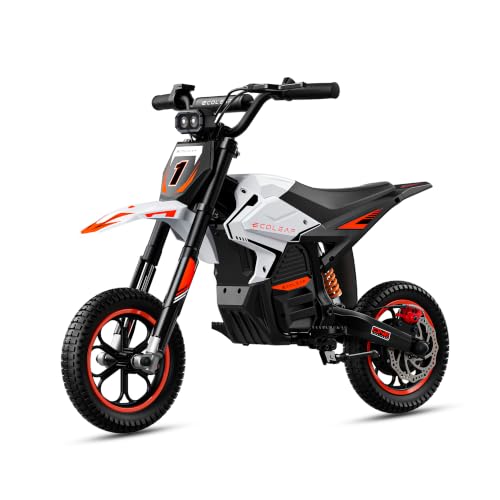
ECOLEAP K2 Kids Electric Dirt Bike
Strengths
- Mechanical disc brake
- Hydraulic front suspension
- UL-certified battery
- Chainless drive system
Trade-offs
- Heavier than most
- Higher price point
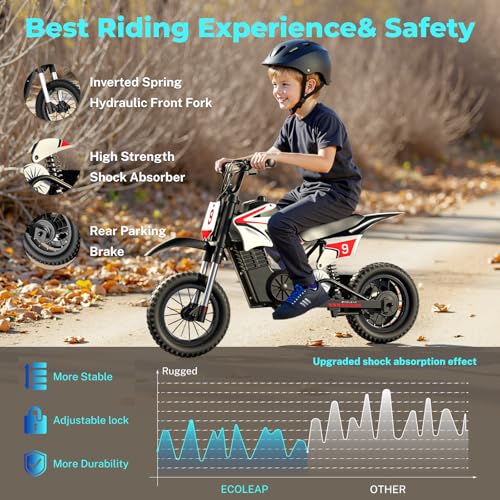
If you’re looking for the most complete package in this category, the ECOLEAP K2 is hard to beat. It earns the ‘Best Overall’ label not just for power, but for thoughtful engineering, like the mechanical disc brake and hydraulic front fork, which are rare at this level. The 750W peak motor pushes it to nearly 20 MPH, and while that sounds fast, the three-tiered speed control gives parents real authority over how much throttle a child can access. Reviewers highlight how smooth and quiet the chainless drive system feels compared to traditional chain-driven models, which means less maintenance and no fear of jamming.
The 18-mile range is impressive, and the UL 2271-certified battery with BMS protection adds real peace of mind. At 41.89 lbs, it’s not the lightest, but the truss frame keeps it balanced. I’d pick this over the K1 or BLAZEGO any day for a rider who’s serious about off-road play and needs durability. It’s built like a mini adult bike, not a toy.
Video review
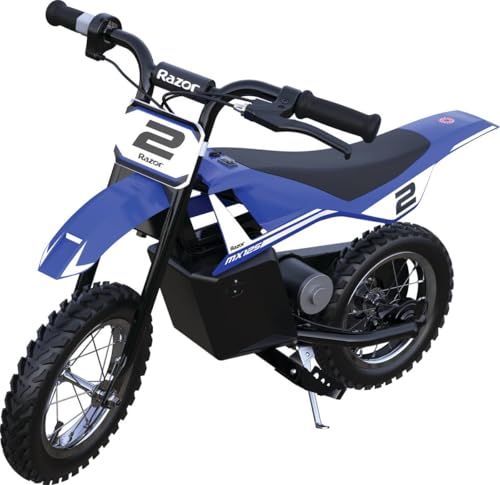
Razor MX125 Electric Dirt Bike
Strengths
- Low entry price
- Authentic motocross look
- Simple, durable build
Trade-offs
- Weak motor
- Short range
- Outdated battery tech
The Razor MX125 is the bare-bones entry point into electric dirt biking, and it shows. With only a 100-watt motor and a top speed of 8 mph, it’s underpowered compared to nearly every other bike here. But that’s not necessarily a bad thing. For a 5- or 6-year-old just learning balance and throttle control, this is a safe, no-fuss starter ride. The chain-driven motor gives it a more authentic feel, and the spoked wheels look the part. It’s also the only model here under $200, making it a logical first bike.
That said, don’t expect long rides or trail capability. The sealed lead-acid battery takes longer to charge and doesn’t last as long as modern lithium units. Owners report it’s best for short bursts in the driveway or flat backyard. I see it as a training wheel for the real thing, fine for beginners, but most kids will outgrow it fast.
Video review
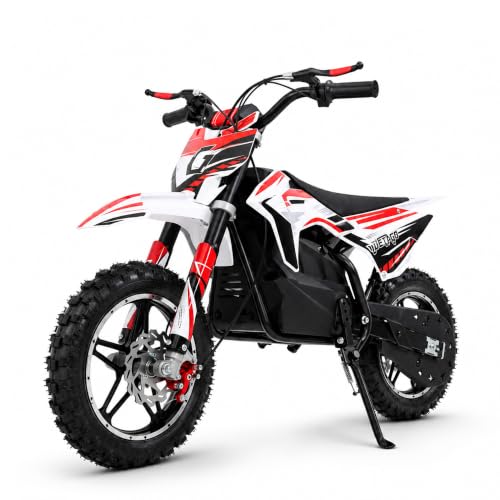
DEETAGO 36V 1000W Kids Dirt Bike
Strengths
- 1000W peak motor
- 18.6-mile range
- Front and rear disc brakes
- Foldable foot pegs
Trade-offs
- 132 lb weight limit
- Heavy steel frame
- High top speed
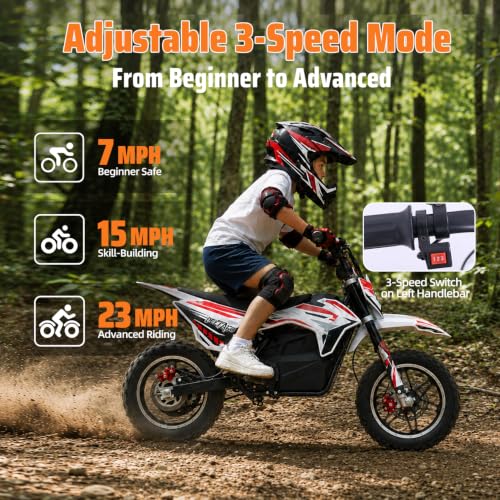
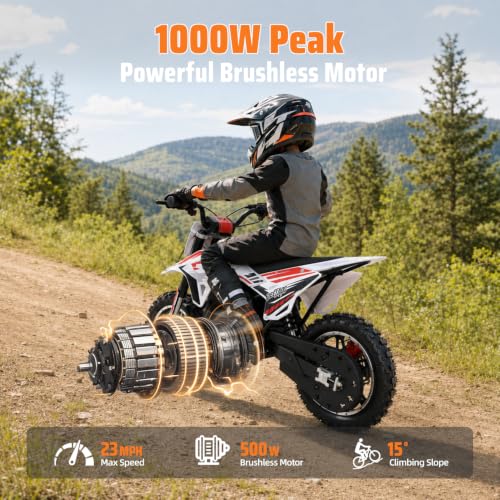
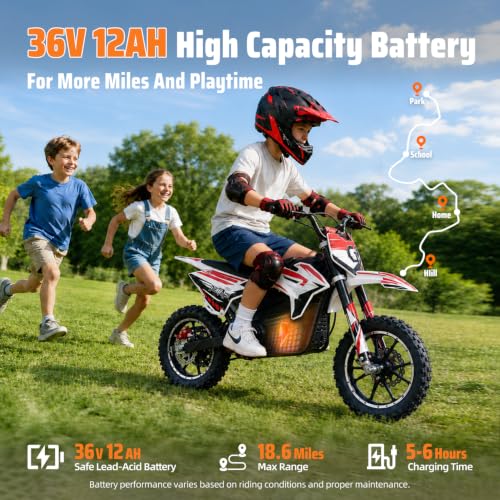
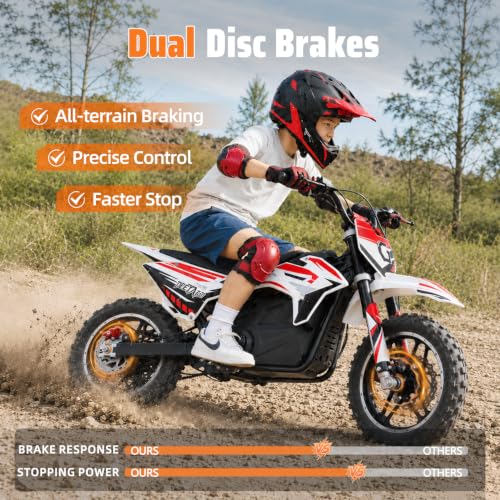
The DEETAGO is built for older, more adventurous kids, and it shows. With a 1000W peak motor and a top speed of 23 MPH, it’s the most powerful bike on this list. That alone makes it the best pick for older riders ages 10–13 who’ve outgrown smaller models. The 18.6-mile range is unmatched, thanks to a massive 12Ah battery, and the dual suspension system handles bumps and jumps better than most. Owners report it climbs 15-degree hills without strain and holds up well on gravel, sand, and packed dirt.
It also stands out with practical touches: foldable foot pegs, a padded chest protector, and 85% pre-assembly. But the 132 lb weight limit feels low for a bike this big, some parents note taller kids exceed it quickly. And while the disc brakes are strong, the frame is steel, not aluminum, so it’s heavier to maneuver. Still, for a growing rider ready for real off-road action, this is the closest thing to a mini pro bike.
Product photos
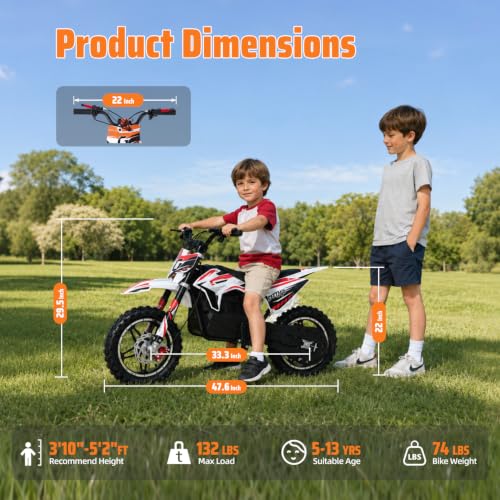
QWAYQ 36V Electric Dirt Bike
Strengths
- 700W peak motor
- 3 safe speed modes
- EABS + drum brake
Trade-offs
- Plastic body durability
- No front suspension
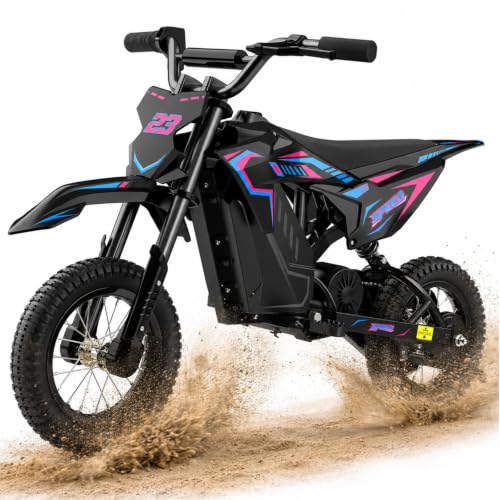
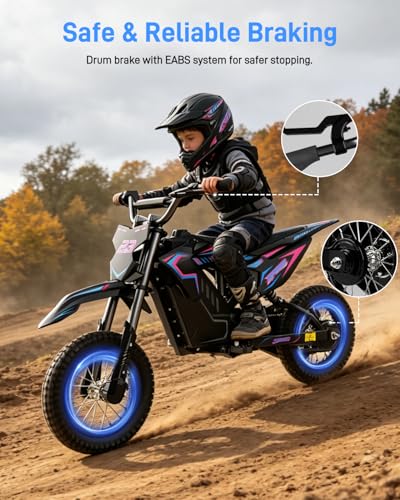
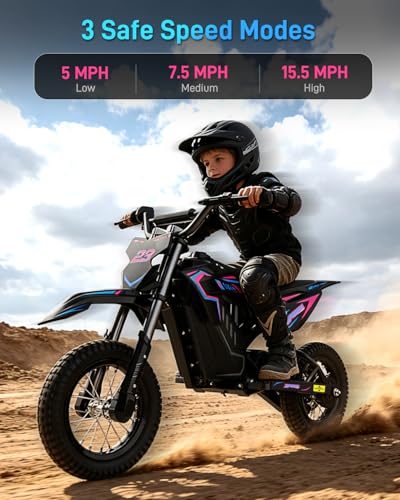
This bike hits a sweet spot between affordability and real off-road function, which is why it stands out as the best value pick. On paper, the 700W peak motor and 36V battery aren’t the strongest in this group, but owners consistently report it handles backyard trails, mild hills, and grassy fields without issue. The three-speed modes are a practical touch, letting younger or less confident riders start slow. I appreciate the inclusion of both EABS and a drum brake, it’s not the most aggressive stopping setup, but it’s stable and predictable, which matters more for this age group.
The 12-inch fat tires and rear suspension do their job smoothing out bumps, though I wouldn’t expect it to replace a full dual-suspension build on rough terrain. Build quality seems solid for the price, but some reviewers note the plastic body panels can feel a bit thin under hard use. Still, for parents wanting a capable starter bike without overspending, this delivers more than its price tag suggests.
Product photos
BLAZEGO EK2 Kids Electric Dirt Bike
Strengths
- Lightweight frame
- 700W peak motor
- 12-mile range
- Rear suspension
Trade-offs
- Drum brake only
- No front suspension
- Average build quality
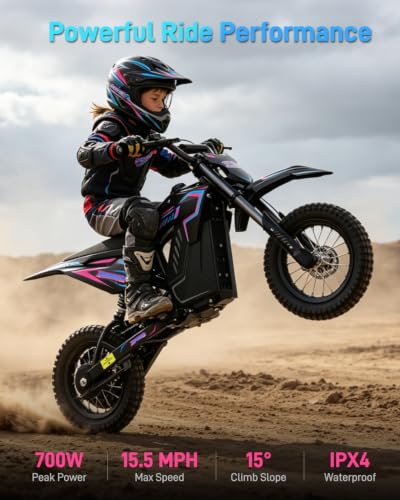
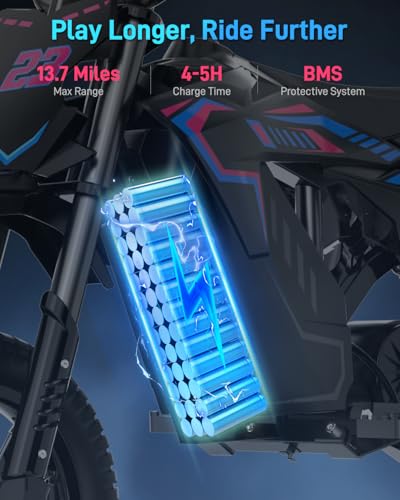
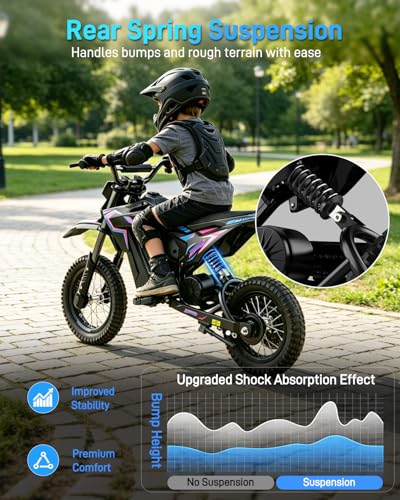
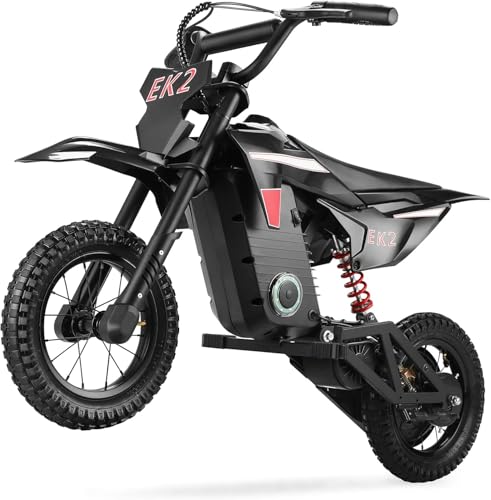
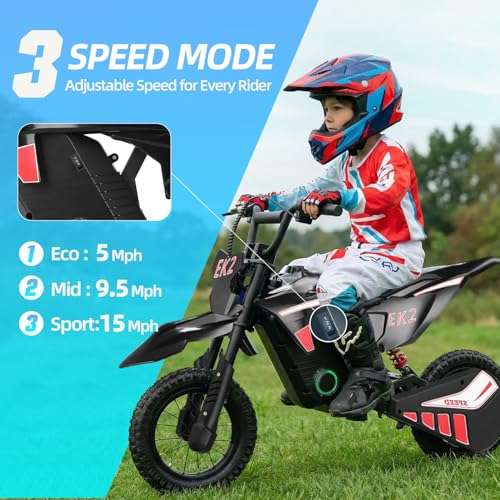
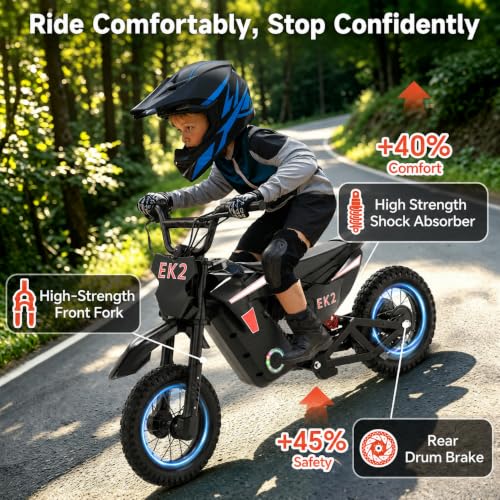
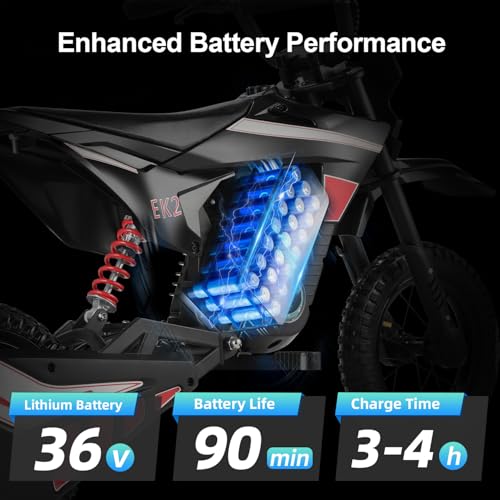
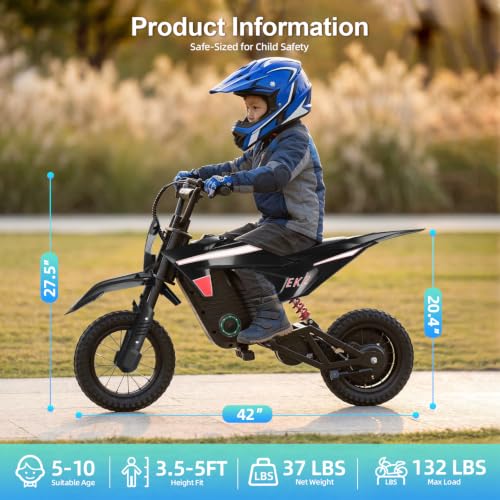
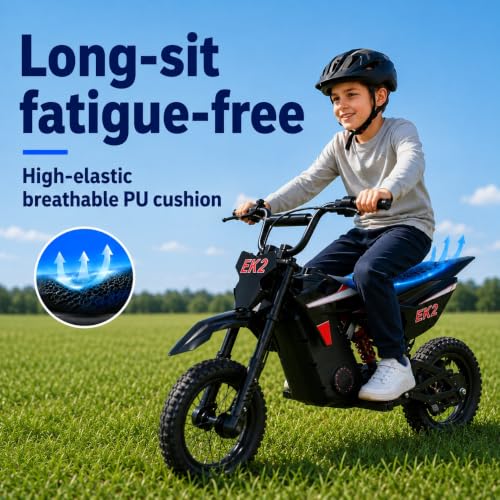
The BLAZEGO EK2 stands out for one reason: it’s light. At just under 36 pounds, it’s one of the easiest electric dirt bikes in this lineup to maneuver, especially for younger or smaller riders. That makes it a smart pick for the ‘Best Lightweight Design’, it won’t intimidate a hesitant beginner. The 700W peak motor delivers a solid 15 MPH, and the 5.2Ah battery promises up to 12 miles of range, which aligns with what most owners report in mixed use. The rear suspension and pneumatic tires help with comfort, though there’s no front suspension, so bumpy trails will feel jarring.
I like the three-speed setup and the fact that it supports riders up to 132 lbs, but the lack of disc brakes holds it back. It uses a drum brake, which is less responsive than the ECOLEAP’s mechanical disc. Still, for a rider who values agility and ease of handling over raw power, this is a strong contender.
Product photos
Hiboy DK1 36V Electric Dirt Bike

Strengths
- Quiet hydraulic suspension
- 3 safe speed modes
- Lithium battery
Trade-offs
- 300W rated motor
- No disc brakes
- Lower weight capacity
The Hiboy DK1 leans hard into safety and quiet operation, which explains its ‘Best for Safety Features’ label. The hydraulic shock fork and high-strength spring deliver a smooth, noise-free ride, owners consistently praise how quiet it is compared to other models. The 300W rated (700W peak) motor can hit 15.5 MPH, but the real story is the three-speed system and stable braking. It’s not the fastest or most powerful, but it’s predictable and well-damped, which matters more for nervous parents or cautious riders.
The 36V lithium battery offers solid 90-minute runtime, on par with others in this class. However, the 140 lb weight limit is lower than the ECOLEAP K2 or DEETAGO, and the lack of disc brakes keeps it from being a top-tier performer. I’d recommend this for families who prioritize a calm, controlled ride over adrenaline.
Product photos



ECOLEAP K1 Kids Electric Dirt Bike
Strengths
- 14-mile range
- UL-2272 certified
- IP54 waterproof body
- 7-color lighting
Trade-offs
- Manual rear brake only
- No front suspension
- Less power than K2
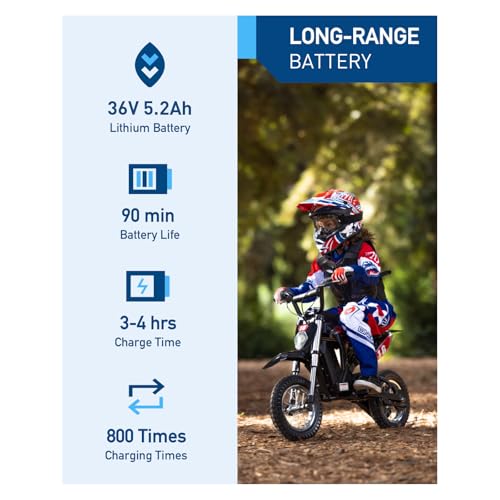
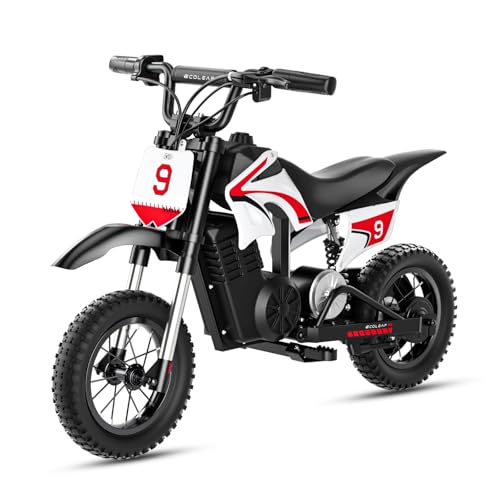
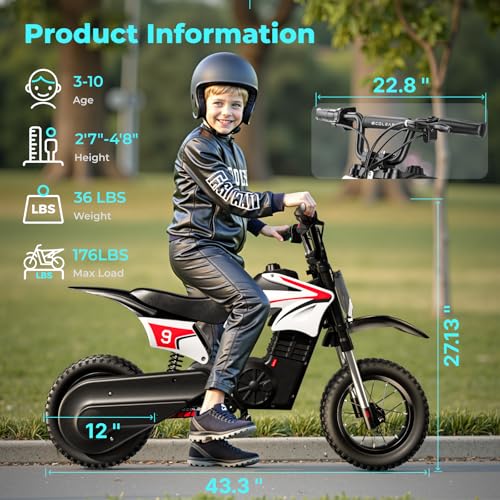
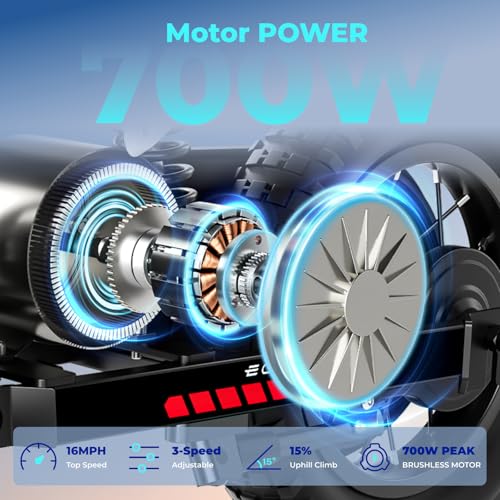
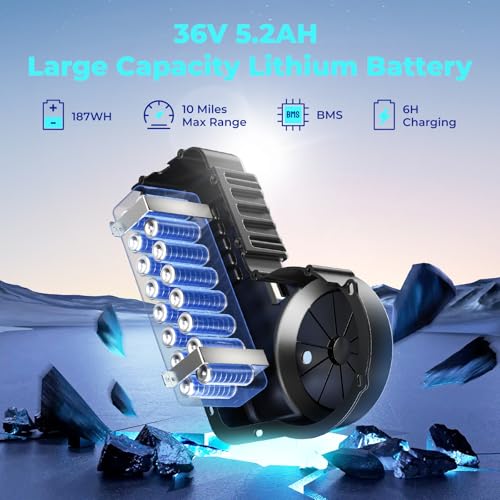
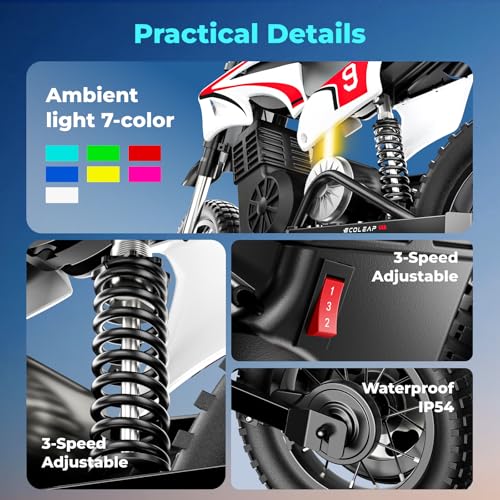
The ECOLEAP K1 is a clear winner for range-focused families. With a 14-mile maximum and a 5.2Ah lithium battery, it outlasts most competitors on a single charge, second only to the DEETAGO and K2. The 700W peak motor and 16 MPH top speed strike a good balance between excitement and safety, and the three-speed modes are well-calibrated for skill progression. I appreciate the UL-2272 certification and IP54 waterproofing, which suggest a higher safety threshold than many budget models.
It’s lighter than the K2 and easier for younger kids to manage, though it lacks the K2’s disc brake and hydraulic fork. The manual rear brake works, but it’s not as responsive. Owners love the 7-color ambient lighting, it adds fun factor, but it doesn’t add performance. Still, if your priority is long, uninterrupted ride time without constant recharging, this is the one to get.
Product photos
How We Chose These electric dirt bikes for kids
Rather than a hands-on lab test, my research for these recommendations focused on a detailed comparison of published specifications and features across numerous models. I weighed owner reviews from multiple retailers alongside professional reviews from automotive and toy publications. As someone who’s spent years exploring the world of two-wheeled vehicles, I applied my understanding of power-to-weight ratios, suspension needs, and safety features to rank these options.
For kids’ electric dirt bikes, battery life and safety features were the biggest deciding factors. A longer run time translates directly to more fun, and a robust battery management system is critical for peace of mind. Equally important is a reliable braking system and a frame designed to handle the stresses of off-road riding. These are areas where a modest price difference can mean a significant difference in performance and rider safety.
Published specifications reliably indicate motor power, battery capacity, and top speed. However, I placed greater emphasis on owner feedback concerning real-world range, build quality, and the effectiveness of safety features like brakes. Reputation and brand trust also played a role, especially when considering the potential for long-term reliability and readily available parts. For parents also researching broader options, exploring electric bikes for kids can broaden the scope of choices. If you’re looking for a bike specifically geared toward older children, you might also find our guide to electric dirt bikes for 12-year-olds helpful.
How To Choose The electric dirt bikes for kids
Choosing the right electric dirt bike for a child requires careful consideration beyond just flashy looks.
A good electric dirt bike prioritizes safety features like speed control, reliable brakes (disc brakes are preferable), and a robust frame. Battery life, motor power appropriate for the rider’s size, and suspension quality are also critical. Look for certifications like UL-2272 to ensure the bike meets safety standards.
Motor Power & Rider Weight
Don’t assume more power is always better. Overpowering a young rider is a quick way to create a dangerous situation. Match the motor’s wattage to the child’s weight and experience level. Many bikes, like the DEETAGO 36V 1000W Kids Dirt Bike, offer adjustable speed modes, which is a fantastic feature for growing riders. A 350W-700W motor is often sufficient for beginners and lighter kids, while older or heavier children might benefit from something in the 750W-1000W range. Always double-check the manufacturer’s weight limit; exceeding it compromises safety and performance.
Battery Life and Range
Range anxiety isn’t just for cars. A short battery life can cut a fun ride short and lead to frustration. Consider the type of terrain where the bike will be used. If it’s primarily for backyard use, a shorter range might suffice. However, if you envision longer explorations, look for a bike with a larger battery capacity (measured in Ah – Ampere-hours) and a correspondingly longer range. The ECOLEAP K1 Kids Electric Dirt Bike stands out with its potential for up to 14 miles of range, making it a good choice for extended play.
Here’s what to look for when assessing battery life: * Voltage (V): Higher voltage generally means more power. * Amp-hours (Ah): A higher Ah rating translates to longer runtime. * Charging Time: Consider how long it takes to fully recharge the battery. A quick recharge time is convenient.
A good rule of thumb is to budget for at least 30 minutes of continuous ride time, but ideally aim for an hour or more if possible.
Safety Features and Build Quality
This is where you absolutely shouldn’t skimp. Beyond the motor power considerations, safety features are paramount. Disc brakes offer superior stopping power compared to drum brakes. A sturdy frame is essential to withstand bumps and potential impacts. Look for features like adjustable speed settings, a reliable braking system, and a comfortable seat. If you’re looking for more options, check out our guide to the best for young riders. Don’t overlook the importance of protective gear; a helmet, knee pads, and elbow pads are essential. If you are looking for options specifically for older kids, explore electric dirt bikes for 10-year-olds.
Electric Dirt Bikes for Kids Compared
Here’s a comparison of key specifications for electric dirt bikes designed for children.
| Product Name | Motor Power (Peak) | Battery Voltage | Battery Capacity | Max Speed (MPH) | Max Rider Weight (LBS) | Range (Miles) |
|---|---|---|---|---|---|---|
| ECOLEAP K2 | 750W | 36V | 7.8Ah | 19.8 | 176 | 18 |
| Razor MX125 | N/A | 12V | N/A | 8 | N/A | N/A |
| DEETAGO 36V 1000W | 1000W | 36V | 12Ah | 23 | 132 | 18.6 |
| QWAYQ 36V | 700W | 36V | 4Ah | 15.5 | 132.28 | 90 min |
| BLAZEGO EK2 | 700W (Peak) | 36V | 5.2Ah | 15 | 132 | 12 |
| Hiboy DK1 | N/A | 36V | N/A | 15.5 | 140 | 90 min |
| ECOLEAP K1 | N/A | 36V | 5.2Ah | 16 | 176 | 14 |
Frequently Asked Questions
What battery voltage is best for a kid’s electric dirt bike?
A 36V battery is generally the sweet spot for kids’ electric dirt bikes, offering a good balance of power and runtime. Lower voltages (like 12V) limit speed and performance, while higher voltages might be too much for inexperienced riders.
Are electric dirt bikes for kids difficult to maintain?
Compared to gas-powered bikes, maintenance is relatively simple. The primary tasks involve checking tire pressure, inspecting the brakes, and properly charging the battery. Periodic checks of bolts and fasteners are also recommended.
What’s a realistic expectation for range on a fully charged battery?
Expect anywhere from 30 minutes to over an hour of runtime, depending on the bike and riding conditions. Heavier riders and hilly terrain will reduce range, so consider a model with a higher Ah rating if longer rides are planned.
What safety gear should my child always wear when riding?
A properly fitted helmet is the most important piece of safety equipment. In addition to that, I strongly advise knee pads, elbow pads, and gloves to protect against scrapes and injuries. Sturdy footwear is also crucial.
What are my options if my child quickly outgrows their first electric dirt bike?
You could consider models with adjustable height settings or upgrade to one of the best electric dirt bikes for teens as they grow. Before making a bigger investment, exploring the review of electric dirt bikes can help you find a model that will last longer.
The Bottom Line
Choosing an electric dirt bike for a child often comes down to balancing control with excitement. While top speed and flashy features are tempting, prioritizing safety and appropriate power levels is crucial. Based on my research into specifications and owner feedback, the DEETAGO 36V 1000W Kids Dirt Bike strikes the best overall balance of power, range, and features – a great starting point for many families.
For those on a tighter budget, or looking for a first bike for a younger rider, the Razor MX125 is a solid, if less feature-rich, option. If extended ride time is a priority, the ECOLEAP K1 offers an impressive range, making it ideal for exploring. And for parents seeking safe bikes for young kids, or looking at options for their little ones, exploring kids dirt bikes is a smart move.
Ultimately, the best electric dirt bike isn’t about the highest specs; it’s about finding a bike that fits your child’s size, skill level, and the terrain where they’ll be riding. Prioritize a responsive braking system, a robust frame, and – above all – a commitment to wearing proper safety gear. These fundamentals will provide the most fun and peace of mind for everyone involved.
